

Journalist

RYU SO HYUN
-
 Jin-Sook Lee Appeals to Voters to Protect Democracy Ahead of Local Elections Jin-Sook Lee, the People Power Party candidate for the National Assembly in Daegu Dalseong-gun, appealed for voter support on June 1, just two days before the local elections, stating, "Please elect me to protect South Korea's liberal democracy." During an appearance on BBS Radio's "Kim Tae-seop's Morning Journal," Lee emphasized, "We are at a critical juncture of whether to uphold liberal democracy or succumb to leftist populism." She also noted that voters in Daegu Dalseong-gun have urged her to "fight fairly to stop the Democratic Party's reckless actions and to prevent the special prosecutor law aimed at canceling the charges against President Lee Jae-myung." Regarding a campaign flyer featuring a photo of her in handcuffs, Lee explained that it conveys a message of her struggle against the Lee Jae-myung administration. She stated, "At that time, there was a bill in the National Assembly to abolish the Korea Communications Commission, and I felt it was necessary to attend the Assembly, so I submitted a request for absence to the police, but they put handcuffs on me. I see this as symbolic of the Lee administration and the Democratic Party's leftist rule." Lee added, "I broke through the 1% chance of having the handcuffs removed," describing the photo as one that represents her determination to fight against the oppressive regime of Lee Jae-myung. She also criticized the special prosecutor law proposed by the Democratic Party, referencing George Orwell's "Animal Farm," stating, "All animals are equal, but some animals are more equal than others. While the people are all equal, the ruling party tries to maintain its privileges as if they are more equal." Lee directed pressure at Democratic candidate Park Hyung-ryong, asserting, "Candidates like Park must clarify their stance on whether they will support the special prosecutor law aimed at canceling charges against Lee Jae-myung if they enter the National Assembly." She concluded, "It is wrong for a president elected by the people to act as if he has absolute power and to eliminate his own trial."* This article has been translated by AI. 2026-06-01 11:15:00
 -
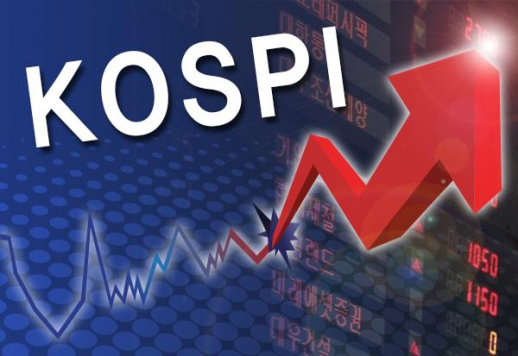 KOSPI Surges Past 8,800 Amid Institutional Buying The KOSPI index surged past the 8,800 mark during trading on June 1, driven by strong institutional buying. Starting at around 8,400, the index quickly climbed to a record high within two hours of the market opening, buoyed by purchases of major stocks such as Samsung Electronics, Samsung C&T, and LG Group shares. As of 10:53 a.m. KST, the KOSPI was trading at 8,823.17, up 347.02 points (4.09%) from the previous trading day. The index opened at 8,485.67, up 9.52 points (0.11%), and continued its steep ascent. In the securities market, institutions led the rise by net buying 1.6976 trillion won worth of stocks, while individuals purchased 152.4 billion won. Conversely, foreign investors were net sellers, offloading 1.7467 trillion won worth of shares. Market analysts noted that the surge in Samsung Electronics, along with increased buying in sectors related to artificial intelligence (AI), robotics, and power infrastructure, contributed to the overall market momentum. Samsung Electronics saw a rise of over 9%, reaching a new all-time high, while Samsung C&T (up 8.90%), Doosan Enerbility (up 4.36%), Hyundai Motor (up 2.90%), and Samsung Life (up 5.41%) also performed strongly. Other stocks like SK Hynix (up 1.54%), SK Square (up 2.68%), and HD Hyundai Heavy Industries (up 1.29%) also showed gains. However, Samsung Electro-Mechanics (down 4.84%) and LG Energy Solution (down 1.64%) faced declines. Notably, stocks in the AI and robotics sectors experienced significant gains, including Doosan Robotics (up 29.95%), LG Electronics (up 27.13%), LG Electronics Preferred (up 25.18%), Samsung SDS (up 24.58%), LG HelloVision (up 23.41%), LG CNS (up 23.20%), and SKC (up 19.74%). Kim Seok-hwan, a researcher at Mirae Asset Securities, commented, “With expectations surrounding Jensen Huang, CEO of NVIDIA, visiting Korea this week, there has been a surge in buying across LG Group stocks such as LG Electronics, LG CNS, and LG Innotek. This aligns with a reevaluation of the physical AI industry’s value, leading to increased interest in the robotics theme.” He added, “The momentum from large overseas orders for power infrastructure companies is also supporting the market’s rise.” Meanwhile, the KOSDAQ index was trading at 1,052.61, down 22.19 points (2.06%) at the same time. Foreign investors net bought 283.2 billion won, while individuals and institutions net sold 267.9 billion won and 8.1 billion won, respectively. Among the top market capitalization stocks, Rainbow Robotics (up 13.39%) and HLB (up 0.39%) saw gains, while EcoPro BM (down 3.69%), Alteogen (down 1.49%), EcoPro (down 4.68%), JUSUNG Engineering (down 6.05%), and Peptron (down 6.64%) faced declines.* This article has been translated by AI. 2026-06-01 11:09:00
 -
 Olive Young's U.S. Launch Highlights the Strength of K-Content The global prominence of Korean content is once again in the spotlight. From films and dramas to K-pop, webtoons, variety shows, games, and beauty products, Korean culture and lifestyle have become a global trend. While semiconductors, automobiles, and shipbuilding once defined the South Korean economy, content has now emerged as a key pillar driving national branding and industrial competitiveness. The recent opening of CJ Olive Young's first U.S. store in Pasadena, California, symbolizes this transformation. The store features a wide array of Korean cosmetics, wellness products, and K-lifestyle items, including skin diagnosis and experiential service areas. Notably, over 80% of the products are from Korean brands, yet local consumer interest continues to grow. Importantly, Olive Young is not merely selling cosmetics; it has created a 'K-Beauty playground' by bringing popular brands and consumer culture from Korea to the U.S. As demand increases for authentic Korean products, K-Beauty is being consumed as a cultural experience. This development illustrates the expanding influence of K-content. Previously, fans might have simply enjoyed dramas and admired actors, but now they are purchasing cosmetics featured in shows, seeking out foods from variety programs, and trying lifestyle products used by K-pop stars. This creates a virtuous cycle where content drives industry growth, which in turn facilitates the spread of content. The power of K-content did not emerge overnight. Just two decades ago, the South Korean content industry struggled to penetrate international markets. Today, the landscape has changed dramatically, with global streaming platforms competing for Korean dramas and K-pop expanding its influence in the global music scene. The webtoon, gaming, and beauty sectors are also creating new markets by integrating with Korean content. However, the global attention on K-content does not guarantee lasting success. Challenges such as increasing dependence on global platforms, creator rights issues, intellectual property competition, and excessive commercialization must be addressed. If the industry becomes complacent and loses sight of its core values, the current trend could become a fleeting phenomenon. Ultimately, the strength of K-content lies in compelling storytelling, a healthy ecosystem, and the dedication of creators who uphold fundamental principles. As the world focuses on South Korea, it is crucial to maintain these values. The essence of K-content is more important than its flashy achievements. Continuous investment in common sense, principles, and competitive content is essential for securing the future of K-content. Just as Japan built its cultural influence through animation and gaming, and the U.S. through Hollywood films and music, the trust and appeal of K-content are powerful economic assets that can shape national image and stimulate demand for K-beauty, K-food, and K-fashion. 2026-06-01 11:09:00
 -
 South Korea's exports hit record high in May on strong AI chip demand SEOUL, June 1 (AJP) - South Korea's exports surged more than 50 percent from a year earlier to a record high last month, fueled by robust semiconductor shipments, even as uncertainty persisted amid the prolonged war in the Middle East, according to data released by the Ministry of Trade, Industry and Resources on Monday. Exports in May totaled US$87.75 billion, up 53.2 percent from a year earlier, the highest monthly figure on record and the third straight month above $80 billion. Exports have risen for 12 consecutive months since June last year. The growth was led by semiconductor exports, which soared 169.4 percent from a year earlier to a record US$37.16 billion, supported by rising memory chip contract prices amid increased artificial intelligence (AI)-related investment by major U.S. technology companies. Chip exports have now exceeded US$30 billion for three consecutive months. Exports excluding chips also rose, while average daily exports surpassed US$4 billion for the first time, breaking the previous record of US$3.79 billion set in March. Computer exports also rose to $4.18 billion, up 290.7 percent, on stronger demand for AI server SSDs, while wireless communications devices increased 12.6 percent to $1.46 billion on solid new-product sales. Display exports rose 9.4 percent to $1.47 billion. Among consumer goods, cosmetics exports increased 24.2 percent to $1.18 billion, the highest for any May. Agricultural and fisheries food exports rose 4.7 percent to $1.07 billion as processed farm products such as noodles and bread increased, offsetting declines in items such as coffee and seaweed. Exports of petroleum products surged 46.6 percent from a year earlier to $5.25 billion as higher oil prices boosted export unit values, although shipment volumes fell 23.8 percent. Gasoline exports fell 31.1 percent, while diesel and kerosene shipments declined 24.3 percent and 99.9 percent, respectively. Petrochemical exports rose 11.1 percent to $3.7 billion, although export volumes dropped 25.5 percent as producers prioritized domestic supply. Auto shipments declined 5.9 percent to $5.83 billion, hurt by fewer working days and logistics disruptions caused by the conflict in the Middle East. By destination, exports to China rose 80.9 percent to $18.9 billion, led by a 243-percent jump in semiconductor shipments and steady growth in consumer goods. Exports to the U.S. increased 59.1 percent to $15.97 billion. Exports to ASEAN rose 58.4 percent to $15.85 billion, and exports to the EU increased 2.4 percent to $6.19 billion. Exports to the Middle East fell 7.7 percent to $1.27 billion. Meanwhile, imports rose 20.8 percent from a year earlier to US$60.8 billion. Energy imports increased 15.9 percent to US$11.75 billion, led by a 25 percent rise in crude oil imports to US$8.5 billion as import prices climbed. With exports exceeding imports, the trade surplus for May widened to $26.95 billion, up $20.03 billion from a year earlier, extending the surplus streak to 16 months. The January to May cumulative surplus reached $101.91 billion, surpassing the previous annual record of $95.2 billion set in 2017. If this trend continues, exports are likely to surpass the government's annual target of US$740 billion, with officials saying that rising chip volumes and prices could push the total even higher. However, the outlook remains uncertain, with the Middle East conflict and U.S. tariffs still unresolved. "The uncertainty in the trade environment remains," Trade Minister Kim Jung-kwan said, adding that the government will work closely with major trading partners to reduce risks and stabilize export conditions. He also vowed to secure stable imports of key raw materials and strengthen supply chain monitoring. 2026-06-01 11:07:55
 -
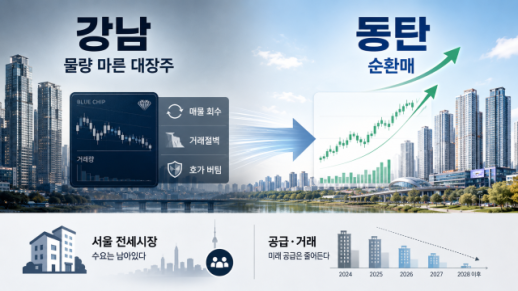 Real Estate Market Dynamics: Gangnam Faces Trading Drought While Dongtan Sees Activity The Yoon Suk Yeol administration has signaled a clear intention to stimulate the stock market since taking office. For the market to thrive, liquidity and transactions are essential. Revisions to commercial law, the elimination of the financial transaction tax, and expectations surrounding retirement pensions have led to an influx of liquidity into the stock market, opening the door for trading. In stark contrast, the government has indicated a desire to end the era of profiting from real estate, simultaneously reducing both fuel and oxygen to prevent further market overheating. Unlike past strategies that relied solely on taxation, the current approach tightens liquidity through lending restrictions and curtails transactions with increased capital gains taxes and land transaction permits. The plan to position stocks as an alternative asset to real estate has seen some success. Speculative transactions in Gangnam have noticeably decreased, leading to an increase in urgent sales and a temporary drop in home prices. Notably, the shift in strategy to rely on finance and supply rather than just taxes is commendable. In stock market terms, this has effectively halted the short-term surges of overheated stocks, resulting in divergent trends between the two markets. KOSPI Hits 8000, Gangnam Faces Trading Cliff While the KOSPI is led by major stocks like Samsung Electronics and SK Hynix, the real estate market's equivalent is the Gangnam area. Over the past year, while the stock market leaders surged with trading volume, the Gangnam area moved in the opposite direction. Lending restrictions have limited buyers' access to funds, increased capital gains taxes have reduced sellers' incentives, and land transaction permits have restricted investment demand. The number of apartments for sale in Seoul has decreased by about 25% compared to a year ago, with urgent sales in Gangnam being absorbed first, leading to a stabilization of asking prices. In stock market terms, Gangnam is not a halted stock but rather a major stock with dwindling supply. Sellers are constrained by taxes, while buyers are hindered by lending restrictions and land transaction permits, resulting in thin transaction volumes. In a market with limited supply, prices are less likely to drop even with fewer transactions. This is why Gangnam began to recover after urgent sales were absorbed in May, just before the end of the grace period. However, the lack of sufficient transaction volume makes it difficult to confirm this rebound as a trend reversal. Average price increases in Seoul do not fully capture the market's true condition. Rather than collapsing under pressure or flooding the market with urgent sales, some homeowners have opted to withdraw their listings to hold firm. With the end of the grace period for increased capital gains taxes approaching, urgent sales were absorbed first, and after the end of the grace period, the supply of listings decreased, leading to a resurgence in asking prices. Ultimately, the three districts of Gangnam resemble high-quality stocks that have not easily succumbed to demand despite repeated regulations. The current trading drought is more akin to a correction phase due to external factors than a fundamental deterioration. While transaction volumes in Gangnam have dried up, market demand has not vanished. Real Estate Demand Persists Despite Market Challenges This is where real estate diverges from stocks. In the stock market, reduced liquidity and trading quickly cool off overheating. However, in real estate, there remains a genuine demand to buy. The liquidity that has dried up in Gangnam has circulated to areas outside of regulations. As trading restrictions were imposed on the major stock of Gangnam, the money did not disappear; it returned to stocks outside of regulations. The first area to attract this circulating demand is Dongtan in Hwaseong. Not classified as a regulated area under the 10-15 measures, it has relatively loose requirements for actual residence and fewer restrictions on taxes and loans, leading to a 112% surge in apartment transactions in Dongtan New Town in the first quarter compared to a year ago. However, it cannot be viewed solely as a speculative theme stock. The area has fundamental support due to its proximity to the semiconductor belt, expectations surrounding the opening of the GTX-A line, and a 1.5% internal loan liquidity. Reports indicate that the demand from employees of semiconductor companies like Samsung Electronics and SK Hynix, along with the availability of internal loans, has bolstered the buying momentum in Dongtan. Not all demand that was stifled in Gangnam has shifted to non-regulated areas like Dongtan. Some buyers have postponed purchases and remained in the Seoul rental market. While the demand for buying has lingered in the rental market, the actual residence requirements and the conversion of rental properties into sales have led to a decrease in rental listings. The average rent for apartments in Seoul rose by 0.28% in the second week of May, marking the highest increase in nearly 10 years since November 2015, while rental listings decreased by 23.5% over three months. Focus on Supply and Transactions, Not Prices So what should be the focus? The trading drought observed earlier reflects the current market's strength, while supply indicates the strength of the next cycle. Just as stock investors look at trading volume and supply rather than indices, real estate should also focus on transactions and supply rather than prices. However, supply is dwindling. This year, the number of apartments ready for occupancy in Seoul is expected to be around 20,000, half of previous years, and housing permits in the first quarter plummeted from 14,966 units to 5,632 units, a 62% decrease year-over-year. Permits are a leading indicator showing supply capacity three to five years down the line, not immediate occupancy. The combination of this year's shortage of new units and a sharp decline in permits suggests a growing rental crisis now and a future supply gap. The direction to resolve this through supply is correct, but the challenge lies in the speed. While the government has promised 1.35 million units in the metropolitan area by 2030, it will take time for the market to feel the impact of this supply. Not all liquidity has spread evenly. Just as major growth stocks and neglected stocks diverge, core areas, industrial belts, and rural outskirts are following different trajectories. The nationwide housing quintile ratio reached a record high of 12.8 times at the end of last year. Additionally, there are still concerns regarding interest rates. While interest rates serve as a discount rate in stocks, they represent monthly repayment amounts in real estate. If regulations are lifted or interest and loan conditions change in a supply-constrained environment, pent-up buying demand could push prices higher again. Real Estate Must Be Viewed Through Its Own Lens Real estate is not the same as stocks. A decrease in transactions does not equate to a disappearance of demand, nor does a drop in prices mean a reduction in housing cost burdens. When purchases are restricted, some buyers move to non-regulated areas, while others remain in the rental market. If rentals become constrained, the market shifts to monthly leases. Supply does not increase immediately upon placing orders; there are years of lag between permits, construction, completion, and occupancy. While stock investors focus on liquidity and trading volume, real estate investors must consider the people and time that remain behind. The government has had some success in curbing speculative trading in Gangnam. However, the trend of price stabilization has not lasted long. Gangnam has managed to hold its asking prices and rebound, while some demand has shifted to Dongtan, and some has remained in the rental market, pushing up housing costs. The government has not fully anticipated when and how the next supply gap will impact the burden on residents. Real estate policy should not end with suppressing the market to buy time. If time has been bought with a stock investor's perspective, then housing must be built for people to live in during that time, as real estate ultimately concerns where people reside. 2026-06-01 11:06:00
 -
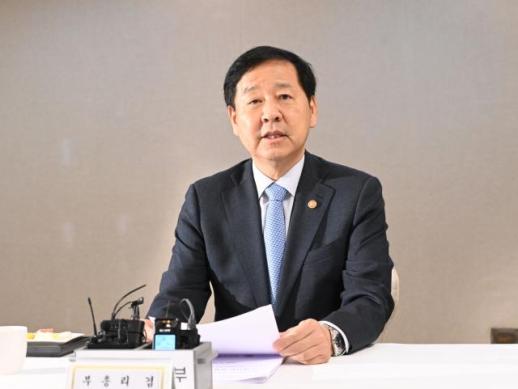 Koo Yoon-cheol: Economic Leap Golden Time Requires Innovation and Structural Reform Koo Yoon-cheol, Deputy Prime Minister and Minister of Economy and Finance, emphasized the need to advance innovation and structural reform to improve the economy's fundamentals and establish a foundation for a rebound in potential growth rates. During an expanded meeting at the Government Sejong Center on June 1, attended by key officials including the two vice ministers and department heads, Koo stated, "The period after June is a golden time for a significant economic leap that will change our economy's fundamentals and lay the groundwork for a rebound in potential growth rates." He noted, "In conjunction with the first anniversary of the people's sovereignty government on May 20, we have completed a review of our economic performance," and urged the Ministry of Economy and Finance to be thoroughly prepared to take the lead in innovation and structural reform through the upcoming economic growth strategy for the second half of the year. The meeting also featured the '2nd Team Happiness Awards,' recognizing departments with outstanding policy achievements. The Property Tax Division was acknowledged for its analysis and response to issues related to real estate and inheritance and gift taxes, while the Economic Analysis Division received an award for its analysis of recent economic trends and emergency economic responses due to the war in the Middle East. The Innovation Policy Officer was recognized for enhancing organizational innovation capabilities through the operation of an AI education program, the Public Policy Coordination Division for promoting the 'K-Maru' project, a collaboration platform for overseas offices, and the Economic Cooperation Division for expanding economic cooperation between Korea and Uzbekistan during the Asian Development Bank's annual meeting. In May, the Best Small Happiness award went to Jeon Hyung-yong, an officer in the Investment Management Division, who was commended for establishing a legal framework to manage liquid tobacco products that had previously been distributed outside the regulatory system through amendments to the Tobacco Business Act after 37 years. The meeting also showcased the results of a recent AI intensive training program. Koo remarked, "The results of our efforts in AI innovation are gradually becoming evident," and emphasized the need for officials' interest in developing specialized AI agents for the ministry, while also considering advanced training programs.* This article has been translated by AI. 2026-06-01 11:03:00
 -
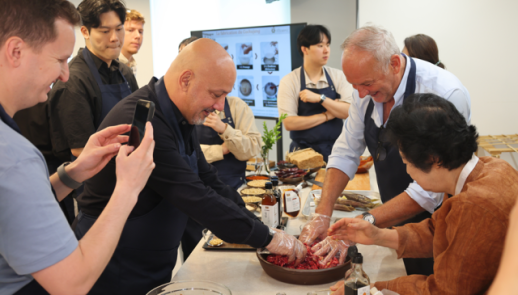 Korean Fermented Sauces Gaining Global Attention, Says Michelin-Star Chef "Korean sauces are excellent ingredients that enhance the flavor of dishes," said Frédéric Anton, a Michelin 3-star chef and a national certified master chef (MOF) from France, after tasting traditional Korean sauces like soy sauce and doenjang. As European fine dining chefs and other key figures increasingly recognize the quality of Korean sauces, the potential for globalizing K-sauces is growing.On June 1, the Ministry of Agriculture, Food and Rural Affairs reported that Anton, along with Michelin 3-star chefs Christian Le Squer and Martin Opner, participated in a culinary experience event at the Korean Food Master Experience Center in Jongno, Seoul, on May 30.The event was led by Master Gisun Do, a culinary expert who has been making sauces using traditional methods for 360 years. During the event, Gisun Do guided the participants in making sauces and showcased dishes that captivated the Michelin-starred chefs.The chefs praised the dishes made with the sauces. Anton remarked, "Korean cuisine is healthy food based on vegetables and enhanced by fermentation."Recently, Korea's sauce culture has gained international recognition for its history and uniqueness. The practice of making Korean sauces was inscribed on UNESCO's Intangible Cultural Heritage list in 2024. Traditional sauces like doenjang, ganjang, and gochujang embody fermentation techniques and wisdom accumulated over thousands of years, earning recognition as a unique cultural asset.Korean sauces have demonstrated their success in the international market. Popularity for sauces such as gochujang and barbecue sauce continues to soar, particularly in the United States. Last year, sauce exports reached $92.2 million to the U.S., $60.4 million to China, and $4.02 million to the Commonwealth of Independent States (CIS).The Ministry of Agriculture, Food and Rural Affairs anticipates that sauces will drive K-food exports this year and is promoting export expansion. Since 2016, the ministry has operated the Korean Food Master Experience Center in collaboration with the Korean Food Master Association to widely promote the value of traditional foods and culinary culture.Recently, the center has focused on participatory programs where visitors can make traditional foods themselves. Last year, there were 53 sessions led by food masters and 204 programs conducted by traditional food specialists, all dedicated to showcasing the excellence of Korean culinary culture.Jung Kyung-seok, director of food industry policy at the Ministry of Agriculture, Food and Rural Affairs, stated, "With our 'sauce-making' culture recognized as a UNESCO Intangible Cultural Heritage in 2024, the excellence of our traditional sauces has been highlighted once again on the global stage. We will actively support the continued development of traditional foods and culinary culture."* This article has been translated by AI. 2026-06-01 11:03:00
 -
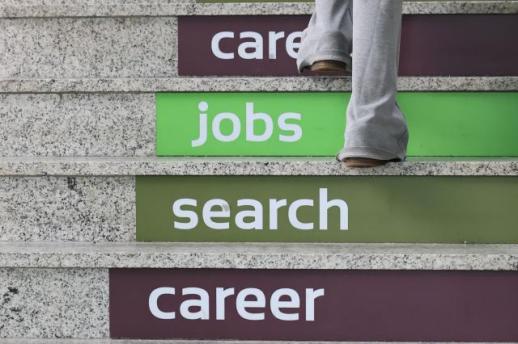 Global Talent Fair Expands Job Opportunities for Youth in Foreign Investment Firms The government is hosting a job fair to expand employment opportunities for young job seekers at foreign investment and overseas companies. The Ministry of Trade, Industry and Energy and the Ministry of Employment and Labor announced on June 1 that they will jointly hold the "2026 Global Talent Fair" at COEX until June 2. The fair aims to provide quality job opportunities for young job seekers while allowing foreign investment and overseas companies to recruit talented individuals. This year, approximately 360 companies are expected to participate. Recently, youth employment rates have been on a downward trend. According to data from the National Statistical Office, the employment rate for young people aged 15 to 29 was 43.7% in April, a decrease of 1.6 percentage points compared to the same month last year. This marks the largest decline since August 2024, continuing a 24-month streak of decreases. The number of employed individuals also fell by 194,000. In response, the government is organizing this fair to support youth employment. During the event, around 18,000 job seekers are expected to participate. Starting this year, support for companies returning from overseas and young job seekers will also be strengthened. Korea Kolmar, the first domestic company to return from outside the capital region this year, will seek young talent at the fair and has set up a separate consulting booth to assist global talent with overseas experience in finding reemployment in Korea. To help young people navigate the AI era, the fair will invite industry representatives to share insights on corporate trends and employment strategies. An "AI Employment Assistant" booth will also be established to analyze job seekers' skills and job fit using AI technology, matching and recommending them to visiting booths. The foreign investment company recruitment section will feature around 140 companies, including Amkor Technology Korea and Hitachi Energy Korea. The overseas employment section will host 121 companies, providing both in-person and virtual consultations for young people interested in overseas job opportunities. Minister of Trade, Industry and Energy Kim Jeong-kwan stated, "As investment in securing outstanding talent is essential in the AI era, I hope this fair provides young people with opportunities to expand into a broader world. The government will continue to create favorable conditions for investment and support youth growth." Minister of Employment and Labor Kim Young-hoon remarked, "This is a meaningful occasion for our youth to meet global companies, and the government will provide various support to help them build global careers and grow. I urge companies to open up broad opportunities for young talent to grow alongside them."* This article has been translated by AI. 2026-06-01 11:03:00
 -
 AI Jobs in Demand at Global Talent Fair in Seoul A large-scale job fair supporting both domestic youth seeking overseas employment and foreign students looking for jobs in South Korea has been launched. As demand for talent grows in advanced industries such as artificial intelligence (AI) and semiconductors, the event aims to connect domestic and international companies with job seekers.The 2026 Global Talent Fair (GTF), hosted by the Ministry of Trade, Industry and Energy and the Ministry of Employment and Labor, and organized by the Korea Trade-Investment Promotion Agency (KOTRA), opened on June 1 at COEX in Seoul. The event will run for two days, concluding on June 2.This year, the fair features a total of 360 companies, including 137 foreign-invested firms, 121 overseas companies, and 100 companies hiring foreign students. It is the largest event of its kind aimed at supporting both domestic youth in their overseas endeavors and foreign students seeking employment in South Korea.The main focus of this year's fair is employment in AI technology companies. With the rapid growth of the AI industry, competition for talent has intensified, prompting global AI firms to share insights on hiring trends and strategies. In the advanced technology section, 86 companies from sectors including semiconductors, secondary batteries, displays, future vehicles, biotechnology, and AI are conducting on-site recruitment and consultations.A dedicated area for Fortune 500 companies, called the 'Global 500 Companies Zone,' has also been established. Twenty-six global firms, including Lam Research Korea, Bosch Korea, Schneider Electric Korea, and Thermo Fisher Scientific Korea, are participating to attract young talent. Global companies located outside the capital region, such as Amkor Technology Korea and Aumobiokorea, are also actively recruiting on-site.An AI-based job support service has drawn attention as well. The 'AI Job Assistant' booth analyzes job seekers' skills and recommends suitable companies using AI technology. Additionally, an experience zone for foreign students was set up to assess their business Korean language skills using AI.Side events sharing employment strategies are also taking place. A job concert featuring employees and recruiters from global companies discusses job trends and employment tips. Sessions on overseas employment strategies share regional insights and experiences, while sessions for foreign students include company-specific recruitment briefings and visa information.KOTRA President Kang Kyung-seong stated, "The Global Talent Fair is a venue that connects youth and companies in a borderless business environment. We will strengthen support to ensure companies find key talent to lead the global market, and that youth have opportunities to find competitive jobs." 2026-06-01 11:03:00
 -
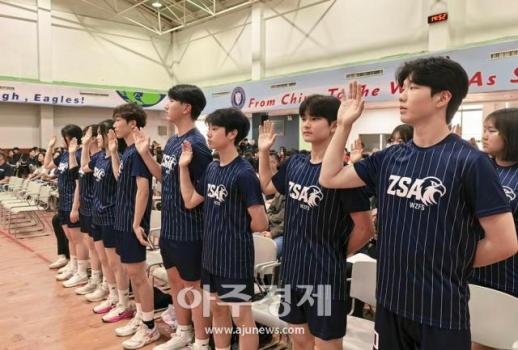 New Volleyball Program at Weihai International School Aims to Develop Global Talent Weihai International School, located in Shandong Province, China, has garnered attention for launching a volleyball program that integrates sports, education, and global career development. The school held an inauguration ceremony for its volleyball team on May 22, marking the beginning of its operations. Founded in 2006 and approved by the Chinese Ministry of Education, Weihai International School has been dedicated to providing international and language education to Korean students, fostering global talent. The creation of the volleyball team is notable for its potential to offer diverse career paths in sports, extending beyond just training athletes. The school plans to develop a curriculum that not only prepares students for professional sports but also opens pathways to careers as international referees, sports agents, and other roles within the sports industry. The school has established a system that allows students to pursue both English and Chinese language education alongside their regular studies and sports training, supporting their athletic skills and global competitiveness. The initiative is being developed as Korea's first volleyball study abroad system. Members of the new volleyball team have expressed high satisfaction, noting the positive environment that allows them to interact with international peers while improving their English and Chinese skills, all while balancing sports and academics. Some students are also cultivating aspirations for careers as international referees and sports agents. Moody Lee, the school's founder, stated, "I want to help students look beyond the singular path of being an athlete and explore diverse possibilities on the global stage. We will continue to strive to nurture talent equipped with global sensibilities and character." In light of the current shortage of international referees and sports agents in the domestic volleyball scene, Weihai International School's initiative is seen as a meaningful attempt to provide students with new career options. There is growing interest in how this new model, which combines sports, education, and internationalization, will yield future results.* This article has been translated by AI. 2026-06-01 10:57:00