

Journalist

Salih Murat Tamer
-
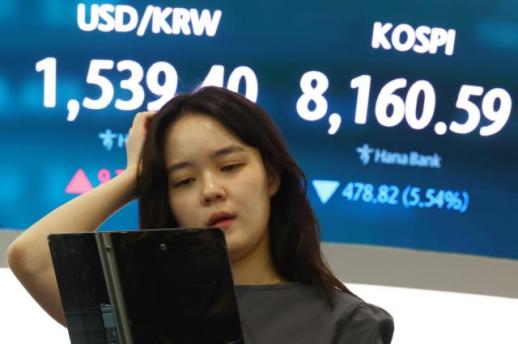 KOSPI Experiences Sharp Decline After Hitting Record High Amid Semiconductor Adjustments Domestic stock markets have entered a phase of heightened volatility following a record high. The KOSPI index briefly surpassed the 8900 mark, driven by optimism surrounding artificial intelligence (AI) semiconductors. However, profit-taking in semiconductor stocks, foreign capital outflows, and a surge in exchange rates led to a sharp decline later in the week. Analysts are now focusing on next week’s Apple Worldwide Developers Conference (WWDC), the U.S. Consumer Price Index (CPI), and the European Central Bank (ECB) monetary policy meeting, speculating on the potential for a rotation in leading stocks centered around semiconductors. According to the Korea Exchange, the KOSPI index closed at 8160.59, down 478.82 points (5.54%) from the previous trading day. Over the week (June 1-5), the KOSPI and KOSDAQ fell by 3.72% and 6.73%, respectively. Notably, the KOSPI surged by 3.68% on June 1 and, on June 2, briefly crossed the 8900 mark for the first time. However, it subsequently dropped for two consecutive days, ultimately falling below 8100. This week, the stock market exhibited extreme volatility as expectations and concerns surrounding semiconductors fluctuated. Early in the week, optimism regarding NVIDIA's AI PC prospects and expectations for CEO Jensen Huang's visit to South Korea boosted investor sentiment, leading to increased buying in Samsung Electronics and SK Hynix. However, Broadcom's disappointing AI chip revenue guidance and news of Micron's CEO selling shares triggered widespread profit-taking across the semiconductor sector. Foreign selling pressure and rising exchange rates also contributed to the market's struggles. The dollar-won exchange rate soared to 1547 won, marking a 17-year high. Concerns over additional tariffs from the U.S. and potential capital shifts ahead of SpaceX's IPO heightened foreign investors' aversion to risk assets. Internally, signs of a reduction in the concentration of semiconductor stocks emerged. The insurance, retail, and software sectors showed relative strength, while buying interest in semiconductor materials, components, and equipment stocks on the KOSDAQ, which had seen significant declines, began to increase. Next week, several major global events are scheduled. The Apple WWDC 2026 will take place from June 8 to 12, with the market keenly observing how Apple integrates AI features into its operating systems and device ecosystem. Additionally, the U.S. CPI for May and the Bank of Canada (BOC) monetary policy meeting are set for June 10, followed by the ECB meeting on June 11. If inflation comes in higher than expected, concerns about prolonged tightening by the Federal Reserve may grow. The ECB is also expected to consider a 0.25 percentage point increase in interest rates in response to signs of accelerating core inflation. SpaceX's anticipated Nasdaq listing on June 12 is another significant variable. With an expected valuation exceeding $170 billion, this massive IPO is likely to impact global market liquidity. Some analysts have even suggested the possibility of early inclusion in the Nasdaq-100 index. Short-term volatility is expected to continue, according to analysts. While the semiconductor sector's earnings momentum remains strong, upward revisions to earnings estimates may slow ahead of the July earnings season. Consequently, there is speculation that buying interest may shift from recently surging semiconductor stocks to financial and dividend stocks or sectors that have been relatively neglected. Lee Jae-won, a researcher at Yuanta Securities, stated, "The justification for future adjustments should be sought in the rise of price-to-earnings ratios (PER) due to stock concentration in May, rather than factors like war or oil prices. The key in June remains not the exit of leading stocks but the expansion of rotation within leading stocks." Labor Gil, a researcher at Shinhan Investment Corp., noted, "The June stock market has entered a seasonal off-peak period where upward revisions to earnings per share (EPS) are slowing. If price adjustments occur, defensive stocks may perform well, while if there is a period of adjustment, sectors that have lagged may see a gap-filling rally." However, from a medium- to long-term perspective, the trend of expanding AI investments remains strong. While short-term volatility is inevitable due to macroeconomic variables such as U.S. inflation, interest rates, and Middle Eastern tensions, the ongoing investment in AI infrastructure and increasing demand for memory semiconductors suggest that the flow of leading stocks is unlikely to be disrupted. Therefore, analysts believe that a selective approach focusing on the AI value chain and semiconductor sector during this short-term adjustment phase is advisable.* This article has been translated by AI. 2026-06-06 07:03:00
 -
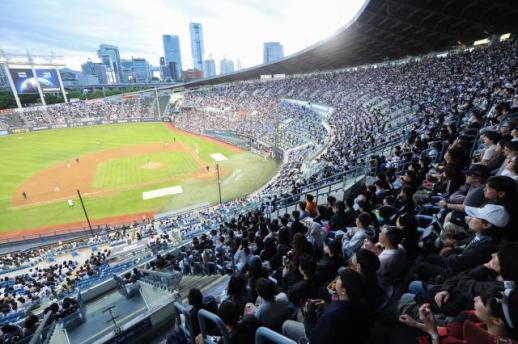 10 Million Fans: A Comprehensive Guide to Benefits for KBO Baseball Fans Despite the early heat exceeding 30 degrees Celsius, the excitement for professional baseball remains high. After surpassing 10 million spectators in both 2024 and 2025, the league continues to thrive this year, with attendance exceeding 5 million in the fewest games ever played. As more fans flock to the ballparks, interest in team-affiliated credit cards that ease the burden of ticket and food costs is growing. According to Card Gorilla, a credit card platform, Shinhan Bank has introduced partnership cards with the LG Twins and Hanwha Eagles. The 'LG Twins Shinhan Card' offers a 3,000 won discount for home game tickets purchased at the venue or online, available once per day with no limit during the regular season. The 'Hanwha Eagles Shinhan Card' provides a 5,000 won discount on home game tickets up to three times a month, depending on the previous month's spending. Samsung Card's 'Samsung Lions Card' offers a 50% discount on tickets for Samsung Lions home games and a 50% discount at the team store. Fans can also enjoy a 10% discount at food and beverage outlets in Daegu Samsung Lions Park, making it easier to enjoy 'Yafu' (baseball food) at the game. Additionally, the card includes a 5% discount on train fares (KTX and SRT), catering to traveling fans. NH Nonghyup Card's 'NC Dinos Card' provides a 2,000 won discount on one ticket for NC Dinos games, with the same benefit available for one accompanying person, without any spending requirements. The same benefits apply to the debit card. IBK Industrial Bank's 'Cham! Good kt wiz Card' offers a 3,000 won discount on one ticket per day for admission to Suwon KT Wiz Park, with no monthly limit. Gwangju Bank's 'Kia Champions Card' provides a 2,500 won discount on-site for home game tickets without prior spending requirements, along with a 2,500 won cashback, totaling a 5,000 won discount. Discounts at the team store require a minimum purchase of 50,000 won for a 10% cashback. KB Kookmin Card's 'Doosan Bears KB Card' offers specialized discounts for Doosan Bears fans, including 50% off home game tickets and merchandise, and 20% off food and beverages at the home stadium. Lotte Card's 'LOCA in MEGACITY' provides discounts for Lotte Giants fans and is tailored for the Busan, Ulsan, and Gyeongnam regions, offering benefits for tickets, offline shopping, and online shopping. While SSG Landers and Kiwoom Heroes do not have official partnership cards, fans can still receive benefits through ticketing platforms like PLCC. SSG Landers has changed its ticketing platform to SSG.COM this year, where using the 'SSG.COM Samsung Card' after meeting spending requirements can earn fans up to 10% in SSG Money on ticket purchases. Kiwoom Heroes' official ticketing platform is NOL Ticket, where using the Hyundai Card 'NOL Card' earns 10% in points on the purchase amount. Go Seung-hoon, CEO of Card Gorilla, stated, "As the popularity of professional baseball continues, official partnership cards from all 10 teams are being launched. With benefits ranging from ticket discounts to merchandise and food, these cards are ideal for frequent attendees of baseball games."* This article has been translated by AI. 2026-06-06 07:03:00
 -
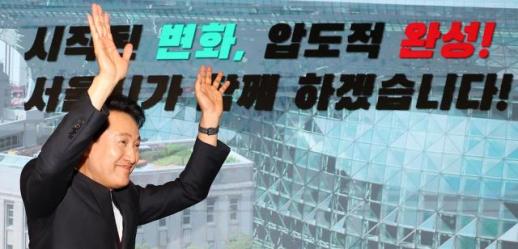 Election Results Highlight Economic Challenges Ahead The election may be over, but public sentiment continues to resonate. Regardless of the outcome, voters sent a clear message to the ruling party. While there was no outright rejection of the government, there was also no unconditional trust. This sentiment, particularly evident in major regions like Seoul, reflects a mix of expectations and dissatisfaction regarding economic policies. Since the inauguration of the Yoon Suk Yeol administration, South Korea's economy has seen notable achievements. The KOSPI index has approached record highs, and exports, particularly in semiconductors, have shown signs of recovery. Corporate performance has also improved, and the international community has recognized the resilience of the South Korean economy. At least based on macroeconomic indicators, there is some justification for the government's claims of success. However, elections assess not just economic indicators but the lived experiences of citizens. Rising stock prices do not necessarily translate to improved living conditions. Many citizens still grapple with high housing costs, rental burdens, unstable jobs, and soaring education and living expenses. The gap between asset holders and those without assets continues to widen, making it difficult for many to feel assured that their lives have improved, despite better statistics. The situation among young people is particularly noteworthy. In this election, the political choices of the 2030 generation displayed a different trend compared to previous years. This shift reflects not just a change in ideology but a manifestation of anxiety about the future. Good job opportunities are dwindling, and the dream of homeownership feels increasingly distant. Marriage and childbirth have become burdens rather than choices. Young people are seeking concrete alternatives to improve their lives rather than mere promises of growth. The government must be cautious about overconfidence in numerical data. Indicators suggesting economic improvement do not automatically equate to public support. Historically, no administration has gained public favor solely through economic growth rates and rising stock prices. What matters more is who benefits from economic growth and how widely those benefits are distributed. The most pressing issue facing South Korean society today is polarization. The divide between metropolitan and rural areas, regular and irregular workers, asset holders and non-homeowners, and large corporations and small businesses is growing. As perceptions strengthen that the fruits of growth are concentrated among specific groups, social conflicts are likely to intensify. This is why the goals of economic policy must extend beyond merely increasing growth rates. The results of this election should not be interpreted solely through a political lens. Voters acknowledge the government's achievements while demanding more. They call for not just growth but also equitable distribution, not just stock market gains but also improvements in daily life, and not just numbers but tangible experiences. This is the true message left by this election. The government must now move to the next phase. Policies supporting corporate investment and export expansion should continue. However, there must also be greater focus on policies that young people, the middle class, and small business owners can feel in their daily lives. Without addressing structural issues such as housing insecurity, education costs, regional disparities, and retirement anxieties, no economic success will resonate with the public. While the election is over, the evaluation of public sentiment continues. The economic challenges left in the wake of this election are clear. Equally important as accelerating growth is ensuring that the warmth of that growth is widely shared. Growth that the public cannot feel will ultimately struggle to gain political support. What the government must heed from this election is not just the outcome but the warnings and expectations expressed by the public. This should guide the direction of future economic policies.* This article has been translated by AI. 2026-06-06 07:03:00
 -
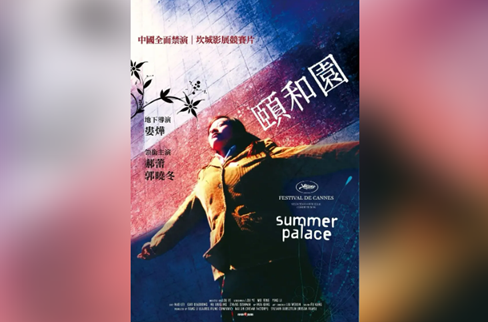 Film 'Summer Palace' Explores the Youth of 1989 Amid Tiananmen Square Tragedy This year marks the 37th anniversary of the Tiananmen Square incident, which occurred on June 4, 1989, when the Chinese government violently suppressed pro-democracy protests by students and citizens in Beijing. Human rights organizations estimate that thousands lost their lives during the crackdown. However, the Chinese government has never officially recognized the event, referring to it only as a "political upheaval that occurred in the late 1980s." As June 4 approaches each year, online censorship in China intensifies. Terms such as '六四' (6.4) and '天安门' (Tiananmen), along with related images, videos, and music, are heavily monitored. This year, posts containing words like '89', '64', and 'tank' have reportedly been deleted in large numbers. Some users have shared experiences of being restricted from entering '64' when sending money via WeChat or from sharing Taylor Swift's album '1989' on WeChat Moments. The term 6.4 remains a taboo in Chinese society, making it difficult to find films that directly address the Tiananmen Square incident. One of the most well-known works is Lou Ye's 2006 film 'Summer Palace' (original title: 頤和園). Set against the backdrop of the politically tumultuous period surrounding the Tiananmen Square protests, the film captures the love, confusion, and turmoil experienced by a generation of college students. The story begins in Tumen, a border city between China and North Korea, where the protagonist, Yu Hong, receives his acceptance letter to a fictional university that combines Beijing University and Tsinghua University. Coming from a rural background, he is shocked by the new cultural experiences of dormitory life, including co-ed living, smoking, and sexual freedom. Here, he falls passionately in love with Zhou Wei. However, as pro-democracy protests spread across the university, their relationship becomes fraught with jealousy, betrayal, anxiety, and obsession. The characters eventually leave Beijing, each carrying their own scars. Yet, the memories of 1989 continue to haunt them, leading their lives into deeper despair. The original title, 'Summer Palace,' refers to the summer retreat of Empress Dowager Cixi during the late Qing Dynasty, a place where the empire's glory and decline coexist. In the film, the most beautiful moments for Yu Hong and Zhou Wei take place by the Summer Palace's lake. Lou Ye has described this scene as the protagonists' most beautiful moment together. The Summer Palace serves not just as a backdrop but as a symbolic location throughout the film. It represents a stage for love that once existed but can never be returned to, a lost paradise of youth. In past interviews, Lou Ye stated, "This film is ultimately a story about love." He likened the relationship between students and the government in 1989 to a brief romantic encounter. The relationship ended painfully, with the government "slapping the students in the face," a metaphor for the violent military crackdown. Lou Ye remarked, "They hit so hard that blood came from the cheek," adding that the government recognized its overreach and sought to make amends through rapid economic development over the next decade. From this perspective, Lou Ye believes that the June 4 incident resembles love and romance. The trauma left by such life-altering events continues to affect individuals long after they occur, which explains why the characters in the film cannot escape their past even after leaving Beijing. The term 'Tiananmen Square incident' does not appear in the film. However, it includes scenes depicting military repression and gunfire against students, along with actual footage of students waving banners and protesting, indirectly illustrating the horrors of the Tiananmen Square incident. The film gained international attention after being submitted to the Cannes Film Festival without approval from Chinese authorities. However, it was banned from screening in China, and Lou Ye received a five-year ban on filmmaking from the government. The film has sparked considerable controversy, particularly due to its explicit scenes and frequent depictions of sexual content. Some viewers have expressed confusion about the director's intentions, questioning the narrative's coherence amid the portrayal of sexual acts and characters choosing death. Conversely, many in the film industry regard it as one of the most profound representations of the confusion and loss experienced by the youth of China around 1989. Lee Jung-hoon, a professor of Chinese literature at Seoul National University, analyzed 'Summer Palace' in a paper, stating, "The sexual acts in the film serve as a rite of passage for the protagonists to affirm their existence and facilitate passionate communication between individuals." He added that while the protagonists once attempted to fulfill the historical mission assigned to youth by their era, they ultimately failed, resulting in a long-lasting narrative of trauma and wandering. He concluded that interpreting the film involves revisiting the inner scars (trauma) that characters carry long after the events of June 4.* This article has been translated by AI. 2026-06-06 06:03:00
 -
 Nation Commemorates Memorial Day with Ceremonies Across the Country "We will remember, record, and fulfill our responsibilities." The government will hold the 71st Memorial Day ceremony on June 6 at the National Cemetery in Dongjak-gu, Seoul, honoring those who sacrificed their lives for the nation and its people. This year’s ceremony, themed "Remember, Record, and Fulfill Our Responsibilities," will feature special guests including families of victims from the Gapyung Army helicopter crash and relatives of those whose remains were recovered from the Korean War. The ceremony will begin with a national tribute, followed by a nationwide moment of silence at 10 AM, marked by a siren. The pledge of allegiance will be read by Choi Il-sang, a gold medalist from the 2016 Paralympic Games. The mother of Lee Jae-seok, a coast guard officer who died while rescuing an elderly person stranded in the mudflats of Yeongheung Island last September, will read a letter expressing her longing for her son. Certificates of national merit will also be awarded in the name of the President to four individuals, including the family of Lee Jae-seok, veterans, and families of disabled veterans. The Ministry of Veterans Affairs announced that this year’s Memorial Day ceremony will be open to the public without invitations, aiming to create a space for collective remembrance and reflection. Minister Kwon Oh-eul stated, "The freedom and prosperity that South Korea enjoys today are possible only because of those who sacrificed their lives for the country. I hope this Memorial Day ceremony serves as a meaningful opportunity to remember the noble spirit and values of our heroes who dedicated everything for the nation, transcending generations and ideologies, and to reflect on the significance of national unity through veterans' affairs." In Wonju, Gangwon Province, a ceremony will also be held on June 6 at the Memorial Tower Square to honor the sacrifices and dedication of the fallen heroes. The ceremony will begin with a moment of silence at 10 AM, followed by a national tribute, flower offerings, incense burning, and commemorative speeches. Approximately 1,000 attendees, including veterans, their families, student representatives, and citizens, are expected to participate. The 36th Infantry Division, the 108th Brigade of the 36th Infantry Division, the 1st Logistics Support Command, and the Sangji University ROTC will support the event, uniting civilians and military personnel in remembrance. On June 5, the Tongyeong Coast Guard held a ceremony at the Chungheon Tower in Mujun-dong, Tongyeong City, to honor the spirits of the fallen heroes. During the ceremony, the Tongyeong Coast Guard reflected on the noble sacrifice of those who dedicated themselves to the nation and its people through flower offerings, incense burning, and a moment of silence. They also visited the bust of the late Officer Jeong Ho-jong, located at the Tongyeong Rescue Team site, to reaffirm their commitment to their mission and responsibilities. Officer Jeong died in June 2022 while rescuing two divers trapped in a cave near Hongdo in Tongyeong. In Seoul, a running crew made up of police officers from the Hyehwa, Dongjak, Seocho, and Bangbae precincts, known as KNPR (Korean National Police Runners), will host a 6.6 km run on June 6 at 8:30 AM, starting from the Yeobit Island in Banpo Hangang Park and ending near the National Cemetery in Dongjak-gu. All registration fees will be donated to the 'Chamsoori Love Foundation,' which supports the families of fallen officers and injured police personnel. This event, which began in 2024, marks its third year, with around 100 participants expected, including about 50 citizens and 50 police officers. * This article has been translated by AI. 2026-06-06 06:03:00
 -
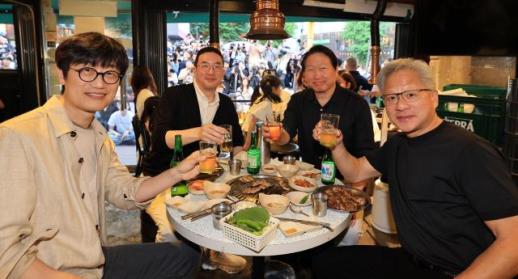 From PC cafés to pork belly: Inside Jensen Huang's unconventional Seoul summit SEOUL, June 05 (AJP) - Neon lights, the rapid clatter of keyboards in a bustling Hongdae PC café, and the unmistakable sizzle of meat hitting a hot grill—these are hardly the traditional backdrops for high-stakes tech diplomacy. Yet, on the evening of June 5, NVIDIA CEO Jensen Huang traded the polished boardrooms of Silicon Valley for the vibrant, everyday rhythms of Seoul. Immersing himself first in South Korea's grassroots digital culture, Huang eventually made his way to "Hyungnim Jeoyo," a local pork belly restaurant, setting a distinctly grounded and intimate visual tone for the night ahead. By 7 p.m., the casual outing transformed into an unprecedented gathering of industry titans. Sharing the table and bonding over a traditional "samso"—pork belly paired with soju—were SK Group Chairman Chey Tae-won, LG Group Chairman Koo Kwang-mo, and Naver founder Lee Hae-jin. This smoky, grill-side meeting echoed a similarly historic summit Huang held just seven months prior with Samsung and Hyundai leadership over fried chicken. The images that follow capture the candid, unbuttoned moments of this extraordinary evening, offering a rare glimpse into the personal, cross-cultural connections that are quietly shaping the future of global technology. 2026-06-05 22:54:20
 -
 NVIDIA CEO Jensen Huang Hosts Gathering with South Korean Business Leaders On June 5, Jensen Huang, CEO of NVIDIA, visited a PC café in Hongdae before arriving at the pork belly restaurant "Hyungnim Jeoyo" around 7 p.m. for a gathering with South Korean business leaders, referred to as a "samso" (pork belly and soju) meeting.This meeting came seven months after a similar gathering with Samsung Electronics Chairman Lee Jae-yong and Hyundai Motor Group Chairman Chung Eui-sun at a chicken restaurant last October. This time, Chey Tae-won of SK Group, Koo Kwang-mo of LG Group, and Lee Hae-jin of Naver gathered around the grill.Koo, Chey, and Lee arrived at the venue around 6:50 p.m., greeting each other and sharing drinks before Huang's arrival at approximately 7:10 p.m. Upon his arrival, the crowd erupted in cheers, with around 1,000 people gathering outside the restaurant to catch a glimpse of him.Despite the gathering of top executives, the hierarchy was clear. The eldest was Chey Tae-won (66), followed by Huang (63), Lee (59), and the youngest, Koo (48), who actively took charge. Koo helped by laying napkins in front of the senior executives and grilling pork belly at the table.When Koo spoke to reporters during the meal, he said, "I grilled a lot of meat. I worked hard on it," adding, "I think I might be a bit tipsy."Huang appeared to fully enjoy Korean dining culture. During the meal, when Lee demonstrated how to wrap kimchi and pork belly in perilla leaves, Huang followed suit, taking a big bite and dipping it in sauce.The atmosphere peaked during the "bomb shot" time. As the restaurant owner prepared a mix of soju and beer, Huang joyfully grabbed a spoon and joined in, calling out, "Go Korea! Go SK! Go LG! Go Naver!" to energize the crowd.During the meal, Huang distributed snacks and HBM chips to the gathered citizens, expressing his affection for HBM chips and stating, "We need more HBM!" Chey, while handing out HBM chips, remarked, "I feel like Santa Claus." Huang also warmly embraced Koo, saying, "He is a good friend."Huang praised Korean culture, stating, "Korean pork barbecue and chicken are the best in the world. Plus, K-pop is exciting, and K-dramas always move me to tears. Korea has always been kind to me and holds a special place in my heart."Following the pork belly gathering, the group headed to a chicken restaurant around 9:30 p.m. As they arrived, a large crowd gathered outside, and at around 10 p.m., Huang personally handed out chicken to the waiting citizens, while Chey distributed HBM chips in response to the crowd's enthusiasm.* This article has been translated by AI. 2026-06-05 22:24:00
 -
 NVIDIA Begins Establishing AI Technology Center in South Korea NVIDIA Launches Recruitment for AI Technology Center in South Korea NVIDIA has begun recruitment for its AI technology center in South Korea. According to Yonhap News on June 5, NVIDIA recently posted a job opening for a Physical AI Solution Architect based in Seoul. The recruitment focuses on digital twins and robotics. The selected candidates will collaborate with key researchers from universities and joint research institutes on various projects and proof-of-concept tasks related to Physical AI. The role will support domestic university and corporate research teams in building virtual worlds using NVIDIA's Omniverse platform based on OpenUSD, generating synthetic data, simulating robots, and fine-tuning and deploying open humanoid foundation models. Candidates are required to hold a Ph.D. in a related field and have over five years of practical experience in digital twins and robotics. Academic research achievements and experience in collaboration among academia, industry, and government are preferred. The AI technology center will serve as a research and development facility where NVIDIA collaborates with local governments, universities, and businesses to develop core technologies and submit papers to international conferences. Similar centers are currently operating in countries like Singapore and the UK. If established in South Korea, it is expected to become a major global R&D hub. Prime Minister's Office Prepares for Upcoming Confirmation Hearing As speculation grows that President Lee Jae-myung will soon nominate a successor to Prime Minister Kim Min-seok, the Prime Minister's Office has reportedly formed a preparation team for the confirmation hearing. On June 5, Yonhap News reported that Kim Young-soo, the first deputy chief of the Office for Government Policy Coordination, will lead the team, which is expected to consist of about 30 members. The office will be located at the Financial Supervisory Service training center in Jongno-gu, Seoul. The prime ministerial nominee must undergo a confirmation hearing in the National Assembly and receive approval from the plenary session before being officially appointed. Kim's nomination took 29 days from nomination to appointment. However, the Prime Minister's Office issued a press release stating that reports regarding the formation of the preparation team are unfounded. Potential candidates to succeed Prime Minister Kim include Kang Hoon-sik, chief of staff to the president; Jeong Seong-ho, Minister of Justice; and Han Seong-sook, Minister of SMEs and Startups. UK's SMR Project Sparks 'Buy British' Controversy The UK aerospace and defense company Rolls-Royce has decided to assign key processes of its small modular reactor (SMR) project to a South Korean company, igniting a 'Buy British' debate within the UK. On June 5, Yonhap News cited the Financial Times, reporting that Rolls-Royce SMR signed a design contract in April with Great British Energy Nuclear to construct three SMRs in North Wales. It subsequently selected Doosan Enerbility as a strategic partner for the production of key equipment. This decision has drawn criticism in the UK for contradicting the principle of prioritizing domestic industry in public projects. The UK government aims to source 70% of the supply chain for the project from domestic products. Rolls-Royce has previously indicated that the British content in the SMR could reach as high as 78%. However, concerns have been raised that with South Korea handling key components, the UK may be relegated to producing relatively low-value parts. Political figures have also raised concerns. Liam Byrne, chair of the House of Commons Business and Trade Committee from the ruling Labour Party, plans to send a letter to ministers requesting clarification on whether this decision aligns with the government's policy of protecting domestic industry. Garreth Stace, director general of UK Steel, emphasized, "The revival of the UK nuclear sector should create opportunities for jobs and industrial capabilities within the UK." Protests Expand at Vote Counting Centers, Reaching 2,000 Participants Protesters who had previously blocked the second polling station in Jamsil, Songpa-gu, have now moved to the vote counting center, increasing their numbers. On June 5, Yonhap News reported that while police deployed over 1,000 officers to transport the ballot boxes, the protesters occupied the entrance of the counting center, preventing about 100 election commission staff, facility personnel, and journalists from leaving. The protesters gathered around the Handball Stadium in Olympic Park, starting with 300 in the morning and swelling to 2,000 by the afternoon. Although there are a total of eight entrances to the stadium, including the first and second floors, the protesters have effectively blocked all access points. Even after the counting was completed, access remained restricted, forcing some staff to exit through windows. The protesters allowed movement only after verifying identities and reportedly intensified controls on certain media outlets. The protesters are demanding a re-election, claiming they cannot accept the counting results. They are encouraging further gatherings through related online channels. Earlier, the second polling station in Jamsil had extended its closing time due to a shortage of ballots on the day of the June 3 local elections, leading to a delay of about 35 hours in transporting the ballot boxes to the counting center after the protesters blocked their removal. Police deployed approximately 1,000 riot officers that day to disperse the protesters and secure the ballot boxes. Russia Confirms Putin Received Zelensky's Letter on Peace Talks Russian President Vladimir Putin has received a letter from Ukrainian President Volodymyr Zelensky regarding discussions on a peace proposal, according to Russia on June 5. On June 5, Yonhap News reported that Dmitry Peskov, spokesperson for the Kremlin, stated in an interview with the daily Izvestia that "a written report was delivered yesterday (June 4), and the media reports were also conveyed to the president." President Putin has reviewed the contents of the letter, and Peskov mentioned that the relevant topics are likely to be discussed at the SPIEF plenary session that day. However, he refrained from providing a direct response regarding Putin's reaction, stating, "I do not want to get ahead of myself." The day before, President Zelensky publicly urged President Putin to engage in direct talks to end the war in a letter he sent. Former President Donald Trump expressed support for this, stating, "We need to meet and get things done." Peskov expressed hope for the resumption of stalled peace negotiations, noting that communication with the U.S. continues through existing channels. He pointed out inconsistencies in statements from the White House but acknowledged that President Trump genuinely wishes for a resolution to the situation. Additionally, Peskov mentioned in an interview with RIA Novosti that there is a "theoretical 50%" chance that a summit between President Putin and President Trump could take place this summer, stating it could happen or not. Seoul Southern District Prosecutors' Office Clears Allegations of Evidence Tampering The Seoul Southern District Prosecutors' Office has concluded its investigation into the so-called "evidence tampering allegations" with a decision of no charges. On June 5, Yonhap News reported that the Southern District Prosecutors' Office announced in a press release that "there was no evidence to support claims that the individuals responsible for seized items intentionally damaged or disposed of the evidence and systematically concealed it." This conclusion aligns with the findings of the Supreme Prosecutors' Office and the special investigation team led by Ahn Kwon-seop, which determined that while there were operational errors, they did not warrant criminal charges. The allegations of evidence tampering arose during a search and seizure operation at the home of Jeon Seong-bae, known as the "Gunjin Law Master," in December 2024. During the operation, cash bundles worth approximately 50 million won, including Bank of Korea evidence seals, were secured, but it was later revealed that the inspection information attached to the cash had gone missing during the prosecution phase. The Supreme Prosecutors' Office concluded that while there were operational oversights, there was no evidence of organized concealment from higher-ups. The special investigation team also confirmed deficiencies in the documentation of seized items but found no objective evidence to substantiate the allegations. The special investigation team effectively concluded that there were "no charges" in March and referred the case to the prosecution. After approximately three months of additional review, the Southern District Prosecutors' Office stated, "After a thorough examination of the records referred by the special investigation team, we found the conclusion to be valid and no evidence to support the allegations, leading to this disposition." However, since the allegations originated from the Southern District Prosecutors' Office, there may be controversy over the "self-exoneration" decision. JTBC Journalists Announce Legal Action After Assault by Protesters The JTBC chapter of the Korean Journalist Association has announced plans to take legal action after some protesters, claiming election fraud, assaulted its reporters during the June 3 local elections. On June 5, Yonhap News reported that the JTBC chapter issued a statement saying, "An unprecedented situation occurred where protesters claiming election fraud confined and assaulted JTBC reporters." They called for severe punishment for the perpetrators. The journalists reported that while covering the counting situation at the Handball Stadium in Olympic Park, the protesters surrounded the entire venue and blocked the entrances, forcing them to escape through windows due to safety concerns. They claimed that when a reporter exited through a window, the protesters demanded identification and aggressively obstructed their movement, physically surrounding them. The JTBC chapter stated that they have secured footage of the incident and plan to pursue legal action against the assailants. They are also considering legal measures against the public disclosure of journalists' personal information and the spread of false information via social media. The JTBC chapter emphasized, "Violence against journalists is an infringement on press freedom and the public's right to know," calling it a significant threat to the foundations of democracy.* This article has been translated by AI. 2026-06-05 22:03:00
 -
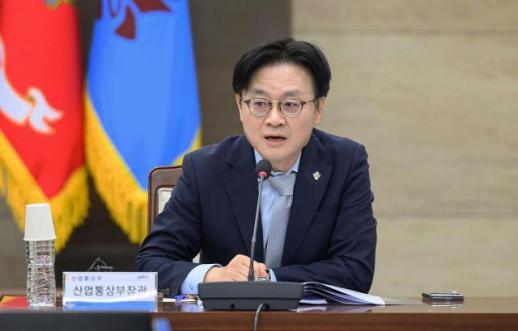 Korean Minister Kim Jong-kwan: U.S. Commerce Secretary Says Not to Worry About Section 301 Tariffs Korean Minister of Trade, Industry and Energy Kim Jong-kwan stated that U.S. Commerce Secretary Howard Lutnick reassured him not to worry about potential increases in tariffs due to the Section 301 investigation by the Trump administration. This investigation raised concerns that Korea's tariff burden could exceed the agreed 15% between the two countries last year. In an appearance on MBN News Wide on June 5, Kim explained details of his video meeting with Lutnick on June 3. "I was worried, but Secretary Lutnick said not to worry. He indicated that the originally agreed 15% would remain in place," Kim said. He added, "This is part of our ongoing investment projects in the U.S., which were built on mutual trust between the two leaders. We discussed how to ensure these efforts succeed." Earlier, on June 2, the U.S. Trade Representative (USTR) announced the results of its Section 301 investigation related to forced labor, warning of new tariffs affecting 60 countries. Among these, 45 countries, including Korea, China, and Japan, could face a 12.5% tariff, while 14 countries and the European Union are expected to see a 10% tariff. However, concerns have been raised that the final tariff rates could exceed 15% as the Trump administration plans to release additional findings related to overproduction. Last year, Korea agreed to invest $350 billion (approximately 540 trillion won) in the U.S. in exchange for reducing mutual tariffs from 25% to 15%. However, the mutual tariff based on the International Emergency Economic Powers Act (IEEPA) was ruled invalid by the U.S. Supreme Court this year. In response, the Trump administration announced a 10% global tariff based on Trade Act Section 122, which is set to expire in July. The administration is planning to impose new tariffs based on Section 301 as a replacement. Regarding Korea's investment in the U.S., Kim mentioned, "We will launch the U.S. Investment Corporation on June 18. We are currently having extensive discussions among our teams to determine if this project is viable and mutually beneficial for both countries." He emphasized, "I believe the trust built over the past year, especially between the two leaders, remains strong. We are continuously discussing strategic mutual benefits and ensuring the commercial viability of these projects." Meanwhile, when asked about this year's export outlook, Kim stated, "I officially expect our exports to exceed $900 billion this year. We are currently ranked around seventh in exports, but we aim to break into the top five." 2026-06-05 22:00:00
 -
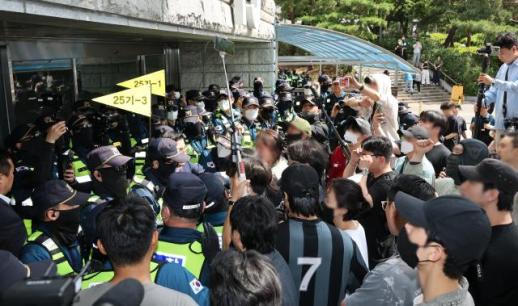 JTBC Journalists Report Assault by Protesters Claiming Election Fraud The JTBC branch of the Korean Journalists Association announced plans for legal action after some protesters, rallying against a shortage of ballots during the June 3 local elections, assaulted reporters. According to Yonhap News on June 5, the JTBC branch stated in a press release, "An unprecedented situation occurred where protesters claiming election fraud confined and assaulted JTBC reporters," urging for severe punishment for the perpetrators. The statement continued, "While covering the vote counting at the Olympic Park handball arena, the protesters surrounded the venue and blocked the entrances, forcing reporters to escape through windows due to safety concerns." It was also reported that the protesters threatened a reporter attempting to exit through a window, demanding identification and physically restricting their movement. The JTBC branch confirmed it has secured footage of the incident and intends to pursue legal measures against those involved. Additionally, the branch is considering legal action against the public disclosure of reporters' personal information and the spread of false information via social media. The JTBC branch emphasized, "Violence against journalists is an infringement on press freedom and the public's right to know," calling it a serious threat to the foundations of democracy.* This article has been translated by AI. 2026-06-05 21:57:00