
Journalist

Samuel Garrett
-
 U.S. Energy Exports Hit Record as Hormuz Closure Spurs Demand Amid Iran War The closure of the Strait of Hormuz amid the Iran war has pushed U.S. energy exports to record levels. According to Yonhap News Agency and The Wall Street Journal, Asian and European buyers cut off from Middle Eastern supplies are turning to U.S. crude oil and liquefied natural gas, or LNG. Last week, U.S. exports of crude and petroleum products averaged 12.9 million barrels a day, a record high. U.S. exports of crude and LNG to Asia in March and April rose about 30% from a year earlier. The surge reflects the Hormuz blockade, which has disrupted purchases of Middle Eastern energy. Countries long dependent on the region have had little choice but to seek U.S. supplies. It is unclear whether the shift will last after the war. Many Asian refineries are designed for Middle Eastern crude, and the United States cannot increase exports without limit. Tsuneo Watanabe, a researcher at the Sasakawa Peace Foundation, a Japanese think tank, said, “If the Strait of Hormuz reopens and Middle East energy prices return to normal, U.S. crude and gas will no longer be attractive.” 2026-04-25 15:39:15
 -
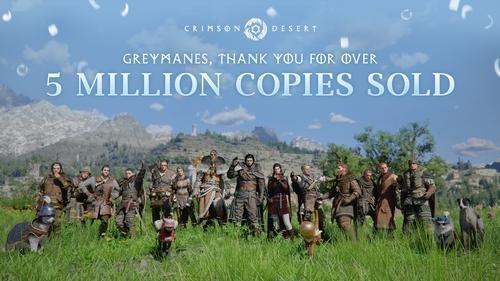 S. Korean PM lauds Pearl Abyss' 'Crimson Desert' for 5 mln sales, pledges industry support SEOUL, April 25 (AJP) - South Korean Prime Minister Kim Min-seok congratulated video game developer Pearl Abyss (263750.KQ) on the record-breaking global sales of its latest title, "Crimson Desert," pledging proactive government support to bolster the country's gaming industry across broader platforms. In a social media post late Friday, Kim highlighted the action-adventure game's milestone of surpassing 5 million copies sold just 26 days after its release, calling the feat a "splendid achievement." Kim praised the developers for captivating global users with a "living game world created entirely with their own technology, photorealistic graphics, and active communication." He added that the game seamlessly integrated South Korean cultural elements, such as Taekwondo and traditional cuisine, thereby "opening a new chapter for K-content." The prime minister framed the title's commercial success as a significant indicator of the domestic industry's potential abroad. "This is an important turning point showing that the domestic gaming industry can expand and leap forward across various platforms, including consoles," Kim wrote. "The government will take responsibility and actively support this to create an environment where K-games can shine as a core pillar of K-content." "Crimson Desert" launched on March 20 and immediately set a record for the fastest-selling South Korean packaged game, moving 2 million copies on its first day. Global sales reached 3 million by the fourth day, 4 million by April 1, and crossed the 5 million mark on April 15. Separately, Pearl Abyss released the game's first official soundtrack album, featuring 75 tracks, on domestic and global streaming platforms on Friday. 2026-04-25 15:29:23
 -
 Appeals court rejects COVID-19 damages suit by Seoul detention center inmates, families Inmates and their families who sued the South Korean government over a COVID-19 outbreak at Seoul Eastern Detention Center in 2020 have also lost on appeal. According to Yonhap News Agency on Friday, the Seoul Central District Court’s Civil Appeals Division 5-1 recently ruled against 33 inmates and family members who sought damages from the state and Choo Mi-ae, the justice minister at the time who oversaw correctional facilities, upholding the lower court’s decision. The panel said it did not see a link between a first wave of infections centered on staff that began Nov. 17, 2020, and a second wave centered on inmates that continued after Dec. 7 that year. The court said it was difficult to conclude the inmate cluster stemmed from the earlier staff outbreak. “The similarity between the viruses in the first and second outbreaks is low, and testing conducted during the first outbreak showed a low positivity rate among inmates,” the court said, adding that it was reasonable to view the routes of introduction as different. The court also rejected the plaintiffs’ claim that infections spread because close contacts were not separated by transmission route. It said the detention center distinguished close contacts using a clear standard of confirmed versus unconfirmed cases, and that identifying each confirmed patient’s route of infection would have been very difficult given time and space constraints. * This article has been translated by AI. 2026-04-25 14:39:16
 -
 South Korea’s Kim Min-seok hails Pearl Abyss’ ‘Crimson Desert’ as milestone for K-games Prime Minister Kim Min-seok congratulated Pearl Abyss on its game “Crimson Desert” surpassing 5 million copies sold just 26 days after release. According to Yonhap News Agency on the 25th, Kim wrote the message on social media the previous evening while sharing an article about the sales milestone. Kim said the title won over players worldwide with a “living game world” built with the developer’s own technology, lifelike graphics and active communication with users. He added that it opened “a new chapter” for K-content by naturally incorporating Korean elements such as taekwondo and Korean food. Kim also said the government would help promote the game industry. Calling it “an important turning point” showing the domestic game industry can expand to platforms including consoles, Kim said the government would “actively support” the sector with a sense of responsibility. He said he would work to create conditions for K-games to shine as a pillar of K-content. “Crimson Desert” was released on March 20 and sold 2 million copies worldwide on its first day, setting a record for the fastest and highest sales for a Korean-made packaged game. It topped 3 million copies on day four, surpassed 4 million on day 12 on April 1, and reached 5 million as of April 15, its 26th day on the market. * This article has been translated by AI. 2026-04-25 14:24:16
 -
 Cha&Mom Phytocerin Outdoor Play Sun Stick Offers Gentle, Hygienic UV Protection Sunscreen is a staple in my bag. As the weather warms and outdoor reporting increases ahead of the June 3 local elections, choosing a product has felt more important — and I have become more careful about what I carry. The one I have been using is Cha&Mom’s ‘Phytocerin Outdoor Play Sun Stick,’ from Cha Bio F&C’s family skin-health brand. As the name suggests, it is a stick, so it goes on quickly without getting on your hands. That makes it easier to use hygienically outdoors, where washing up is not always an option. It glides on smoothly and, even with repeated applications, feels neither sticky nor heavy. It dries down to a soft, powdery finish. It also has a banana scent, which helps children use it without resistance. In summer, it does not take much movement to start sweating. The company says it applies an “Activeproof Solution” so UV protection lasts longer even with sweat or heavy activity. In my use, the dry finish held up relatively well while I moved quickly to follow election candidates, and after a child ran around for a long time. That can mean fewer touch-ups. The ingredients are also positioned as gentle. The product description says it uses zinc oxide, a non-nano mineral UV filter, to reduce skin burden, and that clinical testing found it nonirritating. The “Phytocerin” in the name is a proprietary ingredient developed by Cha Bio dermatological science specialists; the company says it helps soothe skin, strengthen the skin barrier and form a moisturizing layer. The white cast often associated with sunscreen was not especially noticeable, making it easy to swipe on without a mirror — including for children. With its simple, hygienic application and a formula intended for both kids and adults, Cha&Mom’s ‘Phytocerin Outdoor Play Sun Stick’ is likely to stay in my bag this summer. _Cha&Mom ‘Phytocerin Outdoor Play Sun Stick,’ 25 grams* This article has been translated by AI. 2026-04-25 14:03:18
 -
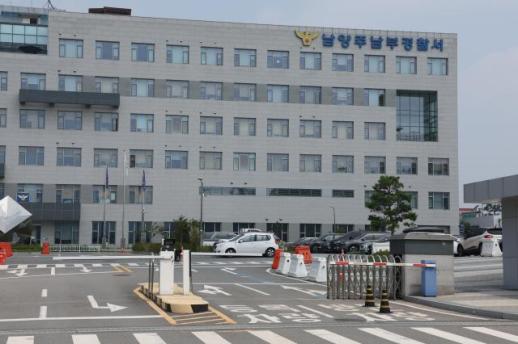 South Korean nightclub worker arrested for attempted murder of teenager SEOUL, April 25 (AJP) - A 20-year-old employee of an adult entertainment establishment has been arrested on suspicion of attempted murder after allegedly stabbing a teenager during a dispute that began while soliciting customers, police said Saturday. The Namyangju Nambu Police Station said the suspect, identified only as A, is accused of stabbing a male teenager in the chest and abdomen at approximately 2:30 a.m. Thursday. The incident took place in an underground parking garage of a commercial building in Hwado-eup, Namyangju, Gyeonggi Province. The victim was transported to a nearby hospital for emergency surgery and remains hospitalized for treatment. According to investigators, the altercation began on the street when A, who was working as a promoter for a local venue, encountered the victim, who was reportedly intoxicated at the time. Following a verbal exchange, A allegedly returned to his place of employment to retrieve a weapon before moving to the parking garage with the victim to carry out the attack. A local court issued an arrest warrant for the suspect on Friday, citing concerns that he might attempt to flee. Police officers apprehended A at the scene immediately following the stabbing. Authorities have secured CCTV footage from the area and are currently analyzing the video to determine the precise circumstances of the dispute. The investigation is ongoing as police work to establish the specific motive behind the violent escalation. 2026-04-25 13:54:37
 -
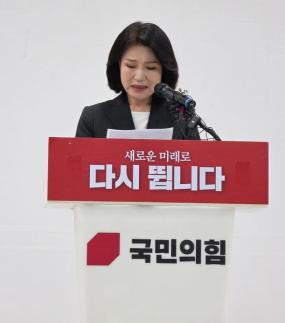 Lee Jin-sook Drops Out of Daegu Mayor’s Race After PPP Cutoff Lee Jin-sook, a former chair of the Korea Communications Commission who was cut from the People Power Party’s primary for Daegu mayor, said April 25 she will not run in the June 3 local election. With Rep. Joo Ho-young also having declared he will not run, the party’s internal turmoil over the Daegu race appeared to ease. Speaking at a news conference at the People Power Party’s Daegu office, Lee said, “Today, I am stepping down from the position of preliminary candidate for Daegu mayor.” She added, “When the People Power Party’s Daegu mayoral candidate is chosen tomorrow (26th), I will do my best to help that person defeat the Democratic Party candidate. I will help protect Daegu from the reckless Democratic Party government.” Lee again called the party nomination committee’s decision to cut her unfair, but said she would not run as an independent. “I also had the desire to leave the party and run as an independent to receive the judgment and choice of citizens,” she said. But she said she was held back by concerns that “if even Daegu is handed over to the left, what will happen to the Republic of Korea,” adding that she feared Daegu, a conservative stronghold, could be overtaken by “socialist populism.” Asked whether she might run in a possible parliamentary by-election that could arise from the Daegu mayoral contest, Lee did not answer directly. “As I said in my statement, I have only one 마음 — to protect Daegu as the last bastion of liberal democracy,” she said. Asked whether she had further meetings with party leader Jang Dong-hyuk or other members of the nomination committee, Lee said Jang met her before leaving for the United States and that they met again recently to discuss the Daegu situation. “We discussed how to protect Daegu, and there was also common ground,” she said. * This article has been translated by AI. 2026-04-25 13:51:17
 -
 Beyond the Abraham Accords: A Call for a Noah Accord to Achieve Peace in the Middle East Wars often begin with justifications, but they ultimately leave behind devastation, bloodshed, and bills to pay. The current war in Iran, initiated by the United States and Israel, follows this pattern. It started under the banners of 'security' and 'deterrence,' but as time passes, the rapid depletion of military supplies, declining national economies, and a contracting global economy have become evident. What runs out first are not victory flags but missile stockpiles and public patience.Recent analyses from U.S. media and think tanks starkly illustrate this reality. Following the 'Grand Fury' operation, the U.S. military has used over 1,100 long-range stealth cruise missiles (JASSM-ER), leaving approximately 1,500 in stock. Each missile costs around 16 million won, originally prepared for a potential full-scale conflict with China. Nearly half of these have been expended in the Iranian theater. More than 1,000 Tomahawk missiles have also been launched, costing about 53 million won each, which is ten times the annual procurement amount. Additionally, over 1,200 Patriot interceptor missiles have been used, exceeding last year's total production by double.The war speaks not only through gunfire but also through numbers. The cost of ammunition used in the first two days alone reached $5.6 billion, with total war expenses already surpassing $28 billion to $35 billion. Daily costs are nearing $1 billion. This is not merely military spending; that money could have funded healthcare for the American middle class, student loans for young people, or the restoration of aging urban infrastructure.Ultimately, the burden of war falls on the citizens.However, the more fundamental issue of this war is not just the depletion of U.S. military supplies. Israel is also no longer in a position to maintain 'unlimited defense.' The Iron Dome, regarded as the world's most advanced air defense system, has shown clear limitations in this prolonged conflict. In a scenario where short-range rockets, drones, ballistic missiles, and cruise missiles are launched simultaneously, the Iron Dome must prioritize interception, leading to saturation in some critical areas. The cost of a single interceptor missile exceeds the price of dozens of attack drones. When defense becomes more expensive than offense, sustainable warfare becomes impossible.Israel, in particular, has had to manage simultaneous threats from the northern Hezbollah front, the Gaza Strip, and long-range threats from Iran. Air defense is not merely a technical issue but a matter of inventory depth, ultimately determining national security. No matter how sophisticated the system, if interceptor missiles are in short supply, the skies will be vulnerable. In fact, some strategic facilities and industrial infrastructure are under threat, and citizens' psychological fatigue is rapidly increasing. The myth of a 'perfect shield' has cracked in this war.Iran's situation is no different; it is even more structural. Iran has maintained a 'resistance axis' centered around the Revolutionary Guard, but in this prolonged conflict, missile production facilities, underground storage sites, drone assembly plants, air defense radar networks, and command and control systems have been heavily targeted. The loss of long-range ballistic missile production lines and key air defense bases is difficult to recover in the short term. While missile launches may continue superficially, if sustainable production capacity collapses, the ability to conduct war will rapidly weaken.Sanctions, foreign exchange depletion, difficulties in procuring industrial components, and restrictions on importing precision guidance systems are already pressuring the Iranian economy. Missiles cannot be produced by will alone; semiconductors, special metals, precision machinery, and supply chains are necessary. The longer the war drags on, the greater the likelihood that Iran's economy will collapse before its military.Ultimately, both Israel and Iran have entered a phase where they must avoid mutual destruction rather than calculate victory. One side's defense is dwindling, while the other side's production base is collapsing. The United States is depleting its ammunition stockpiles, and the alliance front in Europe and Asia is weakening. This is no longer a question of 'who will win.' The key fact is that continued fighting will weaken everyone.More seriously, the justification for the war itself is rapidly running out. The U.S. has spoken of eliminating nuclear threats, while Israel has claimed self-defense for survival. Iran has shouted resistance, dignity, and anti-imperialism. However, as time passes, each side's justification loses its persuasiveness. Civilian fatigue, international fatigue, and ally fatigue accumulate, leaving no one with a clear answer to the question of 'why are we fighting.'Wars are inherently more political when they are short. The longer they last, the more commercial they become. The military-industrial complex thrives while citizens' lives crumble. Oil prices rise, exchange rates fluctuate, and supply chains become unstable again. For a trade-dependent country like South Korea, this is a matter of survival. A surge in oil prices creates a chain reaction of shocks across petrochemicals, aviation, logistics, and food. Exchange rate instability dampens corporate investment sentiment and raises the cost of living for households. A war without justification ultimately holds the entire global economy hostage.The question is now clear: Will we continue to fight, or will we choose to survive?The difficulty of negotiations for both sides is evident. First is the issue of regime. For Iran, nuclear capability is not just a technology but an insurance for regime survival. Iran has seen what happened to Libya's Gaddafi after he gave up his nuclear program. Conversely, for Israel, Iran's nuclear capability is an existential threat. The insecurity of one side becomes the fear of the other.Second is domestic politics. The Israeli leadership's political foundation shakes the moment they lose their hardline stance. Iran's revolutionary regime also cannot easily choose retreat. The United States, facing an upcoming election, finds it politically difficult to withdraw from the Middle East. While peace is necessary, politicians often prioritize approval ratings over peace.Third is the regional order. Saudi Arabia, the UAE, Turkey, Qatar, Egypt, and even Russia and China all have vested interests. The Middle East is not a chessboard but a multi-layered Go board, where one move can shake multiple directions. Therefore, a structural agreement is needed, not just a simple ceasefire.Here, we need new imagination. It is time for a Noah Accord that goes beyond the Abraham Accords. The Abraham Accords marked a turning point in Middle Eastern diplomacy in 2020 when Israel, the UAE, and Bahrain first agreed to normalize relations under U.S. mediation, followed by Sudan and Morocco. The key point is that the previous official stance of 'no normalization with Israel before resolving the Palestinian issue' has been shaken in the face of reality. The U.S. provided security guarantees, arms sales, and economic support, while Arab nations chose to contain Iran and secure their interests. The process involved strong diplomatic coordination from Washington, confidential working-level negotiations, and official signing at the White House. Reality took precedence over ideals, and national interests over emotions.However, this was primarily an adjustment of interests between states. What is now needed is a deeper civilizational agreement. We must return to a more fundamental common ancestor than 'the father of faith' Abraham. That ancestor is Noah, 'the new ancestor of humanity.' According to Genesis 10, Elam, understood as the ancestor of Iran, is placed in the lineage of Shem, Noah's son. Israel is also a descendant of Shem, and Abraham is above that lineage. Among Shem's descendants is Eber, from which the term 'Hebrew' is derived. Ultimately, Iran and Israel are not distant civilizations but brother nations that have diverged from the same root.AJP, the English news agency of AJU News Corporation, has always been uncomfortable with the media's simplistic interpretation of the Middle East as 'Arab versus Israel.' The Middle East is not solely an Arab world. There are Persians, Turks, Kurds, and Jews. Iran is not an Arab nation. The 5,000-year-old civilization of Persia is independent. Any so-called Middle East expert should at least be aware of this historical structure.Jeremiah records the judgment of Elam's pride but also states, 'In the latter days, I will bring back the captives of Elam' (Jeremiah 49:39). Judgment and restoration coexist. This is not just religious comfort but also insight into international politics. Complete destruction does not create a sustainable order. Only recoverable peace can forge the future.The Noah Accord must start here. First, the nuclear issue must be addressed within the framework of regime guarantees. Second, a multilateral security guarantee system for the region, including Iran and Israel, must be redesigned. Third, economic cooperation, supply chain stability, and joint energy management systems must be integrated. Peace does not come from declarations; it arises from creating structures for survival together.If the Abraham Accords were a diplomatic agreement, the Noah Accord must become an agreement for survival. In a reality where no one can achieve complete victory and no one can completely disappear, coexistence and mutual prosperity are the only exit.The Art of War states, 'The best victory is to win without fighting' (上兵伐謀), and the Tao Te Ching says, 'The strong are broken, and the soft survive' (柔弱勝剛强). The Bible also states, 'Blessed are the peacemakers' (Matthew 5:9). Civilization is ultimately built on order, not the edge of a sword.What Iran and Israel need now is not more missiles but more imagination. Not more military supplies, but more trust. The reconciliation in the Middle East that began in the name of Abraham must now expand in the name of Noah.Military supplies have been depleted, and the justification for war is running out. Now, only the choice remains: Will we continue to fight and collapse together, or will we remember our shared roots and live together?Peace in the Middle East is no longer just a regional issue. It is a matter of global economic stability, South Korea's national interests, and the next chapter of human civilization. It is time for agreements, not gunfire, to change history. 2026-04-25 13:47:04
 -
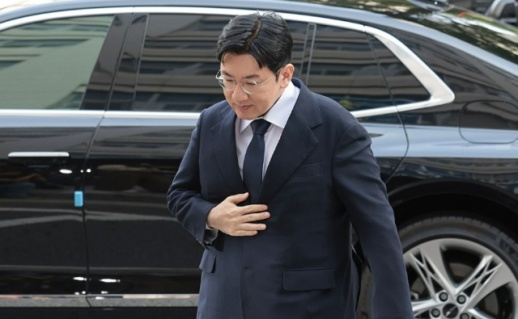 BTS Founder Bang Si-hyuk Faces Legal Scrutiny Amid K-Series Growth The law must apply equally to all, including individuals. The integrity of the capital market relies on trust, which is built on fair information and transparent processes. Therefore, allegations of violations of capital market laws surrounding Bang Si-hyuk, chairman of HYBE, cannot be taken lightly. If it is true that he misled existing shareholders about the company's public offering plans before its listing and transferred shares to a specific private equity fund, only to realize substantial profits through the IPO, he must face the full force of the law. Markets do not operate on emotion or reputation; they function based on contracts, disclosures, and facts. The recent decision by prosecutors to reject a warrant for Bang's arrest and request further investigation is significant. This indicates that there is insufficient evidence to justify an arrest at this stage, not a declaration of innocence. The fundamental principle of criminal justice is to conduct investigations without detention. Economic crimes often leave behind documentation, contracts, accounting records, and internal reports. Unless there is clear evidence of flight risk or potential destruction of evidence, arrest should be a last resort. Moreover, Bang is already a globally recognized businessman. His domestic and international activities are public, and he has cooperated diligently with repeated summons for questioning. While equality before the law is essential, the proportionality and rationality of law enforcement are also components of justice. Arrest is a means of investigation, not punishment. Symbolic arrests to appease public sentiment lean more toward emotional politics than the rule of law. We should pursue justice without resorting to preemptively detaining individuals. However, this case cannot simply be viewed as a judicial risk for one businessman; it reflects a broader historical context. The name Bang Si-hyuk has transcended individual identity to symbolize the founder of BTS, a global cultural asset. BTS is no longer just an idol group; they represent South Korea's cultural sovereignty on the world stage and are the epitome of K-culture. The year 2026 is significant. With members returning from military service, the world is once again anticipating BTS. The fanbase, known as ARMY, is not merely a fan club but a vast cultural community that transcends borders. The competition to host BTS concerts spans from Seoul to Mexico, Vietnam, the United States, Europe, the Middle East, and Latin America, entering the realm of diplomacy. In Mexico, the president has expressed hopes of hosting a BTS concert. This request goes beyond mere entertainment; it represents a massive economic event that can enhance national image, boost tourism revenue, and invigorate youth culture and consumption. Similarly, Vietnam is seeking a BTS concert as part of its cultural aspirations and national branding strategy. The desire of a nation's highest authority for a specific group's performance underscores the idea that culture is a form of national power. BTS's world tours cannot be evaluated solely by ticket sales. They trigger a chain reaction across various industries, including aviation, hospitality, retail, cosmetics, fashion, food, and platforms. A single concert in Seoul can generate billions in economic impact, with international tours amplifying this effect. The spending around concert venues, along with the global exposure of Korean brands, enhances national image and attracts tourism, creating a vast economic ecosystem. As K-food opens dining opportunities, K-beauty transforms lifestyles, K-defense builds national trust, and K-semiconductors lay the industrial foundation, BTS serves as the heart connecting all these K-series elements to global sentiments. Additionally, K-dramas and K-cinema must be included in this narrative. The global impact of "Squid Game" and the prestige of "Parasite" have demonstrated that the Korean cultural industry is not merely a commodity for export but a force capable of reshaping global civilization. K-dramas have transformed Korean narratives into universally relatable stories, while K-cinema poses fundamental questions about humanity, class, family, and desire in uniquely Korean ways. If K-pop shakes the world with rhythm, K-dramas captivate hearts with storytelling, and K-cinema provokes thought, this is not just cultural export; it is about instilling the spirit and sensibility of South Korea in the world. Culture transcends borders and languages, leaving a lasting imprint in memory. This is true soft power. Thus, the president's global diplomacy cannot be the sole responsibility of the foreign and industry ministries. Discussions at summits should include not just semiconductors and defense but also K-pop, K-dramas, and K-cinema. Diplomatic relations between heads of state do not end with contracts; they also involve emotions, trust, image, and goodwill. Many world leaders are familiar with BTS, watch Korean dramas, and discuss Korean films. Culture is often the first to open hearts. This is why culture must accompany the president on international trips. Industry creates interests, while culture fosters goodwill. Interests may change, but goodwill endures. We are no longer in an era where diplomacy is solely about tanks and treaties. It is a time for a comprehensive national strategy that includes concerts, films, dramas, and food. In light of increasing global economic uncertainty, we need a new narrative for growth. Amid U.S.-China tensions, supply chain restructuring, instability in the Middle East, and soaring energy prices, the South Korean economy is once again called to combine strategic and cultural industries. Manufacturing alone is insufficient, nor is culture alone enough. Technology and emotion, industry and narrative must go hand in hand. At the intersection of these lies BTS and the K-series. Of course, this does not mean we should halt legal proceedings for the sake of national interest; that would be more dangerous. The law must be fair to everyone. However, enforcing the law without considering national interest is also unwise. A state is not merely a machine for punishment. The purpose of law is the stability and sustainability of the community. If the truth can be sufficiently uncovered without detention, we must carefully consider whether it is necessary to damage a national asset in this manner. We often place justice and national interest at opposing ends. However, true national interest does not come from abandoning justice, and genuine justice does not ignore the future of the entire community. The rigor of the law and national strategy should not be conflicting concepts but harmonized values. Confucius advised that a gentleman should prioritize righteousness, and the I Ching speaks of carrying all things with deep virtue. A leader's path is to benefit all with profound virtue. The Tao Te Ching states that a great nation should lower itself to gather all waters. The same applies to governance. Laws should be established while considering the nation, and principles should be upheld while looking to the future. South Korea stands at a crucial crossroads. Beyond the question of Bang Si-hyuk's guilt or innocence, we must ask how to protect national assets and realize justice. The return of the full BTS lineup is not just a comeback; it signifies the resurgence of K-pop and the entire K-series, including K-dramas, K-cinema, K-food, and K-defense, moving back to the center of the world stage. In court, guilt must be contested until the end. However, detention is not synonymous with justice. What is needed now is not showy severity but a calm legal approach and mature national judgment. This is not just about one individual, but about how South Korea will handle its own future. The judgment of the law and the completion of the K-series. At this crossroads, we must prioritize principles over emotions and consider national interest within those principles. That is the true essence of truth, justice, and freedom. 2026-04-25 12:36:36
 -
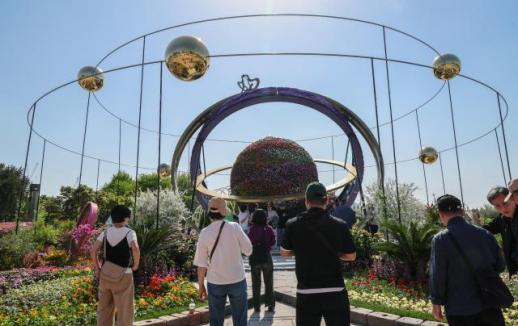 Sea of colorful bloom at Goyang flower festival SEOUL, April 24 (AJP) -Spring arrives in full and assorted colors at Ilsan Lake Park as the 2026 Goyang International Flower Festival opens, drawing visitors into a vast landscape of blooms just northwest of Seoul. Under the theme “Flowers Color Time,” the 17-day festival unfolds across a 250,000-square-meter venue, where more than 100 million flowers shape gardens, installations and winding paths along the lakeside. Large-scale floral sculptures rise against the water, while walking gardens and shaded rest areas offer a slower pace for visitors taking in the season. Families gather around themed spaces featuring Pengsoo, adding a playful touch to the spring outing. Inside, exhibition halls shift the mood from open-air spectacle to curated artistry. Floral designers from around the world present intricate arrangements, while an international flower exhibition brings together participants from some 30 countries, showcasing rare species and diverse plant life. Now in its 18th year, the festival has grown into one of the country’s best-known spring events, attracting more than 9 million visitors over time and cementing its place as a seasonal escape near the capital. 2026-04-25 12:14:46