
Journalist

Samuel Garrett
-
 Doosan Enerbility Seeks Foothold for Vietnam Nuclear Project, Led by Chairman Park Ji-won Doosan Enerbility said it is expanding its global push by securing a foothold to take part in Vietnam’s planned new nuclear power projects, led by Chairman Park Ji-won. The company said Thursday that Park and other top executives joined President Lee Jae-myung’s business delegation during his visit to Vietnam and discussed cooperation on new nuclear power plants with Vietnamese government officials and key figures in the energy industry. Park attended a business roundtable and business forum in person, the company said. Vietnam plans to build Ninh Thuan nuclear power plant units 1 and 2 by 2035. Russia has won the contract for Unit 1, while bidding for Unit 2 is still underway. The combined project is valued at about 30 trillion won. Vietnam also plans to secure an additional 8 gigawatts of nuclear capacity by 2050. The company said “Team Korea” — made up of the Ministry of Trade, Industry and Energy, Korea Electric Power Corp. and Doosan Enerbility — is widely seen as a strong contender for Ninh Thuan Unit 2. South Korea and Vietnam signed a memorandum of understanding on nuclear cooperation following the summit, it said. Yoon Yo-han, head of Doosan Enerbility’s marketing division, attended a business forum in Hanoi and signed separate agreements with local firms PTSC and PETROCONs on cooperation for new nuclear projects and supply chain development, the company said. Both firms are subsidiaries of Vietnam National Oil and Gas Group, or PVN, which is leading the Ninh Thuan project. Doosan said the agreements help lay the groundwork for a local supply chain in nuclear equipment and construction, strengthening its position for participation in the Ninh Thuan Unit 2 project. “Cooperation between the two countries, expanded through joint public-private efforts to participate in Vietnam’s new nuclear power projects, will lead to meaningful results,” Park said. “Doosan Enerbility will do its utmost in its role so that Team Korea, which has already proven its competitiveness in the UAE and the Czech Republic, can achieve results in Vietnam as well,” he said.* This article has been translated by AI. 2026-04-23 22:16:00
 -
 OCI Holdings Q1 Operating Profit Falls 77.7% to 10.8 Billion Won OCI Holdings said in a regulatory filing on the 23rd that it posted first-quarter consolidated revenue of 892.4 billion won, operating profit of 10.8 billion won and net profit of 8.8 billion won. Revenue fell about 77% from a year earlier. The company said it has continued a recovery trend after returning to the black in the fourth quarter of last year. The company said higher sales at key units helped drive the profit, excluding Malaysia-based OCI TerraSus, which underwent legal restructuring in the first quarter. The units cited were OCI Enterprises, a U.S. solar holding company; OCI SE, which operates the Saemangeum combined heat and power plant; and operating company OCI. OCI Energy, a unit of OCI Enterprises, contributed to the operating profit increase as remaining proceeds from the sale of the Sun Roper project last year were recognized as revenue, the company said. OCI Energy is pursuing the sale of a large-scale 500-megawatt project. If related procedures are completed within the second quarter, the company said, it expects to recognize new revenue and profit. Chairman Lee Woo-hyun said silicon-based technology is increasingly seen as extending beyond terrestrial and space applications into next-generation semiconductors and data infrastructure. “OCI Holdings will take this trend as an opportunity for future new businesses and will continue to enhance product competitiveness so we can meet customers’ next-generation technology shifts, including silicon photonics,” he said. In the fourth quarter of last year, OCI Holdings reported revenue of 810.6 billion won, operating profit of 27.3 billion won and net profit of 26.6 billion won.* This article has been translated by AI. 2026-04-23 22:15:17
 -
 Nikkei briefly tops 60,000 for first time, then falls on profit-taking and oil worries Japan’s Nikkei stock average briefly crossed 60,000 for the first time on April 23 but reversed to finish lower, as profit-taking after a sharp run-up combined with renewed worries over Middle East-driven oil volatility. The Nikkei fell for the first time in four sessions, closing down 445 points, or 0.75%, at 59,140.23 in Tokyo. It climbed as high as 60,013.98 intraday to set a record, then selling intensified and losses at one point neared 900 points. Nikkei reported the market opened higher on overseas short-term investors’ futures buying and strength in major semiconductor-related shares, helped by continued gains in U.S. tech stocks the previous session. Risk appetite also carried over after the Nasdaq and S&P 500 hit record highs on expectations of an extended cease-fire following U.S. and Israeli strikes on Iran. The Nikkei quickly cleared 60,000 early in the session. Analysts said money was increasingly concentrated in artificial intelligence and semiconductor names, while only about 20% of stocks on the Tokyo Stock Exchange’s Prime Market rose. The rally did not hold. Concerns about an overheated market and the burden of the recent surge triggered broad selling. Higher crude prices tied to Middle East tensions also weighed on sentiment. Reports that the U.S. Defense Department assessed it could take up to six months to clear mines in the Strait of Hormuz helped keep oil prices elevated, raising worries about pressure on corporate earnings. Losses narrowed late in the day after the Nikkei slipped below 59,000, prompting bargain hunting by overseas short-term funds and individual investors. The broader Topix index, which tracks all Tokyo Stock Exchange issues, fell 28.61 points, or 0.76%, to 3,716.38 for a third straight decline. Investors are increasingly viewing Japanese stocks as overheated in the short term, with the risk of bigger swings tied to oil and geopolitical factors.* This article has been translated by AI. 2026-04-23 21:52:38
 -
 Lee Jae-myung Calls Vietnam Key Partner, Urges Stronger Rare Earths and Urea Supply Chains President Lee Jae-myung: Vietnam is an ideal partner; strengthen rare earths and urea supply chains President Lee Jae-myung, on a state visit to Vietnam, met with business leaders on April 23 (local time) and called for expanded economic cooperation. Speaking at the Korea-Vietnam Business Forum at a hotel in Hanoi, Lee said economic cooperation between South Korea and Vietnam was more important than ever as uncertainty in the global economy grows. He said he was confident the two countries are "ideal partners" in leading global value chains, and that expanding trade and investment could make it possible to reach a new goal of $150 billion in bilateral trade by 2030. Lee also urged stronger manufacturing cooperation and a broader partnership in advanced industries such as semiconductors and electric vehicles. He said it was also important to strengthen supply-chain links in energy-related items essential to high-tech industries, including rare earths and urea solution. Third U.S. aircraft carrier moves closer to Middle East as truce extended With a ceasefire between the United States and Iran extended, a third U.S. aircraft carrier has moved closer to the Middle East. The United States is working to hold a second round of talks on ending the war while also reinforcing forces in case fighting resumes. CNN reported on April 23 (local time), citing photos posted on the Pentagon website, that the aircraft carrier George H.W. Bush has been in the Indian Ocean since April 21. The move would soon give the U.S. Navy access to dozens more military aircraft that could be used if the ceasefire ends or if Iran’s ports are blockaded. The Pentagon did not disclose the carrier’s exact location in the Indian Ocean. Seoul apartment prices rise 0.15% as outer districts lead gains Apartment sale prices in Seoul rose 0.15%, led by continued strength in midpriced areas including Seongbuk, Dongdaemun, Gangbuk and Gangseo districts. According to the Korea Real Estate Board’s weekly apartment price trend report released April 23, Seoul apartment sale prices for the third week of April (as of April 20) rose 0.15% from the previous week, accelerating from a 0.10% increase a week earlier. Outlying districts with large concentrations of midpriced apartments drove the gains. Seongbuk rose 0.27%, centered on Gireum and Hawolgok; Dongdaemun gained 0.25%, led by Dapsimni and Hwigyeong; Gangbuk climbed 0.24% on large complexes in Mia and Beon; Gwangjin rose 0.22% around Guui and Gwangjang; and Nowon increased 0.22% near stations in Wolgye and Junggye. Outside the capital, apartment prices fell. The five major metropolitan cities, flat the previous week, slipped 0.01% in the third week. Sejong fell 0.07%, reversing from a 0.02% rise a week earlier. Large oil bet spotted before Trump announced truce extension A large trade betting on falling oil prices was detected shortly before U.S. President Donald Trump abruptly announced an extension of the ceasefire with Iran. Reuters reported April 22 (local time) that traders sold 4,260 Brent crude futures contracts about 15 minutes before Trump announced the extension on April 21. At the time, the trade was worth about $430 million (about 630 billion won) and amounted to a major directional bet on lower prices. Reuters noted the trade occurred during the typically thinly traded period after settlement, given that the Brent market settles at 18:30 GMT. Because similar trades have repeatedly appeared just ahead of major policy announcements, some have raised the possibility of leaked inside information. The U.S. Commodity Futures Trading Commission has opened an investigation into a series of unusual oil futures trades, including transactions on March 23 and April 7. Korea gasoline prices among OECD’s lowest at 1,894 won per liter As geopolitical risks from the Middle East push up global oil prices and gasoline costs worldwide, South Korea’s gasoline prices have remained low compared with other advanced economies, according to industry data. The assessment cited government price-stabilization measures and refiners’ competitiveness and supply capacity. Industry officials said April 23 that Korea National Oil Corp.’s Opinet data for the first week of April showed South Korea had the second-lowest gasoline price among 23 OECD countries, at 1,894 won per liter, behind Japan. Only three countries, including third-ranked Canada, were below 2,000 won per liter. Prices were far higher in major European countries, including the Netherlands (4,045 won), Denmark (3,868 won), Germany (3,698 won) and France (3,482 won). The industry pointed to large-scale refining facilities and investment in advanced processing as key factors. The combined refining capacity of South Korea’s four major refiners totals 3.36 million barrels per day, ranked fifth in the world. The companies also operate multiple plants considered among the world’s top facilities on a single-site basis, enabling cost reductions through economies of scale. Government price-stabilization policies also played a role. The data said that after the Middle East war, refiners cooperated with market stabilization by holding back supply-price increases and minimizing margins alongside the introduction of a maximum price system. Company-run gas stations also joined price cuts, helping ease the burden on consumers.* This article has been translated by AI. 2026-04-23 21:51:25
 -
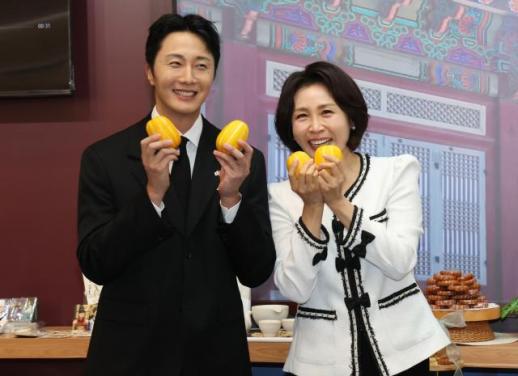 First lady Kim Hye-kyung promotes K-culture during Vietnam state visit Kim Hye-kyung, the wife of President Lee Jae-myung, on April 23 (local time) cast herself as a “K-culture ambassador” during the couple’s state visit to Vietnam. At the K-Culture Tourism Expo at Lotte Mall West Lake in Hanoi, Kim said culture, including film, is “the warmest link that connects people beyond language and borders,” adding that such exchanges will deepen understanding and friendship between the two countries. According to a written briefing by presidential deputy spokesperson Ahn Gwi-ryeong, the expo was organized by the Korea Tourism Organization and others to let visitors experience the K-culture wave spreading in Vietnam across areas including content such as dramas, food, beauty products, heritage and travel. The event runs from April 23 to 26. Lotte Mall West Lake Hanoi is Vietnam’s largest shopping and entertainment complex and is often described as “Korea in Vietnam” and a hub for K-lifestyle. Since opening in September 2023, it has logged more than 25 million cumulative visitors. Wearing a hanbok, Kim toured indoor pop-up zones with actor Jung Il-woo, who appeared in the Korea-Vietnam co-produced film “I’m Going to Abandon My Mom” and is nicknamed “Vietnam’s son-in-law” locally. Kim visited a K-content and K-food pop-up zone themed around the drama “The Tyrant’s Chef,” viewing costumes and props associated with a royal chef from the Joseon era. Guided by chef Ji Jun-hyeok, the first Korean to be listed in the Vietnam Michelin Guide in 2023, she joined a hands-on session making dishes featured in the drama. “I'm looking forward to what new flavors might come out when Vietnamese ingredients are added,” Kim said as she made bibimbap with visitors, mixing rice with water spinach and other vegetables, gochujang and butter. She also finished macarons using Korean black sesame and Vietnamese condensed milk, then handed them out to Vietnamese attendees. At a traditional K-food zone, she heard explanations of persimmon leaf tea, ginseng and yakgwa, and sampled yakgwa. After tasting fruit punch made with Korean melons and strawberries and Vietnamese mango, Kim said, “With all the delicious fruit, it’s even more balanced, and the Korean melon is especially fresh and cool.” She added that she could feel the local popularity of Korean melons, now in their second year of exports to Vietnam. At the K-beauty zone, Kim looked over Korean cosmetics and tried products with visitors. She also visited K-heritage and K-travel zones, along with outdoor K-webtoon and K-game pop-ups. Earlier in the day, Kim drew attention by wearing a pink ao dai. At the Vietnam Museum of Ethnology in Hanoi, she met Ngo Phuong Ly, the wife of Vietnam’s Communist Party general secretary, for a spouse-to-spouse cultural event. Ly told Kim she had seen photos posted on social media and said the ao dai suited her, “like a Vietnamese girl.” Kim replied that Ly looked “even more beautiful” when she wore a hanbok last year. With guidance from the museum director, the two viewed artifacts, models, photos and videos depicting the traditional culture and daily life of Vietnam’s 54 ethnic groups. When Ly asked for explanations, Kim described spaces one by one, including a hanok’s sarangbang and an apartment kitchen. Seeing a traditional gat hat in the sarangbang, Kim noted that the “Saja Boys” wore gat hats in the Netflix animated film “K-pop Demon Hunters.” They also watched a water puppet show, a representative Vietnamese intangible cultural heritage. At the end, puppets in an ao dai and a hanbok danced together, symbolically showing harmony between the two countries. Ahn said the two discussed shared interests including cultural cooperation and people-to-people exchanges, and greeted foreign tourists at the museum. Kim said she hoped efforts to respect and share each other’s traditions — like the hanbok and ao dai — would help bring the two peoples closer. Separately, President Lee’s social media carried thanks for the ao dai gift. The presidential office’s second annex posted on Instagram a message from Kim saying, “Madam Ly, thank you sincerely for sending such a precious gift,” adding that the “beautiful pink ao dai” conveyed Vietnam’s distinctive beauty and that she would cherish the warm sentiment. * This article has been translated by AI. 2026-04-23 21:49:42
 -
 Lee Calls Vietnam Key Partner, Urges Stronger Rare Earths and Urea Supply Chains President Lee Jae-myung, on a state visit to Vietnam, met with business leaders on April 23 (local time) and called for expanded economic cooperation. Speaking at the Korea-Vietnam Business Forum at a hotel in Hanoi, Lee said that with global economic uncertainty rising, cooperation between South Korea and Vietnam — which he called “the best partners” — is more important than ever. From South Korea, attendees included Samsung Electronics Chairman Lee Jae-yong, LG Group Chairman Koo Kwang-mo, SK Group Chairman Chey Tae-won and Doosan Enerbility Chairman Park Ji-won, among other executives. Vietnamese participants included Le Ngoc Son, chairman of the oil and gas corporation; Dang Hoang An, chairman of the power corporation; Dang Ngoc Hoa, chairman of Vietnam Airlines; and Phung Quang Hiep, chairman of the chemical corporation, who discussed potential cooperation with South Korea. Lee said he was confident the two countries are “the best partners” in leading global value chains, adding that expanding trade and investment could make it possible to meet a new goal of $150 billion in bilateral trade by 2030. He urged stronger manufacturing cooperation and a broader partnership in advanced industries such as semiconductors and electric vehicles. He also stressed the need to strengthen supply-chain links in energy-related items essential to high-tech industries, including rare earths and urea solution. Lee said building high-efficiency power distribution networks — including LNG power plants and nuclear power plants — is needed to support Vietnam’s stable industrial environment. He added that the business leaders gathered at the forum should serve as a cornerstone for opening a new chapter of cooperation. In welcoming remarks, Vietnamese Prime Minister Le Minh Hung called for stronger practical ties between companies to achieve shared growth, and asked South Korea to expand higher-quality investment in Vietnam. He also urged more investment and stronger technology transfer in high value-added fields such as advanced technology, semiconductors, artificial intelligence and clean energy. Business leaders also pledged to step up cooperation. Asked about accompanying Lee on his India-Vietnam trip, Samsung Electronics Chairman Lee Jae-yong replied briefly, “Businesspeople should speak with results.” LG Group Chairman Koo Kwang-mo said he hoped cooperation with India and Vietnam would advance in quality as well as scale. Doosan Enerbility Chairman Park Ji-won said, “We are trying to build a nuclear power plant in Vietnam. At today’s forum, I will explain Doosan Enerbility’s performance well.”* This article has been translated by AI. 2026-04-23 21:36:22
 -
 Third U.S. Aircraft Carrier Moves Closer to Middle East as Ceasefire With Iran Is Extended The U.S. military’s third aircraft carrier has moved closer to the Middle East as a ceasefire between the United States and Iran has been extended. Washington is pushing to hold a second round of talks on ending the war while reinforcing forces in case fighting resumes. CNN, citing photos posted on the Pentagon’s website, reported Thursday local time that the aircraft carrier George H.W. Bush has been in the Indian Ocean since April 21. With the Bush arriving, the U.S. Navy will soon have dozens more military aircraft available for use if the ceasefire ends or if Iran’s ports are blockaded. The Pentagon did not disclose the carrier’s exact location in the Indian Ocean. Some Pentagon website photos of the Bush include captions saying it was in the Indian Ocean on April 17. The carrier departed March 31 from Naval Station Norfolk in Virginia and was reported to have passed near South Africa’s Cape of Good Hope on April 17. Two U.S. carriers are already operating in the region: the Abraham Lincoln in the Indian Ocean and the Gerald R. Ford in the Red Sea. CNN said the U.S. military has 11 aircraft carriers but is currently operating only four because of maintenance and training. With the Bush joining, three of the four active carriers would be committed to the war with Iran.* This article has been translated by AI. 2026-04-23 21:03:18
 -
 People Power Party leader Jang Dong-hyeok meets acting U.S. ambassador in Seoul Jang Dong-hyeok, leader of South Korea’s People Power Party, met with James Heller, the acting U.S. ambassador in Seoul, to discuss the results of Jang’s recent trip to the United States and ways to strengthen the South Korea-U.S. alliance, political sources said. According to the sources, Jang held the meeting Thursday afternoon at the U.S. Embassy in Seoul. He also raised controversy over remarks by Unification Minister Jeong Dong-young about North Korean nuclear facilities, the sources said. Lawmakers Kim Dae-sik and Cho Jung-hoon, who traveled to the United States with Jang, attended the meeting as well. Separately, Kim posted on Facebook on Thursday to push back against criticism of Jang’s U.S. trip. Listing meetings Jang held with U.S. think tanks, members of the U.S. Senate and House, and key Republican Party figures, Kim wrote, “The delegation also took seriously the parts that did not meet the public’s expectations and has repeatedly apologized.” Referring to a photo of Jang and Supreme Council member Kim Min-su that drew criticism, he added that he hoped it would not “overshadow the nonstop meetings carried out for the national interest.”* This article has been translated by AI. 2026-04-23 20:48:19
 -
 South Korea Fines Duo and Two Others After Data Leaks Expose Hundreds of Thousands South Korea’s privacy watchdog said it imposed a combined 4.7882 billion won (about $47.9 billion won) in administrative fines and 17.4 million won in penalties on three businesses, including matchmaking firm Duo Information Co., for violating personal data protection rules. The Personal Information Protection Commission said it made the decision at its seventh plenary meeting on the 23rd, also ordering corrective measures and public disclosure. Key violations included large-scale data leaks and the collection and storage of resident registration numbers without a legal basis. The biggest breach involved Duo. Investigators said a hacker in January infected a Duo employee’s work PC with malware, obtained database server account credentials and accessed the member database, leaking personal information of 427,464 full members. The leaked data included basic details such as names, dates of birth and contact information, as well as sensitive profile information that could reveal personal characteristics, including education, workplace, religion and marital history. Because matchmaking services handle broad, life-related details, authorities said the risk of secondary harm is high. The commission said Duo lacked basic access controls, such as blocking access after repeated authentication failures, and used weak encryption methods for resident registration numbers and passwords. It also collected and stored resident registration numbers without legal grounds and failed to destroy about 290,000 records after retention periods expired. Authorities also faulted Duo for delaying its report of the breach for more than 72 hours after recognizing the leak and for not notifying users. The commission fined Duo 1.197 billion won and imposed 13.2 million won in penalties, ordering it to notify affected individuals and prepare measures to prevent a recurrence. Two other companies were cited for inadequate safeguards: call center outsourcing firm KS Korea Employment Information and Geumreung Park Cemetery. KS Korea Employment Information was fined in the 3.5 billion won range after an administrator account was stolen, leading to the leak of personal data on about 40,000 employees and applicants and 50,000 personnel documents. Geumreung Park Cemetery was fined 54.2 million won after a website vulnerability exposed personal data of about 5,000 people. “Resident registration numbers must be handled only in limited cases where there is a legal basis,” the commission said, urging businesses to collect only the minimum necessary data and thoroughly implement security measures such as encryption. * This article has been translated by AI. 2026-04-23 20:39:21
 -
 MBC’s “True Story Investigation” Probes Alleged Group Assault at Fitness Center MBC’s “True Story Investigation” is examining an alleged indiscriminate assault at a gym. The program airing on the 23rd focuses on a group assault that occurred in March at a large fitness center in the greater Seoul area. The victim, Minjun (alias), suffered serious injuries and was taken to an emergency room that day. His family said his face was so swollen it was hard to recognize, and he was bleeding heavily. CCTV footage obtained by the production team shows the assault in a small break room. The conflict began over how sales were credited: team leader Han (alias) challenged the decision by a new trainer, Junseong (alias), to transfer membership sales credit to Minjun. As Minjun protested, the situation escalated quickly. Han demanded a written pledge stating they would fight one-on-one and not report it. The beating began shortly after Minjun signed, according to the broadcast. Han, identified as a fourth-degree judo black belt, was suspected of using judo techniques during the assault. Witnesses said blood pooled on the floor to the point it stuck to shoes, and bloodstains extended into the hallway. The response afterward also drew criticism. The broadcast cited claims that people involved drove witnesses out and told staff to wipe blood from the hallway, raising allegations of an attempt to destroy evidence. Police received a report at 10:23 p.m., about two hours after the assault, it said. The gym is also accused of issuing work instructions to block refunds for the victim’s clients while he was hospitalized, instead of offering an apology or visiting him. “True Story Investigation” said it will review what happened inside the gym and questions surrounding the handling of the case. The episode airs at 9 p.m. on the 23rd.* This article has been translated by AI. 2026-04-23 20:33:43