

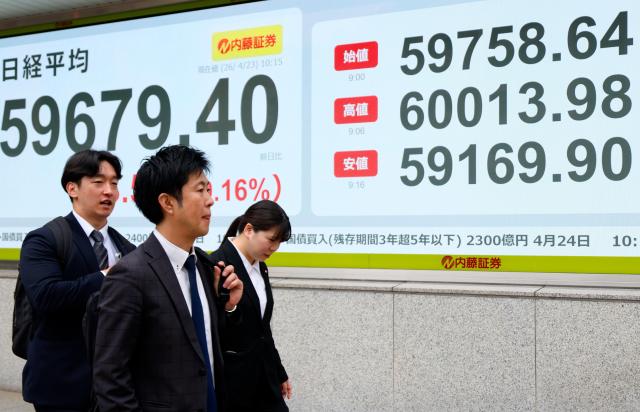
Japan’s Nikkei stock average briefly crossed 60,000 for the first time on April 23 but reversed to finish lower, as profit-taking after a sharp run-up combined with renewed worries over Middle East-driven oil volatility.
The Nikkei fell for the first time in four sessions, closing down 445 points, or 0.75%, at 59,140.23 in Tokyo. It climbed as high as 60,013.98 intraday to set a record, then selling intensified and losses at one point neared 900 points. Nikkei reported the market opened higher on overseas short-term investors’ futures buying and strength in major semiconductor-related shares, helped by continued gains in U.S. tech stocks the previous session.
Risk appetite also carried over after the Nasdaq and S&P 500 hit record highs on expectations of an extended cease-fire following U.S. and Israeli strikes on Iran. The Nikkei quickly cleared 60,000 early in the session. Analysts said money was increasingly concentrated in artificial intelligence and semiconductor names, while only about 20% of stocks on the Tokyo Stock Exchange’s Prime Market rose.
The rally did not hold. Concerns about an overheated market and the burden of the recent surge triggered broad selling. Higher crude prices tied to Middle East tensions also weighed on sentiment. Reports that the U.S. Defense Department assessed it could take up to six months to clear mines in the Strait of Hormuz helped keep oil prices elevated, raising worries about pressure on corporate earnings.
Losses narrowed late in the day after the Nikkei slipped below 59,000, prompting bargain hunting by overseas short-term funds and individual investors.
The broader Topix index, which tracks all Tokyo Stock Exchange issues, fell 28.61 points, or 0.76%, to 3,716.38 for a third straight decline. Investors are increasingly viewing Japanese stocks as overheated in the short term, with the risk of bigger swings tied to oil and geopolitical factors.
* This article has been translated by AI.
Copyright ⓒ Aju Press All rights reserved.