
Journalist

Samuel Garrett
-
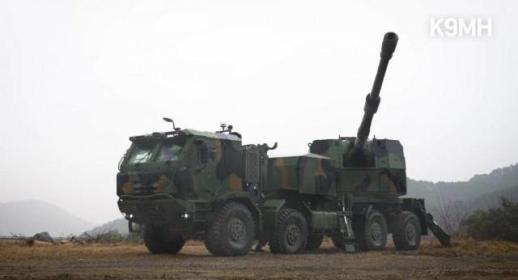 Hanwha's new K9 wheeled howitzer draws global attention after viral test video SEOUL, April 18 (AJP) - A test video of Hanwha Aerospace’s new wheeled self-propelled howitzer, the K9MH, has spread widely on social media, drawing attention to its performance. The U.S. Army is pursuing a major program to replace its current 155mm M777 towed howitzers with wheeled self-propelled systems. Hanwha’s U.S. unit, Hanwha Defense USA, said last month it had proposed the K9MH for the program. The company is also reviewing plans to produce the system in Alabama if selected, and is reportedly planning to invest about $1.3 billion to build an ammunition plant in Arkansas. The K9MH is based on Hanwha’s flagship K9 self-propelled howitzer platform. It mounts a fully automated K9 turret on an 8×8 chassis from Tatra Trucks, a widely used solution for wheeled artillery, reducing the crew to three. Compared with the tracked K9, it is seen as offering lower maintenance costs and greater strategic mobility. Although not from official sources, footage filmed at a test site in Changwon, South Korea, has circulated on overseas social media, showing live-fire exercises of the K9MH. The video includes ammunition loading and firing sequences, demonstrating a dual-feed system that transports projectiles and propellant charges via separate conveyors. The system showed a firing cycle of about 7.5 seconds, delivering nine rounds per minute. Ukrainian defense outlet Defense Express said the K9MH’s performance is comparable to Sweden’s Archer artillery system, one of the leading automated wheeled howitzers, which typically fires eight to nine rounds per minute with a loading cycle of around eight to nine seconds. It added that the K9MH could outperform Germany’s RCH 155 in terms of reload speed. However, the outlet noted that the Archer retains an advantage in deployment speed. The Archer takes about 23 seconds to fire its first round after stopping and 34 seconds to leave position, compared with roughly 20 seconds and 50 seconds, respectively, for the K9MH. The U.S. Army is expected to select candidates for the next phase of the program in July, with a final decision scheduled for the fourth quarter of 2027. Other contenders include Rheinmetall’s RCH 155, Elbit America’s Sigma, and BAE Systems’ Archer. 2026-04-18 15:19:07
 -
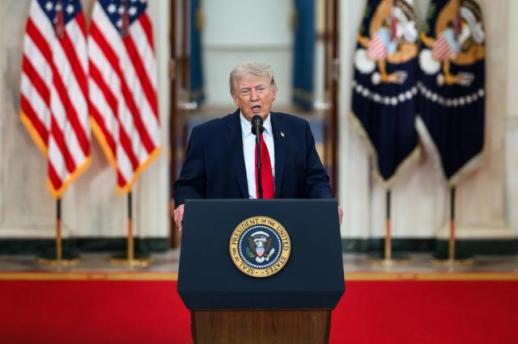 Trump warns of no ceasefire extension as U.S.-Iran talks set for April 20 SEOUL, April 18 (AJP) - U.S. President Donald Trump on Friday warned that the United States may not extend the ceasefire with Iran if no agreement is reached by April 22, stepping up pressure on Tehran. “Maybe I won’t extend it, but the blockade is going to remain. So you have a blockade, and unfortunately we’ll have to start dropping bombs again,” he said aboard Air Force One while returning to Washington from Phoenix, Arizona. The United States and Iran agreed to a two-week ceasefire proposal put forward by Pakistan on April 7, setting April 21 as the initial deadline for reaching a broader agreement. It remains unclear whether Trump’s reference to April 22 reflects an extension of the deadline or a misstatement. A second round of ceasefire talks between the United States and Iran is likely to be held on April 20 in Islamabad, Pakistan, U.S. officials said. Iranian officials also told CNN that their delegation is expected to arrive in Islamabad on April 19, with negotiations likely to take place the following day. Iran has also raised expectations for a deal by announcing that it would fully allow commercial shipping through the Strait of Hormuz following ceasefire declarations between Israel and Lebanon. However, major differences remain over key issues, including uranium enrichment and Iran’s nuclear program. The first round of talks collapsed after the two sides failed to narrow differences on enrichment. U.S. media reported that Washington had softened its earlier demand for a complete ban on uranium enrichment, instead proposing a 20-year suspension. Iran reportedly countered with a five-year proposal, preventing a breakthrough. Trump earlier said Iran had “agreed to everything,” including not possessing nuclear weapons, and would hand over what he described as “nuclear dust” buried underground following U.S. strikes involving B-2 bombers last June. But Iranian Foreign Ministry spokesperson Esmaeil Baghaei rejected the claim in an interview with state-run IRIB, saying Iran’s enriched uranium “will not be transferred anywhere.” 2026-04-18 13:09:59
 -
 Health authorities say current vaccines remain effective amid concerns over new COVID-19 variant SEOUL, April 18 (AJP) - The Korea Disease Control and Prevention Agency (KDCA) said Saturday that current COVID-19 vaccines remain effective against a new variant, urging the public not to overreact. The agency cited an assessment by the World Health Organization regarding the BA3.2 variant, noting that currently approved COVID-19 vaccines are “expected to continue providing protection against severe disease,” and adding that there is “no data indicating increased severity” associated with the variant. According to the KDCA, BA3 — a sublineage of the Omicron variant — briefly appeared in early 2022 before disappearing. Its subvariant, BA3.2, was first identified in South Africa in November 2024. The agency said that although the BA3.2 variant could contribute to a rise in cases domestically, it is continuing to closely monitor the situation. The COVID-19 positivity rate at local clinics rose to 6.3 percent in the 15th week (April 5–11), up from 4.7 percent a week earlier. During the same period, the BA3.2 variant accounted for 23.1 percent of cases, making it the third most prevalent strain. As of last month, PQ2 and NB1.8.1 led with 34.6 percent each, followed by BA3.2 at 23.1 percent and XFG at 3.8 percent. A KDCA official said, “The WHO has assessed that the BA3.2 variant does not significantly change disease severity, and current vaccines remain effective. Excessive concern is unnecessary at this stage.” The official, however, urged high-risk groups, including those aged 65 and older and immunocompromised individuals, to get vaccinated, with vaccinations available through June 30. 2026-04-18 10:36:17
 -
 President Lee signals South Korea role in safeguarding Hormuz shipping lanes SEOUL, April 18 (AJP) - President Lee Jae Myung on Friday said South Korea would make a “substantive contribution” to efforts to safeguard navigation in the Strait of Hormuz. Lee made the remarks during an international summit on maritime security in the strait, where leaders discussed coordinated efforts to restore safe passage through one of the world’s most critical energy chokepoints. According to the presidential office, Lee emphasized that disruptions in the strait — a vital artery for global supply chains — have shaken energy, financial, industrial and food security worldwide. He also raised concerns over the safety and well-being of seafarers, including South Korean nationals, who remain stranded amid ongoing instability. “South Korea is a key stakeholder, importing about 70 percent of its crude oil through the Strait of Hormuz,” Lee said, adding that Seoul would make “a substantive contribution” to ensuring freedom of navigation. Lee further said the government would actively explore ways to expand diplomatic and military cooperation in response to evolving conditions. The summit, attended by representatives from 49 countries, lasted about 90 minutes. While China and Japan also took part, they were represented by non-head-of-state officials. Among leaders participating virtually, Lee was the first to speak and delivered remarks lasting approximately four minutes and 40 seconds, slightly exceeding the allotted three-minute speaking time. Lee’s remarks come amid growing discussions over a potential multinational maritime mission, led by the United Kingdom and France, being prepared as a postwar, strictly defensive effort to safeguard shipping and restore freedom of navigation in the Strait of Hormuz. At a joint press conference, French President Emmanuel Macron said recent developments were “encouraging” for the transport of gas, fertilizers and other goods, while cautioning that risks remain. British Prime Minister Keir Starmer said, “More than a dozen countries have already offered to contribute assets” to help safeguard navigation in the strait. Momentum for international involvement may be building, as Iran earlier in the day announced it would fully reopen the waterway, raising expectations for progress in ceasefire negotiations. U.S. President Donald Trump welcomed the announcement, writing “THANK YOU!” on his social media platform Truth Social. However, he added that the naval blockade would remain “in full force and effect” until a deal with Iran is “100% complete.” 2026-04-18 09:35:10
 -
 Kookmin University professor develops framework to make image generation AI safer SEOUL, April 17 (AJP) - Professor Kim Min-gyu at Kookmin University (KMU) has developed a unified framework to ensure the safety of artificial intelligence models that generate images and videos. The research, which addresses issues like copyright protection and harmful content, has been selected for an oral presentation at the International Conference on Learning Representations (ICLR) 2026. Kookmin University (KMU) said Friday. Professor Kim Min-gyu worked as the lead author on the study alongside Professor Kim Young-heon and Professor Park Mi-jeong from the University of British Columbia (UBC). The project received support from the Institute for Information and Communications Technology Planning and Evaluation (IITP) and the Canadian Institute for Advanced Research (CIFAR). The research introduces a system called Safety-Guided Flow (SGF) to improve how AI models handle sensitive data and requests. This framework unifies existing safety techniques, proving that previous methods were specific cases of a broader mathematical concept known as maximum mean discrepancy potential. The team also identified what they call a critical time window in the AI generation process. Using control barrier function theory, they demonstrated that safety controls must be applied most strictly during the initial stages of image creation before being gradually phased out. Tests of the SGF system showed improved performance in defending against harmful content and preventing the AI from accidentally memorizing its training data. These improvements are seen as a foundation for making generative AI safer for commercial and public use in South Korea and abroad. "This research provides a new analytical framework that allows us to understand scattered safety research from a single, unified perspective," Professor Kim Min-gyu said. "In the future, it can be used as a core technology to ensure safety as diffusion and flow matching models are put into practical use in high-risk areas such as autonomous driving, medicine, and content creation." 2026-04-17 19:10:58
 -
 Korean Drugmakers Head to AACR 2026 to Showcase Next-Gen Cancer Research Hanmi Pharmaceutical, Yuhan, Samsung Bioepis and Celltrion, among South Korea’s major drug and biotech companies, are heading to San Diego ahead of the American Association for Cancer Research’s AACR 2026 meeting. The companies plan to present early-stage findings on next-generation cancer drug candidates, highlight emerging trends and seek future technology-licensing opportunities. Industry officials said on April 17 that AACR, which runs through April 22 (local time), is considered one of the world’s three major cancer meetings, along with the American Society of Clinical Oncology and the European Society for Medical Oncology. AACR is known as a venue where preclinical and early clinical results are concentrated, and is widely viewed as a stage for gauging potential blockbuster candidates and licensing prospects. This year’s meeting is expected to spotlight next-generation modalities including antibody-drug conjugates, CAR-T therapies, radiopharmaceuticals and RNA-based treatments. Hanmi Pharmaceutical will present nine preclinical studies, the most among Korean companies. Its lineup spans targeted therapies and newer approaches, including an EZH1/2 dual inhibitor combined with a DNA damage inducer, a p53 mRNA cancer therapy, a 4-1BB x PD-L1 bispecific antibody and a B7H3 x PD-L1 bispecific ADC. The market expects Hanmi to extend its record of leading Korean firms in the number of presentations for four consecutive years, underscoring its research and development strength. Yuhan will also take the AACR stage, presenting research aimed at broadening the intersection of targeted cancer therapy and immuno-oncology. The move is seen as part of an effort to expand global partnerships, as AACR can serve as a starting point for licensing talks and co-development discussions. Samsung Bioepis will present preclinical data on SBE303, an ADC candidate and the company’s first new-drug pipeline, positioning it as an independent drug developer on the global stage. The company recently received U.S. Food and Drug Administration approval for an investigational new drug application for a Phase 1 clinical trial of a nectin-4-targeting ADC. Celltrion Pharm will introduce two new candidates using its dual-payload ADC platform, AD2C. The design aims to reduce dose-limiting toxicity while improving efficacy, as the company seeks differentiation in the next-generation oncology market. Biotechs scheduled for oral presentations are also drawing attention. Verismo Therapeutics, a subsidiary of the HLB Group, will present interim Phase 1 results for SynKIR-110, a CAR-T candidate for solid tumors. It will also disclose preclinical results for SynKIR-310, a CAR-T candidate for blood cancers, which was reported to have recorded a 100% survival rate, the only one to do so among comparator groups. Rznomics will give an oral presentation of interim clinical results for RZ-001, a gene therapy for liver cancer. The approach targets telomerase mRNA to induce both cancer cell death and immune cell infiltration, and is expected to draw interest because it will be the first disclosure of proof-of-concept data for the company’s RNA editing and replacement technology. A representative of a Korean pharmaceutical company said the meeting is a chance to show how competitive Korea’s oncology platforms are on the international stage. “Preclinical and early clinical stages carry high risk, but if successful, they can lead to technology exports and a reassessment of corporate value,” the person said. 2026-04-17 19:03:00
 -
 Sookmyung Women's University and Korea University Guro Hospital partner for medical research SEOUL, April 17 (AJP) - Sookmyung Women's University Research & Business Development Foundation and the Research Institute of Women's Health signed an agreement with Korea University Guro Hospital to collaborate on the research and treatment of incurable diseases. The partnership aims to build a cooperative ecosystem involving universities, research institutes, and hospitals to accelerate the development of new drugs and medical technologies. Sookmyung Women's University said Tuesday. Representatives from the institutions met at the Sookmyung Women's University (SMU) AI Center in Yongsan-gu, Seoul, on April 14, 2026. The ceremony was attended by Research & Business Development Foundation (RBDF) Director Shin Jee-young, Research Institute of Women's Health (RIWH) Director Yang Young, and Korea University Guro Hospital (KUGH) Research Vice President Cho Gum-jun. Under the new agreement, RIWH will serve as a primary research body to conduct basic and translational studies using clinical data provided by KUGH. Since its launch in 2005, RIWH has specialized in deep research into incurable conditions affecting women through science-based health studies. The SMU RBDF plans to support the initiative by identifying promising technology companies and facilitating the transfer of intellectual property. This cooperation is designed to bridge the gap between academic research and the commercial healthcare market in South Korea. Both organizations also intend to focus on training specialized medical personnel to contribute to the improvement of public health. "The collaboration with Korea University Guro Hospital, which has advanced medical systems and rich clinical infrastructure, will be an important foundation for the university's research results to lead to actual medical sites," Shin Jee-young said. 2026-04-17 18:57:53
 -
 Viet Nam courts South Korean chip giants as Hanoi ratifies landmark incentive package SEOUL, April 17 (AJP) - Hanoi is formalizing a massive state-led effort to corner the semiconductor supply chain, offering South Korean conglomerates a sweeping array of tax holidays and land-use exemptions. The newly passed Law on Digital Technology Industry marks a strategic pivot for Viet Nam, moving beyond its traditional role as a low-cost assembly hub toward becoming a core strategic node for high-end silicon fabrication. This legislative overhaul disrupts the regional status quo by targeting the specific operational hurdles that have previously deterred high-stakes capital investment in Southeast Asia. The policy framework centers on a corporate income tax holiday that lasts for four years, followed by a 50 percent tax reduction for the subsequent nine years. To encourage deep-tech integration, Hanoi is allowing a 200 percent tax deduction for research and development expenditures, a move designed to lure R&D centers away from traditional hubs in East Asia. According to the South Korean Chamber of Commerce in Viet Nam, these concessions are currently the primary focus for Seoul-based executives evaluating long-term infrastructure plays in the region. Logistical velocity is a critical component of the new law, acknowledging the hyper-sensitive turnaround times inherent in semiconductor assembly and packaging. Hanoi has established a "green lane" for customs clearance to accommodate the "Pali Pali" culture of South Korean business, which prioritizes rapid execution. Furthermore, the Vietnamese government has eliminated import duties on project-related machinery and equipment, while granting complete exemptions from land lease fees for the entire lifecycle of a project. This allows firms like Samsung and SK Hynix to channel their capital expenditures directly into core technology rather than real estate overhead. The strategy seeks to build a self-sustaining ecosystem by extending these same incentives to Tier-1 and Tier-2 suppliers. Under the new mandate, any ancillary manufacturing firm integrated into the semiconductor supply chain receives state subsidies for infrastructure and equipment commensurate with those given to the lead developer. This synchronization ensures that when a major anchor tenant moves into a province like Bac Ninh or Bac Giang, its entire constellation of South Korean satellite suppliers can transition under a unified regulatory framework. To address the regional shortage of high-skilled labor, the law introduces radical shifts in immigration and personal taxation. South Korean experts and high-tech personnel are now eligible for immediate work permit exemptions and five-year extended visas that include full family sponsorship. Hanoi is also offering a five-year personal income tax exemption for high-caliber digital technology personnel, alongside state-funded stipends intended to maintain a standard of living comparable to Gyeonggi Province. This legislative push arrives as global firms increasingly adopt "China Plus One" strategies to mitigate geopolitical risks—a term originally popularized by Japanese business circles in the mid-2000s to describe diversifying manufacturing away from China (Source: Nikkei Asia). Amkor Technology has already inaugurated a 1.6 billion dollar facility in Bac Ninh, while Samsung continues to scale its chip substrate production in Thai Nguyen. Hana Micron has also committed billions of dollars toward expanded operations in Bac Giang. 2026-04-17 18:45:47
 -
 AI 'hunter' sparks alarm in Korea amid regulatory vacuum SEOUL, April 17 (AJP) — Claude Mythos, an artificial intelligence model developed by Anthropic to autonomously detect and potentially exploit critical software vulnerabilities, is another new import challenging South Korea’s lagging regulatory response to rapid technology advances. Experts in Korea are already raising concerns over the lack of legal and ethical accountability. “If such technology is misused, the developer must bear responsibility,” said Kwon Hun-yeong, a professor at the School of Cybersecurity at Korea University, warning that the exploitation of software vulnerabilities could carry serious legal consequences. South Korea’s Ministry of Science and ICT convened a meeting with major cybersecurity firms on Wednesday morning to assess the impact of global AI-driven security projects and explore ways to safeguard local industry. On Tuesday, the government separately held an emergency review with the country’s three major telecom operators and leading platform companies, including Naver and Kakao. Mythos is a tightly controlled preview system, available only to a limited number of partners through Anthropic’s “Project Glasswing” program, which provides early access to advanced AI models for cybersecurity research. It is reported to autonomously detect software weaknesses at an advanced level, a capability that can also be misused for malicious attacks and potentially pose risks to the global financial system. In just two days, using around $20,000 in computing power, it uncovered a previously unknown flaw in OpenBSD, a highly secure open-source operating system, that had gone undetected for 27 years. Park Choon-sik, a professor of information security at Ajou University, said such tools could help identify and fix weaknesses but could also provide attackers with a clearer map of system vulnerabilities. “If these capabilities fall into the wrong hands, hacking could become faster, easier and far cheaper,” he said. “This kind of capability should not be allowed to evolve into a weapon.” Beyond detecting vulnerabilities, Mythos is believed to map attack paths and minimize traces after execution, compressing tasks that once took years into hours. Such speed makes it difficult for traditional security systems to keep up. South Korea’s ICT sector is stepping up its defenses. Following Tuesday’s emergency meeting, companies scrambled to strengthen internal security protocols and expand AI-based threat monitoring. Naver is closely tracking global security developments linked to Mythos, stepping up real-time monitoring and analyzing AI-driven attack patterns while deepening cooperation with government authorities. Kakao is also reinforcing its security posture, reviewing internal information protection systems and expanding monitoring to prepare for potential risks. Toss is strengthening core security practices, including asset management, vulnerability scanning and access control, while enhancing intrusion detection, log management and backup systems. The telecom sector is tightening defenses, with SK Telecom, KT and LG Uplus expanding vulnerability analysis and continuous monitoring, strengthening anomaly detection and upgrading AI-based threat response capabilities. Park noted that organizations are already capable of identifying vulnerabilities with precision, but the core issue lies in how quickly they respond. “Organizations will need to eliminate weaknesses through patches before they are exploited,” he said. “In many cases, the problem is not detection but the failure to respond once weaknesses are identified.” Despite stepped-up defenses, some experts point to the need for broader governance. Kwon said the focus should not be limited to restricting the technology, but also on how it can be used to strengthen defenses, noting that developers could build systems to counter the very threats their models create. “Rather than treating all uses as inherently illegal, there needs to be a framework that allows responsible use while preventing abuse,” he said, warning that the issue could have significant legal and societal repercussions if left unaddressed. In the cybersecurity industry, such risks have traditionally been managed through coordinated vulnerability disclosure, where vulnerabilities are reported privately and disclosed publicly only after patches are developed. The speed and scale of AI-driven discovery, however, are outpacing existing frameworks, compressing the window between discovery and exploitation. Kwon stressed that rather than imposing legal prohibitions on the exchange of vulnerability information, “we need to focus on how it can be used constructively,” emphasizing that the discussion must be translated into action quickly. 2026-04-17 18:03:44
 -
 South Korea to hold training camp in Salt Lake City to prepare for World Cup in June SEOUL, April 17 (AJP) - The final roster of South Korea's national soccer team for this year's FIFA World Cup will be decided by mid-May, the Korea Football Association said on Friday. Once the 26-man roster is announced by head coach Hong Myung-bo on May 16, they will leave for Salt Lake City, Utah to hold a pre-tournament camp to prepare for the quadrennial sporting event. This year's World Cup, which kicks off in June, will be the first to feature 48 teams and three host countries - Canada, Mexico, and the U.S. Salt Lake City was chosen as the training site because it sits at about 1,460 meters above sea level and has time zone and altitude conditions, similar to Guadalajara, Mexico, located at roughly 1,500 meters, where South Korea will play its first two group matches, making it an ideal place to prepare. It also aims to reduce travel fatigue and jet lag from long-haul flights by avoiding travel to Seoul before flying to World Cup venues for players based at European clubs. About a two-week stay there, before leaving for Guadalajara on June 5, would also help players adjust their fitness and regain normal cardiopulmonary performance, which typically takes about two to three weeks at such altitudes. But the full squad is not expected to gather until late May, as players based in Europe are likely to join later depending on their respective club schedules. Grouped with the Czech Republic, Mexico and South Africa, South Korea will face the European side in its opening group-stage match slated for June 11. 2026-04-17 17:55:26