
Journalist

Samuel Garrett
-
 KBS2’s “Music Bank” Announces Lineup Featuring TXT, ifeye and MODYSSEY KBS2’s music show “Music Bank” has announced its lineup for the episode airing Friday afternoon. The broadcast will feature 1000° (Cheondo), BE BOYS, cosmosy, hrtz.wav, ifeye, KEYVITUP, KickFlip, KISS OF LIFE and MODYSSEY. Also set to appear are RESCENE, SANTOS BRAVOS, VVS, Dayoung, AMPERS&ONE, All'N, Lee Ji-min and TOMORROW X TOGETHER. Lee Ji-min and MODYSSEY are scheduled to perform their debut stages on the show. ifeye and TOMORROW X TOGETHER will return with comeback performances. “Music Bank,” hosted by Kim Jae-won and Bang Ji-min, airs every Friday at 4:55 p.m.* This article has been translated by AI. 2026-04-17 08:12:15
 -
 Korean Drugmakers Gain FDA Orphan Drug Designations, Boosting Global Push South Korean pharmaceutical and biotech companies are increasingly securing orphan drug designations from the U.S. Food and Drug Administration, a step they see as helping open doors to global markets. The designation does not guarantee a successful drug, but it can cut time and costs in the approval process and is widely viewed as a strategic pathway. Industry officials said April 16 that candidates being developed by ABL Bio, Yuhan Corp. and Onconic Therapeutics have recently received FDA orphan drug designation. The FDA program targets rare diseases with small patient populations and few or no alternative treatments. The designation comes with regulatory incentives. The FDA offers benefits such as waiving application fees and providing expedited review, and it supports a 25% tax credit for clinical trial costs. After a product is approved for sale, it also grants seven years of market exclusivity in the United States. ABL Bio said its bile duct cancer candidate tovecimig, a bispecific antibody it licensed out to Compass Therapeutics, was designated an orphan drug. The drug is designed to block both the DLL4 and VEGF-A pathways, which play key roles in new blood vessel growth and tumor vascular formation. It is being developed for bile duct cancer, where treatment options are limited. Yuhan said its Gaucher disease candidate YH35995 also received orphan drug designation. Gaucher disease is a hereditary rare disorder in which a specific enzyme deficiency disrupts metabolism, leaving significant unmet medical needs. The company said only about 100 patients are registered in South Korea, but the market is shaped around high-priced therapies, making it potentially profitable. Onconic Therapeutics, a subsidiary of Jeil Pharmaceutical, said its synthetic lethality-based dual-target anticancer drug nesuparib was recently designated an orphan drug for small cell lung cancer. Nesuparib had previously received orphan drug designation for pancreatic and gastric cancers, and the latest decision again points to broader development potential, the company said. The rare-disease drug market is growing as diagnostic tools improve and aging populations contribute to rising patient numbers, expanding demand for treatments. Evaluate, a pharmaceutical data analytics firm, said rare-disease therapies accounted for about 17% of the global prescription drug market as of last year and are projected to reach about 20% of the total prescription market by 2030. Still, orphan drug designation does not necessarily translate into commercial success. Because the designation is granted at an early stage, candidates must still prove themselves through clinical trials, regulatory review and market entry. "Even candidates with orphan drug designation are often discontinued because they fail to prove efficacy or run into safety issues," a pharmaceutical industry official said. "Even if they clear clinical trials, there can be variables at the commercialization stage, such as failing to meet production cost targets." Even so, a track record of orphan drug designation is often taken as a signal that a candidate has cleared a certain level of screening and that regulators recognize unmet needs in the disease area. That can be a positive factor in global partnerships, industry officials said. "Rare diseases have limited market size, but institutional support can reduce the burden," another industry official said. "Building approval experience can help earn trust in the global market."* This article has been translated by AI. 2026-04-16 18:18:51
 -
 Korea Medical Tourism Expands Beyond Beauty to Cancer and Fertility Care As South Korea enters the era of 1 million foreign patients, its medical tourism industry is rapidly moving beyond skin care and cosmetic procedures into specialized treatment such as cancer care and infertility services. With demand rising for longer courses of care that run from diagnosis and surgery through recovery, hospitals say overall patient management — including language support, logistics and follow-up — is becoming a key measure of competitiveness. The government had set a goal of attracting 700,000 foreign patients by 2027, but the total already topped 1 million last year. Industry officials said on the 16th that Korea’s medical tourism has long been driven by K-beauty, but more patients are now traveling to Korea for complex treatment, including cancer and infertility care. Asan Medical Center said more than 19,000 foreign patients visited in 2024. Patients from the United States as well as the United Arab Emirates and Mongolia often request consultations in advance by email or messaging apps and send medical opinions from local doctors along with CT and MRI materials to prepare for care, a hospital official said. The hospital’s International Healthcare Center has built an integrated online platform that links registration, uploading test materials, pre-consultations and telemedicine, allowing management to begin before patients arrive. “More patients with serious illnesses are coming to Korea after setting treatment plans through remote care before entering the country,” an Asan Medical Center official said. Over the past five years, the hospital conducted more than 800 remote consultations for patients from 57 countries, many involving severe cases such as liver and pancreatic cancer, the official said. Analysts say the shift toward serious disease treatment also reflects conditions overseas. In the United States, treatment costs are high, and many procedures are known to cost about 50% to 90% more than in Korea. In the United Kingdom, patients can wait months to see specialists. By contrast, Korea is viewed as combining relatively lower costs with strong outcomes. In 2023, Korea’s treatable mortality rate — early deaths that could be avoided with timely, effective care — was 45 per 100,000 people, well below the OECD average of 77. Satisfaction with medical technology and facilities is also reflected in repeat demand: A Korea Health Industry Development Institute survey found 59.8% of foreign patients said they were willing to return. Hospitals are also strengthening tailored services to attract overseas patients. With about 70% of foreign patients coming from nearby countries such as Japan, China and Taiwan, Magok CHA Hospital’s fertility center is cited as an example of improving convenience by leveraging its location near Gimpo Airport. For infertility patients who must return repeatedly to match treatment schedules, the “10-minute drive from the airport” is described as a key advantage. The center has also set up a separate treatment area, Building B, for foreign patients, separating their routes from those of Korean patients. The hospital said it redesigned the care environment to reflect longer interpretation and consultation times. “We chose the location with accessibility in mind, and we operate specialized interpreters and a one-on-one consultation system,” a fertility center official said. Seoul, where 85% of foreign patients are concentrated, is expanding policy support. The city plans to increase its pool of interpreter coordinators from 100 to 1,000 this year, broadening coverage beyond English, Chinese and Japanese to include less common languages such as Russian and Arabic. “Not only medical care but also interpretation and guidance can shape the patient experience,” a Seoul Tourism Organization official said, adding that trust built through those services can influence perceptions of Korea’s health care overall. Seoul is also pushing to introduce “medical-friendly accommodations.” A city official said medical tourism is currently centered on hospitals and clinics, with related services such as patient recruitment agencies, travel firms and transportation operating alongside them. The city is reviewing support systems tailored to long-stay patients, the official said.* This article has been translated by AI. 2026-04-16 18:18:00
 -
 V-League FA Standout Jeong Ho-young Signs With Heungkuk Life for 3 Years, 540 Million Won Heungkuk Life of the women’s professional volleyball V-League has signed middle blocker Jeong Ho-young, regarded as one of this season’s top free agents. The club said Wednesday it agreed to a three-year deal worth 540 million won, including 420 million won in salary and 120 million won in incentives. Jeong entered the league after being selected No. 1 overall in the 2019-2020 rookie draft by KGC Ginseng Corp., now Jeonggwanjang, and developed into a leading V-League middle blocker. This season, she played 27 matches and totaled 290 points (10.7 per match), ranking fourth with 0.667 blocks per set. Known for her high contact point and steady blocking, Jeong has also been a regular selection for the national team and has gained international experience. In a statement released by the club, Jeong said she was “happy and excited” to join Heungkuk Life and would “adapt quickly in a new environment, help the team and repay the fans with better performances.” Coach Tomoko Yoshihara said Jeong “has height, speed and blocking timing,” adding that she expects Jeong to bring stability in the middle and increase the team’s attacking tempo. Jeong is classified as an A-grade free agent. Under league rules, Heungkuk Life must either provide Jeonggwanjang with 200% of her previous season’s salary and one player outside the club’s list of six protected players, or pay a transfer fee equal to 300% of her salary. Jeong’s salary for the 2025-2026 season was 300 million won.* This article has been translated by AI. 2026-04-16 18:12:11
 -
 Korea Pharmaceutical and Bio-Pharma Association Welcomes Launch of National Bio Innovation Committee The Korea Pharmaceutical and Bio-Pharma Association welcomed the launch of the National Bio Innovation Committee, saying it expects governance of the pharmaceutical and biotech sector to be unified. In a statement issued on the 16th, the association said coordination among ministries and the government’s ability to execute policy would be strengthened, adding that it hopes policy goals and implementation plans will be pursued in a systematic way. Earlier that day, the government held a launch ceremony for the committee at the Government Complex Sejong, chaired by Prime Minister Kim Min-seok. The committee was formed by integrating the separately run National Bio Committee and the Bio Health Innovation Committee, with the aim of overseeing and coordinating bio policy across the government. The association said intensifying global technology competition has brought a shift across areas including new drug development, convergence with artificial intelligence and advanced manufacturing, underscoring the need for the committee. It also said plans to expand open innovation based on cooperation among industry, academia, research institutes, hospitals and government, and to strengthen full-cycle support from research and development to commercialization, would help drive both expansion of the industry and qualitative growth. The association also gave a positive assessment of measures such as AI-based support for R&D, building a national bio cluster and pursuing regulatory rationalization. It said it hopes the committee will serve as a policy control tower and a focal point for strengthening national competitiveness, adding that it will actively cooperate for successful operations.* This article has been translated by AI. 2026-04-16 18:06:21
 -
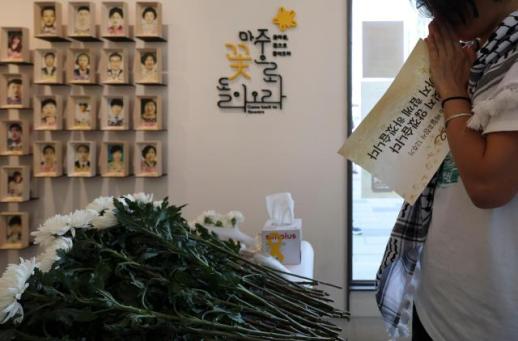 Nation honors Sewol victims as 12th anniversary deepens calls for accountability SEOUL, April 16 (AJP) - A synchronized silence descended upon the plaza fronting the Seoul City Council building at precisely 4:16 p.m. on Tuesday, as hundreds of citizens bowed their heads to mark twelve years since the Sewol ferry disaster. The gathering was held at the "Memory and Light," a civic space that served as a solemn anchor for a nation still grappling with the loss of 304 lives. The vast majority of victims were Danwon High School students from the city of Ansan, southwest of Seoul, on a seasonal field trip. This 12th anniversary underscores the enduring trauma of April 16, 2014, when a vessel bound for Jeju Island capsized off the coast of Jindo. The catastrophic event shattered public trust and remains a defining catalyst for safety reform in Seoul. While over a decade has passed, these dual ceremonies in the capital and Ansan demonstrate that the demand for collective memory has not faded, but rather evolved into a permanent fixture of the civic landscape. The proceedings in central Seoul were meticulously timed to allow participation from those unable to travel to the primary memorial held at 3:00 p.m. at the Hwarang Recreation Area in Ansan. 2026-04-16 18:01:35
 -
 Sewol families still trapped in that day 12 years ago as closure never arrives SEOUL, April 16 (AJP) - The familiar ache — the rage, the self-hate, the gut-wrenching grief, and finally the emptiness — returns every April. It is, for Choi Soon-hwa, the cruelest month. Each night in the days leading up to April 16, she returns to that day, now twelve years ago. “Why did so many people have to die? Why weren’t they saved? Why didn’t anyone tell them to come out, to jump, to escape?” For twelve years, these questions have never left her. In mental health, closure is not a luxury. Without it, the mind circles back — replaying the past in endless variations of what if. The questions remain unanswered, and the past does not settle into memory. It continues to intrude, reshaping the present. For Choi, and for many of the families, closure has remained out of reach. She is the mother of Lee Chang-hyun, a second-year student at Danwon High School in Ansan, one of the 250 students and 14 teachers who never returned from what was meant to be a long-awaited school trip to Jeju Island. The night before, her son left for the trip. For once, there was no struggle to wake him, no need to rush him out the door. She turned off her phone and went to bed, expecting something rare — rest. Then came the call. A pastor asking for her husband. A ferry was sinking. At first, it did not feel real. It was daytime. The waters off Jindo were not distant. The ship was large, visible, close to shore. There were hundreds on board. “I thought they would be saved,” she recalls. Inside the ferry, Chang-hyun tried to call his mother. The call never connected. Only later, through phone forensics, did she learn he had reached out. Instead, a message remained — sent to a friend. “Hey, the ship is sinking right now. If I die, will you come to my funeral?” “If the call had gone through… if anyone had answered… if someone could have comforted those children, even a little, when they must have been so afraid and alone…” Her voice fades. It is a regret that does not disappear with time. It changes shape, but it remains. Chang-hyun was, as she describes him, a boy who loved his friends more than anything. He chose his high school simply to stay with them. He spent his days with classmates, drifting between school, internet cafés, and the familiar rhythms of adolescence. More often than not, she let him be. Then something began to change. A teacher, Lee Hae-bong, entered his life in his second year. Chang-hyun began to think about studying, about his future, about the shape of his life. He wrote it down — his twenties, thirties, forties — a quiet plan stretching forward. His dream was simple - to run a bean sprout soup restaurant, a place like the one he frequented with friends, where meals were inexpensive and portions generous. After he was gone, his mother found that note in his room. The room remained as it was. His belongings stayed in place. Only later, when she returned home after the funeral, did the silence settle in. The absence became real. A never-ending replay For hours after the ferry began to sink, part of it remained visible above the water — a tilted silhouette. There were rumors of air pockets. Reports suggested that survivors might still be inside. Hope lingered, even as time passed.Then the ship slipped beneath the surface. Chang-hyun’s body was found the next night, about 100 meters from the ferry. There were no proper procedures. Bodies were placed in black bags and delivered without ceremony. The funeral passed in a blur. People came from across the country. The scale of the tragedy overwhelmed the intimacy of grief. The question that took root that day has never left her. Why was nothing done? Why were they not told to escape? Why were they not saved? Twelve years have passed. Investigations have come and gone. Committees have issued findings that satisfied no one. Accountability remains contested. For the families, the sense that the truth has not been fully uncovered persists. Families fractured under the weight of grief. Siblings, often overlooked, carried their own burdens. Many withdrew from public attention, wary of scrutiny and hostility. “After 2014, my children didn’t want us to speak publicly,” Choi says. “There was too much criticism directed at Sewol families.” Her children are still in therapy. “For siblings and surviving students, trauma can deepen over time,” she says. “And the parents — we’ve spent twelve years out on the streets, fighting. We haven’t taken care of our own bodies.” Support systems exist, but they remain limited — bound by timelines that do not reflect the enduring nature of loss. Under current law, medical support is set to expire in April 2029. Choi points to the United States, where victims of the September 11 attacks have been tracked through long-term studies for decades. She is also calling for the passage of a comprehensive life safety law — one that would establish a permanent support system and train professional responders. At present, support depends on individual special laws. After several years, assistance fades. And then, another disaster follows. Jecheon. Itaewon. Osong. Hwaseong. Muan. After Itaewon, she says, the realization was devastating. “It was exactly the same. Nothing had changed.” Memory, too, has become uncertain ground. Temporary memorials have been moved. Permanent spaces remain incomplete. Even remembrance has, at times, felt provisional. And yet, some continue. Some write poems for each child’s birthday. Some return to classrooms where desks remain as they were. The Sewol tragedy did not end that day. For the families, it continues — in unanswered questions, in unresolved responsibility, in the absence of closure. Closure is not about forgetting. It is not about moving on. It is about being able to hold the past in a form that can be endured. What the families want is not something large: answers to their questions, a process of understanding, a way to live with what happened. So that one day, they might remember their children without being pulled back into that day. So that grief, finally, can come to rest. 2026-04-16 17:59:06
 -
 Report: LIV Golf Faces Uncertainty as Saudi PIF Funding Halt Rumored Reports said LIV Golf is facing an existential threat four years after its launch amid speculation that Saudi Arabia’s Public Investment Fund, or PIF, could end its financial support. The Financial Times and The Telegraph reported on April 16 (Korea time) that LIV Golf held an emergency meeting in New York a day before its Mexico event and was likely to make an announcement related to PIF funding. The outlets said LIV could be forced to shut down if the backing stops. The Financial Times said PIF initially invested aggressively in sports to expand political, social and cultural influence, but that its approach is shifting amid changes in the international environment, including tensions between the United States and Iran. The paper said PIF has sought to keep LIV going after committing large sums, but believes it cannot provide open-ended support if losses continue. PIF is estimated to have put about $5 billion (7.38 trillion won) into LIV Golf since the league launched in 2022. LIV drew attention with rules that set it apart from the PGA Tour, including 54-hole events over three rounds, no cut, and shotgun starts. But it has struggled to secure profitability as attendance and TV ratings fell short of expectations. This season, LIV expanded all tournaments to 72 holes over four rounds. Still, some star players, including Brooks Koepka and Patrick Reed of the United States, left LIV ahead of the season, prompting assessments that its competitiveness has weakened. Reuters reported that PIF funding will continue as planned and that the remaining nine events on this season’s schedule will proceed as scheduled. LIV Golf is also set to be held in South Korea. The season’s eighth tournament is scheduled for May 28-31 at Busan Asiad Country Club.* This article has been translated by AI. 2026-04-16 17:57:00
 -
 Singer Park Hye-kyung Releases New Single, 'Dreams Don’t Melt' Singer Park Hye-kyung is returning with a new song. Park is releasing the single, “Dreams Don’t Melt,” on Wednesday. The modern rock track, marked by a polished British alternative feel, carries a message that dreams held deep inside do not disappear even through hardship and the passage of time. The song opens with a lyrical guitar riff and restrained vocals, then builds as distorted guitar and a driving rhythm intensify toward the chorus. Park’s clear tone and huskier voice add to the song’s sincerity. Through her agency, Park said she hopes the new release “will become a song of encouragement for everyone going through a difficult time, so they can run again toward tomorrow.” She added that returning with new music after a long break feels especially meaningful, saying she spent that time thinking and preparing musically and “put that sincerity into this new song.” Park also said she plans to connect more directly with fans through busking and other formats, and promised to repay those who have waited with better music and an earnest presence. “Dreams Don’t Melt” will be available at 6 p.m. Wednesday on major online music platforms.* This article has been translated by AI. 2026-04-16 17:54:08
 -
 After Gulf war, Section 301 looms as next hit to Korean economy SEOUL, April 16 (AJP) — As South Korean markets price in a winding down of the Middle East conflict, another front is quietly opening — this time in trade. With the KOSPI hitting fresh highs on easing war concerns, attention is shifting to Washington, where a new round of investigations under Section 301 of the Trade Act is gathering pace, raising the risk of fresh tariffs on key trading partners, including South Korea. Seoul, alongside Japan and China, is among 16 countries targeted in the probe announced March 11 by the Office of the United States Trade Representative. Those same countries have also been repeatedly singled out by U.S. President Donald Trump for offering limited support during the Gulf conflict despite their heavy reliance on the Strait of Hormuz for energy imports — a linkage that is increasingly shaping Washington’s trade posture. The Trump administration is turning to Section 301 as a workaround after a Feb. 20 Supreme Court ruling struck down its reciprocal tariff framework, effectively reviving one of its most powerful trade tools. From war shock to trade pressure The potential fallout of the Section 301 investigation was initially overshadowed by the Gulf crisis. Following the Feb. 28 U.S. strike on Iran and Tehran’s subsequent blockade of the Strait of Hormuz, oil markets were jolted. Dubai crude surged nearly 150 percent, while disruptions to supply chains drove up freight rates and fuel surcharges, feeding directly into the real economy. With the immediate energy shock beginning to ease, analysts say Washington is likely to revert to trade pressure. “Tariffs could be back at previous levels by early July,” U.S. Treasury Secretary Scott Bessent said at a Wall Street Journal event this week, citing ongoing Section 301 investigations into what the U.S. deems “unfair” trade practices, including excess profits and oversupply. South Korea’s persistent trade surplus leaves it structurally exposed. In autos, Hyundai Motor Group captured a record 11.3 percent share of the U.S. market in 2025, ranking fourth behind General Motors, Toyota and Ford. The Trump administration had previously imposed a 25 percent tariff on automobiles, later reduced to 15 percent after Seoul pledged large-scale investment under the “Special Act on Investment in the U.S.” Even so, Hyundai’s first-quarter operating profit fell 32 percent on-year to 2.46 trillion won, reflecting the end of a near tariff-free environment. Semiconductors present another point of friction. U.S. tech firms, particularly in artificial intelligence, rely heavily on chips from Samsung Electronics and SK hynix, while U.S.-based Micron Technology has lagged behind in high-value segments such as high-bandwidth memory. Non-tariff barriers remain a persistent source of tension. For years, Seoul restricted exports of high-precision 1:5,000-scale maps to foreign firms, citing national security concerns and the need to protect domestic platforms such as Naver and Kakao. Conditional approval for exports to Google was only granted in late February. Washington has also flagged issues such as network usage fees as potential barriers. Section 301 as a “permanent tool” Economists say the likelihood of tariffs under Section 301 is high. “The U.S. has been maintaining a temporary 15 percent tariff under Section 122, but that expires in July,” said Kang In-soo, an economics professor at Sookmyung Women’s University. “Raising Section 301 suggests they intend to impose tariffs in some form even after that.” Section 122 allows tariffs of up to 15 percent for 150 days. By contrast, Section 301 offers a more durable legal basis. “Unlike the IEEPA framework used previously, Section 301 is a permanent tool with stronger legal footing,” said Jang Sang-sik of the Korea International Trade Association, reinforcing expectations of a more sustained tariff regime. The Korea Institute for International Economic Policy also warned of broad-based damage, noting the lack of precedent for applying Section 301 measures to a close U.S. ally. Some analysts see geopolitical factors compounding the risk. Seoul remained cautious when Washington called for naval support to secure tanker routes through the Strait of Hormuz, saying no formal request had been received. At the same time, South Korea engaged in a series of diplomatic exchanges with countries such as Brazil and France, while extending $2.5 million in humanitarian aid to Iran and Lebanon. The Center for Strategic and International Studies (CSIS) recently described Section 301 as a “strategic tool,” suggesting it could be used as a form of calibrated retaliation. Still, others caution against over-interpreting the linkage. “Section 301 is grounded in claims of unfair trade practices,” Kang said. “It is unlikely that the U.S. would formally tie tariff measures to Korea’s diplomatic positioning.” For South Korea, the concern is less about whether pressure will come than when. With the won already under strain from prolonged energy shocks and trading above 1,400 per dollar for more than six months, additional tariffs could further weaken the currency and fuel inflation. “If large-scale outward investment continues, it could erode Korea’s capacity to stabilize the exchange rate,” Kang said. As the Gulf conflict moves toward de-escalation, markets may be looking past the next risk. But for Korea’s export-driven economy, the end of one crisis may simply mark the beginning of another. 2026-04-16 17:52:05