
Journalist

Samuel Garrett
-
 Following the tracks, following the taste (Gangneung) -1 SEOUL, April 13 (AJP) - The journey begins before the sea comes into view.Steel rails draw a quiet line from Seoul to the East Coast, and along that line, time seems to fold. Since the opening of the KTX Gangneung Line in 2017 ahead of the 2018 PyeongChang Winter Olympics, the city has moved closer (two hours) —not just in distance, but in rhythm. What once required a night’s stay now fits within a single day. The train does not merely carry passengers; it reshapes intention. A city once reserved for weekends becomes an impulse, a pause, a breath between obligations. Gangneung is no longer a destination you prepare for. It is a place you slip into. At Anmok Beach, the sea does not rush you. Cafés line the shore like open windows, each framing the same horizon differently. Coffee here is not hurried—it lingers, like the salt in the air. People walk, stop, sit, and stay. Time stretches between sips. What was once a simple coastline has become a choreography of movement and pause. You arrive, you wander, you settle. The act of drinking coffee turns into a way of inhabiting the city.The sea is still the destination. But now, so is everything around it. Around Gyeongpo Lake, the rhythm shifts with the seasons. During spring, cherry blossoms draw crowds along the water, while programs such as the traditional boating experience near Ojukheon add another layer to the landscape. Here, the city extends beyond the shoreline, blending water, season and movement into a broader flow. Wolhwa Street traces the path of a former railway, now softened into a pedestrian corridor. Here, the city breathes differently. Shops, light, and footsteps replace the rumble of steel. The line that once carried people through the city now invites them to linger within it. The coastline no longer holds the entire story. Movement extends inward, weaving the sea into the streets, the journey into the city’s core. Yet beneath these new rhythms, older stories remain. 2026-04-13 17:29:01
 -
 Mortgage Rates Near 7% While Deposit Rates Stay in 2% Range, Widening Bank Spreads Mortgage loan rates have pushed toward 7% while deposit rates remain stuck in the 2% to 3% range, widening the gap between what banks charge borrowers and what they pay savers. With loan rates jumping amid the Middle East situation, borrowers’ interest burdens are rising. According to the financial sector on the 13th, fixed-rate (five-year) mortgage rates at the five major commercial banks — KB Kookmin, Shinhan, Hana, Woori and NH NongHyup — stood at 4.16% to 6.76% a year, with the top end nearing 7%. The upper bound briefly exceeded 7% as of March 27 after the benchmark five-year bank bond yield (AAA) surged on fallout from the Middle East situation. Deposit rates, however, have remained in the 2% to 3% range, widening the spread. Disclosures from the Korea Federation of Banks show the headline rates on the five banks’ flagship 12-month time deposits at 2.85% to 3.10% a year. Base rates, excluding preferential rates, were in the low 2% range. Loan rates tend to move faster than deposit rates because they are set off market benchmarks. Banks typically calculate lending rates by adding a spread to a base rate that reflects indicators such as the Bank of Korea’s policy rate and COFIX (the cost of funds index), then subtracting discounts. Data from the Korea Financial Investment Association show the five-year unsecured AAA bank bond yield rose from 3.57% at the end of February to 4.05% at the end of last month, up nearly 0.5 percentage point. A recent government move to tighten oversight of high-value mortgages by revising contribution rates to the Korea Housing Finance Credit Guarantee Fund has also added upward pressure, as differentiated rates apply to larger loans. Deposit rates that had topped 4% under the high-rate environment fell into the 2% range early this year and have not rebounded. Analysts say tighter household lending rules have curbed loan demand, reducing banks’ need to raise funding and weakening incentives to lift deposit rates. Market watchers expect the widening spread to persist for now. If market rates keep rising while banks maintain a focus on managing household lending, lenders are likely to keep loan rates elevated. The Bank of Korea has held its policy rate at 2.5% for seven straight meetings, but expectations of a rate hike later this year continue to circulate, also supporting higher loan rates. The concern is that a wider spread translates directly into heavier interest burdens for borrowers. The Bank of Korea said variable-rate loans accounted for 28.9% of outstanding mortgages as of the end of February, the highest level in three years and seven months. As rates rise, more borrowers are falling behind. A Financial Supervisory Service survey found the delinquency rate on banks’ household loans was 0.42% at the end of January, up 0.04 percentage point from a month earlier. Mortgage delinquencies rose 0.02 percentage point to 0.29%. A financial industry official said uncertainty has not fully eased and some analyses suggest central banks at home and abroad could begin raising policy rates in the second half even if they do not move immediately. The official added that market rates feed quickly into loan rates while deposit rates tend to follow later, making the widening spread difficult to reverse soon.* This article has been translated by AI. 2026-04-13 17:21:00
 -
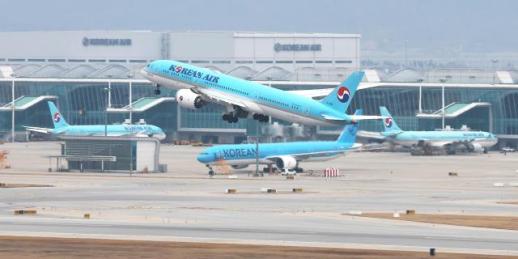 Korean Air posts record Q1 revenue as Middle East risks loom SEOUL, April 13 (AJP) - Korean Air posted record first-quarter revenue despite rising geopolitical risks in the Middle East. The airline said Monday it recorded 4.52 trillion won ($3.03 billion) in revenue and 516.9 billion won in operating profit for the first quarter on a standalone basis. Revenue rose 14.1 percent from a year earlier, marking the highest first-quarter performance in the company’s history. Operating profit climbed 47.3 percent year-on-year, while net profit increased 25.6 percent to 242.7 billion won. Korean Air said both passenger and cargo businesses contributed to improved earnings despite ongoing instability in the Middle East. Passenger revenue rose 7.3 percent from a year earlier to 2.61 trillion won, supported by solid travel demand during the Lunar New Year holiday in February and increased sales on key transfer routes, including Europe. Industry officials said disruptions at Middle Eastern airports, including Dubai, due to the regional conflict may have boosted transfer demand through Asian hub airports such as Incheon. According to aviation data from the Ministry of Land, Infrastructure and Transport, Korean Air carried 8.04 million passengers in the first quarter, up 5 percent from a year earlier. Cargo revenue increased 3.5 percent to 1.09 trillion won. The airline attributed the growth to expanding fixed-volume contracts and flexible route operations, including additional charter and ad hoc flights on strong-demand routes to North America. Cargo volume reached 431,500 tons, up 2.7 percent from the same period last year. However, Korean Air warned that the impact of geopolitical tensions in the Middle East would likely intensify in the second quarter, as rising fuel costs and exchange rate volatility weigh on profitability. A Korean Air official said the airline had shifted to an emergency management in April to prepare for surging fuel costs and would pursue cost efficiency measures. “We are strengthening our financial fundamentals and using this period as an opportunity to build a stable foundation for future growth,” the official said. 2026-04-13 17:10:48
 -
 Korean stocks fall as Hormuz blockade threat triggers risk-off SEOUL, April 13 (AJP) — Korean stocks closed lower Monday as investors moved to the sidelines amid fresh uncertainty in the Middle East, following U.S. threats to launch a maritime blockage operation in the Strait of Hormuz starting later in the day. The benchmark KOSPI fell 0.9 percent to 5,808.6, after trading between a high of 5,827.73 and a low of 5,730.23. Regional markets moved in tandem. Japan’s Nikkei 225 declined 0.7 percent and Hong Kong’s Hang Seng Index dropped 1.2 percent, while China’s Shanghai Composite Index edged up 0.06 percent, the only major market in the region to remain in positive territory. Investor positioning reflected a clear shift to risk aversion. Foreign investors sold a net 456.4 billion won ($306.6 million), while institutions offloaded 701.6 billion won. Retail investors absorbed the selling, buying a net 750 billion won. The retreat came as oil prices surged on escalating geopolitical tensions. Brent crude jumped 6.8 percent to $101.6 a barrel, while West Texas Intermediate rose 7.3 percent to $103.6, after Washington moved to impose targeted maritime restrictions on vessels linked to Iranian ports following failed weekend negotiations. The escalation followed the collapse of ceasefire talks between the United States and Iran in Islamabad, with both sides trading blame for the breakdown, deepening uncertainty over energy supply routes through the Gulf. Large-cap stocks in Seoul were broadly weaker. Samsung Electronics fell 2.4 percent to 201,000 won, Hyundai Motor dropped 2.3 percent to 478,500 won, LG Energy Solution declined 2.6 percent to 401,500 won, and Samsung Biologics slipped 1.3 percent. In contrast, SK hynix rose 1.3 percent to 1,040,000 won, extending gains in line with global semiconductor strength, as the Philadelphia Semiconductor Index advanced 2.3 percent. Hanwha Aerospace also added 1.5 percent. Losses were concentrated in industrial and cyclical sectors. Doosan Enerbility fell 0.9 percent, while the KRX Construction Index dropped 1.6 percent to 1,721.7, as expectations for Middle East reconstruction demand weakened after the diplomatic breakdown. Despite the decline, volatility remained relatively contained. The CBOE Volatility Index fell 1.3 percent to 19.23, suggesting markets are still pricing in a controlled disruption rather than a full-scale supply shock. In currency markets, the won strengthened slightly to 1,488.7 per dollar, while the dollar index rose 0.3 percent to 98.99. The junior KOSDAQ outperformed, rising 0.6 percent to 1,099.8. Retail investors led gains on the secondary board, buying a net 264 billion won, while foreign and institutional investors sold 148.7 billion won and 93.2 billion won, respectively. Sector gains were concentrated in digital infrastructure themes. Optical communication stocks surged 10.5 percent, while telecom equipment and 5G-related shares climbed 10.4 percent and 7.8 percent. Among notable movers, Silicon Two jumped 10.7 percent to 47,200 won, while Pearl Abyss rose 3.1 percent to 57,300 won. EcoPro fell 1.8 percent to 143,700 won, extending weakness in secondary battery shares. 2026-04-13 17:09:57
 -
 Woori Bank, Kim & Chang and Samil PwC Form Joint Team for Business Succession Support Woori Bank said on the 13th it signed a memorandum of understanding with Kim & Chang and Samil PwC to cooperate on business succession services. The agreement aims to provide integrated support across finance, legal services and tax matters. The three organizations said they will work together to address issues that arise during succession and to jointly design practical, executable succession strategies, going beyond simple advice. As founders of small and midsize companies age rapidly, business succession is increasingly seen as a key issue affecting corporate survival and employment, not just a family inheritance matter. If succession is not handled smoothly, companies can face abrupt sales or closures, increasing the need for specialized support. Under the MOU, the partners will provide legal and tax advice on succession, jointly run education programs and seminars for companies, and share research and information to help develop related systems and the market. They also plan to support structures tailored to each company, reflecting a shift from child-centered succession to broader options such as third-party sales, including mergers and acquisitions, and to assist through execution. "Business succession is not simply a transfer of shares, but a process of designing a company's future," Woori Bank CEO Jeong Jin-wan said. He said the partnership will help companies transition more steadily to the next generation through a model that combines financial, legal and tax support. * This article has been translated by AI. 2026-04-13 17:07:02
 -
 Kiss of Life dance challenge for new song draws sexualization backlash Girl group Kiss of Life has come under criticism over a dance challenge for its new song, with some viewers calling the choreography sexually suggestive. The group recently posted a choreography challenge video for its new track, ‘Who is she,’ on its official YouTube channel. In the clip, members face each other and perform a move that appears to mimic choking. The routine also includes both members thrusting their hips at the same time, drawing surprise and complaints online. Some internet users said the scene evokes a specific sexual image and said they were uncomfortable. Comments included: “A producer who fits the team is important,” “It’s unpleasant,” “This is a bit much,” “I don’t know what concept this is,” and “The songs are always good, but the choreography is disappointing.” Despite the controversy, the ‘Who is she’ music video has surpassed 30 million views and continues to gain traction. 2026-04-13 17:06:38
 -
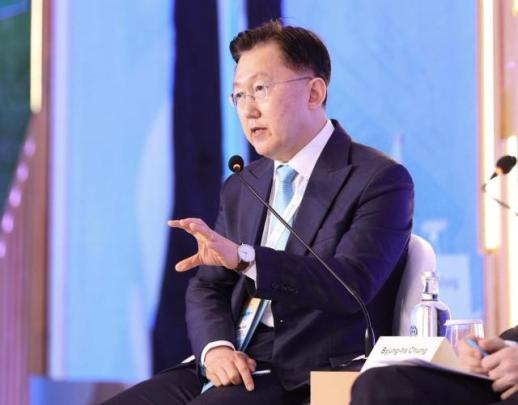 S. Korean special envoy enters Tehran as failed US-Iran talks trap tankers in Hormuz SEOUL, April 13 (AJP) - Special envoy Chung Byung-ha arrived in Tehran on Monday to negotiate the release of 26 South Korean tankers and 173 crew members currently stranded in the Strait of Hormuz. The diplomatic surge follows a direct order from Foreign Minister Cho Hyun as Seoul attempts to bypass the paralysis of international mediation to protect the maritime corridor that provides 70 percent of the crude oil imports of the nation. The arrival of the envoy marks a strategic pivot for Seoul, which has traditionally relied on Washington to secure the Persian Gulf. By launching this high-stakes bilateral channel, South Korea is effectively signaling that it can no longer wait for a global consensus that has evaporated following the collapse of multilateral peace efforts over the weekend. The regional crisis escalated on February 28 when a coalition led by the United States and Israel launched massive strikes against the nuclear and naval infrastructure of Iran. While a fragile ceasefire briefly paused the violence, the Islamabad Talks between Washington and Tehran failed on Sunday after 21 hours of deadlock. The breakdown centered on demands from Tehran for control over the strait and the unfreezing of billions in assets, which the United States flatly rejected, leading to the current effective blockade of the waterway. Chung is scheduled to hold discussions with Foreign Minister Seyed Abbas Araghchi and other senior leaders to establish a safe passage for Korean-linked vessels. These ships, primarily ultra-large crude carriers and liquefied natural gas tankers, are currently frozen in place as insurers and shipping companies treat the passage as a total war zone. This diplomatic initiative draws on a deep, decades-long reservoir of bilateral goodwill that has persisted despite the geopolitical friction of the last decade. The relationship is famously symbolized by the 1977 agreement to rename streets in each capital, resulting in the prominent Teheran-ro in the Gangnam district of Seoul and Seoul Street in Tehran. These landmarks represent a history of economic and cultural exchange that both nations have sought to preserve even as international sanctions complicated official trade. Throughout the era of heightened sanctions, Seoul maintained a functional relationship with Tehran under the surface, often serving as a quiet intermediary for humanitarian concerns. During the height of the COVID-19 pandemic, the South Korean government prioritized the delivery of medical equipment and test kits to Iran, utilizing a specialized humanitarian channel to bypass financial restrictions. This history of cooperation provides the current envoy with a unique level of access that other Western-aligned diplomats currently lack. The visit by the special envoy took place while desperation in Seoul is driven by a dwindling energy clock, with internal reports suggesting that strategic petroleum reserves have fallen to critical levels. The economic security of the country is at stake as long as these vessels remain trapped behind an Iranian naval screen that requires individual coordination for safe passage. In a parallel move, the government has appointed Lee Kyung-chul as the new Special Representative for Middle East Peace to address the broader geopolitical fallout. Lee, a veteran of United Nations Security Council affairs, will focus on long-term stability and the resolution of the Palestinian conflict to prevent the current war from expanding into a permanent regional conflagration. The return of the envoy remains unscheduled as the ministry monitors the progress of the talks and the evolving military posture of the Iranian Revolutionary Guard Corps. Seoul continues to coordinate with the European Union and regional partners to ensure that any breakthrough for its own vessels does not further destabilize the fragile security of the strait. 2026-04-13 16:56:51
 -
 Seoul's two landmark statues get spring wash SEOUL, April 13 (AJP) - Seoul's two landmark statues in Gwanghwamun are being bathed this week as part of regular maintenance and preservation efforts. As spring arrives, dust and other stains that have accumulated on the statues of King Sejong the Great and Admiral Yi Sun-shin over the long winter months will be washed off on Monday and Tuesday. Any damaged areas will also be touched up and recoated to prevent rust and preserve the statues' original condition. 2026-04-13 16:53:58
 -
 Review Preview: 'Hind’s Voice' Recreates Gaza Girl’s Final Call for Help War often reaches people first through social media — a sudden surge of posts on X, many showing children injured or killed. At first, it is hard to look away. Over time, the images become unbearable, and the instinct is to scroll past — even as the scenes linger. When news reports later describe airstrikes hitting military sites, schools or hospitals somewhere far away, the faces of those children return. For many viewers, that is where the mourning stops. The docudrama “Hind’s Voice” forces audiences to stay with that discomfort, centering on the voice of a child who is dying somewhere in the world. The film is based on a real incident. On Jan. 29, 2024, as the Israeli military issued evacuation orders in the Gaza Strip, gunfire struck a car carrying a fleeing family. Only Hind, 6, survived long enough to call for help and speak with emergency responders. The movie uses the actual recorded audio of the calls between Hind and a call center worker. Actors playing the call center staff performed while listening to the real voice from the recording. Rescuers were about eight minutes away, but they needed permission from the Israeli military to move safely. It took five hours before they could depart. Because the case is widely documented, the film’s ending can be found with a simple search — and it is as devastating as many would fear. The director adopts an experimental approach that blurs documentary and drama, aiming to deliver “Hind’s case” with maximum impact. For viewers, the film becomes a confrontation with guilt and grief — mourning people killed in war despite having no role in starting it, and imagining that such violence could one day reach their own skies. Those who choose “Hind’s Voice” knowing what it contains may be prepared to carry that grief, even if it feels imposed. The film suggests that doing so may ease, if only slightly, the weight of looking away. “Hind’s Voice” opens April 15.* This article has been translated by AI. 2026-04-13 16:45:47
 -
 Celltrion Expands Omliclo Prescriptions Across Europe, Wins Key Tenders Celltrion expands Omliclo prescriptions across Europe Celltrion said April 13 that Omliclo (omalizumab), used to treat chronic idiopathic urticaria and allergic asthma, is gaining prescriptions across Europe and posting tender wins. In Italy, Celltrion’s local unit won bids from 10 regional governments. Supply has begun in some areas, including Umbria, Trentino-Alto Adige and Tuscany, the company said. In the United Kingdom, Celltrion said it won National Health Service tenders in all four administrative areas, including England, the largest omalizumab market. As of January, before the official tenders opened, Omliclo had already reached a double-digit market share, it said. In Germany, Celltrion said Omliclo, launched in September last year, reached a double-digit share within one month and continues to grow. The German unit completed listing agreements with all public health insurers shortly after launch, it said. In Northern Europe, Celltrion said results are becoming clearer. In Denmark, after winning a national tender, the company moved the launch up by four months through talks with the tendering body and secured exclusive supply status through September. Omliclo held a 98% share in Denmark as of January, based on IQVIA and market data, it said. In Finland, it posted a 73% share as of February, as switching from the original product accelerates in key Nordic markets. In Spain, Celltrion said it was selected as the top-ranked supplier in tenders to supply all public medical institutions in Catalonia and the Basque Country. Ha Tae-hoon, head of Celltrion’s Europe headquarters, said, “We will continue expanding our sales coverage so the results achieved in launch countries can spread across Europe.” Daewoong Bio launches 5 mg Glivixa, completing full lineup Daewoong Bio said April 13 it will launch a 5 mg low-dose version of Glivixa (memantine hydrochloride), a treatment for Alzheimer’s-type dementia. The addition completes the product’s dose lineup alongside 10 mg and 20 mg tablets. The company said Glivixa posted a compound annual growth rate of 18% from 2021 to 2025. It ranks No. 2 among prescription memantine products by outpatient prescription sales, and No. 1 in the generic market excluding the original product, it said. Daewoong Bio said it plans to accelerate prescribing based on the full lineup and to maximize synergy with its central nervous system portfolio, including Gliatamin, Cerebrain and Beacept. Memantine hydrochloride works by regulating excessive activity of glutamate, a neurotransmitter linked to Alzheimer’s-type dementia, helping prevent brain-cell damage and improve cognitive function, the company said. It added that early treatment can cause side effects such as dizziness, headache and drowsiness, requiring careful dose adjustment. Memantine therapy typically starts at 5 mg and is increased gradually over three weeks to reduce the risk of adverse reactions, it said. Patients with moderate or worse renal impairment must reduce the dose to 10 mg per day, which has driven steady demand for low-dose products. A Daewoong Bio official said the 5 mg product is expected to provide a safer option for patients starting treatment or those with moderate renal impairment, improving tolerability. Yuyu Pharma pushes AI-based work innovation toward a smart factory Yuyu Pharma said April 13 it is expanding AI-based work innovation beyond its factory, sharing use cases with staff in sales and marketing, research and development, and management support, and rolling out the enterprise AI solution WorksAI companywide. The company said it formed a production AI task force in the second half of last year to support smart-factory operations, including process optimization. The team identified six improvement areas, including manual Excel work, document review and the risk of human error. It compared five paid AI tools, including ChatGPT and Claude, and began applying selected tools tailored to each factory team’s work, it said. Yuyu Pharma said the effort produced practical tools, including production and quality data dashboards, precise comparisons of labeling materials and design drafts, searches and interpretation for GMP and regulatory documents, and equipment manual troubleshooting. The company said frontline staff in production management, quality management and product technology built the tools using AI despite limited IT expertise, with the IT department stepping in only where technical support was needed, such as real-time connections to internal servers. Yuyu Pharma said the tools are now being used to optimize processes, reduce bottlenecks by shifting repetitive tasks to AI, and lower risk factors by detecting structural errors, improving confidence in quality and safety. CEO Park No-yong said the company will deepen and expand AI use in production, including automating labor-hour analysis through data integration and conducting industrial safety risk assessments, while continuing to identify AI models suited to factory needs. CHA Women’s Medical Center signs agreements with Jeju providers to build infertility-care network CHA Women’s Medical Center Seoul Station said April 13 it has signed a series of agreements with four major medical providers in Jeju to build an infertility-care network: Hanmaeum Hospital, Seogwipo Medical Center, Hyundai Obstetrics and Gynecology Clinic, and L Obstetrics and Gynecology Clinic. Under the agreements, the organizations will work on referrals and return referrals based on patient symptoms, share clinical information to ensure continuity of care, and operate a cooperative system aimed at improving public health, the center said. A key goal is to help patients in Jeju receive follow-up care near home after undergoing advanced infertility procedures at the Seoul Station center, it said. The center said the network is expected to help patients focus on preparing for pregnancy and prenatal care without gaps caused by long-distance travel. Director Yoon Tae-gi said, “Through a close referral and clinical cooperation system, we will do our best to provide patients with the greatest convenience and, together with regional hub hospitals, contribute to the task of addressing the low birthrate.”* This article has been translated by AI. 2026-04-13 16:39:25