
Journalist

Seán Canney
-
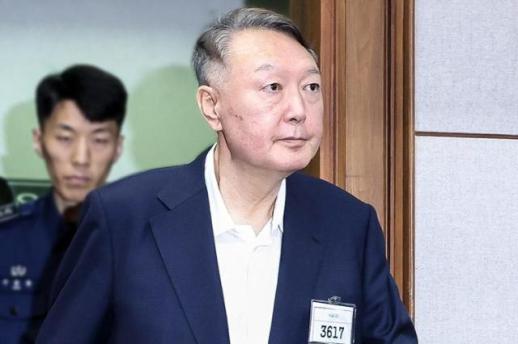 Yoon Suk Yeol and Co-Defendants Request Recusal of Judges in Insurrection Case Yoon Suk Yeol's insurrection case faced disruptions on its first day as he and other key defendants filed for the recusal of the judges, leading to a temporary halt in proceedings. On May 14, the Seoul High Court's Criminal Division 12-1, presided over by judges Lee Seung-cheol, Jo Jin-goo, and Kim Min-ah, announced that it would separate the arguments and schedule future hearings after acknowledging the recusal request from Yoon's legal team. Yoon, who submitted a notice of absence the previous day, did not attend court. Before the trial commenced, lawyers for former Defense Minister Kim Yong-hyun expressed their discontent after the court dismissed their request for a constitutional review of the insurrection court law. Attorney Lee Ha-sang argued, "It is inappropriate for the insurrection court to judge the constitutionality of its own law," and requested time to consider the recusal application. The court agreed to a five-minute recess, after which Lee submitted the recusal request. Following Kim, former Intelligence Chief Noh Sang-won and former Military Police Commander Kim Yong-gun joined the recusal motion for similar reasons. As the key defendants continued to file for recusal, the special prosecution team argued that the requests were clearly intended to delay the proceedings and urged the court to issue a summary dismissal. A summary dismissal allows judges to reject frivolous recusal requests that aim to stall the trial. However, the court stated, "At this stage, it is difficult to conclude that the requests are clearly intended to delay the proceedings," emphasizing the need for procedural clarity. Consequently, the arguments were separated, and the trial for Kim Yong-hyun, Noh Sang-won, and Kim Yong-gun was paused, with all four defendants exiting the courtroom. After separating the arguments, the special prosecution team read the appeal summary for the remaining defendants. They asserted that the case was not a spontaneous insurrection but rather a calculated conspiracy, claiming that the lower court had misinterpreted facts and legal principles. They highlighted that crucial evidence, including Noh's notebook and memos from Lee Jin-woo and Yeo In-hyung, had not been properly acknowledged by the lower court. The prosecution noted, "Specific preparations for a state of emergency were confirmed starting around October 2024," stating that the notebook contained over 70 pages of detailed discussions on the arrest and detention of politicians and judges, as well as the selection of personnel for explosive operations. They also pointed out that Yoon had made threatening remarks about shooting anyone who brought him in after mentioning key politicians during a meeting at his residence, indicating the defendants' intent to disrupt the constitutional order. The prosecution further claimed that evidence from Lee Jin-woo's phone notes clearly indicated attempts to co-opt military commanders through clandestine meetings and provoke North Korean military provocations to create conditions for a state of emergency. They argued that the lower court had excessively strict interpretations regarding the admissibility of evidence and called for severe sentences for the defendants. In the afternoon session, arguments were presented regarding the high-ranking police defendants, including former Police Chief Jo Ji-ho. Jo's attorney contended, "The prosecution's account of the insurrection preparations does not mention police involvement even once," asserting that the police were only passively deployed to maintain order on the day of the events and were not part of the insurrection leadership. The defense further claimed that the police's role in the insurrection process was minimal and that Jo only became aware of the situation on that day. They urged the court to consider Jo's serious health condition, as he is currently suffering from advanced blood cancer, and to acquit him. In contrast, the prosecution pointed to former Police Investigation Planning Coordinator Yoon Seung-young, stating, "Police officials who have held key investigative positions for years would not have been unaware of the unconstitutional nature of the proclamation," arguing that executing orders for arrests without warrants constituted clear abuse of power and involvement in the insurrection. Meanwhile, the court allowed live broadcasting of the proceedings, considering the case's significance and public interest. Although there were some objections from the defense, the presiding judge stated that the trial would be broadcasted to balance public interest with the defendants' right to counter-argument, with the condition that filming could be halted if there were concerns about national security or public morals. With the key defendants filing for recusal, the trial will proceed for now only against Jo Ji-ho, former Seoul Police Chief Kim Bong-sik, former National Assembly Security Chief Mok Hyun-tae, and former Investigation Planning Coordinator Yoon Seung-young. 2026-05-14 16:18:07
 -
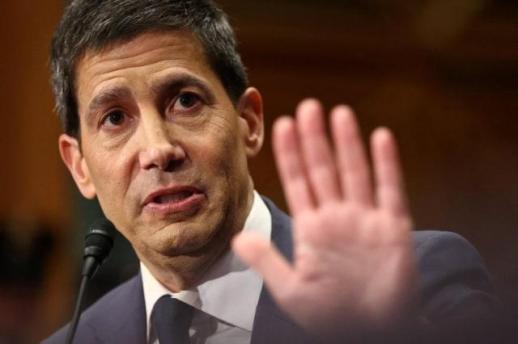 Kevin Warsh Set to Lead Federal Reserve Amid Economic Challenges Kevin Warsh is poised to take over as the next Chair of the Federal Reserve. While President Donald Trump anticipates interest rate cuts, Warsh faces a challenging economic landscape. Inflation is rising again, and within the Fed, there is a growing sentiment for caution rather than immediate rate reductions. On May 13, the U.S. Senate confirmed Warsh's nomination as Fed Chair with a vote of 54 in favor and 45 against. All 53 Republican senators supported the nomination, while only Democratic Senator John Fetterman voted in favor. Senator Kirsten Gillibrand did not cast a vote. Warsh will succeed Jerome Powell, whose term ends on May 15. Warsh will preside over his first Federal Open Market Committee (FOMC) meeting on June 16-17, filling the position previously held by former board member Stephen Myron. Early Rate Cut Expectations Stifled by Inflation Market attention is focused on how quickly Warsh might pivot toward rate cuts. President Trump has publicly criticized Powell for delaying rate reductions, which he claims have burdened government economic policies. Warsh's nomination is seen as a continuation of this trend. However, inflation data is constraining Warsh's options. The Consumer Price Index (CPI) for April rose 3.8% year-over-year, an increase from March. The Producer Price Index (PPI) also climbed 6.0% year-over-year, marking the highest increase since December 2022. Rising energy prices due to the conflict between the U.S. and Iran are further exacerbating inflationary pressures. Despite high inflation, Warsh has argued that there is still room for rate cuts. He suggests that productivity gains from artificial intelligence (AI) could alleviate inflationary pressures, and that reducing the Fed's long-term bond holdings could create space for short-term rate reductions. He also believes that alternative indicators, which more accurately reflect actual price movements, should be considered in policy decisions. However, this reasoning requires validation before leading to a policy shift. It remains uncertain whether the productivity effects of AI will stabilize prices in the short term. Critics argue that rising asset prices could stimulate consumption and push short-term prices higher. Additionally, linking the reduction of long-term bond holdings to short-term rate cuts must undergo internal Fed research. Political pressures also remain a variable. While Warsh emphasized the Fed's independence during his confirmation hearing, the voting patterns revealed a clear partisan divide. Warsh's decision to retain his board seat after Powell's departure signals that the tension between the Trump administration and the Fed is not yet resolved. Fed Reforms Likely to Take Precedence Over Rate Cuts In this context, Warsh's initial actions are expected to focus more on reforming the Fed's operational methods than on adjusting interest rates. He has previously criticized the Fed's large-scale bond purchases and market interventions. The Fed's current asset holdings stand at approximately $6.7 trillion. After taking office, Warsh is anticipated to review the balance sheet reduction, bank reserve requirements, inflation measurement methods, and communication strategies regarding monetary policy. The first area he may address is the Fed's communication style. Warsh has expressed skepticism about the dot plot, which indicates FOMC members' interest rate projections, and the quarterly Summary of Economic Projections (SEP). He believes that press conferences and forward guidance can overly constrain the market. However, since the dot plot and press conferences have become essential tools for managing market expectations, experts predict that discussions will likely focus on modifications rather than outright elimination. The pace of reforms may also be moderated. Randall Kroszner, a professor at the University of Chicago who worked with Warsh at the Fed from 2006 to 2009, told Reuters, "He does not want to shake up the market. He has many things he wants to accomplish, but it will take time to address them one by one." He added, "It’s not as if he will suddenly decide to reduce the balance sheet to $4 trillion."* This article has been translated by AI. 2026-05-14 16:14:17
 -
 Megazone Cloud Turns Profit, Accelerates Growth in AI and Security Megazone Cloud is leveraging its recent profitability to accelerate its expansion in artificial intelligence (AI) and security services. As demand for AI transformation among businesses surges, the company aims to evolve from a simple cloud management provider to an 'AI orchestrator' that integrates and manages various AI services. With an initial public offering (IPO) on the horizon, Megazone is positioning AI and security as key drivers of future growth to enhance its corporate value. At a press conference on May 14 in Seoul, Yum Dong-hoon, CEO of Megazone Cloud, stated, "We are entering an era of multi-agent systems where companies operate hundreds of AI software-as-a-service (SaaS) and agents simultaneously. The ability to manage these AI environments is crucial to prevent chaos." AI orchestration refers to the concept of connecting and controlling multiple AI models, services, and agents to function as a cohesive workflow, similar to a conductor leading an orchestra. As companies increasingly adopt generative AI, the need for diverse AI models and cloud environments has gained attention as a next-generation AI infrastructure strategy. Yum highlighted the company's strength in its diversity, noting, "While large system integrators focus on specific groups, Megazone Cloud is not tied to any particular conglomerate, allowing us to gain experience across various industries and data environments. Our experience with over 8,000 clients and more than 200 partners forms the foundation of our AI orchestration competitiveness." Last year, Megazone Cloud recorded its first annual operating profit since its founding. The company's revenue reached 1.7496 trillion won, a 27.9% increase from the previous year, with overseas sales surpassing $100 million for the first time. Notably, AI and security sectors have emerged as new growth engines. AI-related revenue exceeded 370 billion won, while security revenue surpassed 70 billion won. The company plans to continue its growth trajectory this year, focusing on AI, cloud, and security sectors. Publicly available data from the company's chief AI officer, Gong Seong-bae, revealed significant achievements among major clients. JB Woori Capital reduced its processing time by approximately 80% through AI-based review operations, while GC Green Cross cut report preparation time by 80%. Amorepacific is advancing IT service management (ITSM) automation, and Hana Tour reported a 432% increase in consulting customers following the implementation of an AI consultation system. Megazone anticipates that the importance of security will grow alongside the expansion of AI. Wi Soo-young, head of the security division HALO, remarked, "AI is accelerating security threats. The increase in multi-cloud environments and autonomous AI agents makes it difficult to rely solely on existing security systems." He identified key threats as the growing complexity of multi-cloud security, asymmetric threats from autonomous AI, internal authority management issues, and increased third-party risks. In response, the company is establishing an integrated security system based on multi-cloud infrastructure. Megazone's security business has grown by 400% compared to the previous year. Megazone Cloud is considered one of the most anticipated IPOs this year. The company plans to invest funds raised from the IPO into strengthening its AI and security businesses. Yum stated, "We are accelerating our IPO preparations and expect even better results this year compared to last."* This article has been translated by AI. 2026-05-14 16:12:51
 -
 Japan Watches U.S.-China Summit with Concern Over Taiwan and Rare Earths Japan is approaching the U.S.-China summit with caution rather than anticipation. The Yomiuri Shimbun reported on May 14 that key issues such as the situation in Iran, navigation through the Strait of Hormuz, U.S.-China trade relations, rare earth export regulations, and the Taiwan issue are expected to be discussed. All these matters are directly linked to Japan's security and economy. Japanese media view this summit as a critical moment not only for assessing whether U.S.-China trade tensions will ease but also for determining if the two countries will bypass Japan to negotiate their interests directly in a 'Group of Two' (G2) framework. The Nikkei reported on May 14 that the Japanese government had considered a plan for President Trump to stop in Japan before heading to China. It stated that Prime Minister Sanae Takaichi aimed to convey Japan's concerns about the threat from China directly to President Trump. The Japanese government has been wary of the possibility that the U.S.-China summit could lead to a major compromise between the two nations that excludes Japan. Japan's concerns extend beyond mere diplomatic exclusion. If the U.S. and China grow closer, there is a fear that U.S. engagement in East Asian security could wane, undermining deterrence regarding Taiwan or North Korea's nuclear and missile issues. Additionally, a loosening of economic security measures against China in areas like semiconductors and rare earths could burden Japan. The Nikkei reported that Prime Minister Takaichi wanted to directly communicate to President Trump that such trends would ultimately benefit China. This is not the first time Japan has attempted such outreach. Former Prime Minister Shinzo Abe has repeatedly emphasized the military threat posed by China since Trump's election in 2016, presenting data to underscore the importance of the U.S.-Japan alliance in countering China. Prime Minister Takaichi appears to have sought a similar approach. However, this plan was overshadowed by developments in the Middle East. Japan initially viewed the U.S.-China summit as a pivotal moment for its foreign diplomacy, considering Takaichi's visit to the U.S. and Trump's planned stop in Japan to reinforce awareness of the Chinese threat. However, following the U.S. and Israel's attack on Iran in late February, key topics shifted from China to the Middle East, particularly concerning stability in the Strait of Hormuz and energy transport. President Trump postponed his originally scheduled trip to China from late March to May due to the situation in the Middle East, which also derailed Japan's plan for a pre-China visit. Japan's Diminished Importance On May 12, U.S. Treasury Secretary Scott Vessenet visited Japan and met with Prime Minister Takaichi, but the meeting lasted only 15 minutes. When asked by reporters afterward if Takaichi had made specific requests regarding China, Vessenet replied, "No." In contrast, a meeting on the same day between Finance Minister Satsuki Katayama and Vessenet lasted 35 minutes, focusing on currency trends amid the Middle East crisis. A Japanese Foreign Ministry official noted, "This time, discussions between finance ministers were crucial." China is attempting to frame this visit as a U.S.-China bilateral issue. The Asahi Shimbun reported on May 14 that China insisted during pre-summit negotiations that President Trump would not stop in any other countries. During his first visit to China in January 2017, Trump visited Japan and South Korea before arriving in China. This time, the analysis suggests that China aims to showcase its influence through direct exchanges with the U.S. Japan is particularly focused on the Taiwan issue. China considers Taiwan a "core interest," and President Trump has indicated he will discuss U.S. arms sales to Taiwan with President Xi. If U.S. policy toward Taiwan changes, Japan may face pressure to reassess its own security strategy. Japan views this summit not merely as a U.S.-China diplomatic event but as a turning point that could influence its own security and economic strategies. While easing U.S.-China tensions could stabilize supply chains and energy markets, any retreat in U.S. measures to contain China could increase Japan's strategic burdens. This is why the Japanese government is closely monitoring President Trump's visit to China.* This article has been translated by AI. 2026-05-14 16:10:16
 -
 Cosmo Robotics Soars 778% in Four Days Following IPO; Polled Hits First-Day Surge Wearable robotics company Cosmo Robotics has recorded limit-up trading for four consecutive days since its listing on the KOSDAQ. According to the Korea Exchange, as of 2:31 PM on May 14, Cosmo Robotics shares were trading at 52,700 won, up 12,150 won (29.96%) from the previous day, reaching the maximum price limit. The stock has surged 778.33% from its initial public offering price of 6,000 won. On its debut day, May 11, Cosmo Robotics achieved a “double limit-up,” meaning its price quadrupled from the offering price before hitting the limit. It continued this trend with limit-up trading on both May 12 and May 13. Founded in 2016, Cosmo Robotics specializes in wearable robots suitable for all age groups, from preschool children to the elderly. The company manufactures wearable robots that assist in walking rehabilitation for patients with strokes, cerebral palsy, and spinal cord injuries, as well as supportive walking robots for daily independence and industrial wearable robots that reduce physical strain on workers. The company raised a total of 25.02 billion won through its IPO, which it plans to use for research and development. On May 11, Lee Geon-jae, head of the KOSDAQ research center at IBK Investment & Securities, noted in a report that exports accounted for a significant portion of sales, maintaining a consistent structure with approximately 80% of revenue from exports: 82.1% in 2022, 79.3% in 2023, 74.8% in 2024, and projected to rise to 85.9% in 2025. He stated, “This indicates that Cosmo Robotics is structurally an export-oriented company with established overseas sales.” He added, “Another noteworthy point is the geographical diversification of exports. In 2022, a single Russian subsidiary accounted for 84.5% of total sales, but last year, the European subsidiary emerged as the largest revenue source, contributing 32.5% of total sales, while subsidiaries in the U.S. and China are also on a growth trajectory.” On the same day, Polled, a company specializing in baby products and hygiene items, also successfully achieved a “double limit-up” on its first day of trading on KOSDAQ. Polled shares rose to 20,000 won, up 15,000 won (300%) from the offering price of 5,000 won. Polled began as an internal venture of Hyundai Motor Company and was spun off in 2019. The company has been rapidly growing, focusing on premium baby appliances and parenting products, including the AIRLUV ventilation and heating sheet, as well as brands like Pixel, Franklin, Yupang, and Baby Brezza.* This article has been translated by AI. 2026-05-14 16:07:57
 -
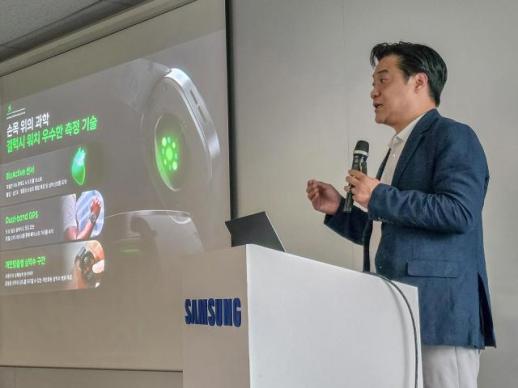 Samsung Health Unveils Integrated Running Solution for '10 Million Runners' Era As the number of runners in South Korea surges, marking the beginning of the '10 Million Runners' era, wearable technology that supports data-driven running is gaining attention. On May 14, Samsung Electronics announced that it will provide an integrated running experience based on 14 years of advanced data from Samsung Health and precise measurement technology from the Galaxy Watch. Samsung Health began in 2012 as 'S Health,' focusing on basic tracking and GPS route recording. In 2018, it integrated with the Galaxy Watch to enhance wearable tracking capabilities by offering real-time pace guidance. In 2020, Samsung introduced the world's first six running posture analysis features. The following year, it equipped the Galaxy Watch with a 'BioActive Sensor' to accurately capture heart rate signals even during intense movement, completing a comprehensive measurement technology that includes blood pressure, electrocardiogram, and blood oxygen levels. Recently, Samsung added a customized heart rate zone feature that analyzes users' cardiovascular fitness to help maintain optimal exercise intensity, along with dual-band GPS for precise tracking of runners' locations even in urban areas. The service also includes a personalized 'Running Coach' that suggests a pace optimized for individual fitness levels. Users can measure their endurance and pace through a 12-minute running test and receive a running level from 1 to 10. They can then access over 160 specialized training programs to aid in post-exercise recovery. Kwon Eun-joo, a former national marathon representative who participated in the program's development, stated, "The real-time voice guide helps prevent over-pacing and provides a suitable schedule, becoming a personalized running partner for each individual." Choi Jun-il, Senior Vice President of Samsung Electronics' MX Division Digital Health Team, remarked, "Samsung Health has grown alongside global users over the past 14 years. We will continue to be a reliable health partner, enabling runners to understand their bodies and find a balance for a healthy life, free from the constraints of mere record-keeping."* This article has been translated by AI. 2026-05-14 16:05:56
 -
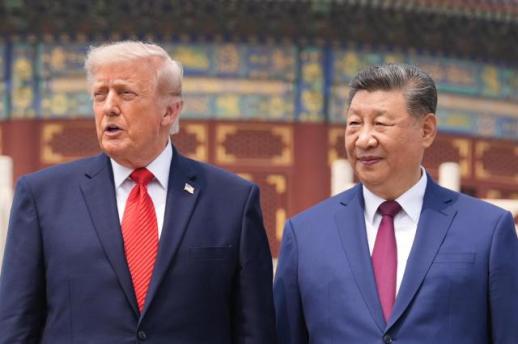 Trump Calls Meeting with Xi 'Good,' Remains Silent on Taiwan Issues Donald Trump positively assessed his meeting with Chinese President Xi Jinping but refrained from discussing specific topics, including Taiwan. On May 14, Trump visited Tian Tan Park in Beijing and responded to reporters' questions about the meeting, saying, "It was good." He added, "It's a wonderful place. Amazing. China is beautiful." According to the Associated Press, Trump's comments about the meeting were limited to his positive remark. When asked whether Taiwan was discussed, he did not provide an answer. In contrast to Trump's silence, Xi directly addressed the Taiwan issue during their meeting, issuing a warning. According to China's state-run Xinhua News Agency, Xi stated, "The Taiwan issue is the most important issue in US-China relations." He emphasized that if handled well, the relationship could maintain overall stability, but mishandling it could lead to confrontation or even conflict, pushing the US-China relationship into a very dangerous situation. Xi also strongly mentioned the issue of Taiwan independence, stating, "'Taiwan independence' and 'peace in the Taiwan Strait' cannot coexist like water and fire," and asserted that maintaining peace and stability in the Taiwan Strait is in the common interest of both countries. Earlier, the two leaders held their summit from 10:15 a.m. to 12:30 p.m., lasting over two hours. This is notably longer than the approximately 100 minutes of the US-China summit held in Busan last October.* This article has been translated by AI. 2026-05-14 16:03:00
 -
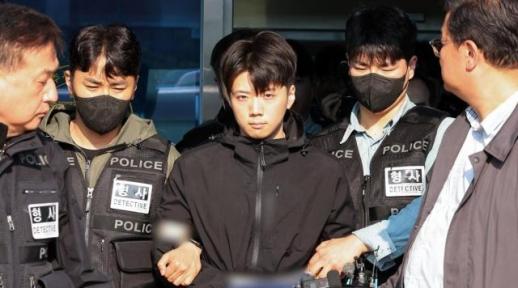 Gwangju High School Murder Suspect Jang Yoon-ki Did Not Submit Apology Letter Jang Yoon-ki, 23, the suspect in the murder of a high school student in Gwangju, expressed remorse to reporters by saying, "I am sorry," but he has not submitted a written apology or reflection letter. According to Yonhap News on May 14, the Gwangju Gwangsan Police Station announced the results of their investigation during a press briefing after Jang was transferred to prosecutors on charges of murder, attempted murder, and conspiracy to commit murder. Before being transferred to the prosecution on the morning of May 14, Jang stood before the media and repeated, "I am sorry," twice. However, it was confirmed that he had not submitted a handwritten reflection letter or apology to the police even nine days after the crime. During police questioning, Jang also stated, "I am sorry," but he did not clarify whether he was expressing remorse for the victims, who were either deceased or injured high school students, or if he regretted his actions. The police concluded that Jang's actions, including disposing of his phone and weapon to evade tracking by investigators, as well as washing his blood-stained clothes after the crime, indicated that the incident was a meticulously planned crime. They also determined that it did not fall under the category of a random crime. A police official stated, "Although Jang expressed remorse during the investigation, he has not submitted any objective materials such as a reflection or apology letter. Given the circumstances of attempting to destroy evidence, it is also unclear whether he had any intent to commit suicide." Jang is accused of murdering a 17-year-old female high school student in a secluded walkway in Wolgye-dong, Gwangsan-gu, at 12:11 a.m. on May 5, and also attacking a 17-year-old male student from another school with a weapon. He has been under investigation and was transferred on this day.* This article has been translated by AI. 2026-05-14 16:01:17
 -
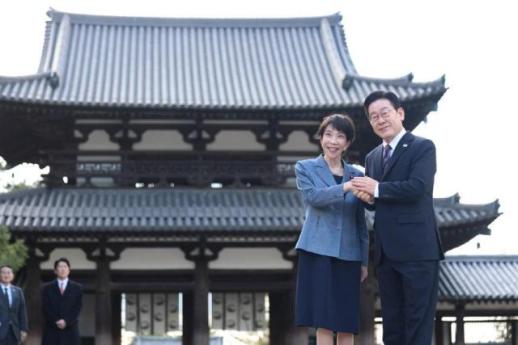 ASIA INSIGHT: Lee to meet Japanese PM in Andong where history meets diplomacy SEOUL, May 14 (AJP) - Diplomacy, at its best, has a sense of place. When Japanese Prime Minister Sanae Takaichi arrives in Andong, North Gyeongsang Province next week for a summit with President Lee Jae Myung, it will be more than just another date on the diplomatic calendar. It will be one of those rare moments where history, culture, and politics come together in a way that goes beyond routine diplomatic ritual. Takaichi's upcoming visit to the southern historic city of Andong, which is also Lee's hometown, would be a reciprocal gesture after Lee visited Takaichi’s hometown of Nara in Japan earlier this year. That kind of symmetry matters in diplomacy. It signals not just courtesy but mutual respect, a reminder that good neighborly relations are built as much on gestures as on treaties. The two leaders first met last fall on the sidelines of the Asia-Pacific Economic Cooperation (APEC) summit in Gyeongju, where they committed to shuttle diplomacy between the neighboring countries. Lee then traveled to Nara in January, and during the meeting, proposed that the next summit be held in Andong. Known as the spiritual and cultural capital of South Korea, Andong breathes history as home to Hahoe Village, one of the country’s most remarkable living repositories of Joseon-era heritage, as well as Byeongsan Seowon, a Confucian academy designated a UNESCO World Heritage Site. In 1999, Queen Elizabeth II visited Hahoe Village, where she was honored with a birthday feast, watched a traditional mask dance performance, and drew global attention to the provincial town that, at the time, many outsiders had never heard of. The effect was electric. Tourist arrivals to the village surged past one million that year, and the ripple effects lasted for two decades. That is the power of a single high-profile visit to the right place. Since then, however, visitor numbers have fallen sharply to around 500,000, hit by the coronavirus pandemic and shifting tourism trends. Andong, for all its magnificence, has struggled to recapture that global spotlight. This summit could change that. Lee and Takaichi are expected to discuss various topics including bilateral cooperation, particularly in sectors such as energy and critical mineral supply chains, amid the prolonged conflict in the Middle East. But the setting will do its own quiet work. Foreign leaders do not often venture 190 kilometers away from Seoul into inland areas. When they do, the world takes notice - and so do travel editors, tourism boards, and curious travelers around the world. A business forum is also being planned in Andong to coincide with the summit, suggesting that both countries understand this is about more than a mere photo-op. It would also be a boost for a city that deserves a closer look as part of balanced regional development. The shuttle diplomacy pattern between the two neighboring countries - Gyeongju, Nara, now Andong - is noteworthy. These are not capital cities. They are places rich in history, where layers of heritage give meetings a weight and texture that no glass-and-steel conference center ever could. Nara, with its ancient temples and roaming deer, and Andong, with its Confucian academies and traditional mask dances, share more in common than their leaders perhaps realize. For Andong, the opportunity is enormous but only if it is seized. The Queen's visit about three decades ago did not promote itself. It took deliberate effort to turn that royal visit into a tourism boom. The same formula could work again here. Some cities wait for history to find them, and Andong is ready when it does. 2026-05-14 16:00:06
 -
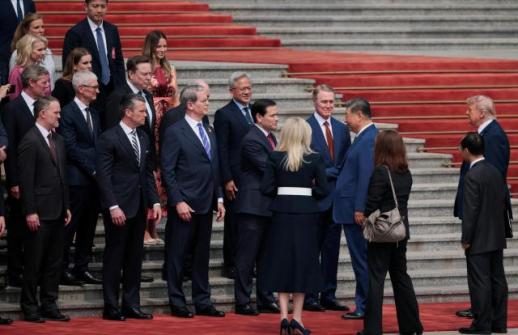 Xi Jinping Tells U.S. Business Leaders China Will Further Open Its Market Chinese President Xi Jinping expressed his commitment to further opening China's market during a meeting with prominent U.S. business leaders accompanying President Donald Trump on May 14, according to state-run People's Daily. During a summit at the Great Hall of the People, Trump introduced each of the American business leaders present, stating, "I have brought with me outstanding representatives of the U.S. business community. They all respect and value China, and I encourage them to expand cooperation with China." The U.S. business leaders emphasized their strong interest in the Chinese market and expressed a desire to deepen their operations in China and enhance cooperation. In response, Xi noted, "U.S. companies are currently deeply involved in China's reform and opening up, and both sides benefit from this engagement. China's opening will only expand further." He added, "China welcomes the U.S. to strengthen mutually beneficial cooperation, and I believe U.S. companies will have broader development prospects in China." The U.S. business leaders who attended the summit reportedly left with a sense of satisfaction. According to The Wall Street Journal, Jensen Huang, CEO of NVIDIA, remarked to reporters as he exited the Great Hall, "President Xi and President Trump were fantastic." Elon Musk, CEO of Tesla, also responded positively when asked about the summit's outcomes, stating, "There were many good things." Trump's delegation included nearly 20 key American business leaders, including Jensen Huang, Elon Musk, and Tim Cook, CEO of Apple.* This article has been translated by AI. 2026-05-14 15:59:44