
Journalist

Seán Canney
-
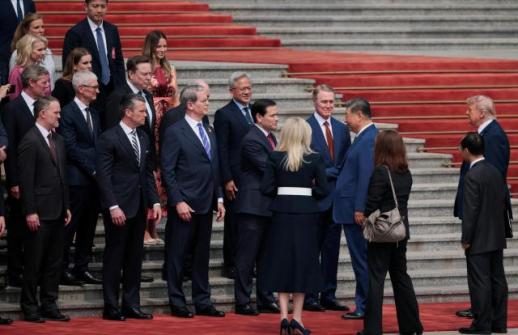 Xi Jinping Tells U.S. Business Leaders China Will Further Open Its Market Chinese President Xi Jinping expressed his commitment to further opening China's market during a meeting with prominent U.S. business leaders accompanying President Donald Trump on May 14, according to state-run People's Daily. During a summit at the Great Hall of the People, Trump introduced each of the American business leaders present, stating, "I have brought with me outstanding representatives of the U.S. business community. They all respect and value China, and I encourage them to expand cooperation with China." The U.S. business leaders emphasized their strong interest in the Chinese market and expressed a desire to deepen their operations in China and enhance cooperation. In response, Xi noted, "U.S. companies are currently deeply involved in China's reform and opening up, and both sides benefit from this engagement. China's opening will only expand further." He added, "China welcomes the U.S. to strengthen mutually beneficial cooperation, and I believe U.S. companies will have broader development prospects in China." The U.S. business leaders who attended the summit reportedly left with a sense of satisfaction. According to The Wall Street Journal, Jensen Huang, CEO of NVIDIA, remarked to reporters as he exited the Great Hall, "President Xi and President Trump were fantastic." Elon Musk, CEO of Tesla, also responded positively when asked about the summit's outcomes, stating, "There were many good things." Trump's delegation included nearly 20 key American business leaders, including Jensen Huang, Elon Musk, and Tim Cook, CEO of Apple.* This article has been translated by AI. 2026-05-14 15:59:44
 -
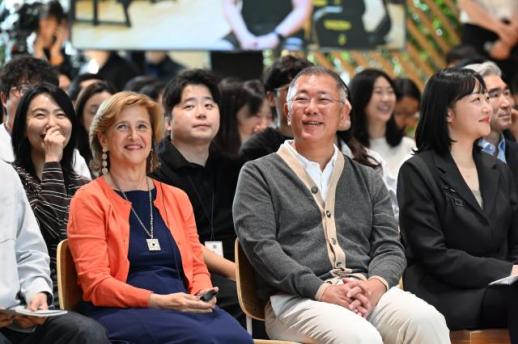 Hyundai's Chung Eui-sun: Labor Conflicts Must Consider National and Corporate Interests As labor unions across various industries, including semiconductors, shipbuilding, biotechnology, and automotive, demand a portion of operating profits as performance bonuses, Chung Eui-sun, Chairman of Hyundai Motor Group, stated that labor disputes should be evaluated considering multiple factors such as national development, shareholders, and the company's growth direction. Speaking to reporters before a renovation event at Hyundai's Yangjae headquarters on May 14, Chung remarked, "Labor and management have had a long-standing relationship. Despite ups and downs, I believe that choosing the right path is essential for the company's efficient growth. We must consider various elements, including shareholder and national development, in our decisions." The Hyundai labor union is demanding that 30% of last year's net profit be distributed as performance bonuses during this year's wage negotiations. They are also calling for a transition to a full monthly salary system instead of an hourly wage to accommodate reduced working hours due to robot implementation, as well as retirement age extensions and a 4.5-day workweek. Similarly, the Kia labor union is advocating for a 30% performance bonus, a 100 million won childbirth incentive, and retirement age extensions. Hyundai Mobis is seeking compensation proposals similar to Hyundai's, along with job security amid controversies surrounding the sale of its ramp division. In this context, demands for primary negotiations from newly established union sub-organizations are also increasing. Chung noted, "Our country has not experienced capitalism for long since the Korean War, so we are currently going through various challenges. I believe we are in a transitional period, and if we navigate this wisely, it could present opportunities for us to lead globally." Regarding robot development, Chung stated, "Hyundai has primarily focused on automobiles and has not ventured into robotics, so we are progressing while learning from our mistakes. Since software is crucial for robots, we are working to balance hardware, and it is essential that the emotional and cultural aspects of our employees are well integrated, which we are paying close attention to." He added, "It is our role as a company to create an environment where talented individuals from engineering and science fields can join and express their ideas. We aim to minimize trial and error and quickly overcome errors to deliver better products swiftly." Chung also expressed concerns about the prolonged conflict in the Middle East. Hyundai began construction of its Saudi Arabian production facility (HMMME) within the King Abdullah Economic City (KAEC) automotive industrial complex last year, aiming for operational readiness in the fourth quarter. Saudi Arabia, which accounts for 35% of total automotive sales in the Middle East, saw Hyundai closely pursue the local leader, Toyota Group, with 140,000 units sold last year. Chung remarked, "As the Iran conflict prolongs, the completion of our Saudi factory may be delayed. While we are worried about a potential decline in Middle Eastern sales, we will prepare thoroughly to ensure we can sell well once the war ends." He emphasized the importance of developing new technologies and improving corporate structure during this highly competitive global automotive market. "It is crucial for Hyundai to excel in developing new technologies and enhancing our capabilities. We will learn from any company that has something to teach us and strive to create products that provide greater customer satisfaction, ensuring we have confidence in the technologies we develop and improving their quality," he stated. Chung reiterated that safety would remain the top priority in the competition for autonomous driving technology. He acknowledged that companies like Tesla and Waymo are advancing rapidly in this area, stating, "Hyundai will also deploy 200 vehicles in Gwangju as a preliminary step. While we can address technological shortcomings, the most important factor is safety. We will focus on customer safety in our development, even if it means being a bit slower." * This article has been translated by AI. 2026-05-14 15:57:48
 -
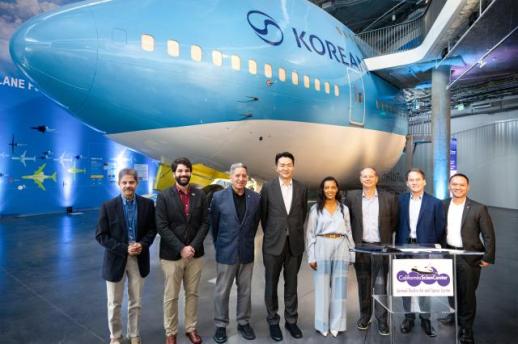 Korean Air and Asiana Airlines Begin Merger Process Amid Stock Surge Shares of Korean Air and Asiana Airlines rose following news that the two airlines have initiated their merger process. As of 2:26 PM on May 14, Asiana Airlines was trading at 7,730 won, up 14.86% (1,000 won) from the previous trading day. Hanjin KAL rose 4.28% to 117,000 won, while Korean Air increased by 3.30% to 26,600 won. On May 13, both Korean Air and Asiana Airlines held regular board meetings and approved the merger agreement. The two companies have set December 17 as the launch date for the merged Korean Air. The merger ratio has been determined at 1 to 0.2736432, which is expected to increase Korean Air's capital by approximately 101.7 billion won. The signing of the merger agreement comes five years and six months after the new stock subscription agreement between Korean Air and Asiana Airlines on November 17, 2020. Following approval from Asiana Airlines' shareholders, the merger is scheduled for December 16, with new shares expected to be listed on January 4, 2027. Jeong Yeon-seung, a researcher at NH Investment & Securities, stated, "Post-merger, the integration of overlapping infrastructures such as aircraft maintenance, ground operations, in-flight meals, and overseas sales networks will be possible. This is expected to lead to significant fixed cost reductions and economies of scale." He added, "Expectations for synergies will gradually increase starting in the fourth quarter, when some operational effects of the merger will be reflected. The merged entity will establish itself as the dominant number one player in the South Korean aviation market." However, Jeong noted that the number of new shares issued during the acquisition of Asiana Airlines by Korean Air will only account for 5.5% of the total shares, which is not expected to significantly dilute shareholder value.* This article has been translated by AI. 2026-05-14 15:55:46
 -
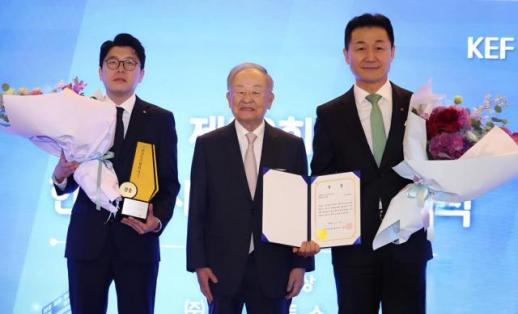 LX Pantos Wins Grand Prize at Korean Labor-Management Cooperation Awards LX Pantos has been awarded the Grand Prize in the large enterprise category at the Korean Labor-Management Cooperation Awards for its achievements in fostering a cooperative labor-management culture.The company announced on May 14 that it received the prestigious award during the 38th Korean Labor-Management Cooperation Awards ceremony held at the Four Seasons Hotel in Jongno, Seoul.Key figures in attendance included Minister of Employment and Labor Kim Young-hoon, Chairman of the Economic, Social and Labor Council Kim Ji-hyung, Chairman of the Korea Employers Federation Son Kyung-sik, and Chairman of the Korean Confederation of Trade Unions Kim Dong-myung. LX Pantos was represented by CEO Lee Yong-ho, worker representative Park Cha-jun, and Chief Human Resources Officer Kim Sung-wook.The Korean Labor-Management Cooperation Awards, organized by the Korea Employers Federation, recognize companies that contribute to the national economy by establishing a desirable labor-management culture through mutual cooperation. The evaluation criteria include trust-building between labor and management, fostering a culture of coexistence, and organizational stability.LX Pantos was particularly praised for maintaining stable labor-management relations without disputes or strikes for nearly 50 years since its founding in 1977. Despite significant external changes in the logistics industry, such as shifts in the global supply chain and fluctuations in cargo volume, the company has sustained a cooperative organizational culture.The company has also received positive recognition for operating various communication channels, including labor-management councils, junior boards, and industrial safety and health committees, which systematically gather employee feedback. This proactive approach to building a labor-management culture focused on prevention rather than merely resolving conflicts after they arise was highlighted.As the importance of managing labor-management conflict risks grows in the current business environment, LX Pantos has worked to strengthen internal communication through regular town hall meetings and management forums. The company is also focused on fostering bonds among employees through family invitation events and expanding organizational culture programs.In terms of ESG (Environmental, Social, and Governance) management, LX Pantos continues its efforts to build a sustainable organizational culture. The company is implementing maternal protection policies, expanding employment for people with disabilities, and engaging in social contribution activities, demonstrating its commitment to corporate social responsibility.In a rapidly changing business environment marked by global economic slowdowns and supply chain uncertainties, stable labor-management relations are increasingly recognized as a key factor in corporate competitiveness. This is especially true for comprehensive logistics companies with a high proportion of global clients, where organizational stability and operational efficiency directly impact business competitiveness.Lee Yong-ho, CEO of LX Pantos, stated, "We are deeply honored to have our employees' efforts in building a cooperative labor-management culture recognized through this award. We will continue to develop a healthy organizational culture based on mutual trust and communication, and achieve sustainable growth."* This article has been translated by AI. 2026-05-14 15:53:01
 -
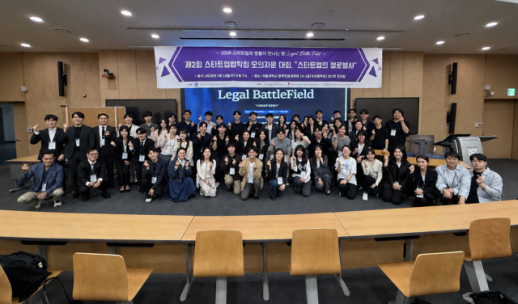 Seum Hosts Startup Investment Negotiation Competition for Law Students Seum, a law firm specializing in startups, hosted a mock consultation competition for law students to experience practical startup investment negotiations. This initiative comes as the demand for legal advice in the growing AI startup sector increases, sparking interest among aspiring legal professionals in the startup legal field. On May 13, Seum announced it conducted the "2026 Night Where Startups Meet Law - Legal Battle Field" for students from Seoul National University’s Startup Law Society. The event took place at the Woochan Law Building at Seoul National University, attracting over 100 participants, including students from other law schools. The competition was structured around a hypothetical AI startup, with students engaging in negotiations at various stages of investment acquisition. They assumed the role of legal advisors for the startup, negotiating with different types of investors, including angel investors, venture capitalists, private equity firms, and strategic investors from large corporations. Practicing lawyers took on the role of investors. The competition comprised four rounds, covering the startup growth process from the Seed stage to Pre-Series A, Series A, and Pre-IPO. Lawyers from Seum served as mentors for about a month, guiding student teams in contract structuring and negotiation strategies. Attorney Moon Han-kyu, who oversaw the event, noted, "Students found it particularly challenging to identify 'compromise points' during the actual negotiation process." He emphasized that beyond constructing legal arguments, practical skills in reaching realistic agreements between startups and investors were crucial. Recent changes in the startup market were also reflected in the event's theme. Seum explained, "There has been a noticeable increase in legal inquiries related to AI during the startup consultation process." Consequently, this year's event was centered around investment negotiations for AI startups. Interest among law students has reportedly increased compared to previous years. Attorney Moon remarked, "Attendance has grown compared to last year, and discussions with students reveal a heightened interest in the startup legal field." The event featured Jung Ho-seok, the representative attorney of Seum, as the head judge, with support from the Startup Division of the Korean Corporate Counsel Association (KICA) and the Young Entrepreneurs Network Prism Mentorship Club.* This article has been translated by AI. 2026-05-14 15:52:05
 -
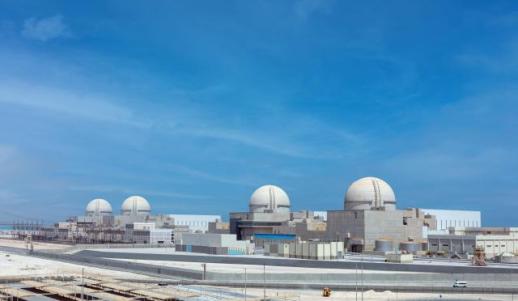 South Korea Streamlines Nuclear Power Export Strategy The South Korean government has decided to unify its nuclear power export efforts, which have been divided between Korea Electric Power Corporation (KEPCO) and Korea Hydro & Nuclear Power (KHNP). A government-affiliated committee will oversee the projects, while KEPCO and KHNP will collaborate on implementation. The formal integration of export agencies will be determined through legislative discussions. On May 14, the Ministry of Trade, Industry and Energy held the first nuclear export strategy council meeting at the Korea Trade Insurance Corporation, where it announced a plan for "efficiency in the nuclear export system." The ministry presented the export efficiency plan in two parts: immediate measures and plans to be pursued within the year. As part of the immediate measures, a public-private joint "Export Planning Committee" will be established under the nuclear export strategy council. The committee, chaired by the ministry's nuclear strategy planning director, will lead negotiations, planning, and coordination for nuclear exports while enhancing reviews and consultations on economic viability and risks. This move comes as most nuclear export contracts have been conducted through direct negotiations. A ministry official stated, "Since 2010, there have been over 20 nuclear exports globally, and with the exception of the Czech Republic, most have been conducted through direct negotiations between governments." The official emphasized the importance of government involvement, noting that these projects are not merely issues between public enterprises but involve government-to-government agreements and national projects. Countries where KEPCO and KHNP previously operated separately will now be managed collaboratively. While both companies will jointly undertake overseas nuclear project development and main contracts, KEPCO will handle external negotiations and equity investments due to its financial strength and recognition. KHNP will lead the construction and operation sectors. This restructuring aims to resolve conflicts between KEPCO and KHNP, which divided nuclear export functions in 2016. KEPCO was assigned to countries that did not require changes to the design of Korean nuclear reactors, while KHNP took on countries needing design modifications. For instance, KEPCO managed the Barakah Nuclear Power Plant in the UAE, while KHNP was responsible for the Dukovany Nuclear Power Plant in the Czech Republic. However, disputes arose between the two companies regarding additional construction costs for the Barakah plant. The Board of Audit and Inspection recently pointed out that inefficiencies in bidding and negotiations were caused by insufficient cooperation in sharing key information, negotiation experience, and support for personnel and technical information. It also noted that a lack of consistency in external negotiations and responses has undermined national credibility. Currently, KHNP will take the lead in ongoing or visible projects in the Czech Republic and the Philippines. KHNP is also responsible for the export of innovative small modular reactors (i-SMR), which it is currently developing. Additionally, the ministry plans to advance the "Nuclear Export Promotion Act" within the year. This proposed legislation will include provisions for the ministry's oversight of public institutions involved in overseas nuclear projects, the establishment of a comprehensive nuclear export agency, and legal grounds for export support measures. During the legislative discussions, the establishment of a comprehensive nuclear export agency will also be considered. The ministry intends to explore the possibility of a unified nuclear export agency, in addition to KEPCO and KHNP. Addressing concerns that the government may interfere in the management of public institutions, a ministry official clarified, "Rather than participating in management, we see it as managing specific projects or economic risks. It is a process where both the public and private sectors seek optimal negotiation and competitive strategies for projects involving counterparts." On the same day, KEPCO President Kim Dong-cheol and KHNP President Kim Hoe-cheon signed a "Strategic Partnership Agreement for Nuclear Exports," agreeing to strengthen cooperation at each stage of nuclear export projects and enhance information and personnel exchanges. They also agreed to modify contracts to change the arbitration of the ongoing UAE nuclear project from the London International Arbitration Court to the Korean Commercial Arbitration Board. Minister of Trade, Industry and Energy Kim Jeong-kwan stated, "To effectively respond to current nuclear export issues in the U.S., Czech Republic, and Vietnam, we will refine the K-nuclear export system as a unified team." He emphasized that ultimately, the government support will be strengthened through legislation. He added, "To seize opportunities in the global nuclear renaissance, we will bolster the competitiveness of the existing Korean nuclear industry, consolidate the capabilities of domestic institutions, and enhance our economic and risk management systems."* This article has been translated by AI. 2026-05-14 15:49:01
 -
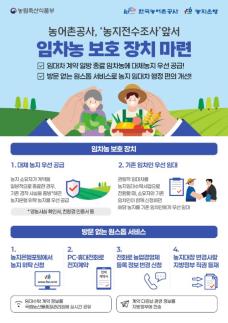 Rural Development Administration Implements Protections for Tenant Farmers Ahead of Nationwide Land Survey The Rural Development Administration announced on May 14 that it has established measures to minimize potential harm to tenant farmers ahead of the government's nationwide land survey. The agency will prioritize the supply of alternative farmland to tenant farmers whose lease agreements have been unilaterally terminated. If a landowner ends a contract without mutual agreement, tenant farmers can receive priority access to land managed by the Land Bank, provided they can prove their previous cultivation. Protections are also in place for those transitioning from traditional lease agreements to the land leasing trust program. Tenant farmers who have been farming without a contract through the agency can apply for the land leasing trust program with the landowner, ensuring that the land is leased to the existing tenant first. With an increase in landowners and tenants expected to participate in the land leasing trust program ahead of the survey, the agency is enhancing its digital services. Landowners can now apply for land leasing through the Land Bank portal without visiting their local office. Additionally, lease agreements can be executed electronically via computers or mobile devices, allowing for remote contract signing. Lee Jeong-moon, Director of Land Management at the Rural Development Administration, stated, "We will continue to actively pursue improvements to the system to protect tenant farmers. We aim to establish the land leasing trust program as a convenient system for both landowners and tenants, creating a foundation for efficient land use and a stable leasing environment." Meanwhile, the Ministry of Agriculture, Food and Rural Affairs will conduct a nationwide land survey over the next two years to eliminate land speculation and assess actual land use. A special maintenance period for normalizing land leases will also be in effect from May 18 to July 31.* This article has been translated by AI. 2026-05-14 15:48:00
 -
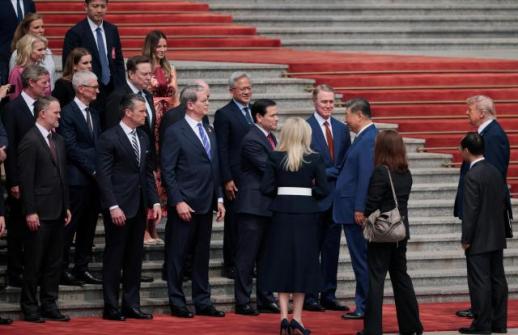 CEOs Respond Positively to US-China Summit During Trump's Visit CEOs of major U.S. companies accompanying President Donald Trump on his visit to China expressed positive reactions regarding the U.S.-China summit. According to the Wall Street Journal, business leaders who traveled with Trump attended a welcome ceremony and summit held at the Great Hall of the People in Beijing on May 14. Jensen Huang, CEO of NVIDIA, commented to reporters as he exited the Great Hall, saying, "President Xi and President Trump were fantastic." Elon Musk, CEO of Tesla, also noted the summit's outcomes, stating, "There were many good things." Along with Musk and Huang, other prominent business figures, including Apple CEO Tim Cook, were part of the delegation. They also attended the welcome ceremony for Trump at the Great Hall of the People. The presence of top executives from major U.S. technology companies highlights the focus on advanced technology, supply chains, and the business environment in China during this summit. NVIDIA is at the center of discussions regarding AI semiconductor export regulations and market access in China, while both Apple and Tesla have significant production and sales operations in the country. High-ranking officials from the Trump administration, including Secretary of State Marco Rubio, Treasury Secretary Scott Vessen, and Defense Secretary Pete Hegseth, also participated in the welcome ceremony. Earlier, President Xi emphasized cooperation in his opening remarks at the summit, stating, "The common interests of the U.S. and China are greater than our differences," and added that the success of both countries presents opportunities for each other, with a stable U.S.-China relationship benefiting the world.* This article has been translated by AI. 2026-05-14 15:46:25
 -
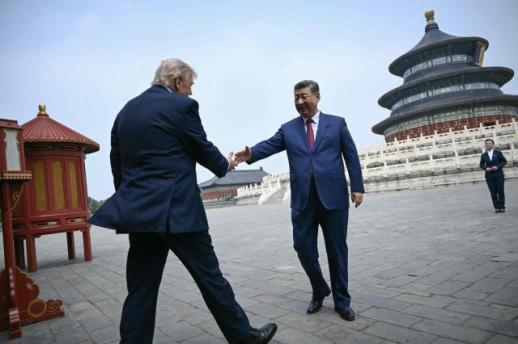 Trump and Xi Arrive at Temple of Heaven After Summit U.S. President Donald Trump and Chinese President Xi Jinping arrived at the Temple of Heaven after concluding their summit at the Great Hall of the People on May 14, according to China’s state broadcaster CCTV. Following their meeting, which lasted from 10:15 a.m. to approximately 12:30 p.m., the two leaders toured the Temple of Heaven and are scheduled to attend a state dinner in the evening. The Temple of Heaven is a sacred site where emperors historically offered sacrifices to the heavens, symbolizing the connection between celestial order and earthly governance. This visit holds significance as it marks a departure from Trump’s first visit to China in 2017, when he was invited to the Forbidden City. Analysts suggest that this invitation to the Temple of Heaven is rich in meaning, allowing China to showcase not only the grandeur of its ancient imperial history but also to convey its cultural depth to President Trump. Additionally, agriculture is a key agenda item for this visit, enhancing the significance of the Temple of Heaven, a place historically associated with prayers for abundant harvests. Observers believe that President Trump may naturally discuss increasing purchases of U.S. soybeans, grains, and meats during this visit. The Temple of Heaven also holds special significance in U.S.-China relations. According to the Singapore-based United Daily News, former President Richard Nixon visited the Temple of Heaven during his historic trip to China in 1972, becoming the first sitting U.S. president to do so. Henry Kissinger, the former U.S. Secretary of State known as a long-time friend of the Chinese people, has visited the site more than ten times, reflecting its importance in diplomatic history.* This article has been translated by AI. 2026-05-14 15:44:42
 -
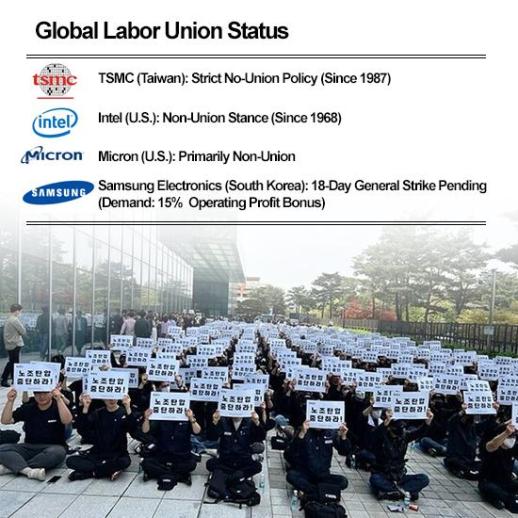 AJP Eye: Samsung's AI ambitions face 'Opex trap' as labor dispute threatens crucial Capex SEOUL, May 14 (AJP) - Samsung Electronics, riding on the AI boom to join the exclusive $1 trillion valuation club, is caught in a squeeze that no chip roadmap can solve: a labor dispute forcing it to choose between rewarding its workers today and funding the factories that will determine its place in the AI memory hierarchy tomorrow. The Opex (operational expenditure)-versus-Capex (capital expenditure) tension is now acute. Following a 17-hour marathon mediation session that collapsed Wednesday, the National Labor Relations Commission has urged both sides to resume talks Saturday. The central friction is performance bonuses. The union is demanding a legally guaranteed pool equal to 15 percent of annual operating profit; the commission has proposed 12 percent as a compromise. The union has rejected it. The arithmetic of a prolonged standoff is stark. Industry analysts estimate a full shutdown of Samsung's production lines would cost approximately 1 trillion won ($670 million) per day in direct losses. Should the union proceed with its threatened 18-day general strike, total damages could reach 30 trillion won — a figure that would dwarf any bonus settlement and land squarely on the capex budget Samsung needs most right now. That budget pressure is the real story. Samsung is competing in an AI memory race where capital deployment speed is the primary variable. TSMC, which has maintained a no-union policy since its founding in 1987, has guided 2026 capital expenditure at $52–56 billion, up to 40 percent above 2025 levels, with 70–80 percent earmarked for advanced process nodes at 2-nanometer and 3-nanometer. Micron, also operating without unions, has revised its fiscal 2026 capex forecast above $25 billion after spending $5 billion in its second fiscal quarter alone. Neither company is negotiating bonus pools. Both are building fabs. The structural contrast is not incidental. The global semiconductor industry runs almost entirely on a non-union model, for reasons embedded in the physics of the business. Chip fabrication requires continuous 24-hour cleanroom operation; any strike-induced halt triggers contamination protocols, yield losses, and recovery timelines measured in weeks, not days. The workforce is composed overwhelmingly of engineers and R&D specialists compensated through stock options and merit pay rather than collective agreements. The Wall Street Journal has described union friction as a potential "obstacle" to semiconductor industry competitiveness. TSMC founder Morris Chang has drawn an explicit parallel to the United Auto Workers, arguing that while unions may secure near-term wage gains, they erode the long-term productivity on which innovation depends. Samsung's situation is more complicated than its rivals' by design. It is a sprawling conglomerate with a large unionized manufacturing base — a structure that served it well in earlier industrial eras but creates friction in a business where uninterrupted capital deployment is existential. The company must now navigate that friction at precisely the moment when HBM4 qualification, new fab capacity, and Nvidia supply contracts are all in play simultaneously. Global investors are watching the Saturday mediation closely. If Samsung cannot contain its opex commitments, it risks ceding the capex window to rivals, who face no such constraint. In a memory supercycle where supply is already sold out and AI demand is accelerating, lost ground won't easily be recovered. — AJP Eye is AJP's business and markets commentary column. 2026-05-14 15:42:55