
Journalist

Seo Hye Seung
-
 Germany’s Merz Calls U.S. ‘Most Important Partner’ Despite Planned Troop Cuts German Chancellor Friedrich Merz reaffirmed Germany’s alliance with the United States, calling Washington the most important partner in the North Atlantic alliance even after the U.S. announced plans to cut 5,000 troops stationed in Germany. According to Reuters, Merz said in an interview with German public broadcaster ARD on May 3 (local time) that while he acknowledged differences with U.S. President Donald Trump over issues including Iran, “nothing changes in the course of cooperation with the United States.” He also said recent friction between the two countries was not connected to the planned reduction of U.S. forces in Germany. The United States recently announced a plan to reduce its troop presence in Germany by 5,000. Reuters reported that the move has effectively put an end to a plan pursued under the Joe Biden administration to deploy a long-range Tomahawk missile battalion in Germany. Merz made similar remarks on April 30 during a visit to a military base in Muenster, saying the trans-Atlantic partnership was “especially important” and that Germany’s security policy remained aligned with “a strong NATO military alliance and reliable partnerships.” The comments came shortly after Trump raised the possibility of cutting U.S. troops in Germany.* This article has been translated by AI. 2026-05-04 14:27:15
 -
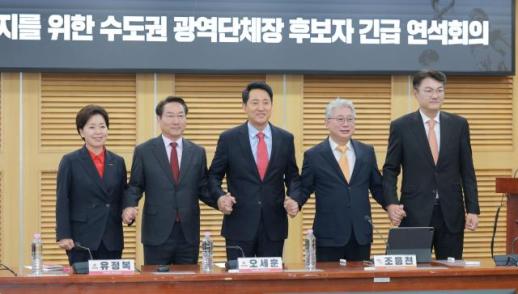 Seoul-Area Opposition Candidates Urge Withdrawal of Democratic Party Special Prosecutor Bill Seoul-area metropolitan candidates from opposition parties running in the June 3 local elections met Monday and denounced a Democratic Party-backed “special prosecutor bill on alleged fabricated prosecutions,” calling it an “Lee Jae-myung self-pardon special prosecutor bill.” They said they would begin a nationwide resistance campaign to stop what they described as a “judicial coup.” Seoul Mayor Oh Se-hoon and Incheon mayoral candidate Yoo Jeong-bok of the People Power Party, along with New Reform Party candidates Kim Jeong-cheol for Seoul mayor and Cho Eung-cheon for Gyeonggi governor, held a joint meeting at the National Assembly and issued a statement. People Power Party Gyeonggi governor candidate Yang Hyang-ja did not attend due to scheduling conflicts but joined the statement. Cho, who proposed the meeting, said, “How can a special prosecutor appointed by the president withdraw an indictment that erases the president’s crimes? It shakes the foundation of the rule of law and is a judicial insurrection.” He added, “On a foundation where the rule of law collapses, local autonomy and the people’s livelihood economy are nothing but a house of cards.” Oh said he could not “stand by” what he called the Lee Jae-myung government’s destruction of the rule of law and democracy, and urged all political forces except the Democratic Party to respond with “extraordinary resolve.” Yoo said South Korea stood at a crossroads between remaining a country governed by law and becoming one where those in power “erase their own cases,” and asked Democratic Party candidates Jeong Won-oh for Seoul mayor, Park Chan-dae for Incheon mayor and Choo Mi-ae for Gyeonggi governor whether they support or oppose the bill. Kim said that if a law allowing someone to “delete their own crimes” is permitted, it would set a precedent that could be repeated even after a change of government. In their joint statement, the candidates demanded that the Democratic Party immediately halt and withdraw what they called the “Lee Jae-myung self-pardon special prosecutor bill.” They also urged President Lee Jae-myung to clearly declare to the public: “During my term, there will never be any withdrawal of indictments related to my allegations, and I will stand trial according to law and principle.” They said they would launch a nationwide online petition to block what they called a judicial coup and conduct public outreach to highlight problems with the bill. They also said they would build solidarity beyond party lines and called on the media, intellectuals and civic groups to state their positions.* This article has been translated by AI. 2026-05-04 14:25:15
 -
 Half of Dual-Income Couples With Preschoolers Face Severe Time Poverty, Study Finds More than half of dual-income households with preschool-age children in South Korea lack enough personal time, a new analysis found, as child care and housework squeeze both leisure and sleep. The Korea Labor Institute said Monday it analyzed the 27th time-use survey from the Korea Labor and Income Panel Study, focusing on married-couple households with spouses ages 20 to 64. Compared with couples without children, households with children spent 49 more minutes a day on mandatory time — paid and unpaid work and commuting — and had 41 fewer minutes of discretionary time. The institute attributed the shift mainly to increased unpaid labor. The institute divided a 24-hour day into essential time (sleep and personal care), mandatory time and discretionary time, then measured time poverty based on discretionary time, leisure and sleep. Time pressure was greatest when children were youngest. In households with preschoolers, the discretionary-time poverty rate was 35.3%, the leisure-and-social-relationships time poverty rate was 23.9%, and the sleep-shortage rate was 26.6% — the highest across all child-age groups. Whether both spouses worked was also a key factor. Among all married-couple households, the discretionary-time poverty rate was 25.2% for dual-income couples, more than double the 11.6% for single-earner households. Leisure and sleep shortages were also more pronounced among dual-income couples, reflecting the combined burden of paid work, commuting and unpaid work. The strain intensified sharply for dual-income households with preschoolers. Their discretionary-time poverty rate reached 51.1%, while the leisure-and-social-relationships time poverty rate was 36.6% and the sleep-shortage rate was 30.5%. Jeong Hyeon-sang, a senior research fellow at the institute, said the combination of a period of concentrated care needs and dual-income work “rapidly compresses the time people can choose to use.” Gender gaps were clear. In dual-income households, women carried a heavier unpaid-work burden than men, further limiting women’s discretionary and leisure time. Among dual-income women with preschoolers, the discretionary-time poverty rate was 64.7% and the leisure-and-social-relationships time poverty rate was 50.5%. Patterns of time shortage also differed by gender. Men were more likely to face sleep loss alone, while women more often experienced overlapping shortages in both discretionary and leisure time — a combination the institute warned could restrict recovery and social ties. Experts said policy responses are needed because time poverty is concentrated in specific life stages and household types. Jeong said dual-income households with preschoolers should be treated as a core support target, calling for expanded access to care services and stronger institutional measures such as more flexible working hours. He added that reforms to encourage men’s participation in caregiving should also be pursued to ease structural imbalances in time burdens. * This article has been translated by AI. 2026-05-04 14:24:16
 -
 China Corruption Cases Point to Stablecoins as Emerging Bribery Tool, Report Says A string of recent corruption cases in China has a common thread: allegations that bribes were paid and received through stablecoins, Hong Kong newspaper Ming Pao reported on May 4. Those implicated include Hu Henghua, the former Chongqing mayor; Luo Lin, the former party secretary of Chongqing’s Liangjiang New Area; and Lin Xiucheng, chairman of San’an Group, described as China’s “LED king,” the report said. According to the report, Hu was brought down on March 20 for serious disciplinary violations and was later dismissed over allegations he took bribes via stablecoins. Investigators found he received about $30.8 million worth of the dollar-pegged stablecoin Tether (USDT), it said. The funds were later moved through overseas exchanges and transferred to a cold wallet, according to the report. The bribes were said to have been provided by San’an Group, a leading company in Xiamen, Fujian province. Lin and his son, Lin Kechuang, allegedly paid in exchange for Hu’s support tied to the group’s business, the report said. Hu was also said to have publicly backed San’an projects and supported the business. Luo, who fell around the same period, was also dismissed over allegations of taking $15.5 million worth of USDT and laundering money using stablecoins, the report said. Stablecoins are crypto assets designed to track the value of fiat currencies such as the U.S. dollar, limiting price swings. The report said their speed and difficulty of tracing can make them attractive for bribes and illegal transfers. Ming Pao said bribery involving stablecoins and other virtual assets is emerging as a new front in China’s anti-corruption drive. In 2024, Yao Qian, former head of the People’s Bank of China’s Digital Currency Research Institute and a key figure in the digital yuan policy push, was brought down on corruption allegations. Investigators found he took about 2,000 ether, worth about 60 million yuan, in exchange for helping a cryptocurrency company list overseas, the report said. Authorities tracked the flow of funds using blockchain technology and uncovered the case, it added. The case was also featured earlier this year in an anti-corruption documentary jointly produced by the publicity department of the Central Commission for Discipline Inspection and China Central Television, titled “Never Stop, Never Retreat.” The documentary warned that new forms of corruption are emerging alongside advances in virtual-asset technology. * This article has been translated by AI. 2026-05-04 14:12:17
 -
 KFA confirms North Korean female soccer club visit for AFC finals in Suwon SEOUL, May 04 (AJP) - The Korea Football Association confirmed Monday that North Korean women's soccer club Naegohyang (meaning "my hometown" in Korean) will visit Suwon, south of Seoul, for the Asian Football Confederation Women's Champions League finals. The visit marks the first time a North Korean athletic delegation has entered South Korea in eight years. According to South Korea's football governing body, the Asian Football Confederation (AFC) informed South Korean officials of the North Korean team's participation on May 1. The move ends a long hiatus in cross-border sports exchange following a period of active cooperation in 2018 that included unified teams and joint athletic entries. Naegohyang qualified for the tournament finals after winning the 2023~2024 North Korean top-flight league title. The team will face Suwon FC Women in a semi-final match scheduled for May 20 at Suwon Sports Complex. The visiting delegation includes 39 individuals, consisting of 27 players and 12 staff members, according to the Ministry of Unification. Naegohyang is a corporate-style club founded in Pyongyang in 2012 and receives sponsorship from a consumer goods company. The squad is led by Ri Yu-il, who previously served as head coach for the North Korean national women's team. The team demonstrated a dominant performance in the qualifying rounds, scoring 23 goals without conceding. Naegohyang advanced through the group stage with two wins and one loss, including a 3-0 victory over Suwon FC. They secured a place in the final four by defeating Ho Chi Minh 3-0 in the quarter-final round. The Korea Football Association won the bid to host the tournament finals in January after Suwon FC successfully advanced to the knockout stages. The winner of the semi-final match will face either Melbourne City or Tokyo Verdy in the championship match on May 23. 2026-05-04 14:12:08
 -
 South Korea Firms Take Diverging Paths in Vietnam’s LNG Power Market Two large liquefied natural gas-fired power projects in Vietnam are moving in opposite directions. Ca Na LNG in Khanh Hoa province took a first step after signing an investment and project contract in April. But Nghi Son LNG in Thanh Hoa province has stalled after failing to attract a single bidder in three tenders. Vietnam’s Finance and Investment Newspaper, an outlet under the Ministry of Finance, reported on May 4 (local time) that South Korean companies are now pursuing different strategies. SK Innovation has been listed as an investor in the nearby Quynh Lap LNG project in Nghe An province, while POSCO International has proposed developing Nghi Son and Quynh Lap together as a package. Vietnam’s LNG market is emerging as a new test for South Korean energy firms. Ca Na LNG signed its investment and project contract on April 10 with Khanh Hoa province through a consortium of Vietnam’s Trung Nam Group and Sideros River. The project is notable as the first LNG power project selected through an international tender under Vietnam’s Power Development Plan VIII. Nghi Son LNG, by contrast, again failed to secure any investor in its third tender. The project calls for a 1,500-megawatt combined-cycle gas turbine LNG plant with total investment of 57.524 trillion dong, but tenders have repeatedly fallen through since 2024. In the second tender on April 4 last year, five foreign companies — including Japan’s JERA, Thailand’s Gulf Energy and South Korea’s SK Innovation — showed interest, but no formal bid was submitted. As Nghi Son drifts, South Korean firms are looking to adjacent projects. SK Innovation was approved in February as an investor in Quynh Lap as part of a consortium. Nghe An selected its developer through direct negotiations rather than a competitive tender. SK Innovation has repeatedly proposed an integrated plan to link the two plants and share LNG storage, a dedicated port and a transmission yard. POSCO International has taken a similar approach. POSCO International CEO Lee Kye-in sent a letter to Vietnam’s Ministry of Industry and Trade in July last year, formally proposing integrated development of the Nghi Son and Quynh Lap LNG projects and selection of investors through direct appointment. The company argued that sharing infrastructure would cut costs and speed up the projects. Local government policy, however, does not align with that approach. An official at the Nghi Son Economic Zone and Industrial Park Management Board said Thanh Hoa chose an open tender because multiple investors had shown interest for a long time, calling it a process to ensure transparency and select capable investors. Thanh Hoa is also maintaining a policy, based on ministry guidance, that each LNG plant should have its own dedicated port — a direct clash with the South Korean proposal to share infrastructure between plants. Still, Thanh Hoa has signaled it does not intend to leave Nghi Son on hold indefinitely. In late March, it formed a working group to address obstacles facing LNG power projects in the province. On April 17, it met with Russia’s Novatek to gauge investment interest in three LNG plants — Nghi Son, Thanh Hoa and Cong Thanh — totaling about 4,500 MW, indicating it is also looking beyond South Korean capital. From an investor’s perspective, the two projects differ in appeal. Ca Na has existing advantages including a deepwater port, stable geological conditions and nearby industrial complexes. Nghi Son and Quynh Lap face the twin burdens of infrastructure needs and heavy investment costs — a key reason South Korean firms keep pushing an integrated development plan. Vietnam, meanwhile, designated LNG power as a core tool for its energy transition in August last year through Politburo Resolution No. 70-NQ/TW. Whether South Korean companies gain ground as stand-alone developers or through an integrated consortium will depend on how policy differences with provincial governments are resolved. Decisions on a possible fourth tender for Nghi Son and whether authorities accept the SK and POSCO integrated proposal are expected to be a turning point for South Korean energy companies in Vietnam’s LNG market.* This article has been translated by AI. 2026-05-04 14:10:35
 -
 Korea University, UNIST team up to build Korean version of Harvard-MIT HST SEOUL, May 04 (AJP) - Korea University College of Medicine and the Ulsan National Institute of Science and Technology (UNIST) have been picked for the government's flagship program to nurture physician-scientists, marking a fresh push to close the gap between Korean medical research and global leaders such as Harvard-MIT and Stanford. The two institutions were selected as a new consortium under the 2026 K-MediST (Korea Medical Science & Technology) program, supervised by the Ministry of Health and Welfare and administered by the Korea Health Industry Development Institute. The five-year project runs from April 2026 through December 2030. Kim Tae-hoon, professor at Korea University College of Medicine and head of research at Korea University Anam Hospital, will serve as principal investigator, while Baek Seung-jae, dean of UNIST's Graduate School of Health Sciences and Technology, takes on the role of co-principal investigator. At the heart of the partnership lies what the schools call the "KUNIST" platform, a joint framework offering a joint MD-PhD degree, a shared research institute, and direct support for technology commercialization. A roughly 502-square-meter research hub will be set up at Korea University's Chung Mong-koo Hall in northern Seoul, linked to UNIST's high-performance computing and analytical infrastructure in Ulsan. The curriculum revolves around four pillars — medical AI, precision medicine, smart hospitals and extreme medicine — and will be built on the ADDIE instructional design model to tailor coursework to each student's research focus. A so-called 'Data Living Lab' is to feed real-time clinical data into research, allowing trainees to move between bedside and bench without friction. The program was modelled on Harvard-MIT's Health Sciences and Technology and Stanford University's BioX, both regarded as global benchmarks for physician-scientist training. The Korean partners say they intend to pursue joint research and exchange ties with those institutions. "Physician-scientists are the core talent in the bio-health field who can solve problems encountered in clinical settings through laboratory research," said Jung Eun-young, director-general for health industry policy at the Ministry of Health and Welfare, in a separate briefing on the broader program. 2026-05-04 14:09:56
 -
 South Korea to Recruit 25,000 for Youth Savings Accounts Aimed at Low-Income Workers The South Korean government is rolling out a program to help low-income young workers build assets. On May 4, the Ministry of Health and Welfare said it will recruit 25,000 new participants for this year’s Youth Tomorrow Savings Account program from May 4 to 20. The program supports working young people on low incomes in saving a lump sum over a three-year term. Eligible applicants are working youths ages 15 to 39 in households earning 50% or less of the median income. Participants who save 100,000 to 500,000 won a month will receive a government match of 300,000 won per month. At maturity after three years, participants can receive a total of 14.4 million won, including their own savings, plus interest of up to 5% annually. Since its introduction in 2022, eligibility had been expanded to those at 100% or less of median income. Starting this year, however, the government said it will focus support on youths at 50% or less of median income — including basic livelihood recipients and the near-poor — with the launch of a new “Youth Future Savings” product. To receive the full payout at maturity, participants must keep working and make monthly deposits, complete 10 hours of self-reliance training through the asset-building portal and submit a plan for how the funds will be used. The ministry also said it improved program rules. Previously, deposits could be paused for up to six months for unavoidable reasons such as job loss, illness or an accident. The pause period has been extended to up to 12 months so accounts can be maintained even during temporary interruptions in income-generating activity. Applicants can apply online through the Bokjiro welfare portal or in person at an administrative welfare center in their local eup, myeon or dong within their city, county or district from May 4 to 20. Selection results will be announced individually by text message in August after reviews of income and assets. Those selected can open an account at a nearby Hana Bank branch or through the Hana Bank OneQ app, and begin saving from August. More information is available through the Korea Self-Sufficiency and Welfare Development Institute’s asset-building portal chatbot service, the asset-building support call center, or local administrative welfare centers.* This article has been translated by AI. 2026-05-04 14:09:18
 -
 Vietnam Draws $18.24B in FDI in First Four Months, Led by Singapore and South Korea Vietnam is boosting growth momentum by expanding both foreign direct investment and public spending. In the first four months of this year, total registered FDI reached $18.24 billion, up 32.0% from a year earlier, while disbursed FDI rose 9.8% to $7.4 billion, the highest for the period in the past five years. Singapore ranked as the top investor with $6.05 billion, and Thai Nguyen and Nghe An led provinces in attracting capital. Vietnam’s Finance Ministry said total registered FDI as of April 27 — including newly registered capital, adjusted capital and foreign investors’ capital contributions and share purchases — totaled $18.24 billion. New registrations alone amounted to $12.15 billion across 1,249 projects. The number of projects rose 3.7% from a year earlier, while registered capital more than doubled. New capital flowed mainly into manufacturing. Processing and manufacturing drew $8.12 billion, or 66.8% of newly registered capital. Electricity, gas, water supply and air conditioning attracted $2.31 billion, or 19.0%, with other sectors accounting for $1.72 billion, or 14.2%. By source country, Singapore invested $6.05 billion, representing 49.8% of newly registered capital. South Korea followed with $4.08 billion, or 33.6%. China invested $524.1 million, Japan $462.0 million, Hong Kong $329.2 million and the Netherlands $318.5 million. By locality, Thai Nguyen remained No. 1 with more than $5.75 billion. Nghe An ranked second with more than $2.2 billion. Ho Chi Minh City attracted $983.0 million across 656 projects, followed by Dong Nai with $596.0 million, Bac Ninh with more than $473.0 million and Ha Tinh with more than $412.0 million. Disbursed FDI totaled $7.4 billion in the first four months. Manufacturing accounted for $6.12 billion, or 82.7%, followed by real estate at $540.5 million and electricity, gas, hot water, steam and air conditioning at $270.6 million. Public investment also increased. Investment disbursed from the state budget reached 187.1 trillion dong, equal to 19.7% of the annual plan and up 10.4% from a year earlier. Spending managed by local governments rose 11.4% to 161.7 trillion dong, while centrally managed spending increased 4.6% to 25.4 trillion dong. Nghe An reported strong results in its own investment drive. In the first four months, it approved 18 new projects and adjusted 58, with new and additional capital exceeding 65.219 trillion dong, up 8.74 times from a year earlier. FDI alone topped $788.0 million. The province also recorded 1,883 newly established businesses, up 58.6%, and 589 firms resuming operations. Vietnamese companies also stepped up overseas investment. Total outbound investment reached $713.9 million, 2.3 times the level a year earlier. Laos accounted for $198.0 million, or 27.7%, followed by Kyrgyzstan with $149.9 million and the United Kingdom with $82.8 million. With inbound FDI, public investment and outbound investment all rising in the first four months, Vietnam’s investment flows are broadening at home and abroad.* This article has been translated by AI. 2026-05-04 14:08:26
 -
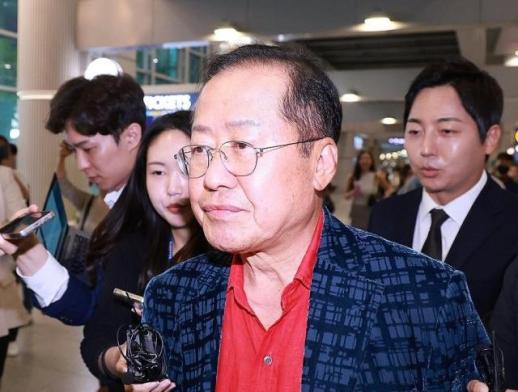 Hong Joon-pyo Slams Conservative Candidates as ‘Shameless’ Ahead of June 3 Local Elections Hong Joon-pyo, former mayor of Daegu, on Monday criticized conservative figures running in the June 3 local elections and by-elections, calling them “shameless” and “thick-faced.” In a Facebook post, Hong said they were seeking office after “ruining the administration,” adding that they were running in by-elections and local government races “just to save themselves.” He also faulted parties for nominating them and voters for supporting them, saying South Korea’s conservative camp had become “a bizarre mess.” He added that some people, after being cut from consideration, did not leave the party and instead focused on attacking from within, asking how elections could succeed under those conditions. Using a metaphor, Hong said it would be better to leave a well and spit than to keep trying to drink from it while spitting into it. “A local election is a local election,” he wrote, but warned that “the bigger confusion will come after the local elections.” * This article has been translated by AI. 2026-05-04 14:07:38