
Journalist

Seo Hye Seung
-
 Trump and Xi to Hold Summit in Beijing on May 14; Trade Talks Set for May 13 in South Korea U.S. President Donald Trump and Chinese President Xi Jinping will hold a summit in Beijing on the morning of May 14, local time. According to a report by AFP on May 10, White House Deputy Press Secretary Anna Kelly announced during a phone briefing that the two leaders will meet in Beijing. Trump is scheduled to arrive in Beijing on the evening of May 13. The following morning, a welcome ceremony and a bilateral meeting with Xi will take place, followed by a visit to Tian Tan Park and a state dinner in the evening. On May 15, Trump and Xi will have a private discussion and a working lunch before Trump returns to Washington. Kelly indicated that Xi and his wife are expected to visit the United States later this year. The summit is expected to address key issues including tariffs, Taiwan, artificial intelligence (AI) technology, and competition over critical minerals. Notably, Trump is seeking to pressure China into cooperating on ending the war in Iran, which the U.S. and Israel initiated on February 28. A senior administration official, speaking on the condition of anonymity, suggested that Trump is likely to apply pressure on Xi regarding Iran. The official noted that Trump has raised concerns multiple times with Xi about China's financial support for Iran and Russia through oil sales, as well as the sale of dual-use goods that could be used for military and civilian purposes. The recent sanctions imposed by the U.S. on China related to the Iran conflict may also be discussed, the official added. Kelly emphasized that Trump’s visit aims to "recalibrate the relationship with China and prioritize reciprocity and fairness to restore America's economic independence." U.S. Treasury Secretary Scott Vessenet and Chinese Vice Premier He Lifeng to Meet in South Korea on May 13 Ahead of the summit, senior trade representatives from both countries will meet in South Korea on May 13. Treasury Secretary Scott Vessenet announced on his X (formerly Twitter) account that he plans to visit Japan and South Korea for a series of meetings ahead of Trump’s historic summit with Xi in Beijing. On May 12, he will meet with Japanese Prime Minister Sanae Takaiichi, Finance Minister Satsuki Katayama, and other government and private sector representatives in Tokyo to discuss U.S.-Japan economic relations. On May 13, he will stop in Seoul for discussions with Chinese Vice Premier He Lifeng. This indicates that the pre-summit meeting between Vessenet and He will take place in Seoul rather than Beijing. The Chinese side has also confirmed the schedule for the pre-negotiations. A spokesperson for the Ministry of Commerce stated on its website that Vice Premier He Lifeng will visit South Korea from May 12 to 13 to engage in economic and trade negotiations with the U.S. side. The Ministry added that both sides will discuss economic and trade issues of mutual interest, based on the important consensus reached during the recent summit in Busan and several phone calls between the two leaders.* This article has been translated by AI. 2026-05-11 08:30:17
 -
 Bitcoin Surpasses $82,000 as Altcoins Gain Momentum Major cryptocurrencies, including Bitcoin, are experiencing a significant rise in prices. This increase is attributed to easing tensions in the Middle East and a renewed appetite for riskier assets, which has improved investor sentiment. According to CoinMarketCap, Bitcoin was trading at $82,145 as of 8 a.m. on May 11, reflecting a 1.36% increase from the previous day. The price of Ethereum also rose by 1.59%, reaching $2,377. Binance Coin (BNB), Solana, and Ripple (XRP) saw increases of 2.11%, 2.76%, and 3.26%, respectively, trading at $665, $96, and $1.47. As altcoins outperformed Bitcoin, overall market sentiment appears to be recovering. Typically, when investor confidence improves, funds tend to flow into more volatile altcoins, indicating a growing buying trend. Notably, XRP and Solana recorded relatively high gains, suggesting that the previously subdued demand for altcoin investments is beginning to revive. However, concerns about potential market volatility remain. With ongoing geopolitical risks in the Middle East and uncertainties surrounding U.S. monetary policy, analysts warn that fluctuations in international oil prices and inflation could lead to renewed volatility in the cryptocurrency market. As of 8 a.m. on the same day, Bitcoin was trading at approximately 120.15 million won ($80,607) on the domestic exchange Bithumb, marking a 0.90% increase from the previous day. The 'Kimchi Premium' stood at -0.097%, indicating that the price of Bitcoin in South Korea is lower than that in international markets.* This article has been translated by AI. 2026-05-11 08:25:27
 -
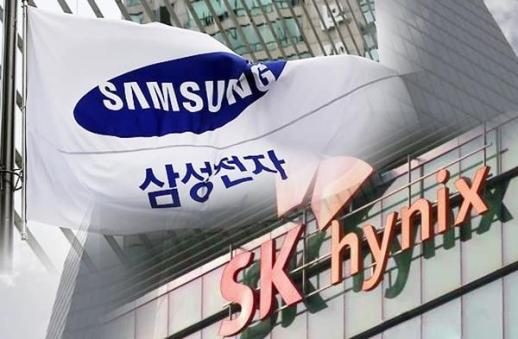 Samsung Electronics and SK Hynix Surge Ahead in Pre-Market Trading On May 11, Samsung Electronics and SK Hynix, the two leading companies in the South Korean stock market, saw their shares rise sharply in pre-market trading, with increases of 6% to 7%, continuing their trend of hitting record highs. According to Next Trade, as of 8:06 a.m., Samsung Electronics was trading at 285,500 won, up 17,000 won (6.33%) from the previous trading day, bringing its market capitalization to approximately 1,669 trillion won. At the same time, SK Hynix's shares surged by 11,800 won (7.00%) to reach 1,804,000 won, with a market capitalization of around 1,285 trillion won. Combined, the market capitalizations of the two companies approached 2,954 trillion won. The strong buying interest in these semiconductor giants has heightened expectations for further gains in the KOSPI index. Market analysts attribute the rising stock prices of Samsung Electronics and SK Hynix to increased demand for high-bandwidth memory (HBM) and improving conditions in the memory chip sector. Notably, foreign investors and leveraged funds have concentrated their investments in these semiconductor leaders, intensifying the trend of trading volume being dominated by Samsung Electronics and SK Hynix. Additionally, the upward momentum in the stock prices appears to be influenced by the recent gains in the New York stock market over the weekend, driven by optimism surrounding a potential resolution to ongoing negotiations and better-than-expected employment data. The Dow Jones Industrial Average closed up 12.19 points (0.02%) at 49,609.16. The S&P 500 index rose by 61.82 points (0.84%) to finish at 7,398.93, while the tech-heavy Nasdaq composite gained 440.88 points (1.71%) to close at 26,247.08.* This article has been translated by AI. 2026-05-11 08:15:29
 -
 Fire Breaks Out in Daejeon Commercial-Residential Building, One Hospitalized On May 11, a fire broke out in a commercial-residential building in the Doma-dong area of Daejeon, resulting in one resident inhaling smoke and requiring hospitalization. According to Yonhap News, the fire was reported at 6:59 a.m. from a two-story building that houses both commercial and residential spaces. Firefighters quickly dispatched 16 fire trucks and 53 personnel to the scene to combat the blaze. The fire primarily spread within the interior of the residence, but prompt action by the fire department prevented it from spreading further. Firefighters managed to extinguish the flames by 7:17 a.m., approximately 18 minutes after the initial report, and assessed the situation for any potential flare-ups. A resident in their 60s, identified as Mr. A, was treated for smoke inhalation at a nearby hospital but is not believed to be in life-threatening condition. No additional injuries to other residents or nearby merchants have been reported. The affected building is a mixed-use structure combining commercial and living spaces. Witnesses reported seeing black smoke billowing from the building, prompting nearby residents and shopkeepers to evacuate. Authorities are investigating the cause of the fire, focusing on the possibility that it originated from electrical issues with appliances inside the home. They are also assessing the extent of property damage.* This article has been translated by AI. 2026-05-11 08:13:28
 -
 Teen Girl Killed in Stabbing; Suspect's Appearance Draws Attention Online A teenage girl was fatally stabbed by a man in his twenties in downtown Gwangju while returning home, leading to the rapid spread of the suspect's personal information online. Photos and personal details of the suspect, identified as A, have circulated widely on various online communities and social media platforms. The posts include recent snapshots of A, as well as what appears to be a high school graduation photo. Notably, claims have emerged stating that A had been reported for stalking a foreign female coworker, allegedly waited in a vehicle for the victim after the attack, and attempted to destroy evidence by washing blood-stained clothing at a nearby laundromat. There are also rumors that A's father is a current police officer. However, the reactions from some netizens have raised concerns. As A's photo circulated, many comments focused more on his appearance than the gravity of the crime. Some users remarked, "He’s good-looking," "He looks fine," and "He has pretty eyes," while others made light-hearted comments linking his looks to the crime. This phenomenon echoes reactions to the recent 'Gangbuk motel serial murder case,' where Kim So-young, 20, was charged with killing two men and injuring another. In that case, Kim's personal information and social media accounts were also quickly disseminated online, prompting comments such as, "She’s sexy. Knowing this was the day after her second crime makes it worse," and, "Honestly, she’s pretty, right? I’d buy her a drink," which shocked many. Experts warn that the trend of consuming or trivializing the appearances of violent crime suspects can diminish the seriousness of such crimes. They emphasize the need for caution, as the indiscriminate distribution of unverified personal information could lead to further victimization of innocent individuals. 2026-05-11 08:12:22
 -
 Concerns Rise in MVNO Sector Ahead of LTE and 5G Unified Pricing Plans As the Ministry of Science and ICT prepares to introduce a unified pricing plan for Long-Term Evolution (LTE) and 5G next month, concerns are mounting within the mobile virtual network operator (MVNO) sector. There are fears that if the new pricing structure, which includes 5G data and a Data Assurance Option (QoS) at LTE price levels, is implemented, it could weaken the competitive edge of the LTE-focused MVNO market. According to industry sources, the three major telecom companies—SK Telecom, KT, and LG Uplus—are in the final stages of discussions to launch the LTE and 5G unified pricing plan. Currently, the telecom market is experiencing a decline in LTE subscribers while 5G subscribers are on the rise. The Ministry of Science and ICT reported in April that as of the end of February 2026, there were 18.35 million LTE subscribers and 38.75 million 5G subscribers. Compared to six months ago, the number of LTE subscribers has decreased by approximately 970,000, while 5G subscribers have increased by about 1 million. On a monthly average, this translates to a reduction of around 160,000 LTE subscribers and an increase of approximately 165,000 5G subscribers. However, the MVNO market remains predominantly LTE-focused. As of February this year, there were 9.7 million LTE subscribers among MVNOs, while the number of 5G subscribers was only 551,593, accounting for about 5% of the total MVNO subscriber base. MVNOs are concerned that the implementation of the unified pricing plan could further disrupt this market structure. While the existing low-cost LTE plans have provided a competitive advantage for MVNOs, the introduction of pricing plans that include 5G data and QoS at LTE price points could diminish this price differentiation. The growth of the MVNO market is also showing signs of slowing down. According to the Korea Telecommunications Operators Association (KTOA), the number of MVNO subscribers decreased by 7,353 last month. The number of subscribers switching from the three major telecom companies to MVNOs has also declined. The number of subscribers moving from SK Telecom to MVNOs fell by 21.5% compared to the previous month, while KT and LG Uplus saw decreases of 20.6% and 18.8%, respectively. Analysts suggest that the expansion of mid-range 5G pricing plans from the major telecom companies is weakening the competitive position of LTE-focused MVNOs. In particular, the Data Assurance Option (QoS), which is a key feature of the unified pricing plan, could further reduce the price and service differentiation between MVNOs and major telecom companies. If all data is exhausted under any plan, users will still have access to additional data at a speed of 400 kbps, which could undermine the competitiveness of existing low-cost MVNO plans. An industry insider stated, "The mid-range pricing market has traditionally been an area where MVNOs have shown their competitiveness, but the government's push for pricing reforms centered around major telecom companies is rapidly eroding market boundaries. In the long term, there is a possibility that the MVNO ecosystem itself could be weakened."* This article has been translated by AI. 2026-05-11 08:09:21
 -
 Yuanta Securities Raises SK Target Price by 51% Amid Subsidiary Value Growth Yuanta Securities announced on May 11 that it has raised its target price for SK from 550,000 won to 830,000 won, reflecting a 51% increase due to the rising value of its subsidiaries and expectations for improved profitability driven by advancements in artificial intelligence (AI) and the semiconductor industry. The firm maintained its "buy" rating on the stock. Lee Seung-woong, a researcher at Yuanta Securities, noted that the stock prices of major subsidiaries, including SK Square and SK Telecom, have surged by 228% and 76%, respectively, since the beginning of the year. This has led to a 102.4% increase in the value of SK's listed subsidiaries, now estimated at 72.1 trillion won. He added that the ongoing positive trends in the AI and semiconductor sectors are expected to enhance the company's profitability. Yuanta cited the soaring value of SK's listed subsidiaries and strengthened earnings capacity as key reasons for the target price increase. Notably, the consensus for SK Hynix's revenue has been significantly raised from 140 trillion won at the start of the year to 328 trillion won recently, which is expected to boost royalty income as well. Consequently, SK's royalty income for this year is projected to reach 9.545 trillion won, marking a 158.5% increase from the previous year. The trend of increasing dividends was also viewed as a positive factor. SK Telecom announced a quarterly dividend of 830 won per share, totaling 176.8 billion won, resuming its usual dividend policy. SK Square is also set to implement its first cash dividend of 200 billion won this year. Yuanta Securities assessed that the group's financial restructuring efforts are nearing completion. Recently, SK Eco Plant increased its stake from 67.6% to 72.2%, and in March, SK sold a 13.94% stake in SK Biopharmaceuticals for 1.25 trillion won, planning to use the proceeds for a capital increase in SKC. Lee stated, "In the medium to long term, the group's business portfolio will be focused on AI and biotechnology," adding that SK Hynix (HBM), SK Telecom (AIDC and Anthropic), and SKC (glass substrates) will be key pillars in the AI sector. He also highlighted the decision to retire approximately 4.8 trillion won worth of its own shares, which constitutes 20.1% of the total 24.6% of treasury shares held. This move is expected to alleviate uncertainties related to treasury shares and increase the potential for stock price appreciation due to a reduction in the number of shares in circulation.* This article has been translated by AI. 2026-05-11 08:03:22
 -
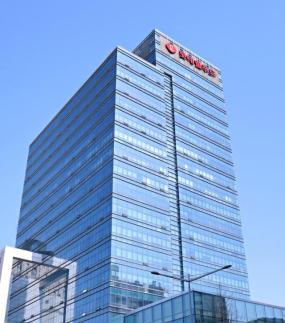 Shinhan Securities Raises Lotte Wellfood's Target Price by 14% Amid Overseas Growth Shinhan Investment Corp. announced on May 11 that it has raised its target price for Lotte Wellfood from 140,000 won to 160,000 won, an increase of 14%, while maintaining its investment rating at 'Buy.' This adjustment is attributed to the company's improving performance driven by growth in overseas sales and cost efficiency in South Korea. Analyst Jo Sang-hoon from Shinhan Investment noted, "Despite ongoing cost pressures, Lotte Wellfood achieved surprising results in the first quarter due to increased domestic efficiency and rising overseas sales. It is particularly important to focus on the recovery of growth in overseas markets, especially in India and Kazakhstan." In the first quarter of this year, Lotte Wellfood reported consolidated sales of 1.027 trillion won, a 5.4% increase compared to the same period last year, while operating profit surged by 118.4% to 35.8 billion won, exceeding market consensus by 47%. Jo explained that domestic profitability improved significantly due to efforts to streamline low-margin SKUs and channels, enhance purchasing efficiency, and improve logistics. He added that overseas sales showed broad growth across all regions, driven by increased sales volume and price hikes. Looking ahead, Jo anticipates a reduction in cocoa price pressures. He stated, "Cocoa prices, which exceeded $10,000 per ton in the first half of last year, have dropped to around $3,200 this year. By the end of the second quarter, we expect the effects of improved margin spreads to be fully reflected in the results." He also expressed optimism about the company's operations in India, noting, "Following the merger of the frozen and dry food divisions last year, we expect synergy effects and increased efficiency. This will lead to expanded regional coverage and a strengthened Lotte brand image." Shinhan Investment forecasts that Lotte Wellfood's Indian subsidiary will achieve an average annual growth rate of 23% over the past five years, with a projected increase of 13.1% this year. The frozen food segment is expected to grow by 13.2%, while the dry food segment is anticipated to grow by 12.9%. 2026-05-11 07:57:18
 -
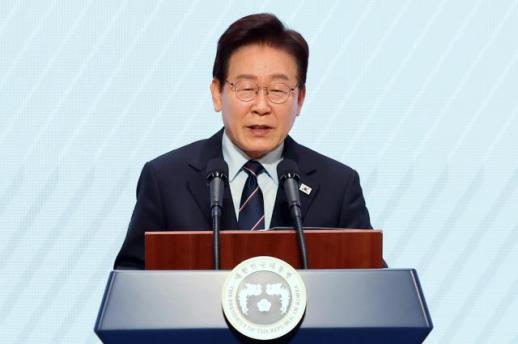 President Lee Considers Selling Opportunities for Non-Resident Homeowners On May 11, President Lee Jae-myung responded to concerns that the government's consideration of exceptions for land transaction permits for non-resident homeowners could effectively allow gap investment for homebuyers. He called such claims "close to unreasonable criticism." In a post on X (formerly Twitter), President Lee explained that the Ministry of Land, Infrastructure and Transport aims to provide equal selling opportunities for one-homeowners with tenants, similar to those for multiple homeowners. On May 10, Minister of Land, Infrastructure and Transport Kim Yoon-deok stated on his X account that the ministry plans to review exceptions for land transaction permits for non-resident homeowners from the perspective of fairness in selling opportunities. Currently, the government allows exemptions from the mandatory residence requirement for homebuyers only when purchasing properties from multiple homeowners in designated adjustment areas. In response to claims of reverse discrimination from non-resident homeowners, the government is considering extending this exemption to buyers of homes owned by non-resident one-homeowners. President Lee noted that for properties with tenants, buyers would be limited to those without homes and would be allowed to move in only after the existing lease period ends, with a maximum waiting period of two years. He added, "This means that we will provide selling opportunities for one-homeowners who cannot sell their properties due to tenant leases, allowing buyers to move in within two years after paying the deposit. To claim that this allows gap investment seems exaggerated." President Lee emphasized, "Escaping the real estate republic is an essential task for the normalization and sustainable development of our country. If real estate speculation resurfaces, who will benefit? I ask for your cooperation." * This article has been translated by AI. 2026-05-11 07:54:19
 -
 AI Server Demand Shifts Semiconductor Supply, Sparking Optimization Race in Gaming Industry As investment in artificial intelligence (AI) servers expands, the semiconductor supply is increasingly focused on server applications, leading to rising prices for consoles and gaming PCs. The gaming industry is shifting its focus from competing on high specifications to ensuring stable performance across a variety of environments, in response to users' longer device replacement cycles. According to industry sources, Nintendo will raise the prices of its console, the Nintendo Switch, starting May 25. The price of the Nintendo Switch OLED model will increase by 50,000 won, from 415,000 won to 465,000 won. The standard Nintendo Switch will rise from 360,000 won to 410,000 won, while the Nintendo Switch Lite will go up from 249,800 won to 279,800 won. Earlier, Sony Interactive Entertainment Korea (SIEK) announced a price increase for the PlayStation 5 (PS5). The base model will see a nearly 27% increase, from 748,000 won to 948,000 won. The higher-end PS5 Pro, which features enhanced GPU performance, AI-based upscaling, and high-resolution graphics processing, will rise from 1,118,000 won to 1,298,000 won, approximately a 16% increase. Microsoft is also gradually raising prices for its Xbox Series X and S consoles. The Series X has increased by about $200 in some countries compared to last year, while the more affordable Series S has seen a price rise of over 30%. In South Korea, the price has reached the upper 300,000 won range. This trend is rooted in the semiconductor supply structure, which has shifted to prioritize AI servers. As the era of 'agentic AI'—which can perform tasks and support decision-making—gains momentum, major global tech companies are ramping up investments in AI data centers. Consequently, leading semiconductor firms like NVIDIA, AMD, and Intel are increasing their production of server chips, while consumer supply is becoming more limited. Industry experts believe that this situation is unlikely to resolve quickly, suggesting that the burden of gaming hardware prices for consumers may persist over the long term. They particularly note the changing device replacement cycles. Traditionally, console replacement cycles were estimated at around five to six years, but with recent price hikes, more users may opt to keep their existing hardware for longer periods. As a result, game developers are finding it increasingly important to provide stable performance across a range of specifications rather than focusing solely on high-end PC environments. Recent major releases have faced user complaints regarding optimization issues, frame drops, and bugs shortly after launch, highlighting that performance stability is becoming a key evaluation factor alongside gameplay quality. For instance, Pearl Abyss is continuing its optimization efforts for the game "Crimson Desert," released in March, ensuring that it does not rely solely on the latest high-end hardware. The company is actively working on stabilization across different platforms, including consoles and PCs, while refining graphics options and improving frame rates. An industry insider stated, "In the past, the competition was centered around graphic quality, but moving forward, how reliably games run on limited hardware environments is likely to become a core competitive advantage. The restructuring of the semiconductor market around AI servers is influencing game development directions as well."* This article has been translated by AI. 2026-05-11 07:48:25