
Journalist

Seo Hye Seung
-
 People Power Party calls DP’s ‘fabricated indictment’ special counsel bill unconstitutional The People Power Party on May 4 criticized a recently proposed “fabricated indictment” special counsel bill by the Democratic Party, calling it an unconstitutional attempt to erase Lee Jae-myung’s alleged crimes. Speaking at a party Supreme Council meeting at the National Assembly, PPP leader Jang Dong-hyeok said, “A law that exists for only one person is not law, but violence and a crime.” Jang said there is “exactly one person on the Korean Peninsula who does not go to prison no matter what crime is committed,” referring to North Korean leader Kim Jong Un. He added, “It looks like there will be one more. Does President Lee Jae-myung want to become ‘No. 2’ in supreme dignity?” Jang also said the bill would mobilize 350 people and spend “hundreds of billions of won” in taxpayer money to wipe out one person’s alleged wrongdoing. He said it would be more honest to create a “supreme dignity law” for Lee and, in an Orwellian way, declare Lee “more equal,” placing him above the Constitution. He said when “rule by man” overwhelms the rule of law, the values of freedom and equality collapse. Jang said voters’ choice on June 3 will determine whether they live as citizens of a liberal democratic South Korea or become “slaves” in what he called “Lee Jae-myung’s Animal Farm,” adding that the local elections are about protecting liberal democracy and the constitutional order. Floor leader Song Eon-seok said the Democratic Party pushed last November for legislation to suspend a president’s trial, but that it was abruptly halted after Lee urged restraint. Song said then-chief of staff Kang Hoon-sik publicly warned party leader Jung Cheong-rae not to drag the president into political conflict. Song claimed Lee’s intent became clear “after half a year,” arguing that Lee was not seeking a temporary suspension of his trial during his term but instead wanted a plan to eliminate the trial altogether. He said Lee’s decision to stop the trial-suspension bill while remaining silent on what Song called a “case-cancellation, trial-deletion” plan was evidence. Song said canceling an indictment in the president’s criminal trial by using a parliamentary investigation and a special counsel would be “null and void from the start.” Song said Lee might be able to use power to force his trial to disappear “once,” but that the public would eventually restart it and ensure he pays for his alleged wrongdoing. He added that even a president should go to prison if a crime is committed, and said politics that uses power to shield oneself “outside the law” will not be tolerated by the public or history. * This article has been translated by AI. 2026-05-04 09:57:15
 -
 SoftBank Partners With South Korea’s Cosmos Lab on Zinc-Halogen Batteries for Data Centers SoftBank of Japan is moving into next-generation batteries that do not rely on rare metals, partnering with South Korean deep-tech startup Cosmos Lab, founded in 2021. The Nikkei business daily reported on Monday that SoftBank and Cosmos Lab plan to jointly develop a “zinc-halogen battery” and begin mass production during fiscal 2027. The production base will be set up at the Sakai plant site in Osaka once owned by Sharp, which SoftBank acquired in 2025. Nikkei said SoftBank plans to include entry into next-generation battery manufacturing in a new medium-term management plan to be announced in May, with a long-term goal of building the business into a new pillar generating annual sales of 100 billion yen (about 9.2 trillion won). The new battery uses zinc for the anode and a halogen compound for the cathode, instead of rare metals such as lithium and cobalt. Nikkei said both materials are easy to procure in Japan, improving cost competitiveness. A key advantage is that the electrolyte uses water rather than an organic solvent, making the risk of ignition “almost nonexistent in principle,” the report said, a potential differentiator as safety concerns have grown after a series of energy storage system fires. Zinc-based batteries, however, typically have a shorter lifespan than lithium-ion batteries. During charging and discharging, dendrites can form on the electrode surface, accelerating degradation. Nikkei reported that Cosmos Lab improved this limitation with a proprietary technique that suppresses crystal formation by creating microscopic holes in the electrode. Further development to raise energy density is also planned. SoftBank plans to first apply the batteries to a large data center it is building in Sakai to verify performance, and then decide whether to proceed with full-scale mass production. It also aims to expand use to factory and home energy storage systems and renewable energy storage. Nikkei said SoftBank is considering investing several tens of billions of yen by 2030 to expand production capacity to more than 1 gigawatt-hour. That would be enough to produce more than 100,000 home energy storage units a year and would make it Japan’s largest plant, the report said. Cosmos Lab, based in Siheung, Gyeonggi Province, has been developing “water battery” technology using water-based electrolytes, which is seen as a way to improve safety while reducing dependence on rare metals. SoftBank has tested next-generation batteries through development of high-altitude platform stations, or HAPS, unmanned aircraft that provide communications links with the ground. In 2021, it also built a next-generation battery evaluation and verification facility in Tochigi Prefecture. Nikkei said the partnership with Cosmos Lab signals a push toward commercialization that also envisions supplying batteries outside the company. The report linked the move to Japan’s “sovereign AI” strategy. SoftBank has promoted domestic production of “technologies that support AI operations,” including AI semiconductors and next-generation communications base stations. Nikkei said the effort also reflects a push to secure data center energy storage systems through supply chains in Japan and allied countries, while reducing reliance on China, which holds a dominant share in rare-metal mining and refining. Zinc-based batteries are also being pursued in Japan by manufacturers such as FDK and by universities including Hokkaido University and Tohoku University. Nikkei said SoftBank’s decision to work with a new Korean startup highlights intensifying competition for technological leadership in the next-generation energy storage market.* This article has been translated by AI. 2026-05-04 09:54:00
 -
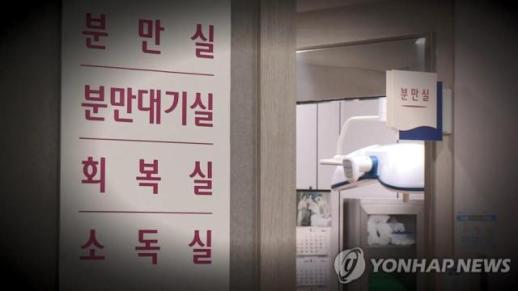 South Korea’s High-Risk Maternity Beds Vanish, Forcing Long-Distance Emergency Transfers A woman in Cheongju, North Chungcheong province, who was 29 weeks pregnant was transferred to Busan after failing to find a hospital able to perform an emergency delivery, and the fetus died. Several hospitals in the Chungcheong region could not accept her, citing a lack of specialists and insufficient beds. She ultimately had to travel more than 300 kilometers by helicopter. By the time surgery began, it was already too late. Another high-risk pregnant woman in Sejong was also reported to have been moved to Busan the same day. Long-distance “medical trips” for childbirth have become a reality. The case is not an isolated incident. In February, a woman in Daegu who showed signs of preterm labor at 28 weeks of pregnancy was turned away by seven major hospitals in the area before being transferred to a hospital in Seongnam, Gyeonggi province. One of her twins died and the other suffered brain damage. Last year in Eumseong, North Chungcheong province, a woman in labor gave birth in an ambulance after she could not find a hospital. The locations differ, but the pattern repeats: mothers cannot secure care in time, fetuses miss the critical window, and families are left with lasting trauma. Three factors are driving the breakdown. First is an absolute shortage of infrastructure. According to data from the National Medical Center, as of 2023, eight of the nation’s 17 provinces and major cities had utilization rates for high-risk maternity treatment rooms below the national average. Sejong was the lowest at 44.35%, and North Gyeongsang, South Jeolla, North Chungcheong and South Chungcheong were also near the bottom. That suggests many patients likely could not receive treatment where they live and had to seek care elsewhere. Utilization rates for neonatal intensive care units were also below average in many regions. Second is a collapse in medical staffing. The number of obstetricians and gynecologists per 100,000 people is below the national average in several areas, including North Gyeongsang at 7.6, Sejong at 8.7, and North Chungcheong, South Chungcheong and South Gyeongsang at 8.8. Beds mean little without doctors, and even where doctors are available, beds cannot function if overnight and emergency on-call coverage cannot be maintained. Critics say some regional university hospitals are holding on with only one obstetrics specialist. Third is a distorted compensation system and heavy legal risk. Deliveries require 24-hour emergency readiness and can turn unpredictable quickly, but fees are low and the burden of medical-dispute litigation is high. That is a key reason younger doctors avoid obstetrics, especially delivery work. The current gaps reflect what happens when essential care is left to market forces alone. The problem is that while large budgets are being spent to raise the birthrate, the country is failing to protect the hospitals needed to deliver babies. Even if the government increases birth incentives and rolls out support programs, policies ring hollow if emergency delivery systems are breaking down. Childbirth is often most dangerous at the moment of delivery; if the state is absent then, families will not feel safe choosing to have children. High-risk maternity intensive care units and neonatal intensive care units need major expansion by region. Public support and fee normalization are also urgent for staffing in obstetrics and gynecology, pediatrics, and anesthesiology. A nationwide real-time bed-sharing system should be built so emergency responders and hospitals can connect immediately. Legal protections for medical staff handling high-risk deliveries also need to be strengthened. Childbirth should be a blessing, not a survival test. If a country requires pregnant women to fly hundreds of kilometers by helicopter to give birth, the health care system has failed before any low-birthrate policy can succeed. One bed, one specialist, can decide whether a life is saved. The government and the National Assembly should act before the stigma of becoming a nation of long-distance childbirth becomes permanent.* This article has been translated by AI. 2026-05-04 09:52:22
 -
 Why Multigenerational Families Are Ditching Flag-Led Tours for Private Pool Villas With the May holiday period approaching, planning a family trip can feel like solving a high-level puzzle. Parents try to work around a second-year middle schooler’s packed after-school schedule while also mapping routes that won’t be too demanding for a grandmother who has difficulty walking. In the past, booking a single package tour could settle most of it. But the so-called “flag-led tour,” where large groups follow a fixed itinerary, is increasingly ill-suited to families spanning multiple generations with different needs. That everyday dilemma is showing up in travel industry data. Even as high prices and exchange-rate pressures raise concerns about weakening demand for overseas travel, family travelers are paying more for customized trips built around their own schedules and preferences. ◆ 1.48 million choose independent travel as the family formula shifts Independent travel, known as FIT (free independent travel), is growing fast. HanaTour said the number of FIT users in the first quarter hit 1.48 million, the highest since it began tracking the figure. That was up 29% from a year earlier, extending a steep rise for a third straight quarter since the second quarter of last year. A key shift is that FIT, once seen mainly as a choice for travelers in their 20s and 30s, is becoming a new standard for multigenerational family trips. Instead of a one-size-fits-all circuit of famous sites, families can build precise itineraries based on stamina and tastes, and use tools such as artificial intelligence agent services to plan routes and make reservations more easily. The smarter way people are buying travel is pushing structural change in a market long dominated by large package tours for families. ◆ Beyond value for money: “value for time” drives short-haul breaks Another clear trend is “select and focus”: improving the quality of rest while minimizing the burden of long-distance travel. Yellow Balloon Tour said its May booking data showed that, despite overall demand softening, families still accounted for 33% of travelers. Destinations shifted heavily toward nearby countries: Japan (27%), China (25%) and Vietnam (11%). With many office workers reluctant to take long stretches of leave, weekend trips departing Friday and returning Sunday have gained popularity, reflecting a growing focus on “value for time.” In that environment, resort lodging has become a decisive factor in choosing family destinations. According to Kyowon Tour’s Travel Easy data, Phu Quoc’s share of all Vietnam bookings for May rose from 14.7% in 2024 to 29.8% this year, continuing a sharp climb. The rise is tied to products built around strong lodging options, including five-star resorts and private pool villas. Without spending energy constantly moving around, travelers from infants to grandparents can stay on-site and enjoy offerings such as the Exotica Village theme park and the Aquatopia water park. The appeal has also been boosted by “no-option packages” that remove unwanted shopping stops, along with perks such as a 50,000-won discount, helping families focus on rest. “Ultimately, the trend for family travel this May can be summed up as a shift from ‘how many places you see’ to ‘how comfortably you spend time together,’” an industry official said.* This article has been translated by AI. 2026-05-04 09:51:25
 -
 Iran Warns US Against Hormuz Shipping Escort Plan, Calls It Ceasefire Violation The United States said it would move to help ships transit the Strait of Hormuz, drawing an immediate warning from Iran that any U.S. involvement in a new maritime order there would be treated as a ceasefire violation. According to AFP on 4, Ebrahim Azizi, head of Iran’s parliamentary National Security Committee, wrote on X that “any U.S. intervention in the new maritime order of the Strait of Hormuz will be considered a violation of the ceasefire.” AFP said the comment came shortly after President Donald Trump announced a plan to support passage through the strait. Trump said in a social media post the previous day that the United States would begin “safely guiding” ships stuck in the Strait of Hormuz starting the morning of 5. The U.S. Central Command told The Associated Press the concept could involve guided-missile destroyers, more than 100 aircraft and 15,000 troops. Trump called it a humanitarian measure but warned of a strong response if it is obstructed. Iran views the plan as destabilizing the ceasefire framework. AP reported that Iran pushed back by labeling U.S. involvement a ceasefire violation. The three-week ceasefire appeared to be holding, but tensions were rising again over control of the strait. The Strait of Hormuz is a key route for global seaborne oil and gas shipments. The United States says Iran’s control of the strait and disruptions to transit threaten international energy flows, while Iran has signaled it intends to keep that leverage as a bargaining chip.* This article has been translated by AI. 2026-05-04 09:43:14
 -
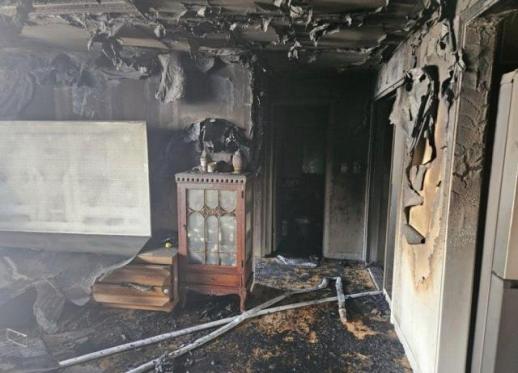 Resident Says Family Lost Home of 20 Years in Uiwang Apartment Fire A resident who lived for more than 20 years in an apartment in Uiwang, south of Seoul, said the family lost everything after a fire that started in the unit below. A post circulating on social media on May 4 identified the writer, surnamed A, as a member of the family living directly above the unit where the fire began. A said the apartment was the first home the parents ever bought. “They lived there for more than 20 years, and overnight they lost everything,” A wrote. “We can’t even cry.” A said the family had been told some belongings might be salvageable, but found nothing could be recovered. “I’m so angry, and it hurts even more that I can’t help them,” A wrote. Because the fire started directly below, A said the damage was worse than in other units. A also said the family did not have fire insurance and that compensation for household items was small. A wrote that the parents did not want to ask even their children for help, despite needing basics such as clothing. Photos posted with the message showed furniture, including a bed, burned beyond recognition and reduced to blackened debris. In a later post, A said an insurance company would provide some compensation for the building and household items. A added that the family was recognized as displaced and would receive support for temporary housing. A said other affected families were still not receiving temporary housing support. A wrote that city assistance is provided per household, making it difficult for families of three or more to use nearby lodging, and that many residents were struggling because immediate housing support was limited. The fire began around 10:30 a.m. on April 30 on the 14th floor of the apartment building. A man in his 60s, identified as B, fell to his death, and his wife, a woman in her 50s, was found dead in the bathroom. Six other residents suffered minor injuries, including smoke inhalation. A note was found in B’s clothing expressing despair over personal circumstances, including financial hardship, authorities said. The couple’s apartment had recently been sold after going to auction, according to reports. A joint team from Uiwang police, the Gyeonggi Nambu Provincial Police Agency’s forensic unit, the National Forensic Service and the Gyeonggi Fire and Disaster Headquarters conducted an on-site inspection on May 1 and confirmed a gas valve inside the unit had been left open. Investigators tentatively concluded that leaking gas led to an explosion.* This article has been translated by AI. 2026-05-04 09:42:22
 -
 Trump Says U.S. Will Help Free Ships Stuck in Strait of Hormuz, Details Unclear 도널드 트럼프 미국 대통령이 호르무즈 해협에 발이 묶인 선박을 빼내기 위한 미국의 조치를 시작하겠다고 직접 밝혔다. 트럼프 대통령은 이번 조치를 중립국을 위한 인도주의 대응이라고 설명했지만, 구체적인 실행 방식은 공개하지 않았다. 이번 조치는 미 해군이 선박을 직접 호위해 빼내는 방식보다 운항 재개 지원에 더 무게가 실린 것으로 보인다. 로이터에 따르면 트럼프 대통령은 3일(현지시간) 자신의 SNS 트루스소셜에 “미국이 월요일 아침부터 호르무즈에 갇힌 선박을 도와 자유롭게 하겠다”고 썼다. 다만 미 해군의 실제 투입 여부와 항로, 이동 방식, 참여국 등 세부 내용은 설명하지 않았다. 백악관과 미 국방부도 추가 설명을 내놓지 않았다. 이번 발표는 단독 조치라기보다 미국이 며칠 전부터 추진해온 다국적 해상 공조 구상의 연장선에 가깝다. 미국 정부는 지난달 28일자 국무부 전문에서 해상 자유 구상(MFC) 창설을 승인했다. 국무부와 국방부가 함께 추진하는 이 구상에서 국무부는 각국 정부와의 외교 조율을 맡고, 국방부는 중부사령부를 통해 해상 교통 조정과 선박 소통을 지원하는 방안을 상정했다. 초점은 군사 충돌보다 통항 질서 복원에 있다. AP는 이번 조치의 명칭을 ‘프로젝트 프리덤’이라고 소개했다. 보도 내용도 군함을 앞세운 직접 호송보다 선박 이동을 돕는 데 초점이 맞춰져 있었다. 국제해사기구(IMO)는 지난달 24일 “호르무즈 해협 어디에도 안전한 통항은 없다”고 밝혔다. IMO는 “약 2만명의 선원이 여전히 이 지역에 발이 묶여 있다”고 했다. IMO는 보험사와 선사, 선원이 모두 위험이 낮아졌다고 판단할 때 운항 재개로 이어질 수 있다는 취지의 메시지를 내놨다. 미국이 추진하는 MFC도 각국 정보 공유와 외교 조율, 해상 교통 관리, 업계 협력을 묶는 방향으로 설계됐다. 로이터는 트럼프 발표 뒤 브렌트유와 서부텍사스산원유(WTI) 가격이 하락했다고 전했다. 시장이 호르무즈 통항 차질 완화 가능성을 반영한 것으로 해석된다. 다만 위험은 여전하다. AP는 트럼프 발표와 같은 날 호르무즈 인근에서 화물선이 소형 선박들의 공격을 받았고, 최근 수주간 드론과 미사일, 소형 선박 공격이 이어졌다고 전했다. 이란은 여전히 해협 통제권을 자국 주권 사안으로 보고 있다. AP에 따르면 이란은 비미국·비이스라엘 선박의 제한 통과 입장을 유지하고 있다. 미국이 자유 항행을 말하는 순간, 이란은 자국 통제 아래 제한 통항 원칙으로 맞서는 구도다. 2026-05-04 09:33:23
 -
 Actor Kim Soo-hyun Reportedly Seen Looking Gaunt in Seoul’s Seongsu-dong Actor Kim Soo-hyun, who has faced controversy over allegations tied to the late Kim Sae-ron, was recently spotted around Seoul’s Seongsu-dong, with an account saying he appeared noticeably thinner. In a video posted May 3 on the YouTube channel “Entertainment President Lee Jin-ho,” former entertainment reporter Lee Jin-ho said an acquaintance saw Kim by chance while passing through Seongsu-dong a few days earlier. “He looked visibly gaunt and worn down,” Lee said, citing the acquaintance. Lee added that the situation was understandable, saying that with various lawsuits, “even just breathing costs tens of millions of won every month,” and that the matter needs to end so things can be sorted out. Kim’s agency, Gold Medalist, has also been reported to be facing management difficulties as key actors have left the company. Kim is in a dispute with Kim Sae-ron’s bereaved family over when the two dated. The group Garosero Research Institute has alleged that Kim dated Kim Sae-ron starting when she was 15 and filed a complaint accusing him of violating the Child Welfare Act, among other allegations. Kim has said the two did date but only after she became an adult. At a news conference, he denied the allegation that the relationship began when she was a minor and filed complaints against Garosero and the bereaved family for defamation over the alleged spread of false information. Amid the dispute, cosmetics brand A, which Kim endorsed, has filed a damages lawsuit of about 2.8 billion won, alleging he violated a duty to maintain the dignity expected of a model. The court is expected to make a final decision in the civil case with the advertiser after reviewing the results of the ongoing criminal defamation investigation.* This article has been translated by AI. 2026-05-04 09:22:14
 -
 7 Free, No-Reservation Children’s Day Events in Seoul and Incheon on May 5 With Children’s Day on May 5 approaching, families are looking for outings that do not require advance reservations. This year, free viewing and walk-in events are scheduled across major central Seoul sites, including Gwanghwamun Square, Han River parks, Dongdaemun Design Plaza (DDP), the National Museum of Korea and Seoul Children’s Grand Park. Not every program is fully open-access. Some hands-on activities have already closed reservations or will be run on a first-come, first-served basis. Food trucks, flea markets and some activities may charge fees, so visitors should check details before heading out. The Seoul Metropolitan Government is running “Seoul Kids Week” across the city from May 1 to 7. On Children’s Day, Seoul-style kids cafes will open citywide, with venue-specific programs such as magic shows and classical instrument experiences. More than 60 Seoul-style kids cafes that can be used for free can be found through the “Our Neighborhood Kiwoom Portal.” In the city center, Gwanghwamun Square will host the “2026 Gwanghwamun Family Companion Festival” from May 2 to 5 under the subtitle “Let’s Play! Gwanghwamun Square!” The program includes participation and event booths, photo zones, a children’s beverage food truck, a lounge, book talks, music performances, a magic show, animation screenings, a cosplay parade and a Lego-building contest. Events will be spread across the square, including play areas, Yukjo Yard and adjacent street space. Children’s Day programs will also continue along the Han River. At Seoulham Park in Mangwon Hangang Park, the “2026 Seoulham Festival” will run May 5 from 11 a.m. to 6 p.m. It will feature a children’s military-life experience, Navy culture activities, special performances and family participation programs. Outdoor performances are free, while some activities require participation after obtaining a Seoulham Park admission ticket. Near the J-Bug (Jabeolle) complex at Ttukseom Hangang Park, “Hangang Plpl Adventure” will run May 1 to 5. Hours are 10 a.m. to 8 p.m., except May 4, when it closes at 7 p.m. Indoors, it will offer a flea market and activity programs; outdoors, it will include a carousel, air bounce attractions, a magic show, a bubble show, street performances and food trucks. Admission is free, while the flea market and food and drinks are paid. Participation is walk-in. At DDP, the “2026 DDP Children’s Design Festival” will be held May 2 to 5 in outdoor areas including Eoullim Square, Palgeori and the lawn hill. Hours are 11 a.m. to 6 p.m., and admission is free. The city said some programs took online first-come reservations, but on-site registration will be available during the festival period for those who missed reservations. The National Museum of Korea has also planned events for families over the Children’s Day holiday. From May 2 to 5, it will host “Gukjungbak Outing” around the Open Plaza, Mirror Pond Plaza and the permanent exhibition halls. The program includes photo zones, performances, activity booths, a QR stamp tour, a book market and a food zone. On Children’s Day, events include balloon art, a bubble magic show, an ensemble performance and a K-pop dance performance. Some programs at the Children’s Museum and special guided sessions, however, require reservations or will be first-come, first-served. At Seoul Children’s Grand Park, the “2026 Seoul Children’s Garden Festival” will run from May 5 to 18. It will be held across about 12,000 square meters from the park’s back gate to the Palgakdang area. This year’s theme is “Gardens Are Art Museums, Children Are Artists,” featuring a garden gallery, children’s art-creation programs, hands-on activities and stage events. Outside Seoul, Incheon Art Platform is another option. It will run a Children’s Day event, “Iyap! A Playground Together,” on May 5 from 10 a.m. to 4 p.m. around the Incheon Art Platform area. Admission is free. Most free Children’s Day events are being held in accessible locations such as downtown squares, parks and museums. Even without reservations, families can cut costs and still enjoy an outing by choosing events that allow walk-in viewing or on-site participation, including those at Gwanghwamun Square, Han River parks, DDP and the National Museum of Korea. Organizers cautioned that Children’s Day can draw heavy crowds, making it important to use public transportation, confirm operating hours and check whether on-site registration is available. Hands-on programs may close early, so visitors may want to plan around performances and exhibitions, or focus on larger outdoor venues such as Han River parks and Seoul Children’s Grand Park when mapping out routes.* This article has been translated by AI. 2026-05-04 09:18:18
 -
 S. Korean researchers develop hologram technology using light properties as security keys SEOUL, May 04 (AJP) - Researchers at the Korea Advanced Institute of Science and Technology have developed a holographic technology that uses the physical properties of light as an encryption key to reveal hidden information, the university said Monday. The system manipulates how light vibrates and twists to ensure that images are only visible when viewed under specific conditions. The research team, led by ,Shin Jong-hwa, a professor at the Korea Advanced Institute of Science and Technology's (KAIST) Department of Materials Science and Engineering, succeeded in controlling two distinct characteristics of light simultaneously: its polarization and its orbital angular momentum. Polarization refers to the direction in which light vibrates, while orbital angular momentum describes how light twists in a spiral as it travels. While these properties have been used individually in the past, combining them to act as independent security keys within a single device has been a significant technical challenge. To overcome this, the researchers created a bi-layer metasurface using two levels of nanoscale structures thinner than a human hair. These structures are designed to react only when they encounter a specific "total angular momentum," which is the combination of light's vibration and twist. If the incoming light does not match the exact required key, the encoded holographic information remains hidden, providing a high level of security against counterfeiting. The technology also allows for the creation of vectorial holograms, which control both the intensity and the direction of light at every point in an image. Because the twisting of light can theoretically take an infinite number of values, this method could also be used to increase the amount of data transmitted through optical fibers for high-speed telecommunications. "This study demonstrates that the polarization and twisting of light can be combined as independent information keys," Professor Shin Jong-hwa said. "It will serve as a core platform for security systems that are difficult to replicate and for high-speed, high-capacity optical communication technologies." The study, which included Jung Jun-gyo as the first author, was published online in the journal Advanced Materials on March 12, 2026. (Reference Information) Journal/Source: Advanced Materials Title: Arbitrary Total Angular Momentum Vectorial Holography Using Bi-Layer Metasurfaces Link/DOI: 10.1002/adma.202519106 2026-05-04 09:18:02