
Journalist

Seo Hye Seung
-
 Kakao Union Seeks Mediation After Failed Labor Negotiations The Kakao Union has applied for mediation with the Gyeonggi Provincial Labor Commission following the breakdown of labor negotiations. Disagreements over the performance bonus structure have left the possibility of strike actions open.According to Yonhap News on May 10, the Kakao branch of the National Chemical Fiber Food Industry Workers' Union submitted the mediation request after recent negotiations with the company failed. The request involves four entities: Kakao, Kakao Pay, Kakao Entertainment, and DK Tech.Reports indicate that the two sides have been at odds over the design of the performance bonus structure. In the IT industry, SK Hynix's decision to allocate 10% of its operating profit for performance bonuses has reportedly influenced the demands of the Kakao Union.If an agreement is not reached during the labor commission's mediation process, the union may proceed with strike preparations. However, a failed mediation does not automatically lead to a strike; the decision will depend on the mediation outcome and an internal vote among union members.This is not the first time the Kakao Union has sought mediation due to failed negotiations. The union previously applied for mediation in 2024 after negotiations also broke down.* This article has been translated by AI. 2026-05-11 04:10:46
 -
 Kim Yong-beom Predicts Record Surplus Revenue Amid Semiconductor Boom Kim Yong-beom, head of the Presidential Policy Office, stated that the ongoing semiconductor boom is expected to generate record surplus revenue over the next two years, emphasizing the need for a more flexible approach in fiscal policy. According to Yonhap News on May 10, Kim made these remarks in a Facebook post titled "KOSPI 7500 and the Threshold of 10,000" on May 8. He noted, "South Korea's fiscal and macroeconomic outlook is based on GDP growth forecasts, but the current semiconductor boom is difficult to capture within the existing GDP framework." He continued, "In industries like semiconductors, where quality improvements outpace price changes, existing statistical systems reflect real changes too slowly. The key point is the fiscal aspect. If the semiconductor boom continues until 2027, the revenue for 2026-2027 is likely to reach historic levels." Kim identified factors contributing to surplus revenue, including corporate taxes from Samsung Electronics and SK Hynix, income taxes from high-earning workers in the semiconductor sector, and the ripple effects of an expanding trade surplus. He stated that if these effects accumulate, "we could see an unprecedented surplus revenue." Kim believes that the revised outlook for 2026, expected in the second half of this year, will serve as a critical turning point. He emphasized, "The level to which the forecast rises will alter the direction of revenue estimates and overall budget for 2027." He also referenced past failures in revenue forecasting, pointing out that during the semiconductor boom following the COVID-19 pandemic in 2021-2022, record surplus revenue was generated, but revenue forecasts and budgets did not adequately keep pace with reality. He added that in 2023-2024, a downturn in the semiconductor market led to a revenue shortfall. "After a boom comes a revenue shortfall, and after a downturn, surplus revenue appears," he diagnosed, noting that revenue and budgets tend to lag behind actual industry cycles. He cautioned that the scale of the current cycle could be much larger than before, and relying solely on past methods could lead to greater discrepancies. He urged a shift away from traditional thinking tied to historical averages, advocating for a more flexible and broader approach to fiscal policy in light of the structural changes centered around semiconductors.* This article has been translated by AI. 2026-05-11 04:08:55
 -
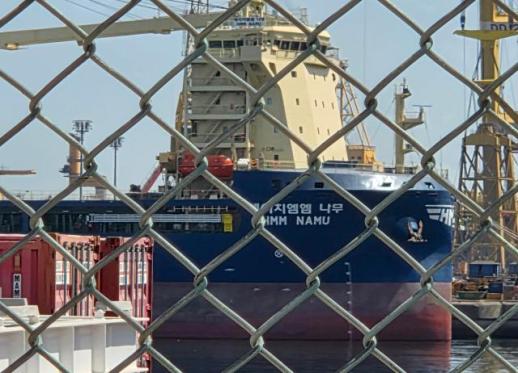 Government: HMM Namoo Fire Caused by Strike from Unknown Aircraft An investigation has determined that the fire on the South Korean vessel HMM Namoo, which occurred in the Hormuz Strait on May 4, was caused by a strike from an unidentified aircraft. However, it remains unclear whether the aircraft was a drone or a missile, or which country may be responsible. According to a report by Yonhap News on May 10, the Ministry of Foreign Affairs announced the findings of a joint government investigation. The ministry stated, "The investigation confirmed that on May 4, an unidentified aircraft struck the stern of the HMM Namoo," adding that there are limitations in identifying the exact type and physical size of the aircraft. They also noted that further analysis of debris collected from the site is planned. On May 4, while docked in the Hormuz Strait, the HMM Namoo experienced an explosion followed by a fire. There were no casualties reported, but the vessel was rendered incapable of sailing under its own power. Following the incident, the government towed the HMM Namoo to Dubai. A team of three investigators from the Marine Safety Tribunal and four forensic experts from the Fire Agency were dispatched to the site to begin the investigation into the cause of the fire. This announcement confirms that the fire was not simply an accident but resulted from an external aircraft strike. However, the identity of the attacker and the type of weapon used remain undetermined. The Iranian embassy in South Korea previously denied any involvement of the Iranian military in the incident, rejecting claims of an "Iranian attack." In contrast, U.S. President Donald Trump asserted shortly after the fire that it was an attack by Iran and called for South Korea to participate in U.S. military operations to free vessels trapped in the Hormuz Strait.* This article has been translated by AI. 2026-05-11 04:07:50
 -
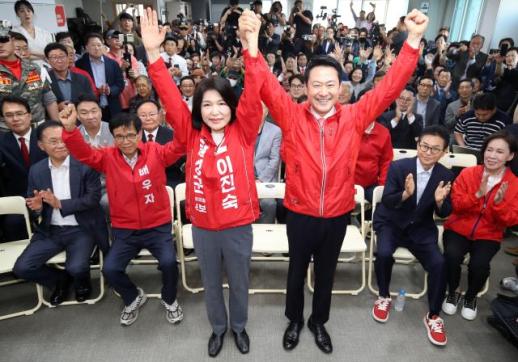 Jang Dong-hyuk Appeals for Support at Lee Jin-sook's Campaign Office Opening Jang Dong-hyuk, leader of the People Power Party, attended the opening of Lee Jin-sook's campaign office for the Dalseong District by-election in Daegu on May 10, urging support by stating, "We need someone who can properly fight against the Lee Jae-myung government." At the event, Jang praised Lee, saying, "She is someone who has fought to uphold her values and has never backed down in the face of oppression or intimidation." He criticized Lee Jae-myung, saying, "He is rushing to cancel charges against himself. Even though he has been president for less than a year, he is disregarding the public by trying to erase all his crimes." Jang also expressed concerns about potential tax increases after the local elections, stating, "After the local elections, a tax bomb will explode. They are planning to take all the committee chair positions during the formation of the National Assembly. We must stop this." He emphasized the importance of Dalseong, calling it "a place that has upheld conservatism and the pride of conservatives," and expressed confidence that the patriotism of Dalseong will protect both South Korea and conservatism. He added, "We need someone who has fought properly until now to come to the National Assembly and fight alongside us. I want to see Lee elected with an overwhelming majority of over 90%." Lee Jin-sook also spoke at the event, declaring, "This election is not just about electing mayors, county heads, or members of the National Assembly. It is about protecting South Korea from unchecked dictatorial power." She criticized the Lee Jae-myung administration, stating, "They are attempting to transform the South Korean system using their majority in the National Assembly. We are living in an era where the abnormal has become the new normal. If Dalseong falls to the left, can we still call South Korea a free democratic country? If the Democratic Party's leftists take over Daegu, there will be no future for South Korea." The opening ceremony was attended by several local political figures, including Chu Kyung-ho, the candidate for Daegu mayor, and Lee Cheol-woo, the candidate for Gyeongbuk governor, along with other local lawmakers such as Lee In-sun, Kwon Young-jin, and Choi Eun-seok.* This article has been translated by AI. 2026-05-11 04:06:04
 -
 South Korea Confirms Fire on HMM Namooho Caused by Unknown Object The South Korean government announced that the fire on the HMM Namooho, which occurred in the Strait of Hormuz on May 4, was caused by an impact from an unidentified object. The Ministry of Foreign Affairs released the findings of a joint government investigation on May 10 (local time). According to the ministry, "The investigation confirmed that an unidentified object struck the stern of the HMM Namooho on May 4," adding that there are limitations in identifying the exact type and physical size of the object. The ministry also stated, "We plan to conduct further analysis of the debris collected from the site." * This article has been translated by AI. 2026-05-11 04:04:58
 -
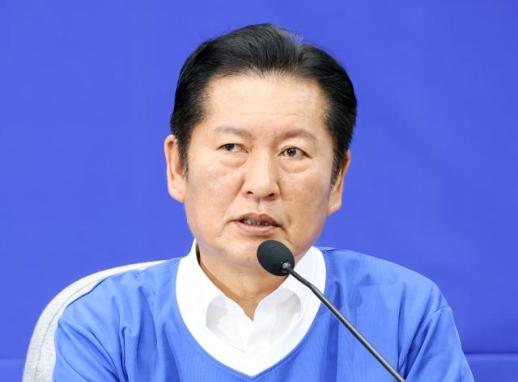 Democratic Party Launches Election Committee Ahead of Local Elections The Democratic Party officially launched its election committee on May 10 in preparation for the June 3 local elections. The committee is named the "Republic of Korea Normalization Election Committee," focusing on strengthening regional organizations while reducing central structures.During the launch event held at the National Assembly, Jeong Cheong-rae, the committee's chair, stated, "We will set our goals high but maintain a humble attitude, taking steps forward together with the people."Jeong characterized the upcoming local elections as a judgment on what he termed a "rebellion." He remarked, "The rebellion is not over, and the forces behind it continue to operate without remorse. We must hold accountable those arrogant factions dreaming of a return through the 'Yoon Again' nominations in this election."The Democratic Party's committee emphasizes regional over central organization. Alongside Jeong, the committee includes Han Byeong-do, the floor leader; Lee Si-jong, former governor of North Chungcheong Province; Ahn Seon-ha, an advisor on climate, AI, and health for the World Health Organization; Kim Hee-jung, a surgeon from Daegu known as the 'TK Daughter' during the last presidential campaign; and Yvonne, a naturalized Korean from Myanmar.Joint committee chairs include Lee An-joo, Hwang Myeong-seon, Kang Deuk-gu, Lee Seong-yun, Moon Jeong-bok, Park Ji-won, and Park Gyu-hwan.Actor Lee Won-jong has been appointed as the "Neighborhood Campaign Chair". Jeong praised Lee for his dedicated contributions during the last presidential election, stating, "Although we are of similar ages, I truly respect him as a cultural figure." Lee expressed his belief that this local election will serve as the conclusion to the 21st presidential election, vowing to achieve their goals, especially in challenging areas.* This article has been translated by AI. 2026-05-11 04:03:48
 -
 Minister Kim Jung-kwan: U.S. Investment Principles Based on Commercial Rationality Minister of Trade, Industry and Energy Kim Jung-kwan stated on May 10 that the fundamental principle for South Korean investments in the United States is "commercial rationality," adding that the U.S. side fully understands this aspect. Speaking to reporters after concluding his visit to the U.S. and Canada, Kim explained that his trip aimed to consolidate discussions on U.S. investment projects that had previously been held at the working level. From May 6 to 9, Kim visited Washington, D.C., where he met with key U.S. officials to discuss strengthening cooperation in the industrial and trade sectors, including a $350 billion investment project. The first U.S. investment initiative, known as Project 1, is expected to be unveiled following the enactment of the Special Act on U.S. Investments on June 18, when the Korea-U.S. Strategic Investment Corporation is launched. The leading candidate for this initial project includes the construction of a liquefied natural gas (LNG) export terminal in Louisiana and new energy infrastructure projects such as nuclear power plants. However, Kim urged patience regarding specific projects, stating, "Negotiations are currently ongoing, so please watch carefully as things develop." Regarding Coupang, he mentioned, "I actually brought up Coupang first and explained the South Korean government's basic stance on the matter. It seems that this provided an opportunity to clarify any misunderstandings that existed." Before his visit to the U.S., Kim traveled to Canada from May 5 to 6, where he held meetings with cabinet-level officials to discuss specific industrial and resource cooperation related to submarine projects. On the potential $60 billion submarine project in Canada, he remarked, "We are currently in a friendly competition with Germany, and I will do my best until the end to bring good news to our citizens without making any assumptions."* This article has been translated by AI. 2026-05-11 04:02:33
 -
 Prepaid Funeral Industry Shifts to Total Life Care Model Amid Regulatory Pressures The prepaid funeral industry is accelerating its transformation to overcome stricter regulations on advance payments. Companies are attempting to pivot to a 'total life care' model as a strategy to navigate government pressures. This includes expanding direct funeral home operations and diversifying revenue streams through services related to travel, weddings, and pet care. According to industry sources on May 10, the prepaid funeral sector has a unique accounting structure that differs from traditional manufacturing or service industries. Monthly payments made by customers are recorded as 'deferred revenue'—essentially liabilities—until funeral services are actually rendered. As the number of subscribers increases and cash inflow rises, the debt ratio on the books also increases, often leading to perceptions of financial instability. Additionally, to protect subscriber payments, companies are required to deposit 50% of advance payments into banks or mutual aid associations, effectively tying up half of their funds. Concerns are growing that if the National Assembly and the Fair Trade Commission implement further regulations on advance payment management, the entire prepaid funeral industry could face a severe liquidity crisis. In response to these structural limitations, companies are expanding into total life care services. Notable examples include conversion services linked to cruise travel, weddings, healthcare, and pet funerals. By allowing subscribers to use their accumulated advance payments for a variety of services beyond just funerals, companies are broadening the utility of their prepaid products. This approach enables consumers to access services during their subscription period, diversifying the revenue model that previously relied solely on advance payments. The recent aggressive push to build direct funeral home infrastructure is also part of this revenue diversification strategy. Direct funeral homes can generate additional income through services such as catering and funeral supplies, beyond merely providing a venue. Woojung Free Life secured 15 direct funeral home brands under 'Shilnakwon' last year and has opened a new 'Shilnakwon Seoul Jejung Funeral Home' in Guro-gu, Seoul, enhancing its network in the capital. Kyowon Life opened a funeral home in Chungju this year, expanding its direct funeral home network to eight locations nationwide, with plans to open another location in the second half of the year. Boram Funeral Services has established a stable offline service chain with a total of 13 direct funeral homes across the country. An industry insider stated, "As regulations on advance payment management tighten, companies that cling solely to traditional funeral services will struggle to survive. Ultimately, only those that can transition to revenue generation through direct funeral infrastructure and lifestyle-oriented new businesses will be able to cross the threshold of survival."* This article has been translated by AI. 2026-05-11 04:01:03
 -
 South Korea's Prepaid Funeral Industry Faces Stricter Regulations The South Korean government is implementing stringent reforms aimed at increasing transparency in the management of prepaid funds within the funeral industry. As the sector reaches a milestone of 10 trillion won in prepaid funds and 10 million subscribers, it finds itself at a crossroads between the need for enhanced transparency and the reality of declining profitability.According to industry sources on May 10, six legislative proposals are currently pending in the National Assembly, focusing on controlling the management of prepaid funds by funeral companies and restricting transactions with major shareholders and related parties. This comes amid growing consumer distrust in the prepaid funeral sector, fostering a consensus on the need for stronger protections for prepaid funds.The core objective of these proposals is to eliminate speculative management of prepaid funds, which are a key asset for funeral businesses. Key provisions include the formalization of principles for managing prepaid funds, prohibiting debt guarantees and collateral provision, and banning loans for equity purchases. Additionally, the proposals aim to enhance oversight of corporate governance by limiting credit extensions to major shareholders, prohibiting unfair internal transactions, and expanding obligations for board resolutions and disclosures.The Fair Trade Commission (FTC) has also announced plans to amend the Enforcement Decree of the Installment Transactions Act and revise guidelines for imposing fines on violators of the Act, with public notices issued between March and April of this year.Notably, there is a shift in the supervisory framework. The existing FTC-centric oversight system will now incorporate the expertise of financial authorities. According to a joint proposal by the FTC and the Financial Services Commission, the FTC will be able to request support from the Financial Services Commission when necessary, and the Financial Supervisory Service will have a legal basis to directly participate in investigations and inspections of funeral companies.While the funeral industry acknowledges the importance of consumer protection, there are concerns that these regulations could threaten business sustainability. The industry relies on managing prepaid funds received from consumers to generate profits. However, increased regulatory restrictions on fund management could significantly reduce operational flexibility.An industry representative stated, "As the number of subscribers grows, the unique accounting structure leads to increased liabilities on the books. If restrictions are placed on the management of prepaid funds, the burden of managing profitability will increase. Limitations on inter-company fund transactions and stricter capital soundness standards could weaken corporate competitiveness in the long term."As South Korea enters an aging society, the scale of the prepaid funeral industry is expanding. According to the FTC, as of March this year, the total amount of prepaid funds in the domestic funeral market reached 10.3348 trillion won, more than tripling from 3.520 trillion won recorded in 2015.Woojung Free Life, the industry leader, reported a cumulative prepaid fund of 2.9118 trillion won at the end of last year and became the first in the sector to surpass 3 trillion won in April this year. Boram Funeral and Kyowon Life are fiercely competing for the second position, with prepaid fund amounts of 1.657 trillion won and 1.6462 trillion won, respectively, as of last year.* This article has been translated by AI. 2026-05-11 03:57:13
 -
 Hyundai Aims for 550,000 HEV Sales in the U.S. to Challenge Toyota Hyundai Motor Group is poised to leverage its eco-friendly vehicle competitiveness to ascend to the top of the global automotive market. Following the Trump administration's elimination of electric vehicle subsidies, the U.S. is experiencing a significant shift toward hybrid electric vehicles (HEVs). Hyundai plans to narrow the gap with Toyota by capitalizing on its supply chain advantages in the HEV sector while strengthening its electric vehicle (EV) portfolio in Europe, where environmental regulations are tightening. Hyundai Chairman Euisun Chung has proposed a strategy of turning crises into opportunities, aiming to enhance competitiveness through rapid responses to local demand. According to industry sources on May 10, Hyundai's Meta Plant America (HMGMA) in Ellaville, Georgia, has commenced production of HEV vehicles. The first model produced will be the Kia Sportage HEV, which sold 63,000 units in the U.S. last year. Production will gradually expand to include popular HEVs such as the Hyundai Tucson, Santa Fe, Palisade, Kia Carnival, and Telluride. Originally designed as an EV-only facility, HMGMA has transitioned to a mixed production system to accommodate HEV manufacturing in response to local supply changes. With the start of HEV production, HMGMA's output is expected to increase to between 300,000 and 500,000 units annually. To achieve this, the plant will implement a second shift starting in September and plans to hire an additional 2,000 employees by the end of the year, doubling its workforce. Brent Sturph, HMGMA's chief operating officer, stated in a local media interview, "We can produce both EVs and HEVs, and we aim to add 500,000 units to our annual production capacity." Last year, Hyundai and Kia sold 1,836,172 vehicles in the U.S., with HEV sales increasing by 48.8% to 331,023 units. Following the repeal of the Inflation Reduction Act (IRA) in September, the U.S. is rapidly transitioning from EVs to HEVs. In fact, HEV sales in the U.S. rose by 10% year-over-year to approximately 650,000 units from the fourth quarter of last year to the first quarter of this year, while EV sales decreased by 8% to around 450,000 units during the same period. Last year, Toyota sold 1,183,248 HEVs in the U.S., compared to Hyundai Motor Group's 331,023 units. Despite a significant sales gap of over 850,000 units, Hyundai is increasing its presence through rapid growth and supply chain advantages. Hyundai's growth rate of 48.8% last year far surpassed Toyota's 17.6% growth. Industry insiders noted, "Toyota's inability to keep up with the rapid HEV transition in the U.S. has led to bottlenecks in popular models like the RAV4, resulting in a significant loss of demand. Additionally, Toyota's reliance on Asian supply chains for batteries and semiconductors remains high, while Hyundai has already established battery plants and mixed production bases for EVs and HEVs in North America, allowing for a quicker response to U.S. policies." Hyundai Motor Group plans to increase its HEV sales in the U.S. to 550,000 units this year, leveraging a more flexible HEV supply chain compared to Toyota. Hyundai aims to achieve this by launching a fully revamped Palisade, along with facelifts for the Santa Fe and Elantra, targeting 300,000 units, while Kia plans to contribute 250,000 units through the second-generation Telluride and additional models like the Seltos. The premium brand Genesis will also significantly expand its HEV lineup this year. An industry expert commented, "To break the established notion of 'hybrid equals Toyota' in the U.S., Hyundai must go beyond simply offering fuel-efficient vehicles. They need to showcase strong competitiveness in innovative extended-range electric vehicles (EREVs) and larger vehicle segments that appeal to local preferences. Especially under a potential second Trump administration, not only product offerings but also supply chain and localization of parts will be crucial, necessitating simultaneous efforts to stabilize production in the U.S."* This article has been translated by AI. 2026-05-11 03:55:20