
Journalist

Seo Hye Seung
-
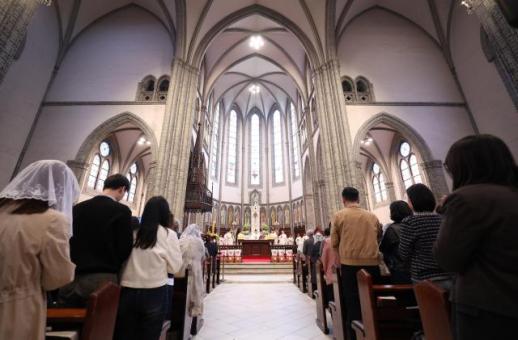 Three in four young Koreans say they are nonreligious SEOUL, May 03 (AJP) - Three out of four South Koreans in their 20s now identify as having no religion, highlighting a deepening generational shift that is accelerating the aging of the country’s faith communities and clergy. According to a recent report by Gallup Korea titled Religion of Koreans 1983–2025, only 24 percent of adults in their 20s said they currently practice a religion last year, meaning more than 75 percent described themselves as nonreligious. The figure compares with 29 percent among people in their 30s, 37 percent in their 40s, 45 percent in their 50s and 52 percent among those aged 60 and older. Overall, 40 percent of South Korean adults said they had a religion in 2025, including 18 percent Protestant, 16 percent Buddhist and 6 percent Catholic. The share of religious adults had climbed from 44 percent in 1983 to a peak of 54 percent in 2004 before entering a long decline. It fell to 37 percent in 2022 during the final stages of the COVID-19 pandemic before rebounding slightly last year. The generational divide, however, remains stark. Among respondents in their 20s who said they had no religion, 58 percent cited simple lack of interest as the main reason. Another 20 percent said they lacked the mental or time capacity for religious life, while 9 percent pointed to distrust or disappointment with religion and another 9 percent said they preferred to rely on themselves. Gallup Korea said the decline in religious affiliation over the past two decades has been driven primarily by younger generations. “The main cause behind the decline in religious populations over the past 20 years was among young people,” the report said. “Not only has the inflow of new young believers decreased, but existing followers have also left organized religion, weakening overall religious communities and accelerating population aging.” The trend is reshaping the demographic structure of South Korea’s major religions. Among adults identifying as Buddhists, 56 percent were aged 60 or older, according to the Gallup survey. The proportion stood at 34 percent among Protestants and 32 percent among Catholics, indicating broad aging across faith groups. Data released last month by the Catholic Bishops' Conference of Korea showed the number of Catholic believers aged 29 or younger fell 34 percent over the past decade, while believers aged 65 and older surged 80.4 percent between 2015 and 2025. Senior citizens accounted for 28.9 percent of all Catholics in South Korea last year, exceeding the country’s overall elderly population ratio of 21.2 percent. The report said the Korean Catholic Church had effectively entered a “super-aged society” as early as 2019. The aging trend is also spreading among clergy. The proportion of diocesan priests aged 65 or older rose steadily from 11 percent in 2015 to 19.7 percent this year, according to Catholic Church statistics. Over the same period, the number of seminarians fell 41.9 percent while newly ordained diocesan priests declined 42.1 percent, suggesting further strain on future clergy recruitment. Korea’s largest Buddhist sect, the Jogye Order, is facing similar pressures. The number of new monastic entrants has reportedly fallen to about one-third of levels seen two decades ago, while more than 30 percent of monks are now elderly. 2026-05-03 15:28:20
 -
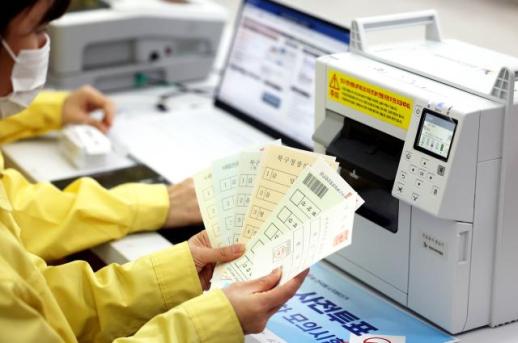 South Korea’s June 3 Local Elections Set: Ruling Party Stresses Stability, Opposition Seeks Referendum With a month to go until the June 3 local elections, South Korea’s rival parties have finalized nominations for the heads of 16 metropolitan and provincial governments and moved into full campaign mode. The vote is the first nationwide election held a year after the launch of the Lee Jae-myung government. The Democratic Party is pitching a message of “stable governance” and what it calls the removal of “insurrection forces,” while the People Power Party is framing the election as a judgment on the government and a check on its power. According to political circles on Saturday, the People Power Party completed its slate a day earlier by confirming Supreme Council member Yang Hyang-ja as its candidate for Gyeonggi governor. Yang competed for the nomination against Ham Jin-gyu, a former lawmaker, and Lee Seong-bae, a former MBC announcer, and won the primary. Yang will face Democratic Party candidate Choo Mi-ae and Reform Party candidate Cho Eung-cheon in the Gyeonggi race. Seoul, Busan and Daegu are widely seen as the top battlegrounds. In the 2022 local elections, the People Power Party won 12 of 17 top local government posts. This time, with President Lee’s approval rating holding in the 60% range, some observers say the Democratic Party could make gains not only in competitive areas but also in the conservative-leaning Yeongnam region. The People Power Party, for its part, is focused on holding Yeongnam, long considered a conservative stronghold. The Democratic Party has sought to refresh its lineup by nominating new figures it says can support the government. The People Power Party re-nominated 11 incumbent local leaders, highlighting administrative experience and policy continuity. Candidate registration for the June 3 local elections will be held over two days starting May 14. Official campaigning runs from May 21 through June 2, the day before the vote, for 13 days. Early voting will be held May 29-30, with Election Day voting on June 3. 2026-05-03 15:27:39
 -
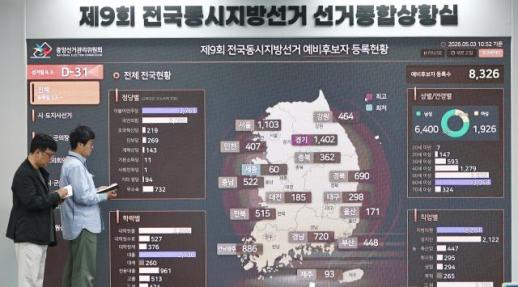 South Korea’s June 3 Local Elections Set as Major Parties Finalize Governor Matchups With about a month left until the June 3 local elections, the People Power Party completed the lineup for all 16 metropolitan mayors and governors after selecting Supreme Council member Yang Hyang-ja on May 2 as its candidate for Gyeonggi governor. With both major parties focused on winning, an all-out campaign is expected in the remaining weeks. Seoul, often seen as the marquee race, will pit Democratic Party candidate Jeong Won-oh against People Power Party candidate Oh Se-hoon. Jeong is highlighting his administrative experience as a three-term district chief, while Oh is emphasizing stability as a four-term mayor. Kim Jeong-cheol of the Reform Party and Kwon Young-kuk of the Justice Party are also running for Seoul mayor. Gyeonggi, another top battleground where a first female metropolitan leader is considered likely, will feature Democratic Party candidate Choo Mi-ae against People Power Party candidate Yang. Choo is a six-term lawmaker and chair of the National Assembly Legislation and Judiciary Committee. Yang is known as Samsung Electronics’ first female executive who rose from a high school graduate track. Attention is also on whether conservatives can unify behind a single candidate in Gyeonggi. Jo Eung-cheon, who initially mentioned unity soon after entering the race as a Reform Party candidate, appeared to shift his stance at an emergency news conference on May 3, saying, “We must not take the tiresome cartel structure of the two major parties for granted.” Whether a unity deal happens remains uncertain. Other races drawing focus include Daegu and Busan. In Daegu, Democratic Party candidate Kim Boo-kyum, who has served as a Cabinet member, will face People Power Party candidate Choo Kyung-ho. Kim, who has served as prime minister and as a four-term lawmaker, also won a seat in Daegu’s Suseong-gap district in the 20th general election. Choo has served as deputy prime minister for economic affairs, as a three-term lawmaker and as People Power Party floor leader. In Busan, Democratic Party candidate Jeon Jae-soo, who served as the first oceans and fisheries minister in the Lee Jae-myung government, will run against People Power Party candidate Park Hyung-joon, who served as senior presidential secretary for political affairs in the Lee Myung-bak government and won reelection as Busan mayor. Reform Party candidate Jeong I-han is also in the race, seeking to become the youngest mayor. In Incheon, Democratic Party candidate Park Chan-dae will face People Power Party candidate Yoo Jeong-bok. Park is considered a leading pro-Lee Jae-myung figure after serving as Democratic Party floor leader when Lee was party leader. Yoo won the Incheon mayoral race in the 2014 and 2022 local elections. In Daejeon, Democratic Party candidate Heo Tae-jeong and People Power Party candidate Lee Jang-woo, both current or former Daejeon mayors, will square off. Heo previously served as Yuseong district chief and became Daejeon mayor in 2018. Lee is the incumbent mayor and previously served two terms as a lawmaker representing Daejeon’s Dong district. In Sejong, Democratic Party candidate Cho Sang-ho, a former deputy director of the Democratic Research Institute, will face incumbent Sejong Mayor Choi Min-ho of the People Power Party. In South Chungcheong and North Chungcheong provinces, Democratic Party candidates Park Soo-hyun and Shin Yong-han will run against People Power Party candidates Kim Tae-heum and Kim Young-hwan, respectively. In Gangwon Province, the Democratic Party nominated Woo Sang-ho, its first nominee in the party and a former senior presidential secretary for political affairs in the Lee Jae-myung government. The People Power Party nominated two-term lawmaker and incumbent Gangwon Gov. Kim Jin-tae. In the Yeongnam region, often viewed as a conservative stronghold, North Gyeongsang Province will see Democratic Party candidate Oh Jung-gi, who ran in the 2018 gubernatorial race, face People Power Party candidate Lee Cheol-woo, a two-term governor and three-term lawmaker. In South Gyeongsang Province, Democratic Party candidate Kim Kyung-soo, elected in the 2018 local elections, will run against incumbent People Power Party Gov. Park Wan-soo, elected in 2022. In Ulsan, Democratic Party candidate Kim Sang-wook, who moved from the People Power Party to the Democratic Party, will face People Power Party candidate Kim Doo-gyeom, who is seeking reelection. Kim Sang-wook, along with Jinbo Party candidate Kim Jong-hoon and Cho Kuk Innovation Party candidate Hwang Myung-pil, has agreed in principle to pursue a unified candidacy by May 13 and is discussing details. For the first-ever elected integrated mayor of the Jeonnam-Gwangju merged city, the Democratic Party nominated Min Hyung-bae, a former Gwangsan district chief and a two-term lawmaker. The People Power Party nominated Lee Jeong-hyun, a three-term lawmaker from a Honam constituency and chair of the party’s nomination committee for this local election. In North Jeolla and Jeju, Democratic Party candidates Lee Won-taek, a two-term lawmaker previously linked to allegations of paying for others’ meal expenses, and Wi Seong-gon, a three-term lawmaker, will face People Power Party candidates Yang Jeong-moo and Moon Seong-yoo, who previously led the Korea Asset Management Corp., respectively. 2026-05-03 15:18:28
 -
 Samsung family completes $9 bn inheritance tax payment as AI boom reshapes empire SEOUL, May 03 (AJP) -The family of late Samsung Group patriarch Lee Kun-hee has completed payment of a record 12 trillion won ($8.8 billion) inheritance tax over five years, concluding what is widely regarded as the largest inheritance settlement in South Korean history while underscoring the dramatic resurgence of the Samsung empire during the artificial intelligence semiconductor boom. According to business industry sources on Sunday, Jay Y. Lee, along with his mother Hong Ra-hee and sisters Lee Boo-jin and Lee Seo-hyun, recently finalized the last installment of inheritance taxes first reported in April 2021 following the death of the late chairman in October 2020. The estate included stakes in key affiliates such as Samsung Electronics, Samsung Life Insurance and Samsung C&T, along with extensive real estate holdings. At the time of the filing, the family stated that “paying taxes is a natural duty of citizens,” pledging to fulfill the obligation in accordance with legal principles. Using South Korea’s installment payment system, the family paid the tax in six installments over five years. The 12 trillion won levy exceeded the government’s total inheritance tax revenue of 8.2 trillion won collected in 2024, making it one of the largest inheritance tax payments ever recorded globally. The completion of the payment also marks a sharp reversal from the uncertainty surrounding Samsung’s succession transition in 2020 and 2021. At the time of Lee Kun-hee’s death, the combined market capitalization of Samsung Group’s major listed affiliates was estimated at roughly 500 trillion won to 600 trillion won ($430 billion to $520 billion at the time), weighed down by the COVID-19 pandemic, a prolonged semiconductor downturn and leadership uncertainty surrounding the succession process. Samsung Electronics alone was valued at roughly 350 trillion won to 400 trillion won during that period. When the inheritance tax bill was announced in 2021, some analysts questioned whether the Lee family would be forced to dilute its control over Samsung through large-scale share sales to meet the payment obligations. Instead, the global AI semiconductor rally fundamentally transformed the conglomerate’s fortunes. Today, the Samsung empire’s combined listed market value has swollen to roughly 1,500 trillion won to 1,600 trillion won ($1.1 trillion), meaning the group’s value has nearly tripled in less than six years as Samsung Electronics emerged as one of the world’s core AI infrastructure suppliers. Samsung Electronics alone has approached or exceeded a market capitalization of 1,000 trillion won during peak periods amid explosive demand for high-bandwidth memory chips and AI data-center semiconductors. The AI-driven rally sharply improved both asset valuations and dividend income, allowing the family to preserve most of its core holdings while completing the unprecedented tax burden. According to the Bloomberg Billionaires Index, the Lee family’s combined fortune climbed to about $45.5 billion this year from roughly $20 billion levels during the succession crisis. Samsung’s economic influence has also expanded alongside the rally. Combined revenue from seven key Samsung affiliates reached the equivalent of 19.3 percent of South Korea’s gross domestic product in 2025, up from 15.1 percent a decade earlier, according to Bloomberg calculations. Alongside the tax payments, the Samsung family pursued one of the country’s largest private philanthropic campaigns rooted in the late chairman’s long-standing philosophy of “contribution to humanity.” In 2021, the family pledged 1 trillion won in medical donations, including 700 billion won to the National Medical Center to strengthen infectious disease preparedness and support construction of South Korea’s first dedicated national infectious disease hospital, scheduled for completion in 2030. Another 300 billion won was donated to Seoul National University Hospital for treatment of pediatric cancer and rare diseases, with Samsung saying roughly 28,000 children benefited from the program over the past five years. The family also donated about 23,000 artworks and cultural assets — collectively known as the “Lee Kun-hee Collection” — to institutions including the National Museum of Korea and the National Museum of Modern and Contemporary Art. The collection, estimated by the art world at up to 10 trillion won at the time of donation, has since toured globally, including exhibitions at the Smithsonian National Museum of Asian Art and the Art Institute of Chicago, with another scheduled at the British Museum later this year. 2026-05-03 15:13:24
 -
 Vietnam Mountain Town Turns Social Media Videos Into Millions in Income Vietnam’s remote mountain communities are drawing attention after earning large sums from YouTube, TikTok and Facebook, according to local media. Residents filmed everyday routines — digging for bamboo shoots, weaving cloth and working fields — and millions watched, reshaping the local economy. Vietnamese outlet Tuoi Tre reported that on May 2 (local time), the People’s Committee of Lam Binh district in Tuyen Quang province announced the official launch of a pilot project to build a “digital content creation village” linked to tourism development. The committee said residents earned about 46 billion dong (about 2.5 billion won) from YouTube, Facebook and TikTok from January through April this year. Personal income tax paid through social media platforms accounted for more than 23% of the commune’s total budget. One of Lam Binh’s best-known examples is a young Dao man, Trieu Man Duong, after photos of him buying a Mercedes-Maybach spread nationwide on Facebook and other platforms in 2023. Duong runs the YouTube channel “Ly Thi Ca.” As of May 3, it had 1.47 million subscribers worldwide. The channel follows the daily life of a mountain girl, Ly Thi Ca, showing cooking, building a home, plowing fields, harvesting crops and selling produce at markets. The videos have attracted viewers beyond Vietnam, including in Russia, Spain, France, the United States and the United Kingdom. The channel has more than 700 videos with total views well above 700 million. ◆ From selling bamboo shoots at market to a village of millionaires Truong Van Quang, chairman of the Lam Binh People’s Committee, said more than 70 high-earning digital content creators live in the commune, contributing more than 23% of the local budget through personal income tax. “In the past, people had to dig for bamboo shoots, pick a handful of vegetables or weave cloth and carry it to market, and sales were limited to what we think of as ordinary retail,” Truong said. “Now the ‘digital economy’ is helping them sell their goods online.” He said terms once considered unbelievable in the area — “millionaire” and “billionaire” — have become reality, with hundreds of households escaping poverty by creating content and building legal wealth through social media platforms. “If people film themselves digging bamboo shoots, making sticky rice, weaving cloth or fishing and upload it to social media, hundreds of millions of people in other places, including overseas, watch,” Truong said. “They value the authenticity and honesty of mountain people and enjoy real, unproduced, simple videos.” The committee estimated that income from digital content production last year would exceed 34.6 billion dong (about 2 billion won), with personal income tax contributions projected at more than 1.5 billion dong (about 85 million won). Lam Binh officials said the gains remain scattered and lack a system, and links to tourism and specialty-product trade are still weak. The pilot project is built on three pillars: a rural digital economy; community tourism tied to smart agriculture and e-commerce; and preservation of ethnic minority cultural identity combined with environmental protection and community education. Local authorities plan to upgrade internet infrastructure, provide equipment for livestream sales of farm products, and support smart-farm projects tied to production and consumption. Plans also include expanding 5G and 6G internet, offering free Wi-Fi in some areas, and creating “digital living spaces” where residents can study and share ideas. Truong said the commune will form a “community core team” by inviting successful young residents to mentor beginners. Working with technical experts, the program will also teach use of basic AI applications on smartphones, video editing and automatic subtitle generation. Lam Binh authorities also stressed that digital content creation requires responsibility, ethics and compliance with laws. They said they will monitor to prevent false information, fraud and content that harms the cultural value of local communities. “We will follow the principle of doing small things firmly first, then expanding,” Truong said. “Only when we are confident it is generating income and building legal wealth will we expand it to the entire commune.”* This article has been translated by AI. 2026-05-03 15:06:35
 -
 South Korea Financial Regulators Face Key May Decisions on Hong Kong ELS, Lotte Card and Bank Governance South Korea’s financial industry is on edge ahead of a series of regulatory decisions expected this month, including sanctions tied to mis-selling of Hong Kong H-index equity-linked securities, a customer data leak at Lotte Card, and a broader push to tighten bank governance. While the cases differ, they share a focus on weak internal controls and management accountability, bringing consumer protection and governance responsibilities back into the spotlight. As of Saturday, the Financial Services Commission is expected to place sanctions against banks over the Hong Kong H-index ELS mis-selling on the agenda for its regular meeting on May 13, according to the financial sector. Some had expected the penalty level to be settled around March, but deliberations have dragged on amid concerns about market fallout and possible legal disputes. Key issues include the size of administrative fines and the severity of penalties for executives and employees. At the prior notice stage, the fines were set at 4 trillion won, but they have already been reduced to about 1.4 trillion won. A further large cut could draw criticism for being too lenient, while tougher sanctions could prompt legal challenges from banks. Because the case is one of the largest mis-selling incidents since the Financial Consumer Protection Act took effect, regulators face pressure as the decision could become a benchmark for similar cases. Attention in the card industry is focused on the Lotte Card case. Late last month, the Financial Supervisory Service’s sanctions review committee proposed a heavy penalty of a 4.5-month business suspension over a customer information leak. The final level will be decided after review at an FSC regular meeting. With fewer disputed issues than the Hong Kong ELS case, the process is expected to move quickly once it reaches the FSC agenda. Lotte Card previously received a three-month business suspension in 2014 after a large-scale personal data leak. The latest incident stems from a different cause, but the fact that information security problems have recurred weighed on the proposed penalty. Lotte Card argued for mitigation, citing an external hack and no secondary harm, but the sanctions panel cited inadequate basic security measures, including security patches, as grounds for a heavy penalty. A bank governance overhaul is also a top issue for regulators. A task force has discussed strengthening the responsibilities of outside directors, improving procedures for selecting chief executives, and limiting long-term reappointments. While sanctions address accountability for past incidents, the governance package would reshape decision-making structures across financial firms and could have broader impact. Working-level review at the FSS is largely complete, with only some provisions left for final coordination with the FSC and other bodies. Still, some observers say announcements on high-impact sanctions or reforms could be pushed back until after next month’s local elections. A financial industry official said, “The longer the announcement is delayed, the more uncertainty grows, so we expect the financial authorities to reach conclusions this month,” adding, “Only when the sanction levels and the direction of institutional reforms are clear can financial companies spell out plans to strengthen internal controls and management.”* This article has been translated by AI. 2026-05-03 15:05:19
 -
 Boryeong-AMA International Motor Festival Aims to Become Asia’s Top Event "Honestly, I came because I love cars. Seeing two race cars drifting together gave me a real adrenaline rush," said Yosep, 26, from Puerto Rico, who attended the 2026 Boryeong·AMA International Motor Festival. On May 2, the area around the Mud Expo Plaza in Boryeong, South Chungcheong province, filled early with engine noise and cheers. At the gymkhana and drifting venues, the sound of tires scraping the pavement rarely let up. Crowds packed the stands for a gymkhana exchange event featuring Asian national team-level drivers from South Korea, Thailand, Singapore and Taiwan. Each time a driver threaded cones and obstacles at speed, spectators erupted. Drivers competed under the same conditions in Toyota Prius hybrid vehicles. Fans also raised smartphones to record drifting demonstrations by popular drivers including Choi Jun. Organizers said the biggest change this year was a stronger focus on hands-on experiences. Instead of simply looking at cars, visitors were encouraged to get in them. The 73,430-square-meter (about 22,000-pyeong) Mud Expo Plaza was lined with vehicles ranging from the latest sports cars to tuned cars and campers. Many visitors sat inside or inspected interiors up close. Kim Si-ho, 17, from Seongnam, Gyeonggi province, said, "It was great to be able to ride in cars you don't usually get to see," adding, "I'm studying an automotive field, and I think it will help with my career path." A Toyota Gazoo Racing (GR) booth in the center of the venue drew steady traffic from motorsports fans, with attention on display models such as the GR86 sports car and a GR Supra stock car. Some visitors also tried a simulator set up separately. At experience booths for advance reservation holders, tire squeal continued throughout the day. Toyota Korea ran slalom, lane-change and drifting programs. In a drifting ride-along with a professional driver, participants felt the car push outward at higher speeds in an understeer moment, then swing into oversteer as the rear slid and the vehicle began circling. Organizers said the GR86's low center of gravity helped keep the spins stable. The Boryeong·AMA International Motor Festival began in 2011 as an on-campus event at Ajou Motor College. It has since grown into a major local festival alongside Boryeong's Mud Festival, becoming a regional signature event within five years of being held around Boryeong Beach. Organizers said more than 140,000 people attended on the first day of the opening ceremony. Ajou Motor College and the city of Boryeong said they want to expand the festival internationally. Park Sang-hyeon, a professor in Ajou Motor College's motorsports program, said the event is widening exchanges with overseas drivers centered on key disciplines such as gymkhana and drifting. "Our goal is to gradually expand the scale and grow it beyond Korea into the No. 1 motor festival in Asia," Park said. This year's gymkhana Asia top-eight exchange event included many drivers from Asian countries including Singapore, Thailand and Taiwan who are active in an organization under the Fédération Internationale de l'Automobile, organizers said. They said they plan to strengthen the event's international competition character through a broader global network. Organizers also said discussions are underway to bring in global brands beyond Toyota, saying participation by major automakers could expand experience programs and raise the event's industrial value. Park said the festival has grown to a global scale with support for grassroots motorsports from Toyota Chairman Akio Toyoda, adding that the number of domestic and overseas manufacturers seeking to participate continues to rise and the event could be larger next year. Boryeong officials also said they want to make the motor festival a core local attraction. Mayor Kim Dong-il said about 200,000 people visited last year's event, generating an estimated 19 billion won in production-inducing effects. "We will foster it as one of Boryeong's two major festivals along with the Mud Festival," Kim said. According to the city, the Mud Festival that opened last July drew about 1.69 million visitors over 17 days and produced an estimated 94 billion won in production-inducing effects. The city said that, measured by impact relative to duration, the AMA International Motor Festival delivered similar results. Ajou Motor College said it is emphasizing its role linking education and industry, with ambitions to boost the region through international exchange. President Han Myeong-seok said students took part in planning and running the event. "This event is a hands-on educational site where students participate in the entire process from planning to operations," Han said. "We will grow it into a platform that connects industry, the region and talent." 2026-05-03 15:03:41
 -
 Foreign Investors Return to South Korea Stocks in April as Retail Investors Pull Back Foreign and retail investors moved in opposite directions in South Korea’s stock market in April, with a sharp shift in who was driving flows. Foreign investors, who had warned of “Sell Korea” amid Middle East risks in March, returned to buying, while retail investors cut exposure to both domestic and overseas stocks led by Samsung Electronics. According to the Korea Exchange, foreign investors were net buyers of 1.2319 trillion won on the KOSPI main board in April, excluding ETFs, ETNs and ELWs. That contrasted with March, when they net sold 43.5050 trillion won as money moved toward safe assets after the Middle East situation escalated. Large-cap stocks, including semiconductors, led the rebound in foreign buying. Top net purchases included Samsung Electronics (1.6117 trillion won), Doosan Enerbility (1.1594 trillion won), SK hynix (916.1 billion won), Hyundai Rotem (609.9 billion won) and Samsung SDI (556.7 billion won). With geopolitical risks easing, investors appeared to rotate back into blue chips expected to post stronger results. Retail investors, meanwhile, sold 15.5228 trillion won over the month in what market watchers described as an unusually sharp pause. After absorbing foreign selling in March, individuals net sold 8.5007 trillion won of Samsung Electronics alone in April. Other heavy net sales included Doosan Enerbility (1.6040 trillion won), Samsung SDI (1.3125 trillion won), Hyundai Rotem (937.2 billion won), POSCO Holdings (650.5 billion won) and Hanmi Semiconductor (564.9 billion won). Individuals had been net sellers of 402.4 billion won in January, then turned aggressive buyers in February (4.0351 trillion won) and March (33.5690 trillion won), purchasing more than 37 trillion won of KOSPI shares over those two months. Han Ji-young, a researcher at Kiwoom Securities, said sentiment was pressured by the burden of higher oil prices tied to Middle East risks and the hawkish April Federal Open Market Committee outcome. Still, she said stronger profit momentum and attractive valuations “remain key points that will keep foreign investors’ incentive to buy Korean stocks intact over the medium term.” Lee Jae-man, a researcher at Hana Securities, said sectors that led gains when the KOSPI broke past prior highs in the past tended to keep leading as new highs were formed. With AI-focused infrastructure investment-related shares now driving the market, he advised increasing exposure to leaders expected to see a large rise in operating profit margins next quarter. U.S.-stock trading by South Korean retail investors also shifted toward caution. The Korea Securities Depository said April settlement amounts for U.S. stocks showed sales of $24.21353 billion exceeding purchases of $23.74460 billion, for net selling of about $468.93 million. The reversal ended a buying-dominant trend from January through March and reflected a broader effort by individuals to reduce stock allocations at home and abroad. Industry officials said retail investors, worn down by volatility linked to Trump-related risks and high oil prices, used rebounds to raise cash. * This article has been translated by AI. 2026-05-03 15:00:00
 -
 Korea Semiconductor Leveraged ETFs Surge, With Top Fund Up Nearly 15-Fold in a Year Korea’s exchange-traded fund market has been dominated by semiconductor leveraged products, posting outsized gains as expectations for an industry upturn lifted related indexes. Because these ETFs are designed to track twice the daily move of their benchmarks, a sustained rally amplified returns through compounding. According to the Korea Exchange on May 3, semiconductor leveraged ETFs led the performance rankings over the past year (April 30, 2025, to April 30, 2026). The top gainer was TIGER 200IT Leverage, which mainly holds shares such as Samsung Electronics, SK hynix and SK Square. It rose to 328,880 won from 20,865 won, a 1,476.23% return. By simple calculation, a 100 million won investment would now be worth about 1.5 billion won. Its one-month return was also about 130%. TIGER Semiconductor TOP10 Leverage climbed 1,307.10% over the same period, to 59,450 won from 4,225 won. KODEX Semiconductor Leverage jumped 1,222.17%, to 100,485 won from 7,600 won. All three rose more than tenfold, highlighting the explosive payoff structure of leveraged ETFs in a strong uptrend. The gains reflect a broader rise in semiconductor shares, as global big tech companies expanded AI investment and demand for data-center buildouts continued, pushing up earnings expectations. As related indexes moved steadily higher, returns for leveraged ETFs tied to them expanded sharply. The same structure can also magnify losses. Because leveraged ETFs target twice the benchmark’s daily return, choppy markets can produce a “negative compounding” effect that erodes value. If an index repeatedly rises and falls within a range, the ETF can gradually lose principal. Investor caution is also being urged as single-stock leveraged ETFs tied to Samsung Electronics and SK hynix are expected to be launched. With volatility in individual shares directly reflected, the potential for gains increases, but so does the risk of losses. Brokerages have raised target prices on the back of positive results from Samsung Electronics and SK hynix, while also flagging risks. Hana Securities raised its target price for Samsung Electronics to 330,000 won, but said, “Uncertainty over operating profit estimates has increased due to a strike issue related to bonuses, and the stock’s recent price movement has been relatively weak.” Some reports have also downgraded SK hynix. BNK Investment & Securities researcher Lee Min-hee lowered the stock to hold, saying, “Despite the steep increase in earnings, it has entered the late stage of the cycle, and considering a slowdown in momentum in the second half, it is now expected to shift into a low price-to-earnings ratio (PER) stock.” 2026-05-03 14:55:15
 -
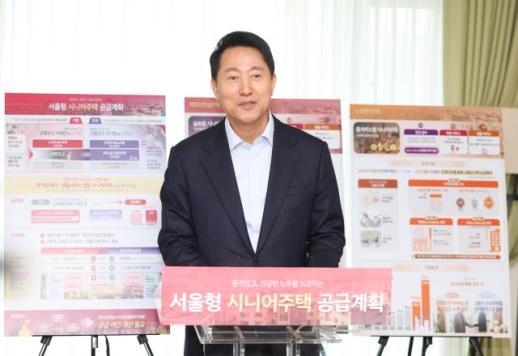 Seoul Pushes Public Senior Housing at About 2 Million Won a Month, Targeting Middle Market As South Korea moves deeper into a super-aged society, senior housing is shifting away from care-focused facilities toward residential models that combine housing, support services and leisure. With the emergence of public-type senior housing priced at about 2 million won a month, an underserved “middle market” is beginning to take shape. Industry officials said May 3 that the senior housing market is showing signs of moving beyond a split structure dominated by high-end “silver towns” and public rental housing, as providers develop a wider range of prices and service models aimed at middle-income older adults. Demand is also changing. Many older residents want more than a place to live, seeking arrangements that help maintain quality of life — including meals, cleaning, health management and leisure programs — while allowing independent living in a hotel-like managed setting. According to the Seoul Metropolitan Government, the city has 1.93 million residents age 65 and older, and 77% of them live in homes that are more than 20 years old. But the existing market has been built largely around expensive senior communities, leaving about 490,000 middle-income older adults with few realistic options and a housing gap, the industry said. Seoul’s newly announced public-type senior housing model would provide services such as meals, cleaning and health management for around 2 million won per month. If supply expands as planned, it is expected to absorb demand among middle-income seniors. Until now, the market has been led by luxury developments. “The Classic 500” in Jayang-dong, Gwangjin-gu, Seoul, has remained popular despite a 1 billion won deposit and monthly costs of about 5 million won, with waiting lists stretching for years. “VL Le West” in Magok, Gangseo-gu, has also drawn attention as a high-end model with deposits ranging from 1.2 billion won to 2.3 billion won. Seoul has announced a plan to supply 12,000 units of “Seoul-type senior housing” by 2035 and is seeking to attract private participation through construction financing support, floor-area-ratio incentives and eased public-contribution requirements. Support measures include up to 60 million won in interest-free deposit assistance, zoning upgrades near transit hubs and floor-area-ratio incentives of up to 10%. A report published April 29 in Construction Policy Journal No. 61 by the Korea Research Institute for Construction Policy said senior housing could move beyond a welfare facility model and become a new pillar of demand for the construction and housing markets. Challenges remain even as the market grows. In the report, Lee Ji-a, a deputy research fellow at the institute’s Industrial Policy Research Office, said senior housing policy needs structural change, not just more supply. She called for redefining senior housing as an independent housing type rather than a welfare facility, and for building a dual supply system that combines new construction with age-friendly remodeling of existing homes. She also said incentives such as floor-area-ratio benefits and financial support are needed to ensure project viability. In February, the National Assembly passed a special law on the creation and operation of retirement communities, providing an institutional foundation for developing the senior housing market. The market is expected to further segment into “active senior” housing for healthy people in their 60s and 70s, care-focused models with stronger support functions, and medical-linked “medical residences.”* This article has been translated by AI. 2026-05-03 14:54:17