
Journalist

Seo Hye Seung
-
 South Korea’s Next-Gen Medium Satellite 2 to Launch on SpaceX Falcon 9 After War Delay South Korea’s Next-Generation Medium Satellite 2 is set to head to space from Vandenberg Space Force Base in California aboard SpaceX’s Falcon 9 on May 2 local time. The Korea Aerospace Administration said the satellite is scheduled for launch at 3:59 p.m. May 3 in South Korea (tentative). According to the launch sequence, the Falcon 9 will shut down its first-stage engine 135 seconds after liftoff and ignite the second-stage engine 146 seconds after liftoff. The payload fairing is to separate at 182 seconds. Final separation of the satellite is planned at 3,625 seconds after launch, about 60 minutes 25 seconds. After launch, the satellite is expected to settle into an orbit of about 498 kilometers (309 miles). It will undergo about four months of initial operations before beginning full mission work in the second half of 2026. The Korea Aerospace Research Institute (KARI) will conduct initial after-launch checks (IAC) and in-orbit tests (IOT). Ground stations for early operations will include King Sejong Station in Antarctica, Troll Station, Svalbard in Norway and a station in Daejeon. Next-Generation Medium Satellite 2 is the first mid-size satellite independently developed under the lead of a South Korean industrial company. Korea Aerospace Industries (KAI) joined the design team for Next-Generation Medium Satellite 1 starting in 2015 and received transfers of key technologies, then led development of the second satellite. The project began in January 2018 and proceeded in stages. It passed a system assembly test readiness review meeting (IRR) in June 2020 and completed a pre-shipment review (PSR) in December 2021. The satellite was originally to be launched from Russia, but the launch was halted after the Russia-Ukraine war began in February 2022. In November 2023, South Korea ended the launch contract with the Russian side and selected SpaceX as the replacement provider, signing a new contract. With the schedule delayed, the satellite underwent state-of-health (SOH) tests every six months while stored on the ground. It completed a final integration test in December and finished a second PSR in March. In April, it was transported to the launch site for final preparations. The aerospace administration said the project is significant because the satellite bus and some core payloads were developed with domestic technology. “It verified Korea’s independent space development capabilities and laid the groundwork for follow-on satellites and international competitiveness,” the agency said. The satellite’s mission is to support public needs such as land and resource management and disaster response. It will provide high-resolution imagery used for ground observation, change detection, mapmaking and urban planning, and can support damage assessment and response during disasters such as typhoons, floods and wildfires. Separately, Next-Generation Medium Satellite 3 was launched on Nov. 27 from the Naro Space Center in Goheung, South Jeolla Province, on the fourth flight of South Korea’s Nuri rocket. That launch was the first produced under private-sector leadership and the first nighttime launch, successfully separating one primary payload and 12 secondary satellites. Next-Generation Medium Satellite 3 observes auroras and airglow in high-latitude regions and precisely measures the space magnetic field and plasma environment. Full mission operations began in February. 2026-05-02 10:12:19
 -
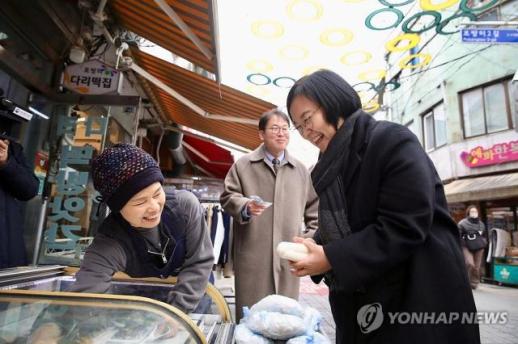 Minister Han Seong-sook urges Donghaeng Festival to drive lasting growth for small merchants SME and Startups Minister Han Seong-sook visited the Donghaeng Festival and stressed the need to boost spending at small businesses. The co-marketing sales event linking major retailers with small merchants is a meaningful attempt. Policies that energize struggling neighborhood commercial districts and encourage consumer participation are needed in the current economic climate. The question is whether the effort stops there. The success of the policy will hinge on whether it moves beyond a one-off spending push and builds a structure in which small merchants can survive on their own. For years, policy for small merchants has largely stayed in “support” mode: when sales fall, try to spur consumption; when hardship grows, inject public funds. That approach is not a fundamental solution. Consumption is an outcome, not a cause. Without product competitiveness and workable distribution channels, any consumption-boosting campaign will be temporary. The Donghaeng Festival can be a starting point, but it will not become a solution without structural change. First, policymakers need to distinguish among the people they are trying to help. Treating all small merchants as one group has clear limits. Subsistence self-employed operators and small businesses with growth potential require different approaches. The former need stability and protection; the latter need expanded sales channels and stronger competitiveness. Past policy has leaned toward uniform support without that distinction, leaving both protection and growth unclear. Han’s task is to design this two-track structure more clearly. Sales-channel policy also needs a reset. Ties with major retailers are necessary, but forcing or allocating shelf space is not desirable because it can distort competition. Instead, policy should lower barriers to entry. Major retailers and platforms should be able to test small-merchant products for a set period, with decisions on placement made naturally based on consumer response. Government should focus on supporting logistics, data and marketing in that process. The goal is not to hand out sales channels, but to create conditions that allow small merchants to enter them. Approaches to “industrializing” small merchants should also differ. It is unrealistic to assume every small business can adopt digital transformation and data-driven management. Still, some growth-oriented merchants can. Policy should identify them and concentrate support. Businesses with online sales capability, brand-building capacity and potential for overseas expansion should receive bold investment. At the same time, stability measures should continue for subsistence operators without imposing excessive burdens. The role of event-driven policies like the Donghaeng Festival should be defined as well. Such events may be necessary, but they are not sufficient. They can stimulate short-term spending, but they do not create a sustainable revenue structure. Events should be treated as a supporting tool, while structural reform should be the core policy. The strategy should pair consumer exposure through the festival with improvements in distribution systems and product competitiveness so demand can continue. Government’s role should be equally clear. The answer lies in the market, but the market needs rules and design to function properly. Government should not replace the market; it should build a framework for fair competition. That includes preventing unfair trade, improving access to platforms, and building data and logistics infrastructure. Competition should then be left to the market. Han’s message is meaningful as a starting point. The intent to revive consumption and help small merchants is clear. But policy is not completed by intent. It is completed by structure. The Donghaeng Festival is now being tested: whether it ends as an event or becomes the start of structural reform. Han’s task is to move beyond policies that merely spark spending and build a market structure in which small merchants can grow on their own. That is the lasting solution.* This article has been translated by AI. 2026-05-02 09:24:00
 -
 Korea’s National Museums Roll Out Family Programs for May Holiday Break May, widely marked in South Korea as Family Month, is bringing a slate of programs at major museums nationwide, with hands-on activities, performances and education designed to make cultural heritage easier and more engaging for visitors. The National Museum of Korea said Thursday it will host a family-focused event, “Gukjungbak Outing,” from May 2-5 across its outdoor plaza, Mirror Pond Square and the permanent exhibition halls. Outdoor photo zones will feature character-themed installations tied to Kakao Friends, including “Bangara Chunsang” and a “white porcelain spring jar” display near the Mirror Pond. The large sculptures reimagine the famed pensive bodhisattva statue and a white porcelain moon jar as the characters Ryan and Chun-sik, respectively. Performances are scheduled in the outdoor plaza, including a fusion Korean traditional music show by Akdan Gwangchil at 3 p.m. on May 2. On May 6, the museum plans balloon art and a bubble magic show by a stilt-walking clown, a Miracle Boyz ensemble performance, and a K-pop dance stage by YouTuber Sumail. Visitors can also join participatory programs such as “My Own National Museum Treasure Exhibit” and “Make a National Museum Treasure Postcard.” In the permanent galleries, events include a “QR stamp tour” and a Children’s Day mission to find treasure stickers. Around the Mirror Pond, 13 independent bookstores will run children’s book sales booths, and Pulmuone Food & Culture will operate food trucks. Regional national museums are also preparing family programs. The National Museum of Cheongju will offer a children’s musical, “The Sun and the Moon,” along with a magic and laser show, fusion Korean traditional music performances and a family sports day. The National Museum of Gongju will run a free children’s concert, “Kongkong Classic,” and a participatory play, “The Giant’s Desk.” The National Museum of Buyeo will hold an interactive education program, “Today I’m an Oaksa,” and the 41st cultural heritage drawing contest. The National Museum of Iksan will stage participatory events around the Mireuksaji site, combining traditional folk games, craft activities, a treasure hunt, a magic show and photo zones. Some museums will highlight local themes. The National Museum of Jeonju will host a children’s pottery festival, while the National Museum of Naju will offer mask-making. The National Museum of Gyeongju will stage a percussion performance near the bell pavilion of the Divine Bell of King Seongdeok, one of the museum’s signature cultural assets, allowing visitors to experience the heritage site alongside live music. Each national museum operates its own website. A museum official said most Family Month events will be free, but some programs require advance reservations, and visitors should check each museum’s site for schedules and participation details.* This article has been translated by AI. 2026-05-02 09:03:18
 -
 Pentagon Orders Withdrawal of About 5,000 U.S. Troops From Germany Within a Year The United States has decided to withdraw about 5,000 U.S. troops stationed in Germany, a move expected to be carried out over the next year as part of a broader review of force posture in Europe. According to Yonhap News Agency and other reports on May 2, the Donald Trump administration made the decision on May 1 local time to pull 5,000 troops from Germany. Sean Parnell, the Pentagon’s chief spokesperson, told Yonhap that Defense Secretary Pete Hegseth ordered the withdrawal of about 5,000 troops from Germany. Parnell said the decision followed a review of overall U.S. force posture in Europe and took into account theater requirements and local conditions. The withdrawal is expected to be completed within six to 12 months. About 36,436 U.S. troops are currently stationed in Germany; if the plan proceeds, the total would fall to about 31,000, a reduction of roughly 14%. Germany is the second-largest host of U.S. forces overseas after Japan. Yonhap reported that Germany is a key hub that hosts the headquarters of U.S. European Command and U.S. Africa Command and has played a central role in European security since World War II. About 28,500 U.S. troops are stationed in South Korea, the third-largest overseas presence after Germany and Japan. They are deployed around Camp Humphreys in Pyeongtaek and in Daegu, Gunsan and Osan. The U.S. Forces Korea presence is assessed as a core capability for deterring North Korea and as part of an Indo-Pacific strategy that includes countering China and Russia. The Pentagon told Yonhap it could not comment on any impact the Germany drawdown might have on U.S. forces in South Korea, citing potential posture adjustments. It added that U.S. Forces Korea remains focused on deterrence and readiness and that the U.S. commitment to South Korea’s defense is unchanged. * This article has been translated by AI. 2026-05-02 08:45:17
 -
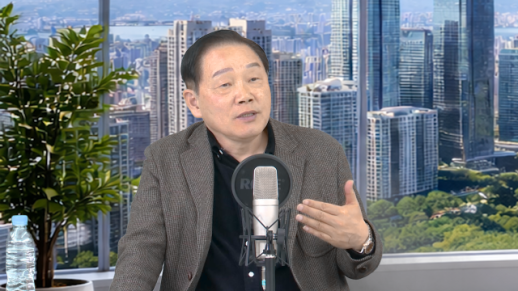 Seoul Tourism Chief Gil Gi-yeon Pitches ‘Post-Hallyu’ Push for Arts Travel Seoul tourism is rebounding after the COVID-19 pandemic shut down international travel and hit airlines, travel agencies, hotels, duty-free shops, restaurants and performance venues. The disruption also accelerated a shift away from low-cost, shopping-focused group tours toward travel that blends hiking, Korean pop culture, arts, hands-on experiences, festivals and city lifestyle. At the center of that shift is Gil Gi-yeon, CEO of the Seoul Tourism Organization, who took office during the pandemic and became the first to win a second term. Under his leadership, the Seoul Lantern Festival, the Seoul Downtown Hiking Tourism Center, Gwanghwamun Seoul Summer Beach, Yeouido Seoul Dal and the Seoul Culture Lounge have become signature offerings. He described the organization’s role as “to get tourists from around the world to come to Seoul, spend a lot of money, and help Seoul’s economy prosper.” Gil’s stated goal is to lift Seoul into the world’s top five tourism cities. In 2023, he unveiled the “Seoul Tourism Future Vision 3377 Strategy,” calling for 30 million foreign visitors, 3 million won in spending per visitor, an average stay of seven days and a 70% repeat-visit rate. Some indicators are nearing those targets. “Spending of 3 million won has risen to about 2.7 million won, the length of stay is close to six days, and the repeat-visit rate is nearing 50%,” he said. Gil said Seoul’s next edge will come from content, not just totals. While K-pop, Korean food and beauty trends are driving visits, he said the “post-Hallyu” strategy should be arts tourism, building a structure in which performances, museums and galleries support city tourism, as in New York, London and Paris. The following are excerpts from a Q&A with Gil. “COVID wasn’t a collapse of tourism. It was a chance to pivot.” - You took office when tourism had effectively stopped. What was your first judgment? “Tourism is an industry where people feel satisfaction through face-to-face activities. During COVID, movement itself became impossible, and in-person contact was difficult. So we thought about what could be done without direct contact. We held MICE meetings online, and because infection risk is relatively lower outdoors, we planned hiking tourism as well. The travel industry was in serious trouble. After discussing it with Mayor Oh Se-hoon, we provided about 30 billion won in support to the travel sector. I believed the crisis would pass. There was MERS and SARS, and they were overcome. So I thought we had to prepare for what comes next.” Gil said the core of crisis response was “calm preparation,” using the pause to identify weaknesses and develop new content. - You said it was a chance to pivot, not collapse. Why? “Before COVID, Seoul tourism depended heavily on shopping. When Chinese group tourists came, tours often took them to shopping centers. There were many cut-rate tours, and Chinese tourists also had complaints. When COVID hit, that structure disappeared. Cut-rate tours couldn’t survive. I think it became a turning point to return to higher-quality tourism.” “From a contract operator to a content producer” - What drove the results that led to your second term? “I keep thinking and value creativity. Rather than copying what others have done, I try to do something new. In the past, the Seoul Tourism Organization largely carried out work commissioned by the Seoul city government’s tourism bureau and earned some fees. After I arrived, we launched many independent projects. I believed we needed our own ability to survive. Examples include the Seoul Downtown Hiking Tourism Center, the Seoul Lantern Festival, Gwanghwamun Seoul Summer Beach, Yeouido Seoul Dal and the Seoul Culture Lounge. We launched new content every year.” “Foreigners are amazed by Seoul’s mountains” - Foreign hiking tourism that began in 2022 drew attention. Where did the idea come from? “I know a German woman who said she loves Seoul every time she visits because the mountains are close. She lived in Munich and said it takes six hours to reach mountains there. In Seoul, mountains are nearby, and there are temples on the trails. She said the temples are beautiful. That inspired me. We surveyed about 3,000 foreign followers. When we asked whether they wanted to visit Seoul’s beautiful mountains, 85% said yes. When we asked whether it would be good if we lent hiking gear and shoes for free, more than 95% said it would be great. That gave us confidence, and we opened the first center at Bugaksan. Mayor Oh liked it, so we created a second and third. Even now, users are increasing by more than 50% each year.” Gil listed Seoul’s strengths as cleanliness, the Han River, mountains, 600-year-old palaces, dynamism, friendliness and safety. “A beautiful major city surrounded by mountains is rare globally,” he said. “‘Living like a Seoulite’ can be a tourism product” - Tourism is shifting from landmarks to experiences. How far will it go? “Experiential tourism will be the main trend. People have already seen landmarks like the Statue of Liberty or the Eiffel Tower. Now they come to Seoul and wonder what to eat, what to wear, and how Seoulites live. Seoul’s streets and citizens have appeared a lot in broadcasts, dramas and Netflix films. Foreign visitors want to try living like Seoulites. That’s why we make products like ‘living like a Seoulite.’ What Seoulites eat on the way to work, how they spend lunch, what they do after work — all of that can become tourism products.” - Is the Seoul Culture Lounge an example of experiential tourism? “Yes. There was an empty 250-pyeong space on the 11th floor of the Seoul Tourism Organization’s Samil Building. It was a waste to use it only for events. With Hallyu rising, we decided to create a Hallyu experience center, the Seoul Culture Lounge. We teach Hangul there. King Sejong created Hangul so ordinary people could learn it easily. These days, foreigners also want to learn it. They practice Hangul and take home items like fans or desk clocks with phrases such as ‘I love Seoul’ written neatly. They also paint folk art and make business card holders with mother-of-pearl. About 20,000 people come a year, and 100% are foreigners. They really enjoy it.” “K-pop is powerful, but it can fade — post-Hallyu is arts tourism” - How will you sustain the Hallyu-driven tourism boom? “K-pop, Korean food and beauty are booming, and many foreigners are coming. We should capitalize while the momentum is here. The government and Seoul should invest more boldly and keep drawing tourists to Seoul using K-pop. But I think Hallyu can fade out someday. Japan’s J-pop was popular in the 2000s but isn’t what it used to be. Hong Kong films swept the world in the 1980s, but fewer people seek them out now. So we are positioning arts tourism as post-Hallyu.” - Why make arts tourism a core future strategy? “Tourism cities like New York, London and Paris have not only landmarks but also strong musicals, theater, ballet, symphonies and fine arts. People go to see them. I visited the Prado Museum in Madrid. I went to see Picasso’s ‘Guernica,’ and the line was about 2 kilometers long. One museum attracts 3.5 million visitors a year. New York’s Metropolitan Museum of Art attracts 6 million. If something like the Lee Kun-hee Museum is fully realized, I think the cultural impact will be significant.” “The Seoul Arts Tourism Alliance links culture institutions and tourism” - You also launched the Seoul Arts Tourism Alliance. What is the plan? “Last year we formed an alliance with about 100 institutions, including musical theaters, the Sejong Center for the Performing Arts, the Seoul Arts Center, the Leeum Museum of Art and the Kansong Art Museum, so tourists can access those places more easily. The Seoul Tourism Organization, the Sejong Center, the Seoul Philharmonic Orchestra, DDP and the Seoul Business Agency, among others, meet as well. We post their programs on our website and channels seen by tourists worldwide. Foreign visitors see them and go to the programs. It’s creating synergy.” Gil said the organization will also hold an arts tourism product contest this year and work with travel agencies to sell arts tourism courses. “3377 is a numeric goal for Seoul tourism” - What is the status of the 3377 strategy? “3377 means bringing in 30 million foreign tourists, having each spend 3 million won, having them stay an average of seven days, and raising the repeat-visit rate to 70%. Right now, foreign tourist numbers are close to 20 million, so 30 million may take some time. Spending per person has nearly reached 2.7 million won, the seven-day stay is close to six days, and the 70% repeat-visit rate is also improving, with the current level nearing 50%.” Gil said reaching 30 million visitors could take longer than planned but could be achieved within three to four years. He cited Japan as a comparison, saying Japan now leads in foreign visitor numbers though the two countries were once similar, and added that Korea also has diverse attractions. “Tourism is a core national industry — bigger job impact than manufacturing” - Many argue tourism should be treated as a high value-added industry. Do you agree? “Tourism is an extremely high value-added industry. During COVID, when tourists didn’t come, city shops closed and struggled. When tourists come, they eat, sleep, shop and move around. All of that connects to money. There are statistics saying tourism has four to five times the job-creation effect of manufacturing. We shouldn’t view tourism as just leisure and entertainment. It should be seen as a core national industry.” He also said tourism demand will persist in an era of AI and robots because it is an experience industry that cannot be replaced digitally. He said tourism’s share of Korea’s economy remains under 3% and the tourism balance runs deficits each year, adding that 30 million visitors and 3 million won in spending per person could make a surplus possible. “Seoul’s strengths are cleanliness, safety, friendliness, the Han River and mountains” - What do you see as Seoul’s key advantages? “Seoul is very clean. If you look at subways in London, Paris or New York, some places are dirty. Seoul is clean, and it has the Han River. Being a city surrounded by mountains is also a major advantage. Most major cities are on plains, and cities as beautiful as Seoul, surrounded by mountains, are rare. There are 600-year-old palaces, and the city is lively and dynamic after rapid industrial development. People are friendly to foreigners, prices are relatively reasonable, and public safety is strong. Seoul is competitive because it meets many of the elements tourism needs.” “Influencers, BTS and Jennie help introduce Seoul to the world” - How are you using travel influencers? “We run a program called Global Seoul Mate. Once a year we select foreign students enrolled at universities in Seoul. We give them missions once a month — for example, to cover and post about Yeouido’s cherry blossoms or the Han River — so people around the world can see Seoul’s appeal.” Gil said BTS served as Seoul’s promotional ambassadors for five years, producing content filmed at locations including Dongdaemun, DDP and Sebitseom that generated major exposure. He said a promotional video made last year with Blackpink’s Jennie was shown to more than 600 million people. “Overtourism: Bukchon already needs management” - Some major destinations face backlash over overtourism. What about Seoul? “In Seoul, Bukchon is a representative case suffering from overtourism. Now large buses cannot enter Bukchon between 10 a.m. and 5 p.m. It’s a measure to protect residents’ daily lives. In areas where tourists concentrate, we should consider entrance fees or mechanisms like tourism taxes or city taxes so residents also benefit. Places like Las Vegas collect city taxes and keep building convention centers. Japan also collects hotel lodging taxes. These systems are needed for tourism to grow rapidly.” “Seoul needs more hotels — both midrange and luxury” - What must Seoul improve to become a top-five global tourism city? “First, there must be more flights into Seoul. And if more than 30 million tourists are to stay, we need hotels. More world-class luxury chain hotels should come in. It’s difficult because land is limited, but it’s necessary. At the same time, more midrange hotels, around three-star level, should be built. Many midrange hotels have opened in areas like Mugyo-dong and Jonggak by remodeling existing buildings, and we need more of those. Rooms will continue to be in short supply. We should offer more generous floor-area ratios so more businesses can enter the hotel sector.” Gil said Seoul would need accommodation infrastructure to look beyond 30 million visitors and even toward 50 million. He added that Seoul’s overall city competitiveness is already high, but its tourism ranking still needs to rise, and that top-five status would be difficult even with 30 million visitors, requiring a level closer to 50 million. “Over the next 10 years, I want to make Seoul a city where anything is possible” - What should Seoul become over the next decade? “Seoul should become a city where anything is possible. Our catchphrase is ‘Absolutely in Seoul.’ That is our goal. It should be comfortable, with hotels always available, and strong taxi, bus and subway service. Interpretation should be good, and it should be convenient to go anywhere. A well-built information and communications network is also a major advantage. If we provide information properly and keep strengthening city competitiveness, I’m confident Seoul will naturally rise in the rankings even without anyone’s recognition.” - As CEO, what do you most want to achieve? “I have many ambitions. I don’t think we’re even halfway there. My ideal is to make Seoul a place where people from around the world come and feel very happy — a fun Seoul, a delicious Seoul, a Seoul with many things to see, a Seoul they want to return to. I think we’re gradually getting there.” Gil Gi-yeon, CEO of the Seoul Tourism Organization, is a field-oriented tourism leader credited with guiding Seoul’s recovery and pivot during the COVID-19 crisis. He became the first head of the organization to win a second term and rolled out Seoul-focused tourism content including the Seoul Lantern Festival, the Seoul Downtown Hiking Tourism Center, Gwanghwamun Seoul Summer Beach, Yeouido Seoul Dal and the Seoul Culture Lounge. During the pandemic shutdown, he pursued support for the travel industry, noncontact tourism and hiking tourism. His “3377 strategy” calls for 30 million foreign visitors, 3 million won in spending per person, a seven-day average stay and a 70% repeat-visit rate. As a post-Hallyu strategy, he has emphasized arts tourism. He argues tourism should be treated not as a simple service sector but as a core industry that strengthens the city economy, jobs and national brand.* This article has been translated by AI. 2026-05-02 08:27:15
 -
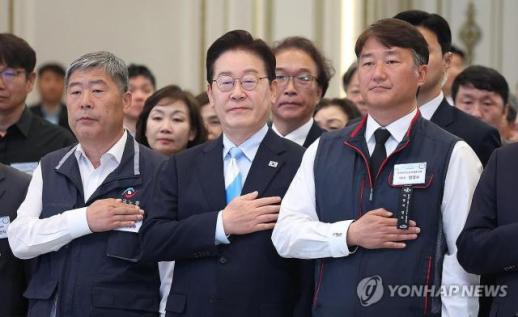 Lee Jae-myung Calls for Labor-Business Coexistence, Urges Policy Follow-Through President Lee Jae-myung delivered a clear message at a Labor Day ceremony on Thursday: the country should move beyond what he called an outdated binary that treats pro-labor policies as anti-business, and pro-business policies as anti-labor. He said a society that respects workers and a country that is good for business can coexist, creating a virtuous cycle of growth and distribution, and of fairness and innovation. The direction is clear. The central question is what comes next: how to turn the declaration into workable institutions. South Korea’s economy is facing pressure on two fronts at once. On one side, advanced industries such as semiconductors, artificial intelligence and biotechnology are demanding massive investment. On the other, labor-market gaps and job insecurity are deepening. In that environment, choosing only one side is no longer viable. As Lee noted, labor cannot exist without companies, and companies cannot exist without labor. The task, then, is not simply “coexistence,” but designing rules that make it possible. Lee’s emphasis on “growth with labor” points to a core challenge. The era when the gains from growth were automatically shared is over. If productivity rises but workers do not feel the benefit, conflict is likely to persist. That is why the country needs a system in which corporate performance and worker compensation move together — with a structure that automatically shares part of increased profits, and also spreads burdens when conditions worsen. It must be built into the system, not left as rhetoric. Lee also cited the principle of “fair pay for equal work,” which requires clearer definition. It does not mean standardizing wage systems across individual companies. Rather, it aims to set minimum standards across the labor market so work of equal value is treated fairly. Within companies, differences tied to performance and productivity are inevitable. Across society, however, a baseline is needed to curb excessive disparities. The two principles are not in conflict, but serve different purposes; without a clear distinction, policy will drift into confusion. Lee’s call for shared growth, too, cannot remain a declaration. South Korea’s labor-management relations have long relied on dialogue and negotiation, but in sharply divided disputes, talks alone often fall short. Making cooperation real requires structural tools — such as profit-sharing arrangements, conflict-mediation bodies, and incentives that link long-term investment to employment. Institutions can build trust, and trust can make cooperation possible. The relationship between labor compensation and investment also needs a reset. A simple claim that higher pay inevitably reduces a company’s capacity to invest does not fully explain reality. The issue is how compensation is structured. Wage systems centered on fixed costs can raise burdens, while performance-linked pay or stock options can reduce cash pressure while expanding workers’ share. The cooperation Lee described, the argument goes, should be realized through innovation in how capital is allocated. The government’s role is also critical. If labor policy and industrial policy move separately, shared growth will be difficult. Pushing investment in advanced industries while labor regulations constrain it — or strengthening worker protections in ways that dampen investment appetite — creates internal policy collisions. The government needs a single framework: provide incentives that tie expanded investment to jobs and compensation, while establishing fair rules for competition in the labor market. The meaning of this year’s Labor Day event was clear: labor and management leaders gathered in one place, signaling change. But symbolism is only a start. If the president’s message does not translate into policy, it risks ending as another statement. Lee posed the right question. What remains is to build an answer. Coexistence between labor and business will not be achieved by slogans, but by institutions that work in practice. 2026-05-02 08:22:26
 -
 Holiday Weekend Day 2: Mostly Cloudy Nationwide; Rain Overnight in Seoul Area Saturday the nation was expected to be mostly cloudy, with rain starting overnight mainly in the Seoul metropolitan area and inland Gangwon Province. The Korea Meteorological Administration said very dry conditions would persist around Seoul as well as inland parts of the Chungcheong and North Gyeongsang regions. Rain was forecast to begin in some areas overnight Saturday and spread nationwide between daytime Sunday and Monday. Forecast rainfall totals were 5-30 millimeters for Seoul, Incheon and Gyeonggi; 10-40 mm for Gangwon; 10-40 mm for North Chungcheong; 5-30 mm for Daejeon, Sejong and South Chungcheong; and 10-40 mm for Gwangju, South Jeolla and North Jeolla. The South Jeolla coast and the Busan and South Gyeongsang south coast were expected to get 20-60 mm, while Ulsan and inland South Gyeongsang were forecast at 10-40 mm. Daegu, North Gyeongsang, Ulleungdo and Dokdo were forecast at 5-30 mm. Jeju Island was expected to see 30-80 mm of rain in all areas except the north. Morning lows were forecast at 8.4-13.3 C, with daytime highs of 19.7-24.8 C. Forecast highs included 22 C in Seoul, 20 C in Incheon, 22 C in Suwon, 23 C in Chuncheon, 23 C in Wonju, 22 C in Gangneung, 24 C in Cheongju, 23 C in Daejeon, 23 C in Jeonju, 23 C in Gwangju, 26 C in Daegu, 22 C in Busan, 26 C in Ulsan and 21 C in Jeju. Seas were forecast at 0.5-2.5 meters. In the Yellow Sea, waves were expected at 0.5-1.0 meters in nearshore and inner offshore waters and 0.5-1.5 meters farther offshore. The South Sea was forecast at 0.5-1.5 meters. In the East Sea, waves were expected at 0.5-1.5 meters nearshore, 0.5-2.0 meters in inner offshore waters and up to 2.5 meters farther offshore. Fine dust levels were forecast to be moderate nationwide.* This article has been translated by AI. 2026-05-02 08:21:18
 -
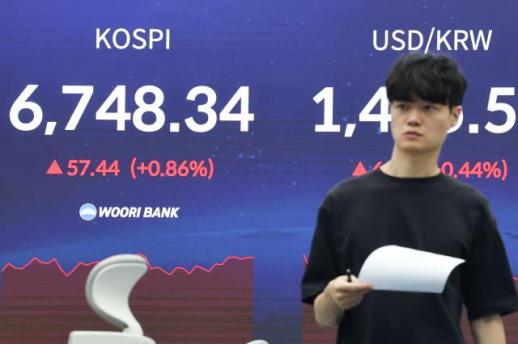 No One Is Selling: Leverage Surges as South Korea’s KOSPI Rallies "Sell in May and go away." It is one of Wall Street’s oldest sayings, built on the idea that returns tend to lag from May through October. The phrase traces back to 19th-century London, when aristocrats left the market during the social season. In South Korea’s market in 2026, the saying lands differently: There is no one eager to leave, because many investors believe prices will keep rising. The KOSPI surged 30.61% in April, quickly recouping losses from an earlier drop tied to the war involving the United States and Israel and Iran. It pushed past 6,700 intraday to set a new record. Combined operating profit at Samsung Electronics and SK hynix topped 95 trillion won, and expectations of an AI semiconductor “supercycle” have helped lift the broader market. The issue is not the rise itself, but the speed. Stocks are climbing while the won and bonds are unsettled. The won-dollar exchange rate has remained highly volatile around 1,480 won. Government bond yields are rising again. Gasoline prices in Seoul have topped 2,000 won per liter, and the consumer sentiment index has slipped below 100 for the first time in a year. Manufacturing output growth slowed sharply, to 0.3% from 5.3%, nearly stalling. As the real economy cools and equities race ahead, the gap leaves the market on weaker footing. Leverage stands out. Outstanding margin loans in the domestic stock market hit a record 35.6895 trillion won, rising for 13 straight trading sessions. About 2.7 trillion won was added in April alone. Retail investors are not just buying shares; they are borrowing to chase the rally. NH Investment & Securities, KB Securities and Korea Investment & Securities have moved to restrict credit, a sign that market heat is outpacing brokerages’ risk controls. The combined market capitalization of the KOSPI and KOSDAQ has climbed to about twice South Korea’s gross domestic product. The so-called Buffett indicator is nearing 200. Warren Buffett has called the measure “the best single measure of where valuations stand.” Some note that U.S. stocks have also sustained a high Buffett indicator since the era of ultra-low rates. Still, the key point is less the level than how quickly the market got there. Only weeks ago, the Korean market was rattled by fears tied to war, oil prices, the exchange rate and slowing growth. Now even the war is being treated as a positive. Investors have grown comfortable with the idea that “a market that rises on bad news is strong.” As prices keep climbing, confidence hardens — and that confidence can invite more borrowing. Bubbles often begin with psychology, not numbers. The “sell in May” strategy is not a rule. Over the past 33 years, U.S. stocks rose 25 times during the May-to-October period, and Deutsche Bank has dismissed the approach as a “coin toss.” This rally also has an earnings foundation: Profit growth at Samsung Electronics and SK hynix is real, and the AI-driven expansion in power and memory demand looks closer to a structural shift. Even so, markets often get excited before fundamentals fully catch up. Financial markets repeatedly overheat in familiar ways: belief that “this time is different,” debt starting to look normal, and rising prices dulling a sense of risk. Economist Hyman Minsky described the dynamic as “stability breeds instability,” arguing that long periods of calm encourage greater risk-taking until a small shock can topple an overleveraged system. That does not mean South Korea’s market is on the verge of collapse. A further rally toward 7,000 on the KOSPI remains possible. The concern is the pace, not the direction. Markets rarely climb in neat steps; more often they sprint on enthusiasm and then, without warning, regain caution. What is needed now is neither fear-driven selling nor the belief that the AI era guarantees endless gains. It is a willingness to question the speed. * This article has been translated by AI. 2026-05-02 08:18:21
 -
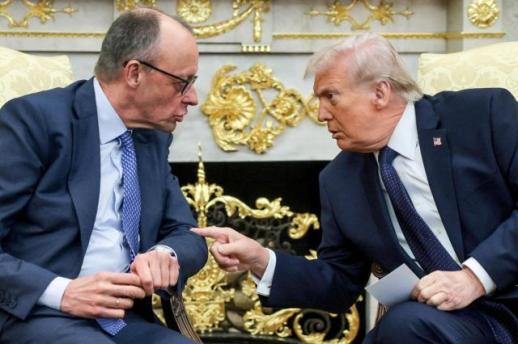 As U.S. Links Iran War Response and Tariffs, South Korea Faces a Hard Choice The United States’ response to the war involving Iran and its tariff talks are increasingly converging into what amounts to a single front. The era when military, security and trade policy moved on separate tracks is ending. Washington is pressing allies on both security contributions and trade rules as it seeks to reshape the international order. After President Donald Trump appeared to target the European Union’s lack of cooperation on the Iran war by floating a review of withdrawing 5,000 U.S. troops stationed in Germany, he announced plans to restore a 25% tariff on EU-made cars. The sequence was no coincidence. It was an explicit signal that security and trade will be negotiated together. “America First” is no longer a campaign slogan; it is becoming an operating principle of global dealings. South Korea cannot treat this as someone else’s problem. It is among the allies most dependent on U.S. security guarantees, while also relying on exports as an open economy. With geopolitical shocks from the Middle East and U.S. tariff pressure arriving at the same time, South Korea faces one of its hardest equations, caught between two conflicts. Core industries such as autos, semiconductors, batteries and shipbuilding are deeply tied to the U.S. market and supply chains. Each shift in U.S. tariff policy can rattle investment plans, production strategies and profitability. If tensions around the Strait of Hormuz drag on, South Korea could also face higher energy import costs and logistics disruptions. For companies, it becomes a double burden: a “tariff war” alongside an “energy war.” In such conditions, the priority is not emotion but clear-eyed realism. Anti-American sentiment or vague calls for self-reliance will not resolve a complex crisis. Nor is unconditional compliance with U.S. demands a solution. What matters is a carefully calibrated diplomacy centered on national interests. U.S. demands can be summarized in three areas: shifting supply chains to the United States, expanding allies’ strategic contributions, and increasing investment in the U.S. Japanese and European companies have already moved quickly to expand local production and make large investments. South Korea, too, needs a practical negotiating strategy to minimize corporate damage, rather than an emotional approach. First, Seoul should separate investment in strategic industries in the United States from the risk of hollowing out domestic industry. Even if some U.S. investment is unavoidable, it must prevent core technologies and high value-added production bases from moving offshore. Domestic research and development capacity, advanced materials and equipment ecosystems, and the pipeline of future talent should remain at home. Second, security contributions should be designed in stages and within realistic limits. On the Strait of Hormuz, for example, policymakers should first consider practical steps that manage risk, such as intelligence sharing, dispatching liaison officers and joining international coordination, rather than committing excessive military assets. National interests are not protected by principles alone; they require strategic action within what the country can sustain. Third, South Korea should raise the level of its trade diplomacy. Today’s negotiations are not simply about tariffs. Security, energy, investment and technology competition are intertwined. The time when the Industry Ministry, Foreign Ministry and Defense Ministry could act separately is over. A unified strategy should be built around an economic security control tower. Above all, Seoul should guard against partisan framing. It is risky to denounce any compromise as capitulation, or to portray acceptance of U.S. demands as patriotism. In a harsher international environment, what matters is not pride but survival, not slogans but calculation. The global order is rapidly shifting toward power politics. The United States is sending a clear message that there will be no more “free security” and no “unconditional free trade.” South Korea must face that reality. Minimizing corporate damage, protecting industrial competitiveness and securing as much negotiating space as possible within the alliance framework is the difficult, unavoidable task now facing the South Korean government. * This article has been translated by AI. 2026-05-02 08:09:26
 -
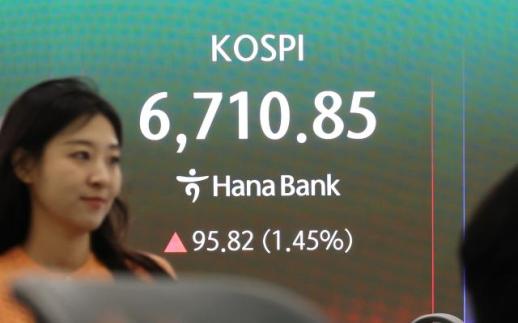 How to Use Korea’s RIA Account as the Kospi Hits Record Highs Korea’s Domestic Market Return Account, known as the RIA, has marked its first month on the market, introduced to steer money back into local stocks. With the Kospi repeatedly setting record highs, investor interest in the account has also grown. Experts say investors should weigh the benefit structure, restrictions and the direction of the local market, rather than signing up solely for tax breaks. The RIA is a special account the government introduced on a limited-time basis this year to help stabilize the exchange rate and invigorate Korea’s capital markets. It launched March 23. Investors can move overseas stocks into the account, sell them, convert proceeds into won and reinvest in domestic assets; if the money is kept invested for at least one year, they can receive a deduction on capital gains tax from overseas stock sales. If overseas stocks held before Dec. 23, 2025, are transferred into an RIA, sold, and the proceeds are reinvested for at least one year in domestically listed stocks, Korea-focused equity funds and ETFs, investors can receive a capital gains tax deduction of up to 100%. The benefit is capped at 50 million won per person, based on the overseas stock sale amount. The deduction rate is 100% for sales by the end of May, 80% by the end of July, and 50% by year’s end. As the Kospi has regained strength compared with the period around the product’s launch, interest in using the RIA has risen. Inquiries have increased, centered on large blue chips such as SK hynix, Samsung Electronics and Hyundai Motor, as well as ETFs like the KODEX 200, according to the report. Still, investors need to check key conditions to fully secure the tax benefit. The 50 million won threshold is based on sale proceeds, not capital gains. For investors holding multiple overseas stocks, using the account first for positions with lower purchase prices and higher returns can increase tax savings. After overseas stocks are transferred into the RIA and sold, the converted funds must be invested only in domestic assets such as locally listed stocks or Korea equity ETFs. Even if an ETF is listed in Korea, the benefit does not apply if it tracks an overseas index. There is also an early-termination risk. If funds are withdrawn or the account is closed before one year, all tax benefits received are canceled. Switching among domestic stock holdings within the account, however, is allowed. Experts said the RIA should be viewed less as a stand-alone tax product and more as a supplemental account for investors who already intend to invest in Korean equities. A financial industry official said, “If you want to keep holding overseas growth stocks right now or plan to use the money in the short term, the practical benefit may not be large.” The official added, “For investors considering taking profits on overseas stocks and looking for a timing to re-enter the domestic market, it can be an option to use the tax benefit.”* This article has been translated by AI. 2026-05-02 07:03:40