
Journalist

Seo Hye Seung
-
 KOSPI Hits Record High Amid Surge in Short Selling Activity As the KOSPI continues its upward rally, funds betting on stock declines through short selling are rapidly increasing. The balance of stock lending transactions has surpassed 180 trillion won for the first time, indicating an unusual trend where short selling expands even amid a rising market. According to the Korea Financial Investment Association and the Korea Exchange, as of May 7, the balance of stock lending transactions reached 179.67 trillion won, and on May 6, it was recorded at 180.63 trillion won, marking the first time it exceeded 180 trillion won. Samsung Electronics and SK Hynix topped the list of the top 10 stocks with the highest lending balances, at 21.71 trillion won and 21.66 trillion won, respectively. The lending balance refers to the amount of stocks borrowed by investors for short selling or hedging that has not yet been repaid. It is typically interpreted as an indicator of funds waiting for short selling. Additionally, major stocks with significant short selling positions include Hyundai Motor, HD Hyundai Heavy Industries, and Hanmi Semiconductor. Hyundai Motor's short selling balance is approximately 1.68 trillion won, while HD Hyundai Heavy Industries has seen its balance nearly double to about 1.38 trillion won compared to the previous month. Hanmi Semiconductor also has a short selling balance of about 1.33 trillion won, making it a notable stock for short selling bets. The short selling balance represents the amount of actual short positions that have not yet been closed. While the lending balance indicates potential future short selling, the short selling balance reflects the actual bets against stock prices. Retail investors are also continuing to bet on declines using inverse exchange-traded funds (ETFs), which profit when the index falls. According to the exchange, the KODEX 200 Futures Inverse 2X ETF saw a net purchase of about 529.9 billion won by individual investors over the past month, placing it among the top ETFs for net purchases. The trading volume is also substantial. The recent monthly average trading value of the KODEX 200 Futures Inverse 2X ETF is approximately 5.06 trillion won, with a single-day trading volume of about 546 billion won on May 8. The trading volume has exceeded 4.2 billion shares, establishing it as a leading short-term trading stock in the domestic ETF market. However, as the KOSPI continues to rise, actual returns from these investments have been disappointing. The recent one-month return for the KODEX 200 Futures Inverse 2X ETF is around -43%, and over three months, it has shown a decline exceeding 66%. This reflects the inverse structure of the ETF, which moves in the opposite direction of the KOSPI's rise. Market analysts note that despite the ongoing rally, trading in inverse ETFs remains steady. This suggests a coexistence of investor demand for both expectations of index increases and preparations for potential short-term corrections, leading to a divergence between the spot market and the derivatives and ETF markets.* This article has been translated by AI. 2026-05-11 03:27:26
 -
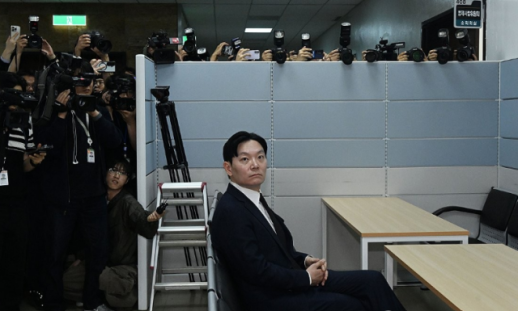 Prosecutor Park Sang-yong Faces Disciplinary Review Over Salmon Party Allegations Prosecutor Park Sang-yong, who is under scrutiny for alleged coercion of testimony related to a "salmon party" during the investigation into the Ssangbangwool North Korea remittance case, is expected to face disciplinary action soon. According to legal sources on May 10, the Supreme Prosecutors' Office plans to hold a disciplinary committee meeting as early as May 11 to discuss Park's case. The committee can summon the subject of the investigation if deemed necessary, but Park stated he has not received any notification. He has expressed a desire for an opportunity to explain himself and plans to wait at the Supreme Prosecutors' Office starting the morning of May 11 for the committee's proceedings. The disciplinary committee consists of 5 to 9 members, including both external figures from the legal, academic, media, and business sectors, as well as internal members. While the Attorney General is not obligated to follow the committee's recommendations, they have generally adhered to its decisions in the past. Even if the committee decides on the disciplinary action and its severity, there are still procedural steps before a final decision is made. If the Attorney General determines that disciplinary action is warranted, they must submit a request to the Ministry of Justice at least 17 days before the statute of limitations expires. Subsequently, the Minister of Justice, who chairs the prosecutor disciplinary committee, will decide on one of five levels of discipline: reprimand, suspension, demotion, dismissal, or termination. According to the Prosecutor Disciplinary Act, all disciplinary actions except for reprimands are executed by the President, who holds the appointment authority, upon the Minister of Justice's recommendation. If a judge or prosecutor is dismissed as a result of disciplinary action, they are barred from practicing law for three years. During the review process by the prosecution and the Ministry of Justice, the level of discipline may change. In a related case, former prosecutor Kim Sang-min, who held a book launch event while still in office and expressed intentions to run for the National Assembly, faced a suspension request from former Attorney General Lee Won-seok in January 2024. The Ministry of Justice recommended a dismissal, which is two levels higher than suspension, but the disciplinary committee ultimately decided on a three-month suspension. The Minister of Justice can also initiate disciplinary requests, leading to situations where the Supreme Prosecutors' Office may deem disciplinary action unnecessary, yet the Ministry of Justice re-evaluates the case. While Park denies the allegations of testimony coercion, criticism from the ruling party has intensified, suggesting that the investigation was manipulated. Controversy is expected to continue even after the disciplinary decision is made.* This article has been translated by AI. 2026-05-11 03:25:41
 -
 U.S. Proposes Ceasefire to Iran, But Talks Stall Amid Sanctions The United States has proposed a ceasefire to Iran and is awaiting a response, but discussions to end the U.S.-Iran conflict remain stalled as Iran has not provided an immediate reply. While seeking a diplomatic solution, the U.S. continues to impose sanctions and maintain a maritime blockade, with Iran warning of retaliation against attacks on its vessels. According to Reuters on May 9, the U.S. is waiting for Iran's response to the ceasefire proposal. President Donald Trump expressed optimism on May 8, stating he expected to receive Iran's answer that evening. In an interview with French media, Trump reiterated his expectation for a prompt response from Iran. Margo Hadad, a reporter for France's LCI, shared on social media platform X (formerly Twitter) that Trump indicated he anticipated hearing from Iran "very soon" during their conversation. However, a day later, there were no signs of movement from Iran regarding the proposal. The ceasefire offer includes provisions to officially end the war before addressing sensitive issues such as Iran's nuclear program. Currently, the U.S. and Iran appear to be discussing a framework where they would first declare an end to hostilities, followed by negotiations over the opening of the Strait of Hormuz, limitations on Iran's nuclear program, and the lifting of sanctions against Iran over a 30-day period. A key point of contention is how to handle Iran's nuclear program. In a PBS interview last week, Trump claimed that any agreement with Iran would involve the transfer of Iran's stockpile of enriched uranium to the U.S. and a halt to operations at Iran's underground nuclear facilities. Russian President Vladimir Putin has also suggested that, if necessary, Russia could store Iran's enriched uranium as part of a ceasefire agreement. However, it remains uncertain whether Iran will respond promptly to the U.S. proposal. Some analysts suggest that Iran may be stalling to extract further concessions from the U.S. As Trump prepares for a visit to China for a U.S.-China summit on May 14-15, he continues to express optimism about reaching a deal. In contrast, analysts believe that Iran has little incentive to quickly accept U.S. demands, given that a ceasefire is already in effect. The Guardian reported that diplomats who have dealt with Iranian negotiators noted that Iran tends to act as if it has ample time during negotiations. U.S. Intensifies Pressure on Iran In response, the U.S. is seeking diplomatic solutions while also ramping up pressure on Iran. The U.S. Treasury announced on Friday that it would impose sanctions on 10 individuals and entities that assisted Iran's military in acquiring weapons and materials for Shahed drones. The sanctions include several individuals and companies based in China and Hong Kong. Military tensions surrounding the maritime blockade continue. The U.S. military is blocking Iran's trade routes through a maritime blockade, while Iran has warned that it will retaliate against U.S. bases and vessels of hostile forces if its ships are attacked in the Strait of Hormuz. U.S. Central Command (CENTCOM), which oversees U.S. forces in the Middle East, stated via X that as of today, it has altered the routes of 58 commercial vessels and neutralized four ships to prevent entry and exit to Iranian ports since April 13. In response, Iran has vowed to take strong action if its tankers and commercial vessels are attacked. According to AFP, the Islamic Revolutionary Guard Corps (IRGC) warned that any attack on Iranian tankers or commercial ships would lead to severe retaliation against U.S. bases and enemy vessels in the region.* This article has been translated by AI. 2026-05-11 03:23:50
 -
 First Korea-France Job Fair to be Held After Macron's Visit The "Career Forum 2026 (Forum Emploi 2026)," a leading recruitment and networking event connecting talent and businesses in the Korea-France business community, will take place on the 27th and 29th in Seoul and Busan, respectively. This year’s event is particularly notable as it follows French President Emmanuel Macron's visit to Korea last month and marks the first time it will be held in Busan. Organized by the French Chamber of Commerce in Korea (FKCCI), the event serves as a platform for recruitment, networking, and career development, providing job seekers and experienced professionals seeking new opportunities in Korea with access to French and global companies. The Seoul event on the 27th will be held at the Korea Chamber of Commerce and Industry (KCCI) International Conference Center, featuring participation from various French and major European companies, including Accor Ambassador, Allianz, Capital Recruitment, Danone Group, De'Longhi, the French-Korean Chamber of Commerce (FKCCI), PwC Mazars, Geodis Korea, Grand Mercure Ambassador Hotel, IT Concept, Louis Vuitton Korea, Luxury Business Group, Orano Korea, Promosalons, Richemont, Sofitel Ambassador Seoul, Thales Korea, Ambassador Seoul Pullman Hotel, Veolia Korea, and Yondera by Aptero. The Busan event on the 29th will take place at the Busan National University Law School, aiming to connect local students and professionals with global companies and provide new opportunities to explore careers within the Korea-France business ecosystem. This event is supported by key institutions and partners, including the French Embassy in Korea, KCCI, Busan National University, French Alumni Day, and the Korea Chamber of Commerce. Currently, registration for both events in Seoul and Busan is ongoing. Individuals and companies interested in attending can apply through the FKCCI website. Participants will have the opportunity to meet recruiters directly, explore career opportunities, and engage in industry-specific conferences and practical workshops to enhance their job skills. Participating companies will benefit from attracting top talent, enhancing their visibility and brand image, and building relationships with universities while supporting academic and economic exchanges between the two countries. This event is receiving significant attention as it follows the recent summit between President Macron and President Lee Jae-myung, where both leaders expressed their commitment to increasing the employment scale of investment companies to 80,000 over the next decade and striving for a new era of human exchange involving 1 million people. Founded in 1986, FKCCI is celebrating its 40th anniversary this year and has been a leading institution in promoting business cooperation between Korea and France, currently boasting over 475 member companies. FKCCI has ranked third in revenue among foreign chambers of commerce in Korea and sixth among French overseas chambers of commerce worldwide for two consecutive years as of 2024, enhancing its presence in Korea. * This article has been translated by AI. 2026-05-11 03:22:02
 -
 Domestic New Drugs Expand into Advanced Biotech, Including CAR-T and Radiopharmaceuticals The scope of domestic new drug treatments is rapidly expanding. From cell and gene therapies to radiopharmaceuticals, the South Korean pharmaceutical and biotech industry is shifting towards advanced biotechnological foundations. According to the Ministry of Food and Drug Safety on May 10, Curocell's chimeric antigen receptor T-cell (CAR-T) therapy, Limcato (active ingredient: anbalcaptagen autoleucel), and FutureChem's diagnostic radiopharmaceutical, Prostavu injection (active ingredient: florastamin (18F)), have each received approval as the 42nd and 43rd domestic new drugs, respectively. Limcato is the first CAR-T therapy developed in South Korea, designed to genetically modify a patient's immune cells to selectively attack cancer cells, making it a personalized autologous T-cell immunotherapy. Previously, CAR-T treatments in South Korea relied on overseas production. Major therapies like Novartis' Kymriah and Gilead Sciences' Yescarta required sending patient cells to foreign manufacturing facilities, resulting in lengthy treatment times and costs around 300 million won. Limcato has shifted this production model to a domestic basis. With the entire manufacturing and supply process conducted within South Korea, it is expected to improve treatment timelines and supply stability. By producing directly at the Daejeon Dungok district facility, the waiting period for overseas products, which can take 4 to 6 weeks, has been reduced to about 2 weeks. In terms of efficacy, clinical trial results from Phase 2 showed that Limcato achieved a complete response rate (the percentage of patients with no detectable cancer cells) of 67.1%, compared to approximately 40% for Kymriah and about 54% for Yescarta. The 43rd new drug, Prostavu injection, is a radiopharmaceutical for diagnosing prostate cancer developed by FutureChem. It selectively binds to prostate-specific membrane antigen (PSMA) to detect lesions, enhancing accuracy compared to existing imaging diagnostics. In a domestic Phase 3 clinical trial involving patients suspected of recurrence or metastasis of prostate cancer, the diagnostic accuracy (positive predictive value of 86%) demonstrated global competitiveness, surpassing the leading global prostate cancer diagnostic agent, Pillarify, which has an 81.9% accuracy rate. FutureChem is also developing a therapeutic agent, FC705, alongside its diagnostic product. This expansion into both diagnostic and therapeutic areas signifies a meaningful advancement for domestic new drugs. Looking ahead, Hanmi Pharmaceutical's obesity treatment, epeglanatide, is highlighted as a promising candidate among upcoming domestic new drugs. This is the first glucagon-like peptide-1 (GLP-1) class treatment independently developed by Hanmi, with plans for release in the second half of this year. Hanmi aims to enter the market by leveraging price competitiveness and domestic production capabilities. By ensuring supply stability through its Pyeongtaek bioplant and employing a tailored strategy based on data from Korean patients, the company seeks to differentiate itself. In clinical trials, it demonstrated a weight loss rate of approximately 8.13% compared to a placebo, similar to the 8.5% weight loss efficacy of Wegovy. Industry experts note that the trend in domestic new drug development is increasingly moving towards advanced biotechnological fields. One industry representative stated, "Domestic new drugs are expanding into areas with high technological barriers, shifting from a chemical-centric model to a structure that can expect profitability, thereby transforming the industry landscape."* This article has been translated by AI. 2026-05-11 03:20:20
 -
 K-Bio Heads to ASCO 2026, Clinical Data as Key Asset The domestic pharmaceutical and biotech industries are turning their attention to the global stage ahead of the 2026 American Society of Clinical Oncology (ASCO) conference, scheduled to take place in Chicago from May 29 to June 2. This year's ASCO is expected to serve as a litmus test for K-Bio, determining whether it can translate participation into concrete business outcomes such as licensing deals and mergers and acquisitions (M&A).According to industry sources, ASCO is recognized as the world's largest oncology conference and a key platform for unveiling clinical trial results in new drug development. With major global pharmaceutical companies shifting their collaboration strategies to focus on 'clinically validated data,' firms are seizing opportunities to present phased clinical results at the conference to secure global partnerships.GI Innovation's immuno-oncology drug GI-101A has been selected for a rapid oral presentation at ASCO 2026 based solely on its Phase 1 data. The company emphasizes the efficacy of its combination therapy with PD-1 antibody drugs, adopting a strategic clinical design from the early stages. The oral presentation at this stage is considered unusual within the domestic biotech sector.ImmuneOncia will present interim results from its Phase 1b trial of the next-generation CD47 antibody IMC-002 targeting triple-negative breast cancer (TNBC) in a poster session. This substantial data release is expected to lay the groundwork for discussions on expanding indications and forming global partnerships.TiumBio will showcase interim results from its Phase 2a trial of the oral immuno-oncology drug Tosefertinib (TU2218) in combination with Keytruda for head and neck cancer in a poster. Tosefertinib is being developed to improve the tumor microenvironment by simultaneously inhibiting transforming growth factor (TGF)-beta and vascular endothelial growth factor (VEGF). The company plans to update response rates and survival analysis results at ASCO, following data presented at last year's Society for Immunotherapy of Cancer (SITC) conference.VigenCell will present oral results from its Phase 2 trial of the cell therapy 'VT-EBV-N.' The company intends to focus on the clinical achievements of VT-EBV-N in terms of reducing recurrence and extending survival, highlighting significant effects in these areas and suggesting improved patient prognosis.Additionally, SillaJen will announce results from its Phase 1 trial of the dual inhibitor 'BAL0891' targeting solid tumors and acute myeloid leukemia (AML). The data will focus on the tolerability and initial response rates of both monotherapy and combination therapy with PD-1 antibodies and chemotherapy. STCube will present early data from its Phase 1b/2 trial (STCUBE-003) of the BTN1A1-targeted immuno-oncology drug 'Nelmastobat' for metastatic colorectal cancer in a poster session, aiming to demonstrate disease control effects and potential survival improvements in patients with high BTN1A1 expression through multiplex immunohistochemistry (mIHC) analysis.An industry insider noted, "ASCO is seen as an opportunity not just for showcasing technological capabilities, but also for potentially reshaping the landscape of licensing deals and M&A with major global pharmaceutical companies. It presents a chance to establish a full value chain that leads to collaboration and global commercialization with these firms."* This article has been translated by AI. 2026-05-11 03:18:35
 -
 Investors Split Strategies Amid Record KOSPI Surge and Derivative Trading Amid a record-breaking bull market, investors are divided in their strategies. As the KOSPI continues to hit all-time highs, funds in derivative trading accounts, margin trading balances, and investor deposits have surged to unprecedented levels, indicating a significant increase in long positions. Conversely, the amount of funds set aside for short selling has also reached record highs, reflecting a growing interest in short positions in anticipation of a market correction following the recent surge. According to the Korea Financial Investment Association, as of May 7, the balance of funds in derivative trading accounts reached 38.2567 trillion won, marking an all-time high. This represents an increase of over 6 trillion won compared to the previous week’s figure of 32.2335 trillion won on April 30. Compared to the 18.3986 trillion won recorded on the first trading day of the year, January 2, this amount has more than doubled in just four months. Funds in derivative trading accounts are reserved for investments in exchange-traded derivatives such as KOSPI 200 futures and options. Due to their higher volatility and frequent use of leverage, these funds are typically seen as indicators of aggressive investor sentiment. Analysts suggest that the recent sharp rise in the KOSPI has led to a significant influx of capital into the derivatives market as investors bet on further gains. The scale of margin trading, or borrowing to invest, is also nearing risky levels. The balance of margin trading loans surpassed 36 trillion won for the first time at the end of April and has remained around 35 trillion won since then. Margin trading represents the amount borrowed by investors from brokerage firms to invest in stocks, and it tends to increase rapidly when bullish sentiment is strong. Additionally, investor deposits, which serve as market liquidity, reached a record high of 137 trillion won on May 7, indicating a substantial increase in available capital for investment. However, concerns are growing regarding the relatively weak risk management capabilities of individual investors. Data shows that individual investors have incurred losses amounting to billions of won annually in derivative trading from 2020 to 2024. While high volatility and leverage can lead to significant profits in a rising market, they can also result in rapid losses if market conditions shift. At the same time, there is an increasing caution among market participants regarding potential volatility following the recent surge. The balance of funds set aside for short selling has recently surpassed 180 trillion won for the first time. As the stock market remains bullish, both long and short positions are being established as investors prepare for potential corrections after reaching new highs. Market analysts believe that corporate earnings will be a key factor in determining whether the KOSPI can continue its upward trajectory. Lee Kyung-min, a researcher at Daishin Securities, stated, "As long as the upward trend in leading earnings per share (EPS) remains intact, the likelihood of continued gains is high. We should keep the possibility of further increases open rather than hastily limiting the KOSPI's upside potential."* This article has been translated by AI. 2026-05-11 03:16:34
 -
 Dua Lipa Sues Samsung for $15 Million Over Unauthorized Photo Use Dua Lipa, the global pop star, has reportedly filed a lawsuit against Samsung Electronics for $15 million (approximately 22 billion won), claiming unauthorized use of her photo. On May 9, U.S. entertainment outlet Variety reported that Lipa's team filed the lawsuit in the U.S. District Court for the Central District of California, alleging copyright infringement, trademark infringement, and violation of publicity rights. According to the lawsuit, Samsung began using Lipa's photo on TV packaging last year. After discovering this, Lipa's team requested that Samsung cease using the image, but the company allegedly refused. The complaint states, "Lipa's face was used extensively in a large-scale marketing campaign for consumer products without her consent or prior consultation, and without granting her any voice or control over its use. Lipa did not permit this and would not have permitted it." The lawsuit also cites social media posts from some consumers who expressed their intent to purchase the TV packaging featuring Lipa's photo. Lipa's team argues this demonstrates Samsung's commercial exploitation of her image and brand value. Lipa, a British artist, debuted in 2015 with the single "New Love" and gained recognition with her first studio album, "Dua Lipa," which reached No. 3 on the UK Albums Chart in 2017. She has since won three Grammy Awards. Variety reached out to Samsung for comment but did not receive an immediate response.* This article has been translated by AI. 2026-05-11 03:15:20
 -
 ETF Assets Surpass 450 Trillion Won, Stock ETFs Break 200 Trillion Won Barrier As the domestic stock market gains momentum, the net assets of stock-type exchange-traded funds (ETFs) have surpassed 200 trillion won for the first time. Overall net assets have also exceeded 450 trillion won. According to financial information provider FnGuide, as of May 7, the total net assets of all domestic ETFs reached 456 trillion won. Of this, the net assets of domestic stock-type ETFs, which invest in companies listed in South Korea, amounted to 212 trillion won, marking the first time this figure has exceeded 200 trillion won. Among the 1,099 ETFs available (including domestic stock, foreign stock, domestic bond, and mixed types), there are 413 domestic stock-type ETFs. The net assets of domestic stock-type ETFs were only around 40 trillion won at the end of 2024, but surged to 93 trillion won last year and have rapidly approached 200 trillion won in just about four months this year. The net assets of domestic stock-type ETFs account for 3.47% of the KOSPI market capitalization of 6,138 trillion won, reaching an all-time high. This proportion was only 1.99% at the end of 2023 and remained at 2.08% in December 2024, but has jumped by 0.81 percentage points this year alone after ending last year at 2.68%. Domestic stock-type ETFs represent 46.6% of all ETFs. As the KOSPI continues to set new all-time highs, funds have rapidly flowed back into domestic stock-type ETFs. This trend indicates a clear shift in investment demand from overseas assets to the domestic market. New investors, often referred to as 'stock beginners,' are actively entering the rising market through domestic stock-type ETFs, which are seen as more accessible due to their diversification benefits compared to individual stock investments. ETFs allow investors to participate in the overall market with a smaller amount of capital. As of the end of April, there were 302,669 investors under the age of 20 investing in ETFs through the five major securities firms, a 37% increase compared to the end of last year. This suggests that younger investors are opting for index and theme-based ETFs to capitalize on market uptrends rather than selecting individual stocks. The expansion of ETF investments in retirement markets, such as pension funds, also appears to be driving the increase in net assets. Additionally, the market is expected to grow further with the upcoming launch of single-stock leveraged ETFs on May 22. Park Woo-yeol, a researcher at Shinhan Investment Corp, stated, "With Samsung Electronics and SK Hynix 2x ETFs already listed and traded on overseas exchanges, we expect to address the outflow of leveraged investment demand caused by regulatory asymmetries."* This article has been translated by AI. 2026-05-11 03:14:04
 -
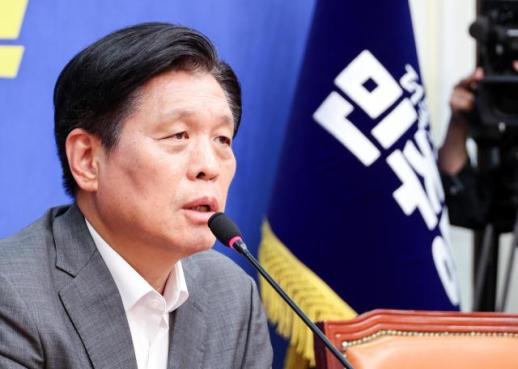 Democratic Party Questions Opposition's Stance on Housing Prices The Democratic Party criticized the People Power Party on May 10 for its aggressive stance following the reintroduction of higher capital gains taxes on multiple homeowners, questioning whether the opposition party wants housing prices to soar uncontrollably. Jo Seung-rae, the party's secretary-general, stated during a press briefing at the National Assembly, "It seems that the People Power Party does not wish for housing price stability." He added, "It would be problematic if housing prices were to skyrocket or plummet," emphasizing that the party's fundamental position is that housing prices must stabilize. Regarding concerns that the end of the capital gains tax exemption could impact elections in the Seoul metropolitan area, Jo remarked, "It is difficult to confirm any direct correlation at this point," explaining that elections involve a variety of issues that voters consider collectively. In contrast, the People Power Party strongly criticized the implementation of the capital gains tax. Party leader Jang Dong-hyuk posted on Facebook, "With the start of the capital gains tax today, housing prices will rise further," adding that many are withdrawing properties from the market. He also criticized Lee Jae-myung, stating, "Lee insists on 'normalizing real estate' at all costs. The mindset that believes this is normal is abnormal." Chief spokesperson Choi Bo-yun argued, "What is needed now is the repeal of punitive taxation that blocks escape routes, along with decisive action to fully lift regulations on reconstruction and redevelopment to allow quality housing to be supplied where the market demands it." He warned that the Lee Jae-myung administration must recognize the failures of past governments that tried to control the market through taxation.* This article has been translated by AI. 2026-05-11 03:12:40