
Journalist

Seo Hye Seung
-
 South Korea, Latvia agree to expand defense cooperation SEOUL, April 29 (AJP) - Defense Minister Ahn Gyu-back met with Latvian parliamentary speaker Daiga Mierina in Seoul on Wednesday, according to the Ministry of National Defense. Calling Latvia a "cooperative partner that shares universal values such as liberal democracy, the rule of law, and human rights," Ahn said during the meeting that Mierina's visit to South Korea would help broaden practical cooperation between the two countries. While discussing ways to expand bilateral cooperation in defense, the two agreed to strengthen strategic communication and cooperation amid growing global uncertainty including the prolonged conflict in the Middle East, and to support peace and stability on the Korean Peninsula and in Europe. Ahn highlighted South Korea's defense technology and its stable production and logistics capabilities, expressing hope that South Korean defense firms could contribute to Latvia's efforts to strengthen its defense. They also agreed to work together on drones and counter-drone systems, with plans to deepen industrial cooperation and build more stable supply chains in a forward-looking, mutually beneficial way. 2026-04-29 15:28:11
 -
 DeepMind CEO Demis Hassabis Reunites With Lee Sedol in Seoul, Says Korea Can Win in AI Era “Ten years ago, the match in Seoul marked the start of the modern AI era. The legacy of those ‘divine moves’ is now opening a golden age of science to solve humanity’s hardest problems.” Demis Hassabis, co-founder and CEO of Google DeepMind, sat down again with Lee Sedol, a top-ranked professional Go player, at a special dialogue event at ‘Google for Korea 2026’ held April 29 at the Westin Josun Hotel in central Seoul. Calling Seoul “a symbolic place where the modern AI era began,” Hassabis looked back to 2016, when AlphaGo faced Lee in what was billed as a match of the century. “It feels like yesterday, and it also feels like 100 years ago,” he said, describing a decade in which AI moved from a single breakthrough to broad impact across science and industry. ‘10 years after AlphaGo’…AI relationship shifts from rivalry to collaboration Under the theme “Back to Seoul: Where the future began,” the two men who once battled across a Go board met again as partners discussing how AI can help tackle major challenges. Hassabis pointed to AlphaFold, an AI system for predicting protein structures that he said led to the 2024 Nobel Prize in chemistry. He said AI has moved beyond a specialized domain like Go and is now entering a stage where it can help solve scientific problems such as drug development and battery innovation. “Ten years ago in Seoul, AlphaGo proved AI’s potential and laid the technical foundation for solving scientific challenges,” he said. “Today, AI is driving change in almost every area of science.” He added that the technology that began with AlphaGo is opening a path toward artificial general intelligence, or AGI, which he said could bring “a new golden age of discovery.” Lee described the 2016 match as “the starting point that redefined the meaning of my life.” He said he once took pride in the creativity of his play but realized, after seeing AlphaGo, that he had been “a frog in a well.” “Everything has changed to the point that it feels like there is nothing left for human Go,” he said. Lee also warned that in the AI era, humans could lose the initiative in thinking, and said society needs to consider AI as a partner for collaboration. After the talk, the two signed a Go board at the venue. If the board a decade ago symbolized a contest between humans and AI, the signatures underscored a shift toward cooperation. Series of meetings with business leaders…expanding AI cooperation with Korean companies Hassabis’ trip to South Korea has focused on expanding cooperation with major Korean companies. The day before, he met in succession with Samsung Electronics Chairman Lee Jae-yong, SK Group Chairman Chey Tae-won, Hyundai Motor Group Chairman Chung Euisun and LG Group Chairman Koo Kwang-mo to discuss broader cooperation in semiconductors, humanoids and physical AI. On April 29, a breakfast event titled the “2026 Leaders AI Roundtable” was also held with Google DeepMind Vice President Karim Ayoub and representatives from Hyundai Motor Group, LG Electronics, SK Telecom, Kakao and CJ. Google shared ways to apply its Gemini AI model to Korean companies’ hardware and services. In opening remarks, Google Korea President Yoon Koo said the company is expanding cooperation with Samsung Electronics across the Android ecosystem and is developing next-generation XR devices, including “Galaxy XR,” together from an early stage. In the dialogue, Hassabis called South Korea “a country with both cutting-edge technological capabilities and strong potential.” “Korea has very strong semiconductor and robotics industries, and it has leading universities and research institutions, so it can become a true winner in the AI era,” he said. He also offered an outlook for the next decade, saying AI is moving beyond screens into the physical world. “Over the next 10 years, AI agents will assist with everything from administrative work to daily life, and humans will focus on more creative work,” he said, predicting “a new era of prosperity.” * This article has been translated by AI. 2026-04-29 15:27:38
 -
 Seoul Photo Festival reimagines home after 5-year hiatus SEOUL, April 29 (AJP) -Photography has become second nature in everyday life — instantly shared, endlessly consumed — yet its deeper resonance often remains elusive. It brings us face to face with moments we have never lived, lives we have never known, making the medium feel at once intimate and distant. Against this backdrop, a festival that returns to the essence of photography has come back after a five-year pause. The Seoul Photo Festival, themed “Come Back Home,” is underway at the Seoul Museum of Photography in northern Seoul. Suspended since 2021, the festival’s return carries added weight this year. It marks the first edition to be held at Korea’s first public museum dedicated exclusively to photography — a milestone that signals a broader effort to reposition photography within the city’s visual arts landscape. Rather than anchoring “home” to a fixed place, the exhibition approaches it as something more fluid — shaped by memory, relationships and movement. Bringing together 23 artists across generations, it unfolds across four sections — “What Makes a Home,” “Moving Homes,” “On the Road,” and “Our Home” — each tracing a different emotional and conceptual path through the idea. The experience extends beyond viewing. The festival expands its participatory programs, inviting visitors not only to look, but also to read, talk, create and share — turning photography into a space of interaction rather than observation. Running through June 14, the festival is open to the public free of charge. 2026-04-29 15:26:56
 -
 Korea short-selling hits record high, but top 10 most-shorted stocks all rise South Korea’s stock market rally has pushed past the downward pressure typically associated with short selling. Even as short positions surged during the recent run-up, share prices in heavily shorted names continued to climb. According to the Korea Exchange on the 29th, net short-selling balances stood at 3.05 billion shares as of the 24th, holding near a record high. The balance was 2.95 billion shares on the 22nd, then rose by about 100 million shares in a single day on the 23rd and remained at that level through the 24th. Short-selling balances accounted for 0.47% of listed shares, the highest level since short selling resumed in March last year. Net short-selling balances refer to shares sold short that have not yet been repurchased and returned. A rising balance indicates more investors are positioning for a decline, even as the KOSPI has posted an unusually strong advance. The increase is being viewed as a natural response to the sharp market jump, reflecting both profit-taking short positions and higher hedging demand from institutions and foreign investors. Short selling typically weighs on prices, but recently many of the most-shorted stocks have risen alongside the broader market, suggesting demand has been strong enough to absorb that pressure. All of the top 10 stocks by short-selling value this month (April 1-28) gained. Samsung Electronics, No. 1 at 4.5918 trillion won in short-selling value, rose 17% to 222,000 won from 189,600 won. SK hynix, No. 2, climbed 46% to 1.3 million won from 893,000 won. HD Hyundai Heavy Industries, No. 3, surged about 48% to 667,000 won from 451,500 won even though short sales accounted for 31.3% of trading during the period. Hyundai Motor, No. 4, rose about 14%, and Hanmi Semiconductor gained 34%. Analysts attributed the resilience to strong expectations for earnings improvement across key sectors such as semiconductors, shipbuilding and autos, which helped offset selling pressure. Short covering — buying shares to close short positions — also appeared to amplify gains. The financial investment industry expects solid growth momentum in major sectors to continue. Yang Seung-yoon, a researcher at Eugene Investment & Securities, said HD Hyundai Heavy Industries disclosed a supply contract for land-based power-generation engines for a data center in Texas, adding that “physical systems are not keeping up with the speed of the AI revolution.” Lee Jeong-bin, a researcher at Shinhan Investment Corp., said, “Semiconductors’ 12-month forward operating profit is 599 trillion won, and their share within the KOSPI reaches about 68%,” adding, “It’s not just the direction of profit growth — the level itself has moved higher.” Lee Sang-su, a researcher at iM Securities, said the roadmap that supported higher valuation multiples for domestic automakers — including SDV, autonomous driving and synergy with Boston Dynamics — “remains valid.”* This article has been translated by AI. 2026-04-29 15:26:43
 -
 SeAH Besteel Holdings Q1 2026 Operating Profit Jumps to 30.7 Billion Won SeAH Besteel Holdings said it posted first-quarter 2026 consolidated revenue of 967.6 billion won and operating profit of 30.7 billion won, according to a regulatory filing. That was up 7.5% and 69.8%, respectively, from a year earlier. From the previous quarter, revenue rose 12.3% and operating profit jumped 247.1% as sales volumes recovered after the year-end slow season and selling prices increased on higher raw material costs. Its subsidiaries also showed broadly improving results. SeAH Aerospace & Defense Materials reported quarter-on-quarter gains of 14.0% in revenue and 58.0% in operating profit, citing expanding global aircraft demand and growth in the defense market. SeAH Besteel said revenue rose 6.0% and operating profit increased 106.2% from a year earlier, even as low-priced imports from China increased. It said sales volumes grew on demand recovery in sectors including eco-friendly vehicles, infrastructure and defense. From the previous quarter, revenue increased 13.8% and operating profit surged 3212.1% on a sales rebound and higher selling prices. SeAH Changwon Specialty Steel said revenue increased 3.9% and operating profit rose 13.3% from a year earlier as demand grew with expanded investment in semiconductor equipment, boosting sales of stainless steel wire rod and bar steel. From the previous quarter, revenue rose 11.2% and operating profit increased 186.3%, helped by recovering volumes and a larger share of high value-added products. Looking ahead, SeAH Besteel Holdings said it plans to expand sales of high value-added products and focus on developing new markets, centered on high-growth industries such as eco-friendly vehicles, semiconductors and nuclear power. It also said it will respond actively to anti-dumping issues involving Chinese special steel and bar steel products to curb low-priced imports and support a recovery in the domestic market. The company said it will also strengthen strategic synergies between its domestic subsidiaries and its U.S. special alloy production unit, SeAH Superalloy Technologies, to improve global supply-chain competitiveness in materials for aviation, space and defense. SeAH Besteel Holdings said, "We plan to accelerate completion of our global supply-chain portfolio centered on our U.S. base, which is scheduled to begin commercial production in the second half of 2026."* This article has been translated by AI. 2026-04-29 15:25:54
 -
 Ecopro posts 602 billion won Q1 operating profit, up 42-fold Ecopro said in a regulatory filing on the 29th that it posted first-quarter 2026 consolidated revenue of 822.0 billion won and operating profit of 60.2 billion won. Revenue rose about 2% from a year earlier, while operating profit jumped 42-fold from 1.4 billion won. The company attributed the results to a rebound at its secondary-battery affiliates, the consolidation of the GEN (Green Eco Nickel) smelter in Indonesia, and higher metal prices. It said lithium hydroxide prices climbed about 80%, to $18.5 per kilogram from $10.3, helping lift selling prices. By unit, Ecopro BM reported revenue of 605.4 billion won and operating profit of 20.9 billion won, as profitability improved. The company cited expanded cathode-material supplies for electric vehicles in Europe and rising demand for energy storage systems as AI infrastructure spreads. Ecopro Materials posted revenue of 166.5 billion won and operating profit of 15.7 billion won, extending a second straight quarter of profit after returning to the black. It credited the GEN consolidation and increased sales of precursors for ESS use. Ecopro HN reported revenue of 34.7 billion won and operating profit of 5.0 billion won, reflecting stronger demand for chemical filters tied to expanded semiconductor equipment investment and more orders for environmental facilities. Other subsidiaries, including Ecopro Innovation and Ecopro CNG, also showed steady performance, the company said. Ecopro said it is accelerating overseas expansion. Following its move into Morowali (IMIP) in Indonesia, it is pursuing the IGIP (International Green Industrial Park) project. Its BNSI nickel smelter, with annual capacity of 66,000 tons, is targeting mass production next year. For Europe, the company said its Hungary cathode-material plant is set to begin mass production in the second quarter, aiming to secure local customers and diversify sales. A company official said Ecopro maintained profitability on “balanced growth across all business divisions,” adding that “from the second quarter, when higher metal prices are reflected, the pace of earnings improvement will accelerate further.” CEO Song Ho-jun said “preemptive investments, including process innovation and the Indonesia smelting business, are translating into results,” and added that once the Hungary plant ramps up and the IGIP project moves into full swing, the company’s global competitiveness will strengthen further.* This article has been translated by AI. 2026-04-29 15:25:06
 -
 India’s L&T Enters Industrial Electronics Manufacturing With Coimbatore Plant India’s construction and engineering company Larsen & Toubro (L&T) said on the 24th it has entered industrial electronics manufacturing, with two production lines beginning trial operations at its plant in Coimbatore in the southern state of Tamil Nadu. The company plans to supply industrial electronic products in India and overseas. The business will be run through a newly established unit, L&T Electronic Products & Systems (LTEPS). Manufacturing will be based in Coimbatore, while LTEPS’ headquarters functions will be located in Bengaluru in southern India. Building on expertise developed in strategic electronic equipment for defense and government customers, LTEPS will develop and manufacture products in areas including power electronics, mobility, industrial robots and automation systems, communications platforms, and electronic system design and manufacturing, known as ESDM. LTEPS said it will expand the business in stages. It plans to build out the full industrial electronics value chain at its Coimbatore site, covering about 40 acres (about 16.2 hectares), from research and development and product development to ESDM, contract manufacturing, design and engineering support, procurement and testing.* This article has been translated by AI. 2026-04-29 15:20:54
 -
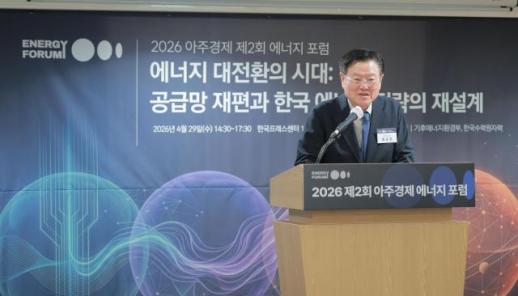 Aju Business Daily CEO urges new power supply strategy as energy security risks grow Lim Gyu-jin, CEO of Aju Business Daily, said securing a stable power supply has become “a core task for national competitiveness, no longer a matter of choice,” and called for a new strategy to manage energy supply and demand. Lim made the remarks in opening comments at the “2026 Aju Business Daily Energy Forum” on April 29 at the Korea Press Center in Jung-gu, Seoul. The forum was held under the theme “Reshaping the energy supply chain and redesigning South Korea’s energy strategy.” He pointed to rapid shifts in the global energy landscape, saying “geopolitical risks surrounding the Middle East, supply-chain instability and the spread of global protectionism are further underscoring the importance of energy security.” Lim also highlighted the impact of artificial intelligence and industrial change on energy markets. “As power demand surges due to the spread of AI, energy security, the power system and industrial competitiveness are now intertwined,” he said, adding, “We are at a point where we must seek a new strategy for energy supply and demand.” The forum was organized into two sessions aimed at practical solutions. The first session examines South Korea’s response strategy and structural challenges amid an energy security crisis. The second session focuses on a realistic energy mix and policy direction. Lim said Aju Business Daily would continue to serve as a bridge between industry, policy and the field by providing a venue for in-depth discussion on key issues including energy, supply chains and trade. He said he hoped the forum would help participants review response strategies and identify workable solutions, and serve as a starting point for strengthening South Korea’s energy security and finding a sustainable growth strategy.* This article has been translated by AI. 2026-04-29 15:20:21
 -
 Man Who Helped Rescue Victims in 2022 Itaewon Crush Found Dead After 10-Day Search A man in his 30s who took part in rescue efforts at the Oct. 29, 2022, Itaewon crowd crush was found dead 10 days after he went missing, according to reports. According to the Incheon Ilbo and other outlets, police said they found the body of A (37) at about 11:57 a.m. on April 29 in the area of Wangbangsan in Seondan-dong, Pocheon. A friend reported him missing to police on April 25, saying they had been unable to reach him since April 20. He was believed to have lost contact with family and acquaintances after leaving home that day. Seoul’s Guro Police Station, which received the initial report, traced his last known location to near Wangbangsan. Police, riot units and firefighters conducted a joint search and found him 10 days after he disappeared. Police said rigor mortis had set in when he was found, suggesting he had been dead for some time. Reports said A ran a business near the Hamilton Hotel in Seoul’s Yongsan district, where the Itaewon disaster occurred, and helped move injured people during the rescue effort. He was said to have suffered severe post-traumatic stress disorder after the disaster and to have complained of trauma and depression while also struggling financially amid a downturn in the area’s commercial activity. ※ If you or someone you know is struggling with depression or thoughts of self-harm, help is available 24 hours a day through the suicide prevention hotline 109 or via social media counseling “Madeleine” (an online friend who listens). 2026-04-29 15:19:39
 -
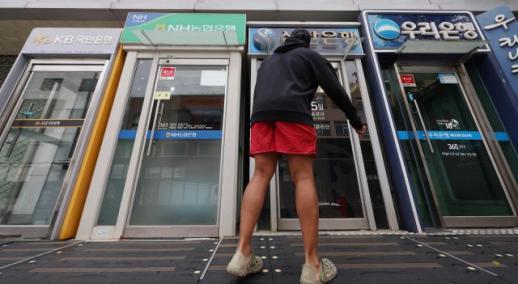 South Korea Variable-Rate Mortgages Near 40% as Borrowers Chase Lower Rates Variable-rate mortgages at South Korean banks climbed to nearly 40% last month, a shift that could leave more borrowers exposed as market rates rise. The jump is widely attributed to a widening gap between fixed and variable mortgage rates after market rates spiked in the short term amid tensions in the Middle East. With mortgage rates rising quickly, the growing share of variable-rate loans is also fueling concerns about a chain of financial stress among vulnerable borrowers and heavily leveraged households. According to the Bank of Korea on Tuesday, variable-rate loans accounted for 39.2% of deposit-taking banks’ mortgage balances as of the end of March, up 10.3 percentage points from 28.9% a month earlier. The share has risen sharply this year, from 13.4% at the end of last year to 24.4% at the end of January, then 28.9% in February, and higher again in March. Variable-rate loans reset periodically in line with market rates. Typically, when rates are rising, borrowers prefer fixed-rate loans because they lock in interest costs and make budgeting more predictable. Even so, borrowers have been gravitating toward variable rates because they are cheaper upfront. The view is that many are choosing to cut near-term interest costs even if they face higher payments later, as the rate gap is close to 1 percentage point. As of Tuesday, fixed-rate mortgages at the five major banks — KB Kookmin, Shinhan, Hana, Woori and NH Nonghyup — were quoted at 4.28% to 6.88% annually for products that reset every five years. Variable-rate mortgages that reset every six months were 3.65% to 6.05%. Fixed rates were higher by 0.83 percentage points at the top end and 0.63 points at the bottom end. The concern is that the shift toward variable-rate borrowing could translate into heavier repayment burdens. Because variable rates reflect market moves at set intervals, borrowers’ interest costs tend to rise in a tightening cycle. Mortgage rates have already been climbing. The Bank of Korea said the average rate on newly issued bank mortgages in March was 4.34% annually, up 0.02 percentage point from February, extending gains for a sixth straight month since October. The outlook remains uncertain, with Middle East tensions still unsettled and war-driven oil price spikes potentially feeding into inflation and higher interest rates. Korea Investment & Securities said in a report Monday that it expects the central bank to raise its policy rate twice in the second half of this year, in August and November. A financial industry official said variable-rate loans are structured to increase borrowers’ interest burdens if rates keep rising. If higher rates coincide with a weakening economy, the official said, repayment capacity could deteriorate among self-employed people and low-income, vulnerable borrowers, pushing delinquency rates sharply higher. 2026-04-29 15:18:47