
Journalist

Seo Hye Seung
-
 South Korea’s Private Sector Meets Disability Hiring Quota for First Time Thirty-five years after South Korea introduced its mandatory disability employment system, private companies have met the legally required hiring rate for the first time. However, hiring remains relatively low among civil servants and companies with fewer than 100 employees, indicating continued need for improvement. The Ministry of Employment and Labor on Tuesday released its “2025 Status of Mandatory Disability Employment.” The system requires the state and local governments and 33,452 workplaces with 50 or more regular employees to hire people with disabilities. The current mandatory rates are 3.8% for the public sector and 3.1% for the private sector. Last year, the overall disability employment rate averaged 3.27%, up 0.06 percentage points from a year earlier. The number of employees with disabilities rose to 309,846, an increase of 11,192 from 2024. The disability employment rate was 3.94% in the public sector, including the government and public institutions, and 3.10% in private companies, up 0.04 and 0.07 percentage points, respectively. Most of the increase — 9,507 people — came from private companies. The ministry said the private sector met its mandatory hiring rate for the first time since the system took effect in 1991. Among companies with 1,000 or more employees, the disability employment rate rose 0.09 percentage points from the previous year. The ministry said disability hiring is increasingly becoming a key management consideration, especially at large firms. The makeup of the workforce is also changing. The shares of workers with severe disabilities and women with disabilities continued to rise, reaching 37.5% and 29.3%, respectively. The share of intellectual, autism and mental disabilities rose to 23.1%, topping 20% for the first time. Still, disability employment rates were low among civil servants and companies with fewer than 100 employees, at 2.85% and 2.13%, respectively. Civil service rates fell short of the legal requirement across central administrative agencies (3.53%), local governments (3.64%), constitutional institutions (2.86%) and education offices (1.91%). Among private companies with fewer than 100 employees, the rate rose 0.08 percentage points from a year earlier but remained low. The government said it will closely review disability employment in the civil service and actively seek ways to expand hiring, including integrated consulting and identifying suitable job roles. To encourage compliance in the private sector, it is providing employment improvement incentives to companies with 50 to 99 employees when they newly hire people with severe disabilities. It also said it will strengthen the effectiveness of levies on companies that repeatedly and deliberately evade their hiring obligations. Labor Minister Kim Young-hoon said, “Private companies meeting the mandatory hiring rate means disability employment is beginning to take hold as a universal standard in the labor market.” He added, “We will continue efforts to secure both quantitative and qualitative diversity in employment so that workers such as women with severe disabilities and those with mental disabilities can work in stable jobs.”* This article has been translated by AI. 2026-04-29 12:05:32
 -
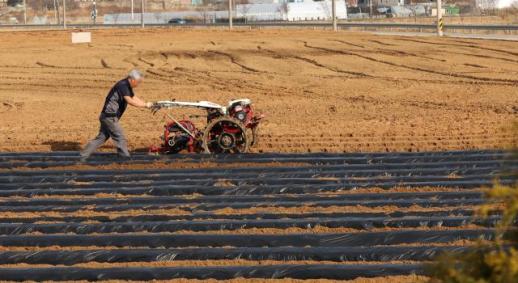 Garlic Planting Area Rises 5.3% on Higher Prices; Onion Area Slips 0.4% Garlic planting area has increased for the first time in three years as prices rose, while onion acreage edged down slightly. According to the National Data Agency’s “2026 Garlic and Onion Planting Area Survey” released on the 29th, this year’s garlic planting area totaled 24,170 hectares, up 5.3% (1,223 hectares) from 22,947 hectares a year earlier. Garlic acreage had been declining since 2023, but rebounded this year, a shift the agency attributed to last year’s price gains. By province and city, the largest garlic-growing areas were South Gyeongsang (7,857 hectares), North Gyeongsang (5,273), South Chungcheong (3,768), South Jeolla (3,023) and Daegu (874). Onion planting area came to 17,609 hectares, down 0.4% (68 hectares) from 17,677 hectares last year, marking a second straight annual decline. The agency said onion acreage tends to rise and fall each year with price swings, and this year’s change was limited. By province and city, onion acreage was led by South Jeolla (6,072 hectares), South Gyeongsang (3,895), North Gyeongsang (2,225), North Jeolla (1,977) and South Chungcheong (1,296). The agency said higher garlic prices last year encouraged expanded planting, while onion acreage was adjusted only modestly due to factors including prices and weather conditions. The preliminary figures are based on a sample survey conducted from March 16 to April 10 and will be finalized in July when the garlic and onion production survey results are released.* This article has been translated by AI. 2026-04-29 12:04:50
 -
 Korea’s ICT R&D Spending Jumps 13.8% to 64.6 Trillion Won, Driven by Private Sector Korean information and communications technology (ICT) companies sharply increased research and development spending last year, led by semiconductors and artificial intelligence, government data showed. The gains, however, were concentrated in private funding while government and public support remained flat. According to the “2024 ICT Corporate R&D Statistics” released Tuesday by the Ministry of Science and ICT and the Institute for Information & Communications Technology Planning & Evaluation (IITP), ICT R&D investment in 2024 totaled 64.6 trillion won, up 13.8% (7.8 trillion won) from a year earlier. It was the largest increase in six years and accounted for 60.6% of total industrial R&D spending of 106.7 trillion won. Private and foreign funding reached 62.4 trillion won, or 96.6% of the total, driving the rise. Government and public funding totaled 2.2 trillion won, or 3.4%, showing little change. By sector, ICT and broadcasting equipment makers—centered on semiconductors—spent 59.5 trillion won, or 92.1% of the total. Software development and production companies invested 4.2 trillion won, or 6.4%. By company size, large firms invested 53.5 trillion won, up 16.3% from the previous year, leading overall growth. Small and midsize companies spent 2.5 trillion won, up 11.9%, while venture companies posted a 0.3% decline in growth rate. By research stage, 45.2 trillion won (70%) went to development research, followed by applied research at 10.9 trillion won (16.8%) and basic research at 8.5 trillion won (13.2%). Basic research rose 19%, outpacing applied research growth of 16.1%. ICT R&D staffing also increased. The sector employed 225,900 R&D workers, up 5,200 (2.4%) from a year earlier, representing 48.0% of total industrial R&D personnel. Equipment makers accounted for 161,000 workers (71.2%), while software development and production employed 57,000 (25.1%). The ministry said the software field generates relatively high employment compared with investment levels. The share of advanced-degree researchers continued to rise. Master’s and doctoral researchers totaled 71,000 (33.2%), narrowing the gap with bachelor’s degree holders at 133,000 (62.2%). Female researchers numbered 36,000 (17.1%), continuing a steady increase since 2020. Park Tae-wan, director general for ICT Industry Policy at the ministry, said, “It is a meaningful result that private-sector-led ICT R&D investment expanded despite domestic and external uncertainties.” He added, “We will reflect this in future investment planning and budget allocation to strengthen synergy between the government and the private sector.”* This article has been translated by AI. 2026-04-29 12:04:19
 -
 South Korea Proposes Five-Tier Public EV Charging Rates, Sets 391.9 Won for 200 kW+ The government is moving to break public electric-vehicle charging fees into five tiers from the current two, lowering rates for slower charging while raising ultra-fast rates to better reflect cost differences by charging speed. The Ministry of Climate, Energy and Environment said April 29 it will issue an administrative notice on a revised fee system and unit prices for public EV charging stations from April 30 through May 19. The ministry also said it will begin a separate legislative notice, running the same day through June 9, on revisions to subordinate regulations under the Clean Air Conservation Act covering management standards for electric and hydrogen charging facilities. Slower charging cheaper, ultra-fast higher under new fee tiers The centerpiece of the plan is to expand the public charging fee structure from two tiers — under 100 kilowatts and 100 kW or more — to five tiers. Current rates are 324.4 won per kilowatt-hour for under 100 kW and 347.2 won for 100 kW or more. Under the proposal, rates would be set at 294.3 won for under 30 kW; 306.0 won for 30 kW to under 50 kW; 324.4 won for 50 kW to under 100 kW; 347.2 won for 100 kW to under 200 kW; and 391.9 won for 200 kW or more. The revised rates would apply when drivers use public chargers installed and operated by the ministry, or chargers operated under agreements with the ministry, and pay with a ministry membership card. A discount program that applies from 11 a.m. to 2 p.m. on weekends and holidays in spring and fall would keep the same discount levels, applied to the new unit prices. The ministry said the existing system has not adequately reflected differences between charger output and actual operating costs. It said it recalculated unit prices to incorporate operating expenses such as communications fees, maintenance, labor and depreciation. A ministry official said charging services in the field have become more segmented — including slow, mid-speed and fast charging — but the fee system has remained a two-tier structure for about four years and has not kept pace with market changes. On concerns that the 200 kW-and-above ultra-fast rate could raise consumer burdens, the official said not all drivers use 200 kW chargers at all times and that simply comparing ultra-fast charging fees with average gasoline or diesel prices is not appropriate given EV usage patterns. Mandatory price posting, stronger maintenance and disclosure rules The ministry is also pursuing tighter management of EV and hydrogen charging infrastructure through revisions to subordinate regulations under the Clean Air Conservation Act. Operators would be required to make charging fees visible on-site through signs or notices. For charging facilities at highway rest areas, the government plans to require external price signs, similar to those at gas stations, so drivers can check rates before charging. The proposal would also strengthen obligations for preventive maintenance and regular inspections to reduce breakdowns. Operators would have to maintain a system to respond to fault reports and user inquiries, and could face corrective orders for failing to meet management standards. A new disclosure requirement would require operators to post charging fees, detailed location information and real-time availability on the Korea Environment Corporation’s integrated online portal for zero-emission vehicles. The ministry said it expects the measure to address “hidden pricing” and encourage price competition in the private charging market. Separately, the ministry said it is reviewing a seasonal and time-of-use pricing system for public charging fees, linking electricity rates and consumer charging prices so charging can be cheaper when renewable power generation is high. No implementation date has been set. The ministry also plans to revise subsidy guidelines to prevent unnecessary charger replacements. If a charging facility that has not reached its eight-year service life is removed and replaced, subsidies would be provided only when there is a justified reason, such as an irreparable failure. It also plans to allow apartment managers to receive subsidies when they directly install and operate charging facilities, expanding user choice. Jeong Seon-hwa, the ministry’s director general for Green Transition Policy, said, “Reasonable charging fees and convenience in using charging facilities are key to expanding EV adoption,” adding that the government will work to build an optimal charging ecosystem starting with the fee overhaul and management standards. * This article has been translated by AI. 2026-04-29 12:03:30
 -
 South Korea Launches 3,600-Ton Frigate Jeju, Delivery to Navy Set for June 2027 The South Korean Navy and the Defense Acquisition Program Administration held a launching ceremony Tuesday for the frigate Jeju at SK Oceanplant in Goseong, South Gyeongsang Province. The 3,600-ton ship is the fourth Ulsan-class Batch-III frigate and is intended to replace older frigates (FF) and patrol combat corvettes (PCC) now in service, officials said. After sea trials, Jeju is to be delivered to the Navy in June 2027 and then deployed following its commissioning process. About 150 people attended the ceremony, including Joint Chiefs of Staff Chairman Jin Yeong-seung, Navy Chief of Staff Kim Kyeong-ryul, DAPA Defense Capability Acquisition Program Bureau chief Jeong Jae-jun, and SK Oceanplant CEO Kang Young-gyu. Jeju is 129 meters (423 feet) long, 14.8 meters (49 feet) wide and 38.9 meters (128 feet) high. It is equipped with a 5-inch gun, the Korean Vertical Launching System (KVLS), anti-ship and missile-defense guided missiles, ship-to-ship guided missiles, tactical ship-to-surface guided missiles, and long-range anti-submarine torpedoes. Its integrated sensor mast carries infrared search-and-track equipment and a domestically developed multifunction phased-array radar. The four fixed radar panels provide 360-degree detection and tracking of air and surface targets and can engage multiple aerial targets at the same time, the Navy said. The ship uses a hybrid propulsion system to reduce noise and operates a domestically developed hull-mounted sonar (HMS) and a towed array sonar system (TASS), giving it enhanced anti-submarine warfare capability, officials said. Jin said the military must strengthen its commitment to self-reliant defense and its readiness posture. He said the armed forces are working to advance “AI-based manned-unmanned combined combat capability” by upgrading evolving K-defense industry technologies such as unmanned surface vessels and unmanned aircraft, in an effort to become “a strong military that can fight and win.” He said the effort would help support peace on the Korean Peninsula through strength, protect lives and property, and build a military “trusted by the people.”* This article has been translated by AI. 2026-04-29 12:00:11
 -
 Japan-Style Math App Mathmaji Launches Pilot Program at Indonesian Islamic Private School Mathmaji, which develops the Japan-style global math learning app “Mathmaji,” said on the 28th it will start a pilot program at an Islamic private school in Indonesia. It is the first time the app will be used at an elementary education facility in the country. The app will be introduced at Sekolah Qur'an Savaty in Makassar, South Sulawesi, which provides integrated education from daycare and kindergarten through elementary school. Students learn math through an original curriculum based on Japan’s national teaching guidelines while also studying “English to become stronger with numbers.” Because the app is displayed in English, the company expects it to help improve proficiency in both math and English. Mathmaji President Yasunori Hirose said he wants to use the program’s results as a basis for a full-scale entry into Indonesia’s elementary education market.* This article has been translated by AI. 2026-04-29 11:57:48
 -
 Korea Customs Hosts Asia-Pacific Anti-Drug Enforcement Workshop With WCO The Korea Customs Service said Tuesday it is holding an Asia-Pacific drug enforcement experts workshop with the World Customs Organization through April 30 to strengthen international coordination against drug crime. Experts from customs authorities across the region, including Thailand, Vietnam and Cambodia, are taking part, along with international organizations and European customs attachés based in China, the agency said. Participants will discuss ways to deepen cooperation by sharing joint-operation models and results by country, the latest drug-smuggling trends, and practices for using drug-detection dogs and drug analysis techniques. The program includes a WCO capacity-building seminar and hands-on training on operating an information-sharing platform between countries. Customs officials said they expect the workshop to strengthen enforcement capabilities and improve the effectiveness of joint crackdowns. This year, the agency plans to expand cooperation beyond existing partners by working more closely with Golden Triangle countries such as Cambodia, Laos and Myanmar to tighten border-level interdiction networks. The workshop will also serve as a pre-check for a Korea-Asia-Pacific joint anti-smuggling operation planned for the first half of this year, with the aim of refining cross-border coordination strategies, the agency said. Because drug crime is a major transnational offense that can undermine borders, a Customs Service official said the workshop will be used to raise cooperation among Asia-Pacific customs authorities and translate it into results.* This article has been translated by AI. 2026-04-29 11:57:16
 -
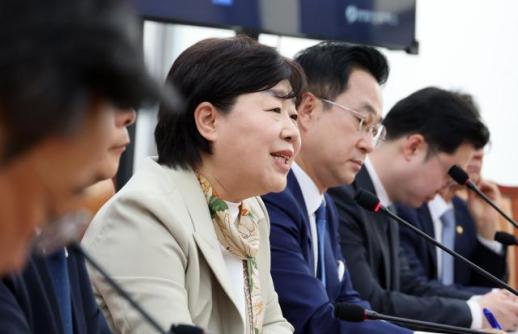 Ruling Party Panel Says Probe Found Prosecutorial Misconduct in Alleged Fabricated Indictments Democratic Party lawmakers serving on a National Assembly special committee investigating allegations of politically motivated, fabricated indictments under the Yoon Suk Yeol administration reported on their work April 29, a day before the panel is set to end its activities. They also said they would push for a special prosecutor to pursue accountability. At a morning news briefing at the National Assembly, the committee said its probe had brought to light what it described as prosecutorial fabrication and other illegal conduct, and it outlined what it called key findings so far. Committee Chair Seo Young-kyo said a review of investigative processes in the Ssangbangwool North Korea remittance case and the Daejang-dong case showed “fabrication” and “illegal acts.” She said the highlight of the April 28 hearing was testimony from former Ssangbangwool Chairman Kim Seong-tae, who appeared and said, “I have never met or even seen Lee Jae-myung.” Seo said the Yoon Suk Yeol administration had mobilized state power to try to remove the organizations of President Lee Jae-myung and former President Moon Jae-in. She said matters that had proceeded secretly within the prosecution were revealed through the parliamentary probe, and pledged to keep working to uncover remaining facts. Rep. Lee Ju-hee described what she said the committee confirmed through its work, including what she called a pattern of “fabricated indictments” in which investigators select targets and use coercion and inducements to produce false statements. She added that cases examined by the committee showed alleged fabrication and concealment of evidence, contamination and bargaining over testimony, and clear violations of constitutional basic rights. Lee said the probe showed the prosecution’s ability to police itself had reached its limits, arguing that a special prosecutor is needed. She said the Democratic Party would use a special prosecutor to determine the full scope of alleged fabricated indictments and bring those responsible before a court of judgment. The committee also said it plans to file complaints against witnesses and participants it says committed perjury during hearings and the investigation. Rep. Lee Geon-tae, the committee’s secretary, said he plans to hold a briefing at 11 a.m. April 30 to explain planned perjury complaints. He said committee members are still sorting the cases and that details would be provided April 30.* This article has been translated by AI. 2026-04-29 11:54:21
 -
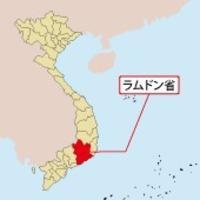 Vietnam’s Sun Group Breaks Ground on Phan Thiet Airport Civilian Facilities Vietnam real estate and resort developer Sun Group began construction April 27 on the civilian-use portion of Phan Thiet Airport in central Lam Dong Province. Total project costs are expected to exceed 3.9 trillion dong (about 23.5 billion yen), with completion projected in 2028. Phan Thiet Airport will be a joint military-civil facility. Sun Phan Thiet Airport Co., a Sun Group unit, is responsible for developing the civilian section. The company will build an airport meeting the International Civil Aviation Organization’s “4E” standard on about 75 hectares in the Mui Ne area. The passenger terminal, a 13-story domed structure with 18,000 square meters of floor space, will incorporate cultural elements of the Champa Kingdom, which is believed to have flourished from the 2nd to the 15th centuries. Sun Group aims to complete the civilian section within two years and to reach annual passenger capacity of 2 million by 2030. Phan Thiet Airport will be Lam Dong Province’s second airport after Lien Khuong Airport. Once it opens, travel times to Lam Dong are expected to be significantly reduced from major domestic cities such as Hanoi, Ho Chi Minh City and Da Nang, as well as key tourist destinations including Phu Quoc Island, boosting visitor numbers to the province.* This article has been translated by AI. 2026-04-29 11:48:16
 -
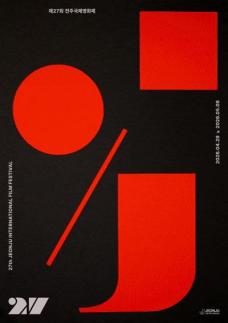 Annual film fest set to kick off in Jeonju, featuring over 200 films SEOUL, April 29 (AJP) - The annual Jeonju International Film Festival (JIFF) is set to kick off with a red-carpet event in the southwestern city on Wednesday. According to organizers, this year's festival, now in its 27th year, will run for 10 days until May 8 and feature some 236 films from 54 countries. The festival's curtain-raiser is American filmmaker Kent Jones' "Late Fame," which tells the story of a poet whose secluded life is suddenly thrown into the spotlight after young admirers rediscover his long-neglected work. A special retrospective event is also scheduled in honor of the late actor Ahn Sung-ki, who died in December last year after battling blood cancer. Around seven lesser-known films from his decades-long career will be screened. The festival, known for its lineup of offbeat and indie films, will close with director Kim Hyun-ji's "Namtaeryeong," a documentary that follows farmers who ride tractors to Seoul to demand the impeachment of then-President Yoon Suk Yeol after he abruptly declared martial law on Dec. 3, 2024, which ended in a brief overnight fiasco. 2026-04-29 11:38:29