
Journalist

Seo Hye Seung
-
 Jipyeong, Criminal Procedure Law Society Hold Seminar on Attorney-Client Privilege and Corporate Legal Strategy Jipyeong Law Firm and the Korean Association of Criminal Procedure Law said April 28 they held an online and in-person seminar the previous day on corporate legal strategy in the “ACP era,” covering responses to investigations and global best practices. On Jan. 29, 2026, a revision to the Attorney-at-Law Act aimed at institutionally protecting confidential communications between lawyers and clients passed the National Assembly plenary session. It is set to take effect Feb. 20, 2027. The change is expected to codify attorney-client privilege, or ACP (Attorney-Client Privilege), which had previously been recognized only in limited circumstances through lower-court rulings. The organizers said the seminar was designed to review legal and practical issues tied to ACP’s introduction and to consider corporate response strategies. The program opened with remarks by Lim Seong-taek, managing partner at Jipyeong, and a congratulatory address by Lee Geun-woo, president of the association, followed by three presentations and a panel discussion. In the first session, Jang Pum, a partner at Jipyeong, spoke on preparations for ACP, reviewing shifts reflected in recent court decisions and outlining key requirements for privilege to be recognized. In the second, Park Seung-dae, also a Jipyeong partner, discussed response strategies for investigative and oversight agencies, offering approaches for handling disputes over whether materials qualify for ACP protection. In the third, Kim Jin-hee, a senior foreign attorney at Jipyeong, presented on overseas examples and best practices, stressing the need for Korean companies to build global-standard practices for documents, investigations and the use of AI on the premise that ACP applies. The panel discussion was moderated by Lee Sang-won, professor emeritus at Seoul National University, with participants including Lee Geun-woo, a professor at Gachon University; Park Jun-yeon, an attorney at Herbert Smith Freehills Kramer; and Kim Ga-yeon, an executive at X (formerly Twitter) Korea. “An important task is to use ACP as an opportunity to advance corporate compliance management and risk-control systems and, through that, strengthen competitiveness,” Lim said. He added that Jipyeong will continue providing practical advice so companies can respond proactively to ACP legislation, including by refining internal standards and building systems to respond to investigations and probes. * This article has been translated by AI. 2026-04-28 15:07:17
 -
 South Korea Assembly Passes Election Law to Add 3 Incheon District Council Seats Ruling and opposition parties on the 28th approved revisions to the Public Official Election Act to adjust the number of basic local council members in Incheon ahead of an administrative system overhaul. Under the bill, Incheon’s total will increase by three seats, to 128 from 125. The National Assembly passed the measure at an afternoon plenary session, revising the number of basic local council seats for the June 3 local elections. Of 246 lawmakers present, 234 voted in favor and 12 abstained. Rep. Bae Jun-young of the People Power Party, explaining the proposal, said the administrative overhaul set to take effect in July revealed that some districts would lose seats under current constituency lines. He said the outcome failed to reflect population growth and changes from the reorganization. Bae said the Assembly’s special committee on political reform concluded additional seats were needed to ensure resident representation and equal voting value. He said the plan would also raise the nationwide total number of district and county council members from 3,003 to 3,006. The bill is a follow-up to a version introduced and processed at a plenary session on the 18th, after lawmakers argued the earlier draft did not fully reflect the administrative overhaul that adds Yeongjong-gu in Incheon and that the council-seat count needed adjustment. Also at the plenary session, the People Power Party delivered a floor statement on a motion recommending the dismissal of Unification Minister Jeong Dong-young, after controversy over his remarks mentioning a uranium enrichment facility in North Korea’s Kangsong city. Rep. Kim Geon said Jeong, since those remarks, had continued to make what he called uncoordinated, unilateral statements on diplomacy and security policy, creating discord with the president, the Foreign Ministry and the Defense Ministry and causing friction with ally the United States. Kim criticized Jeong for not issuing an official apology or presenting steps to prevent a recurrence despite what he described as diplomatic risks between South Korea and the United States. Kim said Jeong had publicly referred in the Assembly to a South Korea-U.S. intelligence matter, creating diplomatic and security risks, and that afterward even information sharing on North Korea had been halted, raising concerns about alliance trust and security coordination. He said Jeong was shifting blame outward rather than offering an apology and prevention measures. Kim urged that the dismissal motion not be treated lightly and called for a plenary session vote, saying, “There is no ruling or opposition party when it comes to national security.”* This article has been translated by AI. 2026-04-28 15:06:07
 -
 Korea Financial Investment Association Launches Mandatory Online Course for Single-Stock Leveraged, Inverse Products The Korea Financial Investment Association has created a mandatory pre-trade education course for investors seeking to trade single-stock leveraged and inverse exchange-listed products, strengthening investor protections for high-risk instruments. The association’s Financial Investment Education Institute said on the 28th that it opened an online course titled “Pre-Trade Education for Single-Stock Leveraged and Inverse Exchange-Listed Product Trading.” The requirement was introduced ahead of the May 22 launch of single-stock leveraged (±2x) products based on leading South Korean shares. Completion is required for anyone who wants to invest in single-stock leveraged or inverse products. Investors must register the completion number issued after finishing the course in their brokerage system before they can place trades. The curriculum focuses on how leveraged products work and the risks involved, including concepts such as negative compounding effects and leverage. It also includes quizzes and a pre-investment checklist to test understanding. Investors must choose the appropriate course depending on what they plan to trade. A combined program covering single-stock leveraged and inverse products totals two hours (one hour basic plus one hour advanced). Those investing only in single-stock products can take a separate one-hour advanced course. Existing investors in leveraged ETFs and ETNs are also subject to the same pre-trade education requirement. The association said the training will help investors better understand the products and improve their ability to make rational investment decisions. The course has been available since 10 a.m. that day and can be accessed by applying through the Financial Investment Education Institute’s website. * This article has been translated by AI. 2026-04-28 15:05:17
 -
 Deputy Prime Minister Koo Yun-cheol Meets AMCHAM Chief to Discuss Korea’s Global Finance Hub Push Koo Yun-cheol, deputy prime minister and minister of finance and economy, met Monday with James Kim, chairman of the American Chamber of Commerce in Korea, to discuss policy directions for South Korea’s push to become a global financial hub. The meeting at the Government Complex Seoul included Koo and the ministry’s international economic affairs chief. AMCHAM attendees included Jeffrey Jones, chairman of the Future of Korea Partnership Foundation, among others. Kim said that as Singapore and Hong Kong strengthen their competitiveness as financial centers, South Korea also needs to bolster the competitiveness of its financial industry to further expand the foundation for attracting global investment. He said he hopes to work closely with the ministry to strengthen market competitiveness and improve the investment environment. Kim also presented Koo with AMCHAM’s recently published report, “Strategy for Advancing Korea as a Financial Hub.” The report includes recommendations for South Korea’s bid to become a global financial hub, including creating a regulatory environment aligned with global standards and building a predictable supervisory system to help expand investment by global companies. Koo said the report contains a range of policy recommendations to strengthen the competitiveness of South Korea’s financial industry and would be a useful reference. He said the government is continuing efforts to advance capital markets, improve the structure of the foreign exchange market and innovate financial regulation. “The Korean government is making an all-out effort to position the capital market as a core platform for economic growth and to modernize it in line with global standards,” Koo said. He added that the government will steadily carry out tasks in the previously announced MSCI roadmap so South Korea’s capital market can be recognized with a fair “Korea premium.” Koo said the government will closely consult with relevant agencies on views raised during the meeting and actively reflect needed items in future institutional improvements. * This article has been translated by AI. 2026-04-28 15:04:28
 -
 South Korea, Singapore Launch Talks to Upgrade FTA, Focus on Supply Chains The Ministry of Trade, Industry and Energy said April 28 that South Korea and Singapore have launched negotiations to upgrade their free trade agreement, prompted by Trade Minister Yeo Han-ku’s visit to Singapore. The ministry said the two countries’ chief negotiators signed negotiating rules in the presence of Singapore Deputy Prime Minister and Minister for Trade and Industry Gan Kim Yong and Yeo. The signing followed a March summit agreement to begin talks on improving the FTA. After the signing, South Korea held the first round of negotiations with relevant ministries including the Ministry of Economy and Finance and the Ministry of Land, Infrastructure and Transport. Talks were conducted in four working groups: supply chains, the green economy, aircraft maintenance, repair and overhaul, and trade facilitation. Yeo also held a series of meetings with Gan; Tan See Leng, minister in charge of digital, supply chain and energy; and Grace Fu, minister in charge of World Trade Organization and multilateral trade issues. The ministry said they discussed ways to speed up upgrade talks on the Korea-ASEAN FTA and the Korea-Singapore FTA, strengthen the foundation for economic cooperation with New Southern Policy countries, and bolster minilateral cooperation. Separately, Yeo met in relay talks with energy trading firms and commodity information and analysis organizations alongside Rep. Lee Eon-ju, chair of the Korea-Singapore parliamentary friendship association and a lawmaker from the Democratic Party. The ministry said meetings with Vitol, Trafigura and S&P Global were used to share outlooks for global energy markets and explore response options. Yeo also held a meeting with South Korea’s four refiners operating locally to review crude oil and naphtha supply and demand conditions and hear difficulties faced by companies. The ministry said Yeo carried out outreach to expand Singapore investment in South Korea’s advanced industries and broaden exports of Korean consumer goods. He visited Singapore’s sovereign wealth fund Temasek and stressed the need for sustained investment cooperation. He also met with Shopee, Southeast Asia’s largest e-commerce company, to discuss a dedicated section for Korean products, as well as cooperation on certification and logistics to help South Korean small and medium-sized companies expand in Southeast Asia. Yeo visited the Hyundai Motor Group Singapore Global Innovation Center, described as Singapore’s advanced manufacturing innovation hub, and PSA, a global port operator, to review on-site artificial intelligence for next-generation manufacturing and the status of logistics automation technology. “Following up on the March summit, we launched FTA upgrade talks and discussed key economic cooperation issues including supply chain stabilization, investment attraction and boosting cross-border online shopping,” Yeo said. “We will work to ensure this visit leads to tangible outcomes that help our companies.”* This article has been translated by AI. 2026-04-28 15:03:21
 -
 Songwon Industrial Shares Jump to 52-Week High After Q1 Preliminary Results Songwon Industrial shares surged after the company released preliminary first-quarter results, hitting a new 52-week high. As of 2:40 p.m., the stock was trading at 14,270 won, up 3,070 won (27.41%) from the previous session, according to the Korea Exchange. Shares jumped after the results were disclosed at 12:55 p.m., and rose as high as 14,560 won during the session, marking a 52-week high. On a consolidated basis, Songwon Industrial posted preliminary net profit of 18.091 billion won for the first quarter, up 272.5% from a year earlier. It swung to profit from a net loss of 2.736 billion won in the fourth quarter of last year. Operating profit came to 26.558 billion won, up 142.8% from a year earlier. Songwon Industrial supplies additives and raw materials to manufacturers in petrochemicals and PVC processing, synthetic leather and coatings. About 85% of its revenue comes from overseas markets, including Europe and North and South America. The company previously attributed last year’s weak performance to worsening market conditions, saying “continued demand slowdown, ongoing margin pressure in key regions, and exchange-rate fluctuations negatively affected results across business divisions.” It added that in the fourth quarter, “oversupply in the market, weakened consumer sentiment, and intensified price competition compounded the difficulties.”* This article has been translated by AI. 2026-04-28 14:58:04
 -
 Seoul court cancels most of Netflix Korea’s corporate tax bill, citing lack of clear tax avoidance Netflix won a sweeping victory in a first-round court fight with South Korea’s tax authorities over corporate taxes. The Seoul Administrative Court’s Administrative Division 6, led by Presiding Judge Na Jin-i, ruled on Monday that 68.7 billion won of the roughly 76.2 billion won in corporate tax assessed against Netflix Services Korea should be canceled. The decision effectively found about 90% of the assessment legally unjustified. The dispute centered on large payments Netflix Services Korea made to a Netherlands-based affiliate, Netflix International B.V. (NIBV). In a 2021 tax audit, the National Tax Service said it found Netflix had sent more than 80% of its revenue earned in South Korea to its overseas headquarters as management advisory fees and content usage fees. The agency viewed that as tax avoidance that shifted domestic income abroad and reduced reported profit. Tax authorities argued Netflix Services Korea effectively exercised content copyrights, making the payments royalties subject to withholding tax. The court disagreed. It said core functions such as storing and transmitting content to South Korean consumers are carried out through a service architecture managed by NIBV. Netflix Services Korea, the court said, performs only ancillary work such as platform operations and marketing, making it difficult to view the Korean unit as the entity that directly uses copyrights to generate revenue. Based on that, the court classified the payments not as copyright royalties but as business income paid for streaming services provided by the overseas entity. Under the Korea-Netherlands tax treaty, the court noted, South Korea cannot tax such business income unless the foreign company has a fixed place of business in the country. The court also cited Netflix’s revenue-sharing structure. Netflix Services Korea is guaranteed a set operating profit margin after costs are deducted from subscription revenue, and it remits the remaining amount to headquarters. If the Korean unit posts a loss, headquarters may cover it. While tax authorities saw that structure as a way to artificially lower profits in South Korea, the court said the pricing method supports the view that the plaintiff does not independently use copyrights. The court added that even if the overseas entity had provided services directly to South Korean consumers without an intermediary, the income would still be business income outside South Korea’s taxing rights. It said it was hard to conclude that placing Netflix Services Korea in the middle was a tax-avoidance scheme designed to circumvent domestic law. Netflix did not win on every point. The court upheld corporate tax tied to Netflix’s OCA (its own cache servers) installed on domestic internet service provider networks. Netflix argued in earlier hearings that it bought the OCA equipment and transferred it to ISPs free of charge, so it should be treated as a consumable expense. The court found, however, that the OCA is used solely to provide Netflix services smoothly and remains an asset over which Netflix exercises practical control. It concluded that taxing the portion treated as an expense rather than booked as an asset was lawful. The ruling is expected to slow the tax agency’s efforts to tighten enforcement on global big tech companies. The article said Netflix generates revenue in the hundreds of billions of won in South Korea while paying corporate tax of only about 0.2% of sales, in the 3 billion won range, and that imbalance is likely to persist for now. Tax authorities said they will review the written decision closely before deciding whether to appeal. The court also expressed concern about limits in the current legal framework. In its decision, it wrote that even if low domestically realized income produces an unreasonable outcome, the issue should be addressed through arm’s-length adjustments under transfer pricing rules or through legislation. The ruling could affect tax litigation involving other global IT companies such as Google and Apple. With debate in the National Assembly active over introducing a digital tax often called a “Google tax,” civic groups are expected to keep pressing for legislative changes that redefine the concept of a fixed place of business for the digital environment.* This article has been translated by AI. 2026-04-28 14:57:09
 -
 550,000 Apply on Day 1 for First Round of High Fuel Price Relief; 316 Billion Won Paid About 550,000 people applied on the first day of applications for the first round of the government’s “high fuel price relief payment,” with 316 billion won paid out, officials said. The Ministry of the Interior and Safety said April 28 that applications opened at 9 a.m. the previous day and totaled 552,900 as of midnight. That equals 17.1% of the 3,227,785 people eligible for the first round. By method, 198,572 applicants chose credit or debit cards. For local gift certificates, 92,739 applied via mobile and 31,763 for paper vouchers. Another 229,826 applied for prepaid cards. In July last year, credit and debit cards accounted for 76% of applications on the first day of the first round of “livelihood recovery” consumption coupons. The first-day application rate for those coupons was lower, at 13.8%. By region, Seoul recorded the most applicants with 86,418, followed by Gyeonggi with 86,368. Next were Busan (50,173), South Jeolla (45,550), South Gyeongsang (41,179), North Jeolla (39,537), North Gyeongsang (35,924) and Incheon (29,992). The relief payment was created to ease household burdens that have grown with higher oil prices and inflation tied to the war in the Middle East. Payments vary by income level and place of residence, with additional support for non-capital areas and regions facing population decline. The first round is being issued first to basic livelihood recipients, near-poverty households and single-parent families. Basic livelihood recipients receive 550,000 won, while near-poverty households and single-parent families receive 450,000 won. Residents in non-capital areas and population-decline regions receive an additional 50,000 won each. To reduce congestion in the first week, applications follow a day-of-week schedule based on the last digit of an applicant’s birth year. Those ending in 1 or 6 applied April 27; 2 or 7 on April 28; 3 or 8 on April 29; and 4 or 9 and 5 or 0 on April 30. The schedule will be lifted afterward. Vulnerable people who miss the first-round window (April 27 to May 8) can apply during the second-round payment period (May 18 to July 3), which covers 70% of the population. The relief payment must be used by Aug. 31, and any unused amount will expire.* This article has been translated by AI. 2026-04-28 14:51:19
 -
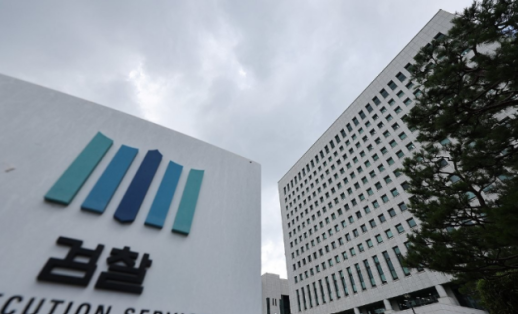 Major Crimes Investigation Agency Task Force to Start Work April 30; HQ Lease Considered A governmentwide team set up to prepare for the launch of the Major Crimes Investigation Agency, due to open in October, will begin full operations at the end of this month. The government said on April 28 that the preparatory team will open an office on April 30 at the Changseong-dong annex of the Government Complex Seoul in Jongno District and start work. The 64-member team will be built around the Ministry of the Interior and Safety and the prosecution service. Vice Interior Minister Kim Min-jae will lead it, and a sitting prosecutor will serve as deputy chief. While Kim oversees Interior Ministry work including planning, organization, AI government, local autonomy and local finance, the deputy chief is expected to manage the team’s day-to-day operations, including preparations for the new agency. Fifteen officials, including staff from the Government Buildings Management Office, will be seconded from the Interior Ministry. The prosecution service will send more than 30 people, including prosecutors and investigators, and the National Police Agency will provide seven. Officials from the Ministry of Personnel Management and the budget office will also join. Through the agency’s opening on Oct. 2, the team plans to handle broad preparations, including office space, hiring, investigative procedures and internal operating systems. Because the new agency will effectively take on the prosecution service’s investigative role, some had expected it to use existing prosecutors’ office buildings. That option is not being considered, the report said. The agency’s headquarters is said to have a policy of not using buildings now occupied by the Supreme Prosecutors' Office, the Seoul High Prosecutors' Office or the Seoul Central District Prosecutors' Office. Officials are reviewing a plan to lease a building first and later move into a newly built facility. For a temporary office, they are checking conditions at two buildings in the Euljiro area of Seoul. * This article has been translated by AI. 2026-04-28 14:49:46
 -
 RDA to Expand New Apple Variety Production Sites to 59 Hectares, Target 35% Adoption by 2030 The Rural Development Administration said on the 28th it will expand production sites for new apple varieties to 59 hectares this year, up from 22 hectares last year. It also plans to raise the adoption rate of domestically developed apple varieties from about 24% to at least 35% by 2030. About 69% of South Korea’s apple cultivation is concentrated in the Yeongnam region. With climate change pushing suitable growing areas northward, the agency said there is a growing need to spread production across regions and diversify varieties. New varieties, however, face hurdles because consumer awareness is low and many farms lack cultivation know-how, the agency noted. To address that, the RDA is working with local governments and distributors to build specialized regional production complexes, including in Gunwi (the variety Golden Ball) and in Chungju and Pohang (the variety “Easyple”). The plan is to link production with distribution and sales to broaden the use of Korean-bred apple varieties. Gunwi County is cultivating the yellow-skinned Golden Ball variety on 20 hectares, citing easier peel-color management. Chungju and Pohang have introduced Easyple on 15 hectares and 10 hectares, respectively, and are working to stabilize quality, the agency said. The regional complexes are a joint framework involving growers, distributors and local governments. Growers can improve competitiveness by producing varieties suited to local conditions, while distributors can secure steady volumes and strengthen market response through joint shipments. Local governments expect higher farm income and greater regional recognition through specialized varieties. The RDA said it expanded the complexes from 9 hectares in 2023 to 22 hectares last year and is targeting 59 hectares this year. It plans to tie the effort to its smart orchard initiative, which includes flat canopy training, mechanization and information and communications technology-based disaster response. Based on that, the agency aims to lift the adoption rate of domestically developed apple varieties from 23.8% in 2025 to at least 35% in 2030. Lee Dong-hyeok, head of the Apple Research Center at the RDA’s National Institute of Horticultural and Herbal Science, said the complexes are “a system that links production and distribution based on a growing environment that can maximize the traits of new varieties.” He added that they are expected to serve as hubs to expand the use of Korean varieties and strengthen the competitiveness of the apple industry. * This article has been translated by AI. 2026-04-28 14:49:01