
Journalist

Seo Hye Seung
-
 South Korea to Pay ‘Fair Allowance’ to Short-Term Public Workers, Ban Sub-1-Year Contracts The government will introduce a new “fair allowance” for short-term fixed-term workers in the public sector after a survey found that about half of such workers were hired on contracts of less than one year. The plan also calls for, in principle, banning fixed-term contracts shorter than one year and tightening rules to prevent abuse of ultra-short-hour workers. The Ministry of Employment and Labor reported the measures at a Cabinet meeting on the 28th as part of a “public-sector nonregular worker treatment improvement plan.” The ministry said it had confirmed unfair practices such as repeated sub-one-year contracts used to avoid paying severance, along with concerns over low pay and allowances. After launching a joint interagency task force on nonregular workers late last year, the government surveyed about 2,100 public entities — including central government agencies, public institutions and local governments — on contracts and wages. The survey found about 146,000 fixed-term workers in the public sector, including 73,000 on contracts shorter than one year. Workers on sub-one-year contracts earned less than fixed-term workers overall, and they were less likely than regular employees to receive welfare points, meal allowances and holiday bonuses. Wage gaps also varied by institution. As a “model employer,” the government said it would pay fair compensation to reflect labor value and job insecurity. Under the plan, public institutions will pay a flat “fair allowance” equal to 10% to 8.5% of a base amount to fixed-term workers employed for less than one year. The base amount is set at 118% of the minimum wage, reflecting the average living wage. The plan applies higher compensation rates for shorter contracts. Based on next year’s 기준, payments would be 382,000 won for 1-2 months of work; 846,000 won for 3-4 months; 1.26 million won for 5-6 months; 1.622 million won for 7-8 months; 2.055 million won for 9-10 months; and 2.488 million won for 11-12 months. To narrow wage gaps within the public sector, the government will also pay an “appropriate wage” and include a one-time budget item in next year’s budget proposal so workers whose monthly fixed pay falls below that level can receive support. The appropriate wage is also set at 118% of the minimum wage. A ministry official said using the average living wage set by local ordinances would have the effect of partially raising and leveling pay for low-wage workers. The ministry said it will also review and gradually improve benefits and allowances, including meal costs, welfare points and holiday bonuses. To establish fair hiring practices, the plan would, in principle, prohibit contracts shorter than one year. Exceptions would require a prior screening process for public-sector nonregular hiring, and the government plans to require outside members on screening committees to strengthen the system. For work that is routine and ongoing, the government said workers should be hired as regular employees. It will also provide guidance to institutions that have not made conversion decisions under the 2017 regularization guidelines. As of this month, 52 public institutions had not made such decisions. To curb misuse of ultra-short-hour fixed-term workers — those working fewer than 15 hours a week — the government will restrict such hiring. Where unavoidable, employers must undergo a necessity review and meet conditions such as additional proportional payments, including weekly holiday pay, to prevent hiring for cost-cutting purposes. The government will conduct regular surveys to track employment and wage conditions for nonregular workers in the public sector. If unfair practices are found during surveys — such as 364-day contracts aimed at avoiding severance — it will guide institutions to guarantee a one-year contract. To ensure implementation, the government will strengthen nonregular employment indicators in management evaluations of public institutions and local public enterprises. A ministry official said detailed evaluation items and indicators will be prepared based on the results of an ongoing research project. The government also plans to draft and expand a tentative “guideline for improving treatment of nonregular workers.” With a committee for public-service workers set to be established starting in September this year, further discussions on public-sector treatment improvements will be handled through that body. Labor Minister Kim Young-hoon said the public sector should take the lead in correcting unfair hiring practices affecting nonregular workers and set an example through reasonable improvements in treatment. He said the government would work to ensure the public sector’s progress spreads to the private sector so all working people are respected and treated in line with the value of their labor.* This article has been translated by AI. 2026-04-28 12:03:18
 -
 Jipyeong Soju expands offline retail reach with Lotte Mart listing SEOUL, April 28 (AJP) - Jipyeong announced that its premium distilled spirit Jipyeong Soju has secured shelf space at Lotte Mart, expanding its offline retail footprint after an earlier listing at E-Mart. Unlike conventional rice-distilled spirits, the company explained that Jipyeong Soju blends three grains — rice, barley and sorghum — in what is described as an optimized ratio, yielding a layered flavor profile that balances the spice of sorghum, the nuttiness of barley and the clean finish of rice. The product has drawn strong interest among younger consumers, the company said, particularly for use in highballs — a cocktail format gaining traction in South Korea. "Through our entry into Lotte Mart, more consumers will be able to experience the depth of flavor that sets Jipy eong Soju apart," said a company spokesperson, adding that the brand aims to establish itself as one of the top three players in the domestic premium distilled spirits segment. 2026-04-28 12:01:05
 -
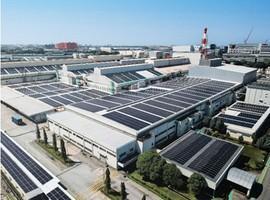 Nippon Electric Glass Installs Large Rooftop Solar System at Malaysia Site Nippon Electric Glass said April 27 that it installed a solar power system on the rooftop of a building at its subsidiary Nippon Electric Glass in Selangor state, Malaysia, and began operating it March 17. It is the subsidiary’s first solar installation, with a maximum output of 7.6 megawatts-peak (MWp). All electricity generated will be used on-site, and the company expects it to cut carbon dioxide (CO2) emissions by 6,900 tons a year. Local solar company Samaiden Group participated as a partner, handling design and construction of the facility, the company said. In 2024, Nippon Electric Glass signed a virtual power purchase agreement, or VPPA, with LSS Hijau, a special-purpose company established by Malaysian renewable power developer Ditrolic Energy. The company said the new rooftop system is expected to further accelerate its use of renewable energy.* This article has been translated by AI. 2026-04-28 12:00:12
 -
 Cho Eung-cheon Announces Run for Gyeonggi Governor as Reform Party Candidate Cho Eung-cheon, a former Reform Party lawmaker, announced on April 28 that he will run for governor of Gyeonggi Province, urging voters to “put down the wrong answer sheets of bad and strange candidates” and choose him as a “good candidate.” Speaking at a news conference at the National Assembly, Cho said he has lived by “principles and conviction.” He criticized eight years of Democratic Party leadership in the province, from Lee Jae-myung to Kim Dong-yeon, asking what had changed for residents. Cho noted the population rose by 1 million, from 13 million to 14 million, and the province’s main budget expanded from 20 trillion won to 40 trillion won, more than doubling, but questioned how much residents’ lives improved. Cho said the Democratic Party now treats Gyeonggi residents like “fish already caught,” and took aim at Democratic Party candidate Choo Mi-ae, saying it was arrogant to nominate someone with no ties to the province who had not lived there and had focused on political fights in the National Assembly. He also criticized the People Power Party, saying its “bullying politics” of using Gyeonggi as a sacrifice for personal political advancement must end. He said the party still had the race vacant because no senior figure stepped forward despite encouragement and it failed to find a competitive candidate even after additional recruitment. “The two major parties have taken away Gyeonggi residents’ right to choose,” Cho said, adding, “Gyeonggi needs administration, not politics. What matters is competence and experience, not a party label.” Cho called the long-standing gap in living conditions between southern and northern Gyeonggi a key challenge. He said the southern belt should be further strengthened as a foundation for South Korea’s growth and innovation, and that the results should be shared more evenly with northern Gyeonggi and the country as a whole. He pledged a denser, more rational transportation network for residents who moved from Seoul to Gyeonggi, and said new momentum is needed for first-generation new towns where 300,000 households in Bundang, Ilsan, Pyeongchon, Sanbon and Jungdong are aging at the same time. Cho also said he is the only candidate who can fight “with conviction and professional capability” against the ruling party’s push to move a semiconductor industrial complex to what he called an uncompetitive, remote area. Cho pointed to Hwaseong’s Dongtan, saying residents showed in the last general election that they can make a better choice by electing Rep. Lee Jun-seok. “Now it’s time to make the Dongtan miracle happen across all of Gyeonggi,” he said, calling for a political upset. Asked about the possibility of a conservative alliance with the People Power Party, Cho said his party has no reason to unify candidacies, but added, “If a proposal comes, we’ll listen.” * This article has been translated by AI. 2026-04-28 11:54:51
 -
 Ruling, Opposition Parties Clash Over Claim Witness Met Committee Chair Before Hearing Rival parties clashed April 28 at the National Assembly over allegations that Kim Seong-tae, a former Ssangbangwool chairman testifying as a witness, entered committee Chair Seo Yeong-gyo’s office before the hearing. Rep. Kim Hyeong-dong, floor secretary for the People Power Party, asked during the special committee’s comprehensive hearing that officials confirm whether Kim entered the chair’s office before 10 a.m., before proceedings began. If the witness met the chair in advance, Kim said, the testimony “could have been tainted.” Fellow PPP lawmakers Kwak Gyu-taek and Shin Dong-wook said the matter could be settled by checking CCTV footage. Seo denied the claim, saying Kim had not entered her office and calling it “nonsense.” Democratic Party lawmaker Park Sun-won said that when he entered Seo’s office at 9:18 a.m., no one was there except Rep. Cha Gyu-geun of the Rebuilding Korea Party. Cha also said he was the first to enter and that Park arrived a minute later. Kim said he did not know whether the place was the chair’s office, but said he had gone somewhere to drink a cup of water from a purifier. He added that he saw Seo for the first time at the hearing. Kim declined to answer most questions, saying he could not speak because he is on trial, but he acknowledged coercive investigations by prosecutors. On the case involving alleged remittances to North Korea, he said he is acquainted with former Gyeonggi Province peace vice governor Lee Hwa-young but “doesn’t even know” President Lee Jae-myung. Later, PPP lawmaker Na Kyung-won pressed Kim, saying that if a future special prosecutor is appointed, prosecutors could drop charges against President Lee while also holding Kim responsible for illegal gambling. Kim replied that he is already on trial on 28 charges and said, “If there’s more to do, they’ll do it.” 2026-04-28 11:51:21
 -
 India’s Prasada Urges Skoda Auto to Expand Investment in Indian Auto Sector India’s Minister of State for Commerce and Industry Prasada met with executives of Czech automaker Skoda Auto and urged the company to expand investment in India’s automotive industry, PTI reported on the 23rd. Prasada held the talks while on an official visit to the Czech Republic from the 22nd to the 23rd. Skoda’s vehicle sales in India in January-March rose 17% from a year earlier to 20,028 units. During his stay, Prasada also visited leading local companies in automobiles, transport equipment and advanced engineering.* This article has been translated by AI. 2026-04-28 11:49:00
 -
 South Korea Envoy Says North Korea Nuclear Issue Is Top Challenge to NPT Jeong Yeon-du, South Korea’s senior representative for North Korea nuclear diplomacy, reaffirmed the government’s goal of the “complete denuclearization of the Korean Peninsula” and stressed the urgency of resolving the North’s nuclear issue at a meeting of the Nuclear Non-Proliferation Treaty, the Foreign Ministry said. In a keynote address on April 27 (local time) at the 11th NPT Review Conference in New York, Jeong, director-general of the ministry’s Foreign Strategy and Information Bureau, said North Korea is “the only case” to have benefited from the NPT system, then declared its withdrawal and openly continued developing nuclear weapons. He called it “the most urgent challenge” to the nonproliferation regime. Jeong said all countries seeking to uphold the NPT must send a clear message that returning to the treaty is the only path that can guarantee security and prosperity. He also urged Russia to halt what he described as illegal military cooperation with North Korea. The ministry said Jeong outlined Seoul’s plan to pursue a phased denuclearization process moving from suspension to reduction and then dismantlement. Jeong said today’s unstable international security environment is undermining the NPT’s credibility and effectiveness, and proposed that nuclear-armed states engage in dialogue to increase transparency and build mutual trust. * This article has been translated by AI. 2026-04-28 11:48:17
 -
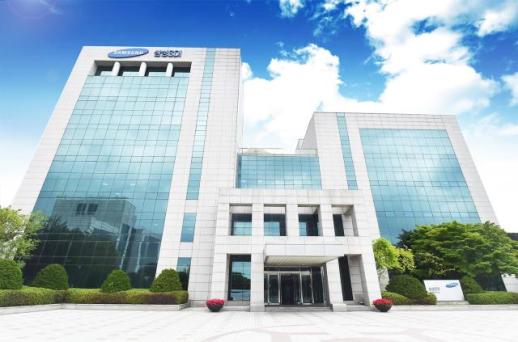 Samsung SDI narrows Q1 loss, eyes profit turnaround in H2 SEOUL, April 28 (AJP) - Samsung SDI reported an operating loss of 155.6 billion won ($105.5 million) for the first quarter of 2026, sharply narrowing its deficit from 434.1 billion won a year earlier. The South Korean battery maker disclosed Tuesday in a regulatory filing that revenue climbed 12.6 percent year-on-year to 3.576 trillion won, while net profit swung to a positive 56.1 billion won. The battery segment, which accounts for the bulk of revenue at 3.354 trillion won, cut its operating loss by 61 percent as demand recovered across energy storage systems, power tools and battery backup units. The electronics materials unit posted an operating profit of 21 billion won on revenue of 222 billion won, buoyed by resilient semiconductor materials sales and a rebound in display materials demand. Samsung SDI said it secured a multi-year supply agreement with Mercedes-Benz during the quarter, completing its lineup of all three major German premium automakers as clients. The company also unveiled its first pouch-type all-solid-state battery sample developed for physical AI applications. "Uncertainty in the global business environment is expected to persist into the second quarter," said a Samsung SDI spokesperson. "We will execute our response strategies by segment and work to achieve a quarterly profit turnaround in the second half." The company said it expects upstream demand to continue recovering through the rest of the year, with ESS battery sales in the United States set to expand alongside growth in AI data center construction, while European EV demand is projected to improve on the back of broader subsidy programs. Shares of Samsung SDI traded at 688,000 won per stock on 11:40 a.m., 8.35 percent higher than a day ago. 2026-04-28 11:44:12
 -
 Iran Central Bank Opens Rial, Yuan, Dollar and Euro Accounts to Collect Strait of Hormuz Tolls Iran’s central bank has opened four dedicated currency accounts to collect tolls from ships transiting the Strait of Hormuz. Arab Times and other outlets reported on the 27th (local time) that Alaeeddin Boroujerdi, a member of Iran’s parliament on the National Security and Foreign Policy Committee, said the central bank set up accounts in the rial, Chinese yuan, U.S. dollar and euro to manage toll revenue. The funds are expected to be managed in cooperation with the Islamic Revolutionary Guard Corps (IRGC) Navy, in line with parliamentary discussions, the reports said. Arsenio Dominguez, secretary-general of the International Maritime Organization (IMO), said international law does not allow tolls, taxes or customs duties to be imposed in straits used as international sea lanes. The Strait of Hormuz is a strategic chokepoint through which about 20% of the world’s seaborne crude oil shipments pass, and the move is expected to ripple through the global shipping industry and regional security. Iran moved to control the strait after war broke out following U.S. and Israeli attacks on Feb. 28, and the United States responded by imposing a maritime blockade targeting Iranian ports and other sites. Boroujerdi said parliament is pursuing a “Strait of Hormuz Security Plan” to put a toll system into law and secure a stable revenue source. He added that payment could later shift to digital currency and mentioned the possible adoption of a blockchain-based payment system to strengthen financial influence in international transactions. The policy has also moved into actual collection. Iran’s PressTV previously reported that on the 23rd, Iran’s military collected a Strait of Hormuz toll for the first time in cash. The toll was deposited into a single central bank account and was paid in cash, not cryptocurrency, the report said.* This article has been translated by AI. 2026-04-28 11:38:40
 -
 South Korea Stock Market Jumps to No. 8 Globally by Value, Passing U.K., on AI Chip Rally South Korea’s stock market has risen to the world’s eighth-largest by market capitalization, overtaking the United Kingdom as a surge in artificial intelligence and semiconductor shares pushed the benchmark KOSPI sharply higher, Bloomberg News reported on the 28th. Bloomberg data showed South Korea’s market capitalization has climbed 45% so far this year to about $4.04 trillion, edging past the U.K. at $3.99 trillion. As recently as the end of 2024, the U.K. market was about twice the size of South Korea’s, but South Korea’s value expanded rapidly over the past year or so to move ahead, Bloomberg said. The rally has been driven largely by the AI boom. Samsung Electronics and SK hynix, seen as major beneficiaries of the AI-led semiconductor “supercycle,” have been rising in earnest since last year and helped lift the broader market. The KOSPI, after first clearing 6,600 on the previous day, also broke above 6,700 on the 28th, extending its record run. Taiwan’s stock market, led by Taiwan Semiconductor Manufacturing Co., the world’s largest contract chipmaker, also surpassed the U.K. to rank seventh globally, Bloomberg said. Taiwan’s market capitalization was put at $4.48 trillion. The United States ranked No. 1 at $75.04 trillion, followed by mainland China at $14.84 trillion, Japan at $8.19 trillion, Hong Kong at $7.41 trillion, India at $4.97 trillion and Canada at $4.49 trillion, according to Bloomberg’s figures. Francesco Chan, an emerging markets and Asia-Pacific investment specialist at JPMorgan Asset Management in Hong Kong, said the rapid rise of South Korea and Taiwan reflects a structural reshaping of global equity markets rather than a tactical asset-allocation shift. “Structural capital inflows are continuing into these countries, which play a central role in the AI supply chain, backed by the advantages of the ‘supercycle’ in advanced foundry and memory,” he said. By contrast, the U.K. market has appeared more removed from the AI cycle, with its benchmark FTSE up just 4% so far this year. Analysts cited Europe’s heavier weighting toward traditional sectors such as financials, consumer staples and energy, compared with South Korea’s larger share of AI and semiconductor-related stocks. Patrick Kellenberger, an emerging-market equity strategist at Swiss asset manager Lombard Odier, said factors including AI, rising global defense spending and corporate governance reforms have provided strong momentum for South Korean and Taiwanese equities. “Europe is still struggling to commercialize innovation and scale it up,” he said, adding that creating conditions for innovative companies to emerge and grow is important but takes time. Bloomberg noted that despite strong chip-company earnings, South Korea and Taiwan still have gross domestic products of about $1.9 trillion and $1 trillion, respectively, below the scale of major European economies such as the U.K., Germany and France, each with GDP above $3 trillion. 2026-04-28 11:32:43