
Journalist

Seo Hye Seung
-
 White House Unveils Beehive Shaped Like Its Mansion as King Charles III Visits Washington As Britain’s King Charles III and Queen Camilla arrived in Washington on April 27 (local time) for a state visit, the U.S. and British governments rolled out a series of soft-power gestures highlighting the closeness of the two allies, despite friction over issues including the Iran war. One of the most eye-catching moves came from the White House, which last week installed a new beehive built as a miniature of the White House mansion. In a social media post on April 24, the White House said the hive was made by a local artisan and that two additional colonies would be added to the two already on site. Beekeeping at the White House began during President Barack Obama’s administration. The New York Times reported that the Obama White House kept up to 70,000 bees in summer and produced 225 pounds (102 kilograms) of honey a year. The new White House-shaped hive, led by first lady Melania Trump, is expected to produce even more honey. The White House-themed hive also reflects the British royal family’s long-standing interest in beekeeping. Charles operates four apiaries at Buckingham Palace and at his residence, Clarence House. Honey produced there is sold, with proceeds used for charity. Camilla is a patron of “Bees for Development,” a civic group that supports bee ecosystems worldwide. Catherine, Princess of Wales, is also known to keep bees and harvest honey. Luxury magazine Town & Country reported that during President Donald Trump’s state visit to Britain in September last year, Catherine brought sandwiches to an event encouraging local Scouts ages 4 to 5, and her honey was used. Meghan Markle, an actress and Charles’ second daughter-in-law, also has a private apiary in California, though she is no longer connected to the royal family. Britain also prepared symbolic touches. Upon arrival, Camilla wore a pink Dior coat dress and a brooch on her left chest showing the U.S. and British flags together. The brooch was a gift from then-New York City Mayor Robert Wagner to Queen Elizabeth II during her 1957 state visit to the United States. Fashion magazine Marie Claire reported it is set with rubies, emeralds and diamonds on a platinum base. The U.S. side also installed large numbers of British flags around the White House. After a White House welcome ceremony, photos and tea, the two leaders attended a garden party at the British ambassador’s residence in Washington later that afternoon. CNN reported the embassy served traditional British foods including Scottish smoked salmon, British roast beef, cucumber sandwiches and scones. In an interview with The Guardian, former White House press secretary Sean Spicer said, “Many Americans are proud of their roots and relationship” with Britain, adding that Americans have long felt affection for the royal family, including Queen Elizabeth, King Charles and Diana, the late Princess of Wales. Charles is scheduled to address members of the U.S. House and Senate on April 28. The New York Times reported he is expected to argue that Britain and the United States have differed at times but have always found a path to unity, emphasizing “reconciliation and a new start.”* This article has been translated by AI. 2026-04-28 10:37:12
 -
 Hansung Motor Adds Customer Experience Managers at 19 New-Car Showrooms Hansung Motor said April 28 it will introduce a new “Customer eXperience Manager,” or CXM, at its 19 new-car showrooms. Hansung Motor, an official Mercedes-Benz partner, said the move comes as Mercedes-Benz shifts to its new sales model, “Retail of the Future,” or RoF. The CXM will serve as each showroom’s top customer-experience lead, overseeing operations tied to customer service. The role will manage the full customer journey — from showroom visits and consultations to test drives, contracts and vehicle delivery. Hansung Motor said it is accelerating a shift in customer management from “sales-focused” to “experience-focused” under RoF. The company said it will more systematically manage customer touchpoints and raise the overall quality of the experience from consultation through delivery. To help ensure a consistently high level of service across all showrooms, Hansung Motor said it will manage sales processes to reduce delays and confusion and to improve consultation quality, response speed and process consistency. Along with the CXM role, the company said it will run an employee training program, the “STAR Guardian Program,” to strengthen customer-experience capabilities. The program is built around customer experience, brand value and process, and focuses on practical, on-site training to develop customer-experience specialists and set standardized execution guidelines to minimize service gaps among showrooms. Hansung Motor also said it will introduce a “Customer eXperience Assistant,” or CXA, to support customer service and showroom operations. The CXA will work with the CXM to maintain quality across the customer journey and strengthen on-the-ground execution. Kim Marco, CEO of Hansung Motor, said the new CXM and CXA roles are “a starting point for advancing the customer experience to a perfect level,” adding, “We will create a new standard for Hansung Motor’s customer journey.”* This article has been translated by AI. 2026-04-28 10:36:22
 -
 ABL Bio Shares Slide After Bile Duct Cancer Drug Misses Overall Survival Endpoint Shares of ABL Bio fell sharply early Tuesday after news that its subsidiary’s bile duct cancer drug candidate “tovecimig” failed to meet the overall survival (OS) endpoint in a Phase 2/3 trial. According to the Korea Exchange, ABL Bio was trading at 137,400 won as of 10:20 a.m., down 35,300 won, or 20.44%, from the previous session. The move followed an announcement by ABL Bio’s U.S. unit, Compass Therapeutics, which said on April 27 local time that it released trial results comparing a combination of tovecimig and the chemotherapy drug paclitaxel with monotherapy. Compass said the treatment group’s OS did not achieve statistical significance. The company said the outcome was affected because more than half of patients in the control group, 54%, switched to the study drug during treatment. Kim Min-jung, an analyst at DS Investment &u0026 Securities, wrote in a report Tuesday that when objective response rate (ORR) data were previously disclosed, the U.S. Food and Drug Administration asked Compass Therapeutics to provide final median overall survival (mOS) data from the Phase 2/3 trial. “Because the requested mOS data failed to achieve statistical superiority, it will not be easy to obtain U.S. FDA approval,” Kim said. Kim added, however, that the impact on ABL Bio’s corporate value would be “very limited,” citing the small number of patients in the bile duct cancer market and a short median progression-free survival (mPFS) of about 4.7 months, which limits treatment duration and commercial potential. Meritz Securities analyst Kim Jun-young said that if the drug does not receive a review designation, the company’s projected possibility of a Prescription Drug User Fee Act (PDUFA) decision in the second half of 2027 would diminish, with a potential delay to the first half of 2028. He also said there is a possibility regulators could require additional confirmatory trials. Kim said tovecimig’s new-drug value is estimated at 178.9 billion won, limiting the overall impact, and added that key investment points remain intact, including the scalability of the BBB shuttle-based Grabody B platform and the potential for technology transfer of ABL111, which he said is producing positive clinical results. He said investors should watch for additional technology-transfer opportunities and momentum from ABL111 trials.* This article has been translated by AI. 2026-04-28 10:35:35
 -
 Kolon Industries shares jump 15% on hopes of demand shift after SABIC outage Kolon Industries surged after reports that a competitor’s production facilities for modified polyphenylene oxide, or mPPO, had halted operations. According to the Korea Exchange, Kolon Industries was trading at 103,500 won as of 10:23 a.m. on the 28th, up 13,500 won, or 15.00%, from the previous session. The stock rose as high as 104,900 won early in the session, setting a new one-year high. Foreign media reported the previous day that a polyphenylene ether (PPE) resin plant operated by Saudi petrochemical giant SABIC has been shut since early April following Iranian airstrikes. PPE resin is the key feedstock for modified PPE, or mPPO. SABIC is a major supplier, accounting for about 70% of global PPO resin production. With supply disrupted, prices for related materials have also jumped. PCB prices in April were reported to have risen by as much as 40% from the previous month. The outage has raised expectations that substitute demand could shift to Kolon Industries’ mPPO, a competing product. Cho Hyun-ryeol, an analyst at Samsung Securities, said the situation could push Kolon Industries’ new plant utilization higher than expected. He said SABIC’s share had been dominant in the mPPO market for artificial intelligence copper-clad laminate, or CCL, resins, and that multiple CCL makers may seek additional capacity as part of efforts to diversify supply chains. Kolon Industries’ mPPO capacity was equivalent to 80 billion won in annual sales as of last year, and is expected to rise to 160 billion won once its new Gimcheon Plant No. 2 is completed. The company expects mechanical completion of the Gimcheon facility by the end of the second quarter this year.* This article has been translated by AI. 2026-04-28 10:34:49
 -
 DL E&C Showcases AI-Driven Construction Data Platform at Palantir APAC Summit Korea 2026 DL E&C said it has presented an AI-based, data-driven model for improving the full construction process on a global stage, highlighting its technology capabilities. The company said it was the only South Korean builder invited to speak at Palantir Technologies’ “APAC Summit Korea 2026,” held April 23 at Paradise City in Incheon, where it shared cases of AI-based operational innovation in construction. The summit drew about 300 executives from major Asia-Pacific industries. DL E&C, the only presenter from the construction sector, outlined operational results using Palantir’s AIP (Artificial Intelligence Platform). Palantir said DL E&C is “creating tangible results by combining data and AI” in an industry where digital transformation is difficult. DL E&C introduced Palantir’s data platform in 2022, the first among South Korean construction companies, and has since integrated data across planning, design, construction and maintenance, it said. Based on that foundation, it built 46 applications used in field operations and established companywide processes for using data. The company said it also structured extensive construction terminology and work knowledge, moving beyond data storage to a decision-focused platform. DL E&C described its core strength as a “flywheel” structure in which AI continuously improves: data generated at sites sharpens AI analysis, and the results are fed back into operations. Work-order data accumulated during construction is linked to planning and decision systems to share risks in similar projects in advance and reduce recurring problems, it said. The company said it is expanding these AI and data capabilities across cost, quality, safety and design, and speeding adoption in new projects using data gathered from about 200 sites. It said the technology is also expected to support key decisions in major redevelopment projects, including Apgujeong District 5 and Mokdong Complex 6, such as comparing design alternatives, predicting risks, and optimizing schedules and costs. Industry observers said the presentation suggests DL E&C’s AI-driven push is extending beyond internal efficiency toward global competitiveness, as long-accumulated construction data is being tied to business performance in a sector long shaped by experience and intuition. A DL E&C official said the combination of years of data and AI technology has pushed the flywheel into a phase of full acceleration starting this year, adding that the company aims to position itself as a leader in changing how the construction industry operates. Separately, the Korea Construction Industry Research Institute said DL E&C is using AI in areas including BIM design packages and drone-based crack detection systems. While South Korean builders are expanding the use of drones, image analysis and robots to improve site safety and quality, the institute noted concerns that the domestic industry still lacks sufficient data infrastructure for AI to learn and make judgments.* This article has been translated by AI. 2026-04-28 10:34:12
 -
 Samsung to Add AI Graphics Tech ENSS to Exynos 2600 Mobile Chip Samsung Electronics said it will add an AI-based graphics optimization technology called ENSS (Exynos Neural Super Sampling) to its next-generation mobile application processor, the Exynos 2600, aiming to boost performance and power efficiency. The company said on the 28th that ENSS is software being applied to the Exynos 2600 for the first time, developed to meet increasingly demanding mobile graphics needs. It consists of NSS (Neural Super Sampling), which uses AI to reconstruct low-resolution images into higher-quality output, and NFG (Neural Frame Generation), which predicts and generates frames. Samsung said ENSS reduces the computing load needed for screen processing, improving power efficiency while delivering clear visuals without stutter even in complex scenes. Support will be rolled out sequentially depending on product and software conditions, it said. Samsung also said the Exynos 2600 is posting strong results on key performance indicators versus rivals. In Steel Nomad Lite, a 3D graphics benchmark measured by tech YouTubers, it showed about 15% higher performance than a competitor, the company said. In ray tracing, a lighting technique used for more realistic visuals, Samsung said the chip recorded standout results. It ranked No. 1 on Basemark Power Board, a platform that aggregates GPU benchmark results. In one benchmark test, it scored 2,064 points, about 59% ahead of a competitor, Samsung said. Samsung also outlined process innovation plans for the follow-up Exynos 2700. It said the Exynos 2700 will move away from a PoP (Package on Package) structure, which stacks DRAM on top of the mobile AP, and instead place the mobile AP and DRAM side by side on the same substrate. The company said the change is intended to further improve heat management, a key challenge for mobile devices.* This article has been translated by AI. 2026-04-28 10:33:25
 -
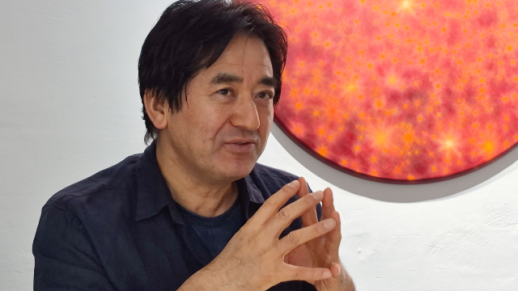 Civilization designer urges transition to meaning as AI automates traditional productivity SEOUL, April 28 (AJP) -Captain Kang Sang-bo, a South Korean civilization designer and author of The Master Key, argues that the rapid integration of artificial intelligence into production and social structures requires a radical reassessment of human value. Speaking in a recent interview, Kang stated that the core transition of the AI era is not a matter of increasing technical skill but moving from "methods" to "meaning." He maintained that this shift is essential for constructing a new form of civilization that prioritizes human purpose over mechanical efficiency. The urgency of this transition stems from the potential for human displacement within purely technical systems. Kang pointed out that when AI can perform nearly all tasks, individuals who fail to set their own direction risk becoming mere functional components of an automated structure. This shift matters because it moves the focus of human progress from the logistics of "how" to the existential "why," requiring a fundamental redesign of social, financial, and educational institutions in South Korea and beyond. Kang has spent years researching the "Meaning Civilization," a concept that attempts to bridge philosophical inquiry with self-growth and the content industry. In his view, the technical civilizations of the past focused on what to build, whereas the AI era forces a shift toward whether something should be built at all. He suggested that technology must operate in a way that brings humans closer to their own essence, moving from a technology-centered loop to a "human-technology-human" cycle. Within this framework, the captain identified four specific domains that define human uniqueness: meaning, vivid dreams, responsibility, and LOVE. He posited that AI and robotics ultimately exist to help humans focus more deeply on these four values, which he believes will become the primary criteria for future judgment. Regarding the definition of success, Kang proposed a formula he calls "BTS x LOVE." In this context, BTS represents Body, Talent, and Spirit, while LOVE signifies human connection and empathy. He argued that because speed and efficiency are being rapidly commoditized by technology, success in the future will depend on creating deeper connections and generating meaning within those bonds rather than simply performing tasks faster. This transition is particularly relevant for the "1030 Young Stars," a demographic of individuals in their teens to thirties whom Kang describes as civilization designers. He noted that this generation cannot expect to gain an advantage by competing with AI on efficiency, which was the logic used by previous generations focused on capital and growth. Instead, he emphasized that their core role must be to create new directions for society. The transition also requires institutional shifts, specifically in the realms of "meaning finance" and "meaning education." Kang suggested that as economic systems begin to function with less direct human labor, finance must move away from a production-centric model and toward investing in human values. He criticized South Korea's current education system for remaining stuck in a "pre-AI" mode of knowledge acquisition. He argued that schools should delegate information gathering to AI and allow students to focus on exploring their own direction, transforming the role of teachers from providers of answers to those who ask the right questions. Kang warned that in a society obsessed with results and capital, the concept of meaning is at risk of being marginalized. He observed that if the public prioritizes only the final outcome, individuals may lose the capacity to judge the purpose behind their actions. He maintained that the 1030 Young Stars currently stand at a crossroads, deciding whether to be the architects of a new civilization or remain passive consumers within an automated system. The interview with Captain Kang Sang-bo was conducted as part of a series examining the long-term social effects of automation in South Korea. 2026-04-28 10:33:02
 -
 Nonghyup Cooperative Leaders, Farmers Urge Parliament to Drop Provisions in Farm Law Revision As the government moves to revise the Nonghyup Act, 500 cooperative heads and farmers gathered at the National Assembly on the 28th to voice concerns about stronger government oversight and proposed changes to how the federation chair is chosen. They called for scrapping provisions they said could undermine Nonghyup’s autonomy. Nonghyup said 500 heads of local agricultural and livestock cooperatives and farmers from across the country held a “joint farmers’ declaration to defend Nonghyup autonomy” at the Assembly on the morning of the 28th. Earlier, the Ministry of Agriculture, Food and Rural Affairs, through consultations with the ruling party, announced a reform plan centered on tighter internal controls and introducing direct elections by cooperative members for the chair of the central federation. Participants urged lawmakers to: immediately halt what they called government-led supervision that infringes on Nonghyup autonomy; remove “poison pill” clauses they said would weaken legal stability; preserve the federation’s authority to guide and supervise subsidiaries to protect its cooperative identity; withdraw a plan to create a new, inefficient audit body; and stop attempts to change the direct election system for the federation chair. The Emergency Committee to Defend Nonghyup Autonomy said the government’s stance had not changed since a farmers’ rally on the 21st. It argued the government is pushing revisions that include contentious items — such as changing the chair’s direct election system and establishing a Nonghyup audit committee — without sufficient discussion. The committee also criticized the limits of regional briefings. It said briefings held on the 22nd in Daegu and on the 24th in Cheongju and Suwon included cooperative heads and farm groups, but ended without adequately collecting views from the field, leaving concerns in farming communities unresolved. Major national farm organizations joined the event and issued a solidarity statement. “Excessive regulation and control of Nonghyup could ultimately lead to cuts in support programs for farmers and increased management burdens on farm households,” the groups said, adding that they would “respond together to the end” because the issue is directly tied to farmers’ right to make a living. Park Kyung-sik, a co-chair of the emergency committee, said farmers had again gathered in front of the Assembly after setting aside their livelihoods because they believe losing Nonghyup autonomy would “directly lead to a crisis in agriculture.” Calling the revision “intervention, not reform,” he said institutional changes should come through sufficient discussion and public debate, not “speed-driven legislation.” Park said the rally showed on-the-ground determination to defend Nonghyup autonomy and asked the Assembly to reflect views in a balanced way from farmers, Nonghyup members and farm groups. The committee delivered the joint declaration it read at the event to the National Assembly. 2026-04-28 10:29:39
 -
 NATO Weighs Scaling Back Annual Summits as Members Seek to Avoid Clash With Trump NATO is discussing whether to scale back its practice of holding a leaders’ summit every year, a move diplomats described as aimed in part at avoiding a public clash with U.S. President Donald Trump. Reuters reported on April 27, citing six diplomats and senior officials from NATO member states, that internal discussions include ending the annual summit routine. NATO leaders have met each summer since 2021. This year’s summit is scheduled for July 7-8 in Ankara, Turkey. The focus is on changing the schedule. One diplomat said the 2027 summit in Albania is likely to be held in the fall, and that an option under discussion is not holding a summit in 2028. That year includes a U.S. presidential election and is Trump’s last full year in office. Some members are also arguing for summits every two years, Reuters said. No decision has been made, and the final call will be made by NATO Secretary-General Mark Rutte. NATO officials stressed that high-level consultations would continue. “NATO will continue to hold regular meetings at the highest level,” a NATO official told Reuters, adding that between summits allies would keep consulting, planning and making decisions on collective security. The talks come amid strains between Trump and other NATO members. Reuters said the Trump administration has repeatedly criticized many of the 31 member countries other than the United States. More recently, it publicly rebuked some allies for not providing greater support for U.S. military operations against Iran. Tensions are expected again at this year’s summit. Reuters reported that after allies declined to support the Iran war, Trump publicly questioned whether the United States should honor NATO’s mutual defense pledge and mentioned the possibility of withdrawal. His claim to sovereignty over Greenland, a Danish territory, also remains a source of friction within the alliance. Some inside NATO argue that frequent summits can undermine long-term strategy. “It’s better to have fewer summits than a bad summit,” one diplomat told Reuters. Another official said the alliance should be judged by the quality of its discussions and decisions, not the number of meetings. Analysts have voiced similar views. Phyllis Berry, a nonresident senior fellow at the Atlantic Council, wrote in a commentary last week that reducing top-level summitry could help NATO focus on its core work and lower tensions that have repeatedly surfaced in recent trans-Atlantic meetings. She also noted that during the Cold War, NATO held only eight summits over several decades. Trump has applied heavy pressure at NATO summits before. At the 2018 summit, he threatened to walk out in protest over what he said was low defense spending by other members. Former NATO Secretary-General Jens Stoltenberg wrote in a memoir published last year that if Trump had actually left, “we would have had to pick up the pieces of a shattered NATO.”* This article has been translated by AI. 2026-04-28 10:28:49
 -
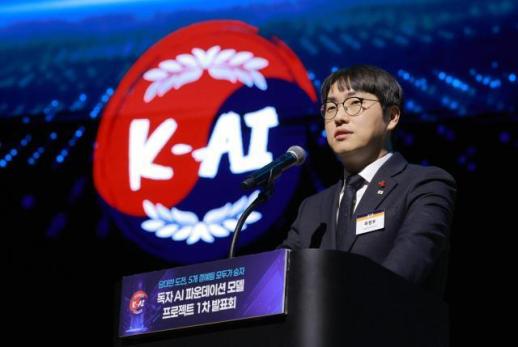 AI Policy Continuity in Question as Presidential AI Aide Resigns to Run for Parliament Ha Jung-woo, the presidential office’s senior secretary for AI future planning, has offered to resign and is moving toward a run in the parliamentary by-election in Busan’s Buk-gu Gap district. The Democratic Party is reviewing a strategic nomination process, and the district has emerged as a battleground expected to draw major candidates from the ruling and opposition parties as well as independents. Ha has been regarded as an expert with experience across the private AI sector and academia. Since joining the presidential office, he has played a central role in coordinating the national AI strategy, driving interagency cooperation and refining an industry development roadmap. With the government positioning AI, along with semiconductors, as a future growth engine, the departure of the dedicated senior secretary is not a routine personnel shift. Global competition in AI is intensifying rapidly. The United States is expanding infrastructure with big tech and government working together, while China is spreading AI across industries under state leadership. Japan and Europe are also moving quickly to update laws and institutions. South Korea, the editorial argues, cannot afford to leave its control tower vacant because of the political calendar. Political participation itself is not the issue, it said. Specialists entering the National Assembly to support industrial policy through legislation can be necessary, and the AI era demands lawmakers who understand technology. If Ha advances work on data use, talent development, regulatory reform and expanded computing infrastructure in parliament, it could benefit the country. The question, the editorial said, is not who leaves, but whether the system keeps working after the departure. South Korea’s policy structure has long been criticized as overly dependent on individuals. Momentum can build under a capable minister or a strong senior secretary, but it has often faded when personnel change. Each change of administration has brought new labels for industrial strategy, and reorganizations have repeatedly sent existing plans back for review. In a field like AI, where long-term investment and consistency are essential, that pattern is especially damaging. The AI industry cannot be judged by results over one or two years, the editorial said. Building large-scale computing infrastructure, improving the data ecosystem, expanding the power grid, training specialized talent, investing in startups and adopting public services are national projects that take at least five years and often more than 10. If policy direction wavers whenever a responsible official moves for election reasons, companies may delay investment decisions and talent may be more likely to leave for overseas, it said. The government and the ruling party should quickly complete the selection of a successor, it said, not merely to fill a post but to minimize any gap by appointing someone with industry understanding and coordination skills. AI policy should also be embedded in institutions rather than personal capability, through a whole-of-government framework, annual budget plans, public-private consultation channels and a legislative roadmap with the National Assembly that are set out in clear terms. The opposition should not treat the issue only as a political fight, the editorial said. If the strategy is meant to endure regardless of which party holds power, it requires bipartisan agreement. Measures such as a special semiconductor law, revisions to data regulations, expansion of power infrastructure and AI talent visa policy should not be judged by partisan advantage, it said, warning that South Korea will fall behind if politics keeps blocking progress while other countries mount all-out efforts. An individual is free to enter politics, the editorial said, but national strategy should not be shaken by personal moves. In an era of competition over AI sovereignty, what is needed is not a single star player but a national system that keeps operating even when people change. Ha’s resignation should not end as another political headline, it said, but should prompt a review of the durability of South Korea’s AI policy. 2026-04-28 10:27:40