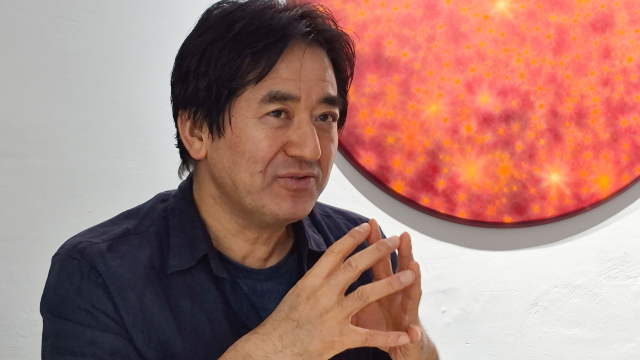
SEOUL, April 28 (AJP) -Captain Kang Sang-bo, a South Korean civilization designer and author of The Master Key, argues that the rapid integration of artificial intelligence into production and social structures requires a radical reassessment of human value. Speaking in a recent interview, Kang stated that the core transition of the AI era is not a matter of increasing technical skill but moving from "methods" to "meaning." He maintained that this shift is essential for constructing a new form of civilization that prioritizes human purpose over mechanical efficiency.
The urgency of this transition stems from the potential for human displacement within purely technical systems. Kang pointed out that when AI can perform nearly all tasks, individuals who fail to set their own direction risk becoming mere functional components of an automated structure. This shift matters because it moves the focus of human progress from the logistics of "how" to the existential "why," requiring a fundamental redesign of social, financial, and educational institutions in South Korea and beyond.
Kang has spent years researching the "Meaning Civilization," a concept that attempts to bridge philosophical inquiry with self-growth and the content industry. In his view, the technical civilizations of the past focused on what to build, whereas the AI era forces a shift toward whether something should be built at all. He suggested that technology must operate in a way that brings humans closer to their own essence, moving from a technology-centered loop to a "human-technology-human" cycle.
Within this framework, the captain identified four specific domains that define human uniqueness: meaning, vivid dreams, responsibility, and LOVE. He posited that AI and robotics ultimately exist to help humans focus more deeply on these four values, which he believes will become the primary criteria for future judgment.
Regarding the definition of success, Kang proposed a formula he calls "BTS x LOVE." In this context, BTS represents Body, Talent, and Spirit, while LOVE signifies human connection and empathy. He argued that because speed and efficiency are being rapidly commoditized by technology, success in the future will depend on creating deeper connections and generating meaning within those bonds rather than simply performing tasks faster.
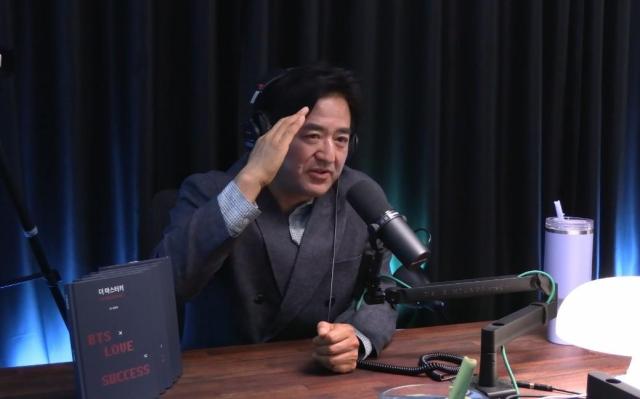
This transition is particularly relevant for the "1030 Young Stars," a demographic of individuals in their teens to thirties whom Kang describes as civilization designers. He noted that this generation cannot expect to gain an advantage by competing with AI on efficiency, which was the logic used by previous generations focused on capital and growth. Instead, he emphasized that their core role must be to create new directions for society.
The transition also requires institutional shifts, specifically in the realms of "meaning finance" and "meaning education." Kang suggested that as economic systems begin to function with less direct human labor, finance must move away from a production-centric model and toward investing in human values. He criticized South Korea's current education system for remaining stuck in a "pre-AI" mode of knowledge acquisition. He argued that schools should delegate information gathering to AI and allow students to focus on exploring their own direction, transforming the role of teachers from providers of answers to those who ask the right questions.
Kang warned that in a society obsessed with results and capital, the concept of meaning is at risk of being marginalized. He observed that if the public prioritizes only the final outcome, individuals may lose the capacity to judge the purpose behind their actions. He maintained that the 1030 Young Stars currently stand at a crossroads, deciding whether to be the architects of a new civilization or remain passive consumers within an automated system.
The interview with Captain Kang Sang-bo was conducted as part of a series examining the long-term social effects of automation in South Korea.
Copyright ⓒ Aju Press All rights reserved.