
Journalist

Seo Hye Seung
-
 Vietnam Warns of Fake Traffic-Fine Sites Stealing Bank Card Data A new scam in Vietnam is using small traffic fines as bait to steal bank card information, authorities and local media reported. The scheme typically cites a fine of 50,000 dong (about 2,800 won), encouraging victims to enter card details without suspicion. Reports say even residents of major cities have been deceived. VnExpress reported that a Hanoi resident, Ngoc Ha, received a text message on April 25 saying her vehicle had committed a traffic violation and instructing her to immediately visit a specific website to resolve the fine. She said the domain included the word “Dichvucong,” meaning public service, leading her to believe it was an official site. The site, however, was a counterfeit that copied the domain name and interface of the national public services portal. Ha said, “Because the screen looked familiar, I didn’t suspect anything.” The page claimed her vehicle had committed an “obstructing parking” violation and assessed a 50,000-dong fine. It also prompted users to pay immediately by entering a card number, cardholder name, expiration date and CVV code. Ha said she intended to pay because the amount was small, but she did not have her card and could not recall the details. “If not for that, I would have lost all my money,” she said. VnExpress reported that many people received similar messages last week. ◆ Hanoi police: No traffic-violation notices by text or phone; report fake portals Hanoi police issued an official warning, describing the scam as a tactic that sends messages about allegedly unresolved traffic violations and lures recipients to a fake link, allowing criminals to take control of cards and withdraw money from accounts. Police said the link is designed with an interface similar to the national public services portal to gain trust. If a victim enters bank card information, including a card number and an OTP code, criminals can seize control of the card and withdraw funds, police said. Police also stressed that there is currently no method of notifying traffic violations by text message or phone call. Violations are notified in writing, and vehicle owners or related parties are summoned to a police station, they said. Those who want to check violations should use the official traffic police website or the VNeTraffic app. Authorities said scams using fake websites have persisted in Vietnam for years, with tactics evolving. Fraudsters impersonate familiar banks, government agencies, e-commerce platforms and other services to steal accounts and money. Such messages may be distributed through fake base stations or unregistered SIM cards. While mobile carriers have tightened subscriber verification to block unregistered SIM use, scam attempts continue, the report said. Authorities urged the public to use only official websites and to carefully check domains, security certificates and unusual signs in interfaces and language. Passwords, OTP codes and personal information should never be provided to unverified sites. Anyone who suspects fraud should immediately lock their account and report it to authorities. Vietnamese internet users voiced concern and criticism. One commenter wrote that they hoped VNeID would quickly integrate systems under centralized management so problems could be reported through a single channel. The commenter also warned that having separate apps for traffic, taxes and other services increases risk, adding, “If people in cities are being fooled, I’m more worried about rural areas.” Another commenter said the public should recognize that the government does not impose fines or penalties by phone, adding that “if you go in person, your money stays safe.” Others also said scams have become too common during the digitization process.* This article has been translated by AI. 2026-04-27 14:44:48
 -
 Korea IR Council Holds Inauguration Ceremony for New Chairman Kim Gi-gyeong The Korea IR Council said Monday it held an inauguration ceremony for its 10th chairman, Kim Gi-gyeong. According to the council, Kim, born in 1966, earned a bachelor’s degree in law from Seoul National University. He previously served at the Korea Exchange, including as head of the Stock Market Department at the KOSPI Market Division, deputy head of the Management Support Division, deputy head of the KOSDAQ Market Division and head of the Management Support Division. The Korea IR Council began in 2009 as a nonprofit incorporated association established by the Korea Exchange. It has hosted corporate investor relations briefings to support capital market development, operated training programs to cultivate IR professionals and organized IR awards. Through its affiliated Corporate Research Center, it also provides research on small and midsize companies, contributing to a sound investment culture.* This article has been translated by AI. 2026-04-27 14:44:17
 -
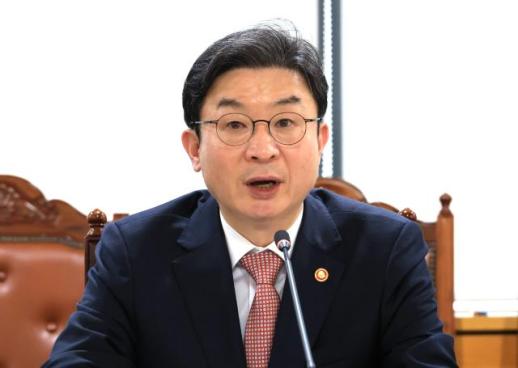 South Korea to Ease Loan Caps for Mid-Rate Lending; Card Issuers to Offer Saitdol Loans Financial authorities said they will ease household-loan volume caps to expand access to credit for mid-tier borrowers, excluding up to 80% of private-sector mid-rate loans from the overall lending limits. They also plan to allow credit card companies to offer Saitdol loans, aiming to increase mid-rate lending and encourage funding at lower interest rates. The Financial Services Commission announced the measures on 27 at a meeting titled the fourth Inclusive Finance Transformation Conference, held at the KB Hope Finance Center in Seoul's Dongjak district. The supply target for mid-rate loans this year is 31.9 trillion won, up 1.1 trillion won from last year. The plan calls for 3.6 trillion won in Saitdol loans and at least 28.3 trillion won in private mid-rate loans. Under the plan, when financial firms manage their overall lending volumes, private mid-rate loans will be excluded by sector by up to 80%. The FSC said the step is intended to prevent a sharp contraction in access to credit for mid-tier borrowers as lenders tighten volume controls to manage household debt. The government will also narrow eligibility for Saitdol loans to borrowers in the bottom 20% to 50% of credit scores, from the previous bottom 50%, to help mid-tier borrowers obtain sufficient funding at lower rates. Officials said the change addresses criticism that Saitdol loans, introduced as a stepping-stone for mid-tier borrowers, have in practice been supplied mainly to low-credit borrowers in the bottom 20% or below. With the overhaul, Seoul Guarantee Insurance premium rates are expected to fall by up to 5.2 percentage points, and the supply amount is projected to increase by up to 100 billion won. The FSC said it will expand Saitdol loan providers beyond banks, mutual finance institutions and savings banks to include specialized credit finance firms such as credit card companies and capital firms. It said participation by those firms, which hold customer data and credit-assessment capabilities for mid-tier borrowers, is expected to provide Saitdol loans at 8% to 12% interest and ease a so-called interest-rate cliff. That would be well below the existing 15.5% rate. Rules for private mid-rate loans will also be revised. When calculating the interest-rate criteria used to recognize mid-rate loans, the FSC will reflect actual loan costs such as funding costs and credit costs, lowering sector-specific benchmarks by up to 1.25 percentage points. Second-tier financial products will be split into mid-rate loan categories 1 and 2 depending on rate levels, and category 1 products will apply interest rates at least 3 percentage points lower than current levels. Financial Services Commission Chairman Lee Eok-won said inclusive finance must also serve as a reliable backstop so mid-tier borrowers can maintain stable financial lives. He said the government will work in balance with the private sector to support both low-credit and mid-tier borrowers and build what he called genuine inclusive finance. 2026-04-27 14:43:28
 -
 Korea National Railway Authority to Hire 127 New Workers in First Half The Korea National Railway Authority said Monday it will hire 127 new employees to help energize the job market and strengthen young people’s practical work skills. The hiring will include 110 youth interns in an experiential program, one driver in a skilled position, 13 field staff members — 11 for protection of nationally important facilities and two for facility management in Gangwon — and three contract workers: two transport equipment vehicle maintenance workers and one commissioned researcher for a national R&D project. The youth internship program will run from the appointment date through the end of the year to provide hands-on experience and help participants build career credentials. Graduates with strong performance will receive a document-screening waiver and additional points when applying for future regular positions, the authority said. Applications will be accepted online through the authority’s recruitment website from May 4 to May 11. After document screening, written tests and interviews, final successful candidates will be announced in June. “This recruitment will be a valuable opportunity for young people to gain meaningful job experience and plan their future,” said Lee An-ho, acting chairman of the Korea National Railway Authority, urging qualified applicants to apply.* This article has been translated by AI. 2026-04-27 14:42:57
 -
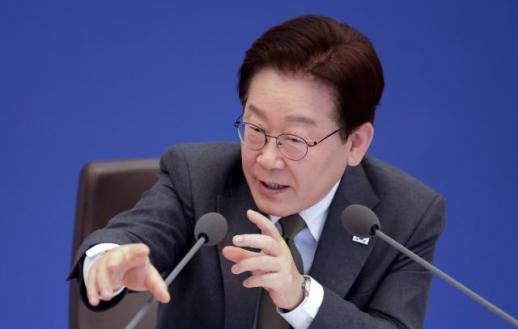 President Lee Jae-myung Vows Steady Push for Korean Peninsula Peaceful Coexistence Policy President Lee Jae-myung said Monday his government will "steadily push ahead" with its "peaceful coexistence policy on the Korean Peninsula." In a written congratulatory message read by Hong Ik-pyo, the presidential senior secretary for political affairs, at an event at the National Assembly Members' Office Building in Seoul marking the eighth anniversary of the April 27 Panmunjom Declaration, Lee said the government will "take the steps we can take first" to restore inter-Korean trust and advance peace. He added that he hopes North Korea will "trust the sincerity" of the government and respond. Lee said ending the war, establishing a permanent peace regime, and achieving coexistence and shared prosperity between the two Koreas are the declaration's core spirit and "the future we must pursue." He urged efforts to ensure uncertainty and anxiety in the international situation, driven by the war in the Middle East, do not spill over to the peninsula, and to build a path where all people on the peninsula can live without fear of war. He said the "people-sovereignty government" has made peaceful coexistence its top policy goal since taking office and has taken preemptive steps to rebuild trust. He said it has also made clear its principles of respecting the North's system, not pursuing unification by absorption, and refraining from any hostile acts. Hong said the government's peaceful coexistence policy presented in early February was based on those principles. "No matter how long the winter lasts, spring will come," Lee said, adding that if efforts toward peaceful coexistence and shared growth are built up "step by step," he firmly believes spring will return to the Korean Peninsula. * This article has been translated by AI. 2026-04-27 14:42:16
 -
 Industry Minister Kim Jeong-gwan Visits Kolmar Korea, Pledges Support for Reshoring and Regional Investment Industry Minister Kim Jeong-gwan visited Kolmar Korea, which has been named the first “reshoring” company of the year, and pledged expanded support as the government encourages firms operating overseas to bring production back to South Korea. Kolmar Korea said Kim visited its Sejong plant in Jeonui-myeon, Sejong City, on the 27th, delivered the official designation certificate in person and held a meeting with company officials. KOTRA President Kang Kyung-sung and Korea Industrial Complex Corp. Chairman Lee Sang-hoon joined the tour and reviewed the company’s cosmetics manufacturing capabilities. The Sejong plant is a key facility that serves as headquarters for Kolmar’s global production network. Built in 2014, it was the largest single plant in Asia at the time. It produces 890 million units of basic skincare products a year for about 4,500 customers in South Korea and abroad. Kolmar’s sunscreen products, which have helped drive the global K-beauty boom, are also made entirely at the site. At a reshoring roundtable held after the tour, Kolmar Group Vice Chairman Yoon Sang-hyeon and representatives from eight reshoring-designated companies, including Simtech, Nepes, Daehan Electric Wire and Sungwoo Hitech, discussed ways to boost domestic investment and improve government support programs. “Now, the competitiveness of companies and countries is determined by how stably they can secure supply chains,” Kim said. “The government will actively support companies so that returning home and investing in regional areas becomes the most reasonable and attractive choice.” Yoon said Kolmar plans to strengthen production capacity with Sejong City as its base to meet rising global demand as K-beauty’s profile grows. He said the company will work in step with government support for reshoring firms to enhance K-beauty manufacturing competitiveness and serve as a bridge for broader industry growth. Earlier, Kolmar said it consolidated its China production at its Wuxi plant and notified the industry ministry of its intention to expand its domestic production base. It was selected in January as the first reshoring company of the year.* This article has been translated by AI. 2026-04-27 14:40:02
 -
 Deputy PM Koo Yun-cheol Pledges Broad Support for Korea’s Bio, Beauty Industries Koo Yun-cheol, deputy prime minister and minister of finance and economy, said on 27일 that the government is focusing on the bio and beauty industries as key growth engines for the South Korean economy and will support them through measures including research and development funding and regulatory streamlining. Koo made the remarks during a visit to Inist ST, a manufacturer of raw materials for chemically synthesized pharmaceuticals, where he inspected operations and held a meeting with representatives of small and midsize companies in the bio and beauty sectors, including firms based in the central region. He urged companies not to settle for the status quo, saying they should expand the economy by developing world-leading products and services. Sustainable growth, he said, requires a “win-win ecosystem” in which large companies lead global markets while small businesses and startups provide support. He also called for closer cooperation to drive shared growth as industries undergo paradigm shifts, including the rise of artificial intelligence. Koo said the public-private consultative body for supporting corporate innovation serves as a platform for ongoing communication among the government, companies and business groups to back investment and innovation. He said the government has prepared measures to foster a startup boom under a plan dubbed “National Startup Era,” reflecting requests raised at the group’s first meeting, including steps to simplify startup procedures for professors and students. In a subsequent meeting on the bio and beauty industries, Koo again stressed the need for continued investment in R&D and ongoing upgrades to quality and safety, rather than relying on existing products and brands. He asked participants to speak candidly about problems they face in the field and possible solutions. Company representatives described their businesses and requested government support in areas they said were needed. Participants said innovation and growth require policies tailored to conditions on the ground, thanked the government for creating a forum for dialogue, and urged officials to reflect the day’s proposals in government measures. The government said it will closely review the views raised at the meeting, provide prompt feedback to those who submitted proposals, and actively incorporate them into future policy and institutional improvements.* This article has been translated by AI. 2026-04-27 14:34:02
 -
 Dongkuk Systems Named Nvidia Elite Partner in Compute Category Dongkuk Systems, the ICT affiliate of Dongkuk Steel Group, has been selected as a top-tier partner of Nvidia. The company said Monday it earned the Elite grade, the highest level, in the "Compute" category within the Nvidia Partner Network. Nvidia assigns partner grades based on technical capabilities and business performance. Dongkuk Systems said the Compute category is among the network’s most core competencies. Elite status is granted only to a small, vetted group of Nvidia partners worldwide. Dongkuk Systems joined the network in 2024 and was promoted to Elite from Preferred in about two years. The certification recognizes the company’s capabilities as an AI infrastructure specialist, including designing Nvidia’s latest graphics processing unit technology for enterprise use and building high-performance server infrastructure from large-scale data centers to manufacturing sites. The company said its ability to provide GPU-based accelerated computing platforms in on-premises and cloud environments was viewed favorably. With domestic demand for corporate AI transformation rising, Dongkuk Systems said it plans to expand support for AI infrastructure projects across major industries, including steel manufacturing as well as finance, manufacturing and the public sector. "This promotion is the result of Nvidia’s official recognition of our GPU technical capabilities and business performance," CEO Kim O-ryeon said. "We will strengthen our role as a partner that provides practical support for customers building AI infrastructure." * This article has been translated by AI. 2026-04-27 14:31:35
 -
 Daekyo to Provide Eye-Level Learning Program for Low-Income Single-Parent Families Daekyo said on 27 it will take part in an education support project led by the Lotte Scholarship Foundation, providing its Eye-Level Learning program to children from low-income single-parent families nationwide. The program will serve 223 children, from infants and toddlers through elementary, middle and high school students, and will run for nine months through December. The project aims to narrow education gaps for children whose learning opportunities are limited by financial and environmental constraints, while strengthening basic academic skills and supporting self-directed learning. Daekyo will offer Eye-Level Learning in core subjects including Korean, math, English, social studies and science, along with digital learning to improve results. It will also provide pre-program counseling and step-by-step, tailored learning plans to help build key competencies and independent study habits. To improve access, Daekyo will use its nationwide offline learning network, allowing families to choose between home-visit instruction and classes at nearby Eye-Level Learning Centers. The company said the approach is intended to support sustained participation and help reduce regional education disparities. A Daekyo official said it was meaningful to join an effort that helps children with limited educational opportunities grow in a stable environment, adding that the company will continue expanding support for underserved groups so more children can access learning opportunities.* This article has been translated by AI. 2026-04-27 14:31:05
 -
 Delivery App Fee Talks Stall as Second Meeting Collapses A social dialogue body launched under the leadership of the Democratic Party’s Euljiro Committee to discuss overhauling delivery platform commission structures is faltering from the outset, with talks on shared-growth measures such as fee cuts repeatedly stalling. Industry officials said the second meeting of the delivery app coexistence consultative body, scheduled for the 27th, was called off after merchant groups that list on the platforms did not attend. The first meeting on April 10 ended with the two sides confirming their differences, and plans for follow-up discussions have now also broken down. The consultative body includes delivery platforms such as Baedal Minjok and Coupang Eats, along with major merchant groups including the Owners’ Association for a Fair Platform, the National Franchisee Council, the Korea Foodservice Industry Association, the Korea Franchise Industry Association and the Korea Federation of Micro Enterprises. Delivery platforms are currently applying a tiered commission system introduced in November 2024. They charge brokerage fees of 7.8% to the top 35% of merchants by sales, 6.8% to those in the 35% to 80% bracket, and 2.0% to the bottom 20%. At the first meeting, platforms were reported to have proposed expanding the 2.0% tier from the bottom 20% to the bottom 30%, while applying 7.8% to the remaining 70%. They also proposed creating a new category for deliveries within 1 kilometer, applying commissions in the 5% range and delivery fees in the high 2,000-won range. The Euljiro Committee argued that the revision could increase the fee burden for some merchants and called for an overall reduction in commissions, but platforms maintained that further cuts would be difficult. Merchant groups responded coolly, saying small business owners are already at their limit due to cost pressures from inflation linked to the war in the Middle East. They said the talks should include not only lower commission rates but also practical support such as help with packaging materials and food ingredients. Complicating matters are differing interests within the merchant groups themselves. With groups varying in size and business type, their demands differ, making it structurally difficult to reach a unified position. No follow-up schedule has been set since the second meeting collapsed. “Each group’s interests are so sharply divided that coordination does not look easy,” an industry official said, adding that the effort is “losing momentum to the point that they cannot even set the next meeting.” The official said the government should first prepare support measures for the most urgent micro and small business owners, then guide the process toward step-by-step alternatives for the merchant groups. 2026-04-27 14:25:01