
Journalist

Seo Hye Seung
-
 Minister Song Mi-ryeong to launch agriculture energy transition task force; NH reform plan due in June Song Mi-ryeong, South Korea’s minister of agriculture, food and rural affairs, said April 27 that the government will form an agriculture and rural energy transition task force this week and run it for about three months, citing the growing need for energy transition amid the war in the Middle East. Speaking at a regular briefing at the government complex in Sejong, Song said that if energy issues are neglected or addressed only through the existing fossil-fuel system while the Middle East conflict continues, South Korea’s food security would inevitably be put at risk. Song said solid-fuel production and biogas conversion could help turn discarded materials in agriculture into energy and allow them to be used as meaningful fertilizer, making them an important resource. She also stressed that farmland could be a key asset because it can be used alongside solar power generation. Song maintained that concerns about strengthening the authority of the chairman of the National Agricultural Cooperative Federation, known as NongHyup, are misplaced. She said she is aware of worries that direct elections by cooperative members could lead to greater power for the federation chairman and that expanded government oversight could infringe on autonomy. But she said that if members are given the power to choose and institutional safeguards such as oversight are put in place, NongHyup can secure democratic governance and operate well. She also said the government will move faster on a second package of reforms for NongHyup. Song said officials have been continuously listening to views from the field in response to criticism that the reform process lacked sufficient input. She said the second reform plan, including key measures such as revitalizing economic businesses, is scheduled to be announced in June. Song played down concerns about shortages of agricultural supplies due to the Middle East war. She said the government has secured raw materials for urea through the end of August to ensure there is no disruption to fertilizer supplies. She added that raw materials for agricultural plastic film have been secured through June and that supplies will be increased for some areas facing shortfalls. On the government’s farmland survey, Song said the first goal is to eradicate speculation and the second is to build a farmland database to improve various systems in the future. On the rural basic income program, she said 72.7% of the funds that must be used within six months have been spent, contributing to local economic activity. Regarding a South Korea-Vietnam memorandum of understanding on animal quarantine cooperation signed on April 22, Song said it appears to be accelerating exports related to heat-treated poultry and Hanwoo beef. She added that if the two countries later follow with an MOU on plant quarantine negotiations, it would lead to a win-win outcome for both sides. 2026-04-27 12:09:20
 -
 South Korea names 187 habitual wage violators, imposes credit curbs on 298 The Ministry of Employment and Labor said on 27일 it will publicly disclose the names of 187 employers found to have repeatedly withheld large amounts of wages and will impose credit sanctions on 298 employers. The employers named are classified as high-amount, habitual wage violators: as of Aug. 31, 2022, they had at least two final guilty verdicts for wage arrears within the previous three years and owed a total of at least 30 million won in unpaid wages within a one-year period. Credit sanctions apply to employers with total arrears of at least 20 million won. In one case, an employer identified as A, who ran a travel business in Gumi and regularly employed about 10 workers, failed over three years to pay about 120 million won in wages and severance to nine workers. The employer received two guilty verdicts, including a sentence of 1 year and 4 months in prison, suspended for three years. In another case, an employer identified as B, who operated a construction business in Cheonan, did not pay about 210 million won in wages to 88 workers over three years and received four guilty verdicts, including a two-year prison sentence. The ministry said the names of such high-amount, habitual violators will be posted on its website and other outlets. For those subject to public disclosure, information including name, age, business name and address, and the amount of unpaid wages over three years will be made public from 27일 through April 26, 2029. For corporations, the disclosure will include the representative director’s name, age and address, along with the corporate name and address. The employers will face disadvantages including limits on government subsidies, restrictions on competitive bidding under the National Contract Act, and limits on recruiting under the Employment Security Act. For employers subject to credit sanctions, personal details and arrears data will be provided to the Korea Credit Information Services, a centralized credit information agency. Under the agency’s rules, they will be listed for seven years as credit management targets and may face restrictions such as limits on loans. The ministry said employers newly placed on the public disclosure list will also be subject to travel bans under the amended Labor Standards Act that took effect last year. If they again fail to pay wages during the three-year disclosure period, the law’s provision requiring a victim’s wish not to punish will not apply, making them subject to criminal punishment regardless of the affected workers’ intent. Vice Minister Kwon Chang-jun said workers’ wages are compensation for labor and a means of livelihood, and that habitual, high-amount wage arrears are not a simple debt default but a serious illegal act that undermines the value of work. He said the ministry will ensure strengthened measures, including higher statutory penalties, are implemented to uproot the practice of treating wage arrears lightly.* This article has been translated by AI. 2026-04-27 12:08:34
 -
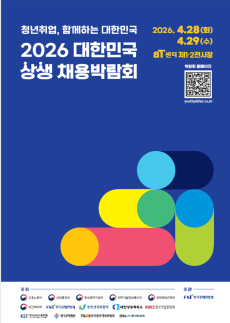 Government, Business Groups to Hold Youth Hiring Fair in Seoul The government and major business groups are joining forces to expand jobs for young people. The Ministry of Employment and Labor said Sunday it will hold the "2026 Korea Shared Growth Job Fair" on April 28-29 at the aT Center in Seoul’s Yangjae area, together with related ministries including the Ministry of Science and ICT, the Ministry of Culture, Sports and Tourism, the Ministry of Trade, Industry and Energy, the Ministry of Health and Welfare, and the Ministry of SMEs and Startups. Seven major economic organizations will jointly take part, including the Federation of Korean Industries, the Korea Chamber of Commerce and Industry, the Korea Employers Federation, the Korea International Trade Association, the Korea Federation of SMEs, and the Korea Enterprises Federation. The fair follows a December "Youth Jobs First Step" pledge by the government and business groups. About 700 companies will participate online and in person, with plans to hire more than 2,200 people. The ministry said both the number of participating firms and planned hires are sharply higher than at the Korea Job Fair held last March and the shared-growth cooperation job fair held in October. A shared-growth hiring zone will feature 169 companies, including suppliers to major conglomerates such as Samsung Electronics, SK, Hyundai Motor and LG, as well as government-recommended mid-sized and small firms, venture startups, and global companies. Participating companies will conduct on-site interviews or provide recruitment information. The event will also run promotion zones for K-Digital Training, with participants including Samsung Electronics, Hyundai Engineering & Construction and Korea Oracle, and for large-small business shared-growth programs, with participants including Samsung C&T, POSCO and Hanssem. Organizers said the zones will offer close counseling to help young job seekers better understand roles and build skills. Programs will include one-on-one coffee chats with employed young professionals who recently landed jobs, practical job-search lectures by corporate recruiters, and an intensive interview zone offering on-site interviews, personal color consultations, suit rentals, and hair and makeup support. Hands-on events will include an LED photo zone for "wishing for success" set against backdrops of well-known sites nationwide, including Yeonjudae on Gwanaksan, and a program to create self-PR business cards highlighting strengths and job skills. For young people and companies outside Seoul who cannot attend in person, an online recruitment hall has been operating since March 19. It will run through the end of July for four months, providing recruitment information and online application services. Labor Minister Kim Young-hoon called youth employment "the most urgent and serious task" facing society. "As this fair shows, solving youth employment is possible when the government and companies work together," Kim said. He added that he hopes the event will go beyond a one-off gathering and become a turning point for large companies and their partners to grow together, with the government and business moving as "one team" to create a virtuous cycle of jobs.* This article has been translated by AI. 2026-04-27 12:07:43
 -
 Survey: About 95% of NH members and public say reform is needed to curb misconduct South Korea’s Ministry of Agriculture, Food and Rural Affairs said April 27 that a survey found about 95% of NongHyup members and the general public agree reforms are needed, with the most common reason being the need to eradicate misconduct by executives, including the chairman and cooperative heads. The ministry said 94.5% of cooperative members and 95.1% of the public supported the need for reform, according to an “awareness survey of members and the general public” on reform measures. The Korea Rural Economic Institute commissioned Gallup Korea to poll 1,079 NongHyup cooperative members nationwide and 1,000 members of the public. Asked why reform is needed, respondents most often cited misconduct by executives such as the chairman and cooperative heads (55.1% of members; 73% of the public). Other leading reasons were an operating structure centered on cooperative heads rather than members (49.4% of members; 47.3% of the public) and problems involving agricultural product distribution and price stabilization (49.4% of members; 54.5% of the public). Support was also high for shifting to direct elections by members for the NongHyup chairman, with 83.1% of members and 90.5% of the public in favor. The main reasons cited were strengthening member sovereignty and democratic governance (66.3% of members; 65.6% of the public) and reducing the risk of corruption such as the provision of money or gifts (48.2% of members; 59.5% of the public). On establishing a NongHyup Audit Committee, support outweighed opposition among both groups (85.8% of members; 93.3% of the public). A key reason was that a separate audit body could conduct fair audits without internal pressure (79.4% of members; 68.6% of the public). Among opponents, a leading concern was increased government influence (70.6% of members; 53.7% of the public). The survey also found support for creating new government oversight authority over NongHyup’s holding company and subsidiaries (67.5% of members; 85% of the public). Strengthening members’ ability to request information disclosure from cooperatives was backed by 68.9% of members and 79.7% of the public. Agriculture Minister Song Mi-ryeong said the results show reform is a shared priority for most members and the public. “We will promptly prepare follow-up reform measures, including revitalizing economic projects and scaling up cooperatives, so that NongHyup can restore its core role,” she said. * This article has been translated by AI. 2026-04-27 12:06:50
 -
 South Korea to Discuss Smart Monitoring to Close Gaps in Industrial Air Pollution Oversight A debate over introducing a “smart monitoring system” to more precisely track air pollutants from industrial sites will move forward at the National Assembly, amid concerns that smokestack-focused oversight misses emissions that leak during production processes. The National Institute of Environmental Research said Sunday it will hold a forum on the smart monitoring system at 10 a.m. on the 28th at the National Assembly Members’ Office Building in Yeongdeungpo District, Seoul, together with the offices of lawmakers Park Hong-bae and Woo Jae-joon of the National Assembly’s Climate, Energy, Environment and Labor Committee. South Korea’s current air pollution control system centers on measuring pollutants released from facility smokestacks. But as industrial operations have grown more complex and chemical and manufacturing sectors have diversified, more cases have been reported of hazardous substances — including volatile organic compounds, or VOCs — escaping from various points across production facilities, exposing limits in the existing approach. In industrial complexes where multiple plants are clustered, officials and experts have also repeatedly pointed to the difficulty of identifying specific sources through inspections of individual sites alone. That has fueled calls for a monitoring system that can manage emissions across an entire industrial complex, beyond a single facility. To address the gap, the institute has operated a monitoring system since 2019 that uses mobile measurement vehicles and spectroscopic remote-sensing technology to track air pollutant emissions in real time. The system is seen as allowing faster checks across wider areas than fixed monitoring methods. At the forum, Kang Dae-il, head of the institute’s Air Engineering Research Division, and Inha University professor Jeon Gi-jun are to present on current operations of the smart monitoring system and on domestic and international technology and policy trends. A panel discussion moderated by Song Ji-hyeon, president of the Korean Society for Atmospheric Environment, will bring together representatives from academia, the government and the National Assembly to discuss expanding the use of advanced monitoring equipment, ensuring the reliability of measurement data and directions for regulatory improvements. The institute said it expects the discussions to accelerate efforts to build the legal and institutional foundation needed to broaden the use of advanced monitoring equipment. “Smart monitoring is an important tool to more accurately understand actual emissions of air pollutants and strengthen on-site response,” NIER President Park Yeon-jae said. “We will actively support the stable establishment of related systems and policies based on scientific evidence and field experience.”* This article has been translated by AI. 2026-04-27 12:06:00
 -
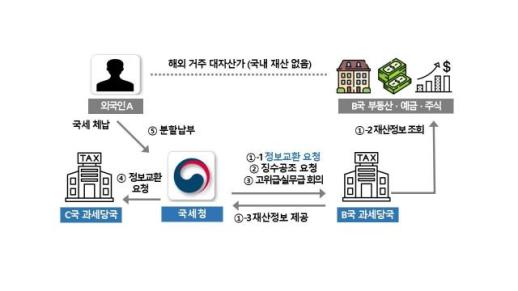 Korea Tax Agency Recovers 33.9 Billion Won in Hidden Overseas Assets From Delinquents The National Tax Service said it has recovered 33.9 billion won in delinquent taxes by strengthening international cooperation against people who hid assets overseas. The agency said dozens of additional cases are still moving through international collection procedures, raising expectations that hundreds of millions of won more could be recovered. According to the NTS on the 27th, since NTS Commissioner Im Gwang-hyeon took office in July last year, the agency has recovered 33.9 billion won in five cases over the past nine months through collection cooperation with tax authorities in three countries. The figure accounts for most of the cumulative results since 2015 — 37.2 billion won across 24 cases — as the agency says international cooperation is now producing tangible collection results. The NTS said it uses two main channels to track overseas assets held by tax delinquents: information exchange and collection cooperation. It identifies overseas accounts and financial assets through automatic exchange of financial information with 119 countries, and obtains information on assets such as real estate through case-by-case requests with 163 countries. When those efforts confirm where a delinquent’s overseas assets are located, the NTS proceeds with collection cooperation by asking the relevant country’s tax authority to carry out compulsory collection. The agency said Korea cannot directly enforce seizures abroad, so local tax authorities conduct attachment and collection on its behalf. In one case, a foreign wealthy individual living overseas who had failed to pay taxes in Korea sold local assets and paid after cooperation with the person’s home-country tax authority began, the NTS said. In another, a foreign professional athlete who had worked in Korea left the country without filing taxes, but paid voluntarily through a representative in Korea after the athlete’s home-country financial account was identified. The NTS also cited a case involving a foreign businessperson who had dispersed and concealed assets across multiple countries. After a third-country financial account was detected and collection cooperation was initiated, the case ended in voluntary payment. For Korean nationals, the agency said it has recovered taxes by tracing accounts of overseas corporations operated under borrowed names and collecting the full deposits, or by using information exchange with countries where delinquents hold permanent residency to seize and collect from overseas accounts. The NTS said it is expanding its methods by directly participating as a creditor in overseas bankruptcy proceedings and by attaching high-end homes abroad. In one case, a delinquent immediately signaled an intent to pay after a luxury home overseas was attached, it said. An NTS official said shifting assets overseas while benefiting in Korea and failing to pay taxes leaves compliant taxpayers feeling deprived, undermines the foundation of public finances, and seriously damages fairness and justice in society. The official said the agency will mobilize all available tax enforcement capacity to respond strictly to malicious delinquents who evade their tax obligations. 2026-04-27 12:04:09
 -
 South Korea orders major open-market platforms to curb overly broad liability waivers South Korea’s competition watchdog ordered corrective steps against what it called overly broad liability waivers used by open-market operators, including clauses that exempt a platform even when fault is shared between the company and users. It also revised provisions that had broadly waived intermediary responsibility on the grounds that the platform was not a direct party to contracts. The Fair Trade Commission said on the 27th it reviewed the terms of service of seven major open-market operators, including Coupang, Naver and Kurly, and corrected 11 types of unfair clauses across four areas: improper exemptions and limits on damages liability; arbitrary exercise of platform operating authority; disadvantages tied to settlement for sellers and refunds for consumers; and other terms unfavorable to users. The commission said the action is intended to strengthen platform accountability and better protect users’ rights as the domestic e-commerce market has expanded rapidly and open markets have become an essential distribution channel. First, it moved to fix clauses that improperly exempt or shift responsibility for protecting personal information. Open-market operators have a duty to securely collect and store users’ personal data, such as names and contact information, gathered during transactions. The commission said some terms had effectively freed operators from responsibility for incidents such as data leaks regardless of whether the company was at fault. It also corrected clauses that broadly waived a platform’s intermediary responsibility. The commission said platform operators that broker transactions between sellers and consumers have a manager’s duty to help ensure transactions are safe and smooth. It said terms will be revised so operators are not exempt when they are at fault, rather than being uniformly shielded because they did not directly participate in contracts. In addition, the commission said it was unfair to exempt a business whenever a user bears any fault in cases where responsibility is shared. When both sides are at fault, it said, liability should be allocated according to each party’s share of responsibility. Other clauses to be corrected include provisions that prioritize separate operating policies over the terms; allow unilateral changes to payment methods without user consent; unfairly delay settlement of sales proceeds to sellers; require users to waive restoration claims when canceling membership; and unfairly differentiate refund conditions based on subscription billing cycles. The commission said the measures were aimed at having major open-market platforms voluntarily correct unfair terms that had been applied unilaterally to users by leveraging superior bargaining power. It said it will continue to review and correct terms to create a safer environment for platform users and improve unfair trading practices. * This article has been translated by AI. 2026-04-27 12:03:17
 -
 Miura Co. Establishes Philippine Subsidiary to Expand Boiler Sales and Service Industrial boiler maker Miura Co. said April 23 that it has established a local subsidiary in the Philippines, Miura Philippines, to strengthen sales and maintenance as demand rises with economic growth. The company set up the unit effective March 25 through its group’s Southeast Asia headquarters in Singapore. It will begin operations May 1. Capital is 18 million pesos (about 47 million yen). The subsidiary will handle sales and rentals of boilers and water treatment equipment, as well as maintenance. In the Philippine market, Miura Singapore has conducted boiler sales and maintenance since opening a branch in 2018.* This article has been translated by AI. 2026-04-27 12:00:14
 -
 Ruling Party Says Middle East Crisis Recovery May Take Over a Year, Energy Supplies Stable The ruling party and the government on April 27 reviewed economic response measures as the war in the Middle East drags on. They said it could take more than a year for energy supplies and global oil prices to return to pre-crisis levels, but assessed that there is no immediate problem with energy supply. They also said an auto insurance discount tied to participation in a driving-day program will be launched next month to ease the burden on households hit by high oil prices. The National Assembly’s special committee on economic responses to the Middle East war said it discussed the issues at its fourth meeting held at the Assembly. Committee Chair Yu Dong-su said the prolonged conflict is expected to require more than a year for energy supply conditions and international oil prices to recover to earlier levels, but added he believes the government is “defending well” against supply-related risks. Rep. Ahn Do-geol, the committee’s secretary, told reporters after the meeting that there were no problems securing crude oil supplies and building naphtha stockpiles. He said 80% of the volume needed for May crude oil supply had been secured, and that with 2.1 million tons of naphtha secured for the year, about 85% to 90% of May needs were covered, allowing for stable supply. On urea solution, Ahn said about three months of inventory has already been secured, but some companies have reported shortages of vehicle-grade urea solution. He said the Public Procurement Service began releasing public stockpiles to companies facing shortages starting on the 23rd. He also said a 25% cut in fuel tax on liquefied petroleum gas (LPG) butane, which is expected to rise in price, is scheduled to take effect next month. The committee said financial support efforts tailored to sectors such as banking, insurance and capital finance are also continuing. Separately, the ruling party and the government announced an auto insurance rider offering a discount for vehicles participating in the driving-day program, following consultations with the nonlife insurance industry. Applications for the rider will open in May for personal auto policies, and the discount will be applied retroactively starting April 1. Subscribers will receive a 2% discount on their annual auto insurance premium. Ahn said 17 million vehicles — 67% of the nation’s 26 million vehicles — would benefit from the discount, calling it a meaningful amount compared with the pace of rising auto insurance premiums. Yu said the discount rider could help ease public anxiety as people face economic hardship from high oil prices. * This article has been translated by AI. 2026-04-27 11:57:19
 -
 EU to Spend 15 Million Euros to Support Myanmar Refugees in Thai Border Camps The European Union said on the 20th it will launch a 15 million euro (about 2.8 billion yen) support program for Myanmar refugees living in nine camps in Thailand along the Myanmar border, as well as refugees living outside camps in Thailand’s northern Tak province, for 2026-28. The EU said the program is intended to help shift support away from reliance on humanitarian aid and toward self-reliance. The program will be carried out in cooperation with the EU, the U.N. refugee agency UNHCR, the International Rescue Committee, and Expertise France, an agency under the French Development Agency. The target areas include refugee camps in four provinces: Mae Hong Son and Tak in the north, and Kanchanaburi and Ratchaburi in the west. Funding will be allocated as follows: 10.5 million euros for essential supplies and employment support through the IRC; 2 million euros to improve health services in Tak province through EF and local medical institutions; and 2.5 million euros for child protection and broader support for refugees within Thailand’s systems led by UNHCR. The EU increased the funding from the originally planned 12 million euros to 15 million euros. The IRC had served for 30 years as a main provider of medical support in northern refugee camps, but ended that assistance in late July last year after U.S. foreign aid was halted.* This article has been translated by AI. 2026-04-27 11:54:37