
Journalist

Seo Hye Seung
-
 HiteJinro Promotes Chamisul at Manila Culture Festival to Reach Young Consumers South Korean liquor maker HiteJinro said it took part in “2026 Round in the Philippines,” a cultural exchange festival between South Korea and the Association of Southeast Asian Nations held in Manila, promoting its brands to younger local consumers. The company set up a tasting booth inside the Araneta Coliseum, featuring its flagship soju brand Chamisul and five fruit liqueur products. It also ran a pop-up store at a nearby shopping mall with hands-on promotions. HiteJinro established its Philippine unit in 2019 and has been working to expand the market through collaborations with local brands. Distribution sales volume in the Philippines in January-March rose about 23% from a year earlier, it said. The company said it plans to keep using music and cultural events for locally focused marketing as it seeks to raise brand awareness across Southeast Asia.* This article has been translated by AI. 2026-04-27 11:48:14
 -
 U.S., Japan Plan First Dual-Use Defense Project: Make U.S.-Developed Drones in Japan The United States and Japan are moving to deepen cooperation on developing defense equipment using dual-use technology that can serve both military and civilian purposes. As a first project, the two sides are considering producing in Japan drones developed by a U.S. startup. The aim is to curb reliance on China, which holds a large share of the global drone market, and to strengthen defense supply chains within the alliance. Japanese media, citing Kyodo News on Monday, reported that the two governments plan to set up a public-private framework within the year to apply dual-use technologies to defense equipment development. The framework would link companies that plan and design equipment with firms that handle manufacturing. The initial concept is to manufacture in Japan drones developed by an emerging U.S. company. Kyodo described it as a structure that combines advanced technologies where the United States has strengths with Japan’s production capacity. Some observers say it could accelerate integration in U.S.-Japan defense equipment development. Drones are a typical dual-use item. In civilian settings they are used for logistics, filming and inspections, while on the battlefield they can be used for reconnaissance, attacks and target tracking. Their military importance has grown through the Russia-Ukraine war and U.S.-Iran clashes. The cooperation is also driven by concerns about China. By producing drones in Japan, the two countries appear to be seeking to reduce dependence on Chinese-made drones and parts and to build a supply chain that can provide stable procurement in an emergency. The plan could also raise concerns inside Japan, including the possibility that lethal attack drones produced domestically could be used in combat or exported to third countries. Japan has recently eased restrictions on defense exports, widening the scope of weapons transfers. If drone cooperation expands, debate could intensify over Japan’s defense export principles and its stance as a pacifist nation.* This article has been translated by AI. 2026-04-27 11:45:20
 -
 Fadu posts 7.7 billion won Q1 operating profit, returns to profitability Data center semiconductor company Fadu said Monday it returned to profitability in the first quarter, posting 59.5 billion won ($59.5 billion won) in revenue and 7.7 billion won in operating profit in a preliminary earnings filing. The company swung from an operating loss of 12.0 billion won a year earlier to an operating profit of 7.7 billion won. Net profit also turned positive, reaching 10.2 billion won after a 12.1 billion won loss in the same period last year. Revenue jumped about 210% from 19.2 billion won a year earlier, the company said, citing accelerating demand tied to growth in AI data centers and a surge in enterprise solid-state drive, or eSSD, demand. Fadu said orders have risen as mass production of its core controller business ramps up for global hyperscalers, and it expects growth to steepen into the second half of the year. The company said controllers accounted for about 80% of first-quarter revenue, reflecting a shift it has pursued since last year and a sharper improvement in profitability. Fadu said it plans to make this year a turning point for a “quantum jump” in both revenue and profit. It said it will cultivate new growth engines such as power management integrated circuits, or PMICs, while broadening its customer base by targeting markets in Asia as well as the United States. The company is also strengthening research and development. In March, it hired Kim Jin-su, a professor in Seoul National University’s Department of Computer Science and Engineering who has researched computer architecture and system software, as chief research officer to pursue next-generation storage system development. Fadu said its goal is to move beyond supplying SSD controllers and become a comprehensive storage solutions company that designs and provides full storage architectures optimized for AI workloads. Chief Executive Nam Yi-hyeon said, “This return to profitability is the result of customers recognizing the technology and sincerity Fadu has worked hard to build over a long time.” She added, “Now that we have fully established ourselves in the global hyperscaler ecosystem, revenue and profit will begin to grow in earnest.” * This article has been translated by AI. 2026-04-27 11:42:42
 -
 India’s Haryana Plans Toy-Focused Industrial Cluster Under 2026 Industry Policy India’s northern state of Haryana plans to develop an industrial cluster specializing in toys, Chief Minister Nayab Singh Saini said on the 23rd, according to PTI. Saini made the remarks after a high-level meeting to review the final draft of the “Haryana Industrial Policy 2026.” He said the state aims to build a toy industry cluster on a 250- to 350-acre site (about 101 to 141 hectares). He said the cluster would help diversify industry in the state and could also strengthen India’s economy by boosting exports. The Haryana Industrial Policy 2026 is expected to focus on emerging sectors including electronic system design and manufacturing (ESDM) and IT, as well as animation, visual effects (VFX) and gaming. The policy is also expected to target investment attraction, large-scale job creation and faster technological innovation.* This article has been translated by AI. 2026-04-27 11:42:15
 -
 Korea Zinc’s Tennessee Smelter Project Added to U.S. FAST-41 Permitting Fast Track Korea Zinc said its integrated smelter project in Tennessee, dubbed “Project Crucible,” has been added to the U.S. federal government’s FAST-41 permitting fast track for major infrastructure and resource developments. The company said Monday the project was designated for FAST-41, a program under Title 41 of the Fixing America’s Surface Transportation Act that coordinates federal reviews to shorten permitting timelines. FAST-41 is designed to streamline approvals for projects considered strategically important by consolidating oversight across agencies. The U.S. Department of the Interior signed a memorandum of understanding in February with the Tennessee state government and others to simplify permitting procedures, and Korea Zinc described the FAST-41 designation as a follow-up step. Under FAST-41, the federal government coordinates and manages permitting schedules to reduce timing and cost risks. The U.S. Permitting Council says FAST-41 projects, on average, receive a final record of decision 18 months faster than non-designated projects. Korea Zinc said the federal-state MOU would allow related procedures to move forward in parallel, accelerating progress. Korea Zinc said the designation is significant because Project Crucible has been viewed as part of the U.S. national security strategy. The company said the only other FAST-41 projects tied to critical minerals are South32’s Hermosa zinc and manganese development in Arizona and Resolution Minerals’ Antimony Ridge exploration and development project in Alaska. Korea Zinc said Project Crucible is the first FAST-41 project led by a South Korean company and expects it to strengthen U.S.-South Korea economic security cooperation over the medium to long term through a critical minerals supply chain. Chairman Choi Yun-beom said, “The FAST-41 designation for Project Crucible will be an important milestone in building a safe and resilient critical minerals supply chain,” adding that the company will continue close consultations with the U.S. federal government, Tennessee and other stakeholders to ensure the project’s success. He said the company will carry out the project’s roadmap “without disruption,” calling for groundbreaking in 2027 and completion in 2029, and said it aims to build a world-class critical minerals processing facility. Project Crucible calls for a total investment of $7.4 billion (about 11 trillion won) through 2029 to build an integrated smelter capable of processing about 1.1 million tons of feedstock annually. Once completed, the facility is expected to produce semiconductor-grade sulfuric acid and 13 nonferrous products, including 11 types of critical minerals such as zinc and lead, as well as rare metals including germanium and gallium. 2026-04-27 11:38:36
 -
 South Korea, Australia to Hold Foreign Ministers’ Talks on Energy Security, Defense Cooperation South Korean Foreign Minister Cho Hyun and Australian Foreign Minister Penny Wong will meet in Seoul on April 30 to discuss cooperation in areas including energy and defense, the Foreign Ministry said Monday. According to the ministry, the two will hold South Korea-Australia foreign ministers’ talks on Wednesday afternoon, covering high-level exchanges, economic security, defense and the arms industry, and regional developments. The meeting will come about a month after the ministers spoke by phone on March 16. The ministry said the two sides will reaffirm their commitment to work together on shared challenges, including the situation in the Middle East and the energy security crisis, and will broadly discuss ways to deepen cooperation in other areas such as defense and the arms industry. Wong also visited South Korea during the APEC summit in Gyeongju last October and met with Cho. * This article has been translated by AI. 2026-04-27 11:38:01
 -
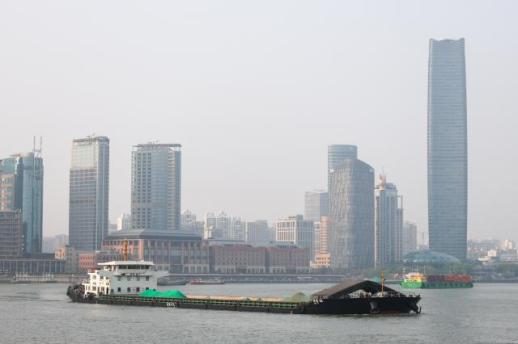 SCMP: South Koreans’ trips to China surge as visa rules ease and ties improve South Koreans are traveling to China in rapidly growing numbers, driven largely by looser visa rules and improving bilateral relations, a Hong Kong newspaper reported. The South China Morning Post reported on the 27th that the rise in visits by South Korean tourists and content creators has coincided with China’s eased visa policies and a steadier trend in South Korea-China ties. China has allowed South Koreans to stay visa-free for up to 30 days for tourism, business and family visits since 2024, the report said. The measure was extended in November last year, reducing what had been a major barrier for short trips. Geographic proximity and a calmer diplomatic climate have also supported more people-to-people exchanges. About 3.16 million South Koreans visited China last year, up 36.9% from the previous year. In January this year, more than 300,000 visited, a 48% increase from a year earlier. Destinations are also broadening beyond traditional choices, with Shanghai, Shenzhen in Guangdong province, Chengdu in Sichuan province and Zhangjiajie in Hunan province drawing attention, the report said. The increase has been especially notable among online content creators. They have highlighted China’s mobile payment systems, high-speed rail and relatively low prices, presenting scenes that differ from some existing perceptions. SCMP said creators have documented street food, advanced technology and large-scale infrastructure, while also comparing similarities and differences with South Korea. A YouTuber based in China was quoted as saying, “Since the visa waiver, visits to China by Korean creators have noticeably increased,” adding that China-related content is drawing strong interest on South Korean platforms. SCMP said the trend has also aligned with a period of more stable ties. It cited continued high-level exchanges, including President Lee Jae-myung’s visit to China in January, as helping create momentum for expanded economic and cultural cooperation. China has expanded visa-free entry policies since the COVID-19 pandemic to attract more foreign visitors. Seventy-nine countries are currently eligible for visa-free entry, including 50 granted the benefit unilaterally by China. According to China’s National Immigration Administration, 30.08 million people entered visa-free last year, accounting for 73.1% of all foreign arrivals. SCMP said the policy is not only boosting tourism but also producing a “soft power” effect by improving perceptions of China.* This article has been translated by AI. 2026-04-27 11:37:13
 -
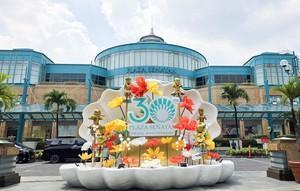 Jakarta’s Plaza Senayan Marks 30th Anniversary With Ceremony Plaza Senayan, a shopping mall in South Jakarta, has marked its 30th anniversary. SENAYAN TRIKARYA SEMPANA (STS), the mall operator and a unit of Kajima Development, Kajima Construction’s Southeast Asia development arm, held a ceremony on April 24. Plaza Senayan opened on April 26, 1996. The mall has one basement level and three floors above ground, with net leasable area of about 70,000 square meters. It has about 200 tenants and an occupancy rate of about 90%. It draws about 30,000 visitors on weekdays and about 40,000 to 50,000 on weekends. Japanese brands have been increasing in recent years. Kurasu, a coffee shop that started in Kyoto, opened on April 25. Kooma, which bills itself as a Japanese artisan bakery, opened its second Indonesia location in mid-April, and stretching studio Dr.stretch opened its first Indonesia location in December. Balcony by 6th, a restaurant from Azabudai Hills, is also scheduled to open in the mall within the year. A banquet hall is also planned for the fifth floor near the parking area, with an opening targeted for August. Capacity is 1,600 in theater style and 900 in dining style. Kajima Construction signed a 40-year build-operate-transfer contract in 1989 with the Indonesian government for the Senayan Square district, covering about 19 hectares. In addition to Plaza Senayan, STS has developed the five-star Fairmont Jakarta, four apartment towers and three office buildings. Under the agreement, Plaza Senayan will be operated for 40 years from its opening through 2036, after which ownership will be transferred to the Indonesian government at no cost. Ten years remain until that deadline.* This article has been translated by AI. 2026-04-27 11:36:41
 -
 Labor Ministry Official: Migrant Workers Must Not Face Discrimination or Safety Gaps Ryu Hyeon-cheol , head of the Occupational Safety and Health Headquarters at the Ministry of Employment and Labor, said on the 27th that migrant workers play key roles across shipbuilding, manufacturing, construction, and farming and livestock, but cases of human rights abuses and discrimination continue to recur. “No one should be discriminated against at work or face gaps in safety and health simply because of a different nationality,” Ryu said. Ryu made the remarks in Ulsan during a “Respect for Migrant Workers” campaign held with four labor rights foundations: the Public Mutual Growth Solidarity Fund, the Financial Industry Public Interest Foundation, the Office Finance Ubuntu Foundation, and the Jeon Tae-il Foundation. He said everyone should be recognized as a member of the workplace and be able to work safely and return home in good health. At the event, the ministry and the four foundations gave about 100 migrant workers at Ulsan-area workplaces safety helmets engraved with their names. It was the first campaign since the ministry and the foundations signed a memorandum of understanding on the 17th to improve migrant workers’ labor rights. Organizers said the effort is meant to encourage everyday practice of calling workers by their names instead of customary terms such as “hey” or “you,” and to stress the importance of wearing helmets to raise awareness of preventing industrial accidents. The ministry and the foundations plan to take the campaign nationwide, starting with Ulsan. Ryu called it meaningful to launch the campaign around Labor Day, which he said regained its name after 63 years, and said he hopes the practice spreads across industrial sites nationwide and helps build a society that respects labor.* This article has been translated by AI. 2026-04-27 11:36:00
 -
 Korea Financial Investment Association Launches Forum to Map Next Decade for Capital Markets The Korea Financial Investment Association has formed the K-Capital Markets Forum and begun talks on a mid- to long-term strategy to design the next decade for South Korea’s capital markets, looking beyond efforts to address the so-called Korea discount. The group said it aims to produce a roadmap that goes beyond policy suggestions and can lead to institutional reforms and legislation. The association held a launch ceremony for the forum on the 27th in Seoul’s Yeouido district and started full-scale discussions to draw up a 10-year blueprint. The forum’s stated goals are to craft a long-term growth strategy and derive a step-by-step implementation roadmap. Beginning in May, the forum will meet monthly to discuss key agendas including innovation-led growth and job creation; expanding access based on digital finance; retirement income security and long-term asset building; modernization of market infrastructure; stronger global competitiveness; and investor protection and market trust. The association said the framework targets both household wealth building and national economic growth. The forum has eight members: Hwang Seong-yeop, chairman of the Korea Financial Investment Association, who will serve as chair; Kim Se-wan, president of the Korea Capital Market Institute; Shin Je-yoon, chair of Samsung Electronics’ board of directors; Yoo Sang-ho, senior vice chairman of Korea Investment & Securities; Jeong Sang-gi, former vice chairman of Mirae Asset Global Investments; Jeong Sun-seop, a professor at Seoul National University School of Law; Choi Un-yeol, chairman of the Korean Institute of Certified Public Accountants; and Hong Seong-guk, former president of Daewoo Securities. The Korea Capital Market Institute will support the forum’s work. The association said a working-level consultative body, expert working groups and advisers — about 100 experts in total — will participate to reflect views from the field. The results will be compiled into a policy report after a year of intensive review and are to be submitted to the government and the National Assembly in the first half of 2027. Also attending the launch ceremony were forum members and representatives of the expert group, including Lee In-hyung, vice president of the Korea Capital Market Institute; Lee Hyo-seop, head of the financial industry office; Moon Seong-hoon, a professor at Hallym University; Seo Jeong-ho, managing attorney at The Wiz; Song Chang-young, managing attorney at Sehan; Oh Young-pyo, managing director at Shinyoung Securities; Yoon Seon-jung, a professor at Dongguk University; and Lee Jong-seop, a professor at Seoul National University. Hwang said, “In a rapidly changing economic environment, now that we have lifted the shadow of the Korea discount and shifted to a premium, this is the right time to prepare for a quantum jump.” He added, “Through the K-Capital Markets Forum, we plan to move forward step by step, with humility, toward the next 10 years for K-capital markets.” Kim said, “This forum will play an important role in raising trust in Korea’s capital markets and presenting a future strategy that benefits both investors and market participants.” * This article has been translated by AI. 2026-04-27 11:30:17