
Journalist

Seo Hye Seung
-
 Shinhan raises Hyosung TNC target price 42% on spandex market recovery Shinhan Investment Corp. on Sunday raised its target price for Hyosung TNC from 600,000 won to 850,000 won, a 42% increase, citing expectations for improving industry conditions. It kept its “buy” rating. Analyst Lee Jin-myeong said the higher target reflects an upward revision to 2026 earnings estimates, up 46%, as the upcycle gains momentum. He said the stock has surged 147% since the start of the year but remains undervalued compared with Huafon, the world’s No. 2 spandex maker. Shinhan said the spandex market has entered a clear upswing. As of April, China’s spandex operating rate rose to 86% from 80% at the end of last year, while inventory days fell to 22 from 39. Prices climbed to 29,000 yuan per ton from 23,000 yuan, which Shinhan said confirms improving supply-demand conditions. Hyosung TNC, the world’s top spandex producer, is expected to see the strongest profit leverage as conditions improve, supported by pricing power and cost competitiveness, Shinhan said. It estimated 2026 operating profit at 596.3 billion won, up 137% from a year earlier. First-quarter results also beat market expectations. Operating profit came to 86.2 billion won, up 93% from the previous quarter and above the consensus estimate of 80.7 billion won. The spandex/PTMG segment posted 77.3 billion won in operating profit, up 60%, leading the gain. Sales volume rose 2% despite the Lunar New Year holiday, helped by steady demand and inventory building, while profitability improved as spandex prices rose more than raw material costs. Shinhan said the improvement is likely to continue in the second quarter, forecasting operating profit of 138.7 billion won, up 61%, with room for another upside surprise. It cited entry into the peak season, expanding inventory demand and a widening increase in spandex prices. * This article has been translated by AI. 2026-04-27 08:52:52
 -
 Trump Describes Shooting Near White House Correspondents’ Dinner, Says He Wasn’t Worried President Donald Trump described what he said happened during a shooting in a security zone near the White House Correspondents’ Association dinner, saying he was not worried even as Secret Service agents moved him and first lady Melania Trump to safety. He said the event should be held again and should not be derailed by “one crazy person.” In an interview with CBS on Saturday, Trump discussed the shooting linked to the dinner held the previous night at the Washington Hilton hotel. “I wasn’t worried,” he said, adding, “We live in a crazy world.” More than 2,500 people attended, including Trump, the first lady, Vice President JD Vance, Cabinet members and journalists. After gunfire was heard, Trump was surrounded by Secret Service agents and evacuated. Trump said the evacuation was delayed in part because he wanted to understand what was happening. “I wanted to see what was going on,” he said, adding that he told agents to wait and assess the situation. “I didn’t make it easy for the security guys to move,” he said. He said agents ordered him to get on the floor. “I was almost walking out standing up,” Trump said. “But the security guys said, ‘Get down on the floor,’ so the first lady and I got down on the floor.” He said that instruction signaled the situation was serious. “I’m the president, and I did what they told me,” he said. Trump said the first lady “was very strong,” but looked shaken in video he later reviewed. “Why wouldn’t she be?” he said. Trump said he had been through similar incidents before, but she had not to the same extent. He said she understood what was happening and followed instructions. Trump said he did not know whether the suspect had targeted him. He referred to what he described as a statement-like writing the suspect reportedly sent to family, saying it suggested the suspect had fallen into extremist thinking. In an interview with Fox News, Trump called the suspect “a very troubled person.” He rejected claims of a security failure. Trump said the suspect broke through the security zone at high speed, but said agents responded professionally and subdued the person immediately. “You can find flaws in any security situation,” he said, adding that agents “did a good job” that night. Asked whether the shooting could change his relationship with the media, Trump kept his distance. He said that after the incident, a White House briefing “looked like the room was completely united,” calling it “beautiful in a way.” But he said, “We disagree on many topics.” Trump repeated his criticism of the press, saying the media and Democrats are “almost one and the same.” He added that there are “great people” in the media, including fair reporters and others who are friendly to him. Trump again said the correspondents’ dinner should be held again. “One crazy person shouldn’t be allowed to cancel an event like this,” he said, adding that it should be held again within 30 days. He said it would be fine with more security and a wider perimeter.* This article has been translated by AI. 2026-04-27 08:52:06
 -
 NH Investment Raises Hyosung Heavy Industries Target on North America Growth NH Investment & Securities kept its “buy” rating on Hyosung Heavy Industries and raised its target price 25% to 4.5 million won from 3.6 million won, citing expanding North America orders, a medium- to long-term supply shortage and clearer earnings visibility from capacity expansion. Analyst Lee Min-jae said Hyosung Heavy Industries posted 4.2 trillion won in new orders in its heavy industries division in the first quarter, showing it has entered a business environment comparable to global peers. He added that a 2028 price-to-earnings ratio of about 26 times remains attractive given expected EPS growth. NH said the higher target reflects the value of the Changwon HVDC business and a third plant in Memphis scheduled to begin operations in 2028, as well as a higher EV/EBITDA multiple of 25 times, up from 24 times, following gains in global peers’ share prices. First-quarter results fell short of expectations due to temporary factors. On a consolidated basis, revenue rose 26% from a year earlier to 1.4 trillion won, and operating profit increased 48% to 152.3 billion won, but both missed the consensus forecast. NH attributed the shortfall to about 40 billion won in deferred profit after late-quarter shipments to North America were recorded as in-transit inventory. The shipments are expected to be reflected in second-quarter results. Order momentum remained solid. New orders in the heavy industries division totaled 4.2 trillion won in the first quarter, and the order backlog expanded to 15.1 trillion won. North America accounted for 77% of new orders and 53% of the backlog, rising quickly as the company benefits from increased investment in power infrastructure, NH said. Lee said delivery dates for projects in North America and Norway have been confirmed for 2031 and 2032, respectively, indicating a prolonged supply shortage. He said Hyosung Heavy Industries has also demonstrated it can command a high valuation within the global power infrastructure sector. * This article has been translated by AI. 2026-04-27 08:48:49
 -
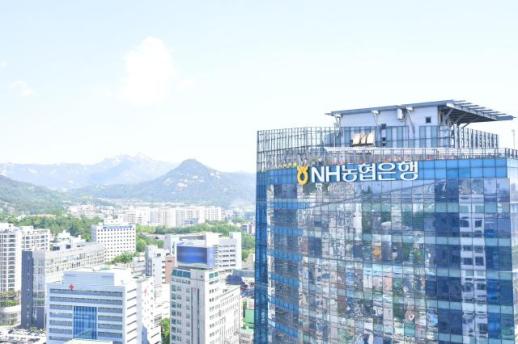 NH NongHyup Bank Launches No-Branch Loans for Successor Farmer Development Funds NH NongHyup Bank said Sunday it has been fully rolling out a no-branch loan service for its Successor Farmer Development Fund since April 24, allowing customers to complete the process without visiting a branch. The fund is a government policy loan designed to foster future agricultural workers and help farmers settle stably. Loans are offered at an annual interest rate of 1.5% for up to 25 years, the bank said. Under the new service, applicants can use the bank’s All One Bank mobile app to handle the entire process from application to disbursement. Document submission and contract signing are also completed electronically. The bank said the move is aimed at improving access to financial services for farmers during the busy farming season. It said it was the first in the financial industry to introduce a non-face-to-face online registration system for farmland collateral and to apply a feature that exempts purchases of National Housing Bonds when taking out farming-related loans. The bank expects up to 20,000 farmers a year to benefit. “The Successor Farmer Development Fund is a key policy loan that supports young farmers’ settlement and growth,” NH NongHyup Bank CEO Kang Tae-young said. “We will expand non-face-to-face lending to improve convenience for farmers.” 2026-04-27 08:48:19
 -
 Nexen Tire to Supply OE Tires for 2026 Jeep Cherokee in North America Nexen Tire said Sunday it will supply original equipment tires for the North American launch of the 2026 Jeep Cherokee SUV, a Stellantis brand. The 2026 Cherokee is the brand’s first vehicle to feature a full hybrid system and can travel more than 500 miles (about 800 kilometers) on a single tank of fuel, the company said. The model will be fitted with Nexen’s Roadian GTX, which the company said is designed to balance braking, snow traction and wear performance with low noise and ride comfort. Nexen said the tire maintains stable braking in both summer heat and winter cold, and uses an optimized zigzag tread pattern to spread road pressure and reduce sudden pull for steadier driving. Nexen said the Roadian GTX has also been selected as an OE tire for vehicles including Kia’s EV5 and EV6 and Renault’s Filante, citing those fitments as evidence of its quality and performance for electric and hybrid models. The company said it has expanded cooperation with Stellantis, including Jeep, based on ongoing research and development and quality competitiveness. A Nexen Tire official said supplying OE tires for Jeep’s first hybrid SUV in North America “once again proves our competitiveness in the future mobility market.”* This article has been translated by AI. 2026-04-27 08:47:05
 -
 South Korea Begins Paying High Fuel Price Relief Grants of Up to 600,000 Won High fuel price relief grants began being paid at 9 a.m. April 27 to basic livelihood recipients, the near-poor and single-parent families. According to the Ministry of the Interior and Safety on April 27, basic livelihood recipients will receive 550,000 won per person. The near-poor and single-parent families will receive 450,000 won per person. Residents outside the Seoul metropolitan area and in depopulation areas will receive an additional 50,000 won per person, for a maximum of 600,000 won. To ease crowding during the first week of applications, both online and in-person applications will follow a day-of-week system based on the last digit of an applicant’s birth year. On April 27, applicants whose birth year ends in 1 or 6 may apply; April 28, 2 or 7; April 29, 3 or 8; and April 30, 4 or 9 and 5 or 0. With May 1, Labor Day, designated a public holiday, applicants with last digits 4 or 9 and 5 or 0 may both apply on April 30. The application deadline is 6 p.m. May 8, with applications accepted for two weeks through online and offline channels. Depending on the region, the day-of-week system may be extended for in-person applications. The grants will be provided as credit or debit card top-ups, prepaid cards, or local gift certificates. Card top-ups will be loaded the day after applying and will be used before other payment methods when making purchases. Mobile or card-type local gift certificates can be requested through the app or website of the local government with jurisdiction over the applicant’s address. Those seeking paper certificates or prepaid cards must apply in person at an 읍면동 administrative welfare center or resident service center. Eligible vulnerable recipients who miss the first application period may apply again during the second round, from May 18 to July 3. The general public may also apply during the second round. Payments are 100,000 won in the Seoul metropolitan area, 150,000 won outside the metropolitan area, 200,000 won in preferred depopulation areas, and up to 250,000 won in special depopulation areas. As in last year, the grants can be used at small businesses with annual sales of 3 billion won or less, including traditional markets, neighborhood supermarkets, restaurants and clothing stores. They cannot be used at department stores, large discount chains, corporate-run supermarkets, e-commerce sites or major-company delivery apps. However, they can be used through public delivery apps such as “Ttaenggyeoyo.” For restaurant franchises, use is limited to franchisee-run locations, not company-owned stores. The government plans to provide information on where the grants can be used through private map apps starting at the end of this month. The grants can be used through Aug. 31, and any unused balance will expire automatically. People who dispute their eligibility determination or payment amount may file objections from May 18 to July 17, either online through the National Petition Center or in person at 읍면동 administrative welfare centers and other local offices. Local governments will review submitted cases and notify applicants individually. For inquiries, tailored assistance is available through the government civil service call center, a dedicated call center, and call centers operated by each local government. 2026-04-27 08:46:03
 -
 Modetour Named Honorary Tourism Ambassador for Chenzhou, China Modetour has been appointed an honorary tourism ambassador for Chenzhou, a city in China’s Hunan province, and said it will use the role to strengthen its travel products through closer cooperation with local state-owned companies. The company said Sunday that it met with officials from Chenzhou’s culture and tourism authorities and the city government from April 22-24 to discuss ways to expand tourism exchanges. At a ceremony on April 23, Modetour was formally appointed and signed a strategic cooperation agreement with the Chenzhou Culture Investment Tourism Group, a leading local state-owned enterprise that operates major attractions including Mangshan and Bichon Mountain. Attendees included Lee Woo-yeon, head of product planning at Modetour; Song Heon-taek, head of the company’s China business division; and Li Hui, director of Chenzhou’s culture and media bureau. Modetour said site inspections helped it secure preferential access to local tourism facilities and set directions for developing products linking key attractions. Interest among South Korean travelers has also risen sharply, the company said. Modetour’s figures show April bookings for Chenzhou package tours jumped 470% from the same period last year, the fastest growth among China destinations. Modetour said it has upgraded its flagship product, the “Chenzhou 5 Days,” by combining Korean Air flights with high-speed rail to cut travel time. The itinerary includes five-star hotels throughout and is sold as no-tipping, no-optional-tours and no-shopping. Stops include the Mangshan scenic area, Xiaodongjiang, Gaoyiling and Dusol Cave, described by the company as the world’s only lake island cave formed 300 million years ago. “Chenzhou’s outstanding natural and cultural tourism resources can now be introduced in earnest to travelers in Korea,” Lee said. “Through close cooperation with local partners, we will improve product quality and help create new demand in the China travel market.” 2026-04-27 08:45:17
 -
 Chef Jeong Ji-seon Questions Son’s Stock Trading and Monthly Spending Chef Jeong Ji-seon voiced concern about her son’s stock trading. On the April 26 broadcast of KBS 2TV’s “Boss in the Mirror,” Jeong was shown visiting Pohang with her son. Jeong asked whether he was still trading stocks, saying he had long enjoyed “playing with numbers” and seemed genuinely interested. She asked why he started investing. When Jeong pressed him on where his earnings had gone and warned that doing well in school was important to investing, her son said the money was in his own account and that he had made about 200,000 won so far. Asked if he understood the importance of money, he said he spends about 200,000 to 300,000 won a month, startling Jeong. Jeong pointed out that he is in sixth grade and receives 50,000 won a month in allowance, calling his spending excessive. Her son replied he did not know where the money was going. Jeong shot back that 300,000 won a month was too much for an elementary school student and told him to stop talking back. In an interview segment, Jeong said her son had grown up and was trying not to lose arguments, adding that she was also trying to “win.” Her son said he believed he needed to spend 200,000 won a month, claiming his friends spend more and citing rising prices and unexpected expenses. “I’m not just wasting it,” he said. Jeong ended the exchange by asking whether she should add more private academies and telling him to be more frugal.* This article has been translated by AI. 2026-04-27 08:42:16
 -
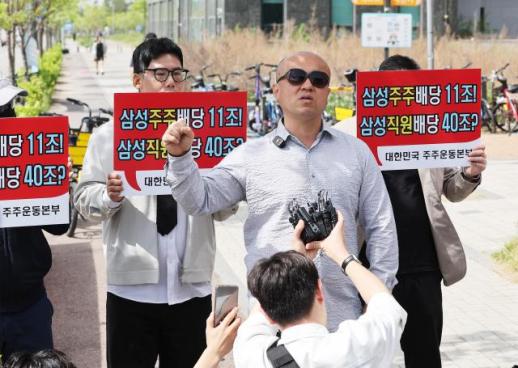 Korea’s Q1 Growth Masks Deeper Risk as Potential Growth Slips to 1% Range South Korea’s economy posted faster-than-expected growth in the first quarter. Major investment banks have raised their full-year forecasts, and the government has pointed to policy effects in a more upbeat assessment. On the surface, it looks like a recovery signal. But the picture is less reassuring on closer review. The gain may largely reflect base effects and external factors such as a semiconductor boom and the exchange rate, suggesting a temporary rebound. A more fundamental concern is that South Korea’s potential growth rate — a measure of the economy’s underlying capacity — has fallen to the mid-1% range. Potential growth is the maximum pace an economy can sustain by mobilizing labor, capital and productivity without stoking inflation. A lower figure signals weaker foundations, meaning even strong headline growth may not last. Major institutions have broadly pointed to the same drivers behind the decline. With a shrinking and aging population, labor supply is falling. Investment capacity is also weakening, and productivity gains have not met expectations. As these pillars erode at the same time, the current upswing looks more dependent on favorable conditions than on improved resilience. The semiconductor upturn has helped obscure those weaknesses. Exports led by SK hynix and Samsung Electronics have lifted overall growth, underscoring competitiveness in a key industry. But heavier reliance on a single sector also increases vulnerability. If the chip cycle turns, overall growth could drop sharply. In such conditions, tensions across the economy tend to rise. As the growth base weakens, conflicts over profits surface more easily. Recent labor-management disputes and shareholder clashes involving Samsung Electronics should not be seen only as isolated incidents. In high-growth periods, such frictions are more readily absorbed; in a low-growth environment, they can intensify — another sign of weakening economic stamina. The policy direction, the article argues, is clear: focus on lifting potential growth. Demographic trends are hard to reverse quickly, so the emphasis should be on capital formation and productivity. That includes developing new growth engines and accelerating technological innovation, with particular attention to building an advanced-industry ecosystem centered on artificial intelligence. A balanced view is needed, however. Semiconductors are not merely an “illusion”; they are core infrastructure for the AI era. The problem is not the chip industry itself but a growth model overly dependent on its cycle. The growth base should be broadened across advanced industries, including semiconductors. Reform of the service sector also cannot be delayed, the article says. With domestic demand constrained by population decline, services should shift toward exports. Health care, tourism, content and education are cited as areas that can compete globally, helping offset weaker demand at home. Execution remains the obstacle. Regulatory reform and industrial upgrades have long been discussed but delayed by conflicts of interest and political costs. The article calls for institutional mechanisms to break the logjam, such as a standing consultative body to coordinate stakeholders and approaches that bundle regulatory changes to spread political risk. Declarations alone, it argues, will not deliver change. The first-quarter result is a welcome signal, but it should not obscure the underlying issue. What matters is not the headline number but the economy’s capacity. As long as potential growth remains in the 1% range, South Korea’s economy will be prone to large swings from even small shocks, the article says. Growth is an outcome; potential growth is a cause. Without addressing the cause, the outcome will not last, it concludes.* This article has been translated by AI. 2026-04-27 08:39:20
 -
 Suspected North Korea-Linked Hack Exposes 100,000 Golf Club Records, Prompting Cybersecurity Review Police have opened an investigation after about 100,000 customer records were leaked from a golf course in Gapyeong, Gyeonggi province. The data reportedly included sensitive information such as names, dates of birth, gender, user IDs, passwords, phone numbers, email addresses and home addresses. Investigators are considering the possibility that a North Korean hacking group was involved. Authorities should not treat it as a routine private-sector breach; it should be seen as a warning for national security, public safety and industrial competitiveness. Golf courses are often used by influential figures, corporate executives, public officials and professionals. When membership details are combined with entry logs, payment information and personal networks, the result can become targeting intelligence, not just personal data. Such material could help track who met whom and when, and even infer daily patterns. If a state-backed hacking group obtained it, the goal could extend beyond financial theft to intelligence gathering, blackmail, network mapping and a foothold for further intrusions. North Korea has long been identified as one of the most persistent cyber threats. Its tactics have grown more sophisticated, including cryptocurrency theft, attempts to penetrate the defense, diplomacy and security sectors, malicious email campaigns and supply-chain hacking. For North Korea, cyberattacks are a low-cost, high-impact tool to offset conventional military disadvantages, capable of disrupting national functions without firing a shot. A key problem is that South Korea’s response remains focused on cleanup after incidents occur. After major leaks, companies typically say they are “investigating,” and authorities form joint teams only later. Victims are left to change passwords and protect themselves. If post-incident responses and blame-shifting continue to outweigh prevention and early blocking, hackers will keep viewing South Korea as an easy target. A comprehensive national review is needed. First, security standards for personal data at heavily used private facilities and membership-based businesses should be strengthened substantially. Golf courses, resorts, hospitals, private academies and platform companies that hold large volumes of personal data should be required to build security systems appropriate to their size and sector. Second, reporting times for intrusions should be sharply shortened, with strong penalties for concealment; delayed disclosure increases secondary harm. Third, real-time coordination should be improved among the National Intelligence Service, police, the Ministry of Science and ICT and the Korea Internet & Security Agency. Fourth, regular public-private drills should be institutionalized to prepare for threats linked to North Korea. Companies also need to change how they view security. It is not merely a cost but an investment in survival. Hiring one more security specialist can matter more than adding another server. Management that prioritizes outward growth while pushing information protection down the list will eventually pay a higher price. The starting point should be recognizing that personal data is not a corporate asset but a public right. Cyber conflict is already underway, and the battlefield is not a border but server rooms, smartphones, corporate networks and everyday data. A leak of 100,000 records is not just a number; it reflects the size of a hole in society’s defenses. Government and business should not dismiss this as another hacking case but redesign national cybersecurity from the ground up. Without action now, the next breach may not stop at 100,000. 2026-04-27 08:36:18