
Journalist

Seo Hye Seung
-
 Yoon Ina ties for fourth at Chevron Championship; Nelly Korda wins Yoon Ina tied for fourth at the Chevron Championship, the LPGA Tour’s first major of the season with a $9 million purse. Playing the final round Sunday (Korea time) at Memorial Park Golf Course in Houston, Texas, Yoon shot a 4-under 68 with seven birdies and three bogeys. She finished at 12-under 276, sharing fourth place with Liu Yan of China, and earned $429,922 (about 635 million won). Yoon, who debuted on the LPGA Tour last year, struggled early, posting just one top-10 finish in 26 starts. This season, she has moved up the leaderboard. She tied for sixth at last month’s Ford Championship, her best finish since joining the tour, then placed fourth at the JM Eagle LA Championship that ended on April 20. With another fourth-place finish at the Chevron Championship, she has posted top-five results in consecutive weeks. It was also her best finish in a major. Her previous best was a tie for 14th at last year’s U.S. Women’s Open. The title went to world No. 2 Nelly Korda of the United States. Korda won at 18-under 270, beating Yin Ruoning of China and Thailand’s Patty Tavatanakit, who tied for second at 13-under 275, by five shots. She earned $1.35 million (2 billion won) in prize money. It was Korda’s 17th career LPGA win, her second of the season and her third major title. She also won this event in 2024. World No. 3 Kim Hyo-joo finished sixth at 7-under 281. Yoo Hae-ran and Hwang Yoo-min tied for 12th at 4-under 284. Choi Hye-jin and Lim Jin-hee tied for 21st at 3-under 285, and Lee So-mi tied for 34th at 1-under 287. Defending champion Mao Saigo of Japan tied for 59th at 4-over 292.* This article has been translated by AI. 2026-04-27 08:12:17
 -
 Ulsan Factories Turn to AI-Driven Autonomous Manufacturing as Workers Decline South Korea’s manufacturing sector is accelerating a shift in how it produces goods as it faces structural pressures from a shrinking and aging workforce. In Ulsan, the shipbuilding and petrochemical industries are pursuing artificial intelligence transformation, or AX, to address different challenges, driving broader change across industrial complexes. As of April 26, industry officials said the Ulsan Mipo National Industrial Complex is expanding AX adoption to respond to labor shortages and to reduce safety and process risks. In shipbuilding at Ulsan Mipo, the central issue is gaps on the production floor. The share of manufacturing workers fell to a record low of 15.2% last year, and the number of people employed in the sector has declined for three straight years. With the share of workers age 55 and older rising quickly, the industry expects a major outflow of core skilled labor within the next five to 10 years. Because shipbuilding processes have long relied on veteran know-how, companies worry the shift could directly hurt productivity and widen quality variation. In response, shipyards are increasingly adopting “autonomous manufacturing,” using process data to predict quality and automatically control equipment settings. The goal goes beyond basic automation, moving toward systems in which AI analyzes operating conditions and supports decision-making, reducing dependence on scarce labor. On-site efforts are focusing on expanding process optimization and automatic control based on equipment operating data. Manufacturing AI solution providers are also increasing deployments. Miracom I&C said its MES-based “Nexplant MESplus” integrates manufacturing data and enables AI to analyze and make judgments on factory operations. LS TiraYutek has proposed an integrated operating model that links workers, equipment and robots through AI to raise the level of unmanned operations. In petrochemicals, where safety is the top priority, work is underway to standardize process data and build AI-based analytics under the “AX demonstration industrial complex construction project.” Demonstrations are being pursued for 12 AI services across process, equipment and safety at an Ulsan pilot plant that concentrates refining and petrochemical operations, with the aim of expanding to companies including KPX Chemical. A key technology is MIQube Solution’s “digital twin modeler.” It organizes plant equipment data based on the international AAS standard, allowing AI to recognize the information and recreate the factory in a virtual space. The approach can simulate process abnormalities in advance and derive optimal operating conditions. A “safety AI agent” combining a large language model with retrieval-augmented generation, or RAG, is also set to be introduced. If a worker asks, “What are the risk factors under the current pressure conditions?” the AI would provide real-time guidance based on manuals and accident data. The technologies are expected to shift into cloud-based software-as-a-service offerings and spread to small and midsize manufacturers. The government is also supporting broader AX adoption through measures including GPU infrastructure support and the creation of manufacturing AI centers.* This article has been translated by AI. 2026-04-27 08:00:17
 -
 Magnitude 6.1 earthquake strikes southeast of Hokkaido; no tsunami threat reported A magnitude 6.1 earthquake struck about 143 kilometers south-southeast of Asahikawa in Japan’s Hokkaido at about 5:24 a.m. on the 27th. According to Yonhap News Agency and the Korea Meteorological Administration, the epicenter was at 42.60 degrees north latitude and 143.10 degrees east longitude, at a depth of 80 kilometers. In Urahoro, Tokachi District, in southeastern Hokkaido, the quake registered a strong 5 on Japan’s seismic intensity scale. A strong 5 means most people have difficulty moving, and unsecured furniture may topple. NHK and Kyodo News reported there was no concern about a tsunami.* This article has been translated by AI. 2026-04-27 07:52:05
 -
 Tutor Accused in Alleged Molestation of 13-Year-Old Posts Blog Denial, Sparking Backlash A case involving a 13-year-old who was allegedly sexually abused by a private tutor in his 20s has drawn renewed controversy after the man identified as the home-camera tutoring suspect posted a rebuttal online. On April 24, a post titled “I am home-cam tutor Park (surname withheld)” appeared on a Naver blog. Park wrote that he had tried to respond only through the courts, but said the level of private retaliation had escalated. He claimed that staying silent in the face of what he called one-sided falsehoods and criticism was harming him, his family and acquaintances, and the reputation of his school. He also said he recently learned the victim’s mother had opened a personal donation account. Park alleged that “false information” was being used to solicit money and said that was why he was writing the post himself. Park said the mother’s public claims were “full of falsehoods,” and denied the sexual assault allegations. He asserted that, contrary to the victim’s account, there was not forced molestation but “physical contact by mutual consent.” He also claimed home-camera footage had been edited and spread in a way that led to misinterpretations. Park further alleged the victim’s family had previously attempted financial settlements in a similar way, and again pointed to the opening of a donation account after the incident. He said online posts and some media coverage had led to excessive criticism, doxxing and other secondary harm. Park claimed that personal information and addresses for his family were exposed, and that his girlfriend and her family were also identified, leading to stalking. He also alleged he was followed and threatened by broadcasting staff, was fired from a part-time job, and that his parents’ store was being attacked. Park said he had avoided responding out of concern it could affect the trial, but said it had become difficult to endure. The blog post reflects only Park’s claims and has not been confirmed by investigators or the courts. The facts of the case require separate verification through publicly disclosed evidence and trial outcomes. The post triggered heated debate in the blog’s comments. As of 7 a.m. on April 27, it had 334 likes and 286 comments. Some commenters said the information released by the victim’s side alone made it hard to understand the full context and urged caution, noting that only parts of the home-camera video had been made public. Others said video evidence and a first-trial ruling already exist, arguing Park’s claims were unconvincing. They also said that in a case involving a minor, describing the conduct as “consensual” was itself inappropriate, and warned that criticizing the victim’s side could amount to secondary victimization. 2026-04-27 07:51:18
 -
 Foreign and Institutional Investors Turn Net Buyers in Kospi; Retail Investors Post Record 14.7 Trillion Won Net Selling ◆Aju Economy Top News ▷Foreign and institutional investors reverse from net selling to net buying; retail investors post record 14.7 trillion won net selling -Over the past month, Kospi fund flows flipped, with foreign investors shifting from net sellers to net buyers. -Retail investors, meanwhile, have logged about 14.7 trillion won in net selling so far this month, the largest on record. -Foreign and institutional investors have focused their buying on heavyweight semiconductor shares such as Samsung Electronics and SK hynix, with net purchases topping 2.5 trillion won and 6.9 trillion won, respectively. -The move contrasts with last month’s sharp sell-off, when retail investors bought heavily; in the current upswing, they appear to be taking profits mainly in semiconductor stocks. -Some in the market expect the Kospi’s uptrend could extend further as expectations build for an improving semiconductor cycle and upward earnings revisions. ◆Key Reports ▷Mirae Asset Securities: “OCI Holdings target price raised on expectations for SpaceX cooperation” -Mirae Asset Securities raised its target price for OCI Holdings to 400,000 won from 270,000 won, citing expectations of a partnership with SpaceX and higher earnings estimates. It maintained a “buy” rating. -The firm said rising U.S. power demand could lift the value of generation assets and power purchase agreement prices, supporting both a higher sale price for OCI Energy assets and improved core earnings. -It also viewed the company’s polysilicon capacity expansion plan as a sign that cooperation with SpaceX is progressing, and cited strengths including low production costs and room to expand amid demand for non-China supply chains. -While results fell short of expectations in the near term, the firm said improvement should continue over the medium to long term on expansion and demand growth, keeping the stock as its top pick in the sector. ◆Major disclosures after the close (24th) ▷Erem decides on a 11 billion won rights offering ▷Hyosung Heavy Industries posts 152.3 billion won in first-quarter operating profit, up 48.8% from a year earlier ▷Dmoa decides on a 19 billion won rights offering ▷Woori Financial Group: “Additional acquisition of Woori Investment & Securities shares worth 1 trillion won” ◆Fund flows (as of the 23rd, excluding ETFs) Domestic equity funds: 63.5 billion won Overseas equity funds: 15.0 billion won ◆Today’s (Mon) key schedule China: Industrial profits (March); Standing Committee meeting of the National People’s Congress United States: 2-year Treasury auction; 5-year Treasury auction * This article has been translated by AI. 2026-04-27 07:27:17
 -
 Iran Foreign Minister Returns to Pakistan, Says He Delivered Specific Terms Iranian Foreign Minister Abbas Araghchi returned to Pakistan’s capital, Islamabad, on April 26, Iranian state media reported, a day after he left for Oman. According to Iran’s state-run IRNA news agency and Yonhap News Agency, Araghchi met with Sultan Haitham bin Tariq Al Said in Oman and then headed straight back to Islamabad. Back in Pakistan after one day, Araghchi met with Army Chief Gen. Asim Munir, among others. Tasnim news agency said Araghchi “delivered specific terms” for ceasefire talks. Since April 24, Araghchi has been traveling to Pakistan, Oman and Russia. Expectations rose that a second round of ceasefire talks with the United States would move forward after Araghchi arrived in Pakistan, which is acting as a mediator. But after meeting Munir and other key figures in Pakistan and conveying Iran’s views and demands on a ceasefire, Araghchi left for Oman on April 25, making it difficult to predict whether the talks with the United States would continue. 2026-04-27 06:05:47
 -
 Korea SME Agency Highlights Budget-Friendly Diet Foods at April Shopping Festival Rising prices and a weaker won have made diet-friendly meal planning more expensive for many consumers. The Korea SMEs and Startups Distribution Corp. said it is spotlighting lower-priced diet and low-sugar foods during the “April Companion Festival.” The agency, known as KODC, said Saturday the event is intended to go beyond simple discounts by giving consumers a chance to manage household spending while supporting small businesses. Among the featured products is “Dubunola” from Bijiterian. It replaces the oats typically used in granola with okara made from domestically produced soybeans, aiming to boost protein and dietary fiber. The company said one bag contains protein equivalent to three eggs and dietary fiber equivalent to six apples. Ingredients include coconut oil, peanut butter, maple syrup and honey, along with unrefined sugar, it said. Sorang introduced its “low-sugar mini pound cake,” designed for consumers who like desserts but want to avoid flour. The company said it uses almonds and grain flour instead of wheat flour and contains no sugar. It comes in eight flavors: fig, mugwort, chocolate, sesame-peanut, carrot, sorghum-chickpea, pea-black sesame and lemon-Earl Grey. Localow’s “Hottab all-purpose low-sugar gochujang” targets consumers seeking a lower-sugar alternative to traditional red pepper paste, which is typically made with grain syrup or corn syrup and contains natural sugars from peppers. The company said it replaced those sweeteners with allulose and added garlic flavor, cutting sugars by 8% compared with conventional gochujang. It said all ingredients are domestically sourced, including a fiber-rich fermented wheat ingredient from the Honam region and garlic harvested in a clean environment on Jeju Island. Sseobol Lab is offering “Diet Fairy unsweetened Greek yogurt,” made after removing 100% of whey, the company said. It said the product uses domestically produced Grade 1 milk and Danish lactic acid bacteria, with a mild, clean taste and thick texture. The yogurt is unsweetened and contains no sweeteners or stabilizers, it said, and is produced at a HACCP-certified facility under a same-day production and shipping policy. A version with 50% of whey removed is also available, it said. Hosted by the Ministry of SMEs and Startups and organized by KODC, the April Companion Festival runs through May 10 with about 33,000 small and midsize companies and small merchants participating, along with more than 200 domestic online and offline retail channels, KODC said. KODC said promotions include discounts of up to 70% on popular items such as food, household goods and fashion across more than 90 online shopping platforms, including Kakao, Musinsa and Coupang. Offline, consumers can try products at special sales events in department stores and big-box retailers and buy items at discounts of up to 90%, it said. A KODC official said the agency is also offering practical benefits to encourage participation during the event period, adding that plans include expanding discount limits for digital Onnuri gift certificates. 2026-04-27 06:04:48
 -
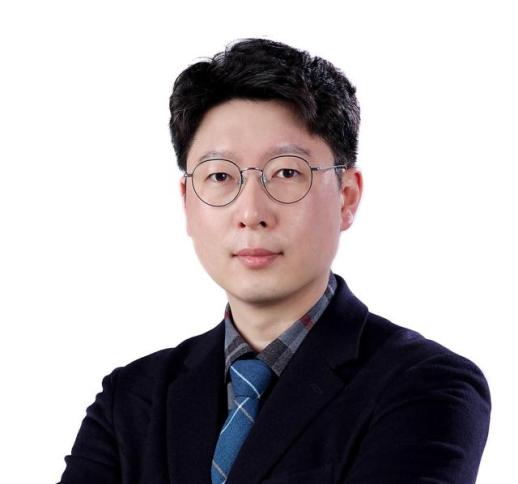 Commentary: Defining the Problem Determines the Market for AI People often say, “We have the technology, but there’s no market.” That is wrong. The market is not absent; it is unseen — because the problem has not been defined. South Korea has learned to run fast on roads others built — in semiconductors, displays and batteries. It has less often created the road itself. Artificial intelligence is a roadless technology: It can detect tiny factory defects, hidden bottlenecks in logistics routes, or whether an older adult living alone took medication — areas that were hard to see and therefore rarely treated as “problems.” When AI makes them measurable, they become problems, and once they are problems, markets open. I recently met the CEO of an AI company in manufacturing. The firm proved its technology through a government project and had a model ready for the shop floor. The obstacle came next: finding factories that needed it and explaining its value in the language of the workplace — tasks it could not do alone. This is not unique. Many AI firms stall at the market’s doorstep. That is a bottleneck for South Korea’s AI industry. Policy now needs to shift from funding technology to defining problems. Economist Mariana Mazzucato called this “mission-oriented innovation policy.” “We will foster AI” is different from “We will cut emergency response time for older adults living alone by half.” The first attaches money to technology; the second attaches technology to a problem. The logic is similar to the U.S. Defense Advanced Research Projects Agency using a single autonomous-driving race to spur an industry, or the European Union aligning technology and capital under the Green Deal. The clearer the problem, the easier it is for technology to find its destination, for companies to forecast returns, and for money to move. Two steps are needed. First, set numeric targets and concentrate support on companies that can deliver. Policy should start with challenges drawn from the field — defects in semiconductor back-end processes, farmland yields, emergency response for older adults. Demand should go to the few with the capacity to solve the problem. Spread support evenly and no one grows big. Second, once companies are selected, support must be sustained. Until now, assistance has been fragmented by project and by year, failing to back growth. Computing resources, data, real-world testing, financing and overseas expansion should be linked, with support scaled up when results appear. Some countries are already producing results this way. France, through French Tech Next40/120, selects 120 scale-up companies each year for full national support and links that effort to deep-tech development through French Tech 2030. Singapore’s Enterprise SG Scale-Up has 집중 supported more than 80 companies and generated S$2.5 billion in new revenue in three years. Israel, under a national AI program, has built a dedicated supercomputer, while its Innovation Authority directly supports companies with research foundations and funding. The methods differ, but the common point is clear: pick companies that can win and back them to the end. South Korea faces the same task. To carry this approach into the field, it needs a small- and medium-sized enterprise-focused institution with both the ability to select firms and the policy tools to support them at each stage. In the end, how precisely a problem is defined determines the size of the market. Technology flows in proportion to that size, and industry grows with it.* This article has been translated by AI. 2026-04-27 06:03:55
 -
 National Nakdong River Biological Resources Institute Opens Applications for Teaching Kit Loans, Online Classes The National Nakdong River Biological Resources Institute said on the 27th it is accepting applications from schools and other educational institutions for its “teaching kit loan service” and its “online bio-environment classroom.” The program, which begins that day, is designed to expand hands-on learning by distributing teaching kits and content developed by the institute for use in classrooms and other learning sites. The teaching kit loan service provides free loans of seven types of kits focused on biodiversity and climate change for use in educational settings. The online bio-environment classroom is an integrated online-offline course that combines video content with hands-on activity packages. Applications open that day through the institute’s website reservation system. Registration for the online bio-environment classroom runs through the 31st of next month, with up to 2,000 participants accepted on a first-come, first-served basis for each program; applications will close once capacity is reached. “Through the teaching kits developed by the National Nakdong River Biological Resources Institute, children and teenagers will be able to understand the value and importance of biodiversity in an easy and engaging way,” said Yeo Jin-dong, head of the institute’s Exhibition and Education Division. He added that the institute will continue to expand educational content that can be used in schools and other learning environments.* This article has been translated by AI. 2026-04-27 06:03:06
 -
 South Korea Weighs How to Use Expected Tax Windfall: Debt Paydown, Extra Budget or Reserves South Korea is again expected to post a large tax revenue surplus this year, and the government is weighing how to use it. Options under discussion include early repayment of government bonds, drafting a supplementary budget, or setting the money aside in a fund. Some analysts say the decision should hinge on what is driving the extra revenue. The choice is complicated by competing goals: restoring fiscal soundness while also responding to economic conditions. How policymakers proceed could depend on whether the revenue increase is structural or a temporary swing in the business cycle. ◆ “Use the surplus to cut debt first”: Fiscal discipline argument One view is that the surplus should be used to repay government bonds early to strengthen fiscal health, after national debt rose during the COVID-19 response. Supporters say paying down debt while revenue is strong would preserve medium- to long-term fiscal capacity and improve the government’s ability to respond if another crisis hits. Early repayment could also signal to international credit rating agencies and foreign investors that South Korea is actively managing economic fundamentals. Compared with injecting more money into the economy, debt repayment may help restrain the money supply and contribute, at least in part, to stabilizing high inflation, proponents argue. Some analysts also warn that using surplus revenue to expand spending could amplify economic volatility. The National Assembly Budget Office said surplus revenue stemming from underestimates can lead to higher spending in the same year or the next, potentially weakening fiscal policy’s countercyclical role during an upswing. An official at the office said, “If a supplementary budget is compiled as a tool to make up for underestimated tax revenue regardless of economic conditions, the likelihood of causing economic instability increases.” ◆ “Use fiscal spending to support growth”: Active fiscal policy argument Others argue for more active fiscal intervention to boost the economy. With domestic demand weakened by the effects of high interest rates and high inflation, they say government spending is needed to lift consumption and investment. Some call for cash-type support for vulnerable groups whose real incomes have fallen due to inflation, and for small business owners hit hard by the downturn, to strengthen the social safety net. Another argument gaining traction is preemptive investment in future growth industries such as semiconductors and artificial intelligence to spur private-sector investment. In this view, fiscal spending is a key tool to cushion near-term downside risks when consumption and investment are sluggish. A third camp says the government should build reserves in a fund rather than immediately expand spending or repay debt, as a hedge against volatility. Supporters describe it as a compromise that could serve as a buffer if sharp economic shifts occur or if large resources are needed during structural reforms. Critics note that setting money aside does not reduce debt as directly as early repayment and offers less immediate stimulus than a supplementary budget, making it less attractive politically. With the three approaches competing, the government has not set a clear direction. Park Hong-geun, minister of the Office of Planning and Budget, recently told reporters the government would proceed cautiously. Park said, “If a tax revenue surplus or surplus funds occur, we will execute them in an appropriate manner in accordance with relevant laws and procedures, including the National Finance Act.” Experts advise first determining the nature of the surplus before deciding how to use it. Kim Yu-chan, a professor of business administration at Hongik University, said it is important to distinguish whether the surplus is structural or temporary. He said the current increase appears largely temporary, driven by a strong semiconductor cycle, and that it would be desirable to pair fiscal spending that helps spread growth beyond semiconductors with a reduction in the amount of government bonds originally planned for issuance.* This article has been translated by AI. 2026-04-27 05:05:55