
Journalist

Seo Hye Seung
-
 NH Investment & Securities Shifts to Co-CEO Structure, Citing Accountability NH Investment & Securities said its board of directors met on the 24th and approved a change in its CEO management structure, shifting from a single-CEO system to a co-CEO system. The company said the move is intended to respond to its larger scale and more diversified business structure following its entry into the IMA (investment management account) business. It said it revamped its top management structure to enable faster, more efficient decision-making as capital markets grow. Under the co-CEO system, the firm plans to strengthen accountability centered on key business divisions and raise division-level expertise. It said the change is aimed at improving execution and speeding decisions, while linking growth in client assets with investment banking capabilities to reinforce its mid- to long-term growth foundation. The company said the board finalized the decision after several rounds of discussions, reflecting NH NongHyup Financial Group’s direction to upgrade governance at its subsidiaries. The board also reviewed expected benefits and potential risks from the shift and said it will put in place phased safeguards. An NH Investment & Securities official said the company will operate a firmwide coordination function and strengthen internal controls so an expertise-based accountability system works smoothly. The official added that while responsibilities by business division will be clearly defined, companywide risk management and customer protection standards will be kept consistent. The official said the change is a strategic choice to strengthen competitiveness over the mid to long term, not a short-term response, and that the company will use greater division expertise to connect expanding business opportunities to higher customer and shareholder value.* This article has been translated by AI. 2026-04-24 22:00:18
 -
 Iran Foreign Minister to Visit Pakistan as US-Iran Talks Are Floated Again Iran foreign minister to visit Pakistan; possibility of second U.S.-Iran talks raised Iranian Foreign Minister Abbas Araghchi is expected to visit Pakistan, according to reports, as the possibility of renewed U.S.-Iran negotiations is being discussed again, though no schedule has been set. Reuters reported on the 24th that Pakistani sources said Araghchi was expected to arrive in Islamabad with a small delegation. The timing of any U.S.-Iran talks remains undecided. The Associated Press, citing two Pakistani officials, also reported that Araghchi could visit as early as that day and no later than this weekend. Pakistan has played a mediating role between Washington and Tehran. Reuters said Islamabad has kept security measures in place in case talks are held, but uncertainty has caused confusion locally because no date has been confirmed. President Lee arrives in Seoul, wrapping state visits to India and Vietnam President Lee Jae-myung returned to South Korea on the 24th after a six-day trip to India and Vietnam, arriving via Seoul Air Base. Air Force One carrying Lee, first lady Kim Hye-kyung and aides landed at about 9:03 p.m. at the base in Seongnam, south of Seoul. They were greeted by Democratic Party leader Jung Cheong-rae, presidential chief of staff Kang Hoon-sik and senior presidential secretary for political affairs Hong Ik-pyo. Prime Minister Kim Min-seok and Interior and Safety Minister Yoon Ho-jung also welcomed the couple. Lee and Kim stepped off the plane and shook hands with officials who came to receive them. Lee began the trip on the 19th with a two-night, three-day state visit to India. In a summit with Indian Prime Minister Narendra Modi, the two agreed to expand cooperation in strategic industries including shipbuilding, artificial intelligence and defense. They also agreed to set up an industrial cooperation committee and speed talks to improve the Comprehensive Economic Partnership Agreement, strengthen supply-chain cooperation, and continue coordination on global issues including Middle East developments. KOSDAQ tops 1,200 for first time in 25 years, led by chip suppliers and biotech South Korea’s KOSDAQ closed above 1,200 for the first time since 2000, lifted by gains in semiconductor materials, parts and equipment makers and biotech shares. The KOSPI, after setting repeated records, traded narrowly as investors took profits. The Korea Exchange said on the 24th that the KOSDAQ rose 29.53 points, or 2.51%, to finish at 1203.84. It was the first close above 1,200 since Aug. 4, 2000, about 25 years and eight months ago. The rally was driven by chip-supply-chain and biotech stocks. As large semiconductor shares eased on profit-taking, buying shifted toward KOSDAQ growth stocks, widening gains. The KOSPI slipped 0.18 point to 6475.63. It climbed as high as 6516.54 early but gave up gains to end near flat. Profit-taking after three straight record closes through the previous day, along with geopolitical risk in the Middle East, limited the advance. Samsung Electronics union reports plan to rally outside chairman’s home on first day of strike A Samsung Electronics labor union has reported plans to hold a rally outside the home of Chairman Lee Jae-yong on the first day of a planned general strike, as a dispute over the bonus system extends beyond the workplace. Samsung Electronics’ National Samsung Electronics Union said on the 24th it filed a notice that morning with Yongsan Police Station in Seoul for a gathering at 1 p.m. on May 21 outside Lee’s residence in Hannam-dong, Yongsan-gu. The reported turnout was about 50 people. The union has announced an 18-day strike from May 21 to June 7. The gathering is expected to be conducted more as a news conference to publicize the strike plan than as a large-scale protest, according to the report. The union is demanding the removal of a cap on performance bonuses and payment of 15% of operating profit as bonuses. The joint union struggle headquarters held a rally the previous day outside Samsung’s Pyeongtaek campus in Gyeonggi province, urging management to accept its demands.* This article has been translated by AI. 2026-04-24 21:54:24
 -
 Pentagon chief says Europe, Asia must share costs for Hormuz security U.S. Defense Secretary Pete Hegseth publicly pressed European and Asian countries over shipping through the Strait of Hormuz, arguing that the era of relying on U.S. military power to secure key sea lanes is over. Bloomberg reported on April 24 that Hegseth criticized what he called “free-riding” by Europe and Asia in connection with Hormuz transit. GB News said Hegseth told a Pentagon news conference that Europe and Asia had benefited for decades from U.S. protection, but that “the time for free-riding is over.” He was also quoted as stressing that alliances are not one-way, a message widely read as a call for countries with major stakes in stable passage through Hormuz to share costs and responsibilities. At the same news conference, Reuters reported that Hegseth said the U.S. maritime blockade on Iran was expanding. “Our blockade is growing and expanding worldwide,” he said. Hegseth said the U.S. Navy has so far turned back 34 vessels in the Strait of Hormuz. He added that without U.S. Navy approval, ships cannot sail from the strait to anywhere in the world. The remarks were seen as a signal that Washington is seeking to link Hormuz transit to burden-sharing by allies. The strait is a critical sea lane for Middle Eastern crude oil and liquefied natural gas, and major importers in Europe and Asia have a direct interest in its stability. Hegseth also left room for negotiations with Iran, saying Iran has a chance to reach a “good deal” with the United States. He did not provide details on any timetable or whether the blockade could be eased.* This article has been translated by AI. 2026-04-24 21:51:21
 -
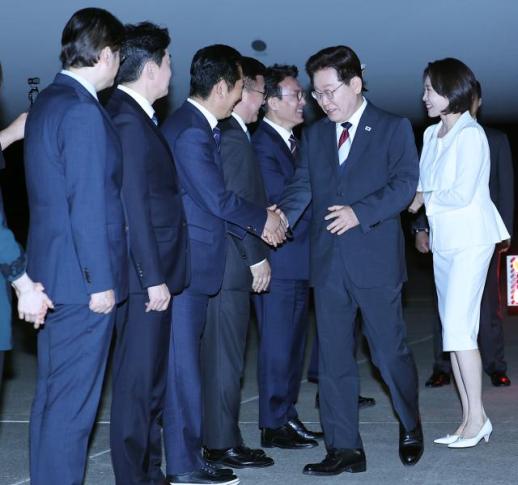 President Lee Jae-myung Returns to Seoul After State Visits to India and Vietnam President Lee Jae-myung returned to South Korea on April 24 after a six-day trip to India and Vietnam. Air Force One, carrying Lee, first lady Kim Hye-kyung and aides, arrived at Seoul Air Base in Seongnam, south of Seoul, at about 9:03 p.m. They were greeted by Democratic Party leader Jung Cheong-rae, Presidential Chief of Staff Kang Hoon-sik and Senior Presidential Secretary for Political Affairs Hong Ik-pyo. Prime Minister Kim Min-seok and Interior and Safety Minister Yoon Ho-jung also welcomed the couple. Lee and Kim stepped off the plane and shook hands with the officials. Lee began the trip in India on April 19, completing a two-night, three-day state visit. In talks with Indian Prime Minister Narendra Modi, the two sides agreed to expand cooperation in strategic industries including shipbuilding, artificial intelligence and defense. They also agreed to strengthen supply-chain cooperation by creating an industrial cooperation committee and speeding up negotiations to improve the Comprehensive Economic Partnership Agreement, and to continue coordination on global issues including the situation in the Middle East. From April 21, Lee made a state visit to Vietnam and held a summit with Communist Party General Secretary To Lam. They agreed to step up cooperation in future-oriented and strategic areas including trade and investment, energy and nuclear power, infrastructure, science and technology, and cultural and people-to-people exchanges. 2026-04-24 21:39:18
 -
 Iran Foreign Minister to Visit Pakistan as Possible US-Iran Talks Resurface Iranian Foreign Minister Abbas Araghchi is expected to visit Pakistan, according to reports, as talk resurfaces about a possible resumption of negotiations between the United States and Iran, though no schedule has been set. Reuters reported on the 24th that Pakistani sources said Araghchi is expected to arrive in Islamabad with a small delegation. The timing of any U.S.-Iran talks remains unconfirmed. The Associated Press, citing two Pakistani officials, also reported that Araghchi could visit as early as that day and no later than this weekend. Pakistan has played a mediating role between Washington and Tehran. Reuters said Islamabad has kept security measures in place in case talks are held, but uncertainty over dates has fueled confusion locally. Araghchi’s trip is being viewed as a factor in assessing whether a ceasefire can be maintained and whether there is room for negotiations to end the conflict. Major issues remain, including passage through the Strait of Hormuz, Iran’s nuclear program and sanctions relief, leaving prospects for progress unclear. 2026-04-24 21:33:17
 -
 Pentagon Email Discussed Suspending Spain’s NATO Status Over Iran War Cooperation, Reuters Says U.S. Defense Department officials discussed the possibility of suspending Spain’s membership in NATO, Reuters reported, reflecting frustration over what was described as Spain’s lack of cooperation during the Iran war. Reuters, citing a U.S. government official, said the idea was raised in an internal Pentagon email. Spain was reported to have denied U.S. requests to use Spanish bases and airspace during U.S. operations in the Iran war. Spanish Prime Minister Pedro Sanchez rejected the reports at a European Union summit in Cyprus, saying, “Spain is a reliable NATO member and is fulfilling all its obligations.” “We do not work by email. We work based on official documents and the official position of the U.S. government,” Sanchez said, adding, “We are not concerned.” Many observers said an actual suspension is unlikely. The Associated Press reported that NATO has no explicit mechanism to suspend or expel a member, while the alliance’s founding treaty sets out procedures for voluntary withdrawal.* This article has been translated by AI. 2026-04-24 21:21:15
 -
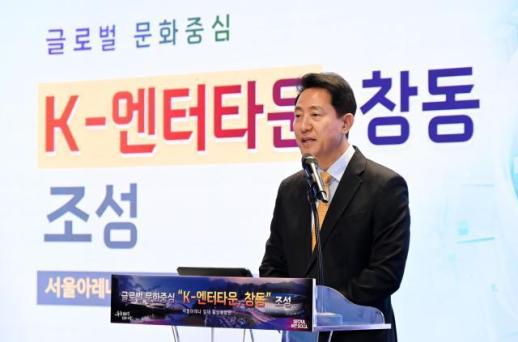 Seoul Mayor Oh Se-hoon Says Ruling Party Leader Jang Dong-hyeok Must Make a Decision Ahead of Local Elections Oh Se-hoon, the mayor of Seoul, said it was “time for a decision” for Jang Dong-hyeok, leader of the People Power Party, publicly raising questions about Jang’s responsibility as the party’s approval rating has fallen to its lowest level ahead of the June 3 local elections. Oh, the People Power Party’s candidate for Seoul mayor, made the remarks on April 24 during an appearance on the TV Chosun YouTube channel. He said candidates campaigning in the field “honestly feel that it would be better if Chairman Jang were less visible,” adding that they believe that would help the campaign. “Oh, now is the time when restraint or a decision is needed,” Oh said. “Since we’ve hit the lowest approval rating since the party was founded, at this point it would actually help the election if the leader felt responsible and reduced the scope of his activities.” Oh also criticized Jang’s remarks about replacing candidates if they engage in conduct harmful to the party. Speaking on TV Chosun’s News 9 the previous day, Oh said he could not agree after hearing comments that, with about 40 days left until the election, sounded like an intention to fight with the candidates. Jang rejected calls to step down. He said April 24 that resigning as party leader because the situation is bad “is not what a responsible politician does,” and said he would be judged after the local elections conclude.* This article has been translated by AI. 2026-04-24 21:09:17
 -
 Gwangjang Market Stall Suspended for 3 Days After 2,000-Won Bottled Water Dispute A street stall at Seoul’s Gwangjang Market that drew criticism for selling a 500-milliliter bottle of water to a foreign customer for 2,000 won has been suspended for three days. The Gwangjang Market street vendors association said April 24 that the stall was ordered to halt business under its disciplinary decision from April 22 through April 24. The dispute began after a Myanmar-born YouTuber living in South Korea posted a video of a visit to the market with a Russian friend on April 16. In the video, they ordered items including dumplings and japchae, then asked for water. The vendor demanded 2,000 won for it. An association official said it is difficult to set uniform prices because vendors operate as individual businesses, but added, “We expect this incident will lead to water being sold at an appropriate price.” The association is also reported to be making price labeling for water mandatory.* This article has been translated by AI. 2026-04-24 20:49:06
 -
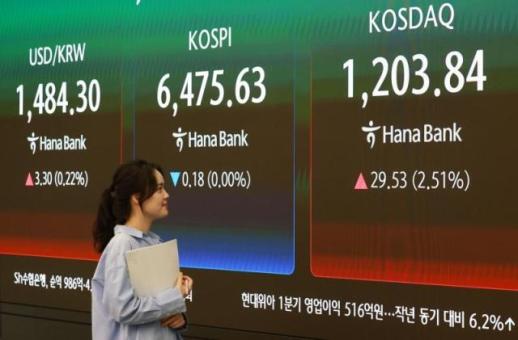 KOSDAQ Closes Above 1,200 for First Time Since 2000 on Chip Materials, Biotech Rally The KOSDAQ index closed above 1,200 on Thursday, its highest level since 2000, lifted by gains in semiconductor materials, parts and equipment shares and biotech stocks. The KOSPI, after setting record highs in recent sessions, traded in a narrow range. According to the Korea Exchange, the KOSDAQ rose 29.53 points, or 2.51%, to finish at 1203.84. It was the first time the index has closed above 1,200 since Aug. 4, 2000, about 25 years and eight months ago. The rally was led by chip-related suppliers and biotech names. As large semiconductor stocks paused on profit-taking, buying shifted toward KOSDAQ growth shares, widening the index’s gains. The KOSPI slipped 0.18 point to 6475.63. It rose as high as 6516.54 early in the session but gave up gains to end near flat. Profit-taking after three straight record closes through Wednesday and geopolitical risks in the Middle East limited the advance. Analysts said further gains in the KOSDAQ will depend on whether expectations for a recovery in the semiconductor cycle and strength in biotech shares continue.* This article has been translated by AI. 2026-04-24 20:48:17
 -
 Iran Central Bank Says Strait of Hormuz Transit Fees Paid in Cash-Like Currency, Not Crypto Iran’s central bank said it collected ship transit fees for the Strait of Hormuz in a cash-like currency, not cryptocurrency, pushing back against speculation that payments were being demanded in digital assets. Iran’s state-run Press TV and Iran International reported on the 24th that the central bank confirmed the revenue was deposited into a central bank account. It said the payment was made in “cash-like currency,” not cryptocurrency. Iran International said the information was carried by Fars News Agency, which is close to Iran’s Islamic Revolutionary Guard Corps. Press TV also cited Fars in reporting the deposit. Iranian authorities did not disclose the size of the fees, how many ships paid them, or what specific currency was used. The Wall Street Journal reported the previous day that Iran had earned its first revenue from the fees. Hamidreza Hajibabaei, a deputy speaker of Iran’s parliament, said the proceeds were deposited into the central bank account. The Journal said Iran did not reveal the amount and that the move could conflict with international norms governing maritime passage. Iran is not a party to the U.N. Convention on the Law of the Sea. The central bank’s statement was seen as aimed at calming controversy over how the fees are paid. Foreign media and maritime security firms had reported that messages were circulating demanding cryptocurrency in the name of Hormuz passage. Reuters, citing Greek maritime security firm Marisks, reported that scam messages were identified seeking bitcoin or tether by offering “safe passage.” It was not confirmed whether the central bank’s phrase “cash-like currency” meant physical cash. Authorities did not disclose what foreign currency was used or how the money was transferred. Iran is using control of the Strait of Hormuz and the fee policy as leverage in talks with the United States. In shipping markets, analysts say the larger question is whether the fee system becomes entrenched, rather than the payment method.* This article has been translated by AI. 2026-04-24 20:24:22