
Journalist

Seo Hye Seung
-
 U.S.-China Summit Set for May 14, Trump to Pressure Xi on Iran Issues Amid stalled peace negotiations between the U.S. and Iran, President Donald Trump is expected to pressure Chinese President Xi Jinping for cooperation on Iran issues during their upcoming summit on May 14. According to a briefing by a U.S. official reported by the Financial Times on May 10, Trump is anticipated to exert pressure regarding China's support for Iran and Russia. The official stated, "The President is expected to apply pressure on this matter," adding that discussions will likely revisit China's involvement in supporting Iran and Russia. The official also noted, "Various sanctions have been issued by the U.S. in recent days, and I am confident they will be part of the conversation," which includes issues related to dual-use components and potential arms exports. Last Friday, the U.S. State Department imposed sanctions on three Chinese satellite companies for allegedly providing satellite imagery and other services that aided Iranian military attacks targeting U.S. forces in the Middle East. Additionally, the U.S. Treasury sanctioned Yushita Shanghai International Trade for assisting Iran in importing portable air defense missile systems, known as MANPADS. However, the Council on Foreign Relations (CFR), a U.S. think tank, predicts that China may have greater negotiating power than the U.S. during this summit, given that the conflict between the U.S. and Iran remains unresolved. The White House and the Chinese Foreign Ministry announced that Trump will make a state visit to China from May 13 to 15 at Xi's invitation. Trump is scheduled to arrive in China on May 13 and hold talks with Xi on May 14. Following their meeting, the two leaders will visit Beijing's Temple of Heaven Park and attend a state dinner that evening. Trump will return to the U.S. after a working lunch on May 15. Meanwhile, while the U.S. and Iran continue behind-the-scenes discussions regarding a peace agreement, negotiations are facing difficulties due to significant differences over key issues such as Iran's nuclear program and the reopening of the Strait of Hormuz. Earlier, Trump expressed his dissatisfaction with Iran's response to a peace proposal sent over the weekend via social media platform Truth Social, stating, "I just read the response from Iran's so-called 'representatives.' I do not like it. It is completely unacceptable." CNN reported that Iran's response included demands for recognition of its sovereignty over the Strait of Hormuz and compensation for war damages, citing Iranian state media IRIB. Iran has also reacted to Trump's rejection of its proposal. According to TASS, a source stated, "No one in Iran writes proposals to please Trump," emphasizing that the Iranian negotiating team bases its plans solely on the 'rights of the Iranian people.' The source added that if Trump is not satisfied with Iran's proposal, "then that is certainly for the better." As peace negotiations struggle, Trump is also escalating military pressure on Iran. In an interview with the U.S. news program 'Full Measure,' he stated, "We could go in and attack all targets in Iran in two weeks." He continued, "We had specific targets we wanted, and we have completed about 70% of them. However, there are other targets we could attack." He added, "Even if we do not do that, it is just cleanup work, and it will take them years to rebuild." Trump's comments came in response to a question about whether combat operations could be considered over. He clarified, "No, I did not say that. I said they have been defeated, but that does not mean it is over." 2026-05-11 15:48:28
 -
 Kurly posts record Q1 as Coupang stumbles SEOUL, May 11 (AJP) - South Korean online grocer Kurly logged its strongest-ever quarterly earnings in the first three months of 2026, riding a wave of consumer migration away from market leader Coupang as the country's e-commerce hierarchy shows fresh signs of strain. According to regulatory filings released Monday, operating profit jumped to 24.2 billion won ($16.4 million) in the first quarter, a 1,277 percent skyrocketing surge from a year earlier and 1.9 times the company's full-year 2025 operating income. Revenue climbed 28.4 percent on-year to 745.7 billion won, while net income swung to a 20.3 billion won profit. Kurly credited gains in its core fresh-food and beauty categories, alongside its midnight Saetbyeol delivery service launched in February and refined operations at its Gimpo, Pyeongtaek and Changwon logistics centers. The fresh-food segment grew 27.8 percent on-year by transaction value, while beauty expanded 20.2 percent. Kurly N Mart, a grocery storefront the company operates within Naver Plus Store, saw March transactions multiply roughly ninefold from September last year. "Steady efforts in merchandising, logistics and technology have differentiated the customer experience, and our diversification push for new growth engines is bearing fruit from the first quarter," said Kim Jong-hoon, chief financial officer at Kurly. " Having demonstrated both growth and profitability, we plan to firm up and accelerate our IPO roadmap." Kurly's breakout quarter coincides with a sharp reversal for archrival Coupang. The Nasdaq-listed market leader posted a $266 million net loss in the first quarter, swinging from a $107 million profit a year earlier, with adjusted EBITDA collapsing to $29 million from $382 million. Coupang attributed the slump to vouchers issued and network inefficiencies tied to a late-2025 customer-data breach that triggered elevated churn. That fallout has reshuffled the competitive map. Naver Plus Store, the search giant's shopping platform, drew 8.39 million monthly active users in April, overtaking AliExpress to become the country's third-largest general shopping app, according to WiseApp Retail. Naver delivered record first-quarter operating profit of 541.8 billion won as commission revenue absorbed so-called "Coupang defectors," while other players such as Gmarket and 11Street continued to shed users. 2026-05-11 15:46:08
 -
 South Korea's Renewable Energy Goals Face Challenges Amid Infrastructure Concerns South Korea's renewable energy transition policy has faced setbacks over the past two decades, marked by unmet targets, shifts in policy direction, and insufficient investment in the power grid, according to a national research institute. Concerns have been raised that the government's goal of achieving 100 gigawatts (GW) of renewable energy capacity by 2030 may be unrealistic without concurrent improvements in infrastructure and regulatory frameworks.On May 11, the National Assembly Future Research Institute released a report titled "Evaluation of Domestic Renewable Energy-Centric Energy Transition Policy and Recommendations for Basic Planning."The institute noted that renewable energy has evolved from a supplementary power source to a critical infrastructure influencing energy security and industrial competitiveness worldwide. According to the International Energy Agency (IEA), renewable energy is expected to account for 36% of global power generation this year, surpassing coal's share of 32% for the first time.The European Union's Carbon Border Adjustment Mechanism (CBAM) and the increasing participation of global companies in the RE100 initiative (committing to 100% renewable energy) have made the ability to procure renewable energy a key factor in export competitiveness.The South Korean government has also positioned renewable energy as a core national policy objective, promoting "industry growth-oriented carbon neutrality" and aiming to establish 100 GW of renewable energy capacity and an energy highway by 2030.However, fears persist that past policy inconsistencies may recur. Since 2001, most basic plans for renewable energy have failed to meet their targets, and policy directions have shifted dramatically with each change in administration, leading to increased market uncertainty.Since the inauguration of President Yoon Suk Yeol, the previous nuclear phase-out policy has been abandoned, and the energy mix has shifted to prioritize nuclear power. The 10th Basic Plan for Power Supply and Demand has reduced the target for renewable energy's share of generation from 30.2% to 21.6%, while increasing the nuclear share to 32.4%.As a result of these policy shifts, the expansion of renewable energy in South Korea remains limited. The share of renewable energy generation increased from 4.8% in 2016 to 10.5% in 2024, yet it still ranks among the lowest in the Organisation for Economic Co-operation and Development (OECD), significantly trailing the global average of approximately 30%.The concentration of renewable energy facilities in regions like Honam and Jeju has created a structural mismatch with the power demand centered in the metropolitan area. The lack of transmission network expansion has exacerbated issues related to grid connection delays and output control.Jeong Hoon, a researcher at the National Assembly Future Research Institute, stated, "Past basic plans have been implemented with a top-down approach that sets targets based on political goals without analyzing technical and economic potential." He noted that the shifting metrics for generation share, primary energy share, and final energy share have made it difficult to continuously compare and verify policy outcomes.He further emphasized that achieving the 2030 goal of 100 GW of renewable energy capacity will require the installation of 10 to 12 GW of new capacity annually starting in 2026, while the current annual installation rate is only about 4 GW.Therefore, the forthcoming "First Basic Plan for Renewable Energy Technology Development, Utilization, and Dissemination" should include not only simple installation targets but also plans for the power grid and system infrastructure. Jeong stressed the need for strategies that reflect regional grid conditions and plans for securing flexible resources such as energy storage systems (ESS), pumped storage, and virtual power plants (VPP).Industry experts have also pointed out that merely increasing the pace of renewable energy expansion is insufficient. An anonymous industry source warned, "If we only expand capacity without restructuring the electricity market and investing in the transmission network, we are likely to face repeated issues with output control and connection delays," urging that renewable energy expansion policies and grid investment plans must be pursued in tandem.* This article has been translated by AI. 2026-05-11 15:42:29
 -
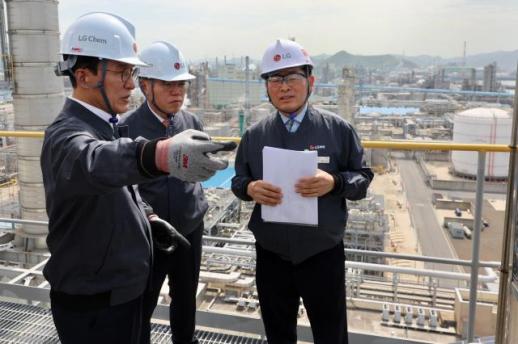 UAE's 60,000 Tons of Naphtha Arrives at Yeosu Port, Boosting Petrochemical Production "Ships carrying naphtha from around the world are arriving one after another. It’s a sight we haven’t seen in nearly a decade," said a worker at the Yeosu-Gwangyang port. On May 11, the petrochemical and shipping industries reported that domestic petrochemical companies, which had seen their operating rates drop to around 50% in March and April due to a shortage of Middle Eastern naphtha, are now increasing production as they secure alternative supplies from the U.S., Algeria, and Oman. On the afternoon of May 11, the Navigait McAllister, which escaped the Strait of Hormuz carrying 60,000 tons of naphtha from the United Arab Emirates after a brief lifting of the blockade on April 18, arrived at Yeosu-Gwangyang port. Approximately 40,000 tons are expected to be supplied to Yeocheon NCC, a joint venture between Hanwha Solutions and DL Chemical, while about 20,000 tons will go to GS Caltex. GS Caltex operates a mixed feedstock cracking facility (MFC) that refines basic petrochemical components from crude oil instead of naphtha, but experts say a certain amount of light naphtha is still needed to enhance the efficiency of the basic component cracking process. Last weekend, 70,000 tons of naphtha from Algeria were delivered to Yeocheon NCC, and 57,000 tons of naphtha from Oman are currently being unloaded for distribution among LG Chem, Lotte Chemical, and Yeocheon NCC. An estimated 160,000 tons of naphtha from the U.S. has also reportedly arrived at Yeosu-Gwangyang port. Notably, the naphtha from Oman is significant as it was secured during a visit by Chief of Staff to the President Kang Hoon-sik to Kazakhstan, Oman, Saudi Arabia, and Qatar as a special economic envoy in April. Industry insiders predict that the naphtha arriving at Yeosu-Gwangyang port since last weekend could supply enough material for about 10 billion plastic bags, which is expected to alleviate the packaging material shortage. The rapid acquisition of alternative naphtha by petrochemical and refining companies is supported by government initiatives. In March, the government announced plans to subsidize 50% of the increased import costs for domestic petrochemical companies with naphtha cracking facilities (NCC) through a supplementary budget. On May 7, the Financial Services Commission proposed a financial support plan to stabilize naphtha supply, which includes raising the limit on naphtha import letters of credit (L/C) to $300 million, set to take effect on May 18. By securing naphtha and crude oil, companies in the three major petrochemical complexes in Yeosu, Daesan, and Ulsan are working diligently to raise NCC operating rates and ensure a steady supply of domestic petrochemical products, including packaging materials and clothing. Yeocheon NCC has increased its NCC operating rate from a low of 55% to 65%, while Lotte Chemical has raised its Daesan NCC operating rate from the 70% range to 83%. LG Chem plans to boost the operating rates of its Daesan and Yeosu NCC (Plant 1) to 75% by the end of Q2, and Daehan Oil has adjusted its Ulsan NCC operating rate from 62% to 72%. The naphtha-ethylene spread, a key profitability indicator for the petrochemical industry, has stabilized above the breakeven point of $250, reaching between $300 and $350. Major petrochemical companies are expected to see significant improvements in their Q2 performance compared to Q1. The outlook for Q3 and Q4 is also positive, as petrochemical facilities in the Middle East, particularly in Kuwait and Qatar, have been impacted by the ongoing conflict, leading to potential shortages of ethylene-based packaging materials not only in South Korea but also in China and Japan. An industry insider remarked, "The ongoing conflict has underscored the importance of naphtha and ethylene as strategic national resources, and the oversupply of basic petrochemical components will be alleviated to some extent. There is a need to reassess the government's restructuring of the petrochemical industry in light of the changing supply chain situation." 2026-05-11 15:38:34
 -
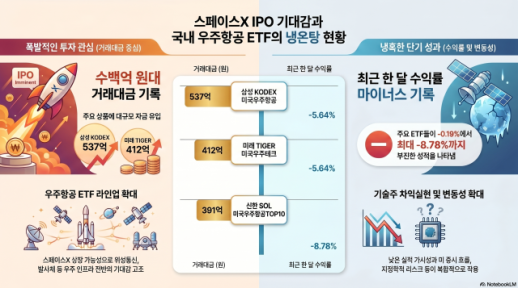 SpaceX IPO Approaches as Space ETFs See Increased Trading but Poor Returns With the SpaceX initial public offering (IPO) just over a month away, major asset management firms in South Korea are seeing increased investments in aerospace exchange-traded funds (ETFs). However, most of these funds have recorded negative returns over the past month. According to the Korea Exchange on May 11, Samsung Asset Management's KODEX U.S. Aerospace ETF has seen a return of -5.64% over the past month, with trading volume reaching 53.7 billion won as of May 8. Hana Asset Management's 1Q U.S. Aerospace Tech ETF recorded a return of -0.19% and a trading volume of 10.7 billion won. ETFs launched last month have shown similar trends. Mirae Asset Management's TIGER U.S. Space Tech ETF, which was listed on April 14, has a return of -5.64% and a trading volume of 41.2 billion won. The ACE U.S. Space Tech Active ETF from Korea Investment Trust Management, which also launched on the same day, recorded a return of -0.63% and a trading volume of 30.5 billion won. Shinhan Asset Management's SOL U.S. Aerospace TOP10 ETF, listed on April 21, has a return of -8.78% and a trading volume of approximately 39.1 billion won. Despite the asset management industry expanding its lineup of space-related ETFs in response to the growing perception of the space industry as a next-generation growth theme, short-term performance has fallen short of expectations. This is attributed to profit-taking in technology stocks on the U.S. market and the inherent volatility of the aerospace industry, which is characterized by low visibility in earnings. Some ETFs have a high concentration of defense stocks, making them susceptible to geopolitical risks and interest rate fluctuations. An industry insider noted, "The space industry has significant long-term growth potential, but it is still largely driven by expectations. If major events like the SpaceX IPO materialize, the related ETF market could regain attention."* This article has been translated by AI. 2026-05-11 15:36:29
 -
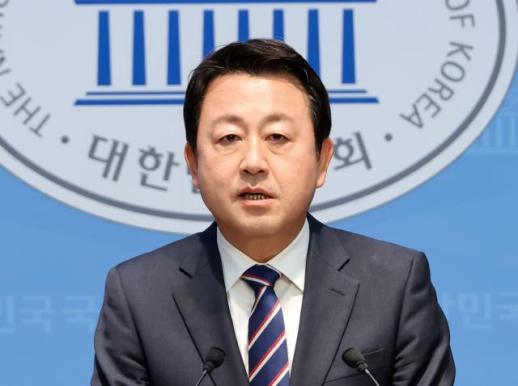 Kim Yong-nam Apologizes for Past Comments on Sewol Ferry Disaster Kim Yong-nam, the Democratic Party candidate for Pyeongtaek, acknowledged on May 11 that his past comments regarding the Sewol ferry disaster caused deep pain for the victims' families. In a post on Facebook, Kim stated, "I did not fully consider how much my remarks would hurt the families of the victims. I recognize that my words left an indelible scar on their hearts." In 2015, while a member of the Saenuri Party, he faced backlash for saying that the special investigation committee on the Sewol ferry was merely wasting taxpayer money. His rival in the Pyeongtaek race, Jo Guk, leader of the Justice Party, criticized Kim during a YTN radio interview, questioning why he has refused to apologize for his serious comments related to the Itaewon and Sewol tragedies. Additionally, Kim reflected on his involvement with Yoon Suk Yeol's campaign during the 2022 presidential election, saying, "My past connection with Yoon, stemming from our time as prosecutors over 20 years ago, clouded my judgment. The behavior exhibited by Yoon and his associates after taking power is completely unacceptable." He emphasized, "In light of the current insurrection situation, I have raised my voice firmly. My belief that 'this is clearly insurrection and Yoon must be punished and impeached as the insurrection leader' aligns with the views of the democratic progressive camp." Kim acknowledged that his role as a spokesperson for Yoon's campaign will remain a significant blemish on his life, but he vowed not to deny or erase it. He expressed his commitment to learning from his mistakes and dedicating the remainder of his political career to strengthening democracy alongside the public.* This article has been translated by AI. 2026-05-11 15:29:02
 -
 South Korea Proposes AI Safety and Cybersecurity Collaboration with Anthropic The South Korean government has proposed a collaboration with the American AI company Anthropic, focusing on AI safety and cybersecurity through the AI Safety Research Institute (AISI). According to the Ministry of Science and ICT, a meeting took place on the morning of May 11 in the Gwanghwamun conference room in Seoul, attended by Deputy Minister Ryu Je-myung, AISI Director Kim Myung-joo, Korea Internet & Security Agency (KISA) Director Oh Jin-young, and Anthropic's Global Policy Lead Michael Selitto. Representatives from the Ministry of Foreign Affairs, the National Intelligence Service, the Financial Services Commission, and the Financial Security Institute were also present. This meeting was organized as a follow-up to discussions between Deputy Prime Minister and Minister of Science and ICT Bak Hoon and Anthropic CEO Dario Amodei during the '2026 India AI Impact Summit' held in February. At that time, both parties discussed the influence of agent AI, AI safety and security collaboration, and strengthening global leadership. The Ministry proposed establishing a collaboration framework centered on AISI for verifying the safety of AI models and enhancing cybersecurity. They emphasized the need for a system to share information that would allow South Korea to proactively respond to global vulnerabilities and security patches. Both sides agreed to continue practical discussions regarding the cybersecurity applications of AI models. Additionally, discussions were held regarding the domestic AI regulatory environment, including the AI Basic Act and AI safety policy directions. A ministry official stated, "There were discussions on AI safety policies, the direction of the AI Basic Act, and global AI security collaboration systems," adding that Anthropic showed significant interest in the South Korean government's AI policies and regulatory framework. Deputy Minister Ryu remarked, "As the performance and application scope of frontier-level AI models rapidly expand, it is crucial to create an environment where citizens and businesses can safely utilize AI. We will actively collaborate with leading global AI companies to enhance the safety of AI models and cybersecurity capabilities."* This article has been translated by AI. 2026-05-11 15:27:27
 -
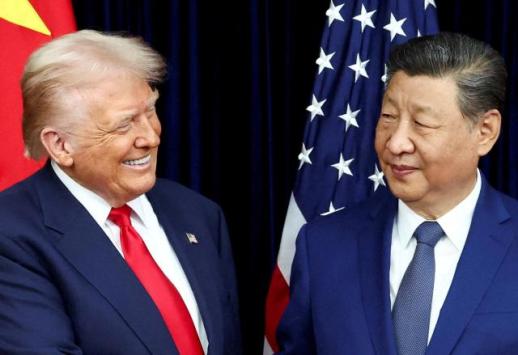 Trump and Xi's Beijing Summit: A Test of New Global Order Amid Conflict The summit between U.S. President Donald Trump and Chinese President Xi Jinping in Beijing transcends typical diplomatic engagement, serving as a critical test for a new international order marked by conflict over war, supply chains, energy, and technological supremacy. Particularly in the context of the prolonged conflict in the Middle East, this meeting underscores the urgent need for both nations to manage potential clashes.While tariffs, investment, semiconductor issues, and Taiwan appear to be the primary agenda items, the real focus of the discussions is likely to center on how to navigate the destabilized global economy and security landscape following the war in Iran. The U.S. is expected to leverage China's position as the largest buyer of Iranian oil to pressure for cooperation. Conversely, China may seek to project itself as a 'stability manager' to prevent soaring international oil prices and a global economic downturn, rather than aligning directly with U.S. pressure on Iran.For President Trump, there are practical considerations at play. As the conflict in the Middle East drags on, international oil prices and inflation are likely to rise, which could ultimately burden American consumers and financial markets. With the midterm elections approaching in November, the Trump administration may find it politically and economically advantageous to maintain a stable relationship with China rather than engage in a full-blown confrontation. Similarly, China is likely to want to avoid exacerbating trade uncertainties with the U.S. amid its own economic slowdown and export challenges. Thus, both countries seem inclined to manage the costs of strategic competition rather than seek to dominate each other.However, this does not imply a fundamental improvement in U.S.-China relations. Instead, the summit is more about recalibrating the rules of competition. The U.S. will likely maintain its stance of containing China in advanced semiconductors, artificial intelligence, and security, while also seeking to expand practical benefits through increased trade in agricultural products, aircraft, and energy. China, on the other hand, may focus on reducing the intensity of U.S. pressure regarding Taiwan and technology sanctions.A key concern is the anxiety felt by allies and neighboring countries during this process. Recent U.S. military asset relocations to the Indo-Pacific region in response to the Middle East conflict and discussions about defense cost-sharing have raised significant alarm among South Korea, Japan, and Taiwan. The New York Times reported that Asian nations are worried about the possibility of the U.S. adjusting its security commitments for economic transactions.For South Korea, the implications are particularly complex. A severe deterioration in U.S.-China relations could directly impact the South Korean economy through exports, exchange rates, and financial markets. Conversely, if the two nations establish a stable management system, it could alleviate market uncertainties in the short term. In fact, recent global financial markets have reacted sensitively to the potential easing of the Middle East conflict and expectations of U.S.-China stability.However, South Korea must be cautious of a new balance of power that could emerge under the guise of 'stability.' As the U.S. expands strategic transactions with China, China's influence in Asia is likely to grow. This is not merely a diplomatic issue; it connects to semiconductor supply chains, advanced technology standards, maritime logistics, and energy security. South Korea, which is economically intertwined with China while relying on the U.S. alliance for security, is one of the countries most directly affected by changes in U.S.-China relations.In this context, what is needed is not emotional partisanship but a realistic and sophisticated strategy centered on national interests. South Korea should maintain the U.S.-South Korea alliance as the cornerstone of its security while enhancing its diplomatic and economic buffer through supply chain diversification and technological independence. At the same time, expanding cooperation with Southeast Asia, India, the Middle East, and Europe to reduce dependence on specific countries will become increasingly important.This Beijing summit is unlikely to change the world order overnight. However, it has the potential to be a significant turning point in how the U.S. and China manage their competition and the positioning of allies and middle powers in that process. South Korea should focus on expanding its strategic space in the evolving international order rather than being swept away by short-term market expectations or partisan narratives.* This article has been translated by AI. 2026-05-11 15:23:34
 -
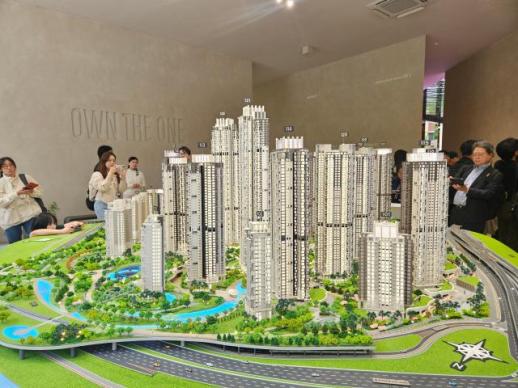 Robots to Handle Parking and Shuttle Services in Apgujeong 3 District Residents can use a demand-responsive transport (DRT) autonomous shuttle through a dedicated app to reach nearby subway stations without walking. After work, they can be dropped off at a hotel-style private drop-off zone, where a valet robot will park their car, while Hyundai's mobility robot, MobED, transports heavy luggage to their doorstep. On May 11, the promotional center for Apgujeong 3 District showcased Hyundai Construction's vision for future living technologies. The DRT autonomous shuttle can be summoned like a personal taxi through the Apgujeong Hyundai Apartments app. It can adjust its route based on passenger requests, providing flexible service. The shuttle will operate within the complex and connect to key external locations such as Cheongdam Elementary and Middle Schools, Apgujeong Rodeo Station, Dosan Park, and Apgujeong Station. The SPOT safety service robot patrols the parking lot and various areas of the complex, detecting anomalies and preventing potential dangers. MobED assists with transporting food, luggage, and even recycling tasks. These advanced robotics technologies from Hyundai will be implemented in the Apgujeong 3 District. The community facility, named 'Club Apgujeong,' spans approximately 45,000 pyeong, four times the size of Gwanghwamun Square. 'The Circle One' is a circular corridor that connects all buildings and community areas, measuring 17 meters wide, 3.5 meters high, and 1.2 kilometers long. Although it is located underground, it will feature air purification and heating and cooling systems to ensure year-round indoor living. Residents can enjoy walking, running, and relaxing regardless of the weather. Inside The Circle One, high-end community facilities will include a spa, swimming pool, sauna, golf practice area, bowling alley, and fitness center. Additionally, private areas such as personal workrooms, private meeting rooms, concierge rooms, and personal healing saunas will be available. This aims to address the limitations of overcrowded community facilities for residents. Furthermore, a health care system will be provided in collaboration with Cha Hospital and The Classic 500. The eight residential buildings along the Han River will feature distinct architectural designs, a result of collaboration with renowned architects RAMSA and Morphosis. The central area will consist of two towers reaching a height of 65 stories, flanked by buildings with fewer than 49 stories. Notably, the top floors of the 65-story towers will include two 'triplex super penthouses' with private gardens. The landscaped area within the complex will cover approximately 35,700 pyeong, featuring 13,000 trees and two themed courtyards. Sculptures by world-class artists will be placed throughout the complex, creating a gallery-like atmosphere. Each of the 30 buildings will have private gardens. The interior design will utilize a 'canvas unit' layout, allowing for flexible configurations except for the outer walls and columns. This design considers the needs of families with more than four members and potential rental income. Hyundai Construction has proposed a construction cost of 10.63 million won per pyeong, which is 570,000 won lower than the bidding standard of 11.2 million won. They also confirmed that the cost for product upgrades will be fully reflected, ensuring no future increases in construction costs. Additionally, they announced that relocation costs will be financed at 100% loan-to-value (LTV) and that member contribution payments can be deferred for up to four years after moving in. Park Seong-ha, head of the Apgujeong Reconstruction Project Team, stated, “By the time residents move in, most future technologies will be commercialized. Currently, valet parking robots are in operation at the Pangyo KT Center, and unmanned transportation systems are already being implemented in areas like Jongno and Anyang.”* This article has been translated by AI. 2026-05-11 15:20:49
 -
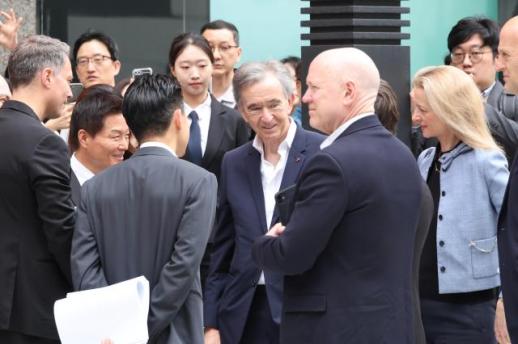 LVMH chair inspects shops in Korea amid weakening sales SEOUL, May 11 (AJP) - Bernard Arnault, chairman and CEO of French luxury titan LVMH, arrived in Seoul on Monday for an intensive inspection of the South Korean market as the world’s largest luxury group faces slowing global momentum and weaker growth in Korea relative to rival luxury houses despite the country’s continued luxury boom. Accompanied by his eldest daughter, Delphine Arnault, CEO of Christian Dior Couture, the LVMH chief’s visit comes at a pivotal moment when the group’s global sales have stagnated amid softening demand in China and the United States. The visit began at Shinsegae Department Store’s flagship store in central Seoul at 12:30 p.m., where Arnault was greeted by Shinsegae CEO Park Joo-hyung. Although the department store was closed for its regular holiday, Arnault spent time closely inspecting the exterior and storefront displays of “Louis Vuitton Visionary Journeys Seoul,” the six-story experiential complex that serves as the brand’s largest retail location globally. Rather than focusing solely on retail traffic or VIP lounges, Arnault’s attention centered on the physical presentation and experiential environment of the flagship, underscoring LVMH’s push toward “destination retail” that blends architecture, exhibitions, dining and brand storytelling. Arnault’s direct oversight of the Seoul flagship highlights the strategic importance LVMH places on South Korea, one of the few luxury markets still posting robust growth despite mounting concerns over a global sector slowdown. While LVMH’s global sales growth slowed to 1 percent last year, Louis Vuitton Korea posted record revenue of 1.85 trillion won ($1.36 billion) in 2025, up 6.1 percent from a year earlier, while operating profit surged 35 percent to 525.6 billion won. Yet LVMH’s Korean growth has increasingly lagged behind some rival luxury houses that continue to post stronger momentum in the country’s polarized luxury market. Chanel Korea surpassed the 2 trillion won revenue mark for the first time last year, with sales rising 9 percent to 2.01 trillion won and operating profit climbing 25 percent to 336 billion won. Hermès Korea also reported standout growth, with revenue increasing 16.7 percent to 1.13 trillion won and operating profit rising 14.6 percent to 305.5 billion won. The contrast has become even more pronounced within LVMH’s own portfolio, particularly at Dior, once grouped among Korea’s so-called “EruSha” trio of Hermès, Louis Vuitton and Chanel. According to regulatory filings, Christian Dior Couture Korea posted revenue of 773.9 billion won last year, down 18.1 percent from a year earlier, while operating profit plunged 43 percent to 129.2 billion won. The brand had already suffered declines in 2024, marking two consecutive years of falling sales and earnings while competitors continued delivering record performances. Arnault plans to make stops at Lotte Department Store, and luxury industry will be closely watching whether Seoul will further shape LVMH’s evolving blueprint for experiential retail in one of the world’s most competitive and polarized luxury markets. 2026-05-11 15:16:56