
Journalist

Seo Hye Seung
-
 President Lee Warns Against Hoarding Goods Amid Rising Prices President Lee Jae-myung warned on May 8 that hoarding goods could lead to disaster, stating, "Hoarding is a path to ruin; those who think they can make a quick profit through hoarding will end up completely failing." In a post on X (formerly Twitter), President Lee noted, "There are still those who do not realize the world has changed and are heading down a path of ruin with outdated thinking. I want to inform them in advance." As concerns about rising prices due to the prolonged conflict in the Middle East continue, he reiterated his commitment to a strong response against market disruption. He emphasized, "Under the law, if hoarding occurs, all items subject to hoarding will be confiscated, and if confiscation is not possible, their value will be seized. Mandatory confiscation means that once detected, leniency is not an option." President Lee also questioned, "Do you think you can avoid detection? We offer rewards of 20-30% of the value of hoarded goods for reports, so is it really possible to go unnoticed?" He concluded by stating, "The era of abnormality is coming to an end, and a normal era is beginning. Those who seek unjust profits by relying on abnormality will face severe consequences." 2026-05-08 12:30:37
 -
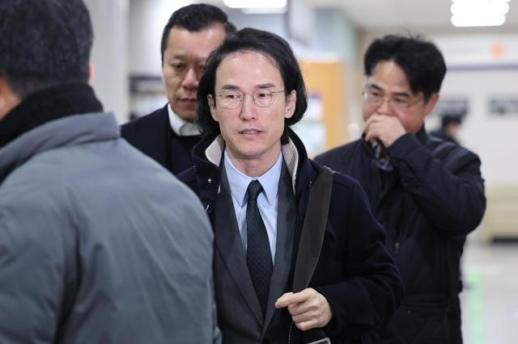 Supreme Court Confirms Two-Year Prison Sentence for Cho Hyun-bum, CEO of Hankook & Company The Supreme Court has confirmed a two-year prison sentence for Cho Hyun-bum, CEO of Hankook & Company, who was charged with embezzlement and breach of trust involving approximately 2 billion won (about $1.5 million). On May 8, the Supreme Court's first division, led by Justice Ma Yong-joo, upheld the lower court's ruling that sentenced Cho to two years in prison under the Act on the Aggravated Punishment of Specific Economic Crimes. Initially, prosecutors alleged that Cho embezzled around 2 billion won of company funds, causing significant financial harm. However, the court ultimately determined the amount involved in the embezzlement and breach of trust to be about 200 million won. The court found Cho guilty of self-dealing, stating he misused corporate funds for personal needs. The ruling detailed several instances of misconduct, including using a corporate credit card for personal expenses, having a company driver perform personal tasks for his spouse, purchasing or leasing five luxury vehicles under the names of affiliates for personal use, and covering moving costs and furniture purchases for his residence with company funds. Conversely, the court acquitted Cho of charges related to improper support of affiliates, a key issue in the case. Prosecutors claimed that Hankook Tire incurred a loss of 13.1 billion won by purchasing tire molds from an affiliate at inflated prices, but both the first and second trial courts dismissed these claims due to insufficient evidence. Additionally, a charge involving a loan of 5 billion won to a company associated with Hyundai Motor was initially deemed guilty in the first trial but was overturned in the second trial based on business judgment considerations, a decision the Supreme Court upheld. Regarding sentencing, the first trial court had imposed a three-year sentence, but the second trial court reduced it to two years after finding some charges not guilty. Both Cho's legal team and the prosecution appealed the verdict, but the Supreme Court rejected both appeals, stating there was no misunderstanding of the law in the lower court's ruling. 2026-05-08 12:29:11
 -
 Homeplus Sells Express Division Amid Liquidity Crisis; NS Home Shopping Expands Offline Presence Homeplus has sold its profitable supermarket division, Homeplus Express, to NS Home Shopping as a desperate measure to escape bankruptcy. However, the company has shuttered 37 stores due to ongoing liquidity issues, unable to wait for the sale proceeds expected in two months. Meanwhile, NS Home Shopping is leveraging this acquisition to establish a nationwide offline presence and expand its omnichannel operations. According to the retail industry on May 8, Homeplus and NS Home Shopping signed a sales agreement for the Homeplus Express division, approved by the Seoul Bankruptcy Court. Homeplus will receive 120.6 billion won (approximately $91 million) in cash, conditional on the assumption of some debts. While this amount falls short of the anticipated 300 billion won, it provides crucial liquidity for overdue wages and payments to suppliers during its bankruptcy proceedings. However, Homeplus's liquidity crisis persists, as the sale proceeds will not arrive for two months. After a 100 billion won injection from its major shareholder MBK Partners in March, most of those funds have been depleted. Homeplus must secure operational funds before the July 3 deadline for its rehabilitation plan. The company announced that the sale alone will not cover the operational funds needed for its rehabilitation process and plans to initiate a "second restructuring" focused on securing additional funds and improving store efficiency. Homeplus has requested short-term loans, including bridge loans and debtor-in-possession financing, from its largest creditor, Meritz Financial Group, until the sale proceeds are received. However, it has yet to receive a concrete response from Meritz regarding this support. Meritz currently holds collateral worth 4 trillion won, four times the 1.2 trillion won loan to Homeplus, covering 68 stores. Homeplus stated, "Without financial support from Meritz, which holds all cash-equivalent assets, recovery is impossible." The company has seen significant revenue declines due to stricter trading conditions and reduced deliveries from major suppliers during the rehabilitation process. Although MBK has provided operational funds through personal investments and guarantees, these resources are nearly exhausted due to prolonged rehabilitation and worsening business conditions. Consequently, Homeplus will temporarily close 37 of its 104 stores from May 10 to July 3, focusing operations on the remaining 67 locations. The strategy includes prioritizing limited product supplies to key stores to minimize revenue loss and customer attrition. Employees at the closed stores will receive 70% of their average wages, with options for reassignment to other locations. In-store rental shops will continue normal operations. Industry analysts view this move as a critical gamble for Homeplus's recovery. The Homeplus union has expressed urgency, stating, "We must prioritize funding for normalizing product supply, even if it means sacrificing wages." Homeplus plans to submit a revised rehabilitation plan to the court and creditors, outlining strategies for store efficiency and the sale of remaining business segments. NS Home Shopping Secures Nationwide Offline Distribution Network In contrast, NS Home Shopping's acquisition of Homeplus Express allows it to expand beyond its TV and mobile-centric business model to establish a nationwide offline distribution network. An NS Home Shopping representative stated, "This agreement will enhance our competitiveness by leveraging our expertise in food and distribution across both online and offline channels." NS Home Shopping plans to accelerate its food-centric omnichannel strategy by connecting offline stores with online ordering and delivery, utilizing its existing customer base. The company aims to draw TV shopping customers into physical stores while offering online services to in-store visitors. However, challenges remain post-acquisition. Homeplus Express has experienced key personnel losses and diminished sales capabilities during its lengthy rehabilitation process. Additionally, the strong influence of labor unions may complicate workforce reallocation and organizational stabilization. NS Home Shopping will also face fierce competition from established players like Emart Everyday and GS The Fresh in the SSM market. An industry insider noted, "This transaction reflects the mutual interests of Homeplus, which needed to sell valuable assets for survival, and NS Home Shopping, which urgently required an offline food distribution network. Homeplus's immediate priority is overcoming its liquidity crisis, while NS Home Shopping must focus on strengthening its food competitiveness through its new offline presence." 2026-05-08 12:24:39
 -
 Welfare Spending in South Korea Increased by 130 Trillion Won Over 18 Years South Korea's welfare spending has increased by over 130 trillion won in the past 18 years, primarily due to pension payments. This concentration of funds raises concerns about whether resources are being effectively allocated to other necessary areas. According to a report by the National Fiscal Research Institute, titled 'Trends and Implications of Welfare Sector Finance,' social welfare spending rose from 33.4 trillion won in 2008 to 165.9 trillion won in 2026, an increase of 132.5 trillion won.This year, the institute analyzed 344 detailed welfare projects, identifying 14 with budgets exceeding 1 trillion won, which accounted for 90.6% of total spending. This is up from 68.8% in 2008, indicating a steady rise in large-scale projects.Public pensions represent the largest portion of social welfare expenditures. The amount allocated to public pensions grew from 21.4 trillion won in 2008 to 97 trillion won today, maintaining a high percentage of total budget allocations at around 60% since 2008.The largest single expenditure among projects over 1 trillion won is the National Pension benefit payments, totaling 54.5 trillion won, followed by civil servant pension payments at 24.9 trillion won and basic pension payments at 23.1 trillion won.Kim Yong-won, a senior researcher at the National Fiscal Research Institute, noted, "From 2008 to 2026, total spending in the analyzed sectors increased by an average of 9.3% annually, with National Pension benefits rising by 14.5% and basic pensions by 16.0%, reflecting the impact of an aging population."Medical and livelihood assistance budgets were also significant, at 9.8 trillion won and 9.2 trillion won, respectively, but their average annual growth rates were lower than the overall average of 9.3%.Despite the focus on income security through public pensions, basic living security, which serves as public assistance, is limited to 22.2 trillion won, with social services at just 10.2 trillion won. These figures indicate that the budget for policies most directly felt by citizens is relatively low.When compared to other countries, South Korea's public social welfare spending remains low. According to OECD data, South Korea's public social welfare expenditure as a percentage of GDP rose from 6.8% in 2008 to 16.2% in 2022, while the OECD average increased from 18.5% to 20.5% during the same period.Although the United States has the lowest public social welfare spending among the G7 nations, it is projected to surpass South Korea by 4.5 percentage points in 2024, rising from 16.3% in 2008 to 19.8%.The findings indicate that while South Korea's social welfare spending has significantly increased, it remains below the levels of advanced nations, with expenditures concentrated in specific areas.The institute emphasized that while increased spending is necessary for transitioning to a welfare state, the concentration of funds in certain projects suggests that resources are not being allocated effectively. Kim concluded, "Our social welfare finance is still insufficient to be called a welfare state, necessitating detailed discussions and proposals for improvement in related areas." 2026-05-08 12:22:11
 -
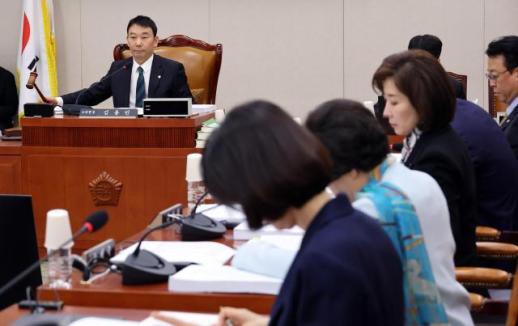 Ruling Coalition Calls for Legislative Reform of Criminal Procedure Law On May 8, the ruling coalition, led by the Democratic Party and the Innovation Party, argued for the need to reform the Criminal Procedure Law during a discussion forum. They expressed concerns that if prosecutors lead the reform, they might regain investigative powers, emphasizing the necessity for proactive legislative measures by the National Assembly. Democratic Party lawmakers Kim Yong-min and Kim Young-ho, along with Innovation Party lawmaker Park Eun-jung, held a forum titled "Direction of Criminal Procedure Law Reform" at the National Assembly, highlighting the importance of legislative leadership in this process. Kim Yong-min stated, "If the government proposes a revision after the local elections, it will likely be led by prosecutors, who may create mechanisms to regain supplementary and direct investigative powers. Therefore, our party should proactively draft a desirable reform proposal. I have repeatedly suggested this to our leadership, but it has not been accepted yet." He added, "I have started discussions with fellow lawmakers, including Kim Young-ho and Park, as well as those passionate about prosecutor reform, such as Legislative Judiciary Committee Chair Seo Young-kyo and lawmaker Choi Hyuk-jin, to draft a proposal based on the ideas raised in today's forum. We aim to create a beneficial law for the public by aligning it with the government's proposal." Park emphasized that the Criminal Procedure Law falls under the jurisdiction of the National Assembly's Legislative Judiciary Committee, stating, "It is inappropriate for prosecutors, who have previously abused their powers, to draft the reform proposal." He further noted, "There is no provision in the Criminal Procedure Law that states prosecutors conduct investigations. If they lead the reform, they may seek to designate cases like arrests and those nearing the statute of limitations through presidential decree to regain investigative powers." Kim Young-ho also remarked, "The corruption displayed by prosecutors during the Yoon Suk-yeol administration underscores the urgent need for prosecutor reform. The Lee Jae-myung administration must ensure that legislative measures are tightly woven to firmly root out the issues in the prosecution system." 2026-05-08 12:20:13
 -
 950 Young Entrepreneurs Launch New Ventures with K-Unicorn Support The Small and Medium Business Administration (SMBA) held the "2026 Startup Launch Ceremony" to support the growth of K-Unicorn companies, which are privately held firms valued at over $1 billion. On May 8, the SMBA announced that the event was organized to celebrate the successful start of 950 young entrepreneurs who joined the 16th cohort of the Youth Startup Academy, the 7th global program, and the 1st deep tech program this year.The first part of the event featured a symposium where alumni entrepreneurs Jeong Ji-sung, CEO of SOS Lab, and Han Won-gyeong, CEO of Sunny Side Up, shared their growth experiences and insights. It also included a discussion with Gary Fowler, chairman of GSD Venture Studios, and an "Alumni Day" for networking among current and former participants.The second part included a badge ceremony symbolizing the partnership between the Youth Startup Academy and its participants, along with a joint event to inspire passion and challenge in entrepreneurship, involving the new students and SMBA officials.Additionally, policy advisors provided consultations on funding, workforce issues, and export opportunities through the "On-Site SMBA" initiative, covering areas such as guarantees, investments, certifications, public procurement, and international expansion.The Youth Startup Academy, operated by the SMBA, is a leading program in South Korea that selects promising early-stage startups to assist with investment and market development, aiming to enhance their competitiveness in the global market. Since its inception in 2011, the academy has supported over 10,000 alumni.Recently, the SMBA announced a partnership with KT&G to develop an integrated support system for youth, combining entrepreneurship, mentoring, and cultural programs to boost local economies.SMBA Commissioner Kang Seok-jin stated, "This year, we will strengthen support focused on AI transformation, deep tech, regional innovation, global expansion, and experiential entrepreneurship to help young entrepreneurs become K-Unicorns." 2026-05-08 12:18:38
 -
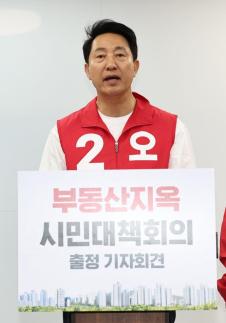 Oh Se-hoon Blames Lee Administration for Soaring Housing Prices in Seongdong Park Yong-chan, spokesperson for Oh Se-hoon, the People Power Party's candidate for Seoul mayor, questioned Jeong Won-o, the Democratic Party's candidate, on May 8 regarding the soaring housing prices and rental crisis in Seongdong. "Is this Jeong's responsibility, or is it due to the Lee Jae-myung administration's flawed real estate policies?" he asked. Park criticized Jeong for blaming Oh, who served as Seoul mayor for five years, for the current housing crisis. He argued that if Jeong follows this logic, he should also be held accountable for the real estate turmoil in Seongdong, where he has been the district mayor for 12 years. He added that Oh does not hold Jeong accountable because he understands that the primary responsibility lies with government policy. Park also criticized the real estate policies of the Lee Jae-myung administration and former Seoul Mayor Park Won-soon, stating that the tax burdens and loan pressures imposed by the current government have led to a housing crisis. He described the decision to deregulate 389 redevelopment zones by the former mayor as a painful mistake that continues to have repercussions. Finally, Park urged Jeong to stop the smear campaign that misplaces blame for the housing crisis. 2026-05-08 12:17:11
 -
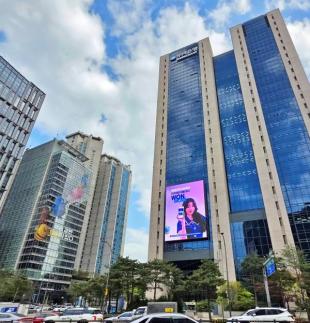 Woori Bank to Manage 886 Trillion Won of National Pension Fund's Foreign Assets Woori Bank has been selected as the preferred bidder to manage the National Pension Service's (NPS) foreign assets, totaling 886 trillion won. The announcement was made on May 8, marking the first selection of a foreign currency custodian bank since 2021. The contract will run from August 2026 to July 2031.The foreign currency custodian bank will oversee foreign exchange transactions, the opening and closing of foreign currency accounts, and the management of foreign funds during the NPS's overseas investments. The NPS, one of the world's largest pension funds alongside Japan's GPIF and Norway's GPFG, manages a total fund of 1,610 trillion won, with 886 trillion won allocated to foreign assets. When Woori Bank was selected in 2021, the NPS's foreign assets were valued at 415 trillion won.Woori Bank and KB Kookmin Bank were the two contenders in this bidding process. The selection criteria included the bank's financial stability, operational capabilities, experience in foreign fund management, service quality, risk management, and liquidity assurance.Woori Bank received high marks for its global risk management system and digital foreign exchange and payment systems. Woori Bank CEO Jeong Jin-wan stated, "We will enhance our risk management system and innovate digital payments to support the stable asset management of the National Pension Fund."Additionally, Woori Bank is competing for the Seoul City Treasury contract, which manages an annual budget of approximately 51 trillion won. The bank previously held this position for 104 years before ceding it to Shinhan Bank in 2018. The city plans to evaluate proposals through a committee of financial experts and certified public accountants, with a decision expected by the end of this month. The selected bank will manage the city's funds from next year through 2030. Woori Bank currently oversees treasury functions for 14 of Seoul's 25 districts, which could create synergies with the city treasury. 2026-05-08 12:15:02
 -
 April Apartment Sales Reach Highest Level in 3.5 Years Last month, the number of private apartment sales in South Korea reached its highest level in three and a half years. While supply surged, many analysts view this as a backlog of delayed projects rather than a true market recovery. However, there are signs of supply normalization as annual sales plans increase. According to an analysis by Realhouse, a property evaluation firm, 24,315 private apartments were supplied nationwide in April, marking a 117.3% increase from March's 11,188 units. This is the largest monthly figure since October 2022 and represents an 83.3% rise compared to the same month last year. The change is stark compared to earlier this year, with only 3,854 units in January and 5,342 in February. After recovering to over 10,000 units in March, April saw a leap past 20,000, indicating that previously delayed projects have finally come to market. The increase was primarily driven by regional developments. Supply in other provinces surged by 203.7% to 11,831 units, significantly outpacing the 106.0% increase in the metropolitan area. Gyeonggi Province also saw the largest growth, with 8,125 units. New supply resumed in regions like Chungbuk, Gangwon, Ulsan, and Jeonbuk, where sales had effectively stalled. This trend reflects a return of previously halted projects rather than new developments. Over the past two to three years, rising construction costs, financing difficulties, and unsold inventory pressures led many developers to delay sales. As financial burdens mounted, further postponements became untenable. A representative from a mid-sized construction firm stated, "In regional markets, the longer projects are delayed, the greater the financial burden, forcing them to supply in the first half of the year. It's more about previously held inventory hitting the market than a recovery in demand." The resumption of supply is seen as a normalization rather than an expansion. The increase in units comes from areas that had no supply last month, differing from a surge in new projects in specific regions. However, the burden of unsold inventory remains a concern. According to the Ministry of Land, Infrastructure and Transport, approximately 30,000 units are unsold post-completion, mostly concentrated in regional markets. If supply continues to grow without sufficient demand, future sales schedules could be disrupted again. Despite this, there are signs of improvement in supply trends. According to Real Estate R114, approximately 180,000 private apartment units are expected to be offered this year, an increase compared to last year, which faced significant supply shortages. Another industry insider noted, "The increase in April's supply is significant as it indicates that stalled projects are starting to move again. However, we need to see if this supply continues into the second half of the year to assess market recovery." 2026-05-08 12:13:05
 -
 Hyundai Motor Group Appoints Choi Jun-young as Head of Labor Policy Hyundai Motor Group has appointed Choi Jun-young, president of Kia, as the head of its labor policy division. On May 8, the group announced several executive appointments aimed at strengthening labor and production operations. Choi will oversee the policy development department, which is tasked with responding to the rapidly changing labor environment, including the implementation of the Yellow Envelope Law (amendments to Articles 2 and 3 of the Labor Union Act). Choi is recognized for his on-site leadership and exceptional stakeholder coordination skills. Hyundai Motor Group expects him to contribute to labor stability and the establishment of advanced labor relations. Jeong Sang-bin, who previously led the policy development department, has been appointed to oversee labor relations policy at Hyundai Mobis. Jeong will leverage his expertise in labor matters as the company navigates disagreements with labor over the sale of its lamp and bumper business. Song Min-soo has been appointed to manage Kia's domestic production and labor operations. He will focus on maintaining a stable production system and driving production innovation as the Chief Safety Officer (CSO). A Hyundai Motor Group official stated, "Today's announcement reflects our commitment to stable labor relations and efficient production operations, considering experience and expertise in these appointments." 2026-05-08 12:11:39