
Journalist

Seo Jeong-hee
-
 Shonu and Hyungwon of Monsta X: From Potential to Genre Every day, dozens of songs and works are created. While music, dramas, and films are introduced through countless media, what reaches the public is often less than half. The artists who sing and act face similar challenges, frequently undervalued or overlooked despite their exceptional talents. Artist Spotlight is a segment dedicated to introducing artists from various fields and exploring their growth. It serves as a heartfelt tribute to these creators. — Editor's Note Only those who have filled to the brim can understand. Just as pouring out all one’s energy requires skill, so does the act of letting go. While Monsta X has expressed the raw desire of love with a fierce mood, Shonu and Hyungwon refine those emotions with polished language and restrained lines. The passionate love becomes a well-ordered tension, and the straightforward confession transforms into a question about love itself. Choosing to evoke lingering feelings rather than certainty, and to observe rather than push, they create a different grammar of love within the world of Monsta X.Shonu and Hyungwon are the first unit formed after eight years since Monsta X's debut. Centered around the team’s main dancer and vocalist, they have crafted an aesthetic that is both distinctly Monsta X and refreshingly unfamiliar. While Shonu anchors the stage with a solid presence, Hyungwon meticulously shapes the temperature and texture of emotions with his unique vocal tone and production sense. This complementary combination vividly marks the unit's identity. If Monsta X confronts emotions with intense energy, Shonu and Hyungwon calmly draw out the underlying tension and restraint within that world. Though their directions differ, their roots remain firmly planted in the fierce journey Monsta X has traveled.Their first mini-album, The Unseen, marked the beginning of realizing their potential. This album starts with a narrative about facing the many 'selves' that exist in the eyes of others. The real me, the me interpreted by others, and the me loved by someone. Instead of denying these unfamiliar and confusing faces, Shonu and Hyungwon quietly accept that they are all part of themselves. The title track, Love Me A Little, explores the tension between the true self and the self that others desire through restrained vocals and performance. Hyungwon took on the production, while Shonu contributed to the choreography, demonstrating that the unit operates with their own sensibilities from the outset.The follow-up mini-album, Love Me, further clarifies Shonu and Hyungwon's aspirations. While The Unseen was about acknowledging multiple selves, Love Me focuses on love within the relationships where those perspectives intersect. The title track, Do You Love Me, captures the precarious tension of pushing and pulling each other while delaying a definitive answer about love. Shonu and Hyungwon present this question with sophistication, leaving ample space rather than forcing a conclusion. They hold onto the hesitations and subtle temperature differences throughout the process rather than rushing to an ending.As their musical grammar solidifies, they carve out a distinct realm separate from Monsta X. Hyungwon, who has previously focused on pain and longing in tracks like Nobody Else, Mercy, and Wildfire, now paints love in a brighter and more romantic light in this album. He sings about summer love with the retro groove of Superstitious and captures a fearless emotional journey in Accelerator. This stands in stark contrast to the tragic tones of previous works, showcasing a broader and more colorful range of love that Hyungwon now explores.While Hyungwon expands his role as a producer through songwriting, Shonu visually completes this on stage. Notably, his solo track Around & Go clearly showcases Shonu's vocal prowess beyond just being a performer. His R&B-infused vocals and delicate control stimulate a refined sensibility, while his solid presence supports the entire piece, firmly anchoring the unit. The harmonious balance between Hyungwon's polished mood and Shonu's strong center makes Shonu and Hyungwon a unique unit.Ultimately, Love Me holds greater significance not just in the fact that the two have reunited, but in the establishment of a distinct narrative unique to this unit. It is a process of discovering a completely different pace and order while sharing the energy of Monsta X. Through this album, Shonu and Hyungwon evolve from a simple unit into a team with their own story.Only those who have burned brightly can possess such calm. They have found the most refined form of beauty within the world that Monsta X has built without erasing it. Love Me proves that their sensibilities have transcended potential to become a genre of their own. The aesthetics of letting go are only possible after having filled to the brim. Shonu and Hyungwon ask us about love again with their delicate sensibility, in the most sophisticated way, leaving a lasting impression.* This article has been translated by AI. 2026-05-29 07:02:00
 -
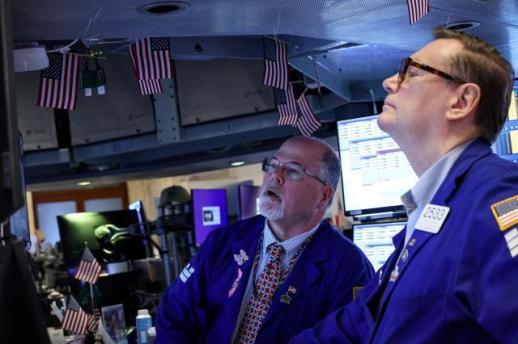 U.S. Stocks Close at Record Highs Amid Hopes for Extended U.S.-Iran Ceasefire U.S. stocks closed higher on expectations of an extended ceasefire between the U.S. and Iran. Despite concerns over inflation and slowing growth, optimism surrounding reduced geopolitical tensions bolstered investor sentiment. The S&P 500 and Nasdaq both set record closing highs for the third consecutive day. On May 28, the Dow Jones Industrial Average rose 24.69 points (0.05%) to close at 50,668.97, according to Reuters. The S&P 500 increased by 43.27 points (0.58%) to finish at 7,563.63, while the Nasdaq climbed 242.74 points (0.91%) to end at 26,917.47. The driving force behind the gains was the report of a potential extension of the U.S.-Iran ceasefire. Reuters reported that the U.S. and Iran have agreed on a draft to extend the ceasefire for 60 days, pending approval from President Donald Trump. However, Iranian news agency Tasnim noted that the draft has not yet been finalized or confirmed. The market reacted strongly to the possibility of reduced risks in the Middle East. Recent tensions, including the Iran conflict and disruptions in the Strait of Hormuz, had previously driven up both oil prices and inflation. As hopes for a ceasefire extension grew, concerns over energy-driven inflation eased, reviving interest in riskier assets. However, economic indicators remain a concern. The Personal Consumption Expenditures (PCE) price index for April rose at its fastest pace in three years. Additionally, the first-quarter GDP growth rate was revised down to an annualized 1.6%. With growth slowing and inflation remaining high, the Federal Reserve faces increased pressure regarding its monetary policy. Sector-wise, technology and healthcare stocks contributed significantly to the index gains. Microsoft shares rose 3.5% following reports of a new coding model launch. Eli Lilly gained 4% after CVS Health announced it would resume coverage for the obesity treatment, Zepbound. Snowflake's stock surged 36% after it raised its annual product revenue outlook and announced a $6 billion AI infrastructure contract with Amazon Web Services (AWS) over five years. Dollar Tree shares jumped nearly 18% after raising its annual profit forecast, while Best Buy's stock rose 15.8% as its second-quarter sales outlook exceeded market expectations. International oil prices showed mixed results. West Texas Intermediate (WTI) crude oil closed up 0.25% at $88.90 per barrel, while Brent crude fell 0.62% to $93.71 per barrel. The yield on the 10-year U.S. Treasury note decreased to 4.453%, and the dollar index fell 0.27% to 99.02.* This article has been translated by AI. 2026-05-29 07:00:00
 -
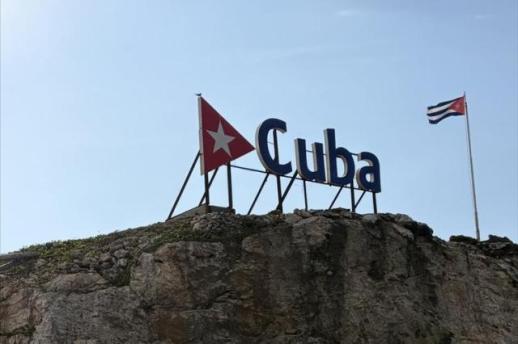 Axios: U.S. Prepares for Potential Collapse of Cuban Regime Reports indicate that the Trump administration is preparing scenarios in response to the potential collapse of the Cuban regime. The U.S. is applying pressure on the Cuban government through sanctions while also reviewing military plans in case of increased internal turmoil. According to Axios on May 28, U.S. officials believe that the Trump administration sees the potential for the Cuban government to collapse as early as this summer. However, President Trump has not authorized an invasion and reportedly prefers a peaceful transition of power. The U.S. strategy primarily focuses on economic pressure. A senior official described this approach as "accelerationism," stating, "We are not trying to topple the regime immediately. There are stages to this." This suggests a strategy to destabilize the regime while keeping options open for response if chaos ensues. Military responses are also being considered. Axios reported that the U.S. Southern Command, which oversees operations in the Caribbean, conducted a government-wide simulation exercise last month in preparation for the situation in Cuba. An official noted, "All options are on the table, but there are no plans for an invasion or any imminent action." The Trump administration's concern about potential unrest this summer is linked to ongoing power shortages and food crises in Cuba. The combination of extreme heat, power outages, and food shortages could lead to large-scale protests. Additionally, the Trump administration is targeting funding sources. On May 1, President Trump signed an executive order imposing secondary sanctions on companies dealing with the Cuban military-run conglomerate GAESA. Following this, Canadian mining company Sherritt International and shipping companies CMA CGM and Hapag-Lloyd reportedly ceased operations in Cuba. Political and legal actions have also followed. Secretary of State Marco Rubio emphasized the sanctions against GAESA as a key message of pressure on Cuba. The U.S. Department of Justice revealed that former Cuban National Assembly President Raúl Castro has been charged with conspiracy to commit murder and the killing of Americans in connection with the 1996 Brothers to the Rescue plane shootdown incident. However, U.S. officials are cautious about interpretations suggesting imminent military intervention. This month, the U.S. announced a $100 million aid package for the Cuban people, which will be distributed through the Catholic Church and charitable organizations rather than the government. The Cuban government views U.S. actions as an attempt to justify military intervention. Foreign Minister Bruno Rodríguez claimed in an interview with Fox News that the U.S. and Secretary Rubio are manipulating public opinion to legitimize military action.* This article has been translated by AI. 2026-05-29 06:56:00
 -
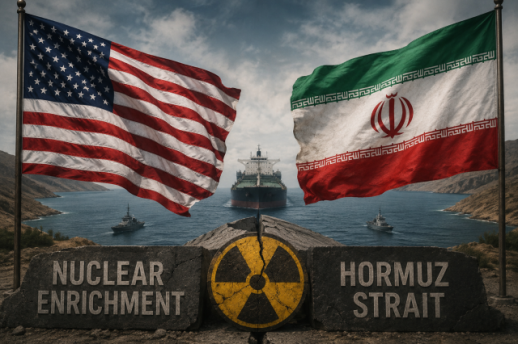 Iran Media Reports US-Iran Ceasefire Agreement Not Finalized Iran's TASS news agency reported that the ceasefire extension agreement between the United States and Iran has not yet been finalized. This comes amid reports that both sides have tentatively agreed to a 60-day extension, with Iran clarifying its position on the interpretation of a final deal. On May 28, Reuters cited sources close to the negotiations, stating that the draft of the agreement has not been finalized and that the approval process is still pending. According to Reuters, while the U.S. and Iran have reached a tentative agreement to extend the ceasefire for 60 days, approval from President Donald Trump and confirmation from Iranian leadership are still required. The tentative agreement reportedly includes discussions on Iran's nuclear program, sanctions relief, and navigation issues in the Strait of Hormuz during the extension period. However, as the final draft and approval process remain incomplete, specific conditions may change. The TASS report appears to counter claims from U.S. and Western media suggesting that an agreement is imminent. Iran emphasizes that coordination on the draft and confirmation from its leadership are still necessary, indicating a desire to leave room for negotiation on issues related to its nuclear program, sanctions relief, and navigation conditions in the Strait of Hormuz.* This article has been translated by AI. 2026-05-29 06:40:00
 -
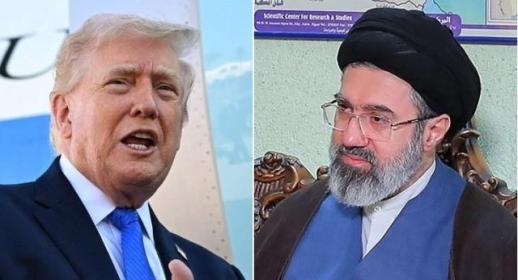 U.S. and Iran Reach Agreement on War Termination MOU, Awaiting Trump Approval U.S. media outlet Axios reported on May 28 that the United States and Iran have reached an agreement on a Memorandum of Understanding (MOU) aimed at ending hostilities, but final approval from President Donald Trump is still pending. According to Yonhap News and Axios, two U.S. officials and local sources involved in the negotiations indicated that additional discussions on nuclear-related issues, as requested by President Trump, are still necessary to finalize the agreement. U.S. officials stated that as of May 26, both sides had largely agreed on the terms of the negotiations. Notably, Iranian representatives conveyed to the U.S. that they were prepared to sign the MOU after receiving approval from their leadership. However, after reviewing the details of the final proposal from the U.S. negotiating team, President Trump did not immediately grant his approval. One U.S. official told Axios, "The president asked the mediators for a few days to think it over." U.S. officials indicated that the MOU would specify an extension of the ceasefire for 60 days, allowing unrestricted passage of vessels through the Strait of Hormuz. This means there will be no tolls or attacks aimed at disrupting maritime traffic, and Iran must remove all mines from the strait within 30 days, according to U.S. officials. 2026-05-29 06:34:00
 -
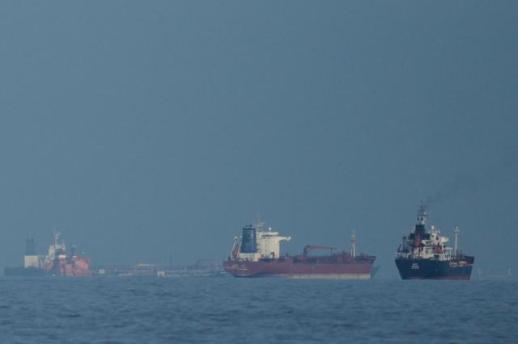 U.S. Warns of Punishment for Those Involved in Hormuz Toll Collection The United States has warned that it will punish individuals and organizations involved in the collection of tolls in the Hormuz Strait. This warning comes as Iran attempts to establish a toll collection system under the guise of navigation management, which the U.S. has made clear it will not recognize even during ongoing negotiations. On May 28, U.S. Treasury Secretary Scott Vesent stated on X (formerly Twitter) that "the U.S. government will not tolerate any attempts to implement a toll system in the Hormuz Strait." He specifically mentioned Oman, warning that "individuals and organizations that directly or indirectly support related activities could also be subject to sanctions." Oman, a country bordering Iran across the Strait, has played a mediating role between the U.S. and Iran. The U.S. mentioning Oman publicly is seen as a measure to prevent any involvement by Oman in Iran's toll collection plans. The U.S. has already designated Iranian organizations involved in this effort for sanctions. The Treasury Department classified the Persian Gulf Shipping Authority (PGSA), which Iran established to manage navigation in the Strait, as a funding mechanism for the Islamic Revolutionary Guard Corps (IRGC). According to the Treasury, the PGSA requires vessels to provide navigation permit information, mandates adherence to designated routes, and imposes fees. Indirect payments are also at risk of sanctions. According to Reuters, the Treasury's Office of Foreign Assets Control (OFAC) previously warned that payments made in the form of charitable donations or indirect transfers are not permitted. This includes nominal donations or digital asset payments that could also be subject to penalties. This warning comes amid ongoing discussions about extending the ceasefire between the U.S. and Iran and resuming navigation in the Strait. Reuters, citing sources, reported that both sides have agreed to a 60-day extension of the ceasefire and the lifting of navigation restrictions, although final confirmation from both countries is still pending.* This article has been translated by AI. 2026-05-29 06:28:00
 -
 Seoul Mayoral Debate Highlights Clash Between Accountability and Stability The only televised debate for the Seoul mayoral election ultimately showcased a direct clash between the themes of accountability and stability. However, what lingered in voters' minds after the debate was not the accountability of Oh Se-hoon, the candidate from the People Power Party, but rather the scrutiny surrounding Jung Won-o of the Democratic Party. The debate, organized by the National Election Commission, took place from 11 p.m. on May 28 to 1 a.m. on May 29, serving as a crucial moment just before early voting. In an unusual scenario where only one debate was held, the four candidates—Oh Se-hoon, Jung Won-o, Kim Jeong-cheol from the Reform Party, and Kwon Young-guk from the Justice Party—engaged in a heated discussion over pressing issues in Seoul, including real estate, the economy, the omission of rebar in the GTX project, the high-profile demolition disaster in Seosomun, and redevelopment challenges. In the early part of the debate, Jung Won-o raised the expected theme of the '10-year accountability' regarding Oh Se-hoon. He urged voters to judge Oh for his decade of incompetence, targeting his administrative performance, safety issues, and failures in housing supply. He criticized Oh for not visiting the site of the Seosomun demolition accident, stating, "His absence shows a lack of safety awareness." However, it was later confirmed that Oh had visited the site before Jung on the day of the incident and returned again later that afternoon. In contrast, Oh Se-hoon defended his record, asserting, "I have done everything possible to normalize Seoul over the past five years," emphasizing themes of stability and experience. He cited initiatives like the Rapid Integration Plan, revitalization of redevelopment and reconstruction, Seoul Run, and the Han River Renaissance, stating, "We are on the brink of becoming the world's third-largest city. I want to complete this overwhelmingly." He also expressed condolences to the victims' families from the safety incidents and promised to establish stricter safety standards and management systems. However, the debate unexpectedly shifted from Jung's attacks to scrutiny of his own past. The most pointed criticism came from Kim Jeong-cheol, who revisited Jung's past controversy regarding alcohol abuse, directly asking, "Did you ever force anyone to stay out overnight during drinking sessions?" In response, Jung claimed, "Bringing up unrelated topics only muddles the election." However, interpretations may vary on whether questions about a candidate's past conduct and morality are indeed unrelated to the debate topics. Voter judgment encompasses not only policy capabilities but also the candidate's qualifications, sense of responsibility, and crisis management skills. Jung's repeated defensive responses to related questions, labeling them as "smear campaigns," "negativity," and "unrelated topics," appeared to weaken his position. At times, he reacted somewhat emotionally. As a challenger expected to lead the attack, spending more time on defense rather than explanation was a missed opportunity. The controversy over Jung's avoidance of debates clearly weighed on him. On this occasion, Kim Jeong-cheol even brought a panel labeled 'Jung Won-o's Debate Avoidance Calendar,' claiming to have recorded every date Jung had evaded debate proposals. The Seoul mayoral election is the largest local election in the country, with the choice of 8 million voters at stake. Compared to past elections where multiple TV debates facilitated policy and qualification verification, the fact that this election concluded with only one official debate left voters feeling disappointed. Oh Se-hoon did not escape criticism either. Kwon Young-guk pressed him hard on the omission of rebar in the GTX project, asking, "Did you really not receive any reports on this?" Jung also targeted Oh over the Seosomun disaster and the shortfall in housing supply. In response, Oh stated, "I was not informed. I learned about it through the news," emphasizing that he was campaigning while under suspension from his duties. Regarding the housing supply criticism, he countered, "We are in the process of restoring the 389 redevelopment and reconstruction areas that were released during the Park Won-soon administration." Overall, while Oh faced attacks, he maintained a relatively calm demeanor, emphasizing experience and administrative continuity. In contrast, although Jung Won-o led with the theme of accountability, he found himself on the defensive due to overlapping issues of past controversies, including the alcohol abuse scandal and debate avoidance. Of course, one debate will not determine the election outcome. Seoul's public sentiment often remains concealed until the last moment. However, it is clear that this debate centered more on the scrutiny surrounding Jung Won-o than on the theme of 'holding Oh Se-hoon accountable.'* This article has been translated by AI. 2026-05-29 06:22:00
 -
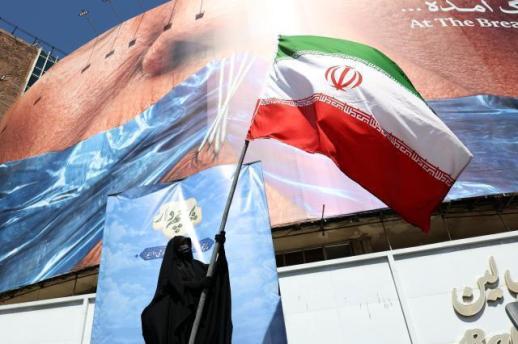 Iranian Military Launches Missiles at 'Specific Targets' in Southern Iran The Iranian military launched missiles toward specific targets in southern Iran on the night of May 28, according to the Fars news agency. The Guardian reported that the destination of the missiles remains unclear, and there has been no confirmation of any damage. Details about the targets, including their location and nature, have not been disclosed. It is also uncertain whether this missile launch is directly linked to other military activities occurring in the Gulf region on the same day. This news comes amid heightened tensions in the Strait of Hormuz and the Gulf area. On the same day, Mehr news agency reported that the Iranian military conducted warning shots toward vessels near the Strait of Hormuz. The Guardian also noted ongoing incidents involving U.S. and Iranian forces. On the diplomatic front, discussions are ongoing regarding an extension of the ceasefire. Reports indicate that the U.S. and Iran are considering a 60-day extension and the initiation of final agreement negotiations, but Iranian officials have stated that no agreement has been finalized. The missile launch complicates the situation, making it difficult to determine the intended target. However, it is seen as a variable that increases uncertainty in the context of military tensions and ceasefire negotiations.* This article has been translated by AI. 2026-05-29 06:20:00
 -
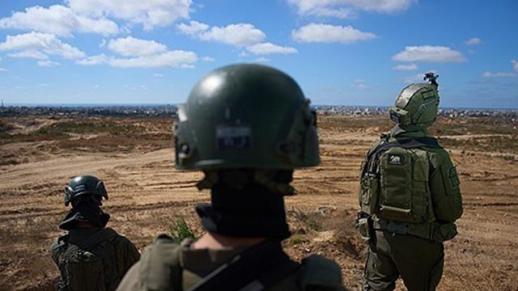 Netanyahu Orders Israeli Forces to Expand Control in Gaza to 70% Benjamin Netanyahu, the Prime Minister of Israel, has instructed the Israeli military to expand its control over the Gaza Strip to 70%. This directive indicates a push beyond the control line established in the ceasefire agreement of October 2025. On May 28, during an event in a West Bank settlement, Netanyahu stated, "We were at 50%, and we moved to 60%. My instruction is to gradually increase our presence in Gaza." He added, "First, let’s aim for 70%. We are pressuring Hamas from all directions." The key issue is the extent of control. According to the October 2025 ceasefire agreement, Israeli forces were to withdraw to a line known as the 'yellow line,' which would leave approximately 53% of the Gaza Strip under Israeli jurisdiction. However, Reuters estimates that Israeli effective control and restricted areas currently cover about 64%. Netanyahu's directive aims to increase this to 70%. Reports indicate that Israel has also adjusted its baseline. Reuters previously reported that Israel moved the concrete blocks marking the yellow line further into Gaza. Netanyahu has framed this action as a measure to pressure Hamas and secure a buffer zone, claiming it is necessary to prevent threats similar to the Hamas attack on southern Israel in October 2023. Palestinian representatives and human rights organizations have criticized this move, arguing it could exacerbate forced displacement and humanitarian crises. If Israel controls 70% of Gaza, the living space for over 2 million residents would shrink to less than one-third of the total area. The ceasefire in Gaza is already under strain. According to Reuters, Israeli airstrikes have continued even after the ceasefire, with Gaza health authorities reporting over 900 deaths due to Israeli attacks. During the same period, Israel reported that four of its soldiers were killed in attacks by armed groups.* This article has been translated by AI. 2026-05-29 06:10:00
 -
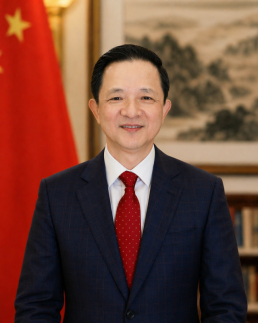 Do Not Mislead the Public with False Information About China Recently, President Lee Jae-myung criticized a South Korean media outlet for spreading false news that "Chinese nationals purchased 944 apartments in Gangnam, Seoul," which he said incited anti-China sentiment. The outlet later issued a public apology, acknowledging serious factual errors in its reporting and removed the article. President Lee's actions were well-received by citizens of both countries. China and South Korea are important neighbors and partners, and strengthening friendly cooperation is the only correct choice for both sides. However, some South Korean media outlets have fabricated and disseminated false news about China to attract attention and increase viewership or for undisclosed political motives. They have exaggerated individual cases, misrepresented biases as facts, and intentionally damaged the image of China and Chinese nationals in South Korea, creating obstacles to improving bilateral relations and ultimately harming South Korea's image and national interests. For instance, claims such as "China interfered in South Korean elections" and "99 Chinese spies were sent to U.S. military bases" have been clearly debunked by South Korea's National Election Commission and the National Intelligence Service. Allegations that "the crime rate among Chinese nationals in South Korea is high" have been shown to confuse absolute figures and ratios. According to the Korean National Police Agency, the crime rate among Chinese nationals is significantly lower than that of locals. The assertion that "fine dust from China affects South Korea's air quality" ignores China's significant improvements in air quality. In fact, in recent years, nearly 90% of days in Chinese cities have seen good air quality, and the fine dust in Seoul is largely unrelated to China. The claim that "all Chinese students in South Korea are spies" is also baseless. Chinese expatriates and students in South Korea are deeply integrated into local society, promoting friendly cooperation and actively contributing to South Korea's economic and social development. Last year, approximately 5.78 million Chinese tourists visited South Korea, and the number has significantly increased this year, strongly boosting industries such as aviation, hospitality, retail, and food service. According to estimates from the Bank of Korea, an increase of 1 million Chinese tourists could raise South Korea's GDP growth rate by about 0.08 percentage points. Over 3 million South Koreans visited China last year, and this year has also seen a significant increase, leading to active "mutual visits" between the two countries. South Koreans who traveled to China have shared photos and videos on social media showcasing China's natural landscapes, historical and cultural sites, cuisine, and trendy figures, presenting an open, friendly, and harmonious image of China. Additionally, many South Korean media outlets are actively reporting on China's economic and technological advancements, emphasizing the need to leverage opportunities and strengthen cooperation with China. At the end of last year and the beginning of this year, the leaders of China and South Korea successfully conducted reciprocal visits, opening a new chapter in bilateral relations. Exchanges and cooperation across various fields, as well as friendly sentiments among citizens, continue to rise. Media outlets in both countries should contribute to fostering a more objective, rational, and inclusive understanding between their peoples, creating a positive atmosphere that propels bilateral relations to a higher level. Freedom of the press does not equate to the freedom to spread falsehoods. It is hoped that individual South Korean media outlets will adhere to journalistic ethics, base their reports on facts regarding China, and view China from an objective and fair perspective, refraining from misleading readers with false information and slander. Seeing is believing. We sincerely welcome more South Koreans to visit China and experience its multifaceted, vibrant, and open society firsthand.* This article has been translated by AI. 2026-05-29 06:02:00