

Journalist

Sohn Jie-ae
-
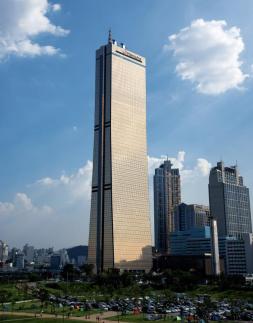 Hanwha Insurance Subsidiaries Upgraded to 'A+' by S&P Amid Improved Profitability and Stability Hanwha Group's insurance subsidiaries have achieved a top-tier global credit rating. On May 29, financial sources reported that Standard & Poor's (S&P), one of the world's three major credit rating agencies, upgraded the credit ratings of Hanwha Life and Hanwha General Insurance from 'A' to 'A+'. The rating outlook is classified as 'Stable.' In its report, S&P stated, "Hanwha Life is expected to maintain a solid market position in the domestic market based on a stable business foundation and a broad sales network that includes Hanwha Life Financial Services. The company's sales strategy, centered on profitable protection insurance, is projected to enhance future profitability, as indicated by the insurance contract margin (CSM) showing growth potential." S&P further noted, "The growth of premiums is ongoing, and the investment portfolio, primarily consisting of high-quality long-term bonds, is expected to remain stable. Profits generated by overseas subsidiaries in Indonesia and Vietnam accounted for approximately 19% of Hanwha Life's consolidated net income as of 2025, supporting its profitability." A representative from Hanwha Life commented, "This recognition reflects the competitiveness of our core insurance business and the successful diversification strategy through global expansion and subsidiaries, which is translating into tangible profits. We will continue to strengthen our growth foundation based on stable financial health to enhance corporate value." The upgrade for Hanwha General Insurance is attributed to the strengthened capital adequacy and stable profit generation capabilities across the Hanwha Financial Group. The strategic importance of achieving service synergies between life and non-life insurance has also been acknowledged. A representative from Hanwha General Insurance stated, "Receiving the 'A+' rating officially recognizes our solid financial structure and profit-generating capacity on the global stage. We will strive to become a trusted insurance company for our customers through stable capital management."* This article has been translated by AI. 2026-05-29 09:36:00
 -
 Jung Dong-won's Agency Vows Legal Action Against Rumors Jung Dong-won's agency has announced a strong response to various rumors surrounding the singer. On May 29, Showplay Entertainment stated, "We have taken actions such as warnings and requests for the removal of posts regarding malicious slander, defamation, the spread of false information, and the dissemination of baseless rumors targeting Jung Dong-won." The agency added, "Recently, actions have escalated beyond simple malicious postings, with individuals posing as fans to spread completely unfounded information or distort and exaggerate specific situations to create negative public sentiment. These actions have also incited conflicts within the fandom and have caused harm to our partner companies, continuously obstructing the artist's activities." They further noted, "While these actions may outwardly resemble typical fan activities, they are actually damaging the artist's image and creating confusion within the fandom, which we are taking very seriously." Finally, the agency emphasized, "We prioritize the protection of the artist's rights and will continue to pursue strong legal action against the dissemination of false information, defamation, malicious slander, and the creation and spread of rumors, as well as actions impersonating fans or inciting conflicts within the fandom, without any leniency or settlement." Meanwhile, Jung Dong-won enlisted in the Marine Corps in February.* This article has been translated by AI. 2026-05-29 09:36:00
 -
 U.S. PCE Index Rises 3.8%, Signaling Renewed Global Inflation U.S. inflation has risen again. The Bureau of Economic Analysis (BEA) reported that the Personal Consumption Expenditures (PCE) price index increased by 3.8% in April compared to the same month last year, marking the highest rate of increase since May 2023. Excluding energy and food, the core PCE also rose by 3.3%, indicating persistent inflationary pressures. The PCE is a key price indicator that the Federal Reserve considers when making monetary policy decisions. Market attention is focused more on the trend than the numbers themselves. Until last year, there were growing expectations that inflation would gradually ease and the Fed would begin cutting interest rates. However, the April data suggests that those expectations may have been premature. The conflict between the U.S. and Iran, rising energy prices from the Middle East, tariff burdens, and the costs of supply chain restructuring have pushed the U.S. economy back into a prolonged period of high inflation and high interest rates. The immediate cause of the price increase is energy prices. Concerns over the Iran conflict and the blockade of the Strait of Hormuz have driven up oil prices, with April energy price increases leading the PCE rise. Reports indicate that gasoline and other energy product prices rose by 5.5% compared to the previous month. Energy is not just a simple consumer item; it acts as the economic blood pressure, pushing up logistics costs, manufacturing expenses, and service prices. However, the issue cannot be solely attributed to the war. The U.S. economy was already facing structural inflationary pressures. Tariff policies have increased import price burdens, while the AI investment boom is simultaneously stimulating demand for electricity, data centers, semiconductors, and construction. The shift from a China-centric supply chain to reshoring and friend-shoring is also raising costs. The era of low-price globalization is ending, giving way to a more expensive security-oriented economic order. Wall Street's anxiety stems from this situation. The market once viewed a Fed interest rate cut as a foregone conclusion. However, as inflation has risen back into the high 3% range, expectations for rate cuts have significantly diminished. Some economists are suggesting that the Fed may maintain the current benchmark interest rate of 3.50% to 3.75% for an extended period. U.S. interest rates set the benchmark for the global economy. If U.S. rates remain high, the dollar strengthens, putting pressure on emerging market currencies and capital markets. South Korea is no exception. A delay in U.S. rate cuts will limit the Bank of Korea's monetary policy options. A high exchange rate will push up import prices, directly impacting the cost of living in South Korea, which heavily relies on energy and raw materials. Particularly, South Korea faces significant household and self-employed debt burdens. Prolonged high interest rates will reduce consumer spending capacity and increase financial pressures on the real estate market and small businesses. While a weaker won may benefit some exporters, the overall population will face rising import prices and living costs. The resurgence of global inflation will inevitably burden the South Korean economy. History shows the high cost of underestimating inflation. After the oil shocks of the 1970s, the U.S. experienced stagflation, where inflation and recession occurred simultaneously. While it cannot be definitively stated that the current situation mirrors that era, it is clear that energy shocks and geopolitical risks can stimulate inflation expectations, warranting vigilance. South Korea has clear steps to take. First, it should not rely solely on expectations of interest rate cuts. Second, it must review its energy import structure and stockpiling systems. Third, it needs to provide targeted support to vulnerable groups to alleviate price burdens without compromising fiscal health. Fourth, enhancing productivity in AI, semiconductors, and manufacturing is essential to build resilience against a high-cost economy. The 3.8% rise in the U.S. PCE is not just a foreign price indicator; it serves as a warning that the global economy is once again facing the shadow of inflation. What is needed now is neither hasty optimism nor excessive fear, but rather calm judgment and proactive preparation. This is the fundamental and sensible approach to navigating the newly reignited era of global inflation.* This article has been translated by AI. 2026-05-29 09:34:00
 -
 KOSPI Opens Strong, Surging Over 2% on Optimism and AI Rally The KOSPI opened higher on May 29, buoyed by easing geopolitical risks in the Middle East and a rally in artificial intelligence (AI) stocks. As of 9:07 a.m. KST, the KOSPI had risen 204.53 points (2.50%) to 8,389.82, after starting the day at 8,384.31, up 199.02 points (2.43%).U.S. markets closed higher overnight, with the S&P 500 and Nasdaq Composite both reaching record highs, gaining 0.58% and 0.91%, respectively, on May 28. The Dow Jones Industrial Average also rose by 0.05%.The market's upward momentum was fueled by optimism surrounding the easing of tensions in the Middle East. Reports indicated that the U.S. and Iran were finalizing a memorandum of understanding (MOU) to end hostilities, pending final approval from President Donald Trump, which improved investor sentiment.Additionally, AI stocks continued to perform well. Snowflake, a cloud data company, saw its shares soar by 36.48% after raising its annual revenue forecast and announcing a long-term contract with Amazon Web Services (AWS). This surge also lifted major semiconductor stocks, with Nvidia rising 0.78% and AMD climbing 4.55%. The Philadelphia Semiconductor Index increased by 1%.In terms of trading activity, both retail and institutional investors were net buyers, purchasing 627.9 billion won and 398.4 billion won, respectively, while foreign investors sold off 1.068 trillion won.Among the top market cap stocks, most showed gains except for LG Energy Solution, which fell by 0.90%. Samsung Electronics rose by 5.51%, SK Hynix by 2.97%, SK Square by 1.21%, Hyundai Motor by 6.06%, Samsung Electro-Mechanics by 5.62%, HD Hyundai Heavy Industries by 1.14%, Samsung Life Insurance by 1.26%, and Samsung C&T by 3.50%.Conversely, the KOSDAQ index turned negative, showing a decline of 12.07 points (1.09%) to 1,092.29. It had initially opened at 1,112.15, up 7.79 points (0.71%), but reversed course due to selling pressure from foreign and institutional investors.In the KOSDAQ market, retail investors were net buyers of 124.6 billion won, while foreign and institutional investors sold 120.3 billion won and 4.1 billion won, respectively.Among the top KOSDAQ stocks, EcoPro BM fell by 3.20%, EcoPro by 3.73%, Kolon TissueGene by 3.28%, Rino Technology by 0.81%, Peptron by 3.28%, and HLB by 1.09%. In contrast, Alteogen rose by 0.68%, Rainbow Robotics by 1.14%, Jusung Engineering by 5.53%, and Samchundang Pharm by 6.07%.Han Ji-young, a researcher at Kiwoom Securities, noted, "Today’s domestic market is expected to rebound due to renewed optimism over U.S.-Iran negotiations, a strong performance in KOSPI 200 night futures, and the impact of Dell's surge in after-hours trading, which is providing recovery momentum to sectors that had previously seen significant declines. The previous day's geopolitical uncertainties and the emergence of dissenting opinions regarding interest rate hikes by the Bank of Korea have also contributed to market volatility."* This article has been translated by AI. 2026-05-29 09:26:00
 -
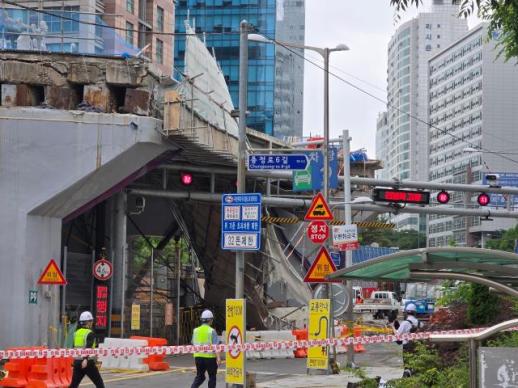 Labor Department Launches Investigation into Collapse at Seosomun Overpass Construction Site Authorities have launched a forced investigation into the collapse at the Seosomun overpass construction site in Seodaemun-gu, Seoul. The Ministry of Employment and Labor's Southern Seoul Office announced on May 29 that it is conducting a joint search with the Seoul Metropolitan Police Agency at the headquarters of the construction company, Heung-Hwa Construction, related to the incident. About 40 personnel, including labor inspectors and police, are involved in the search. Investigators aim to secure relevant documents, such as structural design plans and safety management plans, to determine whether the demolition work adhered to design standards and if appropriate safety measures were implemented to mitigate collapse risks. On May 26, a structure collapsed at the Seosomun overpass demolition site, resulting in the deaths of three men: one in his sixties and two in their fifties. Three others were injured in the incident. The Ministry plans to investigate the entire safety management system on-site, including the process of issuing work orders and the actual work methods employed. It will focus on identifying the causes of the fatalities. Following the accident, the Ministry established a dedicated investigation team of 15 members, primarily consisting of labor inspectors, to begin the inquiry. If the investigation reveals violations of the Industrial Safety and Health Act or the Serious Accident Punishment Act, the Ministry intends to hold responsible parties legally accountable. A Ministry official stated, "Based on the materials secured through the search, we will closely examine the circumstances of the accident and the implementation of safety measures. We plan to actively utilize forced investigations, including searches and arrests, in cases where there are significant casualties or where basic safety protocols were not followed."* This article has been translated by AI. 2026-05-29 09:26:00
 -
 SK Telecom to Launch Integrated 4G and 5G Plans in July SK Telecom (SKT) is set to launch a new pricing plan that integrates its 5G and LTE services, completely overhauling its pricing structure to ensure basic communication even after data is depleted. Starting in July, SKT will implement a phased update to its pricing system, which includes the launch of a 5G and LTE integrated plan, automatic application of age-based benefits, and free data assurance for all citizens, the company announced on May 29. The new plan, named 'Best Light,' will be available on July 2 and is designed to eliminate distinctions between network generations. It will consist of five unlimited data options ('Best') priced between 89,000 and 129,000 won per month, and 11 tiered data options ('Light') offering between 6GB and 250GB, priced from 39,000 to 79,000 won per month. Users of existing 5G devices will no longer be restricted to LTE networks when using LTE plans; they will have the flexibility to utilize both 5G and LTE networks as long as their devices support them. The existing ten pricing plans will also be consolidated into the new integrated plan, starting from the 20,000 won range. The method of applying benefits will also be simplified. Previously, customers had to enroll in separate age-specific plans to receive additional benefits, but now, customers who sign up for 'Best Light' will automatically receive age-based perks. For instance, upon reaching the age of 65, customers will receive an automatic 1.5GB data boost, and youth and student customers will get 50% discount coupons for coffee, movies, and roaming services. Additionally, subscribers to 'Best Pro' and higher plans will gain access to generative AI subscription benefits. Beginning July 1, SKT will also offer a 'Data Assurance Option (QoS)' for 107 LTE plans at no extra charge. This service allows customers to continue using communication services at speeds of up to 400kbps even after their basic data has been exhausted. Customers can opt out of this service through T World, authorized dealers, or by calling 114 if they prefer not to use it. The bundled plans will also be revamped starting July 1. The 'Recent Family Bundle' will remove the requirement for one line each of mobile and internet services, allowing customers to join by bundling only mobile lines, thereby lowering the entry barrier. Enrollment will also be available through non-face-to-face methods. Yoon Jae-woong, head of SKT's Product and Brand Division, stated, "We hope this pricing system overhaul will allow customers to use communication services more easily and comfortably. We will continue to enhance and improve our service system for customer convenience in the future." Meanwhile, LG Uplus announced on May 28 that it will launch its own integrated 5G and LTE pricing plan starting July 1, simplifying its pricing structure from 53 plans down to 18.* This article has been translated by AI. 2026-05-29 09:24:00
 -
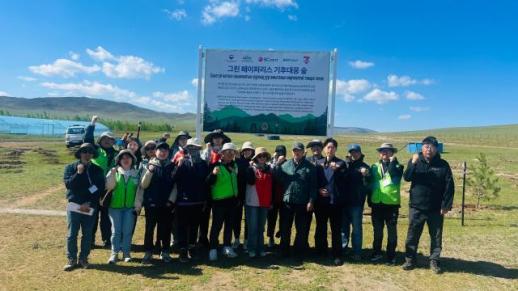 BC Card Expands Afforestation Project in Mongolia to Combat Desertification BC Card is expanding its afforestation efforts in Mongolia to combat desertification. The company announced on May 29 that it will utilize its 'Paperless' environmental fund and 'Green Card' fund to plant an additional 10 hectares of forest annually in the Bayanchandmani area of Mongolia through 2028. The Paperless environmental fund was established in 2012 through a partnership between BC Card and the Korea Environmental Industry and Technology Institute. It operates a system that eliminates the printing of card receipts. Currently, when participating merchants, such as BGF Retail and 7-Eleven, skip printing receipts, the savings from reduced value-added network (VAN) fees and receipt issuance costs are accumulated by BC Card to support the environmental fund. From 2019 to last year, BC Card and the Korea Environmental Industry and Technology Institute used the Paperless environmental fund to plant over 60,000 trees in the Ugiin Urt area of Mongolia, creating a cumulative forest area of 60 hectares. They also supported the installation of irrigation facilities essential for the continued growth of the trees. In addition, programs to assist local residents in achieving economic independence are being implemented. BC Card plans to continue providing agricultural training to local herders and support the expansion of local crop sales and job creation through a cooperative established in 2020 to help develop markets for local produce. Kim Hee-jung, head of BC Card's Communication Division, stated, "The small efforts of our customers to refrain from printing receipts in their daily lives are blossoming into a vast eco-friendly forest that is preventing desertification in Mongolia and transforming the air quality in Northeast Asia. We will continue to engage in diverse ESG management activities utilizing the Paperless environmental fund to lead the protection of the global environmental ecosystem." Meanwhile, the Mongolian government has been promoting a 'Billion Trees Campaign' since 2021 to combat desertification, and BC Card is supporting this initiative alongside NGOs and local governments.* This article has been translated by AI. 2026-05-29 09:22:00
 -
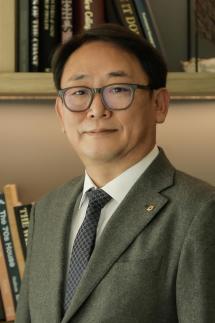 DaeShin Securities CEO Jin Seung-wook Focuses on Stability and Growth Jin Seung-wook's leadership at DaeShin Securities emphasizes 'stability after expansion.' Recently, the firm surpassed 4 trillion won in equity, meeting the criteria for entering the large investment banking sector. The focus now shifts from mere growth to whether this can be translated into a sustainable growth structure. Jin, a 'one-club man' with over 30 years at DaeShin and its affiliates, faces the challenge of transforming a retail-focused brokerage into a corporate finance and asset management platform based on investment notes. A Strategic Leader Driving Change at DaeShin SecuritiesJin Seung-wook is a representative strategic CEO who has grown within DaeShin Securities. He joined the company in 1993 through a public recruitment process and has since gained experience across various sectors, including global business, strategic support, management planning, DaeShin F&I, and DaeShin Asset Management. His unique background combines sales, finance, strategy, and affiliate operations.His leadership aligns with DaeShin Securities' current situation. The firm has rapidly expanded its capital in recent years, achieving significant growth. By the end of 2025, its standalone equity reached 4.1316 trillion won, and it was designated as a comprehensive financial investment business operator. The remaining tasks include obtaining large investment bank approval and entering the investment note business.The challenge begins here. Becoming a large investment bank requires more than just capital size; a stable revenue structure, internal controls, and risk management capabilities are essential. Financial authorities have recently emphasized internal controls and financial soundness as key factors in the approval process for large investment banks. This is why under Jin's leadership, there is a focus on both 'growth' and 'substance.'Upon taking office, he identified 'establishing a stable revenue base,' 'customer-centric management,' and 'strengthening risk management' as core tasks. This is not merely a declaration of conservative management; it signifies a shift towards substantial improvement following expansion.Ultimately, the crux of Jin Seung-wook's leadership is whether DaeShin Securities can evolve from a mid-sized brokerage into a stable capital market platform. Simultaneously Enhancing Wealth Management Stability and Investment Banking ProfitabilityDaeShin Securities is traditionally recognized for its strong retail and wealth management (WM) capabilities. As of the fourth quarter of last year, total WM assets reached 108 trillion won, a 38% increase from the previous year. The number of clients with assets exceeding 100 million won also rose significantly to 74,400.This is a vital asset for DaeShin Securities. A stable customer base and competitive asset management become strengths amid increasing market volatility. Jin aims to maintain this foundation while simultaneously expanding corporate finance and investment banking capabilities.Recently, DaeShin Securities has restructured its investment banking organization. The previous system has been changed to a '1 general manager, 3 divisions, 3 responsibilities' structure, focusing on enhancing corporate lending, refinancing, and IPO capabilities. Preparations for the investment note business are also part of this trend.Jin opts for balance here. Rather than pursuing aggressive global expansion like Mirae Asset Securities, he aims to strengthen both WM stability and IB profitability. This approach aligns with DaeShin's pragmatic strategy.The company's performance is also showing improvement. Last year, DaeShin Securities reported a consolidated operating profit of 301.4 billion won and a net profit of 186.7 billion won, with increases in brokerage, interest income, and trading profits. However, the decline in IB commission income indicates that strengthening IB capabilities remains a key challenge.Ultimately, Jin's strategy is clear: to build IB competitiveness on a stable WM foundation and transition into a large investment bank. The Key to Becoming a Large Investment Bank: Risk ManagementThe most significant test for Jin Seung-wook's leadership will be risk management. DaeShin Securities is considered a brokerage with a relatively high exposure to real estate finance and overseas real estate investments. As of the end of last year, the balance of securitized debt guarantees was approximately 4.3 trillion won, exceeding its equity.This is a critical variable in the process of obtaining large investment bank approval. Financial authorities consider not only capital size but also sustainable revenue structures and internal control systems. Recent cases of some brokerages facing difficulties in obtaining investment note approvals due to internal control issues have been interpreted as a warning to the market.DaeShin Securities has also faced internal control issues in the past due to allegations involving some employees in stock price manipulation. In response, the company implemented stringent measures, including the dismissal of related employees and restrictions on stock trading.Jin views this aspect as a top priority. He emphasizes strengthening risk management systems and compliance over aggressive growth. In fact, the market tends to evaluate his leadership more as a 'stability-focused strategist' rather than an 'expansion-oriented CEO.'Ultimately, Jin Seung-wook's entrepreneurial spirit in finance is not merely about aggressive management. He aims to connect DaeShin Securities to a long-term growth structure through the establishment of a 'stable system' necessary after capital expansion. Becoming a large investment bank is just a goal; the real challenge lies in ensuring sustainability thereafter.: SWOT Analysis :StrengthJin Seung-wook's leadership strength lies in his balanced experience in strategy, finance, and affiliate operations. He possesses a high understanding of the internal dynamics needed to lead both WM stability and large investment bank initiatives.WeaknessThere are evaluations that DaeShin's IB competitiveness is still limited compared to larger brokerages. The burden of real estate finance exposure is also seen as a weakness.OpportunityObtaining large investment bank approval and entering the investment note business present new growth opportunities. Expanding WM assets can also serve as a stable revenue base.ThreatThe real estate market downturn, interest rate volatility, and increased financial regulations pose key risks. The potential for recurring internal control issues may also impact market trust.* This article has been translated by AI. 2026-05-29 09:20:00
 -
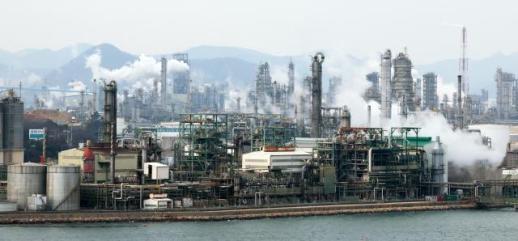 Korea's April industrial activity and spending retreat on Gulf energy shocks SEOUL, May 29 (AJP) - The energy shocks from months-long disruption of the Strait of Hormuz from the Middle East conflicts arrived on South Korean shores, battering industrial activity, corporate and consumer spending in April, data showed Friday. Factory output fell 0.7 percent from the previous month in April, the first contraction since January, as the refining sector was hit hard by the suspension of shipments from the Gulf, according to the Ministry of Statistics and Data. Industry-wide output stood at 117.8 in April, down 0.6 percent from the previous month in the first decline since January. Refining production collapsed 19.4 percent, marking its sharpest decline in roughly 38 years since 1988 in the aftermath of the Asian financial crisis and nationwide industrial restructuring, underscoring the depth of the Hormuz shock. 2026-05-29 09:19:21
 -
 Samsung Elec joins Anthropic funding round, fueling expectations of foundry order SEOUL, May 29 (AJP) - Samsung Electronics has taken a stake in Anthropic, the U.S. artificial-intelligence company behind the Claude model, in a deal that has raised expectations the South Korean firm will manufacture AI chips for Anthropic through its loss-making foundry business. Anthropic said on Thursday in the United States that it had raised $65 billion in a Series H funding round that valued the company at $965 billion, or about 1,440 trillion won — figures that rank among the largest private fundraisings and highest private valuations on record. The world's three memory-chip makers — Samsung Electronics, SK hynix and Micron Technology — joined the round as "strategic infrastructure partners." Anthropic said the trio's technology plays a core role in the global supply of memory, storage and logic chips, and that the partnerships would help it expand its computing capacity to meet customer demand. Neither Anthropic nor Samsung has confirmed a specific foundry order. The reference to logic chips is the basis for the foundry speculation. Logic chips are produced through foundry processes, and of the three memory companies in the round, only Samsung Electronics operates a foundry — neither SK hynix nor Micron has a foundry division. The industry has therefore read Anthropic's statement as a signal that the partnership extends beyond memory into contract manufacturing, with Samsung positioned to produce the AI chips that power Claude. Anthropic, regarded alongside OpenAI as one of the world's leading AI-model developers, would become a major addition to a Samsung foundry customer list that has been rebuilding in recent months. Samsung has already secured orders for Tesla's next-generation AI5 and AI6 chips, and produces the upgraded version of the AI4. It manufactures the Groq 3 Language Processing Unit, an inference chip originally designed by Groq and now produced for Nvidia following Nvidia's $20 billion licensing acquisition of Groq's core technology in late 2025. Samsung is also set to supply image sensors for Apple's new iPhone next year. That matters because the foundry has been a drag on Samsung's earnings for several years. As of 2025, the company held second place in the global foundry market with a 7.2 percent share, but TSMC of Taiwan led at 69.9 percent — a gap of 62.7 percentage points. The recent run of customer wins is not expected to close that share gap meaningfully in the near term, but it has revived hopes the foundry unit itself could return to profit next year, an aim more modest than catching the market leader. The Anthropic investment is being read in the industry as a step beyond a financial stake. Samsung has positioned itself as a "one-stop solution" provider combining high-bandwidth memory, advanced foundry processes and advanced packaging, an offering it is now extending into AI-infrastructure partnerships. As the AI market evolves from a memory-supply contest into a broader ecosystem spanning chip design, production, packaging and system optimization, the company appears to be using its full semiconductor portfolio to deepen relationships with the AI sector's most important players. "Samsung's investment is not a simple equity stake in an AI company but a signal that Samsung is broadening strategic relationships with the core players of the AI era," a person in the semiconductor industry said. "Expectations are growing that Samsung's foundry business may seize another opportunity as the AI market expands." 2026-05-29 09:19:11