
Journalist

Thomas Gift
-
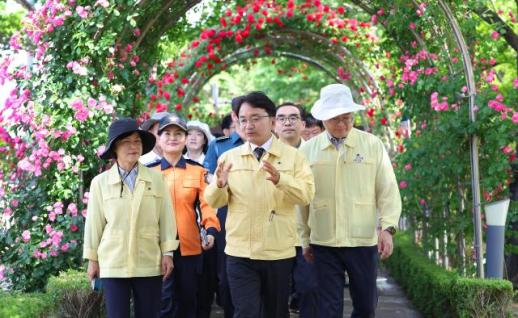 Ministry of Interior Inspects Safety Measures for Jungnang Rose Festival The Ministry of Interior announced that Kim Kwang-yong, head of the Disaster and Safety Management Bureau, visited the site of the Jungnang Rose Festival in Seoul's Jungnang District on May 15 to assess safety management measures for the event. The Jungnang Rose Festival, which began in 2009, is celebrating its 18th edition this year. The festival features a 5.45-kilometer rose tunnel along the Jungnang Stream, showcasing 320,000 roses of 232 varieties. Over the past two years, the festival has attracted more than 3 million visitors each year. With a large number of tourists expected this year, thorough safety management is essential due to concerns about crowd congestion along the viewing paths. Kim Kwang-yong chaired a meeting with officials from the Jungnang District, police, and fire departments to review safety measures, including crowd control, fire prevention, and emergency response plans. After the meeting, he inspected key routes within the festival area, checking intelligent CCTV systems and emergency call buttons for crowd management. He paid particular attention to the 'Second Yeonnyuk Bridge,' where bottlenecks could occur, ensuring the installation of central dividers and guiding pedestrians to keep to the right. Additionally, he confirmed the access routes for ambulances in case of emergencies and encouraged personnel at the joint situation room responsible for on-site safety, emphasizing the importance of close cooperation among agencies. Kim Kwang-yong stated, "The government will work with relevant agencies to ensure that the public can enjoy the festival safely and return home without incident. I also urge visitors to actively cooperate with safety personnel to maintain order at the event."* This article has been translated by AI. 2026-05-15 15:04:16
 -
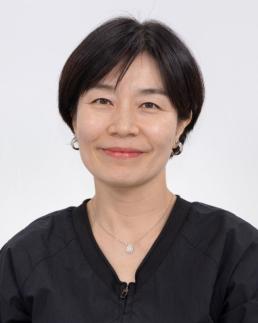 New Appointments in South Korea's Ministry of Health and Customs Service President Lee Jae-myung appointed Hyun Soo-yeop as the new Deputy Minister of Health and Welfare and Lee Jong-wook as the Commissioner of the Korea Customs Service on May 15. This reshuffle comes less than a year after both officials were initially appointed.Lee Gyu-yeon, senior secretary for public relations at the Blue House, announced the personnel changes during a briefing at the Chunchugwan.Hyun Soo-yeop, the new Deputy Minister, is a seasoned bureaucrat who has held key positions in the ministry, including Director of Population and Child Policy and Head of Childcare Policy.Lee noted that Hyun, a working mother of four, has significantly contributed to improving the working conditions for childcare teachers and implementing on-site childcare systems. He described her as the right person to build a comprehensive social safety net that encompasses both welfare and health.Regarding Lee Jong-wook, the new Customs Commissioner, Lee highlighted his success in uncovering large-scale illegal exports and collaborating with the Thai government to crack down on drug trafficking. He emphasized that Lee is well-suited to support stable trade and investment activities for domestic companies while preventing customs violations that threaten public safety.Hyun Soo-yeop and Lee Myung-koo were appointed in June and July of last year, respectively, with Hyun being designated as the 'Dedicated Deputy Minister for Social Isolation' just two days prior to this announcement.When asked about the reasons for the personnel changes, Lee Gyu-yeon acknowledged the challenges of starting a new role and expressed gratitude for the contributions both officials made in laying the groundwork for policies in their respective fields. He added that the new appointments are expected to lead to more efficient and elevated policy development.Additionally, President Lee appointed Moon Sung-yo, the Planning and Coordination Director at the Ministry of Land, Infrastructure and Transport, as the new head of the Saemangeum Development Agency, following the vacancy left by Kim Ui-gyeom's candidacy for a by-election in Gunsan, Gimje, and Buan.Lee Gyu-yeon described Moon as a veteran bureaucrat in land and urban development, noting his role in establishing the infrastructure for administrative-centered complex cities and developing the Busan-Ulsan-Gyeongnam master plan. He expressed optimism that Saemangeum will play a significant role in becoming a hub for future advanced industries such as robotics, hydrogen, and artificial intelligence (AI).Furthermore, President Lee appointed Hong Mi-young, a former lawmaker, as chair of the Sustainable Development Commission, Kim Ki-young, a professor at Yonsei University, as chair of the National Library Commission, and Baek Jong-woo, a professor in the Department of Mental Health at Kyung Hee University, as vice chair of the National Safety Commission.* This article has been translated by AI. 2026-05-15 15:01:39
 -
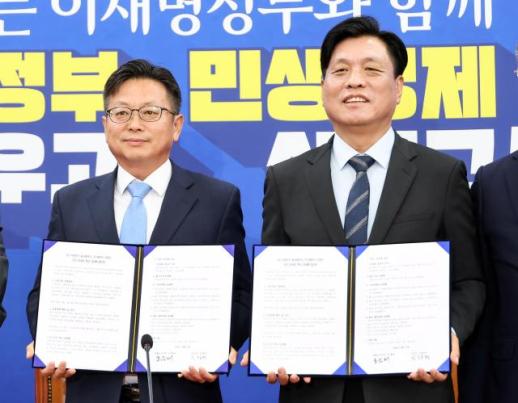 Intensifying Political Maneuvering Ahead of Local Elections in South Korea The National Election Commission will close candidate registration for the June 3 local elections and the National Assembly by-elections on May 15. As the deadline approaches, political parties are intensifying their strategies around candidate unification, which is seen as a key factor in the elections. On May 15, the Democratic Party and the Progressive Party held a press conference at the National Assembly, announcing their agreement on a unified candidate for the Ulsan mayoral election, as well as for several local government positions in Ulsan and the mayor of Busan's Yeonje District. This means that Democratic candidate Kim Sang-wook and Progressive candidate Kim Jong-hoon will compete in a primary determined entirely by public opinion polls. The day before, Hwang Myung-pil, the candidate from the Justice Party, withdrew his candidacy in support of Kim Sang-wook, effectively finalizing the unification within the progressive camp. As a result, Kim Du-gyeom of the People Power Party and independent candidate Park Maeng-woo will compete against the unified progressive candidate. Although Kim Du-gyeom and Park Maeng-woo had previously announced a halt to their own unification efforts, the rapidly changing political landscape has raised the possibility of resuming those discussions. In addition to the Ulsan mayoral race, unification efforts in Pyeongtaek and Busan's North District are also expected to influence the elections. In Pyeongtaek, three candidates from the progressive camp—Democratic candidate Kim Yong-nam, Justice Party leader Jo Guk, and Progressive Party chair Kim Jae-yeon—are running against People Power Party candidate Yoo Yi-dong, a former three-term lawmaker, and Hwang Kyo-ahn, the leader of the Liberty and Innovation Party and a former Prime Minister during the Park Geun-hye administration. Particular attention is focused on the potential unification between Kim Yong-nam and Jo Guk. However, political analysts suggest that their past contentious exchanges, with Kim having been labeled a 'target' by Jo, may complicate the unification process. The decision of Kim Jae-yeon could also be a significant variable; if the progressive unification fails, it could benefit the conservative candidates. In the North District, a three-way race is shaping up between Democratic candidate Ha Jung-woo, People Power Party candidate Park Min-sik, and independent candidate Han Dong-hoon, a former leader of the People Power Party. Analysts suggest that if Park Min-sik and Han Dong-hoon do not unify, Ha Jung-woo may have the advantage. Unification is considered the most significant variable in this election. The first deadline for unification is set for the candidate registration closure on May 15, with registration open until 6 p.m. Candidates may choose to withdraw to support a single candidate, enhancing their chances. The second deadline is anticipated on May 17, as ballots will be printed on May 18, aiming to minimize the risk of wasted votes. A third deadline is set for May 20, with the Democratic Party and Progressive Party aiming to finalize the Ulsan mayoral unification by this date. Official campaigning begins on May 21, making it strategic to complete unification beforehand. Finally, May 28, the day before early voting, is proposed as the ultimate deadline. Candidates who withdraw by this date will have their status reflected on the early voting ballots, reducing voter confusion. Although unification can still occur after this date, past trends suggest that the impact may be limited due to high early voting rates.* This article has been translated by AI. 2026-05-15 15:00:00
 -
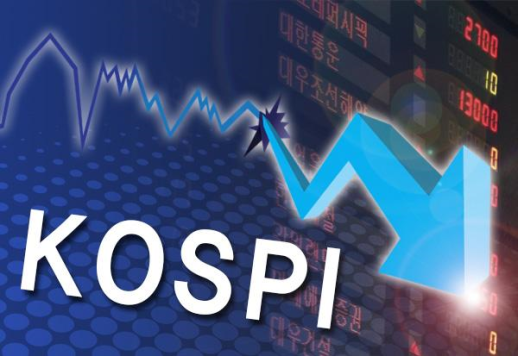 KOSPI Surges Past 8000 Before Sharp Decline, Breaking Below 7500 The KOSPI index briefly surpassed the 8000 mark for the first time in history but then plummeted by over 5% due to a wave of profit-taking, falling below 7500 to around 7400. According to the Korea Exchange, as of 2:46 PM, the KOSPI was trading at 7456.55, down 524.86 points (-6.58%) from the previous trading day. The index opened at 7951.75, down 29.66 points (-0.37%) from the previous day, but managed to rise above 8000 early in the session. However, a rapid influx of profit-taking, primarily from foreign investors, quickly expanded the decline. At approximately 1:28 PM, a sell-side circuit breaker was triggered due to sudden fluctuations in the KOSPI 200 futures index, halting program sell orders for five minutes. This was the first activation of a sell-side circuit breaker in the KOSPI market since April 2. Lee Kyung-min, a researcher at Daishin Securities, noted, "Although the KOSPI initially broke the 8000 mark for the first time, it turned bearish and retreated toward the 7500 level. The recent concentration on large semiconductor stocks has intensified, leading to a rapid rise followed by profit-taking pressure due to a normalization of this concentration and rising bond yields." Han Ji-young, a researcher at Kiwoom Securities, commented, "The surge in the dollar/won exchange rate back to around 1500 won has led to increased foreign net selling. There is also a burden from the rapid 20.9% increase in the KOSPI since May 1 and the aftereffects of extreme concentration in a few sectors." In the main stock market, individual investors have made a net purchase of 5.4633 trillion won to support the index. In contrast, foreign and institutional investors have focused on profit-taking, selling a net 4.7857 trillion won and 779.2 billion won, respectively. Most of the top market capitalization stocks are showing declines. Samsung Electronics is down 8.61%, SK Hynix is down 7.92%, SK Square is down 6.49%, Hyundai Motor is down 2.11%, LG Energy Solution is down 5.43%, Samsung Electro-Mechanics is down 1.76%, Doosan Enerbility is down 5.72%, HD Hyundai Heavy Industries is down 5.37%, and Samsung Biologics is down 1.86%. The KOSDAQ index has also turned downward. At the same time, the KOSDAQ was recorded at 1138.07, down 53.02 points (-4.45%) from the previous trading day. The index initially rose to 1197.23 but quickly reversed as investor sentiment weakened. In the KOSDAQ market, foreign investors have made a net purchase of 131.8 billion won, while individuals and institutions have sold a net 64.1 billion won and 17.3 billion won, respectively. The top market capitalization stocks in the KOSDAQ are also experiencing declines. Alteogen is down 3.77%, EcoPro BM is down 7.08%, EcoPro is down 8.01%, Rainbow Robotics is down 3.33%, Kolon TissueGene is down 2.10%, Samchundang Pharm is down 4.20%, Rino Technology is down 9.19%, Rigakem Bio is down 2.45%, HLB is down 2.82%, and ABL Bio is down 5.18%. 2026-05-15 14:55:25
 -
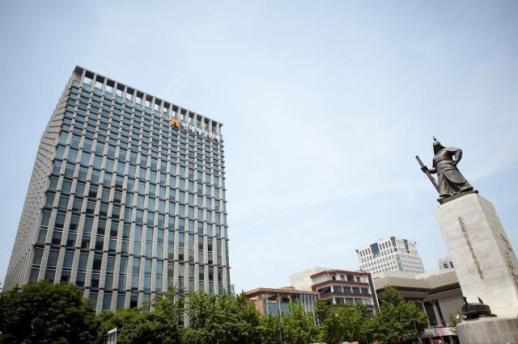 Hyundai Marine & Fire Insurance Reports 1st Quarter Net Profit of 223.3 Billion Won Hyundai Marine & Fire Insurance reported an increase in net profit for the first quarter of 2026, driven by improvements in long-term insurance, despite losses in auto insurance and poor investment performance. The company announced on May 15 that its standalone net profit for the first quarter reached 223.3 billion won, a 9.9% increase compared to the same period last year. The growth was primarily led by long-term insurance, which saw profits rise to 265.9 billion won, a 132.5% increase year-on-year. This improvement was attributed to a slowdown in the growth of actual payouts compared to expected claims, enhancing the gap between expected and actual insurance payouts. Additionally, managing a portfolio focused on high-profit products contributed to maintaining profitability. General insurance profits also increased by 9.4% to 50.2 billion won, thanks to the absence of unusual factors such as large claims and a stable overall loss ratio. However, the auto insurance segment faced challenges, reporting a loss of 14 billion won, marking a shift from profit in the previous year. This downturn was influenced by the cumulative effects of premium reductions implemented until 2025 and rising compensation costs. Investment performance also declined significantly, with investment income dropping by 94.3% to 6.1 billion won compared to the same period last year. This was due to valuation losses from bonds and alternative investments resulting from rising interest rates. Nevertheless, the company anticipates that if interest rates stabilize in the second quarter, some of these valuation losses may be recovered. The insurance contract margin (CSM), a future profitability indicator, stood at 9.17 trillion won, reflecting a 0.7% increase year-on-year. Hyundai Marine & Fire Insurance is managing a portfolio of high CSM products to ensure strong profitability. Furthermore, solvency indicators improved, with the solvency ratio (K-ICS) reaching 207.2% at the end of the first quarter, an increase of 17 percentage points from the end of the previous year. This improvement was achieved through duration matching management, which reduced market interest rate volatility, along with a decrease in required capital due to the improved gap between expected and actual payouts.* This article has been translated by AI. 2026-05-15 14:53:07
 -
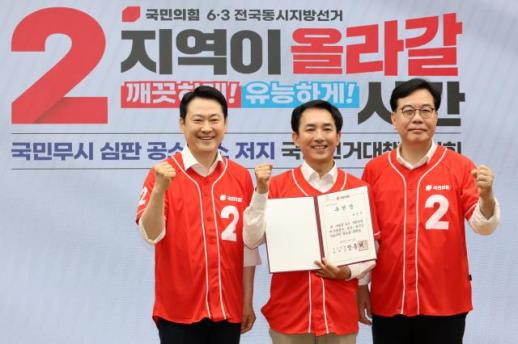 Calls for Candidate Unification in Busan North District Amid Tensions Jang Dong-hyuk, leader of the People Power Party, dismissed calls for candidate unification in the Busan North District by-election on May 15, stating, "It is not the behavior of a general preparing for battle to discuss unification before candidate registration is even complete." His comments come amid demands for unification between Park Min-sik, the party's candidate, and independent candidate Han Dong-hoon.In a post on Facebook, Jang emphasized that "a mere calculation of votes does not align with conservative values." He asserted, "The People Power Party must win this local election, as we are the last bastion protecting South Korea's liberal democracy and the lives of our citizens. However, victory cannot be the sole objective. It cannot be the path to unification or victory itself."He added, "Candidates nominated by the party must remember this. The issue of unification should follow the will of the party members and the party. If any conditions are attached to unification, it must be left to the party's decision in accordance with the members' wishes."Earlier, Jin Jong-oh, a lawmaker aligned with Han Dong-hoon, urged the party leadership to pursue unification among opposition candidates in Busan North District. Jin stated on Facebook, "Unification is the only way to initiate conservative integration and rebuilding, responding to the demands of the public. If we stubbornly cling to meaningless competition without addressing the public's needs, we will inevitably be rejected by the people."He pointed out that recent polls indicate about 65% of conservative voters in Busan North District support unification, yet the party leadership is ignoring this. Jin argued that unification is not a choice for a specific individual but a minimal responsibility to consolidate supporters' wishes and reduce political confusion.He insisted, "We must start the first step toward a new conservatism in Busan North District to halt the reckless governance of the Lee Jae-myung administration. What is needed now is not silence but a decisive action. I urge the party leadership to actively pursue unification for conservative integration and rebuilding."Tensions regarding candidate unification continue within and outside the party. Party member Cho Kwang-han stated on YTN Radio the previous day, "Han should yield to Park and quickly return to Seoul; that is the right answer." He suggested that if Han were to withdraw from the race to unify with Park, he would consider reinstating Han's party membership positively.In response, former party member Kim Jong-hyuk remarked, "It seems the Yoon Again faction is flustered by Han's surprising performance in a three-way race in North District. After this local election, regardless of the outcome, the Yoon Again faction will politically collapse." He added, addressing Cho, "The one leading that collapse should be more concerned about their own future after the local elections rather than who to reinstate."* This article has been translated by AI. 2026-05-15 14:49:53
 -
 Asia's next harvest held hostage by the drawn-out Hormuz disruption SEOUL, May 15 (AJP) - The Middle East war that began with oil is now squeezing Asia's soil. Nearly three months into the closure of the Strait of Hormuz, the disruption that first hit refineries and shipping desks is migrating into rice paddies, urea silos and government budgets across a continent that feeds more than half the world's population. About one-third of global seaborne fertilizer trade and roughly 35 to 45 percent of world urea exports normally pass through the narrow Gulf corridor, according to the U.N. Food and Agriculture Organization. Daily tanker transits have collapsed by more than 90 percent since hostilities erupted on Feb. 28, effectively severing Asia's most important agricultural lifeline. The result is a slow-burning crisis with a long tail. Energy prices spiked first. The deeper damage is now reaching the inputs that determine next season's harvest — and the harvest after that. "Agriculture operates within a crop calendar that cannot be postponed," FAO Director-General Qu Dongyu said on May 7 at a ministerial meeting in Rome. "Fertilizers must be applied at specific moments in the crop cycle. If they do not arrive on time, yields are reduced, regardless of what happens later." The FAO estimates that between 1.5 million and 3 million tons of fertilizer trade per month have been delayed since the war began. Middle Eastern granular urea jumped nearly 20 percent in a single week after the initial strikes; by mid-April, urea prices had risen around 52 percent in the United States and 60 percent in Brazil. The World Bank now expects overall fertilizer prices to climb 31 percent this year, with urea potentially up 60 percent against 2025 levels. For Asia, the geography of the shock is unforgiving. The Gulf is not merely an oil supplier but the engine of the region's nitrogen fertilizer supply, with Saudi Arabia ranked as the world's largest urea exporter and Oman among the top five. India, the world's second-largest fertilizer consumer, has felt the squeeze first and hardest. Urea import bids surged from around $510 per ton in February to nearly $950 by April, while domestic production fell from a typical 2.5 million tons a month to roughly 1.5 million tons in March as LNG supplies from Qatar were rerouted, according to government and industry data. New Delhi avoided an outright shortage only by paying premium spot prices — at a cost. The country's fertilizer subsidy bill is now expected to exceed 2 trillion rupees, well above the budgeted level. Prime Minister Narendra Modi has urged farmers to reduce fertilizer use as part of a broader austerity drive to defend the rupee. Bangladesh, where roughly 53 percent of fertilizer imports originate in the Gulf, has shut four of its five domestic fertilizer plants for lack of natural gas feedstock, leaving the country dangerously exposed ahead of its monsoon planting season. The damage extends across Southeast Asia, the world's rice basket. The Philippine Department of Agriculture has warned that rice output could fall by as much as 20 to 50 percent owing to soaring fertilizer and fuel costs, compounded by looming El Niño conditions, with the country now forced to import a potentially record 6.9 million tons of rice this year. "We are currently facing an energy crisis, but we believe that this energy crisis can eventually lead to a food crisis," Senator Francis Pangilinan told a Senate hearing in Manila in April. "And therefore we have to prepare." Rice farmers in Thailand and Vietnam — the world's two largest rice exporters — are scaling back fertilizer use as costs collide with stagnant paddy prices. Indonesia, already heavily reliant on imported urea, has tendered for emergency phosphate cargoes through state-owned Pupuk Indonesia to stabilize domestic supply. The chain reaction reaches into Northeast Asia. About 40 percent of South Korea's urea and ammonia imports — critical raw materials for nitrogen fertilizer — pass through the Strait of Hormuz, according to the Korea International Trade Association. Major Gulf suppliers including Industries Qatar and Saudi Arabia's SABIC Agri-Nutrients have declared force majeure on shipments to Asia. Seoul's Ministry of Agriculture, Food and Rural Affairs convened an emergency review in March and has since extended freight and war-risk subsidies for fertilizer importers — limited relief for a country whose grain self-sufficiency hovers near 20 percent, with wheat self-sufficiency at roughly 2 percent. The second-order effects are now coming into focus. Fertilizer applied in narrow planting windows means even a delay of weeks translates directly into smaller harvests. Removing nitrogen can cut wheat yields by more than half; inadequate phosphorus can reduce rice yields by around 30 percent, the FAO has warned. What alarms agronomists most is the lag. Higher food prices grab headlines, but the structural damage accumulates quietly — thinner farmer margins, depleted soil fertility, sliding productivity and a multi-year drag on output. The FAO projects tightened global food supplies through the second half of 2026 and into 2027. The U.N. Development Programme estimates that a prolonged disruption could push 8.8 million people across Asia-Pacific into poverty and subtract between $97 billion and $299 billion from regional output. The shock spreads beyond food. Gulf shipments also carry sulfur — vital for phosphate fertilizers, mining and metallurgy — along with methanol and monoethylene glycol, key feedstocks for the plastics, textiles and packaging that anchor Asian manufacturing supply chains. China has responded by expanding export controls on nitrogen and phosphate fertilizers to protect domestic supply. Others have fewer options. For now, Asia's grain silos remain comparatively full, cushioned by last year's strong harvests and FAO food price readings that have risen only modestly. That buffer will not last if the war drags into the autumn planting season. "This is not only a geopolitical crisis," Qu said in Rome. "It is a disruption at the core of the global agri-food system." 2026-05-15 14:47:27
 -
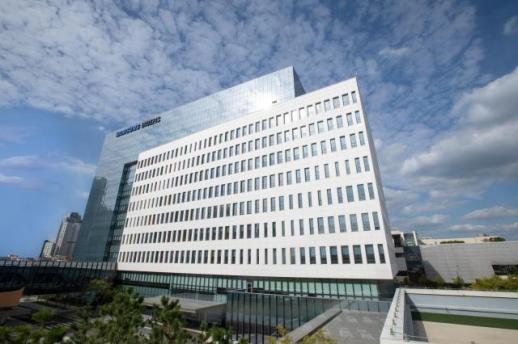 Samsung Bioepis Expands Open Innovation for Obesity and ADC Drug Development Samsung Bioepis is accelerating its drug development efforts by collaborating with external biotech ventures. The company is emphasizing open innovation as it expands from biopharmaceutical research into new drug areas. According to industry sources, Samsung Bioepis signed a memorandum of understanding (MOU) last month with the Atlas Innovation Center, a Chinese biotech growth support organization, to enhance global open innovation collaboration. This marks the company's first partnership with an overseas open innovation institution, aimed at proactively securing promising early-stage technologies. Atlas provides research infrastructure and clinical trial services in major biotech hubs such as Beijing, Shanghai, and Singapore, facilitating collaboration between global pharmaceutical companies and biotech ventures. The company plans to utilize this network to identify promising biotech firms from the initial research stage and expand its collaboration scope by leading the design and operation during clinical development. By sharing the financial and regulatory burdens that biotech ventures face during clinical trials, Samsung Bioepis aims to secure high-potential technologies early on. Recently, the company has also initiated the "2026 Seoul Biohub-Samsung Bioepis Open Innovation Program" in partnership with the Seoul Biohub, focusing on discovering domestic biotech startups capable of linking technologies such as antibody and peptide-based therapies and artificial intelligence (AI) drug development platforms. The new drug pipeline is expanding, focusing on peptide-based obesity treatments and antibody-drug conjugates (ADCs). Samsung Bioepis is developing an obesity treatment that combines glucagon-like peptide-1 (GLP-1) technology with long-lasting efficacy, aiming for a single administration to maintain effects for several months. In March, the company entered into a joint research and licensing agreement with domestic biotech firm G2G Bio in collaboration with the biotech platform company Episenex Lab. This approach is seen as a strategy to differentiate itself in the obesity treatment market, currently dominated by major pharmaceutical companies. The focus is on improving dosing convenience while reducing development risks based on proven technologies and gradually seeking market entry. In the ADC sector, the first drug candidate, SBE303, has begun global Phase 1 clinical trials, with preclinical results recently presented at AACR 2026. This candidate combines the company's antibody with linker technology from domestic firm Intecelle and payload from Chinese company Frontline, developed through open innovation. A second drug candidate, SBE313, is also under joint research and development with Frontline. Samsung Bioepis aims to secure at least one clinical-stage drug candidate each year. Kim Kyung-a, CEO of Samsung Bioepis, confirmed the company's focus on expanding its business around new drug development during the first regular shareholders' meeting of the year. The company plans to reinvest profits generated from its biosimilar business into new drug development while strengthening its strategy to quickly connect external candidates to new drug development based on accumulated analytical and processing capabilities. A Samsung Bioepis representative stated, "We plan to accelerate the acquisition and development of various drug candidates targeting unmet medical needs through open innovation."* This article has been translated by AI. 2026-05-15 14:46:02
 -
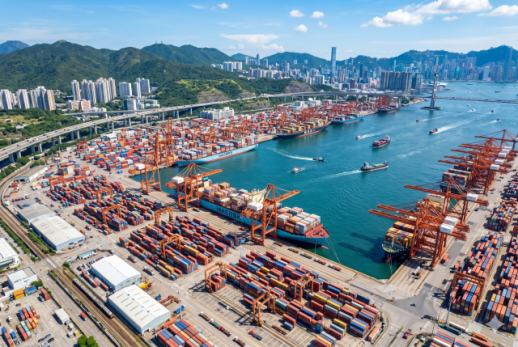 ASIA INSIGHT: While Hormuz burns, Hong Kong ships AI revolution As conflict turns the Middle East into a maritime graveyard, the Pearl River Delta is quietly monopolizing the world's most valuable supply chain. At the Kwai Tsing Container Terminals, the air carries the scent of ozone and hydraulic fluid. There are no bulk carriers of iron ore or massive tankers of crude lining the piers today. Instead, the focus is on a single, climate-controlled container being winched onto a freighter bound for the Port of Long Beach. Inside are high-density server racks and neural processing units manufactured less than thirty miles away in Shenzhen. This is the new architecture of Hong Kong’s economy—a pivot from the generalist trade of the past to the high-stakes hardware of the future. The geopolitical landscape of 2026 is defined by a brutal contraction. As the conflict involving Iran escalates, the Strait of Hormuz has essentially closed to commercial traffic, causing global energy prices to breach 120 dollars per barrel. While this has paralyzed industrial hubs in Europe and threatened the energy security of Northeast Asia, it has paradoxically accelerated a shift in Hong Kong’s economic utility. The city is no longer merely a financial outpost; it has become the primary physical gateway for the artificial intelligence supercycle, leveraging its proximity to Shenzhen to monopolize the global supply chain for advanced computing components. The numbers reveal a stark divergence from the global trend. According to the latest quarterly report from the Census and Statistics Department of Hong Kong, the territory’s gross domestic product expanded by 5.9 percent in the first quarter of 2026. This represents the fastest growth rate in five years. The engine of this expansion is a 24 percent real-term increase in the export of goods, a figure recently verified by the World Trade Organization’s regional monitor. This surge relies entirely on the relentless global demand for the semiconductors, precision components, and specialized circuitry produced in Shenzhen, the undisputed Silicon Valley of China. The structural importance of this regional axis becomes clear when compared to neighboring maritime giants. The Port of Shanghai remains the world’s largest by volume, handling roughly 47 million twenty-foot equivalent units annually, but its operations are heavily weighted toward bulk manufacturing and heavy industrial output. Similarly, the Port of Busan in South Korea has seen its growth stagnate at less than two percent this year, grappling with severe won-dollar currency pressure and a sharp decline in traditional automotive exports. Hong Kong has opted to cede the battle for sheer tonnage to focus on value density. Electronic components now account for 70 percent of Hong Kong’s total export value, according to data from the Hong Kong Trade Development Council. This specialization provides a unique insulation against the current Middle Eastern crisis. While the closure of Hormuz has forced global shipping to reroute and caused maritime insurance premiums to spike, the astronomical margins of AI hardware absorb these logistical costs far more effectively than the low-margin commodities handled by other Asian ports. A single container of high-end graphics processing units carries a market value thousands of times greater than a container of steel or textiles. By acting as the premier outlet for Shenzhen’s technology sector, Hong Kong effectively decouples its growth from the traditional vulnerabilities currently hobbling global trade. The persistent narrative of Hong Kong’s irrelevance fundamentally misunderstands the mechanics of modern commerce. The city offers the legal, operational, and financial infrastructure required to move sensitive, high-value technology across borders during a period of intense global scrutiny, acting as a sophisticated translation layer that turns Chinese engineering into liquid capital. As long as the global arms race for computing power continues, the path to the future will lead directly through the Kwai Tsing terminals. The world order may be fracturing, but the desperate demand for the next intelligence age ensures that Victoria Harbour remains the most valuable stretch of water in Asia. 2026-05-15 14:44:00
 -
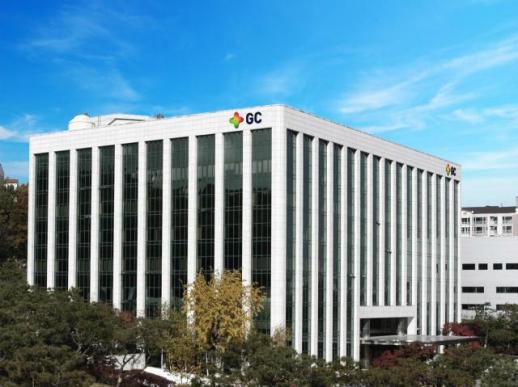 GC Green Cross Joins AI Drug Development Platform Project GC Green Cross announced on May 15 that it has been selected as a key research institution for the "AI-Medicine Drug Development Full Cycle Multi-Agent AI Platform Construction and Demonstration" project, led by the Ministry of Science and ICT. This initiative is a national project with a total government funding of approximately 17.7 billion won over 57 months. It aims to establish a system where large language model (LLM)-based specialized AI agents collaborate to carry out the entire drug development process, from target discovery to preclinical candidate selection. GC Green Cross will be responsible for the "platform demonstration," which involves validating and optimizing the candidate substances identified by the AI platform through actual experiments. The company expects this will enhance the predictive accuracy of AI models and reduce the time required for discovering new drug candidates. The company possesses the capability to conduct the entire drug development process, from small molecule synthesis to drug activity and efficacy evaluation, as well as non-clinical research. Its prior experience in implementing and utilizing various AI platforms was also a factor in its selection for this project. The domestic pharmaceutical industry currently faces a shortage of professionals capable of understanding statistics and handling diverse pharmaceutical data. Since 2020, the company has operated an AI Data Center to disseminate AI big data across its research and development efforts. The project is overseen by Yonsei University, with Aizen, Hitz, Mokam Life Science Research Institute, and the Korea Biotechnology Research Institute responsible for AI platform development, while GC Green Cross, Daewoong Pharmaceutical, and Yonsei University will handle platform validation. Jae-wook Jeong, head of R&D at GC Green Cross, stated, "We will enhance the completeness of the AI platform based on our accumulated drug development experience and contribute to strengthening the global competitiveness of the domestic bio industry."* This article has been translated by AI. 2026-05-15 14:42:51