
Journalist

Tom Stacey
-
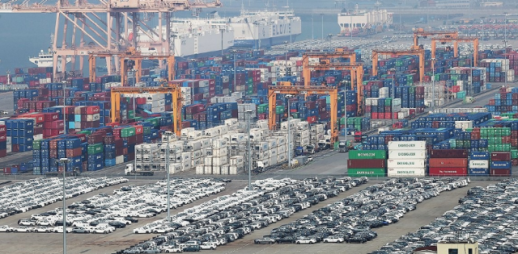 South Korea Exports Top $80B for Second Straight Month on AI Chip Surge South Korea’s exports stayed above $80 billion for a second straight month in April, extending the momentum after first crossing the threshold in March, led by a sharp rise in semiconductor shipments tied to the global boom in artificial intelligence. With the Middle East war sending shock waves across industries, exports are being seen as a key support for the economy. According to Yonhap, the Ministry of Trade, Industry and Energy released April trade figures on Thursday. Exports rose 48.0% from a year earlier to $85.89 billion despite the war in the Middle East. After never having posted a $70 billion month, South Korea exceeded $80 billion in March for the first time and remained above that level in April. April’s total was the second-highest monthly export figure on record, following March’s $86.6 billion. Average daily exports, adjusted for working days, also rose 48.0% to $3.58 billion, topping $3 billion for a third consecutive month. Semiconductors drove the gains. Chip exports surged 173.5% to $31.9 billion, the second-highest monthly total on record after $32.8 billion in March. Semiconductors exceeded $30 billion for a second straight month and posted a record for the month for the 13th consecutive month. Auto exports fell 5.5% to $6.17 billion, as logistics disruptions from the Middle East war and increased local production in the United States following U.S. tariffs weighed on shipments. Exports of eco-friendly vehicles, including electric and hybrid models, increased. Petroleum product exports rose 39.9% to $5.11 billion on higher oil prices, but export volumes fell 36.0%. The ministry said exports of gasoline (down 43.0%), diesel (down 23.2%) and kerosene (down 99.9%) dropped sharply from a year earlier after export control measures were introduced for petroleum products. Petrochemical exports increased 7.8% to $4.09 billion, though export volumes fell 20.9% as domestic supply rose. Among 15 major export items, eight posted gains, including computers ($4.08 billion, up 515.8%) and wireless communications equipment ($1.62 billion, up 11.6%). Exports to China climbed 62.5% to $17.7 billion, extending gains for a sixth straight month on stronger shipments of semiconductors and other IT products such as computers and wireless communications equipment. Exports to the United States rose 54.0% to $16.33 billion, led by items such as semiconductors and computers that were described as exempt from tariffs. Shipments to ASEAN rose 64.0% to $15.41 billion, and exports to the European Union increased 8.5% to $7.19 billion, also supported by semiconductors. Exports to the Middle East, however, fell 25.1% to $1.27 billion due to factors including logistics disruptions. Imports increased 16.7% to $62.11 billion. Energy imports rose 7.5% to $10.61 billion, while non-energy imports climbed 18.8% to $51.51 billion. The trade balance posted a $23.77 billion surplus in April, extending the surplus streak to 15 months. Industry Minister Kim Jeong-gwan said April marked the first time the country recorded exports of more than $80 billion and a trade surplus of more than $20 billion for two consecutive months while the Middle East war continued for more than two months. He attributed the results to expanding global AI investment, higher unit prices for petroleum products amid rising oil prices, and companies securing supply chains in advance. Kim warned that export volatility could increase due to intensifying competition in key products and difficulties in securing raw materials linked to the Middle East war. He said the government would seek to reduce burdens on companies through marketing, financing and insurance support and policies to diversify export markets, while actively using trade networks to secure additional alternative supplies of crude oil and naphtha. * This article has been translated by AI. 2026-05-01 10:18:18
 -
 Apple's incoming CEO signals new products as quarterly revenue hits record SEOUL, May 01 (AJP) - Apple's incoming chief executive John Ternus voiced strong confidence in the company's product pipeline, hinting at new categories on the horizon as the iPhone maker posted record fiscal second-quarter revenue. Speaking on a conference call on Thursday (local time) after Apple reported results for the January-March quarter, Ternus, who takes the helm in September from Tim Cook, said the company had "an incredible roadmap" ahead and was preparing fresh offerings, though he declined to disclose details. "Suffice it to say, this is the most exciting time in my 25-year career at Apple to be building products and services.," Ternus said, suggesting work was under way on new product forms. He pledged to carry on the financial discipline that defined Cook's 15-year tenure. Apple posted revenue of $111.18 billion for the quarter, up 17 percent from a year earlier and surpassing the LSEG consensus estimate of $109.66 billion for an all-time high in the period. Earnings per share came in at $2.01, beating Wall Street's $1.95 forecast. iPhone sales jumped 21.7 percent to a record $56.99 billion but fell just shy of the $57.21 billion analysts had projected, while the iPad, Mac, wearables and services divisions all topped expectations. Services revenue reached $30.98 billion, and research and development spending climbed 33.6 percent to $11.42 billion as the company widened its artificial intelligence push. Cook flagged supply constraints during the quarter, particularly for the iPhone, tied to limited capacity at advanced chip nodes operated by Taiwan's TSMC, and warned that the squeeze would tighten in the April-June quarter. 2026-05-01 10:02:18
 -
 Holiday Weekend Forecast: Cool Mornings, Highs Up to 26C; Dry Air and Poor Dust in Seoul Area Saturday, the second day of the holiday weekend, is expected to bring chilly mornings and evenings but warmer conditions during the day. Yonhap News Agency reported Friday that morning lows are forecast at 8C to 16C, with daytime highs of 19C to 26C. Temperatures are expected to vary by about 15C between day and night, and starting on the 3rd, readings are forecast to fall below seasonal averages. With dry weather alerts in effect, the air will be very dry in Seoul, inland parts of the Chungcheong region, northeastern inland North Jeolla Province and inland North Gyeongsang Province. Authorities urged caution against wildfires and other fire risks. Skies will be mostly cloudy nationwide. Fine dust levels are expected to be "bad" in the greater Seoul area and "moderate" elsewhere, due to inflow of dust from overseas. Concentrations are forecast to ease gradually from the south. Waves are expected at 0.5 to 2.0 meters in the East Sea, 0.5 to 1.0 meters in the Yellow Sea and 0.5 to 1.5 meters in the South Sea. In offshore waters about 200 kilometers from the coast, wave heights are forecast at 0.5 to 2.0 meters in the East Sea and 0.5 to 1.5 meters in the Yellow Sea and South Sea.* This article has been translated by AI. 2026-05-01 09:42:17
 -
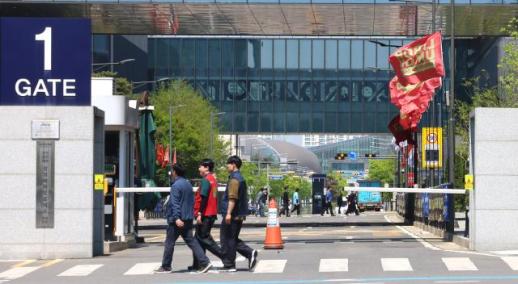 UPDATE: Samsung Biologics union demands immediate talks as first-ever strike begins SEOUL, May 1 (AJP) - Samsung Biologics, the world's largest contract drug manufacturer by volume, was rocked on Friday by the first full-scale walkout in its 15-year history, with the union demanding management return to the bargaining table at once and the company warning of losses of up to 640 billion won ($434 million). The Samsung Biologics chapter of the Samsung Group labor union launched the strike on Friday, Labor Day, after 13 rounds of wage talks since December collapsed without a deal. The union has vowed to walk off the job through May 5. In a sharply worded statement issued as the strike began, the union accused executives of resorting to legal pressure and intimidation rather than substantive dialogue, blaming boardroom missteps — chronic understaffing, aggressive cost-cutting, and decisions made without input from the production floor — for the company's recent order shortfalls. "If the company is truly worried about losses and damage to client trust, it should stop shifting responsibility to employees and immediately enter genuine negotiations," the union said. Workers are demanding a 14 percent average pay raise, a one-off bonus of 30 million won per employee, and 20 percent of operating profit to be distributed as performance pay. Management has countered with a 6.2 percent wage hike, leaving the two sides far apart. The projected hit of 640 billion won amounts to about half of the company's first-quarter revenue of 1.26 trillion won. Samsung Biologics warns that biopharmaceutical manufacturing relies on a continuous, nine-stage process in which a single interruption can spoil entire batches of living cells, forcing them to be discarded as waste. A partial strike from April 28 to 30, joined by some 60 workers in the materials handling division, has already disrupted output of 23 products including cancer treatments, HIV medicines, and atopic dermatitis therapies, with damage estimated at 150 billion won. Chief Executive John Rim convened a town hall on Thursday and apologized to staff before issuing an afternoon message urging workers to reconsider joining the walkout, saying prolonged disruption could inflict irreversible damage on both the firm and its employees. Ahead of the walkout, the company filed for an injunction to block the strike. A South Korean court last month barred industrial action only on the final three stages — concentration and buffer exchange, drug-substance filling, and buffer manufacturing — while allowing the union to halt the other six. Samsung Biologics appealed the same day, arguing the entire production line must be tightly controlled. Industry observers warn that supply-chain disruption could erode Samsung Biologics' standing with global clients, who may shift orders to overseas rivals if delivery deadlines slip. The U.S. Food and Drug Administration and other regulators place heavy emphasis on process integrity, meaning even minor disruptions typically trigger full batch disposal regardless of actual quality outcomes. The walkout underscores deepening labor unrest across the Samsung empire. Affiliate Samsung Electronics, the world's largest memory chipmaker, faces an 18-day general strike from May 21 through June 7, with tens of thousands of workers demanding bonuses tied to 15 percent of operating profit — a sum that could reach 45 trillion won. The South Korean government has cautioned that a stoppage at the chip giant could ripple through the broader economy. 2026-05-01 09:25:08
 -
 As romance revives from recession in Korea, dating mimics reality TV SEOUL, April 30 (AJP) - For Jason Park, a corporate analyst in his mid-30s, the math of modern romance simply wasn’t adding up. Buried in work under lingering post-pandemic social atrophy, the prospect of a chance encounter felt less like a possibility and more like a statistical anomaly. "If I hadn't been there that day two years ago, I would still be wrapped up in work," Park says, glancing shyly at his girlfriend, Choi, a freelance announcer in her 30s. The pair met not through a serendipitous coffee spill or a mutual friend, but in the polished confines of a premium lounge bar—a curated "rotation dating" event designed for Seoul’s high-achieving singles. "That day, I didn’t just meet my life companion; I found a community." In South Korea, where the "dating desert" has become a matter of national discourse, romance is staging a comeback—not through traditional slow-burn courtships, but through high-end, highly structured social engineering. The statistics tell a story of romantic recession. As of 2024, nearly 75% of South Korean men aged 30 to 34 remain unmarried; for women in the same bracket, the figure sits at 58%. Yet, despite the narrative of a "non-marriage generation," the desire for partnership is rebounding. Recent data from the Planned Parenthood Federation of Korea shows that over 60% of single men and nearly half of single women express a desire to wed—a figure that has climbed for two consecutive years. This gap between desire and reality has birthed a burgeoning industry of "curated" dating. These are not the sterile, interview-like sessions of traditional matchmaking agencies. Instead, they are immersive experiences that feel, by design, like a localized episode of Heart Signal. From Screen to Script At a private lounge in Gangnam on a recent April afternoon, the air is thick with the "syntax of curated romance." Here, 40 participants in coordinated black-and-white attire mingle over wine. The atmosphere is less "blind date" and more "reality TV set." "The traditional setup invests an entire evening in a single proposition that may immediately fail," explains Helen Shin, a professor of Media and Communications at Korea University. "The rotation format diversifies that investment across many short exposures." Shin calls this "emotional portfolio logic." By meeting 20 people in one evening, the psychological sting of rejection is diluted, dispersed across a dozen micro-interactions rather than concentrated in one failed dinner. For Lee, a 36-year-old participant, the appeal is the escape from the "credential-checking" fatigue of apps and agencies. "Traditional agencies felt like interviews," she says. "You evaluate people as resumes. Here, you begin to realize what kind of person you’re genuinely drawn to naturally." At elite clubs like The Grace Club, the "natural" feel is underpinned by rigorous gatekeeping. Entry requires mandatory identity verification, employment screening, and a pre-screening of photographs. Most participants are professionals from "top-tier" backgrounds—lawyers, doctors, and engineers from conglomerates like Samsung and Hyundai. While critics might view this as cold calculation, Professor Shin suggests it is a form of "defensive realism." "Verification functions as a technology of trust in a moment when the social institutions that once underwrote courtship—family introductions, workplace circles, neighborhood networks—have substantially eroded," Shin says. In this new ecology, the dating app, the reality show, and the premium event have merged into a single, recursive loop. Participants arrive already fluent in the observational habits of the screen, viewing their own lives through the "evaluative gaze" of an invisible camera. Despite the rise of AI-driven matching and the efficiency of digital filters, the participants in Yeongdeungpo date night remain firm on one point: chemistry cannot be coded. Even during the height of Covid-19, when "online rotation" sessions were held via group chats, the goal was always the eventual physical meeting. As 10 p.m. nears on a rooftop in western Seoul, the clinking of glasses signals the end of the "event" and the beginning of something more traditional. Phone numbers are exchanged; future dinners are planned. Whether this represents a permanent shift in Korean courtship or a temporary adaptation to economic strain remains to be seen. But for a generation navigating scarcity and uncertainty, the most rational response to a chaotic world appears to be a perfectly curated evening. 2026-05-01 09:00:00
 -
 Busan mayoral race tight as voters split between change and conservative unity With the June 3 Busan mayoral election approaching, voter sentiment appears split with no clear direction, clouding the outlook. The contest is taking shape as a clash between calls for a change in government and appeals for conservatives to unite, with televised debates and the Buk-gu Gap by-election emerging as key variables. Democratic Party candidate Jeon Jae-su and People Power Party candidate Park Hyung-joon plan to face off in at least three TV debates before Election Day: May 12 on Busan MBC, May 19 on KNN and May 27 on Busan KBS. The only official debate hosted by the election commission is the KBS event. Both camps say additional debates remain possible if requested. With both sides already trading sharp attacks over pledges and Park’s record at City Hall, the debate performances are seen as a potential late decider. On the ground, views are sharply divided. In a recent field report by Aju Business Daily in parts of Haeundae and Buk districts, some residents argued it is time for change, saying, “I’ve voted conservative for 75 years, but now feels like the time to change,” and “The People Power Party doesn’t seem sorry to the public.” Some voters also voiced expectations for Jeon, saying they had heard “Jeon Jae-su gets things done.” Others cited uneven policy focus and weak communication. A self-employed man in his 30s who runs a private academy in Dongnae District said, “With policies centered on Haeundae, other areas feel left out,” explaining his support for Jeon. Another office worker said a ruling-party candidate could have an advantage “considering cooperation with the central government,” pointing to the value of alignment. At the same time, calls for conservative unity remain strong. Some residents said Park “ran city administration smoothly” during his term, backing a stability argument. Many also raised allegations that Jeon accepted money, with comments such as, “He should have cleared that up before running,” and “Because of that, it’s hard to support him.” Among older voters, the view that “Busan should vote for the People Power Party” was still evident. The split is reflected in polling. In a survey commissioned by KBS Busan, Jeon had 40% support and Park 34%, a tight race within the margin of error, making the outcome difficult to predict. The Buk-gu Gap by-election is also drawing attention. High-profile politicians, including Han Dong-hoon, the former People Power Party leader, have joined campaign stops, potentially boosting turnout and influencing the mayoral race. One voter said the by-election would bring them to the polls and that they would vote in the mayoral contest as well, adding, “I think I’ll end up voting for the conservative candidate.” Visits by senior figures from both parties are also intensifying the campaign, as they fan out across Busan to rally support and frame local issues in national political terms. With debates, possible spillover from the by-election and an all-out push by national party leaders, the Busan mayoral race is expected to remain a close contest through the final days.* This article has been translated by AI. 2026-05-01 08:48:21
 -
 Hanwha Solutions Rights Offering Stalled as Regulators Seek More Disclosure Hanwha Solutions’ plan for a rights offering has been held up after financial regulators repeatedly demanded revisions. Even after the company cut the size and resubmitted the filing, it was blocked twice, underscoring that the issue goes beyond paperwork. The episode shows that corporate fundraising is no longer treated simply as a matter of raising money, but as a test of market trust and disclosure. A rights offering is a basic way for companies to strengthen capital. Raising funds to reduce debt and improve financial stability is generally viewed positively, since debt repayment is central to improving a balance sheet. But this case drew skepticism because saying the money will reduce debt is not enough to persuade investors. The core question is not debt repayment itself, but what comes next. The company did not sufficiently explain whether the offering was aimed only at short-term liquidity or tied to a medium- to long-term growth strategy. Markets look beyond near-term financial repairs to a credible path to future value creation. For investors, the key is not only why money is needed now, but what future it is expected to produce. Without that link, a rights offering can be read less as a necessary step and more as a warning sign. Another point is the role of the Financial Supervisory Service. The entity that put the brakes on the offering was not the market but the regulator, indicating that minimum disclosure standards were not met even before investors could make their own judgments. Regulators check transparency and formal requirements; markets then assess value based on that information. This case suggests the basic conditions for such evaluation were not in place. Regulatory intervention, however, should not be dismissed as excessive. Capital markets run on trust. In South Korea, where retail investors make up a large share of trading, information gaps can be significant, making a degree of advance screening necessary. The goal is not to replace the market, but to ensure the minimum foundation for it to function. Stronger oversight does not automatically mean a more mature market, but it can be part of a transition toward building trust. For companies, the episode offers clear lessons. First, the purpose of fundraising must be specific. Vague references to “financial improvement” are not enough; companies should explain what they will invest in, what returns they expect and when results may appear. Second, advance communication with investors is essential. Because a rights offering dilutes existing shareholders, companies need a process to build understanding and consent. Third, companies should present realistic measures to address concerns about shareholder value. It may be impractical to demand share buybacks or higher dividends from a cash-strapped firm. Instead, companies can build trust by setting a reasonable discount rate, attaching clear conditions to how funds will be used and strengthening management accountability. What matters is not formal fixes, but a plan investors can accept. Financial authorities also need a balanced approach. Investor protection matters, but oversight should not choke off normal corporate fundraising. Consistent standards and a predictable review process would help companies prepare and support broader market confidence. Ultimately, the point is straightforward: Raising capital is not simply a right; it is a process of persuasion. When a company asks the market for money without adequate explanation, the effort loses legitimacy. A rights offering is not just numbers; it is a narrative about what future a company intends to build. The Hanwha Solutions case is not only about one company. It reflects a South Korean capital market moving toward demanding more detailed disclosure and higher trust. Companies should raise transparency, regulators should clarify standards, and markets should judge on that basis. Only when those pieces align can the capital market function properly. Fundraising without trust eventually stops. And that trust begins not with figures, but with clear explanations.* This article has been translated by AI. 2026-05-01 08:42:58
 -
 Lesson From Korea Mine Reclamation Corp.’s Boleo Exit: Overseas Resource Investment Needs Clear Rules After investing 3 trillion won, it exited for about 2,900 won. By the numbers alone, the outcome is shocking and, judged only by the result, a clear failure. The Mexico Boleo copper mine project involving the Korea Mine Reclamation Corp. ended with a withdrawal that effectively wiped out most of the investment. The case is more than a bad deal; it highlights where South Korea’s approach to overseas resource development broke down. But drawing the conclusion that South Korea should scale back overseas resource investment misreads the lesson. The need is the opposite: to do more, but in a fundamentally different way. Minerals are not optional; they underpin industrial survival. Semiconductors, batteries, electric vehicles and defense industries all depend on minerals. Without copper, nickel, lithium and cobalt, production itself is not possible. The problem is not investing. It is how to invest. This case can be summed up in one line: There was willingness to invest, but no clear investment standards. A look at global resource development makes the contrast clearer. Japan has a well-known success story: the Escondida copper mine in Chile, backed by Japanese trading houses and the government, remains a steady profit-maker. Japan spent years in the early stage verifying geological data and cost structures, then reduced risk through long-term purchase contracts. The pace was slow, but the standards were clear. Japan’s approach to Australian iron ore followed a similar logic. It did not stop at buying stakes; it designed long-term supply chains linked to steelmakers, tying resource security to industrial strategy. The result was stable raw-material supply and returns. Japan has also had failures, including losses in some oil and gas projects in Indonesia after underestimating political risk. The key difference was the speed of cutting losses. When profitability collapsed, it chose withdrawal over additional investment, limiting damage. There were setbacks, but the system held. China’s model is different. China National Petroleum Corp. and Aluminum Corp. of China pursued aggressive resource acquisitions in Africa and South America. Some projects were maintained despite losses, with risk managed through a combination of diplomacy and financial support. China had the capacity and political leverage to absorb failures. South Korea also has successes. The Roy Hill iron ore project in Australia, involving POSCO, is a leading example. POSCO secured a stable production structure after its initial investment and has generated long-term returns, aided by a strategic approach tied to steel production rather than a simple equity stake. Another example is SK Innovation’s Peru LNG project. SK Innovation invested step by step from exploration to production, spreading risk and ultimately building a stable profit structure. In both cases, selection mattered more than speed. Failures, however, are familiar. Past overseas oil development and some mineral projects expanded losses after investing on optimistic early forecasts, then facing price declines and rising costs. The common thread was unclear investment standards and delayed decisions to withdraw. Boleo was not fundamentally different. Weak geological conditions, high production costs and local risks were present from the start. Investment proceeded anyway, and losses accumulated. The problem is often described as poor screening. That is true, but incomplete. In resource development, what happens after the investment can matter more than the entry point. Policy shifts by host governments, tighter environmental rules and swings in global prices are hard to predict. Resource development is therefore about screening and geopolitics at the same time. South Korea sits in the middle: it lacks China’s ability to push through risk and has not fully built Japan’s refined system. That makes standards more important than ever. First, projects must be classified. Not every project should be judged by the same yardstick. Strategic assets tied directly to supply chains, such as rare earths and other critical minerals, may warrant accepting a certain level of loss to secure access. More common metal projects should be approached on profitability. Without this distinction, every investment becomes ambiguous. Second, exit rules must be explicit. As Japan’s experience shows, acknowledging failure quickly is the way to limit losses. A structure is needed in which losses beyond a set threshold trigger an automatic review. Decisions should be made by system, not instinct. Third, the roles of the public and private sectors should be separated. Early-stage exploration has a high failure rate, making private participation difficult, so a public role is necessary. But if decisions remain vulnerable to politics and bureaucracy, the same problems will recur. The decision-making structure should change through outside expert review, independent investment committees and mandatory exit standards. Fourth, the approach to failure must change. Resource development is an industry with frequent failures. The issue is not failure itself, but unmanaged failure. A system that ignores foreseeable risks or withdraws only after losses balloon must be corrected. The core lesson is straightforward: Overseas resource investment should continue, but not in the current way. The priority is not increasing the size of investment, but establishing decision standards first. The case of turning 3 trillion won into 2,700 won is not only a record of loss; it is evidence of missing standards. Without resources, industry is shaken. But misguided investment also shakes industry. National strategy is to balance those risks. Resources are necessary. But more important than knowing where to invest is knowing when to stop. The success or failure of overseas resource development ultimately comes down not to willingness, but to the ability to screen and decide. 2026-05-01 08:39:19
 -
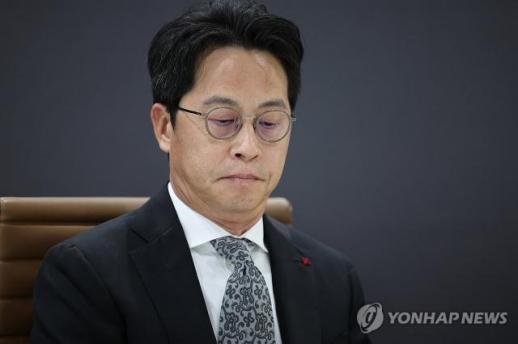 Regulator’s warning to Lotte Card CEO signals tougher accountability for data breaches South Korea’s Financial Supervisory Service has reportedly decided on a business suspension and an administrative fine for Lotte Card over a large-scale customer data leak, and also issued a disciplinary warning to former CEO Cho Jwa-jin. Holding a top executive responsible in a financial-sector data breach carries clear symbolic weight. It signals that security failures will not be treated solely as an IT department mistake or only as the work of outside hackers. In many past incidents, companies often ended accountability at the working level, focusing on system managers or contractors while the CEO issued an apology and stepped back. In digital finance, that approach is increasingly untenable because protecting customer information is a management issue tied to a company’s survival. The leaked Lotte Card data is reported to involve about 2.97 million people. Some of it reportedly included key payment information such as card numbers and expiration dates. For consumers, that raises concerns beyond a privacy violation and could extend to potential financial harm. A CEO’s responsibility does not disappear because the executive did not personally carry out the intrusion. Decisions on security budgets, staffing, contractor oversight, and whether internal controls and inspections function are management responsibilities. Attacks may be carried out by hackers, but vulnerabilities are created by organizations. The move also sends a message across the financial industry. Nonbank firms such as card companies, insurers and brokerages have been criticized for moving quickly on digital transformation while investing relatively less in security and staffing. Information protection has at times been pushed aside by profitability and marketing competition. Discipline alone, however, will not solve the problem. Penalizing a CEO does not automatically raise security standards. Financial firms need boards to regularly review cyber risk and strengthen the authority and independence of chief information security officers. IT budgets should be treated as investments in trust, not targets for cost cutting. Beyond Cho’s individual case, the episode is a signal to CEOs across South Korea’s financial sector: taking custody of customer data also means taking responsibility for security. The practice of sharing credit for performance in executive meetings while shifting blame for failures to frontline staff should end. Finance depends on trust, and trust begins with safety. The warning to Cho is not only a sanction against one person, but a step toward resetting expectations for executive accountability. CEOs should treat security review reports with the same seriousness as earnings results.* This article has been translated by AI. 2026-05-01 08:24:17
 -
 NH NongHyup Bank’s 500 billion won capital raise puts focus on corporate lending strategy NH NongHyup Bank is pursuing a 500 billion won capital increase as it moves to expand corporate finance. The bank aims to build capital in advance to increase corporate lending and narrow the gap with top-tier commercial banks. Strengthening capital while supporting the real economy is a sound direction. The question is whether the move ends as simple balance-sheet expansion or becomes a responsible growth strategy. Debate over “share dilution” misses the point. NongHyup Bank is not listed and is a wholly owned unit of NH Financial Group, so there is no structure in which ordinary investors’ stakes are diluted. The core issue is not persuading shareholders but accountability for how the new capital is used. Capital raising is a means, not an end. What matters is where the money goes and by what standards. A rights offering is not meant to increase risk but to prepare to absorb it. Raising the common equity Tier 1 ratio is a standard step to strengthen loss-absorbing capacity. Expanding corporate lending requires additional capital, and this increase is largely a preemptive buffer tied to that plan. Reading it simply as a signal of aggressive expansion or higher risk is an overreach. What follows after the capital increase is a separate issue. Capital is only the starting line; outcomes depend on the lending strategy that comes next. The bank’s push for “productive finance” is directionally right but difficult to execute. Financing small and midsize firms and advanced industries typically involves greater information gaps and higher risk. The issue is not a simple choice between tightening or loosening screening. Policy-oriented finance is neither blanket risk avoidance nor indiscriminate risk-taking; it requires selecting and spreading risk to fit the purpose. That means the task is not just more lending, but more precise, purpose-driven finance. Screening standards that reflect industry characteristics, risk-sharing structures such as guarantees and participation, and stronger post-loan monitoring must work together. Public-policy goals and commercial banking are not opposites but a matter of balance. If screening is weakened in the name of public interest, bad loans can follow; if the bank becomes overly conservative in the name of profitability, policy goals can be undermined. How that balance is designed will determine whether this capital increase succeeds. The growth approach also matters. NongHyup Bank has said it will expand corporate lending to increase both scale and earnings capacity. But competition in corporate finance is already intense. To gain share in areas dominated by established commercial banks, a late mover is likely to compete on pricing, limits and speed, which can translate into short-term sales pressure. That is where risks emerge. If the bank becomes fixated on a race for size, loan quality can suffer. If it is too cautious, it can lose ground. The need is not to choose “scale or trust,” but to expand while maintaining trust. More important than how much the loan book grows is how sound those assets remain. A bank’s competitiveness ultimately rests on credibility. Financial regulators also have a role. There is no clear reason to restrict capital strengthening itself; preemptive capital building can support financial-system stability. But supervision must be refined so added capital does not translate into unchecked risk-taking. A workable market requires balance between upfront rules and after-the-fact oversight. This capital increase is more than a financial event. It is a statement about what kind of bank NongHyup Bank intends to become. Whether policy-branded expansion becomes a short-term result or a sustainable corporate-finance model will depend on execution. A bank does not only lend money; it lends trust. Capital is the basic strength that supports that trust, and greater capacity brings greater responsibility. The market will be watching whether this move becomes the start of real improvement rather than simple expansion.* This article has been translated by AI. 2026-05-01 08:15:19