

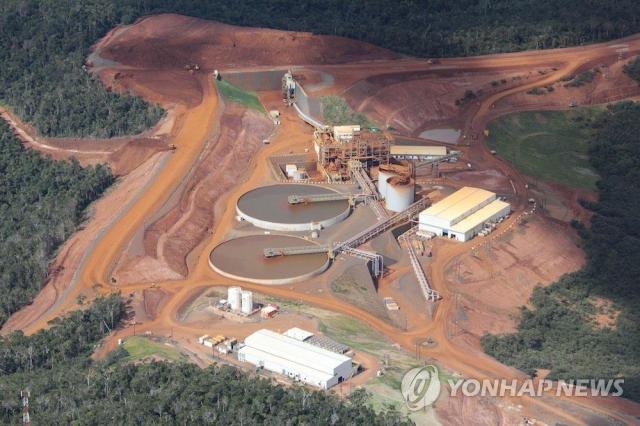
After investing 3 trillion won, it exited for about 2,900 won. By the numbers alone, the outcome is shocking and, judged only by the result, a clear failure. The Mexico Boleo copper mine project involving the Korea Mine Reclamation Corp. ended with a withdrawal that effectively wiped out most of the investment. The case is more than a bad deal; it highlights where South Korea’s approach to overseas resource development broke down.
But drawing the conclusion that South Korea should scale back overseas resource investment misreads the lesson. The need is the opposite: to do more, but in a fundamentally different way. Minerals are not optional; they underpin industrial survival. Semiconductors, batteries, electric vehicles and defense industries all depend on minerals. Without copper, nickel, lithium and cobalt, production itself is not possible.
The problem is not investing. It is how to invest. This case can be summed up in one line: There was willingness to invest, but no clear investment standards.
A look at global resource development makes the contrast clearer. Japan has a well-known success story: the Escondida copper mine in Chile, backed by Japanese trading houses and the government, remains a steady profit-maker. Japan spent years in the early stage verifying geological data and cost structures, then reduced risk through long-term purchase contracts. The pace was slow, but the standards were clear.
Japan’s approach to Australian iron ore followed a similar logic. It did not stop at buying stakes; it designed long-term supply chains linked to steelmakers, tying resource security to industrial strategy. The result was stable raw-material supply and returns.
Japan has also had failures, including losses in some oil and gas projects in Indonesia after underestimating political risk. The key difference was the speed of cutting losses. When profitability collapsed, it chose withdrawal over additional investment, limiting damage. There were setbacks, but the system held.
China’s model is different. China National Petroleum Corp. and Aluminum Corp. of China pursued aggressive resource acquisitions in Africa and South America. Some projects were maintained despite losses, with risk managed through a combination of diplomacy and financial support. China had the capacity and political leverage to absorb failures.
South Korea also has successes. The Roy Hill iron ore project in Australia, involving POSCO, is a leading example. POSCO secured a stable production structure after its initial investment and has generated long-term returns, aided by a strategic approach tied to steel production rather than a simple equity stake.
Another example is SK Innovation’s Peru LNG project. SK Innovation invested step by step from exploration to production, spreading risk and ultimately building a stable profit structure. In both cases, selection mattered more than speed.
Failures, however, are familiar. Past overseas oil development and some mineral projects expanded losses after investing on optimistic early forecasts, then facing price declines and rising costs. The common thread was unclear investment standards and delayed decisions to withdraw.
Boleo was not fundamentally different. Weak geological conditions, high production costs and local risks were present from the start. Investment proceeded anyway, and losses accumulated. The problem is often described as poor screening. That is true, but incomplete.
In resource development, what happens after the investment can matter more than the entry point. Policy shifts by host governments, tighter environmental rules and swings in global prices are hard to predict. Resource development is therefore about screening and geopolitics at the same time. South Korea sits in the middle: it lacks China’s ability to push through risk and has not fully built Japan’s refined system.
That makes standards more important than ever.
First, projects must be classified. Not every project should be judged by the same yardstick. Strategic assets tied directly to supply chains, such as rare earths and other critical minerals, may warrant accepting a certain level of loss to secure access. More common metal projects should be approached on profitability. Without this distinction, every investment becomes ambiguous.
Second, exit rules must be explicit. As Japan’s experience shows, acknowledging failure quickly is the way to limit losses. A structure is needed in which losses beyond a set threshold trigger an automatic review. Decisions should be made by system, not instinct.
Third, the roles of the public and private sectors should be separated. Early-stage exploration has a high failure rate, making private participation difficult, so a public role is necessary. But if decisions remain vulnerable to politics and bureaucracy, the same problems will recur. The decision-making structure should change through outside expert review, independent investment committees and mandatory exit standards.
Fourth, the approach to failure must change. Resource development is an industry with frequent failures. The issue is not failure itself, but unmanaged failure. A system that ignores foreseeable risks or withdraws only after losses balloon must be corrected.
The core lesson is straightforward: Overseas resource investment should continue, but not in the current way. The priority is not increasing the size of investment, but establishing decision standards first.
The case of turning 3 trillion won into 2,700 won is not only a record of loss; it is evidence of missing standards. Without resources, industry is shaken. But misguided investment also shakes industry. National strategy is to balance those risks.
Resources are necessary. But more important than knowing where to invest is knowing when to stop. The success or failure of overseas resource development ultimately comes down not to willingness, but to the ability to screen and decide.
* This article has been translated by AI.
Copyright ⓒ Aju Press All rights reserved.