
Journalist

Tom Stacey
-
 With Won Near 1,500 per Dollar, Expert Urges Stronger Foreign-Exchange Defenses Bank of Korea Gov. Shin Hyun-song took office April 20. The central bank’s most important tasks are price stability and defending the exchange rate, the author wrote. The won has trended weaker over decades, from the 200-won range in the 1970s to about 2,000 won during the IMF foreign-exchange crisis and 1,600 won during the global financial crisis. South Korea depends on trade, with a trade-to-GDP ratio of about 75%, the world’s second-highest, the author said. That makes exchange-rate swings from external shocks more than a market indicator, he wrote, calling on the government to build a stronger foreign-exchange “breakwater” on three fronts. First, the author urged building foreign-exchange reserves toward $1 trillion. South Korea’s reserves stand at $420 billion, which he said is insufficient in a crisis and equals about 23% of gross domestic product. He compared that with Taiwan, Hong Kong and Switzerland, which he said hold reserves equal to 80% to 130% of GDP. He cited Taiwan’s experience in the 1997 Asian financial crisis, saying its stockpiled reserves helped it remain stable. South Korea should expand reserves to $1 trillion, or about 50% of GDP, to provide psychological stability to markets, he wrote, arguing that readily deployable cash is the most practical shield against speculative attacks on the won. Second, he called for restoring and expanding currency swap lines with the United States and Japan on a standing basis. If reserves are a country’s own capital, he wrote, swap lines are a second line of defense, like an overdraft. The $60 billion Korea-U.S. swap line has ended, and the Korea-Japan swap line has shrunk to about $10 billion from a previous $70 billion, he wrote. Swap lines with reserve-currency countries, he added, can convince markets that “Korea will not run short of dollars,” helping curb sharp exchange-rate spikes. Third, he urged stricter debt management and stronger fiscal discipline. The IMF has warned about 2030, when South Korea’s government debt ratio is expected to reach 60%, he wrote. Including contingent liabilities such as civil servant and military pensions, he said broader public debt has already reached 181%. If fiscal weakness erodes external confidence, he warned, the won’s long-term weakening could accelerate. The author also called for attracting more foreign investment by cutting South Korea’s corporate tax rate from 26% to the global average of 21% and easing regulations tied to the fourth industrial revolution. He wrote that new industries such as Uber, Airbnb and Tada have all been banned in South Korea, adding that the exchange rate is “the price of national credibility.” He argued the government must also avoid injecting excessive liquidity. The government has finalized a 26 trillion won supplementary budget. Last year, South Korea posted 1% economic growth and 2% inflation, and he wrote that an appropriate money-supply increase would be about 3%. But he said the minimum wage was raised 2.9%, the annual budget was increased 8.1%, and including the 26 trillion won “war” supplementary budget would push the total above 9%. More won liquidity would fuel demand, lift prices and lead to a weaker currency, he wrote. South Korea’s ratio of money supplied relative to GDP is 154%, he said, compared with 71% for the United States. Only preemptive action can prevent a “second IMF,” he wrote. Companies and individuals have accumulated more than $1 trillion in dollars, he said, but low-income households holding assets only in won would face greater hardship in an exchange-rate crisis. With war and global supply-chain restructuring, he added, exchange-rate stability is no longer solely the Bank of Korea’s task. He urged an all-of-government push to build reserves, expand swap lines and strengthen fiscal discipline. The government, he wrote, should not miss the “golden time” to protect the economy and break what he described as an 86% probability that the exchange rate will keep rising. He called for a responsible choice between repeating a foreign-exchange crisis and protecting livelihoods through early action.* This article has been translated by AI. 2026-04-29 17:07:58
 -
 Appeals court increases ex-president's martial law-related sentence to 7 years SEOUL, April 29 (AJP) - Former President Yoon Suk Yeol was sentenced to seven years in prison on Wednesday over one of several charges related to his botched martial law debacle as an appeals court stiffened the initial five-year sentence handed down in January. In a televised verdict, the Seoul High Court in southern Seoul found him guilty of obstructing official duties, fabricating official documents, and other charges related to his declaration of martial law on Dec. 3, 2024. It was Yoon's first appellate ruling among a string of cases related to the debacle including the main charges of insurrection and abuse of power, for which he was sentenced to life in prison in the first trial in February, which is also under appeal. Prosecutors had earlier sought 10 years in prison for Yoon. Wednesday's ruling came just a day after his wife and former first lady Kim Keon Hee was sentenced to four years in prison on multiple charges including bribery and involvement in a stock manipulation scheme, in an appellate ruling, more than twice the 20-month sentence handed down in the first trial, leaving the disgraced couple with their sentences increased on appeal. 2026-04-29 17:05:16
 -
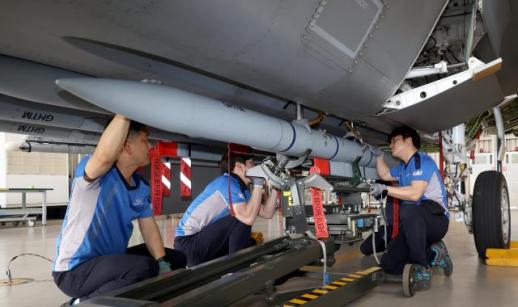 Hanwha Aerospace to develop homegrown meteor-class missile by 2033 SEOUL, April 29 (AJP) - Hanwha Aerospace has launched the development of a homegrown air-to-air missile comparable to the Meteor, as part of efforts to localize advanced aerial weapon systems. The company unveiled its localization roadmap at the “Hanwha Tech Academy 2026” event in central Seoul on Wednesday. The Meteor, developed by European defense firm MBDA, is known for its top speed of Mach 4 and an interception range exceeding 200 kilometers, making it one of the most advanced long-range air-to-air missiles currently in service. Hanwha Aerospace said it aims to complete development of the indigenous missile by 2033 in cooperation with the Agency for Defense Development (ADD), with mass production expected after 2036. The missile is intended for deployment on South Korea’s indigenous fighter jet, the KF-21 Boramae. A key focus of the project is the development of a "Ducted Ramjet Propulsion," a core technology that enables extended range and high maneuverability. The system generates propulsion by burning solid fuel using air intake during flight, significantly improving fuel efficiency. “The Ducted Ramjet Propulsion is what has made the Meteor missile recognized as one of the world’s most advanced long-range air-to-air missiles,” said Cho Bok-ki, a senior researcher at Hanwha Aerospace’s PGM Research Center. “Our goal is to apply this propulsion method while pursuing even greater performance.” The company said it plans to leverage more than two decades of experience in propulsion-related research, including work on propellants, gas generators and combustors under projects led by the ADD since 2005. Hanwha Aerospace also expressed expectations that integrating domestically developed air-launched weapons with Korean fighter jets such as the KF-21 and offering them as package deals could strengthen competitiveness in global markets. “We will continue working with the government and industry partners to localize advanced defense technologies, while boosting self-reliance and expanding defense exports,” a company official said. 2026-04-29 17:05:15
 -
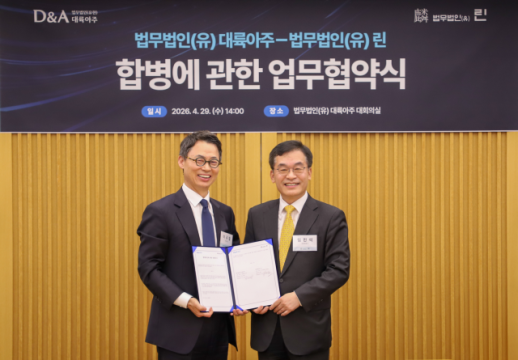 Daeryuk & Aju and Lin Launch Merger Committee to Pursue Combined Law Firm Daeryuk & Aju Law Firm and Lin Law Firm have launched a consultative body to pursue a merger, formally beginning integration talks. The firms on April 29 held a signing ceremony for a business agreement in a conference room at Daeryuk & Aju’s offices in Seoul’s Gangnam district and agreed to form a merger promotion committee. About 50 people, including partner attorneys from both sides and journalists, attended. The committee will oversee merger discussions from April 29 until the merger is registered, including the merger structure, decision-making system and the name of the combined firm. Under an equal-merger principle, each firm will appoint one overall co-managing representative and the committee will have the same number of members from each side. Decisions will be made unanimously. If completed, the deal would be the largest combination in South Korea’s law-firm history, the firms said. The two firms have a combined 393 lawyers in South Korea — 260 at Daeryuk & Aju and 133 at Lin. Their 2025 revenue totaled 143.7 billion won, including 102.7 billion won for Daeryuk & Aju and 41.0 billion won for Lin. Based on those figures, the merged firm would rank sixth domestically by number of lawyers and in the eighth tier by revenue. The firms said they expect synergies by combining Daeryuk & Aju’s strengths in litigation, advisory work and new-industry sectors with Lin’s corporate advisory capabilities. Lee Gyu-cheol, managing partner at Daeryuk & Aju, said the integration is a strategic decision aimed at building “a new model of a comprehensive law firm” able to respond to rapidly changing industrial structures and the global environment, rather than simply expanding in size. Lim Jin-seok, managing partner at Lin, said the firms will combine their “innovation DNA” with professional expertise and organizational capabilities to provide more advanced legal services to clients at home and abroad, adding that the goal is to become a market-leading firm.* This article has been translated by AI. 2026-04-29 17:02:57
 -
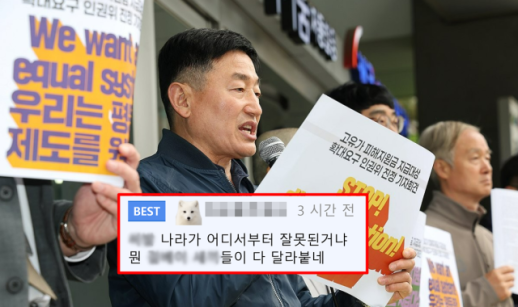 Migrant Rights Groups File Complaint Over Exclusion From Korea’s High Fuel Price Aid Migrant rights groups have filed a complaint with the National Human Rights Commission of Korea, saying most migrants were excluded from government payments meant to offset damage from high fuel prices. Groups including the Migrant Workers Equality Solidarity held a joint news conference on the 28th in front of the commission’s office in Seoul’s Jung District and then submitted the complaint. The groups said that of about 2,167,000 migrants who had stayed in South Korea for at least three months as of March, about 1,785,000 were excluded from the payments, except for marriage migrants, permanent residents and recognized refugees. Udaya Rai, chair of the Migrants’ Trade Union, said, “Damage from high fuel prices does not discriminate by nationality,” adding that migrant workers should be treated equally because they work and live alongside Koreans. Attorney Lee Jin-hye, of the migrant center Chingu and acting as the groups’ representative, argued that excluding foreigners because they are not listed on a resident registration record or do not hold permanent residency or marriage-migrant status amounts to arbitrary discrimination. The Ministry of the Interior and Safety has said exceptions apply to foreigners listed on a resident registration record that includes at least one Korean national, as well as permanent residents, marriage migrants and recognized refugees, if they are enrolled in national health insurance, are dependents, or receive medical aid. Applying those standards, the groups said more than 80% of long-term migrants — about 1,785,000 of the roughly 2,167,000 — were excluded as of the end of last month. Migrant rights groups have raised similar concerns over COVID-19 relief payments and “livelihood recovery” consumption coupons. At the time, they said migrants pay taxes such as earned income tax, comprehensive income tax and local resident tax, but are excluded from social security programs because they are not citizens. Online commenters, however, posted more than 500 comments each on related posts, with many expressing opposition. Comments included: “Where did the country start going wrong?” “Please go back to your own country and be treated there,” “Even 30% of citizens can’t get it. Ask your country,” “If you don’t like it, leave,” “You’ve adapted perfectly to the country of complaints,” “We should abolish the human rights commission,” “Next they’ll give it to Tom and Mary overseas,” and “So that means none of them are marriage migrants, permanent residents or recognized refugees, right?” 2026-04-29 17:01:41
 -
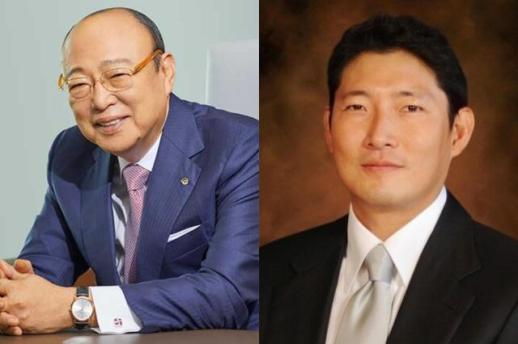 Hanwha Jumps to No. 5 in Korea Conglomerate Rankings; Hyosung Rises on Power Gear Boom Hanwha Group and Hyosung Group have expanded rapidly, reshaping South Korea’s top-30 conglomerate rankings, which have typically seen limited movement. According to the Fair Trade Commission’s disclosure on large business groups released on the 29th, Hanwha rose to fifth from seventh. Hyosung also moved up, to 28th from 31st. Hanwha’s total assets increased by about 24 trillion won, to 149.6 trillion won this year from 125.7 trillion won last year, overtaking Lotte Group and POSCO Group. The rise was attributed to combined growth across defense, shipbuilding and energy businesses. In defense, expanded orders at Hanwha Aerospace were a key driver. As of the end of 2025, its backlog for ground-defense systems stood at 37 trillion won, and its annual operating profit topped 3 trillion won. In shipbuilding, Hanwha Ocean’s turnaround stood out. It posted operating profit of 441.1 billion won in the first quarter of 2026, up more than 70% from a year earlier. Analysts cited a strategy focused on high-value LNG carrier orders and increased investment aimed at entering the U.S. naval maintenance and repair (MRO) market as factors behind the asset gains. Energy and infrastructure also contributed. Hanwha Solutions expanded its foothold in the North American solar market, supported by operations at its U.S. “Solar Hub.” Hyosung’s rise was largely attributed to improved performance at Hyosung Heavy Industries, which helped drive growth as its total order backlog exceeded 15 trillion won. The company benefited from a transformer boom tied to rising global demand to replace aging power infrastructure. In the United States, demand for grid upgrades has surged, and supplies of extra-high-voltage transformers have not kept pace. With shortages strengthening pricing power, profitability has been assessed as improving sharply. The spread of artificial intelligence data centers was also cited as a factor. As global big tech companies expand data center construction, demand for large-scale power supply equipment has increased, lifting demand for Hyosung Heavy Industries’ power solutions. A business community official said the top-30 rankings usually do not shift much, but this round of changes was heavily influenced by strong conditions in energy, defense and shipbuilding. The official added that defense-related demand has also been significant due to the prolonged Iran war.* This article has been translated by AI. 2026-04-29 16:56:41
 -
 South Korea's Cho Hyun, Azerbaijan foreign minister discuss cooperation and regional issues South Korean Foreign Minister Cho Hyun spoke by phone Tuesday afternoon with Azerbaijani Foreign Minister Jeyhun Bayramov to exchange views on overall bilateral ties, practical cooperation and regional developments, the Foreign Ministry said. Cho thanked Azerbaijan for helping South Korean nationals evacuate safely during heightened tensions in the Middle East in June last year, and asked for continued attention and cooperation to protect South Koreans in connection with the situation in the region. Cho also said South Korea is actively pursuing the continuation and development of its New Northern Policy, including plans to host the first Korea-Central Asia summit in September as part of its diplomatic diversification efforts. He said the two sides agreed to maintain close communication with Azerbaijan, which has recently been strengthening its connectivity with Central Asia. The two ministers shared the view that it is important to advance mutually beneficial South Korea-Azerbaijan relations and agreed to further expand practical cooperation, including high-level exchanges, the ministry said. * This article has been translated by AI. 2026-04-29 16:55:53
 -
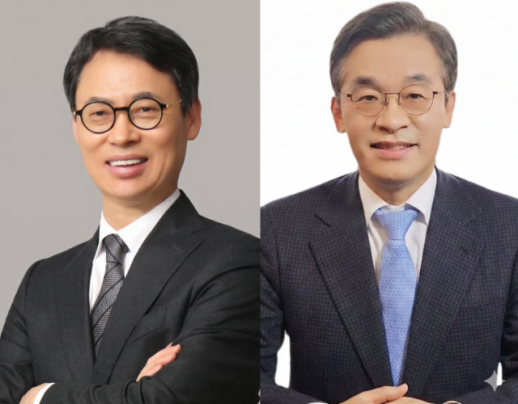 Daeryuk & Aju and Lin to Merge, Citing Limits for Mid-Sized Law Firms Daeryuk & Aju and Lin said they will merge, saying mid-sized firms face structural limits in moving into the top ranks of South Korea’s legal market. Lee Gyu-cheol, managing partner at Daeryuk & Aju, said in an interview after the firms signed a merger memorandum of understanding on the 29th that “in the current law firm market structure, it is virtually impossible for a mid-sized firm to rise into the top tier through organic growth alone.” He described the gap in scale: “If a top firm grows 10%, that’s an additional 10 billion won, but for a mid-sized firm it’s only 1 billion won,” he said, adding that “under this structure, it’s hard to narrow the gap.” Lee said Daeryuk & Aju, which he described as remaining in “Tier 2,” saw a risk of stagnating or falling behind. That assessment led to the merger push. “There are limits to recruiting individual talent, so we had no choice but to choose a merger,” Lee said. “I think this decision is our last big bet.” Lim Jin-seok, managing partner at Lin, voiced a similar view, focusing on practical constraints. “At the level of a mid-tier firm, there are clear limits to the size of cases and deals you can handle,” he said, adding that “for some large matters, the structure makes it difficult even to apply.” Lim said Lin concluded it had reached a “ceiling” at its current size. He pointed to barriers to entry. “First-tier financial institutions such as banks, and major fair-trade cases, move around the Big 6 firms,” Lim said. “Even with capability, if you’re small, you often aren’t included among the options.” Lim said Lin pursued a merger not for simple expansion but for a “tier jump.” He said Daeryuk & Aju was “the most proactive” and best-aligned partner among firms Lin contacted. Both firms said the post-merger strategy will focus on “synergy.” “A merger matters only if 1 plus 1 becomes 3, not 2,” Lim said. “If we secure scale and a brand, we can compete 충분히 with top firms.” Lee said the next task will be improving revenue per lawyer. He said the merger should broaden the range of matters the combined firm can take on. The firms plan to combine Daeryuk & Aju’s strengths in litigation and criminal matters with Lin’s strengths in corporate advisory work and mergers and acquisitions, aiming to build a “one-stop service” system. Lim said Lin has been relatively weaker in criminal work, sometimes leaving it unable to handle related matters for corporate clients in-house. After the merger, he said, the firm expects to respond to clients’ criminal, litigation and advisory needs under one roof. Lee said the firms will also prepare for risks that can come with a large merger. “Conflicts of interest can inevitably arise during the merger process, but we can minimize them through 충분한 discussion,” he said. “What matters is that the number of matters we can handle increases.” On differences in organizational culture, Lee said Lin has many lawyers who previously worked at large firms, adding that there is “a lot to learn.” He said the firms plan to integrate through collaboration and personnel exchanges. Lim said “the most important thing in a merger is will,” adding that the goal is to grow the firm and have its members prosper together. Both also addressed artificial intelligence. Lee said it would be difficult to generate direct revenue from AI and that it would mainly be used to improve efficiency. He said reducing costs and raising productivity will shape competitiveness. Lim said AI is a variable affecting the entire legal industry and warned that firms that fail to prepare could be left behind. The merger process is at an early stage. The firms said they have formed a merger promotion committee to discuss the combined firm’s name and decision-making structure, with a goal of filing merger registration in October. “Today’s agreement is only a starting point,” Lee said, stressing the need to create synergy by combining strengths. He said the long-term goal is to reach more than 200 billion won in revenue. Lim said the merger would create a foundation to compete with top firms, adding that the combined firm would now have the conditions to compete head-on on the same stage.* This article has been translated by AI. 2026-04-29 16:53:51
 -
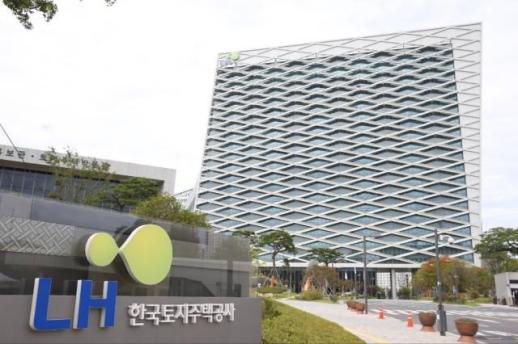 LH Signs Implementation Deal for Seoul’s Myeonmok District 9 Public Redevelopment Korea Land and Housing Corp.’s Seoul metropolitan redevelopment unit said Tuesday it signed an implementation agreement with the residents’ representative council for the Myeonmok District 9 public redevelopment project in Seoul. Myeonmok District 9 failed to make the cut in 2021 under the city’s fast-track planning program and the first round of public redevelopment candidates. It was later selected as a second-round public redevelopment candidate in 2022, backed by strong resident participation, with a 55% consent rate. LH said coordination with the local government accelerated the process. After the plan cleared review by the Seoul Metropolitan Government’s Urban Planning Commission in December, the district designation was completed about a month later. In January, LH said it also completed administrative steps including designation of the project implementer and formation of the residents’ representative council. LH said it plans to complete contractor selection this year through a public bidding process and to pursue approval of the project implementation plan next year. Under the current redevelopment plan, the area would be rebuilt into a large complex of 1,057 households, with a floor area ratio of 275.2% and buildings up to 30 stories, or 135.5 meters. LH said it also plans to reflect possible changes tied to the legislative track of the so-called “9.7 measures,” including a higher floor area ratio and a shorter project timeline, to improve project feasibility. “LH will bring its extensive public redevelopment capabilities to keep the Myeonmok District 9 project on track,” Park Hyeon-geun, head of LH’s Seoul metropolitan redevelopment unit, said in a statement. He said LH will work closely with the residents’ council to deliver faster housing supply and improved living conditions. * This article has been translated by AI. 2026-04-29 16:52:55
 -
 Daewoo Elcrew Ilsan Private Rental Project in Deogi-dong Advances Land Acquisition, Planning Steps A private rental apartment project known as “Daewoo Elcrew Ilsan,” planned for the Deogi-dong area of Goyang, Gyeonggi Province, is moving ahead with land acquisition and preparations for required administrative procedures. Real estate industry officials said on the 29th that the developer is pursuing land acquisition while also preparing steps tied to a district unit plan. Industry observers note that early-stage projects often hinge on factors such as urban planning standards, population allocation and whether land can be secured. They said progress should be assessed in context, citing similar developments that moved forward after administrative consultations and plan adjustments, ultimately leading to approvals and supply. Some past projects initially faced concerns about delays or procedural risks, but later became viable as district unit plans were revised, agencies consulted and land acquisition advanced. Experts advise against judging prospects based on limited early information, and instead recommend reviewing administrative steps, project structure and land acquisition status together. Daewoo Elcrew Ilsan is being promoted as a private rental project. Unlike typical local housing cooperative projects, where land acquisition rates, member recruitment and project plan approvals can introduce multiple uncertainties, private rental projects can vary in land-use documentation requirements and follow-up steps depending on structure and permitting stages. As a result, land acquisition progress and administrative procedures are seen as key indicators of stability. The developer said it has secured about 91% of the total project site. However, final permitting and the supply schedule may change depending on subsequent steps, including district unit plan revisions, consultations with relevant agencies and approval of the project plan. Park Byeong-rok, CEO of Yason Architecture Co., which is handling the design, said of the site, “There is no major problem in changing it in a direction that allows apartment construction through a district unit plan application.” He added, “We plan to complete the related preparations by the end of April, and then adjust the filing timing to fit the situation.” Daewoo Elcrew Ilsan is providing consultations through a promotional office set up in Dongpae-dong, Paju, Gyeonggi Province. 2026-04-29 16:48:03