
Journalist

Tom Stacey
-
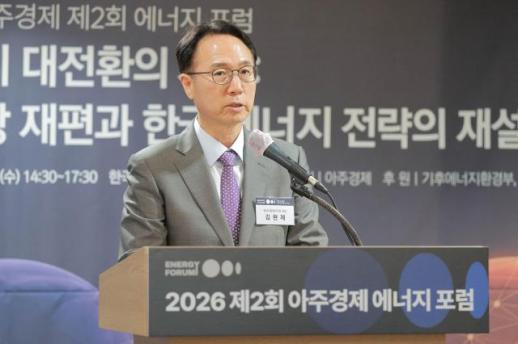 Energy Think Tank Chief Says Secure Energy Supply Is Key to National Competitiveness Kim Hyeon-je, president of the Korea Energy Economics Institute, said a stable energy supply is no longer just an issue for individual industries but a core task that affects national competitiveness and the broader economy. Speaking in opening remarks at the “2026 Aju Business Second Energy Forum” held April 29 at the Korea Press Center in Jung-gu, Seoul, Kim said the world is “creating a new energy order” as geopolitical conflict, supply-chain restructuring and the push toward carbon neutrality converge. “Electricity, in particular, is the most basic infrastructure that powers industry and daily life,” he said, adding that as advanced industries expand and electrification accelerates, the ability to provide stable power supply is directly tied to a country’s growth capacity. Kim said efforts should move in parallel to diversify energy sources, strengthen supply-chain resilience and expand infrastructure such as power grids and storage systems. He also called for using a range of clean energy sources, including renewables and nuclear power. “Energy transition and energy security are not opposing goals, but tasks of our time that must be achieved together,” he said, expressing hope the forum would help sharpen the direction of Korea’s energy strategy and seek practical, sustainable solutions.* This article has been translated by AI. 2026-04-29 15:13:02
 -
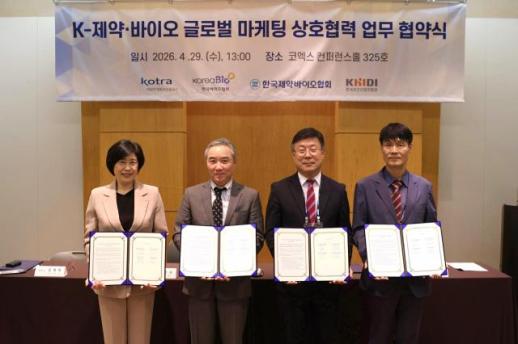 Four Korean pharma, bio bodies forge 'one team' to accelerate global push SEOUL, April 29 (AJP) - Four of South Korea's leading pharmaceutical and biotechnology organizations signed a memorandum of understanding to consolidate their fragmented overseas-support programs under a single coordinated framework, dubbed the "K-Pharma Bio One Team." The Korea Pharmaceutical and Bio-Pharma Manufacturers Association (KPBMA), the Korea Health Industry Development Institute, the Korea Biotechnology Industry Organization and the Korea Trade-Investment Promotion Agency inked the agreement at COEX in Seoul Wednesday, establishing a joint support structure for domestic firms seeking to expand abroad. Under the MOU, the four bodies will pool resources to conduct shared market analysis, identify and resolve export bottlenecks, gather overseas market intelligence, and coordinate marketing efforts at international trade events — replacing what had previously been a patchwork of institution-by-institution programs. The alliance plans to kick off operations in earnest at BIO International Convention, set for June in San Diego, California. More than 250 South Korean companies are expected to attend the event this year, making Korea the second-largest national contingent after the United States. The four organizations will jointly support Korean exhibitors at BIO USA and co-host a consolidated "Korea Night" reception expected to draw more than 600 industry officials, investors and potential partners. "This MOU marks a significant step forward in upgrading the support framework for the global expansion of Korea's pharmaceutical and biotech industry," said KPBMA president Noh Yun-hong, adding that the alliance would work to sharpen corporate competitiveness and raise the sector's international profile. 2026-04-29 15:12:41
 -
 KOSME Chair Kang Seok-jin Visits Cheonan SMEs for Fifth On-Site Meeting This Year The Korea SMEs and Startups Agency (KOSME) said Tuesday it held an on-site meeting, billed as “KOSME that visits and solves problems,” at the Cheonan, South Chungcheong Province, facility of KMF. KOSME said the session marked the fifth such visit this year by Chairman Kang Seok-jin. Since January, Kang has visited the Gwangju Regional Headquarters, the Western Gyeongnam Branch, the Overseas Expansion Division and the Seoul Western Branch, holding talks with companies in areas including the Gwangju High-Tech National Industrial Complex, domestic shipbuilding, exports and future industries such as artificial intelligence. The Cheonan meeting was organized to support small and midsize companies preparing for risks tied to the Middle East war and for artificial intelligence transformation (AX). Attendees included Kang; Lee Jeong-gu, head of the South Chungcheong “Strongly Studying Businesspeople Association”; and representatives from eight member companies. Participants shared concerns including difficulties related to exports to the Middle East and discussed possible responses. They cited rising logistics costs, sharp increases in raw material prices, growing uncertainty in exports, labor shortages and the burden of adopting AI transformation. One company official said delays in exports to the Middle East had led to a steep drop in sales and higher shipping costs, creating what the official described as a severe management crisis and an urgent need for government support. Another official said companies agree on the need for AI transformation but are struggling to adopt it because of upfront investment costs and a lack of specialized workers. KOSME said it will strengthen follow-up support tailored to on-the-ground needs, including policy financing and export vouchers, measures to ease logistics-cost burdens and assistance in responding to export contracts, to help companies overcome the crisis and advance digital transformation. Kang said small and midsize companies are facing heavier management burdens amid an uncertain trade environment, including the Middle East situation, and the accelerating pace of AI transformation. “Based on what we hear in the field, we will prepare practical support measures and take the lead in resolving business difficulties through ‘KOSME that visits and solves problems,’” he said.* This article has been translated by AI. 2026-04-29 15:09:18
 -
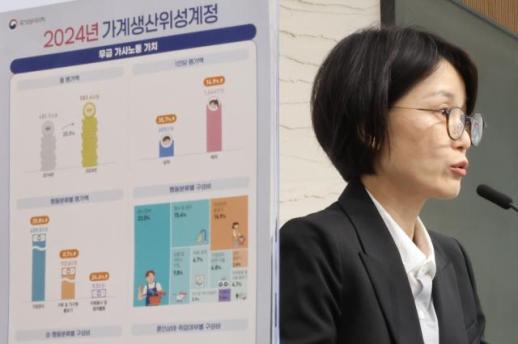 Korean women still do 3 times more unpaid housework, men on faster rise SEOUL, April 29 (AJP) - South Korean women would effectively be 2.7 times richer than men — if unpaid household work were properly compensated — though the gap has eased from 3.2 times five years ago as single life forces more men to take on domestic responsibility, data showed Wednesday. The value of home management in South Korea — encompassing childcare, cooking, cleaning and elder care — was estimated at 582.4 trillion won ($420 billion) in 2024, equivalent to 22.8 percent of nominal gross domestic product, according to the 2024 Household Production Satellite Account released by Ministry of Data and Statistics. The account measures the economic value of unpaid work not captured in GDP. The estimate marked a 20 percent increase over the past five years, though its share of GDP edged down by 1 percentage point. The value of unpaid household work per person was estimated at 11.25 million won annually, up 20 percent over the same period. Housework remains primarily women’s responsibility, with their unpaid labor valued at 16.46 million won per person, compared with 6.05 million won for men — about 2.7 times higher. The shift, however, has been sharper among men. Among unmarried men, the value of unpaid household labor surged 68.7 percent over five years, outpacing the 47.2 percent increase among unmarried women. Married men also recorded a faster rise at 28.9 percent. By category, household management work rose 25.8 percent, while care for pets and plants jumped 60.4 percent. Adult care, including eldercare, increased 20.8 percent as the population aged. By contrast, the value of childcare fell 1.8 percent, reflecting a decline in the school-age population. Single-person households recorded the sharpest increase in unpaid household labor value, rising 66.2 percent over five years, followed by two-person households at 40.9 percent and three-person households at 22.2 percent. Households with five or more members saw an 11.3 percent decline. Three-person households accounted for the largest share at 166 trillion won, followed by four-person households at 147.4 trillion won and two-person households at 136.7 trillion won. By employment status, unpaid household work was valued at 297.4 trillion won for those outside the workforce, slightly exceeding the 284.9 trillion won for those with jobs. Regionally, Sejong posted the steepest increase at 42.3 percent, driven by growth in the child population and rising caregiving time. First introduced in 2018, the household production satellite account is compiled every five years to estimate the value of unpaid work excluded from GDP. 2026-04-29 15:07:53
 -
 Ourhome to Launch New Buffet Brand TAKE With First Seoul Location Ourhome is entering the buffet market with a new brand built on nearly 30 years of food-service operating experience. The company said Tuesday it will open the first location of its new buffet brand, TAKE, on May 1 on the second basement level of the Youngpoong Building in Jongno-gu, Seoul. The restaurant has about 823 square meters (250 pyeong) of dedicated space and is connected to Jonggak Station on Seoul Subway Line 1. Ourhome said it expects demand from nearby office workers on weekdays and from visitors and tourists on weekends, citing proximity to areas such as Gwanghwamun, Insadong and Cheonggyecheon. The name TAKE comes from the film term for a unit of shooting, reflecting the company’s aim for the dining experience to remain as memorable as a scene in a movie. The store concept is a “global food market,” bringing together dishes from around the world to create a travel-like experience, the company said. The menu centers on “global gourmet stations” featuring signature dishes from different countries, offering about 130 items on weekends and holidays. Ourhome said it plans to continue introducing new dishes at each station that reflect national characteristics and current trends. A barbecue-focused area called “TAKE Grill” uses a rotisserie method, slowly roasting skewered ingredients while they turn. The company said the space is designed as a “live grill zone” where customers can watch food being prepared. Menu items include a pulled pork taco plate and smoked Texas barbecue ribs. Porchetta and chicken steak will be offered as “Golden Ticket” items for an additional 9,900 won. The restaurant will also run a content-style space called “Pop-up Table.” Ourhome said the first collaboration will be with Samyang Foods’ Buldak brand, followed by projects including collaborations with star chefs, “Meet the Celeb” featuring Ourhome’s Pyeonstorang convenience foods, and “Everyone’s Table” with long-established restaurant brands. Prices for adults are 23,900 won for weekday lunch and 29,900 won for weekday dinner; weekends and holidays are 32,900 won. To mark Family Month, Ourhome said it will run a “299 event” from May 1 to May 5, offering the weekend and holiday menu at the weekday dinner price of 29,900 won.* This article has been translated by AI. 2026-04-29 15:06:09
 -
 Foreigners Net Buy 10 Trillion Won in South Korean Treasuries After WGBI Entry Foreign investors have net purchased more than 10 trillion won in South Korean Treasury bonds in the month since the country’s inclusion in the World Government Bond Index, officials said. The government is watching May — when the index weight rises — as a potential turning point for inflows and market supply-demand conditions. The Ministry of Economy and Finance said it held the fifth meeting of its “WGBI standing inspection and investor outreach task force” on Tuesday at the Government Complex Seoul. It said foreigners’ net purchases of Treasury bonds totaled 10 trillion won on a trade-date basis from March 30 through April 27. On a settlement basis, net purchases were 7.9 trillion won from April 1 through April 27. The ministry said WGBI inclusion has helped draw more long-term investors such as pension funds and has broadened demand for medium- and long-term maturities. Hwang Sun-kwan, director general of the Treasury Bureau, said, “Over April, global investors and our market infrastructure learned to work together and built valuable experience.” Analysts cautioned that recent rate moves cannot be attributed solely to the WGBI effect. Treasury yields were relatively stable in April compared with major countries, but experts said easing Middle East tensions and a slowdown in the rise of international oil prices had a larger impact on the decline in yields. Ahn Ye-ha, a researcher at Kiwoom Securities, said April’s yield decline could be read as a combination of steadier oil prices and foreign inflows, but added that “it may be difficult for that mix to hold going forward.” She said supply-demand conditions could weaken somewhat from April after May, given a higher share of long-term issuance and limited demand from insurers. She added that oil prices also “carry the possibility of greater volatility or a renewed rise rather than further declines,” which could increasingly limit how far yields fall. The government said it sees May as the first full test of the WGBI inclusion effect, as it has set May’s Treasury bond auction issuance at 19 trillion won, a level that could coincide with both inflows and shifting supply-demand conditions. Hwang said, “As the WGBI inclusion weight rises in May, inflows are expected to begin from this week, so thorough preparation is needed.” The ministry said it will continue to monitor foreign inflows through the task force and expand investor relations efforts to strengthen communication with the market.* This article has been translated by AI. 2026-04-29 15:04:04
 -
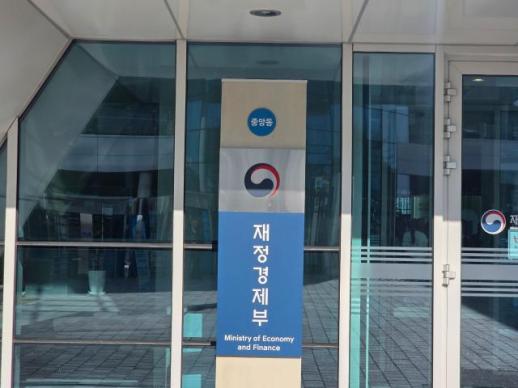 South Korea to Select New Supply Chain Stabilization Lead Firms, Offer Fund Support The government will begin procedures to select new private-sector “lead firms” for 2026 that play a key role in stabilizing South Korea’s domestic supply chains. The Ministry of Economy and Finance said on the 29th that lead firms are companies or business groups recognized by relevant ministries as contributing to supply chain stability by introducing, producing or providing items and services tied to economic security under the Framework Act on Supporting Supply Chain Stabilization for Economic Security. Since the law took effect in 2024, a total of 187 lead firms have been designated. The designation period is generally three years from the initial selection date. The government plans to jointly announce the selection plan for one month starting on the 30th and complete the process by June. Companies or business groups seeking designation must submit a “supply chain stabilization plan” to the relevant ministry by next month’s 29th for review, detailing their business, links to economic security items, plans to diversify sourcing and other stabilization measures, as well as financial status and implementation capacity. With the situation in the Middle East dragging on, the ministry said stable procurement of economic security items and services has become more important. The government plans to prioritize firms that propose measures such as diversifying import sources, expanding production bases at home and abroad, developing import-substitution technologies, and increasing stockpiles. Final designees will receive benefits including preferential interest rates as priority recipients of support from the Supply Chain Stabilization Fund. Lee Seung-wook, the ministry’s director general for economic supply chain planning, said recent developments in the Middle East have exposed weak points and bottlenecks in domestic supply chains, making structural improvements for stabilization and diversification more important. He said the government will maintain close communication and consultations with lead firms, which he described as central to domestic supply chain stability. * This article has been translated by AI. 2026-04-29 15:03:18
 -
 Iran’s Infighting Deepens Over Whether to Negotiate Nuclear Program With U.S. Iran’s internal rifts have flared again over whether to negotiate with the United States, including on its nuclear program, raising fresh signs of political division, the Financial Times reported. The newspaper said Iranian factions that had rallied around the government during airstrikes have begun to fracture again since a cease-fire, with disputes widening over whether to pursue talks with Washington. According to the report, political forces closed ranks during the strikes to confront what was described as a war for survival. But three weeks after the cease-fire took effect, long-running disputes have resurfaced and debate has intensified over Iran’s next steps. The central issue is whether to negotiate with the United States over the nuclear program. Opposition to talks has grown, particularly among hard-liners, who have targeted Parliament Speaker Mohammad Bagher Ghalibaf. The report said he led outreach after meeting U.S. Vice President JD Vance in Pakistan on April 11. Politicians aligned with the hard-line Paydari faction criticized the negotiating team, saying it did not sufficiently follow guidance from the supreme leader. Mahmoud Nabavian, a lawmaker identified as part of Paydari, told local media that “negotiations are a total loss and no one should enter negotiations.” He called it a “strategic mistake” to include the nuclear program on the agenda. On April 27, 261 of Iran’s 290 lawmakers adopted a statement backing the negotiating team, but key Paydari figures did not sign, the report said. Analysts also said uncertainty is growing because of the supreme leader’s absence. Ayatollah Ali Khamenei has not appeared in public since the war, and the decision-making structure is reported to be strained. The report said veteran figures who had managed internal disputes for decades died early in the airstrikes, leaving a newer leadership with less crisis-management experience. President Donald Trump cited the turmoil when he announced over the weekend that he was canceling the dispatch of a second negotiating team. “There is tremendous infighting and chaos in Iran’s leadership. No one, including themselves, knows who is in charge,” he said. Iran has reportedly proposed an end-of-war framework to the United States that includes reopening the Strait of Hormuz, imposing transit fees on ships and maintaining its right to enrich uranium. Secretary of State Marco Rubio called the proposal “better than expected,” but said it was unclear whether the person who made it had real authority. Iranian leaders have urged unity. Ghalibaf, President Masoud Pezeshkian and the head of the judiciary wrote on X, formerly Twitter, “In our Iran, there are no hard-liners or moderates. We are all Iranians and revolutionaries.” Still, Khamenei’s seclusion is seen as making coordination difficult. One source said most people want a cease-fire, but “even minimal communication between the supreme leader and lower-level organizations is almost impossible.” Concerns are also rising inside Iran that if negotiations stall, the country could slide back toward full-scale war with the United States and Israel. Reformist politician Mohammad Sadegh Javadi Hessar criticized hard-liners for continuing to push back, calling it self-destructive and saying they were seeking room for their own political future.* This article has been translated by AI. 2026-04-29 14:58:14
 -
 UAE’s OPEC Exit May Not Break Supply Coordination, but Could Shift Oil Market After War The United Arab Emirates’ decision to leave OPEC has exposed new strains inside the group, but it is too soon to read it as a sign of collapse or a wave of departures. The main force shaking the oil market is not output levels but war-related shipping disruptions and the effective closure of the Strait of Hormuz. In that sense, the UAE move points less to an immediate supply shock than to the risk that OPEC’s ability to steer the market could weaken after the war. According to Reuters, CNBC and The Edge Malaysia, even if the UAE exits OPEC on May 1, other members are likely to keep coordinating supply for now. Reuters, citing OPEC+ sources, said producers are expected to continue aligning supply policy. Iraq, for its part, said it wants “stable and acceptable oil prices” and has no plan to leave. The UAE’s departure is drawing attention because it was one of the few countries, along with Saudi Arabia, with significant spare capacity at the core of OPEC. CNBC reported that the UAE and Saudi Arabia together held more than half of the world’s over 4 million barrels of spare production capacity. Jorge Leon of Rystad Energy said the UAE exit would make OPEC “structurally weaker.” Reuters also reported that, by International Energy Agency estimates, OPEC+ control of global production would fall to about 45% from about 50% after the UAE leaves. Still, analysts do not expect the OPEC framework to be shaken sharply in the near term. Even without the UAE, a Saudi-led system of supply management could hold for the time being, with Saudi Arabia still seen as the key holder of spare capacity. Market analyst Gary Ross said, “In the end, Saudi Arabia was effectively OPEC.” A quick drop in oil prices also appears unlikely. Even if the UAE produces more, current conditions make it difficult to export additional barrels smoothly. Reuters said the UAE would struggle to sharply raise production and exports immediately with the Strait of Hormuz effectively blocked. CNBC also reported that oil futures showed little reaction to the UAE exit news. The bigger question is what happens after the war. The UAE has shown tensions with Saudi Arabia over production quotas and has sought quotas that better reflect its expanded capacity. CNBC reported the UAE has wanted freedom to set output without OPEC constraints and is targeting production capacity of 5 million barrels a day in 2027. If the war ends and Hormuz reopens, the UAE could be more likely to boost output. That could change the direction of prices. Ole Hansen of Saxo Bank said the market could absorb additional UAE barrels in the short term. But he warned that if other producers also prioritize market share over sticking to quotas, OPEC’s ability to coordinate supply could weaken. If supply rises and OPEC’s ability to defend prices erodes, the risk of lower prices would increase. Robin Mills, CEO of Dubai-based consultancy Qamar Energy, told CNN that the UAE exit could encourage other producers to leave. Nordea’s Jan von Gerich also said the UAE’s push to raise output is negative for oil prices.* This article has been translated by AI. 2026-04-29 14:57:19
 -
 Leeum Museum Recreates Jeong Kang-ja’s Censored 1970 Immersive Work "You are now inside my work." Jeong Kang-ja’s “Non-Body Exhibition” has no solid form, yet it creates a claustrophobic tension that pushes viewers backward. White smoke seeps from the corners of a square room. A red siren blares. A flat voice repeats, “You are now inside my work,” evoking the sense of being confined in South Korea’s closed society of the 1970s. The smoke, intangible but insistent, keeps rising to knee level no matter how far one retreats. Leeum Museum of Art has revived “Non-Body Exhibition,” first shown at Jeong’s debut solo show at the National Public Information Center in 1970. The government at the time, which treated avant-garde art as political agitation, forcibly removed the work three days after the opening without consulting the artist. With Jeong now deceased, Leeum said it worked to reconstruct the original using past news reports, the artist’s notes and testimony from surviving family members. According to Leeum on the 29th, visitors will be able to enter “Non-Body Exhibition” as part of the museum’s upcoming special exhibition, “Into Another Space: Women Artists’ Synesthetic Environments 1956-1976,” opening May 5. The exhibition was organized in 2023 at Haus der Kunst in Munich and expanded as it traveled via Rome and Hong Kong before arriving at Leeum. It revisits and reconstructs pioneering “environment” works by women artists long omitted from art history. Often seen as early models for today’s “experiential” or “immersive” exhibitions, the works allow visitors to step inside and experience light, sound, color, air and movement with their whole bodies. At a press briefing, Leeum Deputy Director Kim Seong-won said environment works were often discarded, leaving little physical trace. He said two curators — Marina Pugliese, director of MUDEC in Milan, and Andrea Lissoni, artistic director of Haus der Kunst — restored the lost works one by one after three years of research. Full-scale reconstructions include Yamazaki’s “Red,” along with environment works from about 50 years ago by Judy Chicago, Lygia Clark, Laura Grisi and Lea Lublin, among others. Pugliese said the team began by reviewing magazine coverage from the period, then visited institutions where the environment works were produced to see whether photographs remained. For artists who had died, she said, they searched for interview materials and other records. She added that women artists in the past often struggled to fully realize what they wanted to express because galleries invested little and sales were rare. For living artists, she said, the team focused on realizing ideas that had been conceived but not properly executed at the time; for deceased artists, it focused on detailed re-creations of past works. Jeong’s “Non-Body Exhibition” followed a similar path. The museum said it had difficulty identifying a South Korean woman artist who presented environment work between 1956 and 1976, searching across fields including crafts and architecture before finding Jeong’s piece. Restoration was also challenging, Leeum said, because documentation was limited and the artist had died. The museum reviewed articles, notes and on-site photographs and conducted extensive verification, including meetings with family members and acquaintances, to get as close as possible to the original. Kim said there were no drawings, exact measurements, descriptions or instructions. He said the line “You are now inside my work” was originally Jeong’s own voice, but no tape survived; the museum used AI to recreate the voice based on her recorded speech. Lissoni said that among the versions presented so far, he was most proud of the one at Leeum. He said it clearly shows the period the organizers set — 1956 to 1976 — and presents works they had not been able to examine under the same criteria. Kim said the exhibition is notable for highlighting women artists who played a formally important role in the development of contemporary art history. "Exhibitions about women artists can easily fall into a trap. Social and cultural or psychological theories can bury the art itself," Kim said. "The two organizers pinpointed the core in a professional, elegant and refined way. It’s at a level where even children can immediately respond to what contemporary art is. It has professional and art-historical value, and yet it’s also popular. You could say it catches two rabbits at once." The exhibition runs May 5 through Nov. 29 at Leeum Museum of Art in Seoul’s Yongsan district. 2026-04-29 14:49:17