
Journalist

Tom Stacey
-
 Uniwon to Hold ‘Dark Museum’ Tactile Art Exhibit in Yongsan for Disability Day Uniwon, a MICE industry company, is hosting a special exhibition titled “Dark Museum for the Visually Impaired” at the Yongsan Cultural Foundation’s pop-up hall in Seoul’s Yongsan district to mark Disability Day, highlighting exhibition content designed to broaden sensory experience. The show is billed as a “multi-sensory” exhibition that shifts art appreciation away from a primarily visual approach. In a darkened setting, visitors are guided to experience works mainly through touch and sound, offering both visually impaired and non-disabled audiences a different way to perceive and interpret art. A central feature is tactile reproduction technology. The exhibition includes well-known works such as Leonardo da Vinci’s “Mona Lisa,” Vincent van Gogh’s “Self-Portrait” and “Portrait of Dr. Gachet,” and Pablo Picasso’s “Portrait of Dora Maar.” Uniwon said an AI algorithm analyzed brushwork, texture and light-and-shadow data from the originals and rendered them in 3D form. Visitors can trace outlines and surface textures with their fingertips to better understand structure and technique. Audio is also integrated. Voice-based commentary is provided for each work so visitors can learn background and meaning without relying on sight. Organizers described the touch-and-audio format as an effort to expand, not just improve access to, the way art is experienced. The exhibition is free and does not require reservations, with visitor routes designed for safe movement in the dark. Organizers said the open, no-cost model is intended to reduce both physical and financial barriers for a wide range of visitors, including those with visual impairments. Uniwon said the project also reflects a “co-production” accessibility model. The Korea Federation of the Blind participated directly in the production process to review accessibility from the perspective of users, a step organizers said improved completeness and practical effectiveness. The company added that corporate sponsorship helped enable the technology and physical production, making it an example of public-private cooperation in culture. The exhibition uses a curation built around famous paintings, aiming to help visitors reconstruct familiar images through tactile experience and reinterpret prior encounters with art through different senses. Uniwon said it plans to continue developing sensory-based exhibition content and contribute to creating an environment where anyone can experience art on equal terms.* This article has been translated by AI. 2026-04-17 09:27:18
 -
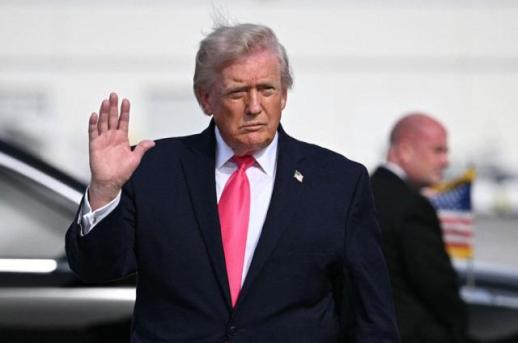 Washington 'very close' to deal with Iran as talks may resume this weekend, Trump says SEOUL, April 17 (AJP) - The U.S. is "very close" to reaching a deal with Iran to end the prolonged conflict in the Middle East, with talks between the two sides likely to resume as early as this weekend, U.S. President Donald Trump said on Thursday. Speaking to reporters at the White House before departing for Las Vegas, Trump suggested some progress has been made in negotiations, though Tehran has yet to comment. "The big thing we have to do is we have to make sure that Iran does not have a nuclear weapon," Trump said, adding "So, very important is that Iran does not have a nuclear weapon, and they've agreed to that." "We have a very powerful statement that they will not have beyond 20 years, that they will not have nuclear weapons," he also claimed. With these developments, another round of talks could be held in Pakistan this weekend after the first round of talks collapsed without a deal last week, signaling that Trump, who may want to save face and leave, is seeking a breakthrough before April 21, when a two-week ceasefire agreed earlier this month is set to expire. "If the deal is signed in Islamabad, I might go. They want me to go," he added. But it remains unclear whether Trump's remarks are accurate. Uranium enrichment is a make-or-break issue for Iran, which is unlikely to abandon it without major concessions. Trump also warned that failure to reach an agreement could lead to renewed confrontations. "I would say the fighting, if there's no deal, fighting resumes," he said. 2026-04-17 09:10:04
 -
 Korean Banks’ Loan Delinquency Rate Hits 0.62% in February, Highest in 9 Months Domestic banks’ loan delinquency rate rose in February to its highest level in nine months, as economic growth slowed and uncertainty at home and abroad increased. The Financial Supervisory Service said Friday that as of the end of February, the delinquency rate on won-denominated loans at domestic banks — based on principal and interest overdue by at least one month — stood at 0.62%, up 0.06 percentage point from 0.56% a month earlier. It was the highest since May last year, when it was 0.64%. New delinquencies totaled 3 trillion won in February, up 200 billion won from 2.8 trillion won the previous month. Over the same period, the amount of delinquent loans resolved held steady at about 1.3 trillion won. The new delinquency rate edged up to 0.12% from 0.11%. Household loan delinquencies rose to 0.45%, up 0.03 percentage point. Delinquencies on home mortgage loans increased 0.02 percentage point to 0.31%, while household loans excluding mortgages — including credit loans — climbed 0.06 percentage point to 0.90%. Corporate loan delinquencies rose to 0.76% from 0.67%. Delinquencies on loans to large companies increased 0.06 percentage point to 0.19%, and those to small and midsize firms rose 0.10 percentage point to 0.92%. The watchdog said delinquency rates are rising, particularly among smaller corporations, and warned the uptrend could continue amid domestic and external uncertainties. It said it will push banks to strengthen asset-quality management by setting aside sufficient loan-loss reserves and stepping up efforts such as selling delinquent loans to clean up their balance sheets.* This article has been translated by AI. 2026-04-17 09:05:08
 -
 South Korea Launches Copyright Protection Campaign for World Book and Copyright Day The Ministry of Culture, Sports and Tourism, the Korea Copyright Commission and the Korea Copyright Protection Agency said Thursday they will run a copyright protection campaign from April 17 to 30 ahead of World Book and Copyright Day on April 23. Events will be held online and in person, including talk concerts with writers and experts, advance promotion for a copyright awareness contest, and an on-site program at the National Library of Korea. Two talk concerts are scheduled for April 23. Writer Kim Gyeoul will meet readers at Kyobo Book Centre’s Gwanghwamun store under the theme “The future of books built through copyright protection.” Kim Seong-woo, identified as a doctor, will lecture at the Copyright Museum in Jinju, South Gyeongsang province, on “Artificial intelligence and copyright, literacy.” Ahead of the “copyright awareness contest” set for May, organizers will run an advance promotion event on the contest website from April 23 until entries open. Participants can register their intent to join and post comments about what they expect. This year’s contest will accept poems and essays promoting respect for and protection of copyright. Organizers plan to select 50 winning works and, in November, award prizes including the Prime Minister’s Award, the culture minister’s award, a special award from the World Intellectual Property Organization, and the Korea Copyright Commission chair’s award, along with total prize money worth 12.5 million won. Local communities and companies are also joining the campaign. One hundred bookstores nationwide, working with Kyobo Book Centre and the Korea Booksellers Association, will distribute 100,000 bookmarks from April 23 to 30 carrying the message, “A heart that loves books, a heart that respects copyright.” Kakao Corp. said it will run a World Book Day reading club through Kakao Brunch and spread messages encouraging respect for copyright. The National Library of Korea will hold a copyright quiz and a kiosk roulette event for visitors on April 23. Online, the commission and the protection agency will run four consecutive social media events: “Choose the correct passage” and “Fill in the blank” from April 17 to 23, followed by “Comment on the promotional video” and “Choose a character from a work” from April 23 to 30. * This article has been translated by AI. 2026-04-17 08:48:26
 -
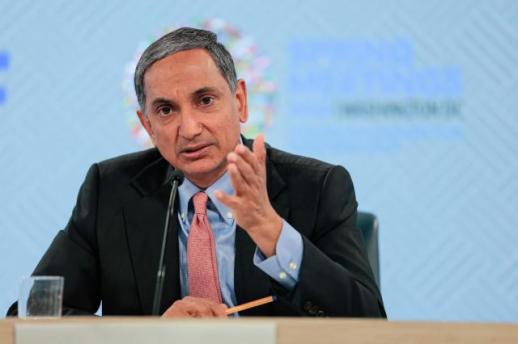 IMF keeps Korea growth view at 1.9% on 'energy buffers' despite Gulf shock SEOUL, April 17 (AJP) -The International Monetary Fund on Thursday maintained its growth outlook for South Korea at 1.9 percent for this year, holding steady from its January projection as it pointed to “sufficient buffers” to withstand energy shocks stemming from the Gulf conflict. The assessment came as the war-driven surge in oil and gas prices adds a fresh layer of uncertainty to the global economy, with Asia seen as particularly exposed due to its heavy reliance on imported energy. “Asia is significantly exposed to the energy shock,” Krishna Srinivasan, director of the IMF’s Asia and Pacific Department, said during a regional outlook briefing in Washington. “The scale and persistence of the shock remain uncertain.” The IMF expects regional growth to slow from 5.0 percent last year to 4.4 percent in 2026, while inflation is projected to rise from 1.4 percent to 2.6 percent over the same period, reflecting the pass-through of higher energy costs. The vulnerability stems from structural factors. Oil and gas consumption accounts for around 4 percent of Asia’s GDP — nearly double that of Europe — while limited domestic production leaves many economies dependent on imports. Net energy imports amount to roughly 2.5 percent of GDP across the region, rising to as high as 8 percent in some economies. Beyond direct fuel costs, the IMF warned of broader supply chain risks. Disruptions to petrochemical inputs such as helium and sulfur could amplify production bottlenecks if the conflict drags on. Despite these pressures, the Fund said Asia entered 2026 with stronger-than-expected momentum, supported by resilient exports — particularly in technology goods — and recovering consumption. That underlying strength is expected to partially offset the shock, keeping growth forecasts broadly stable under the IMF’s baseline scenario, which assumes the energy disruption remains limited in duration. For South Korea, the IMF struck a cautiously balanced tone. “Korea starts from a strong macroeconomic position,” said Thomas Helbling, deputy director of the Asia and Pacific Department. He cited the country’s solid growth momentum, supported by the tech cycle, and its proactive policy response to mitigate the impact of the shock. The IMF also highlighted Korea’s relatively strong energy buffers as a key advantage compared to other energy-importing economies in the region. Still, vulnerabilities remain. “Korea, like the rest of Asia, is an energy-importing economy,” Helbling said, noting that the outlook could deteriorate significantly under a more prolonged or severe energy shock scenario. Under the IMF’s adverse scenario, oil prices could rise as much as 60 percent above earlier forecasts this year and remain elevated into 2027, leading to broader output losses and more persistent inflation across the region. In such a case, the impact would extend beyond price increases. “This is a shock which has both a price impact and a quantity impact,” Srinivasan said, warning that prolonged disruptions could lead to shortages in energy-related inputs and amplify supply chain stress. “If you have both price shocks and shortages, the growth impact becomes much more acute,” he added. Against this backdrop, the IMF urged policymakers to avoid overreacting to short-term inflation spikes while remaining flexible. Most Asian central banks still have room to “look through” the initial surge in energy prices, as inflation expectations remain broadly anchored, the Fund said. However, it cautioned that monetary policy must remain agile if the shock proves more persistent. On the fiscal side, the IMF reiterated its long-standing stance against broad-based subsidies and price controls, calling instead for targeted and temporary support measures. “Generalized subsidies are costly, distortionary and very hard to unwind,” Srinivasan said, emphasizing the need to preserve fiscal buffers after years of repeated shocks. The Fund also framed the current crisis as a catalyst for longer-term structural adjustments. It called for greater investment in alternative energy, improved energy efficiency and stronger power infrastructure to reduce dependence on imported fuels. At the same time, it urged deeper regional trade integration to cushion external shocks and enhance resilience. “The near-term task is to absorb the shock while preserving policy credibility,” Srinivasan said. “The medium-term task is to build a more resilient, balanced and inclusive growth model.” 2026-04-17 08:33:52
 -
 KBS2’s “Music Bank” Announces Lineup Featuring TXT, ifeye and MODYSSEY KBS2’s music show “Music Bank” has announced its lineup for the episode airing Friday afternoon. The broadcast will feature 1000° (Cheondo), BE BOYS, cosmosy, hrtz.wav, ifeye, KEYVITUP, KickFlip, KISS OF LIFE and MODYSSEY. Also set to appear are RESCENE, SANTOS BRAVOS, VVS, Dayoung, AMPERS&ONE, All'N, Lee Ji-min and TOMORROW X TOGETHER. Lee Ji-min and MODYSSEY are scheduled to perform their debut stages on the show. ifeye and TOMORROW X TOGETHER will return with comeback performances. “Music Bank,” hosted by Kim Jae-won and Bang Ji-min, airs every Friday at 4:55 p.m.* This article has been translated by AI. 2026-04-17 08:12:15
 -
 Korean Drugmakers Gain FDA Orphan Drug Designations, Boosting Global Push South Korean pharmaceutical and biotech companies are increasingly securing orphan drug designations from the U.S. Food and Drug Administration, a step they see as helping open doors to global markets. The designation does not guarantee a successful drug, but it can cut time and costs in the approval process and is widely viewed as a strategic pathway. Industry officials said April 16 that candidates being developed by ABL Bio, Yuhan Corp. and Onconic Therapeutics have recently received FDA orphan drug designation. The FDA program targets rare diseases with small patient populations and few or no alternative treatments. The designation comes with regulatory incentives. The FDA offers benefits such as waiving application fees and providing expedited review, and it supports a 25% tax credit for clinical trial costs. After a product is approved for sale, it also grants seven years of market exclusivity in the United States. ABL Bio said its bile duct cancer candidate tovecimig, a bispecific antibody it licensed out to Compass Therapeutics, was designated an orphan drug. The drug is designed to block both the DLL4 and VEGF-A pathways, which play key roles in new blood vessel growth and tumor vascular formation. It is being developed for bile duct cancer, where treatment options are limited. Yuhan said its Gaucher disease candidate YH35995 also received orphan drug designation. Gaucher disease is a hereditary rare disorder in which a specific enzyme deficiency disrupts metabolism, leaving significant unmet medical needs. The company said only about 100 patients are registered in South Korea, but the market is shaped around high-priced therapies, making it potentially profitable. Onconic Therapeutics, a subsidiary of Jeil Pharmaceutical, said its synthetic lethality-based dual-target anticancer drug nesuparib was recently designated an orphan drug for small cell lung cancer. Nesuparib had previously received orphan drug designation for pancreatic and gastric cancers, and the latest decision again points to broader development potential, the company said. The rare-disease drug market is growing as diagnostic tools improve and aging populations contribute to rising patient numbers, expanding demand for treatments. Evaluate, a pharmaceutical data analytics firm, said rare-disease therapies accounted for about 17% of the global prescription drug market as of last year and are projected to reach about 20% of the total prescription market by 2030. Still, orphan drug designation does not necessarily translate into commercial success. Because the designation is granted at an early stage, candidates must still prove themselves through clinical trials, regulatory review and market entry. "Even candidates with orphan drug designation are often discontinued because they fail to prove efficacy or run into safety issues," a pharmaceutical industry official said. "Even if they clear clinical trials, there can be variables at the commercialization stage, such as failing to meet production cost targets." Even so, a track record of orphan drug designation is often taken as a signal that a candidate has cleared a certain level of screening and that regulators recognize unmet needs in the disease area. That can be a positive factor in global partnerships, industry officials said. "Rare diseases have limited market size, but institutional support can reduce the burden," another industry official said. "Building approval experience can help earn trust in the global market."* This article has been translated by AI. 2026-04-16 18:18:51
 -
 Korea Medical Tourism Expands Beyond Beauty to Cancer and Fertility Care As South Korea enters the era of 1 million foreign patients, its medical tourism industry is rapidly moving beyond skin care and cosmetic procedures into specialized treatment such as cancer care and infertility services. With demand rising for longer courses of care that run from diagnosis and surgery through recovery, hospitals say overall patient management — including language support, logistics and follow-up — is becoming a key measure of competitiveness. The government had set a goal of attracting 700,000 foreign patients by 2027, but the total already topped 1 million last year. Industry officials said on the 16th that Korea’s medical tourism has long been driven by K-beauty, but more patients are now traveling to Korea for complex treatment, including cancer and infertility care. Asan Medical Center said more than 19,000 foreign patients visited in 2024. Patients from the United States as well as the United Arab Emirates and Mongolia often request consultations in advance by email or messaging apps and send medical opinions from local doctors along with CT and MRI materials to prepare for care, a hospital official said. The hospital’s International Healthcare Center has built an integrated online platform that links registration, uploading test materials, pre-consultations and telemedicine, allowing management to begin before patients arrive. “More patients with serious illnesses are coming to Korea after setting treatment plans through remote care before entering the country,” an Asan Medical Center official said. Over the past five years, the hospital conducted more than 800 remote consultations for patients from 57 countries, many involving severe cases such as liver and pancreatic cancer, the official said. Analysts say the shift toward serious disease treatment also reflects conditions overseas. In the United States, treatment costs are high, and many procedures are known to cost about 50% to 90% more than in Korea. In the United Kingdom, patients can wait months to see specialists. By contrast, Korea is viewed as combining relatively lower costs with strong outcomes. In 2023, Korea’s treatable mortality rate — early deaths that could be avoided with timely, effective care — was 45 per 100,000 people, well below the OECD average of 77. Satisfaction with medical technology and facilities is also reflected in repeat demand: A Korea Health Industry Development Institute survey found 59.8% of foreign patients said they were willing to return. Hospitals are also strengthening tailored services to attract overseas patients. With about 70% of foreign patients coming from nearby countries such as Japan, China and Taiwan, Magok CHA Hospital’s fertility center is cited as an example of improving convenience by leveraging its location near Gimpo Airport. For infertility patients who must return repeatedly to match treatment schedules, the “10-minute drive from the airport” is described as a key advantage. The center has also set up a separate treatment area, Building B, for foreign patients, separating their routes from those of Korean patients. The hospital said it redesigned the care environment to reflect longer interpretation and consultation times. “We chose the location with accessibility in mind, and we operate specialized interpreters and a one-on-one consultation system,” a fertility center official said. Seoul, where 85% of foreign patients are concentrated, is expanding policy support. The city plans to increase its pool of interpreter coordinators from 100 to 1,000 this year, broadening coverage beyond English, Chinese and Japanese to include less common languages such as Russian and Arabic. “Not only medical care but also interpretation and guidance can shape the patient experience,” a Seoul Tourism Organization official said, adding that trust built through those services can influence perceptions of Korea’s health care overall. Seoul is also pushing to introduce “medical-friendly accommodations.” A city official said medical tourism is currently centered on hospitals and clinics, with related services such as patient recruitment agencies, travel firms and transportation operating alongside them. The city is reviewing support systems tailored to long-stay patients, the official said.* This article has been translated by AI. 2026-04-16 18:18:00
 -
 V-League FA Standout Jeong Ho-young Signs With Heungkuk Life for 3 Years, 540 Million Won Heungkuk Life of the women’s professional volleyball V-League has signed middle blocker Jeong Ho-young, regarded as one of this season’s top free agents. The club said Wednesday it agreed to a three-year deal worth 540 million won, including 420 million won in salary and 120 million won in incentives. Jeong entered the league after being selected No. 1 overall in the 2019-2020 rookie draft by KGC Ginseng Corp., now Jeonggwanjang, and developed into a leading V-League middle blocker. This season, she played 27 matches and totaled 290 points (10.7 per match), ranking fourth with 0.667 blocks per set. Known for her high contact point and steady blocking, Jeong has also been a regular selection for the national team and has gained international experience. In a statement released by the club, Jeong said she was “happy and excited” to join Heungkuk Life and would “adapt quickly in a new environment, help the team and repay the fans with better performances.” Coach Tomoko Yoshihara said Jeong “has height, speed and blocking timing,” adding that she expects Jeong to bring stability in the middle and increase the team’s attacking tempo. Jeong is classified as an A-grade free agent. Under league rules, Heungkuk Life must either provide Jeonggwanjang with 200% of her previous season’s salary and one player outside the club’s list of six protected players, or pay a transfer fee equal to 300% of her salary. Jeong’s salary for the 2025-2026 season was 300 million won.* This article has been translated by AI. 2026-04-16 18:12:11
 -
 Korea Pharmaceutical and Bio-Pharma Association Welcomes Launch of National Bio Innovation Committee The Korea Pharmaceutical and Bio-Pharma Association welcomed the launch of the National Bio Innovation Committee, saying it expects governance of the pharmaceutical and biotech sector to be unified. In a statement issued on the 16th, the association said coordination among ministries and the government’s ability to execute policy would be strengthened, adding that it hopes policy goals and implementation plans will be pursued in a systematic way. Earlier that day, the government held a launch ceremony for the committee at the Government Complex Sejong, chaired by Prime Minister Kim Min-seok. The committee was formed by integrating the separately run National Bio Committee and the Bio Health Innovation Committee, with the aim of overseeing and coordinating bio policy across the government. The association said intensifying global technology competition has brought a shift across areas including new drug development, convergence with artificial intelligence and advanced manufacturing, underscoring the need for the committee. It also said plans to expand open innovation based on cooperation among industry, academia, research institutes, hospitals and government, and to strengthen full-cycle support from research and development to commercialization, would help drive both expansion of the industry and qualitative growth. The association also gave a positive assessment of measures such as AI-based support for R&D, building a national bio cluster and pursuing regulatory rationalization. It said it hopes the committee will serve as a policy control tower and a focal point for strengthening national competitiveness, adding that it will actively cooperate for successful operations.* This article has been translated by AI. 2026-04-16 18:06:21