
Journalist

Tom Stacey
-
 Energy-poor ASEAN speaks out, demands safe Hormuz reopening SEOUL, April 14 (AJP) —The Association of Southeast Asian Nations (ASEAN), increasingly strained by energy supply disruptions stemming from the Gulf conflict, on Monday urged the United States and Iran to reach a permanent resolution and restore safe passage through the critical shipping lane of the Strait of Hormuz. ASEAN foreign ministers issued a joint statement following a virtual meeting, calling on Washington and Tehran to intensify diplomatic efforts toward a lasting end to hostilities and durable peace in the Middle East. They warned that the conflict is already disrupting both energy and food supply chains, underscoring the urgency of securing priority access to energy for member states amid the crisis. The ministers stressed the need for the full and effective implementation of the two-week ceasefire agreement to prevent further casualties, and called for the immediate restoration of safe, secure and uninterrupted transit for vessels and aircraft through the Strait of Hormuz. They also urged all parties to ensure the safety of ships and crews operating in the area. ASEAN reaffirmed its commitment to strengthening cooperation with South Korea, China and Japan to mitigate supply disruptions and curb price volatility. Philippine foreign minister Theresa Lazaro said the ministers also discussed joint measures to secure key agricultural inputs, including fertilizers, in a bid to reinforce regional food security. She added that the ASEAN Summit in May will proceed as scheduled, with a focus on food and energy security as well as the safety of citizens across member states. Manila chairs this year's summit. The region is considered particularly vulnerable to the conflict due to its heavy reliance on Middle Eastern oil and gas. According to the International Energy Agency, roughly 20 percent of global seaborne oil trade passes through the Strait of Hormuz, with nearly 80 percent of those flows bound for Asian markets, including Southeast Asia. Countries with limited reserves are already feeling the strain from what officials describe as the worst energy disruption in modern history. The Philippines has declared a national energy emergency, Indonesia has introduced flexible work arrangements, Vietnam has suspended crude exports, and Thailand is rationing diesel while reactivating coal-fired power plants. Tensions escalated further after Donald Trump announced that U.S. naval forces had begun blocking Iranian-linked shipping routes near the Strait of Hormuz starting at 10 a.m. Eastern Time on April 13. The move followed the collapse of ceasefire talks held in Islamabad from April 11 to 12. 2026-04-14 15:41:59
 -
 How Director Lee Sang-min and Actor Kim Hye-yoon Built the Fear in 'Salmokji' Every production holds many perspectives. The same place and time can feel different depending on where a director or actor stands. “Choi Song-hee’s B-Cut” looks beyond the on-screen “A-cut” to the vivid record of what happened off camera. By weaving interviews with directors and actors, it reconstructs the “B-cut” moments that were often more intense than the finished frame. <Editor’s note> ※This article contains spoilers for the film The horror film “Salmokji” begins when an unidentified figure appears in a reservoir road-view image. A team returns to the site to film again and encounters something in the black, deep water. Rather than leaning on a simple ghost story or shock tactics, the movie builds dread by stacking small, unexplained signs and the slow sense that people at the water’s edge are being consumed. On screen, the reservoir swallows the characters; off screen, the director and cast closely discussed how to shape that fear. Director Lee Sang-min and actor Kim Hye-yoon shared a love of the horror genre, but approached the set differently. Lee focused first on sound, devices and the texture of the location. Kim built the emotions of a character who tries to hold on but ultimately begins to crack. Their contrasting instincts, they said, helped make the film’s fear feel more layered. “Kim Hye-yoon is sincere and exemplary by nature,” Lee said. “Since this is my first film at this scale, she was a real support. She gave a lot of good ideas, and I was grateful that she helped organize difficult ensemble scenes. Her expressiveness is excellent, too. She seemed to know exactly what the right ‘degree’ was. I think we worked together really well.” “On set, Director Lee has a firm image of the script in his head, but when it comes to acting, he left room for us to freely offer ideas and try things,” Kim said. “He’s the type who likes building scenes through a lot of conversation.” Their shared genre taste also carried into discussions about equipment and staging. Lee said he regularly watches horror content on YouTube, and that interest fed into the film’s devices. “I really like horror YouTube,” Lee said. “Watching YouTubers use things like a ghost box, I thought, ‘Someday I have to use that in my movie.’ Usually you just hear static, but if, at a certain spot, words start pouring out, that would be terrifying. Those were elements that scared me even on YouTube, so I tried to blend them into the film.” “I like horror a lot, too, so I knew about that equipment,” Kim said. “The director also knew ghost boxes well, so we talked about the gear and discussed how to use it. Ha ha.” Kim plays Su-in, the character who anchors the story. Within the team heading to Salmokji, Su-in must show leadership while carrying an emotional fault line that could collapse first. Kim said she built Su-in around two main ideas: fear of water and guilt. “When the director and I developed Su-in, we used fear of water — trauma — and guilt as key words,” Kim said. “She’s under huge stress from that, so I thought it would be good if she looked exhausted in every way. A bit worn down, drained, and even when she’s with others, as if she’s lost in different thoughts.” Lee said he started by researching road-view filming and then assigning roles needed for the work — including a road-view controller, a command lead and a place-view role — before shaping the characters. Su-in became central, he said, because the water ghost must “pull” someone in, requiring a backstory that would drive that movement. While everyone goes to Salmokji for the road-view job, Lee said he wanted each person to have a different private goal, and needed a leader who could make rational judgments but still be fixated on the reservoir. That is why he gave Su-in “guilt” as a defining trait, he said. Notably, Su-in’s past is not fully explained in the film. Viewers infer it through bits of dialogue and mood. Lee said he chose that approach to keep attention on what happens in the location itself. “I wanted audiences to focus only on what happens in the film’s ‘space,’” Lee said. “I wanted to unpack the backstory, but no matter how I thought about it, it felt like the flow would drift elsewhere. So I think we only conveyed it through nuance. Su-in had an experience where she almost died in water, and because of that trauma she fears water. She’s assigned to Salmokji for the road-view shoot, and even though she doesn’t want to go, she forces herself. We tried to capture the fear of the space itself and the discomfort of water.” “When I first got the script, he told me about Su-in’s backstory,” Kim said. “It’s part of the story, but it doesn’t appear in the film, so I tried to compress those emotions and show them to the audience.” Kim said one scene she remembers most strongly is the stone-skipping sequence. As Kyung-jun and Sung-bin toss stones across the water to pass time, the film briefly seems to ease its pace — then quickly turns the familiar rhythm into something unsettling. “As a horror fan, my favorite scene in this movie is the stone-skipping scene,” Kim said. “It was also the moment that startled me most in the theater. During filming, what comes flying from the other side was CG, so I couldn’t see it with my eyes, but on the big screen it surprised me — and it was really scary.” Lee said sound was his top priority in shaping that moment. “When should it become quiet? The best moment in a horror movie is when everyone holds their breath,” he said. “I wanted to bring that silence to life. I wanted the sound of the stone flying in, the impact, and the splash to feel sharp. I talked a lot with the sound engineer about how strong the lapping should feel. When you don’t know it’s water, we cut the sound down, and once the camera reveals it’s underwater, we made it feel bigger.” In the end, the film’s fear was not built through a single method. Lee tightened tension through the arrangement of space, sound and devices, while Kim carried Su-in’s inner collapse under trauma and guilt. Their different approaches to the same reservoir, they said, locked together to create the film’s distinctive chill. 2026-04-14 15:33:25
 -
 KB Kookmin Bank Launches New KOSPI 200-Linked Deposit With Up to 13.8% Annual Return KB Kookmin Bank said April 14 it has launched the “KB Star Equity-Linked Deposit (ELD) 26-3,” a principal-protected product if held to maturity that can offer additional returns depending on the performance of the underlying asset. The one-year product is linked to the KOSPI 200 index and comes in three structures: an upside participation type (minimum-rate guaranteed), an upside knock-out type (minimum-rate guaranteed), and an upside knock-out type (high-yield seeking). For the upside participation type (minimum-rate guaranteed), the maturity rate is set based on the index’s gain, ranging from an annual 2.95% minimum to an annual 3.05% maximum (as of April 13, before taxes). For the upside knock-out type (minimum-rate guaranteed), the maturity rate ranges from an annual 2.95% minimum to an annual 3.50% maximum. The upside knock-out type (high-yield seeking) offers an annual 2.00% minimum to an annual 13.8% maximum. For the upside knock-out type (minimum-rate guaranteed), if the underlying index rises more than 25% during the observation period, the maturity rate is fixed at the minimum rate. For the upside knock-out type (high-yield seeking), the same applies if the index rises more than 20%. Subscriptions will be accepted through April 22. The sales cap totals 250 billion won: 100 billion won each for the upside participation type (minimum-rate guaranteed) and the upside knock-out type (minimum-rate guaranteed), and 50 billion won for the upside knock-out type (high-yield seeking). A KB Kookmin Bank official said the bank increased the subscription limit for product structures that drew strong demand in the previous sale, and asked for customers’ interest and participation.* This article has been translated by AI. 2026-04-14 15:27:18
 -
 Culture Minister Choi Hwi-young seeks film industry solutions on holdback, funding “I think we can work through this quickly.” Culture, Sports and Tourism Minister Choi Hwi-young said on the 14th that the government, the film industry and the Korean Film Council should form a public-private consultative body to address pending issues, stressing the need for swift action. Speaking at a meeting with filmmakers in Seoul’s Jung District on supplementary budget planning for the film sector, Choi said there were areas that also required talks with theaters and that he hoped discussions would move forward. The meeting was held to hear industry views on issues including scrapping efforts to legislate a holdback, introducing limits on screen concentration, expanding minimum screening days and increasing policy funds. Attendees included Kim Byeong-in, head of the Korea Scenario Writers Association; Kim Seung-beom, CEO of Niners Entertainment; Baek Jae-ho, head of the Korean Independent Film Association; and director Yang Woo-seok. Earlier, a coalition of 13 major film groups held a news conference saying Korea’s film industry faced a structural crisis and calling for a more active government role, including institutional changes. The groups voiced clear opposition to legislating a “holdback” that would allow films to be released on follow-on platforms such as OTT services only six months after their theatrical run ends. Saying the holdback would amount to a near blackout, they called instead for a system to limit excessive allocation of screens to specific films. Choi noted differing views within the industry and said more discussion was needed. “On holdbacks, there are a variety of opinions even within the film industry,” he said, adding that it did not appear to be an issue to be discussed separately by each side. He said proposals under discussion in the National Assembly were not finalized. “On the big principles, the direction and perspective of the film industry and the government are not different,” Choi said. “What matters is how we turn specific issues into workable measures.” The ministry said it secured a major increase in funding for the film industry through the first supplementary budget for 2026. The package includes 26 billion won for mid-budget film production, 4.5 billion won for independent and art film production, 8 billion won for advanced production support for Korean films, and 27.1 billion won to promote moviegoing, for a total of 65.6 billion won. Choi said he pushed the plan with a sense of crisis that “if film collapses, K-culture collapses,” and with the aim of minimizing the scale of damage from the war in the Middle East. He said the government budget allocated to the film sector for 2026 was 127.9 billion won, and the supplementary budget for the sector was 65.6 billion won. He said support was included for two mid-budget films with production costs of 10 billion to 15 billion won, and that 18 additional films in the 2 billion to 10 billion won range would be designated. Considering the original plan to support 20 mid-budget films, he said, the total support would cover 40 films. 2026-04-14 15:22:03
 -
 Banks Brace for Fierce Bidding for Seoul, Incheon and Other Local Government Depository Deals Local governments’ depository contracts are emerging as a major battleground for South Korea’s banks, with competition expected to intensify as several large jurisdictions near the end of their current agreements. According to the financial industry on April 14, five governments — Seoul, Incheon, Sejong City, South Jeolla Province and North Gyeongsang Province — will see their depository agreements with banks expire at the end of December. Shinhan Bank currently handles Seoul’s first and second depositories. Incheon’s first and second depositories are managed by Shinhan Bank and NH NongHyup Bank, respectively. Sejong City uses NongHyup and Hana Bank; South Jeolla uses NongHyup Bank and Gwangju Bank; and North Gyeongsang uses NongHyup Bank and iM Bank. Seoul is widely viewed as the biggest prize, given its budget size and the prestige of being the city’s main banking partner. Seoul’s total budget this year (general account plus other special accounts) is 51.4778 trillion won, the largest among local governments nationwide. Other banks are signaling strong interest in unseating Shinhan. All five major commercial banks, including Shinhan, attended a proposal briefing held April 9, according to industry officials. Seoul plans to accept proposals through May 6 and then hold presentations by each bank. A revised scoring system could further sharpen the contest. The weighting for interest rates on demand deposits has been increased to 8 points from 6, raising expectations of more aggressive rate offers. Incheon, with a depository of about 15 trillion won, is also expected to be closely contested. The city plans to begin preparing its bid process in June and aims to sign an agreement as early as July. While Shinhan and NongHyup currently serve as depository banks, Hana Bank — which is set to relocate its headquarters to Incheon’s Cheongna International City in September — is emerging as a leading challenger. Analysts say interest rates could be decisive as Incheon pushes an ordinance change that would require rates to be disclosed within 30 days after a depository agreement takes effect. Outside the capital region, competition is also expected for Sejong, South Jeolla and North Gyeongsang. Their budgets this year total more than 28 trillion won: North Gyeongsang at 14.0363 trillion won, South Jeolla at 12.7023 trillion won and Sejong at 2.0829 trillion won. Banks pursue these contracts largely because managing public funds can secure large volumes of low-cost deposits. The average interest rate paid on local government depository funds nationwide last year was 2.53%, according to the Interior and Safety Ministry’s Local Finance Integrated Disclosure System released in January. The contracts are also seen as valuable for reputation. “A city or provincial depository carries symbolic value, but it also delivers substantial practical benefits in areas such as corporate and investment banking,” a financial industry official said. “With some evaluation criteria adjusted and disclosure of contracted rates becoming mandatory, strategic competition among banks is likely to grow even more intense.” 2026-04-14 15:21:00
 -
 Minor party leader Cho Kuk declares bid for parliamentary seat in Pyeongtaek SEOUL, April 14 (AJP) - Cho Kuk, the leader of the minor Rebuilding Korea Party said he will run for a parliamentary seat in Pyeongtaek, Gyeonggi Province in the upcoming local elections in June. At a news conference at the National Assembly on Tuesday, Cho vowed to reform the country by rooting out insurrection forces behind disgraced former President Yoon Suk Yeol's botched declaration of martial law in December 2024. Cho, who had been expected to run in one of several contentious districts such as Ansan, Hanam and Busan, said he chose Pyeongtaek because it is the "toughest of tough districts" for the ruling Democratic Party (DP), having failed to win the seat against the main opposition People Power Party (PPP) three times in a row. He then urged the DP not to field a candidate, saying that the seat has been left vacant after former DP lawmaker Yi Byeong-jin stepped down in January over election law-related violations. The ex-justice minister, who received a two-year prison sentence in December 2024 for corruption and document forgery related to his children's university admissions, was released in August last year under President Lee Jae Myung's first amnesty, marking the 80th anniversary of Liberation Day. 2026-04-14 15:12:36
 -
 Celltrion Completes Cancellation of 9.11 Million Treasury Shares, Industry’s Largest Celltrion said Tuesday that its largest-ever cancellation of treasury shares has been fully reflected in the stock market following a change listing on April 13. With the process complete, the company said its total number of outstanding shares fell by about 4%. Celltrion described the move as the largest treasury-share cancellation ever in South Korea’s pharmaceutical and biotech industry. The canceled shares accounted for about 74% of the company’s treasury stock and 3.94% of total issued shares. Based on the previous day’s closing price, the cancellation was valued at about 1.7782 trillion won, exceeding the combined size of its treasury-share cancellations in 2024 and 2025. Celltrion said the cancellation is expected to improve earnings per share. Earlier, Celltrion said it recorded a shareholder return rate of about 103% last year through a cash dividend of 750 won per share and treasury-share cancellations, surpassing its stated three-year average target of 40%. A Celltrion official said the cancellation was aimed at boosting shareholder value and expressed confidence it would be a turning point for the company to be properly valued alongside future earnings growth.* This article has been translated by AI. 2026-04-14 15:12:00
 -
 Huons Biopharma Names Lee Jeong-hee as New CEO Huons Biopharma, a Huons Group company specializing in botulinum toxin, said April 14 it has appointed Lee Jeong-hee, an executive director, as its new CEO. Lee, born in 1976, earned an MBA from Aalto University in Finland. He has more than 23 years of experience in the dermatology and medical aesthetics market, working in marketing, sales and strategic planning at Ipsen Korea, Hanwha Pharma, Hugel, Daewoong Pharmaceutical, Jetema and Chong Kun Dang Bio, among others. The company said Lee was credited with helping lay the groundwork for global expansion while leading overseas business development at Hugel and Daewoong Pharmaceutical. Huons Biopharma in January received product approval from China’s National Medical Products Administration for its botulinum toxin Hutox (sold domestically as Liztox) in a 100-unit dose, and began its first shipments last month. “Huons Biopharma is at an important turning point as it has secured approval in China for its botulinum toxin product and is moving into full-scale exports,” Lee said. “We will accelerate exports to China in the second half and expand R&D for next-generation products to sustain growth.”* This article has been translated by AI. 2026-04-14 15:09:00
 -
 Former PPP leader to run for Busan as races for local elections heat up SEOUL, April 14 (AJP) - Han Dong-hoon, the former leader of the main opposition People Power Party, said he wants to devote himself to improving the lives of residents in Busan, hinting that he will run for local elections slated for early June. Calling the southern port city his "political hometown," Han, who has yet to formally declare his candidacy, said he respects what he described as Busan's role in protecting South Korea and steering the country back on track, in an interview with CBS Radio on Tuesday. He promised he would do his best so that residents in the city's northwestern district of Buk-gu could be a little better off, indicating the seat he intends to run for. Han also said he is prepared to serve the district better than anyone. His comments came just a day after he wrote on social media that he had rented a flat in the city. It is now almost certain that Han is running as an independent candidate for the district after being expelled from the PPP in January this year over dubious allegations that included hundreds of defamatory comments about disgraced former President Yoon Suk Yeol and his wife, Kim Keon Hee posted on the party's online bulletin board, making the district likely to become one of key battlegrounds. Amid mounting calls within the ruling Democratic Party (DP) to field Ha Jung-woo, the presidential adviser for artificial intelligence and future strategies, the Busan native is widely expected to declare his bid in what looks to be a fiercely contested race between the two rival parties. This year's local elections, which will elect more than 4,000 metropolitan mayors, provincial governors and other heads of local governments nationwide, will be held on June 3. 2026-04-14 14:29:35
 -
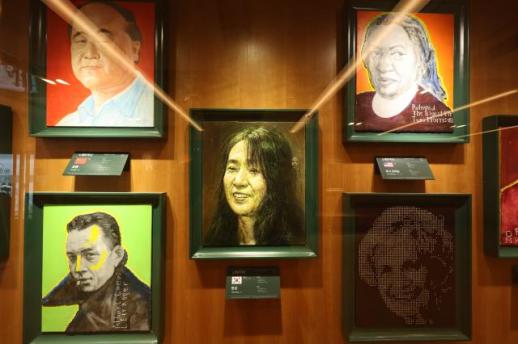 Nobel laureates greet visitors at downtown Seoul bookstore SEOUL, April 14 (AJP) - Portraits of Nobel Prize laureates line the Sejong-ro entrance corridor at Kyobo Book Centre in Gwanghwamun, offering passersby a glimpse of history's greatest minds. Among the portraits displayed are novelist Han Kang, who won the 2024 Nobel Prize in Literature, and Kim Dae-jung, South Korea's 15th president and recipient of the 2000 Nobel Peace Prize. The exhibition brings the achievements of Nobel laureates into the heart of the city, making their legacies accessible to daily visitors of one of Seoul's most prominent bookstores. 2026-04-14 13:57:36