
Journalist

Tthe Embassy of Uzbekistan in the Republic of Korea
-
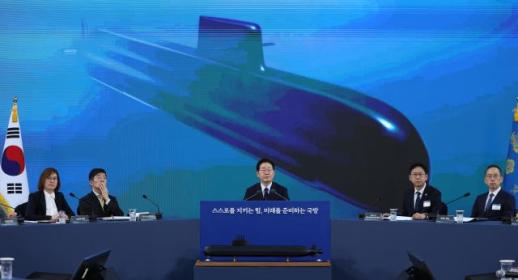 AJP Focus: Seoul's nuclear submarine push raises broader regional security questions SEOUL, May 27 (AJP) - South Korea's new "Jangbogo N" nuclear-powered submarine program is raising questions over whether the project is designed primarily to deter North Korea or whether it could eventually become part of a broader U.S.-led effort to counter China. Officials have described the submarine as a symbol of Seoul's determination to take greater responsibility for its own security. But the move comes after the commander of U.S. Forces Korea recently described South Korea as a "dagger" from China's strategic perspective. Under the current timetable, the first vessel is expected to become operational in the mid-2030s. Defense Minister Ahn Gyu-back unveiled the plan during the first meeting of the Future Defense Strategy Committee at the Navy Submarine Command in Jinhae on Tuesday. "The nuclear-powered submarine, to be built on the foundation of a strong South Korea-U.S. alliance, will be a symbol of our will to take responsibility for peace and security on the Korean Peninsula ourselves," he said. Ahn added that the project would also contribute to strengthening South Korea's defense industry and play a key role in countering North Korea's submarine-based nuclear and missile threats. According to the Defense Ministry, the submarine South Korea plans to build will carry conventional weapons and is unrelated to strategic nuclear submarines armed with nuclear weapons. Its reactor will use low-enriched uranium at around 20 percent, rather than highly enriched uranium that can be used to produce nuclear weapons. The U.S. currently uses highly enriched uranium of more than 90 percent for its nuclear submarines, while France and China are known to operate nuclear-powered submarines based on low-enriched uranium. Under the South Korea-U.S. nuclear cooperation agreement signed in 2015, Seoul requires Washington's consent to enrich uranium below 20 percent and reprocess spent nuclear fuel. South Korea has so far been effectively unable to enrich uranium and imports all nuclear fuel used in its power plants. If Seoul seeks to receive nuclear fuel for its submarines from Washington, the two countries will need further discussions, including a separate agreement under the U.S. Atomic Energy Act. Any transfer of nuclear fuel would also require approval from the U.S. Congress. The plan comes as the second Trump administration, under its "Make America Great Again" agenda, presses allies to invest more in their own defense and assume a greater share of collective security responsibilities. South Korea is also facing growing pressure as the U.S. war with Iran drags on. Washington has called on Seoul, where about 28,500 U.S. troops are stationed, to contribute more to U.S.-led security efforts, while President Lee Jae Myung has emphasized the need for greater defense self-reliance. According to the U.S. Army War College website on Tuesday, Gen. Xavier Brunson, commander of U.S. Forces Korea, said during a podcast hosted by the school on May 22 that, from China's perspective, "what they see is Korea, a dagger in the heart of Asia, and Japan, which is kind of the shield or the blocking wall as they have ambitions to get beyond the South China Sea." Experts say the Jangbogo N program is not merely a matter of strengthening military capabilities, but a strategic decision about how South Korea will acquire and operate nuclear-powered submarines. They note that the issue has become more complex amid the AUKUS pact and intensifying U.S.-China maritime competition. Seoul must pursue domestic shipbuilding capabilities while complying with the global nonproliferation regime, even as its new submarines are likely to be viewed by Beijing as part of a wider effort to check China's growing naval reach. Because nuclear-powered submarines can operate for more than 40 years, heavy dependence on foreign technology or components in the first vessel could lock Seoul into long-term reliance on outside support for maintenance and upgrades. Jeong Kyung-woon of the Korea Association of Military Studies said in a report that the SSN project is "not a one-time purchase, but a structural choice that will define South Korea’s future submarine force," adding that the level of domestic shipbuilding and defense industry involvement from the initial stage will determine the country's technological autonomy and long-term cost curve. Still, the government appears to be leaving room for further consultations with Washington over where the submarines will be built. President Donald Trump wrote on Truth Social the day after the Oct. 30 summit that South Korea would build its nuclear-powered submarines "right here in the good ol' U.S.A. shipyards of Philadelphia.” The South Korean government, however, has since made clear that it intends to build them domestically. Analysts also warn that while SSNs could eventually be drawn into long-range missions aimed at countering China, Seoul should clearly define their primary role as deterring North Korea. "South Korea already has enough strategic requirements within its exclusive economic zone and surrounding waters," Jeong added. "If Seoul openly expands the mission of its nuclear-powered submarines to counter China, it could invite responses from the Chinese and Russian navies and fuel a regional arms race." Experts said that the more deeply South Korean SSNs are integrated into U.S.-Japan combined operational networks, the more likely China is to view them as forward-deployed U.S. offensive assets — much as it viewed the THAAD missile defense system, elements of which have reportedly been redeployed from Korea to the Middle East amid the prolonged war with Iran. 2026-05-27 17:53:52
 -
 Love affair with Chanel goes both ways for South Korea SEOUL, May 27 (AJP) - South Koreans love Chanel, and the fashion house loses Korean right back. For a few hours on Tuesday, the streets of Yeouido in western Seoul felt less like a business district and more like the center of the global fashion world. Long before the show began, the venue for Chanel’s 2026 Métiers d’Art Collection in Seoul was already overflowing with cameras, flashing lights and tightly packed photographers lining the photo wall. Every new arrival triggered a fresh wave of shutter clicks as celebrities stepped briefly into the spotlight before disappearing inside. The event unfolded in two sessions, but the rhythm remained the same throughout the evening — black cars pulling in one after another, security teams moving quickly, photographers shouting names in unison and celebrities pausing for only seconds beneath the barrage of flashes. Among those drawing the loudest reactions were Kim Go-eun, Park Seo-joon, Ko Youn-jung and Lee Jung-jae, alongside Kazuha of LE SSERAFIM. International guests added to the global scale of the evening. Japanese artist CHANMINA, Taiwanese actress Gwei Lun-mei, longtime Chanel ambassador Tilda Swinton and French actress Marion Cotillard each took their turn before the cameras, dressed in sharply tailored Chanel looks that blended classic silhouettes with theatrical detail. The photo calls themselves lasted only moments. Celebrities posed briefly for full-body shots and close-ups before staff quickly guided them inside. Photographers continued firing nonstop, racing to capture expressions, gestures and head-to-toe looks within a narrow time window before the next arrival appeared. The Métiers d’Art Collection occupies a special place within Chanel’s calendar. First launched in 2002, the project highlights the craftsmanship of the house’s artisan ateliers — the embroidery studios, feather makers, jewelers and textile specialists that preserve traditional couture techniques behind the scenes. Each year, the collection travels to a different global city, merging Chanel’s heritage with local cultural inspiration. This year’s Seoul presentation carried additional attention as it marked the Asian unveiling of the first Métiers d’Art collection by creative director Matthieu Blazy, first shown in New York last December. The choice of Seoul reflected a broader shift already visible across the luxury industry. As K-pop, Korean dramas and Korean celebrity culture continue expanding their global reach, Seoul has increasingly become a major stop for luxury houses staging large-scale runway shows, exhibitions and ambassador events. International celebrities now regularly fly into the city for campaigns and fashion presentations that spread instantly across social media platforms worldwide. By the time the final guests disappeared inside, the pace outside never fully slowed. Photographers remained in position, cameras raised, waiting for one more arrival beneath the flood of lights. For one night, Seoul moved to the sound of camera shutters — another global fashion spectacle added to the city’s rapidly growing luxury stage. 2026-05-27 17:51:01
 -
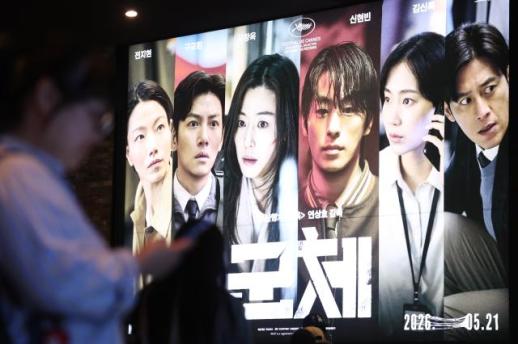 K-zombies are fast, vivid — and in "Colony," finally thinking SEOUL, May 27 (AJP) - Summer heat in Korea brings horror season, and this year's bar-raiser is "Colony," Yeon Sang-ho's latest zombie thriller, which drew more than 2.1 million admissions in its first six days. The film claimed 39.9 percent of advance reservations across 1,858 screens nationwide, prompting inevitable comparisons to Yeon's 2016 breakout "Train to Busan," which sold 11.5 million tickets and pushed Korean zombie cinema onto the global stage. Yeon, however, frames "Colony" as a rupture rather than a sequel in spirit. At a press conference at CGV Yongsan IPark Mall, the director said the film breaks from "Train to Busan," "Seoul Station" and "Peninsula" by training its lens on the zombies themselves. "In 'Seoul Station,' 'Train to Busan' and 'Peninsula,' the stories came from putting classic zombies into new spaces," he said. "'Colony' is about the zombies. In a sense, it's the first film I've made where they are the protagonists." The shift is more than perspectival. In "Colony," the infected mutate quickly, moving and communicating as a coordinated collective. "It's a confrontation between zombies with collective intelligence and humans," Yeon said. "The zombies begin in a primitive state and evolve rapidly, while humans devolve from civilization into savagery. What remains after that devolution — that, I thought, might be the core of humanity. That was the image I wanted to draw." If "Train to Busan" made Korean zombies famous for their speed, "Colony" makes them frightening for their coordination. The zombie is no longer simply an infected body. It is a network. For decades, Korean horror lived in the register of ghosts — resentment, unresolved grief, the vengeful woman in white, haunted school corridors, broken family homes. Gang Beom-gu's "A Monstrous Corpse," often cited as Korea's first zombie film, surfaced in the early 1980s, but the genre remained marginal for years. Its later ascent tracked the country's anxieties: the 1997 Asian financial crisis brought mass unemployment and a deep distrust of institutions, and popular culture began imagining collapse in collective rather than spectral terms. The pivot has only sharpened in recent years, with Korean horror trading supernatural vengeance for infection, social breakdown and mass panic. Set inside a sealed building during a mysterious outbreak, "Colony" follows survivors as they face infected beings whose behavior evolves unpredictably. The title nods to biology — a colony being a group of organisms functioning as a single unit. The film's quiet provocation is that the infected are not mindless. Aaron Kim, a 20-year-old university student from Edinburgh visiting Seoul, said he hadn't planned to see a Korean zombie film on his trip, but a Korean friend persuaded him. "In most zombie films I've seen, zombies have no mind. They just kill indiscriminately," Kim said. "In 'Colony,' they have intelligence. I realized how unsettling that could be." He found the film fresher than the genre fare he was used to abroad. "Zombie films overseas tend to follow a similar pattern," he said. "Korean zombies feel new. They run fast, and they're not simple." Kim gave the film an eight out of 10 and likened its central conceit to artificial intelligence. "The more people use AI, the more data feeds into one system, and the more powerful it gets," he said. "The zombies in 'Colony' felt like that. Each one seemed to be part of a larger circuit that kept learning." Jiyoon Lee, a 20-year-old student based in New York, said the film parts ways with predecessors like "Train to Busan" and "Kingdom." "In those, people turn into zombies because of a virus, and they attack aggressively but without thought," Lee said. "In 'Colony,' the zombies seem to have a clear purpose — to spread the virus. They build a kind of collective intelligence through their own communication network and move together. That was chilling." Both reactions point to one of the defining traits of Korean zombie cinema: speed. Since "Train to Busan," K-zombies have been fast, violent and physically overwhelming. But speed alone doesn't account for their pull. Korean zombie stories tend to plant contagion in dense, socially loaded spaces — trains, schools, apartment complexes, sealed buildings — amplifying the dread that there is nowhere to run because there is nowhere outside. That separates K-zombies from much of the Western tradition shaped by George A. Romero, which often asks what remains after civilization falls. Korean zombie stories ask the inverse: how quickly can a society unravel while everyone is still trapped inside it. Film critic Lee Ji-hye said K-zombie narratives draw much of their force from the emotional ties they implicate. "Korean zombie stories often hinge on the idea that a beloved family member or friend has become a monster," Lee said. "Existing bonds are woven into the narrative, which makes the story far more immersive." Grief and guilt, she said, are routinely fused to infection. "There's a tendency to attach collective guilt or sorrow to the fact that someone has become a zombie," Lee said. "The story makes room for mourning." That emotional undertow runs through the canon: "Train to Busan" wove family sacrifice into class friction; "Kingdom" set infection against royal politics, famine and state failure; "All of Us Are Dead" turned a high school into a theater of bullying and survival; "Happiness" used a quarantined apartment complex to dissect fear and hierarchy. Institutional collapse, Lee added, is rarely background scenery. "Korean zombie works tend to weigh the breakdown of social systems, the incompetence of government in a crisis, bureaucracy and human selfishness — not just zombies chasing people," she said. Unlike the jiangshi — the hopping corpse of 1980s Hong Kong cinema, rooted in Taoist folklore — Korean zombies are modern disaster figures, shaped by infection, institutions and the pressures of crowded urban life. With "Colony," the genre takes another step. The fear is no longer just the speed of the dead. It is an enemy that learns, coordinates and, in doing so, holds up a mirror to the society it consumes. 2026-05-27 17:50:29
 -
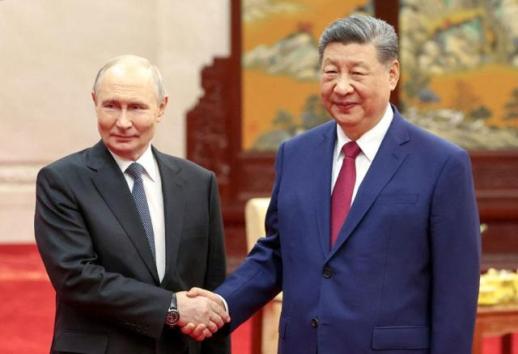 ASIA INSIGHT: What Xi's possible visit to Pyongyang woud mean for Korean Peninsula SEOUL, May 27 (AJP) - Speculation emerged last week that Chinese President Xi Jinping has been preparing to visit Pyongyang to meet North Korean leader Kim Jong-un, possibly before the end of this month or early next month. It comes after Xi hosted U.S. President Donald Trump in Beijing earlier this month, where the two leaders reaffirmed their shared goal of North Korea's denuclearization. Then, barely a week later, Russian President Vladimir Putin also arrived in Beijing. Now Xi is reportedly poised to visit Pyongyang, fueling speculation about his recent diplomatic moves. According to South Korean intelligence sources, Xi's security personnel and protocol staff had already visited Pyongyang in advance, in an apparent sign of an imminent trip and that Xi could seek to mediate relations between Pyongyang and Washington. The Chinese Foreign Ministry, when asked, offered little, with its spokesman saying only that the two countries are "good friends and close neighbors." The question is not simply whether Xi will go, but what he is really after. North Korea is no longer as isolated as it once was. When Kim sat alongside Putin and Xi at a military parade in Beijing in September 2025, the gathering of the three traditional allies appeared to signal a shift. Kim was no longer a desperate outlier seeking relief, but an emboldened leader with something to offer, amid North Korea's growing military ties with Russia. North Korea is believed to have sent around 15,000 troops to assist Russia's war in Ukraine and supplied large quantities of ammunition, in return for hard currency and military technology. Kim’s possible visit to Russia later this year is also expected to further strengthen their ties, while Beijing is closely watching these developments. That would be the main reason behind Xi's urgency. China has long seen North Korea as a close ally and a strategic buffer, sitting between from its border and U.S. troops stationed in South Korea. For decades, Beijing kept Pyongyang closely in check, using trade and aid as tools of pressure. But North Korea has since found a powerful new friend in Moscow, weakening Beijing's leverage. As Trump has expressed willingness to meet Kim again, if Xi positions himself as a mediator who makes that happen, China would secure a seat at the table, a say in any deal that emerges, and a chance to bolster its image as a key global player. For South Korea, however, all of this is deeply unsettling. Talks and negotiations shaping the future of the Korean Peninsula are taking place in Beijing and, possibly soon, Pyongyang, without Seoul at the table, among powers whose interests do not always fully align with South Korea's. For Kim, it would be a no-brainer. A visit by Xi would likely bring some economic relief and allow him to balance Beijing and Moscow against each other, getting as much as possible from both without fully committing to either. 2026-05-27 17:44:23
 -
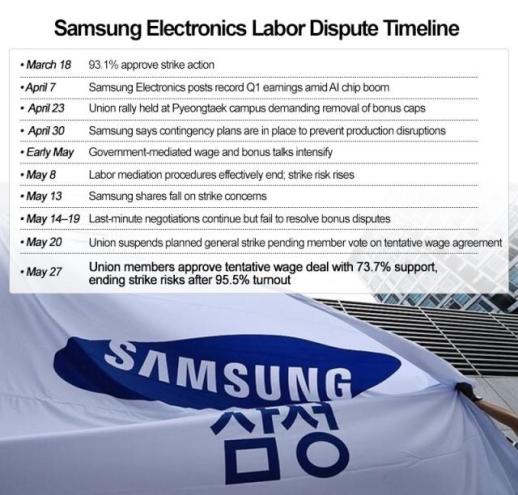 AJP Watch: Samsung puts on charm offensive after avoiding strike despite internal rift SEOUL, May 27 (AJP) - Samsung Electronics went on a multitrillion-won spending blitz Wednesday, pledging 5 trillion won ($3.6 billion) over the next five years to nurture talent and support suppliers on the very day it averted a historic strike by agreeing to hand out over 40 trillion won in rewards tied to this year’s blockbuster earnings and soaring share prices. Management and labor formally signed the 2026 wage agreement after union members approved the deal by 73.7 percent, with turnout reaching 95.5 percent, ending months of escalating tensions that had threatened Samsung’s first large-scale strike. Following the signing ceremony in Giheung, Gyeonggi Province, Samsung executives issued a rare joint statement apologizing for the labor unrest and unveiling a 5 trillion won support package for smaller suppliers, AI talent development and inclusive financing programs. The extravaganza, however, appeared hastily assembled to paper over the deep internal fractures exposed during the negotiations. At the center of the conflict was a widening disparity in performance bonuses between the highly profitable Device Solutions (DS) semiconductor division and the Device eXperience (DX) division, which oversees mobile and consumer electronics businesses. The deal mostly rewards chipmakers – up to 600 million won through special boon-tied bonus, while non-memory workers get 6 million at best. An estimated 74,000 of the chip division is expected to collect the special bonus, costing the company over 40 trillion won – most of what the company has earned in the first quarter. Samsung Electronics earned 57.2 trillion in operating profit in the first quarter, of which 53.7 trillion won came from the chip division. After 93.1 percent of unionized workers approved strike action in March, tensions peaked in April with large-scale rallies demanding the removal of bonus caps. A tentative agreement was reached late on May 20, only hours before a planned general strike. But the relief quickly gave way to another round of infighting. A surge of disgruntled DX employees joined the minority Samsung Electronics Co. Union (SECU), swelling its membership to around 12,000. The representative majority union then stripped SECU members of voting rights on May 21, prompting the smaller union to seek a court injunction Tuesday. Management experts say preventing future labor crises will require Samsung to fundamentally overhaul its compensation structure, replacing opaque and ad hoc bonus decisions with transparent and predictable standards. Hwang Yong-sik, a business administration professor at Sejong University, said the essence of a performance-based reward system lies in predictability and motivation. “The necessity of predictability is to ensure employees are motivated, immersed in their work and driven to produce results. That is the true purpose and essence of a performance bonus system,” Hwang told AJP. Addressing calls from some employees to structurally separate Samsung’s divisions to resolve bonus inequities, Hwang dismissed the idea as unnecessary for a diversified conglomerate. “There is no need to physically separate the organization to achieve equality,” he said. “As long as the company sets clear standards that bonuses are paid according to each business unit’s performance — meaning if the DX division generates strong operating profits in the future, it receives corresponding rewards — there should be no major issues.” While Samsung has stepped back from the brink of a strike, the bigger challenge now lies in repairing trust within an increasingly divided workforce and building a compensation framework capable of sustaining cohesion during the intensifying global AI and semiconductor race. 2026-05-27 17:36:05
 -
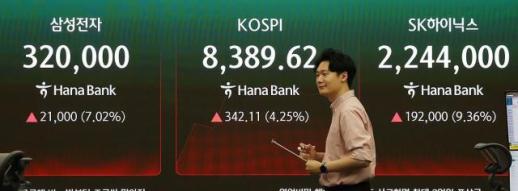
 KOSPI closes at record high as Korea outperforms Asian markets SEOUL, May 27 (AJP) - South Korean KOSPI lead the gain in major Asian markets Wednesday, with the KOSPI closing at a fresh record high above the 8,200 level, driven by a concentrated rally in semiconductor and artificial intelligence-linked large-cap shares. The benchmark KOSPI rose 2.25 percent, or 181.19 points, to close at 8,228.70. The index opened higher and climbed as much as 5.09 percent to 8,457.09, crossing the 8,400 level for the first time, before paring gains. Elsewhere in Asia, Japan’s Nikkei 225 ended nearly flat, rising 0.01 percent to 64,999.4. China’s Shanghai Composite fell 1.3 percent to 4,092.7, while Hong Kong’s Hang Seng Index dropped 1.2 percent to 25,289.3. On the main Seoul bourse, retail investors bought 406.5 billion won ($270.8 million) as institutions purchased 188 billion won. Foreign investors sold 449.8 billion won, extending their selling streak on the KOSPI to 14 consecutive sessions. The rally was led by Samsung Electronics and SK hynix. Samsung Electronics rose 2.68 percent to close at 307,000 won after its tentative wage agreement was approved in a union vote, easing immediate concerns over labor disruption. SK hynix jumped 9.31 percent to 2,243,000 won, pushing its market capitalization above $1 trillion for the first time. SK Square gained 8.04 percent to 1,276,000 won, as investors continued to seek indirect exposure to SK hynix through its parent company. Samsung Electronics’ preferred shares also rose 2.56 percent. IT service and software-linked shares advanced sharply. Samsung SDS soared 29.8 percent to 261,500 won, LG CNS jumped 14.1 percent to 94,600 won and Hyundai AutoEver surged 19.9 percent to 765,000 won. Hyundai AutoEver’s rally came as investors continued to price in expectations tied to Hyundai Motor Group’s robotics, software-defined vehicle and physical AI strategy. Other Samsung affiliates also gained, with Samsung Electro-Mechanics rising 3.69 percent and Samsung Life Insurance adding 1.87 percent. But the broader market remained weak. Hyundai Motor fell 1.16 percent to 681,000 won, Kia lost 1.38 percent and LG Energy Solution dropped 4.01 percent to 383,500 won. Doosan Enerbility declined 3.64 percent, HD Hyundai Heavy Industries slipped 0.13 percent, Samsung C&T edged down 0.12 percent and Hanwha Aerospace fell 0.56 percent. LS Electric dropped 8.3 percent to 261,500 won, while Samwha Capacitor fell 5.1 percent to 125,900 won and Daewoo Engineering & Construction declined 8.2 percent to 26,750 won. Despite the KOSPI’s record close, market breadth was extremely weak. Only 77 stocks advanced on the main bourse, while 826 declined, showing that the rally was concentrated in a narrow group of semiconductor, AI and IT service names. The junior KOSDAQ fell sharply as funds flowed out of smaller growth shares. The index dropped 3.36 percent, or 39.39 points, to close at 1,133.13. It opened at an intraday high of 1,173.80 but reversed course and fell as low as 1,128.75. Retail investors bought 642.5 billion won on the KOSDAQ, but foreign investors sold 85 billion won as institutions dumped 551.8 billion won. Battery, robotics and chip-equipment shares led the decline. EcoPro BM fell 2.95 percent to 313,500 won, while EcoPro lost 2.79 percent to 142,900 won. Rainbow Robotics dropped 5.18 percent, Ju Sung Engineering declined 2.35 percent, Sam Chun Dang Pharm fell 3.03 percent, HLB lost 2.67 percent and Leeno Industrial slid 7.49 percent. Jeju Semiconductor tumbled 11.6 percent to 105,100 won. Some biotech names bucked the downtrend. Alteogen rose 5.75 percent to 386,500 won, while D&D Pharmatech hit its daily upper limit. Peptreon climbed 6.28 percent and Nature Cell jumped 9.4 percent to 32,000 won after announcing three-year follow-up results for its degenerative arthritis stem-cell treatment. The Korean won strengthened slightly against the dollar. The dollar-won exchange rate was quoted around 1,500.9 won, down 0.4 percent from the previous session. Oil prices also moved lower. West Texas Intermediate crude fell 2.7 percent to $91.3 per barrel, while Brent crude declined 2.2 percent to $97.4. The session showed that Korea was the clear outperformer in Asia, but the KOSPI’s record close masked a deeply narrow rally driven mainly by semiconductor and AI-linked heavyweights. 2026-05-27 17:29:51
 -
 KOSPI rally cuts Korea's net external assets as foreign-held stocks surge SEOUL, May 27 (AJP) - South Korea’s external financial liabilities posted their fourth-largest quarterly increase on record in the first quarter, driven mainly by a sharp rise in the value of domestic stocks held by foreign investors. External financial liabilities refer to Korean assets owned by foreign investors, including local stocks and bonds. When the domestic stock market rises, the value of those foreign-held assets also increases, mechanically expanding Korea’s external liabilities on paper. The increase reflected valuation gains from the KOSPI’s rally rather than a large inflow of new foreign investment into local stocks and bonds. According to preliminary data released Wednesday by the Bank of Korea, external liabilities stood at $2.129 trillion at the end of March, up $147.1 billion from the previous quarter. External financial assets rose by only $15 billion to $2.8826 trillion over the same period. As liabilities increased much faster than assets, net external financial assets fell by $132.1 billion to $753.6 billion, marking the second-largest quarterly decline on record. In other words, Korea’s net external position weakened largely because the value of domestic assets owned by foreigners rose faster than the value of overseas assets held by Koreans. Net external financial assets had surpassed $1 trillion for the first time at the end of 2024, reaching $1.102 trillion. They later fell to $904.2 billion at the end of last year before dropping further into the $700 billion range in the first quarter. The latest decline was driven largely by non-transaction factors, including asset price movements and exchange rate changes. Transaction factors reduced external financial liabilities by $14.3 billion in the first quarter. But non-transaction factors increased them by $161.4 billion, showing that the liability increase was mainly an accounting effect rather than fresh capital inflow. In practical terms, existing foreign investors simply saw the value of their Korean stock holdings rise sharply as the market rallied. The biggest factor was the domestic stock market rally. The KOSPI rose 19.9 percent in the first quarter, climbing from 4,214.2 to 5,052.5. As a result, foreign investors’ holdings of Korean equity securities increased by $122.1 billion from the previous quarter to $1.0325 trillion. By contrast, Korea’s overseas asset growth was limited by weaker global stock markets and higher bond yields. Outbound direct investment by Korean residents increased by $15.4 billion, but outbound securities investment fell by $15.1 billion. Overseas equity securities declined by $9.3 billion, while overseas debt securities fell by $5.8 billion. As overseas stock and bond prices fell, the market value of foreign assets held by Korean investors also declined. The decline in overseas equity assets reflected weak global stock markets. In the first quarter, the Dow Jones Industrial Average fell 3.6 percent, the Nasdaq dropped 7.1 percent and Japan’s Nikkei 225 lost 6.1 percent. Higher long-term interest rates in the United States and Japan also weighed on the valuation of overseas bonds. The U.S. 30-year Treasury yield recently rose above 5 percent, its highest level in about 19 years, while Japan’s 10-year government bond yield climbed to the 2.7 percent range, the highest since 1996. A different trend appeared in Korea’s domestic bond market. Foreign investors’ holdings of Korean debt securities fell by $13.8 billion from the previous quarter to $440.4 billion, hit by a weaker won and falling bond prices. The three-year Korean Treasury yield rose to 3.55 percent at the end of March from 2.95 percent at the end of last year. The 10-year yield climbed to 3.88 percent from 3.39 percent over the same period. The won also weakened 4.7 percent against the dollar, moving from 1,447.70 won at the end of last year to 1,515.00 won at the end of March. The weaker currency reduced the dollar value of won-denominated bonds held by foreign investors. External debt indicators also weakened slightly. Net external credit stood at $365.5 billion at the end of March, down $7.6 billion from the previous quarter. External credit fell by $3.3 billion to $1.1399 trillion, while external debt rose by $4.2 billion to $774.4 billion. Short-term external debt increased by $4.2 billion to $183.6 billion. Foreign exchange reserves fell by $4.4 billion to $423.7 billion. The ratio of short-term external debt to reserve assets rose by 1.4 percentage points to 43.3 percent. The share of short-term debt in total external debt also increased by 0.4 percentage point to 23.7 percent. However, both figures remain well below crisis levels. The short-term external debt-to-reserve ratio reached 78.4 percent in the third quarter of 2008 during the global financial crisis. 2026-05-27 17:28:50
 -
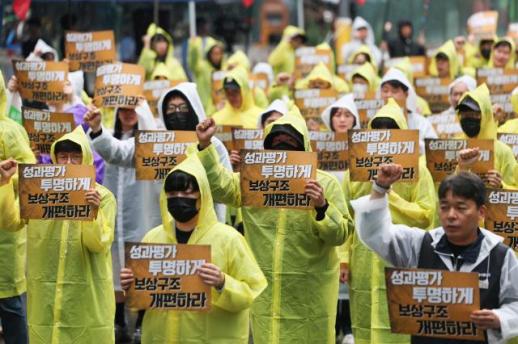 Kakao enters second mediation as labor unrest spreads SEOUL, May 27 (AJP) - Labor and management at Kakao entered a second round of mediation at the Gyeonggi National Labor Relations Commission, with the talks widely seen as a make-or-break moment that could push South Korea's dominant messaging platform into its first-ever headquarters strike. The two sides failed to bridge their differences during a first session on May 18, extending the deadline for a resolution, entering the next round Wednesday. Four Kakao affiliates — Kakao Pay, Kakao Enterprise, DKTechin and XLGames — have already secured the legal right to strike after separate mediation efforts collapsed, and strike ballots held at five affiliates were all approved with votes in favor. The central dispute pits the union's demand for a transparent bonus formula against management's insistence on counting 5 million-won annual grants of restricted stock units (RSUs) as part of performance pay — a classification the union flatly rejects. The union is demanding a formula that ties bonuses to a fixed share of annual operating profit, modeled on a landmark agreement at SK hynix. Kakao headquarters has never gone on strike since the company's founding. The prospect of a walkout has already rattled investors: Kakao shares have fallen about 35 percent from levels around 64,000 won at the start of the year, closing at 40,450 won on Wednesday. The standoff at Kakao is unfolding as labor tensions spread across South Korea's corporate landscape. Samsung Electronics' union has been seeking 15 percent of chip-division operating profit, while Hyundai Motor's union opened 2026 wage talks demanding 30 percent of net profit — a wave of collective action signaling growing worker assertiveness at the country's most prominent conglomerates. 2026-05-27 17:25:40
 -
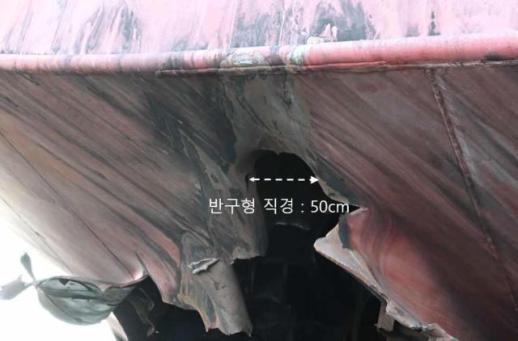 South Korea links Iranian missile to cargo ship attack SEOUL, May 27 (AJP) - The South Korean Ministry of Foreign Affairs announced Wednesday that an older Iranian anti-ship missile is highly likely to have struck the cargo ship HMM Namu earlier this month, signaling a sharp escalation in diplomatic tensions. The conclusion marks a decisive shift from the stance of strategic caution maintained by South Korea since the May 4 attack in the Strait of Hormuz. According to earlier government briefings and maritime records, the HMM Namu, a 38,000-ton multipurpose heavy-lift cargo ship delivered to the South Korean shipping firm HMM in early 2026, was anchored near the United Arab Emirates when two unidentified flying objects struck its stern, triggering an engine room explosion and fire that disabled the ship without causing a catastrophic hull breach. Foreign ministry investigators determined that the weapon used in the incident was likely an Iranian Noor anti-ship missile. Officials noted that an engine component recovered from the explosion site is highly similar to Iranian-made turbojet engines. Government officials stated that multiple pieces of physical evidence are now pointing toward Iran as the entity behind the attack. In response to the forensic findings, South Korea plans to summon the Iranian ambassador to lodge a strong protest and demand formal guarantees against any recurrence. The ministry did not disclose the specific timing for the official diplomatic summons. Officials also noted that the intentionality of the attack remains difficult to confirm unless the governing authority or group responsible explicitly admits to the action, while Iran has vehemently denied any involvement in the maritime incident. 2026-05-27 17:22:58
 -
 Annual beauty trade fair opens in Seoul with over 800 booths SEOUL, May 27 (AJP) - A trade fair for cosmetics and beauty products kicked off at COEX in southern Seoul on Wednesday. Organized by Korea International Exhibition, the three-day expo, dubbed "CosmoBeauty Seoul" and now in its 40th year, brought together hundreds of companies and industry professionals as well as buyers around the world, with around 800 booths showcasing a diverse range of cosmetics from haircare and nail products to spa services, inner beauty products, and smart beauty devices. Foreign buyers and international visitors crowded the booths as soon as the fair opened, while companies demonstrated innovative products and beauty technologies. Among the highlights is a pavilion featuring products from small and medium-sized companies seeking to expand into overseas markets, supported by the Ministry of SMEs and Startups. According to organizers, about 180 overseas buyers were invited to the fair, where export consultations and business matching programs will be available, along with various events including seminars and lectures on industry trends and marketing strategies. 2026-05-27 17:21:55