
Journalist

Wolfgang Preiser, Cheryl Baxter, Jean Nachega
-
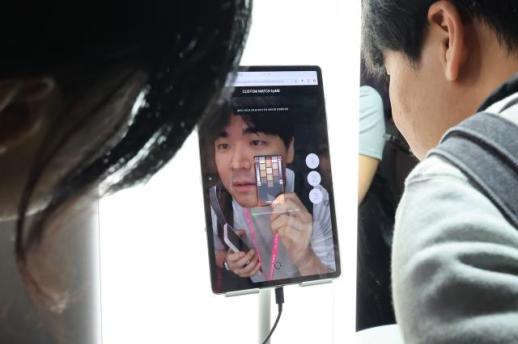 AWS' annual tech expo in Seoul showcases agentic AI, robotics innovations SEOUL, May 20 (AJP) - The annual tech expo hosted by Amazon Web Services (AWS) kicked off at COEX in southern Seoul on Wednesday, offering a space to experience the latest agentic artificial intelligence (AI) and physical AI technologies. The two-day AWS Summit Seoul brought together companies from various industries including beauty, media, manufacturing, security and robotics, showcasing their AI solutions, drawing more than 50,000 pre-registrations and about 6,000 on-site attendees. Among the highlights are diverse attractions and hands-on experiences including autonomous delivery robots that transport goods on demand, quadruped robots, gripper robots that autonomously recognize and sort types of waste, and AI-powered skin diagnostics. 2026-05-20 17:40:04
 -
 S. Korea tanker exits Strait of Hormuz after talks with Iran amid regional conflict SEOUL, May 20 (AJP) - The first South Korean-operated oil tanker stranded inside the Strait of Hormuz since the outbreak of war between the United States and Iran in late February safely exited the strategic waterway Wednesday following negotiations between Seoul and Tehran, the foreign ministry said. The vessel, operated by HMM, was passing through the Strait of Hormuz on Wednesday afternoon under coordination with Iranian authorities, according to the ministry. Foreign Minister Cho Hyun also confirmed the passage during a parliamentary session earlier in the day. “At this very moment, our tanker is leaving the Strait of Hormuz through consultations with the Iranian side,” Cho told the National Assembly’s Foreign Affairs and Unification Committee. Cho said the ship began sailing Tuesday after discussions with Iranian authorities and was proceeding “very cautiously” through the route. He also referred to “2 million barrels,” apparently indicating the volume of crude oil loaded on the tanker. Ship-tracking data from MarineTraffic and reports from Bloomberg identified the vessel as the Universal Winner, an HMM-operated crude oil tanker owned by the same company as the Namoo, which was recently struck in the region. The tanker, which had remained in waters near Qatar, began moving on June 19 along a route designated by Iranian authorities. The foreign ministry said neither the South Korean government nor the shipping company had paid tolls or compensation to Iran in exchange for the vessel’s passage. Seoul also maintained that Iran’s decision to allow the tanker through the strait was unrelated to the recent attack on the Namoo. The government said the transit became possible after Seoul repeatedly requested safe passage for South Korean-linked vessels while maintaining diplomatic coordination with Tehran through four phone conversations between the two countries’ foreign ministers and the dispatch of a special envoy. Iran informed the South Korean Embassy in Tehran late Monday that passage through the strait would be permitted, the ministry said. The notification came a day after Cho held talks with Iranian Foreign Minister Seyed Abbas Araghchi and requested clarification regarding the attack on the Namoo. The South Korean government is continuing negotiations with Tehran to secure the passage of 25 remaining South Korean-linked vessels still inside the Strait of Hormuz. Officials are reportedly prioritizing ships carrying large numbers of South Korean crew members or cargo considered strategically important to South Korea. Iran has requested that vessels use routes designated by Iranian authorities, though some shipping companies remain concerned over potential security risks and possible U.S. sanctions. The United States Department of the Treasury previously issued an advisory warning that shipping firms and vessels engaging in transactions with Iran related to safe passage through the strait could face sanctions. South Korea’s foreign ministry, however, said it believes the U.S. advisory does not apply to government-level negotiations and does not expect the tanker that exited the strait to become subject to sanctions. 2026-05-20 17:35:40
 -
 Seoul and Tokyo equities fall, Asian currencies and debt tumble on inflation fears SEOUL, May 20 (AJP) - Seoul and Tokyo bourses extended losses in a broad Asian retreat as investors moved past AI euphoria toward a reality check on the economic toll of prolonged Gulf conflicts and renewed inflation fears. The benchmark KOSPI fell 0.86 percent to close at 7,208.95 after swinging between an intraday high of 7,324.52 and a low of 7,053.84. Foreign investors sold a net 2.9293 trillion won ($1.94 billion) worth of shares, while retail and institutional investors bought 1.7106 trillion won and 1.1053 trillion won, respectively. Large-cap technology shares showed mixed performances. Shares of Samsung Electronics edged up 0.18 percent to 276,000 won even after government-mediated wage talks with its labor union collapsed ahead of a planned general strike Thursday. The Central Labor Relations Commission officially declared its second mediation attempt unsuccessful Wednesday morning after the two sides failed to narrow differences over compensation for workers in loss-making semiconductor units, including System LSI and foundry operations. The union confirmed it would proceed with the strike as planned. President Lee Jae Myung appeared to indirectly criticize the union during a Cabinet meeting Wednesday, saying labor rights were not granted “to enforce the interests of a few through collective force.” The government has previously signaled it could invoke emergency arbitration powers should the strike materially disrupt the national economy. SK hynix closed flat at 1,745,000 won. Shipbuilding shares outperformed the broader market, buoyed by expectations that rising data center-related electricity demand would boost orders for power engines and related infrastructure. HD Hyundai Heavy Industries surged 6.35 percent to 636,000 won. Elsewhere on the KOSPI, losses were widespread. Mirae Asset Securities fell 6.63 percent to 62,000 won, while LG Electronics dropped 5.58 percent to 181,000 won. POSCO Holdings declined 5.33 percent to 417,000 won, while Korea Electric Power slid 5.49 percent to 37,000 won. Doosan Enerbility lost 4.43 percent to 101,300 won, while Doosan Robotics fell 4.6 percent to 95,500 won after a second large block sale of PRS-linked shares worth about 537.6 billion won. Naver retreated 3.33 percent to 191,500 won. The tech-heavy KOSDAQ dropped 2.61 percent to close at 1,056.07 after moving between an intraday high of 1,081.04 and a low of 1,038.23. Foreign investors bought a net 194.2 billion won worth of KOSDAQ shares, while retail and institutional investors sold 57.7 billion won and 130.7 billion won, respectively. High-valuation growth shares came under renewed pressure as rising global bond yields reduced investor appetite for risk assets. AI robotics, secondary-battery and biotech shares led the decline, with robotics-related names extending recent losses amid broader weakness in AI-linked sectors. Among KOSDAQ heavyweights, Alteogen fell 1.91 percent to 359,500 won, while Ecopro dropped 2.38 percent to 118,700 won. Ecopro BM slipped 3.12 percent to 176,700 won, while HLB declined 3.84 percent to 47,600 won. Samchundang Pharm plunged 5.06 percent to 347,000 won, while ABL Bio and Kolon TissueGene each lost 5.1 percent. The Korean won strengthened slightly, with the dollar trading at 1,506.30 won, down 0.1 percent from the previous session. Asian markets also closed broadly lower. Japan’s Nikkei 225 fell 1.23 percent to 59,804.41, while China’s Shanghai Composite slipped 0.18 percent to 4,162.18. The selloff was driven by a sharp rise in long-term U.S. Treasury yields, with the 30-year yield briefly topping 5.18 percent, its highest level since 2007. The Japanese government bonds hit levels not seen in nearly three decades. 2026-05-20 17:29:42
 -
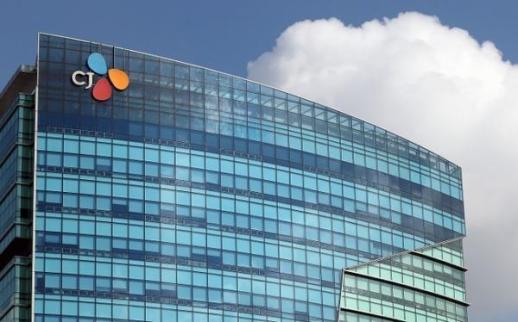 CJ Group seeks police probe over leak of female employees' personal data SEOUL, May 20 (AJP) - CJ Group filed a complaint with the Seoul Metropolitan Police Agency over the leak of personal information belonging to about 330 female employees via a Telegram channel, in the latest in a string of data security breaches rattling corporate Korea. The disclosed material the group revealed on Wednesday included mobile phone numbers, internal extensions, job titles and profile photographs, all of which matched current and former staff records, the company said. The Telegram channel, opened in 2023 and followed by about 2,800 users, surfaced over the weekend and prompted an internal probe pointing to a likely insider leak rather than an external hack, given that some of the exposed fields could only be retrieved through CJ's intranet. "We will cooperate fully with the police investigation," a CJ Group spokesperson said, adding that affected employees had been notified individually and that the company was taking steps to prevent secondary harm. The breach does not meet the threshold for mandatory reporting to the Personal Information Protection Commission, the company said, as it involves fewer than 1,000 people and does not include resident registration numbers or other sensitive identifiers. Even so, the incident has drawn fresh scrutiny because the leaked photographs and contact details target female staff exclusively, raising the prospect of stalking, harassment and other downstream abuse. The CJ leak lands amid a punishing run of cyber and data incidents at South Korean conglomerates. Shinsegae Group's IT affiliate disclosed in late December that malware had compromised the records of about 80,000 employees, including staff numbers and, for some, names, departments and IP addresses, through the group's intranet. Days later, Korean Air said about 30,000 employee records, including names and bank account numbers, were exposed when Korean Air C&D Services, a catering supplier spun off from the airline in 2020, was breached by an external hacker group. Mobile carriers SK Telecom and KT also came under government investigation last year, with the SK Telecom breach exposing internal data tied to roughly 27 million users. 2026-05-20 17:19:55
 -
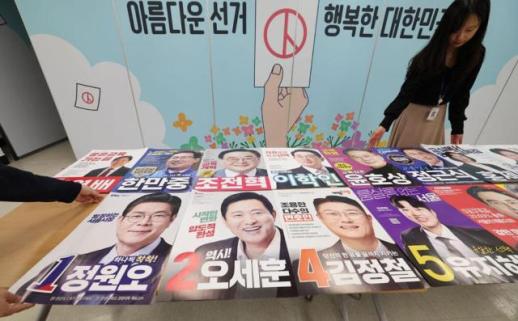 Two-week-long campaigning for local elections set to begin Thursday SEOUL, May 20 (AJP) - The official campaign period for next month's local elections is set to begin on Thursday, as the ruling Democratic Party (DP) and the main opposition People Power Party (PPP) prepare to launch full-scale campaigning across the country in an already-heated race. According to the National Election Commission (NEC) on Wednesday, candidates and their supporters will be allowed to actively canvass at the stroke of midnight and will have about two weeks to win over voters until the eve of election day slated for June 3. During the period, they will be allowed to give speeches in public places between 7 a.m. and 11 p.m., distribute campaign materials and put up campaign banners. Meanwhile, voters can cast their ballots from 6 a.m. to 6 p.m. at designated polling stations across the country to elect about 4,000 metropolitan mayors, provincial governors, and other local government heads. South Korean citizens aged 18 or older or those born on or before June 4, 2008, are eligible to vote. Two-day early voting will also be available on May 29 and 30 for those who are unable to vote on election day. South Koreans residing overseas will also be allowed to vote at polling stations set up at diplomatic missions abroad, provided they register for absentee voting in advance. Foreigners living in South Korea are also eligible to vote if they are 18 or older and have held permanent residency for more than three years. The upcoming local elections are widely seen in effect as a midterm referendum on President Lee Jae Myung, marking his first nationwide gauge of public support since taking office last June following the ouster of disgraced former President Yoon Suk Yeol over his botched Dec. 3 declaration of martial law in 2024, although the already-faltering PPP, plagued by internal disputes, appears headed for a resounding defeat. 2026-05-20 17:18:58
 -
 'More time on paperwork than artwork': Bureaucratic hurdles haunt Korean artists SEOUL, May 20 (AJP) - In South Korea, artists must prove they are artists before qualifying for public grants, and many complain the opaque and exhausting certification process has become a bureaucratic ordeal that leaves them spending more time on paperwork than artwork. Artist Certification falls under the Korea Artists Welfare Foundation (KAWF), an agency under the Ministry of Culture, Sports and Tourism. It is effectively required to apply for government aid, public grants and welfare programs. The system was born out of two tragedies. On Nov. 6, 2010, Lee Jin-won of the one-man indie band “Rock Will Never Die (Moonlight Fairy Grand Slam)” was found dead at his home in Yeongdeungpo-gu, Seoul. On Jan. 29, 2011, screenwriter Choi Go-eun was found dead in Anyang. Both were respected figures in the indie music and film industries but suffered severe financial hardship due to unfair contract structures and irregular income. Their deaths led to the enforcement of the Artist Welfare Act on Nov. 18, 2012, followed by the establishment of the Korea Artists Welfare Foundation the next day as a minimum social safety net for struggling artists. But many artists say the benefits have fallen far short of that mission. Controversy erupted in late March when the famous indie band “Broccoli, You Too?” failed the Artist Career Verification screening. The band took to X to express frustration, revealing that it had submitted records of royalty payments from album releases only to receive a “disqualified” notice. At the time, the foundation explained that it evaluates the “continuity of activities” rather than an artist’s fame alone. However, the band had released a full-length album and performed dozens of concerts throughout 2025, while its appearance on KBS’s “Open Concert” had been confirmed just days before the rejection notice. Following the controversy, complaints from artists across multiple disciplines poured out. Many argued that guidance on the system remains insufficient and inconsistent. Painter and contemporary artist Jung So-hee was one of them. It took Jung more than two years to pass the Artist Certification screening. Despite a career spanning over 20 exhibitions, her applications were repeatedly rejected or returned for supplementary documentation until she finally received approval this year. “I had to spend more energy writing reports to prove I am an artist than on my actual creative work,” Jung said. Jung said she still has little confidence she would pass again if she reapplied for the same project because she has never been clearly informed why she ultimately succeeded. Installation artist Shin Yun-jung applied four times, only to be rejected each time. “It was difficult to prepare because the criteria for qualitative screening were unclear,” Shin said. “Even when I tried to infer from other artists’ experiences, the standards kept changing.” The lengthy review process has also become a major source of frustration. Artists including Jung and Shin said they waited between three and six months for re-evaluation results. A stage director, who requested anonymity, recalled receiving a “disqualified” notice while traveling from a logistics center job to a theater rehearsal. “It felt hollow after waiting for four months,” he said. Outdated screening criteria have also come under criticism. Painter A pointed out that participating in “art fairs” — auction-style exhibitions — is not recognized as professional artistic activity. “The fastest way to build a relationship with a gallery and hold a solo exhibition is to pay to participate in an art fair,” a painter, who also requested anonymity, explained. Despite submitting years of consecutive participation in a major local art fair, she was told the experience could not be counted. “It makes no sense that even mega-fairs like KIAF or Frieze, which the First Lady has visited, cannot be counted because they aren’t ‘solo exhibitions,’” she added. As dissatisfaction grew, a “Task Force Seminar on Artist Career Verification” was held on April 22 at the National Assembly Members’ Hall, hosted by Rep. Son Sol of the Culture, Sports and Tourism Committee. Attendees criticized what they described as a lack of communication and transparency in the deliberation process. “We aren’t asking to lower the threshold blindly; we are asking for clear reasons and standards for rejection,” said installation artist Lee Seung-hyun. Calls for transparency in the review process also continued throughout the seminar. Oh Se-gon, a stage actor who participated in the original task force that helped design the Artist Career Verification system, argued that “it must be clearly revealed who the committee members are and whether there were offline discussions and debate processes.” Critics also pointed to overseas examples. In the case of Arts Council England, active artists evaluate the eligibility of fellow artists for welfare services, and the identities of reviewers as well as approval and rejection outcomes are disclosed transparently. This stands in contrast to the KAWF system, where even the professions and age groups of review committee members are not easily disclosed. The government and the foundation offered their own explanations. Kim Ga-jin, head of the planning and coordination team at the Korea Artists Welfare Foundation, said during the seminar that the foundation must verify three things: whether art is the applicant’s primary occupation, whether the output can be objectively verified through documentation and whether the work has been consumed or distributed publicly. Regarding delays, the foundation cited a shortage of personnel. As of March 2026, just five full-time and five contract employees were responsible for processing applications from more than 43,000 people. The foundation further argued that the review process has become more time-consuming because of concerns that public funds could flow to cases unrelated to genuine creative activity, especially as generative AI and hobby-based creations continue to blur the boundaries of artistic work. Officials said a “request-based” system requiring a certain level of career history and supporting evidence remains necessary as a minimum verification mechanism. Some European countries such as Germany and France have also faced criticism over the scale of artist welfare spending because such programs are closely tied to broader social security systems. While recognizing artistic activity itself as labor has expanded the social safety net for artists, concerns have also steadily grown that the boundaries of eligibility could become too broad. Yet many artists say the foundation’s explanations remain contradictory. One frequently cited example is the “Artist Activity Savings Account” project launched last year. Despite the claimed shortage of reviewers, applications for the program closed in less than half a day on Feb. 4, 2026, under a first-come, first-served system. The use of individual rather than household income standards also sparked criticism. “People receiving financial support from a spouse or parents without earning a penny can be selected without filtering, while artists who must work for a living are put at a disadvantage,” said an indie film director, who requested anonymity after being rejected under the criteria. The Ministry of Culture, Sports and Tourism’s total budget for this year stands at approximately 7.85 trillion won ($5.33 billion), up 11.2 percent from last year. The Korea Artists Welfare Foundation directly administers 117.6 billion won, while an estimated 200 billion won is tied to artist verification-related support programs. Yet many artists argue that where and how the money is ultimately spent remains opaque. Artists interviewed for this story agreed that public funding can only function properly if officials at both the foundation and the ministry develop a deeper understanding of artists and the broader creative ecosystem. “There needs to be a broader effort to research and understand the actual creative activities of artists,” Jung emphasized. “I am eager to ask whether the current standards are truly for artists who dedicate themselves solely to creation.” “The current application method is more preoccupied with ‘where and with whom you exhibit’ rather than ‘what kind of work you do,’” Shin said. “This structure is absolutely advantageous for those who can afford rental fees — in other words, those who do not need the welfare system.” 2026-05-20 16:45:33
 -
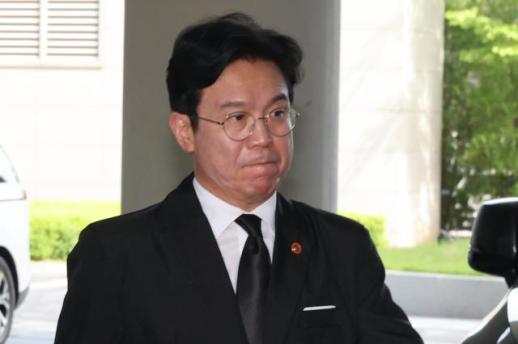 Samsung Live: Labor minister steps onto the mound to save talks and stop strike SEOUL, May 20 (AJP) -With a nationwide strike at Samsung Electronics just hours away, South Korean Labor Minister Kim Young-hoon on Wednesday personally stepped into wage negotiations after government-mediated arbitration collapsed, underscoring mounting fears in Seoul that a prolonged walkout could destabilize the semiconductor industry at the center of the global AI boom. The Ministry of Employment and Labor said Kim would directly oversee renewed talks between Samsung management and the union beginning at 4 p.m. at the Gyeonggi Regional Labor Office, in what officials described as an extraordinary attempt to keep dialogue alive after the National Labor Relations Commission failed to broker a compromise. The minister-led negotiations differ from the commission’s formal post-mediation process and are not intended to produce a legally binding settlement. Instead, the government is seeking to pressure both sides back into voluntary negotiations as concerns grow that the planned 18-day strike could disrupt chip production, exports and investor confidence by flagging an extraordinary authority to disallow a strike in an industrial site should it cause serious damage to national economy. Samsung and the union participated in a second round of post-mediation talks from May 18 but failed to narrow differences over key issues including the distribution formula for performance-based bonuses across business divisions. The labor commission proposed a compromise package balancing both sides’ positions. While the union accepted the proposal, Samsung management withheld a final decision, prompting the commission to declare the mediation unsuccessful. The collapse of negotiations intensified speculation that the government could invoke emergency arbitration powers, a rarely used authority allowing Seoul to suspend strikes and force compulsory mediation in industries deemed critical to the national economy. Labor Ministry spokesperson Hong Kyung-eui said the government would continue supporting labor-management talks “without being bound by formalities” but cautioned that it was “premature” to comment specifically on the possible invocation of emergency arbitration powers. 2026-05-20 16:22:11
 -
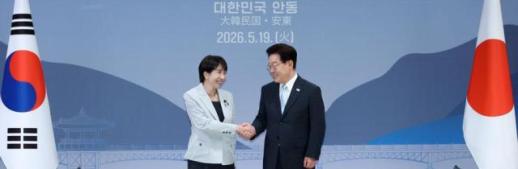 ASIA INSIGHT: Can South Korea and Japan turn shuttle diplomacy into substantive cooperation? SEOUL, May 20 (AJP) - South Korea and Japan have long had a relationship that goes back and forth, sometimes improving, sometimes worsening, and then improving again. This cycle has been driven not only by practical interests, but also by historical issues between the two neighboring countries. But a quieter shift now seems to be taking place. It is not marked by dramatic breakthroughs or major progress on long-standing historical disputes. Instead, it is more gradual, built on the steady rebuilding of trust through frequent exchanges including an unusual new practice in which leaders meet not only in their capitals, but also in each other's hometowns. At a summit between President Lee Jae Myung and Japanese Prime Minister Sanae Takaichi held in Andong, a historic city in southern South Korea on Tuesday, the leaders reflected on a pattern that would have been hard to imagine just a few years ago. Just four months earlier, they had met in Nara, Takaichi's hometown. Now the visit was reciprocated in Lee's hometown. The symbolism was deliberate. By stepping outside the formal setting of traditional diplomacy and into places tied to personal memory, both sides are signaling a desire to humanize a relationship that has long been shaped by historical resentment and mutual misunderstanding. Yet symbolism alone does not define this moment. What gives this phase of bilateral relations its potential significance is the steady accumulation of practical agreements beneath the formal, ceremonial meetings. Among them is a long-delayed effort to address remains recovered from Japan's Chosei coal mine, where DNA identification procedures are finally set to begin. The issue, long marked by emotional and historical weight, is being approached through humanitarian cooperation rather than political contestation. It is a small but telling example, showing that even the most painful historical issues can sometimes be worked through when both sides are willing to cooperate and share responsibility. Police agencies from both countries also signed an agreement to jointly tackle transnational crime and scam networks, which have become increasingly sophisticated and borderless. In an era when fraud is often run across multiple countries and digital platforms, and both sides seem to recognize that older ways of cooperating simply are not enough anymore. Economic cooperation is now driven by practical needs. Both South Korea and Japan rely heavily on imported energy, and with global markets becoming increasingly unstable, neither country can afford to go it alone. The two countries are now exploring ways to coordinate, including sharing crude oil and petroleum reserves and jointly purchasing liquefied natural gas. These are not symbolic gestures, but practical arrangements that could help shield both economies when the next external shock would come. At the same time, the two leaders recognized that regional stability cannot be separated from their bilateral relationship. The prolonged conflict in the Middle East, which began with joint U.S. and Israeli airstrikes against Iran in late February, has showed how distant conflicts can quickly translate into domestic economic vulnerability, including disruptions to global supply chains and risks to key shipping routes such as the Strait of Hormuz. There is also continued emphasis on coordination through broader regional frameworks, including trilateral cooperation with Washington, while keeping channels of dialogue open with North Korea as well as its traditional ally China. Still, the central question remains whether "shuttle diplomacy," a practice of frequent reciprocal visits, can evolve into something more durable than diplomatic routine. There is always a risk that repetition creates comfort without depth, ritual without results. Leaders may visit each other's hometowns, attend cultural events, and issue joint statements, while some key issues remain unresolved. Their next meeting, in this iterative format, is expected to take place at a hot spring resort in Japan, further extending this increasingly personal style of diplomacy and reflecting an effort to turn abstract commitments into more practical mechanisms. Even historical issues, often the most intractable, are being approached through narrower, more manageable paths. Whether this evolving model can endure will depend on how it holds up when political climates change. Shuttle diplomacy can open doors, but it does not guarantee that domestic politics in either country will remain aligned. Security crises, contentious historical issues and other disputes could still persist. For now, at least, a quieter shift is taking shape. 2026-05-20 15:53:23
 -
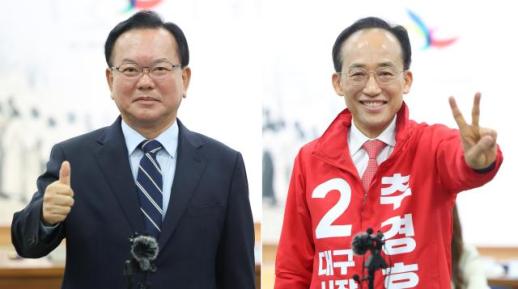 AJP Election Watch: Heavyweight match in Daegu, Kim Boo-kyum vs Choo Kyung-ho SEOUL, May 20 (AJP) -Daegu, a traditional conservative stronghold, remains one of the rare constituencies on South Korea’s electoral map still firmly painted red — the color of the main opposition People Power Party (PPP). In the 2022 presidential election, former President Yoon Suk Yeol captured 75.14 percent of the vote in the southeastern city. A decade earlier, former conservative President Park Geun-hye had also dominated the region. The city did not abandon conservatives even after Yoon’s impeachment following his December 2024 martial law debacle. In last year’s snap presidential election, PPP candidate Kim Moon-soo defeated President Lee Jae Myung by 67.6 percent to 23.2 percent in Daegu. Whether Lee’s approval rating hovering around 60 percent, combined with a divided conservative front, can crack that decades-old political tradition in the June 3 local elections is now one of the country’s most closely watched political questions. The matchup itself is heavyweight politics. Representing the ruling Democratic Party (DP) is former Prime Minister Kim Boo-kyum, a four-term lawmaker under the administration of former liberal President Moon Jae-in. Facing him is PPP Rep. Choo Kyung-ho, a three-term lawmaker who last served as deputy prime minister for economy and finance minister under Yoon. Daegu has never elected a liberal mayor since local elections were institutionalized in 1995. Kim nevertheless has entered the race emboldened by his breakthrough victory in Daegu’s Suseong A district in 2016, when he became the only Democratic Party lawmaker elected from the city. This time, his chances may not be as slim. A Metavoice-Research Lab survey commissioned by JTBC and conducted May 5–6 showed Choo at 41 percent and Kim at 40 percent — a one-point gap within the margin of error. Daegu has effectively become a political testbed for both parties. For the DP, a victory would mark a historic breach into the conservatives’ last fortress. For conservatives, holding the city would reinforce a regional base crucial for any future political revival. At the center of the race is the economy. According to latest government data on Korea’s regional GDP, Daegu posted a 3.9 percent contraction — the steepest decline among all metropolitan cities and provinces nationwide in the first quarter of 2025. Both candidates are framing themselves as crisis managers with the bureaucratic credentials to revive the city’s stagnant economy. Kim is pitching a vision to transform Daegu into “the Pangyo of the South,” referencing the technology hub often dubbed Korea’s Silicon Valley. “To revive Daegu’s economy, we have to change the industrial structure itself,” Kim told AJP in written interview. He argued that Daegu should combine its traditional industrial base — machinery, metals, auto parts and textiles — with artificial intelligence technologies to modernize “design, manufacturing processes, quality control and logistics.” Kim’s blueprint centers on linking Suseong Alpha City, Technopolis, DGIST, local universities, research institutes and private companies into a unified regional innovation ecosystem. “We will create a structure in which young people can learn, find jobs and grow in Daegu,” Kim said. He also pledged to establish an “Asian global youth startup and culture convergence special zone” along with a 100 billion won ($66.3 million) youth startup fund aimed at helping young entrepreneurs commercialize ideas and expand globally. Choo is also pitching economic restructuring — but from the perspective of a veteran economic technocrat. “The biggest reason Daegu’s economy is struggling is that it has not sufficiently responded to changes in the industrial structure,” Choo told AJP separately in his election office in Daegu. “Daegu once led Korea’s industrialization with textiles and manufacturing, but it failed to secure enough growth engines as the industrial paradigm shifted toward AI, semiconductors and digital industries.” Choo proposes fostering five future industries — AI, robotics, future mobility, bio and semiconductors — while simultaneously upgrading traditional sectors such as machinery and textiles. He is also emphasizing service industries favored by younger workers, including medical services, culture, tourism, gaming and digital content. A defining feature of Choo’s campaign is his focus on execution. Rather than offering “mere slogans,” he says he is proposing “actual implementation structures,” including emergency economic task force meetings, a supplementary livelihood budget, a foreign investment attraction team, an AI transformation committee, a startup growth fund and “Daegu-style” university-industry contract departments. The political logic behind Kim’s campaign is straightforward: leverage the power of the ruling party. The next four-year mayoral term will overlap almost entirely with the remaining four years of Lee’s presidency and the DP-controlled National Assembly. “At this time, the success or failure of key issues such as the TK new airport depends on who can better draw support and cooperation from the central government and the ruling party, which holds a majority in the National Assembly,” Kim said. “My strength is the political power and execution ability to turn Daegu’s demands into reality.” Kim also directly challenged Choo’s claim to economic expertise. He pointed out that Daegu’s national budget allocations increased by 10.94 percent in 2021 and 15.47 percent in 2022 during his premiership, while increases slowed sharply to just 0.59 percent in 2023 and 0.94 percent in 2024 when Choo served as finance minister. “‘Finance minister’ is a title, not performance itself,” Kim said. “What Daegu needs now is not a mayor who talks, but a mayor who produces results.” Choo rejects the notion that a PPP mayor would be disadvantaged under a Democratic administration. “The Daegu mayor is an administrator responsible for citizens’ lives,” Choo said. “I have no intention of becoming a mayor who clashes with the central government just because our parties are different.” He argued that his 35 years as an economic bureaucrat, along with his experience as deputy prime minister and finance minister, provide practical leverage. “I know very well how budgets are made,” Choo said. “I have networks across all areas of government ministries. I can communicate directly with working-level officials who design policies and managers who make decisions.” On youth policy, both candidates agree the city’s core problem is not simply population decline, but the lack of quality jobs and competitive wages. Kim said many young residents have told him: “Starting salaries in Daegu’s IT industry are about 70 percent of those in Pangyo,” and “I don’t want to leave my family, but I have no choice.” “This problem cannot be solved with short-term support alone,” Kim said. “Through industrial transformation, major company attraction and future industry development, we will create a structure in which good jobs and better wages are possible within the region.” He is also proposing a “Youth Dandi Chaeum” savings program that would help young workers accumulate up to 30 million won in assets over five years. Choo’s youth strategy focuses on attracting young people back through industrial growth, startup support and stronger university-industry ties. He has proposed “youth reshoring,” Daegu-style contract departments and a 1 trillion won startup fund to cultivate unicorn companies. “We will make Daegu a city where young people return,” Choo said, arguing that future industries and high-value service sectors can reverse the city’s demographic decline. The next mayor will also inherit several major regional development projects, most notably the relocation of Daegu’s military airport and construction of the new TK airport. The project is viewed not merely as an aviation issue, but as a broader test of Daegu’s ability to integrate economically with North Gyeongsang Province, expand logistics networks and attract new industries. Kim frames the airport initiative as an issue requiring political leverage at the national level. Choo frames it as an administrative and fiscal challenge demanding deep experience within the central government bureaucracy. “Cooperation is not achieved through vague requests or begging,” Choo said. “I have learned over decades how work actually gets done.” He added that projects such as the TK new airport and Daegu–North Gyeongsang administrative integration “must be pursued beyond party lines.” Kim, meanwhile, insists Daegu needs a mayor capable of extracting concrete support from the current national power structure. “The new mayor will work on the same timetable as the remaining four years of the president’s term,” Kim said. “Who can better bring in support from the central government and the ruling party will decide the fate of key pending issues.” For decades, Daegu mayoral elections were viewed as predictable contests in conservative territory. This year, however, the race has evolved into a direct showdown between two nationally recognized political heavyweights who agree Daegu must reinvent itself, but disagree sharply on who is best equipped to deliver that transformation. Kim is asking voters to break with Daegu’s political history and use the ruling party’s national power to bring investment, budgets and jobs into the city. Choo is asking voters to trust a veteran conservative economic bureaucrat who says he can rebuild Daegu’s economy “from day one.” “This election is ultimately about who can revive Daegu’s economy,” Choo said. “Choo Kyung-ho will become a professional economic mayor who works skillfully from the first day.” Kim’s closing message is equally blunt. “Daegu now needs a mayor who can produce results, not just words,” he said. 2026-05-20 15:52:57
 -
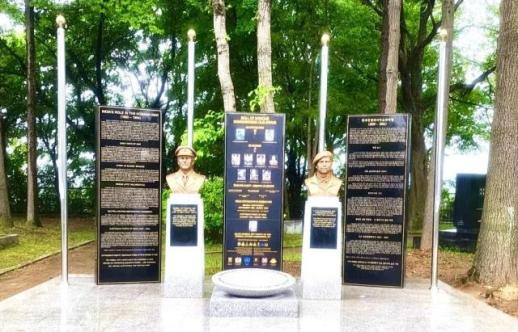 Korea, India to sign MOU on honoring Korean War veterans SEOUL, May 20 (AJP) - South Korea and India will work together on international veterans affairs projects to honor Indian veterans who served in the 1950-53 Korean War as part of a medical support unit, Seoul’s Veterans Affairs Ministry said Wednesday. Minister of Patriots and Veterans Affairs Kwon Oh-eul and visiting Indian Defense Minister Rajnath Singh will sign a memorandum of understanding on bilateral cooperation in international veterans affairs at the Indian Korean War Memorial in Imjingak, Paju, Gyeonggi Province, on Thursday. Under the MOU, the two countries will cooperate in collecting historical records related to India’s participation in the war, honoring veterans, promoting exchanges for veterans’ descendants and future generations, and carrying out academic, educational and cultural projects to shed light on the significance of India’s contribution. After signing the agreement, the two ministers will also attend an unveiling ceremony for the first memorial in South Korea dedicated to Indian Korean War veterans, built by India’s Defense Ministry. The memorial includes busts of Lt. Col. A.G. Rangaraj, who commanded a field hospital during the Korean War, and Gen. K.S. Thimayya, who served as chairman of the Neutral Nations Repatriation Commission after the armistice agreement. Rangaraj was selected by Seoul’s Veterans Affairs Ministry as the Korean War Hero of the Month in March. During the unveiling ceremony, Kwon will present a plaque recognizing the honor to Rangaraj’s descendant, Kalpana Prasad. When the Korean War broke out, India, then a neutral country, dispatched the largest medical contingent among countries that sent medical support, in line with a U.N. resolution on civilian relief. India’s 60th Parachute Field Ambulance arrived in Busan in 1950 and treated many soldiers and patients near the front lines while moving alongside combat units. 2026-05-20 15:45:58