

Journalist

Woo Joo Seung
-
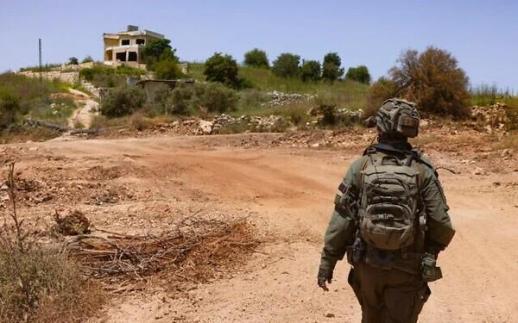 Israel Warns of Strong Retaliation After Iranian Missile Attack Israeli forces have issued a warning of immediate retaliation following an Iranian missile launch aimed at Israel. The conflict, which began on the Lebanon front, has escalated into a direct attack from Iran, complicating ongoing ceasefire discussions between the U.S. and Iran. According to reports from AFP and other sources on June 7, Israeli Chief of Staff Eyal Zamir stated during a situational assessment meeting, "We will strike Iran forcefully as soon as the order is given." The Israeli military added that the Iranian regime has made a significant mistake and vowed to continue operations throughout Lebanon while intensifying attacks against Hezbollah. The missile launch from Iran is seen as a retaliation for Israel's airstrikes on Beirut. Previously, Israel had conducted airstrikes in the vicinity of the Lebanese capital, prompting Iran to target northern Israel with missiles. The Israeli military reported that its air defense systems intercepted all Iranian missiles. This attack marks the first direct assault on Israeli territory by Iran since a ceasefire took effect on April 8. Despite the ceasefire, clashes between Israel and Hezbollah, an Iran-aligned armed faction in Lebanon, have persisted. The recent airstrikes and missile launches have expanded the conflict from the Lebanon front to a direct confrontation between Iran and Israel. The United States has been working to prevent escalation while simultaneously pursuing ceasefire negotiations. However, the direct attack from Iran and Israel's warning of retaliation have complicated the diplomatic landscape. As discussions continue regarding the resumption of shipping through the Strait of Hormuz and the extension of the ceasefire, the Lebanon front has emerged as a new variable in U.S.-Iran negotiations.* This article has been translated by AI. 2026-06-08 07:45:00
 -
 Foreign Investors Sell 57 Trillion Won in Samsung, SK Hynix Amid Month of Net Selling ◆Ajou Economic Key News ▷Foreign investors have sold 57 trillion won in Samsung Electronics and SK Hynix for a month straight - Foreign investors have aggressively sold off shares in Samsung Electronics and SK Hynix. - Over the past month, foreign investors have net sold approximately 69 trillion won in the domestic stock market, with the sell-off heavily concentrated in Samsung Electronics and SK Hynix. Meanwhile, individual and institutional investors have countered with significant net purchases, helping to defend the KOSPI index above the 8000 mark. - According to the Korea Exchange on June 7, from May 7 to June 5, foreign investors net sold 69.4 trillion won in the KOSPI market. During the same period, individuals net purchased 56.4 trillion won, and institutions net bought 12.1 trillion won, absorbing the foreign sell-off. - The foreign selling has been particularly focused on large-cap semiconductor stocks. Samsung Electronics topped the list with a net sell of 30.1 trillion won, while SK Hynix saw a net sell of 27.3 trillion won. Together, these two stocks accounted for the majority of the total foreign net selling. ◆Major Reports: Sudden Shift in Market Sentiment - Following a significant drop in the domestic stock market on Friday, the KOSPI 200 futures saw an additional 8% decline due to surprising U.S. employment data, indicating a continued downward trend in the U.S. market with diminishing buying interest. - With limited catalysts to revive market sentiment over the weekend, a negative reaction at the start of the week is likely. - While it is generally observed that corrections in a bull market tend to hit the sectors that have risen the most, the narrative surrounding AI, which is currently driving the market, is evidently unfavorable. - This week, key variables include the upcoming SpaceX listing on June 12, the U.S. Consumer Price Index (CPI) report for May, and earnings announcements from Oracle and Adobe. - The market is particularly focused on whether Oracle and Adobe can replicate the 'beat and raise' performance seen with Broadcom, whether the CPI report will show stability, and if the European Central Bank (ECB) will proceed with a 25 basis point rate hike as expected. ◆Major Announcements After Market Close (June 5) ▷Taeyoung Construction has secured a contract worth approximately 1.208 trillion won from Busan Urban Corporation for the construction of a multi-purpose administrative town in western Busan. ▷Shinsegae Engineering has won a contract worth about 10.1 billion won from Waybis for cleanroom and utility facility construction. ▷DL E&C has received a conditional purchase order worth approximately 499.9 billion won from Korea East-West Power for the installation of power blocks and ancillary facilities at a clean energy complex in Jeju. ▷Hansol Technics has decided to dispose of land and buildings at its Ochang plant in Chungbuk for a total of 64 billion won to improve management efficiency and financial structure. ◆Fund Trends (as of June 4, excluding ETFs) ▷Domestic equity funds: 1.025 trillion won ▷Foreign equity funds: -223 billion won ◆Key Schedule for Today (June 8) ▷Japan: GDP growth rate (Q1) ▷Germany: Factory orders (April) ▷Eurozone: Sentix Investor Confidence Index (June) ▷U.S.: Employment Trends Index (May)* This article has been translated by AI. 2026-06-08 07:45:00
 -
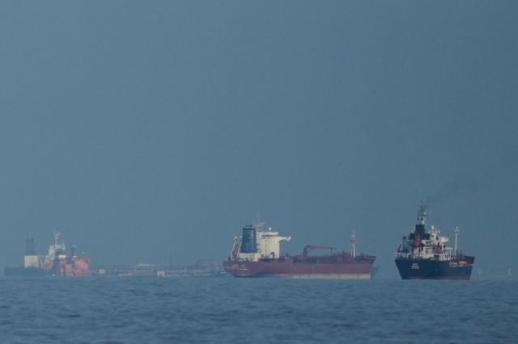 Iran Imposes Fees on Ships Passing Through Hormuz Strait Iran has begun charging fees for ships passing through the Hormuz Strait. This move comes as the United States has initiated a maritime blockade targeting vessels entering Iranian ports, escalating tensions over control of this vital global shipping route. According to a report by Xinhua News Agency, citing Iran's semi-official Fars News Agency, Iran is collecting an average service fee of $1.5 million to $2 million (approximately 2.3 billion to 3 billion won) per vessel transiting the Hormuz Strait. Fars quoted Mohsen Zanganeh, a member of the Iranian Parliament's Budget and Planning Committee, stating, "Iran has officially started implementing its plan to collect service fees from ships passing through the Hormuz Strait." This decision follows an announcement by the Iranian Parliament to establish a management plan for the Hormuz waterway. Ali Nikzad, the Deputy Speaker of the Iranian Parliament, revealed last month that a 12-point plan for managing the Hormuz waterway is being developed at the parliamentary level. Fars also reported that an organization has been established under the supervision of the Supreme National Security Council (SNSC) to collaborate with the Iranian Ministry of Economic Affairs and Finance. The collected funds will be deposited into the Iranian treasury for designated purposes. Some payments are expected to be made in Tether (USDT), a dollar-pegged cryptocurrency, as well as through cash and barter transactions. Iran justifies the fee as not merely a toll but as compensation for maritime and environmental services. Iranian environmental authorities are reportedly drafting regulations to impose vessel fees under the guise of providing environmental services in the Hormuz Strait. In response to Iran's increased maritime control, the United States has ramped up its pressure. The U.S. Central Command announced in April that it would enforce a maritime blockade on vessels entering or leaving Iranian ports. However, this does not constitute a complete blockade of the Hormuz Strait but is specifically aimed at ships entering Iranian ports. The Hormuz Strait is a crucial maritime route connecting the Persian Gulf and the Gulf of Oman. With Iran's fee collection now in full swing, the situation in Hormuz has evolved from a potential military conflict to a factor influencing shipping costs and energy prices.* This article has been translated by AI. 2026-06-08 06:45:00
 -
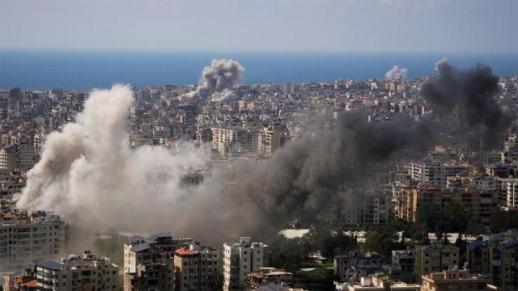 Israel Strikes Beirut, Iran Responds with Missiles as Trump Calls for Restraint Israel's airstrike on Beirut has prompted a missile retaliation from Iran, marking the first direct confrontation since a ceasefire between the U.S. and Iran in April. President Donald Trump has urged Tehran to return to negotiations and called on Israel to exercise restraint to prevent further escalation. On June 7, local time, reports from AP and The Guardian indicated that Israel conducted airstrikes on the southern outskirts of Beirut. The Israeli military stated that the strikes targeted positions held by the Iran-aligned militant group Hezbollah, explaining that the action was in response to rockets fired from Hezbollah towards northern Israel. The strikes raised concerns of escalation as Israel expanded its military operations beyond southern Lebanon to the vicinity of Beirut, complicating discussions surrounding U.S.-Iran negotiations. Iran quickly retaliated by launching ballistic missiles towards northern Israel, which the Israeli military reported intercepting. Air raid sirens were activated in northern regions, and explosions were heard. This missile launch has reintroduced the risk of military conflict into U.S.-Iran negotiations, which have been focused on issues such as nuclear matters, navigation through the Strait of Hormuz, and sanctions relief since the ceasefire. However, the airstrike on Beirut and the missile response have heightened tensions just as a potential agreement seemed imminent. President Trump called on Iran to cease further military actions and return to the negotiating table. In a phone interview with Fox News, he stated, "Now that they have fired missiles, it’s time to stop and come back to the table to make a deal." He added that the recent events would not aid negotiations. Trump also expressed dissatisfaction with Israel, reportedly indicating that the attack on Lebanon was not coordinated with the U.S. He mentioned that he would urge Israeli Prime Minister Benjamin Netanyahu not to retaliate following Iran's missile launch. He noted, "No one was hurt by Iran's attack," and expressed hope that Israel would refrain from further retaliation. He stated, "Both Israel and Iran have attacked. No further attacks are necessary." Trump maintained that a U.S.-Iran agreement was close, saying, "We are very close to a final deal with Iran," and emphasized that he did not want the current situation to derail the negotiations. Fox News reported that Trump suggested an agreement with Iran could be reached as early as Monday to Wednesday of the following week. The key factor now is whether Israel will retaliate again. If Israel resumes military actions, Iran would have justification for further responses. Conversely, if both sides can halt additional clashes, the U.S. may navigate this crisis and resume U.S.-Iran negotiations.* This article has been translated by AI. 2026-06-08 06:36:00
 -
 Iran Launches Missiles at Northern Israel in First Direct Attack Since Ceasefire Iran launched missiles toward northern Israel, marking the first direct attack on Israeli territory since a ceasefire was established in April. This strike is seen as retaliation for Israel's airstrikes in Lebanon, which have complicated ongoing U.S.-Iran negotiations. On June 7, local time, reports from AP and the Financial Times indicated that Iran fired ballistic missiles at northern Israel. The Israeli military confirmed that it intercepted the missiles. Air raid sirens were activated across various locations in northern Israel, with reports of explosions in some areas. This attack followed Israeli airstrikes targeting Hezbollah positions in southern Beirut, Lebanon. Iran reportedly viewed Israel's actions as a violation of the ceasefire and responded accordingly. This is the first instance of Iran attacking Israeli territory since the ceasefire on April 8. Since then, the U.S. and Iran have been engaged in negotiations over nuclear issues, navigation through the Strait of Hormuz, and sanctions relief. However, the recent escalation with Israel's airstrikes and Iran's missile launch has created uncertainty in the negotiation process. President Donald Trump has sought to prevent further escalation. In a phone interview with Fox News, he urged Iran to stop its missile attacks and return to the negotiating table, stating, "This attack does not help negotiations." He also called on Israel to exercise restraint, noting that "no one was hurt in the Iranian attack" and expressing hope that Israel would refrain from retaliating. Trump mentioned that he would personally call Israeli Prime Minister Benjamin Netanyahu to urge against retaliation. Trump maintained that a deal with Iran is close, asserting, "We are very close to a final agreement with Iran, and I do not want this to fall apart because of what is happening now." The key issue remains whether Israel will retaliate. If Israel conducts further strikes, Iran would have justification for additional responses. Conversely, if both sides refrain from further attacks, the U.S. could manage this conflict as pressure to return to negotiations.* This article has been translated by AI. 2026-06-08 06:24:00
 -
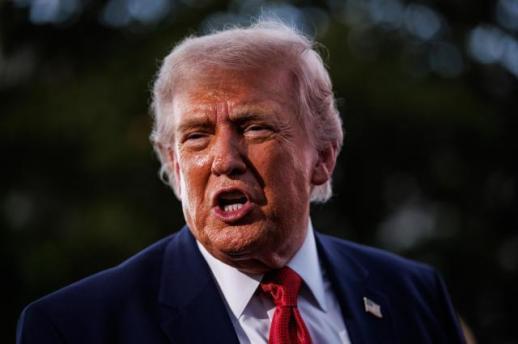 Trump Urges Iran to Halt Attacks and Return to Negotiations President Donald Trump has called on Iran to cease its attacks and return to the negotiating table. He also urged Israel to exercise restraint in retaliation. His remarks come as US-Iran negotiations appear to be progressing, with the aim of preventing military conflict from derailing talks. In a phone interview with Fox News on June 7, Trump stated, "Iran has fired missiles, so it’s time to stop and come back to the table to negotiate." He added, "Iran's attacks will not help negotiations at all." Fox News reported that Trump indicated progress in negotiations with Iran could lead to an agreement between Monday and Wednesday of this week, specifically mentioning the potential for a deal between June 8 and 10. On the same day, Iran launched approximately ten ballistic missiles toward northern Israel, which the Israeli military intercepted. This marked the first attack on Israeli territory since a ceasefire between the US and Iran took effect on April 8. The missile strikes were seen as retaliation for Israel's attack on Hezbollah positions in southern Beirut, Lebanon. Trump expressed dissatisfaction, stating, "Israel's attack in Lebanon was not coordinated with the United States." In a separate conversation with Axios, Trump reiterated his commitment to preventing Israeli retaliation. He noted, "No one was hurt by Iran's attack," and expressed hope that Israel would refrain from responding. He also mentioned, "I will call Prime Minister Benjamin Netanyahu directly to tell him not to retaliate." Trump emphasized, "Both Israel and Iran have attacked. No further attacks are necessary." He concluded by stating, "We are very close to a final agreement with Iran, and I do not want this to be derailed by what is happening now." * This article has been translated by AI. 2026-06-08 06:18:00
 -
 Election Commission Faces Backlash Over Voting Paper Shortages "The Election Commission should handle election operations independently. No more using local government employees as scapegoats." This statement was made by a public servant from Songpa District, who is believed to have supported the local elections held on June 3. The writer criticized the Songpa District Election Commission, questioning how no staff members were present at the polling stations and stating, "I can no longer work with such an inadequate group." During the June 3 local elections, polling stations in the Gangnam area of Seoul experienced unprecedented disruptions due to a shortage of ballots. In both Gangdong and Seodaemun districts, election officials mistakenly issued two ballots to each voter. Although the voting deadline was extended to 10 p.m. for those who did not receive ballots, exit poll results and real-time vote counts were released before voting concluded, leading some voters to give up after waiting in line. The situation escalated beyond just delayed voting; there were also issues with personal data leaks. Voter registration lists containing personal information were inadvertently broadcast live on YouTube from polling stations that lacked ballot boxes. Heo Cheol-hoon, the Secretary General of the Election Commission, issued a public apology, but it further eroded public trust. He merely cited that "the high early voting rate led to a reduction in the number of ballots printed." While it is understandable that variations in voter turnout could lead to shortages, there was no explanation for the lack of response to reports from public servants indicating that they anticipated a shortage of ballots. Ultimately, the ballot box at the second polling station in Jamsil 7-dong, the epicenter of the ballot shortage crisis, was opened two days after the local elections, and the counting was completed. Noh Tae-ak, the Chairperson of the Election Commission, held a press conference on the afternoon of June 5 to announce his resignation. He stated, "Heo Cheol-hoon has expressed his intention to resign as the head of the Secretariat, taking responsibility for this incident. I also feel a deep sense of responsibility for this entire situation and will step down as the Chairperson of the Election Commission." This marks the first time in four years that both the Chairperson and Secretary General have resigned amid election management controversies since the 2022 presidential election. The Election Commission continues to assert that the high early voting rate justified the reduction in printed ballots. However, they admitted that they had no contingency plan to transport additional ballots in case of shortages. They failed to anticipate the possibility of a ballot shortage, resulting in no specific procedures for transporting additional supplies. Out of 14,288 polling stations nationwide, 50 experienced ballot shortages, with 22 of those stations having to pause and then resume voting. This number is higher than initially reported. With the additional ballot boxes opened, Oh Se-hoon’s election as mayor of Seoul was legally confirmed, but there were changes in the proportional representation seats in the Seoul City Council. One seat shifted from the Democratic Party to the People Power Party. Before the counting of the Jamsil 7-dong ballots on June 4, the proportional representation seats were 8 for the Democratic Party and 7 for the People Power Party. After the counting, the seats flipped to 8 for the People Power Party and 7 for the Democratic Party. Han Gi-seong, the Democratic Party's candidate for the 8th proportional representation seat, was removed from the list of elected candidates, while Wi Seong-chan from the People Power Party was newly elected. Once trust in an election is lost, even a fair outcome will be met with skepticism. The preemptive measures intended to prevent allegations of fraud have inadvertently fueled conspiracy theories. Given that the Constitution designates the Election Commission as a constitutional body and guarantees its independence, it must undertake significant reforms to restore public trust.* This article has been translated by AI. 2026-06-08 06:03:00
 -
 KOTRA Operates Korean Pavilion at Bulgaria's Defense Exhibition KOTRA has operated a K-defense promotional booth at the largest defense exhibition in the Balkans. This initiative comes as European countries increase their defense spending amid the ongoing Russia-Ukraine war and instability in the Middle East, targeting the Eastern European market. According to industry sources, KOTRA set up the Korean pavilion at the 'Bulgaria International Defense Industry Exhibition (HEMUS)' held in Plovdiv from June 3 for four days. Nine domestic defense companies, including Korea Aerospace Industries (KAI) and HD Hyundai Heavy Industries, participated in the exhibition. The participating companies showcased products related to mobility equipment, communication systems, and drones, while conducting export consultations with local governments and defense firms. Discussions on cooperation with government agencies and institutions also took place. This event is a biennial showcase of the leading defense exhibition in the Balkans. This year's exhibition featured global defense companies such as Rheinmetall and Lockheed Martin, along with the Bulgarian Ministry of Defense and local defense firms. Bulgaria has recently accelerated its defense spending. Following the Russia-Ukraine war, uncertainties regarding Black Sea security have increased, highlighting the need for modernization to replace Soviet-era weapons. The Bulgarian government has also proposed a plan to gradually increase defense spending to about 5% of its GDP. In the Eastern European defense market, there is a growing demand for package-type cooperation that includes not only the purchase of finished products but also local maintenance, parts supply, and technology transfer. Securing local partners has become a key factor in winning contracts for domestic defense companies. KOTRA noted that it identified cooperation needs in the fields of drones, anti-drone technology, communication equipment, and training aircraft during the exhibition. Having participated consecutively since 2024, KOTRA aims to continue discovering local partners and follow-up consultations. A procurement official from the Bulgarian Ministry of Defense who visited the Korean pavilion stated, "Korean defense technology and reliability are already well-known in the European market. We expect various partnerships, including not only the purchase of weapon systems but also technology cooperation and local investment between our two countries." Jang Seong-gil, head of KOTRA's Defense Industry Trade Support Center, remarked, "Bulgaria is investing in the modernization of its defense sector in response to changes in the security environment. We will continue to leverage the network established through the exhibition for follow-up virtual consultations and partnership opportunities."* This article has been translated by AI. 2026-06-08 06:03:00
 -
 Best-Selling Books of the First Half of 2026: 'Project Hail Mary' Tops the List The book market in the first half of 2026 was dominated by literature and investment titles. Novels that gained renewed attention through films, television, and YouTube swept the best-seller charts, while investment books continued to enjoy steady popularity amid a booming stock market. According to Yes24, the top-selling book of the first half of the year was Andy Weir's "Project Hail Mary," which saw a surge in sales following the release of its film adaptation in March. Sales of the book increased approximately 58 times (5731.7%) compared to the same period last year after the film's debut. This marks the first time since 2014, when "The 100-Year-Old Man Who Climbed Out the Window and Disappeared" topped the annual sales, that a foreign novel has reached the number one spot on Yes24's overall sales list. The strength of novels was particularly evident, with five titles making it into the overall top ten, including "Project Hail Mary" (1st), "Goethe Said It All" (2nd), "I Said Goodbye" (3rd), "Grapefruit Peach Club" (9th), and "Contradiction" (10th). Both domestic and international literary works received equal recognition from readers. Notably, works that appealed to younger readers also made the best-seller list. "Grapefruit Peach Club" by singer and author Han Ro-ro ranked 9th, with 32.7% of its readers in their 20s. Yang Gwi-ja's "Contradiction" has seen a continuous increase in sales over the past three years, securing the 10th spot in the first half of this year, with 41.4% of its buyers aged 20 to 30. The thriving stock market also influenced book sales. With the KOSPI reaching record highs, investment titles like "Stock Investment for Progress" climbed to 5th place overall. In other categories, social issues impacted sales. The posthumous memoir of former Prime Minister Lee Hae-chan, published in 2022, saw a staggering increase in sales of about 1,600 times compared to the same period last year, landing it in 4th place overall and 1st in the social and political category.* This article has been translated by AI. 2026-06-08 06:03:00
 -
 New Book Highlights Kim Dae-jung and Lee Hee-ho's Imprisonment Records Kim Dae-jung and Lee Hee-ho Imprisonment Records=Planned by Yonsei University Kim Dae-jung Library, Hangilsa The book focuses on the years from 1976 to 1982, during which former President Kim Dae-jung was imprisoned due to the March 1st Democratic National Declaration and the 1980 conspiracy incident. It vividly recounts the tense circumstances of that time through the notes, letters, and international rescue efforts documented by Lee Hee-ho. Notably, 20 pieces of material, including visitation notes written by Lee herself, are being published for the first time. Lessons in Parenting from Classical Literature=Written by Lim Young-joo, Ideal Climate The author, an educational expert with over 30 years of experience in parenting counseling, applies insights from Eastern classics such as Mencius and Confucius to modern child-rearing. The book presents principles for nurturing children into complete individuals. It introduces classical texts, explains their meanings, and connects them to real-life parenting examples and practical strategies. Thinking is the Path 2, 3=Written by Yong-ta, National History Both Thinking is the Path 2 and Thinking is the Path 3 contain 108 short essays each. As indicated by the subtitle 'Thinking for Happiness,' the author suggests that the best way to achieve happiness, liberation, and a compassionate life is through 'thinking well.' Although brief, these essays offer wisdom for lightening the heart and mind. The author encourages readers to maintain a smile and not to be distracted by a single rotten tree but to appreciate the lush forest surrounding it.* This article has been translated by AI. 2026-06-08 06:03:00