

Journalist

Woo Joo Seung
-
 Bitcoin Recovers to $62,000 After Weekend Dip Bitcoin, which had fallen to the $59,000 range over the weekend, rebounded by more than 3% in just one day, recovering to the $62,000 mark. However, it has not yet returned to last week's levels due to the outflow of institutional funds and a shift of investor capital to the stock market. According to CoinMarketCap, a global cryptocurrency market site, Bitcoin was trading at $62,822, up 3.71% from the previous day as of 8 a.m. on June 8. This marks a partial recovery compared to its drop to the $59,000 range on June 5, which was the first time Bitcoin had reached that level since the re-election of President Donald Trump in November 2024. Most altcoins also showed signs of recovery. At the same time, Solana rose 7.55% to $66.33, while Ethereum increased by 7.18% to $1,670.68. Ripple (XRP) was recorded at $1.15, up 5.97%. However, these altcoins have not yet regained their prices from June 5, when Solana was at $68.40, Ethereum at $1,767.12, and Ripple at $1.16. Market analysts attribute the recent price adjustments in virtual assets to the outflow of institutional funds and changes in risk appetite among investors. Notably, the world's largest Bitcoin-holding company, Strategy, recently disclosed that it sold 32 Bitcoins, which has dampened investor sentiment. This marks the first sale of Bitcoin by Strategy since 2022. Additionally, the ongoing strength of the U.S. stock market, coupled with rising expectations for initial public offerings (IPOs) from major companies like OpenAI, Anthropic, and SpaceX, has led some investment capital to shift from the cryptocurrency market to the stock market. Meanwhile, at the same time on the domestic exchange Bithumb, Bitcoin was trading at approximately 95.15 million won ($61,015), up 1.32% from the previous day. The so-called "Kimchi premium," where domestic prices are lower than international prices, was recorded at -2.998%.* This article has been translated by AI. 2026-06-08 08:30:00
 -
 IBK Securities Raises Target Price for Samsung E&A Amid Investment Expansion IBK Securities maintained a buy rating for Samsung E&A on June 8 and raised its target price to 60,000 won. The firm cited an expected increase in orders due to expanded semiconductor equipment investments and improved conditions for energy project bids. Research analyst Jo Jeong-hyeon stated, "Samsung E&A's non-chemical sector is likely to exceed its annual order target of 3 trillion won, potentially reaching over 5 trillion won. The key factor is the scale of Samsung Electronics' P5 investment." Jo explained that the P5 facility is designed to be a large fab that combines the capacities of the previous P3 and P4 levels, rather than just matching P4. He noted that the demand for high-bandwidth memory (HBM), high-performance DRAM, and eSSD is increasing due to improvements in the memory market and expanded investments in AI servers, necessitating an increase in production capacity among related companies. He projected that the expansion of P5 investments and streamlined processes will be the source of upward revisions in Samsung E&A's non-chemical order guidance. Regarding the chemical sector, Jo assessed that geopolitical risks in the Middle East cannot be viewed merely as negative factors. He stated, "The risks from the Iran conflict and the Strait of Hormuz could delay some project bids, but they may also stimulate demand for the restoration and reconstruction of existing energy facilities and increase investments in energy security." He also anticipated that new order opportunities in the LNG market would expand. Jo remarked, "Amid the diversification of LNG supply chains and the strengthening of energy security, demand for new EPC contracts is rising. If Samsung E&A can address its lack of references, its opportunities for LNG project contracts will also increase." He added, "Rising memory prices are stimulating an increase in semiconductor equipment investment (CAPEX), while Middle Eastern risks are driving demand for restoration, reconstruction, and LNG supply chain diversification. In a phase where both cash flow and investment justification for clients are improving, Samsung E&A's order guidance remains conservative. When clients open their wallets, Samsung E&A is the first company to show results in numbers."* This article has been translated by AI. 2026-06-08 08:27:00
 -
 OpenAI to Revamp ChatGPT into 'Super App', Declares 'Chatting is Dead' OpenAI is set to significantly overhaul its core service, ChatGPT. According to a report by the Financial Times on June 8, citing over ten current and former employees, OpenAI plans to transform ChatGPT from a simple chat tool into a 'super app' that encompasses agent capabilities, coding, and image generation. An internal executive stated, "Chatting is dead." The revamped ChatGPT is expected to be designed to encourage the use of apps developed by partners such as Canva and Booking.com, with a phased rollout planned through its website and mobile app in the coming weeks. This shift in product strategy is seen as a response to pressures for revenue diversification, as agent and coding tools are projected to generate higher profits than simple chatting. Apple WWDC 2026 Kicks Off with Tim Cook's Final Keynote Featuring Gemini-Powered Siri Apple is hosting its WWDC 2026 keynote on June 8. This will likely be Tim Cook's final keynote before he hands over the CEO position to John Ternus on September 1. A key announcement will be the redesigned Siri, powered by Google's Gemini. Apple has licensed a custom Gemini model with 12 trillion parameters for approximately $1 billion annually. In iOS 27, Siri will be separated into an independent app, allowing users to set third-party AIs like Claude and Gemini as their default assistants. This marks the first time Apple, which has prioritized privacy, has entrusted core functionalities to an external AI model, drawing significant industry attention. SpaceX Plans Record IPO as OpenAI Prepares for Public Offering SpaceX is pursuing a Nasdaq listing at $135 per share, aiming for a total valuation of $75 billion. If successful, it would break the record for the largest initial public offering (IPO), surpassing Saudi Aramco. The price is expected to be finalized on June 11. SpaceX, which merged with xAI, reported $18.7 billion in revenue for 2025 but faced a net loss of $4.9 billion due to integration costs. Starlink remains the only profitable division, accounting for about 69% of total revenue in the first quarter. OpenAI has also submitted confidential IPO documents with Goldman Sachs and Morgan Stanley as underwriters, targeting a September listing. Trump and Sanders Call for Government Stake in AI Companies Senator Bernie Sanders has proposed the 'American AI Sovereign Fund Act,' which would impose a one-time tax on 50% of shares from frontier AI companies like OpenAI, Anthropic, and xAI, directing the funds to the federal sovereign wealth fund. This proposal stems from concerns that these companies have amassed vast wealth by using millions of copyrighted works without permission. President Donald Trump has also expressed support for a partnership structure where the government holds stakes in AI companies. This unusual alignment between two politically opposing figures raises concerns about the complexities surrounding the IPO environment for AI companies.* This article has been translated by AI. 2026-06-08 08:24:00
 -
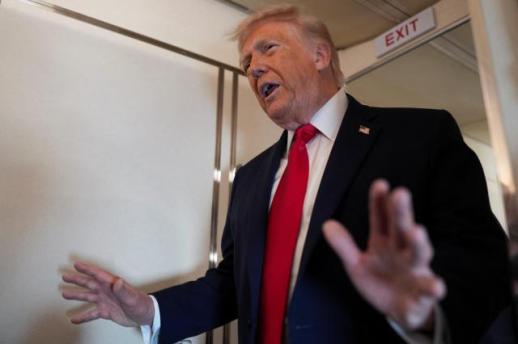 Trump: Netanyahu Has No Choice but to Accept Iran Deal Donald Trump, the President of the United States, stated that Israeli Prime Minister Benjamin Netanyahu will have no choice but to accept any agreement the U.S. reaches with Iran. In a phone interview with the Financial Times on June 7, Trump said regarding Netanyahu's acceptance of a U.S. deal with Iran, "He will have no choice." He emphasized, "I make all the decisions; it’s not his decision." This statement came shortly after Iran launched ballistic missiles toward northern Israel, citing support for Hezbollah. Earlier, the Israeli military had attacked Hezbollah positions in Beirut, Lebanon, which are backed by Iran. Trump reportedly spoke with Netanyahu about an hour before making his comments. He had previously indicated to Axios that he would call Netanyahu to advise against retaliation against Iran as he pursued an agreement. In his interview with the Financial Times, Trump asserted that Iran's missile attack would not affect his commitment to seeking a diplomatic resolution. He stated, "It will have no impact on the agreement," adding, "We will see how it ends. But their attack was completely ineffective," describing it as part of a longstanding conflict that has persisted for thousands of years or, depending on how one calculates, for 47 years. The Financial Times noted that Trump did not specify whether a deal with Iran was imminent. However, he had previously mentioned to Fox News that only a few days remained until an agreement could be reached before the attacks occurred. Trump expressed confidence that negotiations were ongoing, stating, "I believe the agreement is still in progress. We will see what happens." He emphasized that while the agreement could be finalized based on its content and conditions, the recent events would not affect it. He also reaffirmed his stance that military action could be taken if no agreement is reached. Trump explained, "Not reaching an agreement means one of two things: either we will address additional targets that we have not previously handled militarily, or it could mean that we continue to maintain a maritime blockade against Iran," noting that this blockade is likely stronger than any attack on Iran.* This article has been translated by AI. 2026-06-08 08:24:00
 -
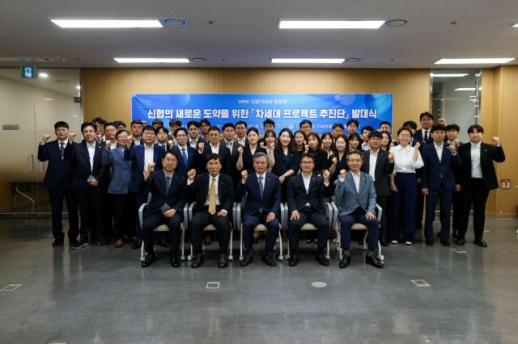 Shinhan Cooperative Bank Launches $3.5 Billion Next-Generation Project Aiming for 2029 Opening Shinhan Cooperative Bank is officially launching a $3.5 billion next-generation project to adapt to changes in the digital financial environment. On June 8, the bank announced that it held the inauguration ceremony for the "Shinhan Cooperative Bank Next-Generation Task Force" on June 5 at its headquarters in Daejeon. The event aimed to formalize the project’s implementation framework and consolidate organizational capabilities for stable preparation and successful execution. The task force will assess key areas such as operations, channels, and infrastructure, incorporating feedback from Shinhan's field operations to enhance the effectiveness of the next-generation information system development. This next-generation project is a long-term core initiative designed to respond to the rapidly changing financial landscape and advancements in digital technology. It focuses on enhancing non-face-to-face financial processes and establishing a robust and scalable information technology (IT) infrastructure. The goal is to improve operational efficiency for member cooperatives nationwide and enhance financial convenience for members, thereby strengthening the competitiveness of on-site financial services. The project builds on preliminary work that began last year, including consulting and data organization. Shinhan plans to systematically prepare for the project under the task force's leadership, with the $3.5 billion initiative set to commence in 2027 and a phased rollout targeting a system launch in the second half of 2029. The funding will be allocated to enhance the digital financial infrastructure across operations, channels, and overall infrastructure. "The next-generation project will be a key growth driver as we prepare for the next 100 years of Shinhan Cooperative Bank," said Ko Young-cheol, chairman of Shinhan Cooperative Bank. He added, "While actively responding to changes in the digital financial environment, we will steadfastly uphold our essence as a reliable financial partner for the public."* This article has been translated by AI. 2026-06-08 08:21:00
 -
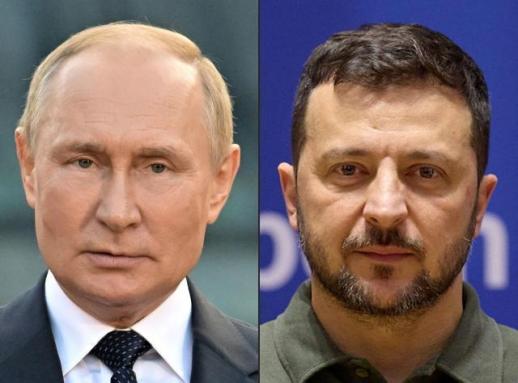 Zelensky Attempts to Initiate Talks with Putin Through Abramovich, Russia Declines Volodymyr Zelensky, the President of Ukraine, reportedly conveyed his interest in a bilateral summit with Russian President Vladimir Putin through Russian oligarch Roman Abramovich. However, it appears that President Putin effectively rejected the proposal. According to the Financial Times on June 7, Zelensky invited Abramovich to Kyiv last month to request that he deliver a message to President Putin regarding the summit. Citing four sources, the FT reported that "President Zelensky sent a message indicating he is prepared for direct peace negotiations with Russia." Abramovich is said to have communicated this message to President Putin. However, Putin met with a Russian business figure who had visited Kyiv last month and responded that meeting with Zelensky would be pointless, indicating that Zelensky's proposal for a summit was not accepted. Separately, on June 4, President Zelensky sent an open letter to President Putin proposing a ceasefire agreement through a summit. A senior Ukrainian official noted that the message conveyed through Abramovich was similar to the open letter but was less confrontational in tone. Putin, however, rejected the summit proposal, stating that the open letter contained "rude expressions." Abramovich has been involved in informal talks between Russia and Ukraine since the early days of the conflict. He participated in the Istanbul peace negotiations and the mediation of the Black Sea grain agreement in 2022, and has continued to engage in exchanges between the two sides, including prisoner swaps. Although he is subject to Western sanctions, he is one of the few Russian figures that Ukraine can accept as a dialogue partner, making him a potential mediator once again. However, Russia maintains a negative stance toward direct summits. President Putin has indicated that talks would be meaningless as long as Ukraine does not cease its military resistance.* This article has been translated by AI. 2026-06-08 07:57:00
 -
Zelensky Attempts to Initiate Talks with Putin Through Abramovich, Russia Declines Volodymyr Zelensky, the President of Ukraine, reportedly conveyed his interest in a bilateral summit with Russian President Vladimir Putin through Russian oligarch Roman Abramovich. However, it appears that President Putin effectively rejected the proposal. According to the Financial Times on June 7, Zelensky invited Abramovich to Kyiv last month and asked him to communicate the summit proposal to President Putin. Citing four sources, the FT reported that Zelensky sent a message indicating he was prepared for direct peace negotiations with Russia. Abramovich is said to have relayed the message to President Putin. However, Putin met with a Russian business figure who had visited Kyiv last month and responded that meeting with Zelensky would be pointless, indicating that the proposal for a summit was not accepted. Separately, on June 4, Zelensky sent an open letter to President Putin proposing a ceasefire negotiation through a summit. A senior Ukrainian official noted that the message conveyed through Abramovich was similar to the open letter but was less confrontational in tone. Putin, however, rejected the summit proposal, stating that it contained “rude expressions.” Abramovich has been involved in unofficial dialogue between Russia and Ukraine since the early days of the conflict. He participated in the Istanbul peace negotiations and the mediation of the Black Sea grain agreement in 2022, and has continued to engage in contacts between the two sides, including prisoner exchanges. Despite being subject to Western sanctions, he remains one of the few Russian figures acceptable to Ukraine for dialogue, thus being utilized again as a mediation channel. However, Russia maintains a negative stance toward direct summits. President Putin has indicated that talks would be meaningless as long as Ukraine does not cease its military resistance.* This article has been translated by AI. 2026-06-08 07:57:00
-
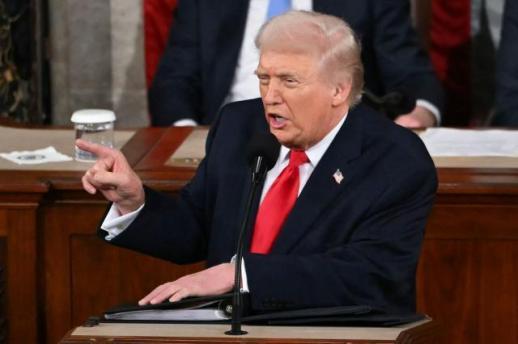 Trump: No Sanctions Relief Before Iran Agreement, Warns of Military Action President Donald Trump stated that there will be no release of frozen assets or easing of sanctions before a peace agreement with Iran is reached. He indicated that if an agreement is made, the U.S. would assist Iran in removing its highly enriched uranium, but warned that military action could be taken if negotiations fail. In an interview aired on NBC's "Meet the Press" on June 7, Trump discussed the possibility of releasing frozen assets and easing sanctions, saying it would be considered "after an agreement." He added, "If they behave well and do well, we can start talking," emphasizing that any sanctions relief would depend on Iran's change in behavior and compliance with the agreement. Trump presented a dual approach of negotiation and military pressure. He remarked on the negotiations with Iran, stating, "We are either very close to an agreement, or we will hit them very hard." Regarding the issue of highly enriched uranium, he suggested that if an agreement is reached, the U.S. could work with Iran to recover and dispose of it, but hinted that military means could be employed if diplomacy fails. He dismissed concerns that a conflict with Iran contradicts his stance against new wars, asserting, "I never guaranteed that there would be no war," and claimed that a conflict with Iran would not lead to endless warfare, framing it as a limited measure to prevent Iran from acquiring nuclear weapons. On the issue of Lebanon, Trump indicated that he would address it separately from a short-term agreement with Iran. He stated that he does not insist on including the Lebanon issue in the negotiations with Iran but expressed a desire for "more precise attacks" regarding Hezbollah, suggesting that Israel's military actions in Lebanon should be limited and clearly targeted.* This article has been translated by AI. 2026-06-08 07:51:00
 -
Trump: No Sanctions Relief Before Iran Deal, Warns of Military Action President Donald Trump stated that there will be no release of frozen assets or easing of sanctions before a peace agreement with Iran is reached. He indicated that if an agreement is made, the U.S. would assist in removing Iran's highly enriched uranium, but warned that military action could be taken if negotiations fail. In an interview aired on NBC's "Meet the Press" on June 7, Trump discussed the potential for easing sanctions and releasing frozen assets, saying it would only be considered "after an agreement." He noted, "If they behave well and do well, we can start talking," adding that sanctions relief would be reviewed based on Iran's change in attitude and compliance with any agreement. Trump emphasized a dual approach of negotiation and military pressure, stating, "We are either very close to an agreement or we will hit them very hard." He suggested that if a deal is reached, the U.S. could work with Iran to recover and dispose of highly enriched uranium, but hinted that military means might be necessary if diplomacy fails. He dismissed concerns that a conflict with Iran contradicts his stance against new wars, asserting, "I have never guaranteed that there will be no war," and described the situation as a limited measure to prevent Iran from acquiring nuclear weapons. Regarding the situation in Lebanon, Trump indicated that he does not insist on including the Lebanese issue in a short-term agreement with Iran. However, he expressed a desire for more precise attacks against Hezbollah, stating that Israel's operations in Lebanon should be limited and clearly targeted.* This article has been translated by AI. 2026-06-08 07:51:00
-
 Israel Warns of Strong Retaliation After Iranian Missile Attack Israeli forces have issued a warning of immediate retaliation following an Iranian missile launch aimed at Israel. The conflict, which began on the Lebanon front, has escalated into a direct attack from Iran, complicating ongoing ceasefire discussions between the U.S. and Iran. According to reports from AFP and other sources on June 7, Israeli Chief of Staff Eyal Zamir stated during a situational assessment meeting, "We will strike Iran forcefully as soon as the order is given." The Israeli military added that the Iranian regime has made a significant mistake and vowed to continue operations throughout Lebanon while intensifying attacks against Hezbollah. The missile launch from Iran is seen as a retaliation for Israel's airstrikes on Beirut. Previously, Israel had conducted airstrikes in the vicinity of the Lebanese capital, prompting Iran to target northern Israel with missiles. The Israeli military reported that its air defense systems intercepted all Iranian missiles. This attack marks the first direct assault on Israeli territory by Iran since a ceasefire took effect on April 8. Despite the ceasefire, clashes between Israel and Hezbollah, an Iran-aligned armed faction in Lebanon, have persisted. The recent airstrikes and missile launches have expanded the conflict from the Lebanon front to a direct confrontation between Iran and Israel. The United States has been working to prevent escalation while simultaneously pursuing ceasefire negotiations. However, the direct attack from Iran and Israel's warning of retaliation have complicated the diplomatic landscape. As discussions continue regarding the resumption of shipping through the Strait of Hormuz and the extension of the ceasefire, the Lebanon front has emerged as a new variable in U.S.-Iran negotiations.* This article has been translated by AI. 2026-06-08 07:45:00