
Journalist

by Abe Kwak
-
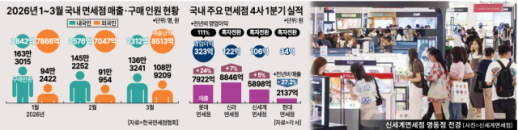 Foreign Shoppers Boost South Korea's Duty-Free Sales in Q1 After a prolonged slump, South Korea's duty-free industry is showing signs of recovery this year. The shift away from the costly daigong (Chinese personal shoppers) model to a focus on foreign high-spenders through K-content and experiential strategies is credited for this turnaround. The second quarter is expected to see continued growth, bolstered by the influx of foreign visitors during China's Labor Day and Japan's Golden Week holidays. According to the Korea Duty Free Association, total sales at domestic duty-free shops in March reached 1.08 trillion won, a 12.5% increase from the previous month (962.4 billion won). After starting the year with 1.07 trillion won in January, sales dipped in February but rebounded in March. The surge in sales is largely attributed to foreign tourists, with March's foreign sales climbing to 851.3 billion won, up 20.8% from February's 704.7 billion won. The number of foreign buyers also rose from 910,954 in February to 1,089,209 in March, marking a 19.6% increase. Compared to last March's 846,148 foreign buyers, this represents a 28.7% year-on-year increase. City duty-free shops led the recovery, with March sales reaching 803.3 billion won, a 16.8% increase from the previous month. Foreign sales accounted for 705.3 billion won, or 88% of the total. In contrast, domestic sales at duty-free shops fell from 257.6 billion won in February to 231.2 billion won in March, highlighting the stark difference in performance between foreign and domestic shoppers. Thanks to the rise in foreign sales, Lotte Duty Free reported Q1 sales of 792.2 billion won and an operating profit of 32.3 billion won, representing year-on-year growth of 24% and 111%, respectively, marking five consecutive quarters of profit. Shilla Duty Free also turned a profit in Q1 with sales of 884.6 billion won and an operating profit of 12.2 billion won. Shinsegae Duty Free reported sales of 589.8 billion won and an operating profit of 10.6 billion won, emerging from losses, while Hyundai Duty Free returned to profitability with an operating profit of 3.4 billion won. The simultaneous profitability of duty-free operators is seen as a sign of effective "qualitative restructuring." The industry has shifted away from its previous reliance on high-cost overseas luxury goods and daigong, quickly adapting to focus on K-beauty and content. By enhancing experiential content tailored to the diverse preferences of individual tourists (FIT), profitability has significantly improved. Shinsegae Duty Free has introduced K-pop themed stores like "K-Wave Zone" and a food curation space called "Taste of Shinsegae" to emphasize experiential content. Lotte Duty Free has revamped its K-culture experiential space, "Star Avenue," into an immersive exhibition area. Hyundai Duty Free has prominently featured over 40 K-beauty brands in its newly opened DF2 area at Incheon International Airport, which focuses on perfumes, cosmetics, liquor, and tobacco. Market analysts are optimistic about the duty-free sector's performance in the second quarter. According to the Korea Tourism Organization, the number of foreign tourists visiting South Korea in April reached 202,786, a 19% increase compared to the same period last year. The overlap of China's Labor Day and Japan's Golden Week in early May is expected to further boost foreign visitor numbers. An industry insider noted, "As the number of multinational individual tourists who prefer K-brands increases, the dynamics of attracting customers to duty-free shops are changing. With significant holiday effects and the upcoming summer peak season, we anticipate a continued positive trend in performance for the second quarter."* This article has been translated by AI. 2026-05-21 21:04:41
 -
 LG Electronics Shares Surge Amid Optimism for AI and Robotics LG Electronics saw its shares hit the daily limit increase as investor optimism grew around its new robotics and artificial intelligence (AI) ventures. The company’s shift away from a traditional home appliance focus has renewed expectations for growth, significantly improving investor sentiment. On May 21, the Korea Exchange reported that LG Electronics' stock closed at 235,000 won, up 54,000 won (29.83%) from the previous trading day. The surge in buying interest is attributed to expectations surrounding the expansion of its physical AI-related businesses, including humanoid robots, industrial automation solutions, and AI-based smart home technologies. The company has been re-evaluated as a beneficiary of the global expansion in AI infrastructure investment, leading to a rapid influx of capital. Additionally, the recent perception of being undervalued has contributed to a rebound in buying activity. The influx of foreign and institutional investors has further amplified the upward momentum. Market analysts suggest that this sharp rise in LG Electronics' stock is not merely a short-term event but reflects broader expectations for structural changes in the company amid an AI transition. There are predictions that the expansion of its robotics and B2B (business-to-business) operations could lead to a long-term re-evaluation of its valuation. Earlier, Kim Min-kyung, a researcher at Hana Securities, noted, "Despite a challenging operating environment, the company has secured profit resilience through comprehensive cost structure improvements and efficient marketing spending. At the same time, it is aggressively pursuing new business opportunities in robotics, solidifying its future growth drivers." He added, "The rapid increase in new orders for data center cooling solutions, along with discussions for collaboration with NVIDIA on physical AI, AI data centers, and mobility, are creating strong momentum for the company's AI-related business initiatives."* This article has been translated by AI. 2026-05-21 21:01:13
 -
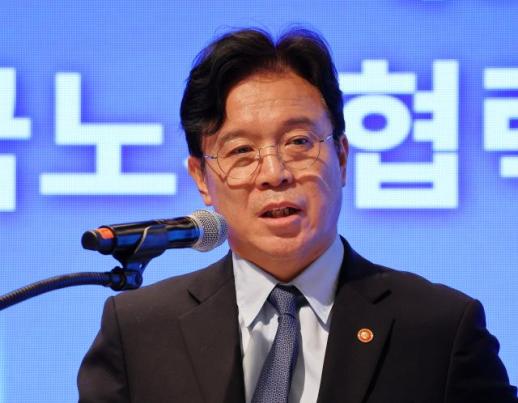 Labor Minister Discusses People-Centered AI Transition with ILO Chief Labor Minister Kim Young-hoon stated on May 21 that as the world faces significant changes due to artificial intelligence (AI) and digital transformation, a "people-centered AI transition" is more important than ever. He emphasized the need to create a model that harmonizes technological innovation with labor rights protection in collaboration with the International Labor Organization (ILO). During a meeting with ILO Director-General Gilbert Houngbo, who is visiting South Korea, the two discussed ways to strengthen strategic cooperation and expand South Korea's role within the ILO. This was Houngbo's first visit to the Ministry of Labor since taking office in October 2022. The discussions included topics such as the direction of people-centered AI policies, the South Korean government's approach to realizing a labor-respecting society, and enhancing partnerships in ILO cooperation projects, as well as ways to elevate South Korea's status within the ILO. Kim reflected on his past experiences representing the labor sector at ILO conferences, stating, "I was deeply impressed by the ILO's commitment to realizing people-centered labor values based on tripartism. It is particularly meaningful for me to welcome the ILO Director-General as the Labor Minister today." He noted that while technological innovation has historically created new opportunities, it has also significantly altered labor market structures and jobs. "In this era of transition, the direction of technological advancement must focus on people, ensuring that labor is not excluded," he said. Kim added, "South Korea aims to fulfill its role as a responsible nation amid the AI transition and changes in the international community. The Ministry of Labor intends to lead the AI transition in employment administration and internal operations provided to the public." He reiterated that a society where labor is respected and everyone can work happily is a universal core value promoted by the ILO. "The spirit of the ILO's Philadelphia Declaration, which asserts that labor is not a commodity but a right and value deserving respect, remains a solid foundation that we will actively participate in discussions to spread throughout the international community," he stated. Houngbo expressed gratitude for South Korea's proposal for a global AI initiative, emphasizing the need for international cooperation to create quality jobs and facilitate a people-centered transition in the AI era. Meanwhile, Houngbo's visit to South Korea will continue until May 22, during which he is scheduled to meet with the President and labor representatives, as well as visit the Seoul Employment Center.* This article has been translated by AI. 2026-05-21 20:58:20
 -
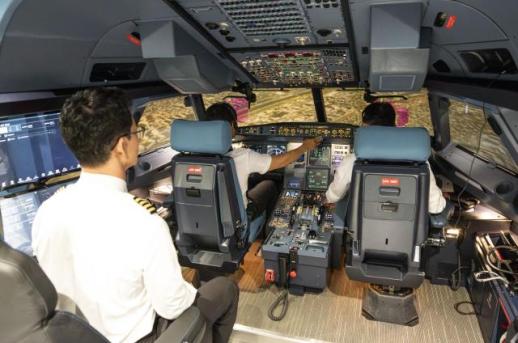 Jin Air Introduces Simulator for Aircraft Fire Response Training Jin Air has completed the introduction of a simulator aimed at enhancing flight safety in preparation for the Airbus aircraft. The A320neo simulator is a training device that allows pilots to conduct simulated flights in an environment identical to the aircraft cockpit. It provides a realistic training environment through precise movements and high-resolution 4K projectors. The simulator can replicate extreme situations where visibility is compromised, including takeoffs, adverse weather conditions, and emergency scenarios. Earlier this year, a series of incidents involving portable battery fires on domestic and international flights highlighted the importance of pilots being familiar with response protocols. U.S. aviation authorities have also recommended smoke response training that simulates real-life conditions. Jin Air is focusing on enhancing pilots' ability to react instinctively, moving beyond mere memorization of manuals. A Jin Air official stated, "Pilots undergo regular training to respond to in-flight fires." Currently, five affiliated airlines, including Korean Air, have completely banned the use of auxiliary batteries on board. Following the simulator, Jin Air plans to introduce a Flight Training Device (FTD) as well. This training device will help pilots master normal and abnormal response procedures using systems identical to those in actual aircraft. Once implemented, Jin Air will operate two Full Flight Simulators (FFS) and one FTD, with an investment totaling approximately 22 billion won.* This article has been translated by AI. 2026-05-21 20:57:00
 -
 CJ CheilJedang Promotes K-Food at PGA's The CJ Cup CJ CheilJedang is set to promote K-Food and Korean culinary culture at the PGA Tour's The CJ Cup Byron Nelson, taking place from May 20 to 24 at TPC Craig Ranch in McKinney, Texas. The company announced on May 21 that it will operate a Bibigo brand experience space and food booths at the event. This year’s event features an expanded scale and enhanced interactive content. Attendees will find the "House of CJ" and two Bibigo concessions throughout the course. The "House of CJ" will be a large pantry-themed space showcasing Bibigo products, complete with a display area, photo opportunities, and tasting events for new products. A casual dining area designed to reflect the atmosphere of Hangang Park will be set up at the 7th hole, allowing spectators to enjoy Bibigo menu items while watching the tournament. Collaborative menus featuring both domestic and international chefs will also be highlighted. Notable participants include Chef Bo McMillan, winner of the American cooking show "Iron Chef"; Chef Park Jung-hyun from the New York fine dining restaurant "Atomix"; and Chef Yoo Yong-wook, who appeared on "Black and White Chef Season 2." Each day, the chefs will present different dishes using Bibigo dumplings, kimchi, K-sauces, and soba chicken. At the 17th hole, a grab-and-go menu will offer convenient meal options, featuring snacks made with Bibigo dumplings and gochujang in both original and spicy versions. Cocktails made with Korean distilled spirits will also be available. CJ CheilJedang plans to showcase four cocktail varieties using Munbaeju and Gamuchisoju through its premium distilled spirit brand "Jari," which is set to launch in the U.S. market later this year after collaborating with local breweries. Since 2018, CJ CheilJedang has introduced the Bibigo brand and Korean cuisine to the global market through The CJ Cup. The players' dining area has been recognized as the "best dining spot" on the PGA Tour, becoming a signature feature of the tournament. A CJ CheilJedang representative stated, "This year, we have prepared a wider range of content and an expanded scale to allow global audiences to experience Korean culinary culture. We plan to continue promoting the appeal of K-Food in the future." The CJ Cup is a PGA Tour event hosted by CJ Group. Launched in 2017 as the first PGA Tour event in South Korea, it has provided local golf fans with the opportunity to watch global star players. Following the COVID-19 pandemic, the tournament moved to the U.S. and has been held under the name "The CJ Cup Byron Nelson" since merging with the 80-year-old Byron Nelson tournament in 2024.* This article has been translated by AI. 2026-05-21 20:54:21
 -
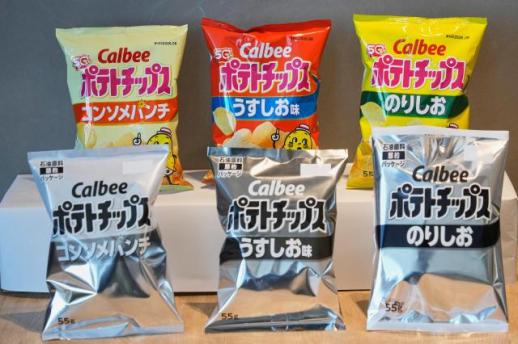 Japan Faces Supply Chain Concerns Amid Rising Naphta Procurement Issues Concerns over naphta procurement, triggered by escalating tensions in the Middle East, are spreading beyond Japan's industrial sectors into the political arena. While the Japanese government asserts that "overall supplies are sufficient" to mitigate these concerns, industries are preparing for potential disruptions and price increases in packaging materials, printing inks, paints, and housing equipment. On May 20, a parliamentary debate took place where Prime Minister Sanae Takaiichi clashed with opposition leaders. The worsening situation in the Middle East and the issue of naphta supply emerged as key topics, elevating raw material supply challenges from an industrial issue to a political one. Asahi Shimbun reported on May 21 that during the debate, Takaiichi acknowledged, "There are bottlenecks occurring in various locations regarding naphta supply," adding that "naphta, which should be sufficient, is not being properly supplied to the field." While maintaining that the total amount of naphta is not lacking, she indicated that issues are arising in the distribution process. Opposition members cited material procurement difficulties and soaring prices, calling for support for supply-side companies, to which Takaiichi responded that she would address these issues. Naphta, a petrochemical raw material extracted from crude oil, is used as a fundamental component in various industrial products, including plastics, synthetic resins, printing inks, paints, and packaging materials. Japan heavily relies on the Middle East for its crude oil and naphta supply, and the prolonged blockade of the Strait of Hormuz has increased burdens across industrial sectors. A notable example illustrating the disconnect between government and industry perceptions is the packaging change by food giant Calbee. On May 12, Calbee announced it would switch the packaging of 14 key products, including potato chips, to black and white due to instability in securing printing inks derived from naphta. According to Asahi, a senior official from the Prime Minister's office expressed strong displeasure at Calbee's response, suggesting it exaggerated supply concerns for media attention, while dismissing the possibility of ink shortages. Following Calbee's announcement, the government quickly contacted the company to clarify that the overall supply of naphta was adequate. Officials close to the Prime Minister viewed Calbee's actions as an overreaction, fearing that such reports could spread anxiety to other companies. However, Calbee has maintained its decision to switch to black and white packaging, stating it is a measure to ensure stable product supply. Takaiichi's Government on Edge The government's sensitive reaction stems from concerns that raw material shortages could dampen consumer spending and business activities. With high approval ratings serving as a driving force for Takaiichi's administration, there is apprehension that supply issues could lead to inflationary pressures and dissatisfaction with the government. In April, TOTO, a major housing equipment company in Japan, temporarily halted new orders for unit baths due to concerns over procuring naphta-derived solvents, prompting the Ministry of Economy, Trade and Industry to swiftly assess the supply situation and adjust supply chains. TOTO has since gradually resumed new orders. However, similar procurement issues have arisen, leading to discussions within the government about the limitations of responding reactively to each individual problem as they arise, Asahi reported. The government's assertion that "naphta is sufficient" is based on total volume calculations. According to Asahi, Japan's typical monthly naphta supply is approximately 2.8 million kiloliters, comprising about 1.2 million kiloliters from imports from the Middle East, 1.1 million kiloliters from domestic refining, and 450,000 kiloliters from non-Middle Eastern imports. With the blockade of the Strait of Hormuz drastically reducing imports from the Middle East, the Japanese government plans to utilize its oil reserves to maintain domestic production and increase procurement from regions outside the Middle East, such as the United States and Peru, to fill the shortfall. Additionally, the government claims to have secured 1.8 months' worth of supply based on the conversion of intermediate products held by the private sector into naphta equivalents. The issue lies in the potential discrepancy between the government's "total" figures and the "item-specific quantities" needed by companies. Intermediate products are often tailored for specific uses and are not easily interchangeable, meaning that even if the overall supply is adequate, shortages can occur for specific products. Matsuo Ko, head of the Energy Economics and Social Research Institute, pointed out to Asahi that "there is a risk of shortages for certain products." The gap between the government's reported naphta inventory and the actual usable inventory in the field is contributing to the confusion. In addition to quantity, price is also a concern. While the government maintains that there is "sufficient" supply based on overall figures, the process of sourcing alternatives from outside the Middle East can lead to increased raw material costs and transportation expenses, ultimately raising the burden on companies. Reports indicate that some companies in the printing ink sector have already raised prices by more than 30%. Price increases are also being observed in consumer goods that use naphta-derived materials for packaging, such as paper diapers and natto. Asahi noted that while the Japanese government continues to repeat the message that "overall supplies are sufficient" to prevent social unrest, companies are proactively preparing for potential procurement disruptions and price hikes. The supply chain concerns originating from the Middle East are extending beyond energy prices, affecting the broader economy, including consumer goods and housing equipment, putting Takaiichi's administration's crisis management capabilities to the test.* This article has been translated by AI. 2026-05-21 20:49:20
 -
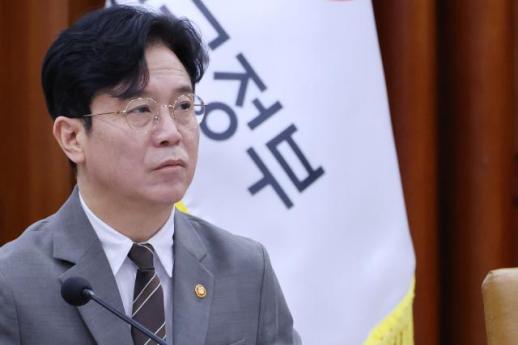 Labor Minister Kim Young-hoon: Negotiations Require Compromise "Negotiations are harder than strikes. Both sides made concessions." On May 21, Labor Minister Kim Young-hoon appeared on the YouTube program "Choi Wook's Maebul Show" and stated, "I believed that making public moves could create resistance, so I continued to persuade and coordinate behind the scenes." Minister Kim personally mediated the final negotiations between Samsung Electronics and its labor union the previous day at the Gyeonggi Regional Employment and Labor Office. The two sides reached a tentative agreement just over an hour before a planned general strike. In the tentative agreement, 40% of the special management performance bonus for the DS division will be prioritized for the entire semiconductor sector, while the remaining 60% will be distributed differentially among business units. Additionally, the implementation of penalties for loss-making divisions will be postponed until next year. The union plans to hold a vote from 2 p.m. on May 22 to 10 a.m. on May 27 to decide whether to accept the agreement. Minister Kim noted, "The Central Labor Relations Commission's pre-adjustment and two post-adjustments did not find common ground," adding, "While Samsung Electronics is a representative company in our country, it has been a non-union company for a long time, leading to a lack of experience in labor relations. The Samsung Electronics super-large union is also a newly formed union without a higher-level organization." He continued, "The clash of desires over how to distribute the enormous added value generated by technological innovation is a growing pain that our society must experience at some point." Minister Kim specifically mentioned that persuading management was challenging. "If both sides had demanded 10% and 5%, a compromise could have been reached at the midpoint of 7.5%. However, when principles clash, it becomes difficult to resolve," he said. "Management's principle that 'there should be rewards where there is performance' was very firm." He identified the 'clash of principles' as the biggest obstacle in the negotiations. "The union accepted the terms, but management did not, making it difficult for the second post-adjustment to proceed. It was not easy to persuade management. Adjustments involve both quantitative and qualitative aspects, including values and principles," he explained. "Quantitative aspects can allow for some compromise, but when principles clash, resolution is difficult," he added. "For example, the company argued that since this is a special performance bonus, rewards should be given where there is performance, questioning how to compensate loss-making areas. While I believe we should respect the company's principles, there are no principles without exceptions." Minister Kim suggested, "When introducing new systems, just as laws have transition provisions and preparation periods, we should propose a postponement of the implementation date," noting that this proposal helped break the deadlock. Regarding the adjustment process, he stated, "Both labor and management made concessions. The union stepped back from its previous position, and by proposing a postponement of the implementation date, we were able to create a breakthrough in dialogue." He also addressed Samsung Electronics union members, saying, "Not all demands can be met at once. It is important to understand that the leadership has been deeply concerned while leading 70,000 members, and we should approach the next steps with the mindset that any shortcomings can be addressed later." He cautioned, "If the union becomes divided and each member looks out for themselves, any future agreements will become even more difficult. We must consider not only short-term gains but also sustainability." In response to claims that the recent labor conflict at Samsung Electronics is a result of the so-called 'Yellow Envelope Law,' he countered, "Criticizing the Samsung Electronics union as an aristocratic union that does not care for its partner companies, while arguing that the Yellow Envelope Law aims to reduce the gap between primary and subcontractors, is a contradiction in terms."* This article has been translated by AI. 2026-05-21 20:46:25
 -
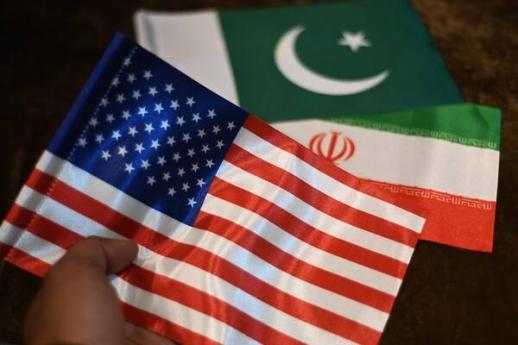 Pakistani Officials Continue Visits to Tehran as Prime Minister Sharif Heads to China Pakistani officials are making a series of visits to Tehran. Prime Minister Shehbaz Sharif is scheduled to visit China from May 23 to 26. As U.S.-Iran ceasefire negotiations remain stalled, Pakistan's diplomatic efforts are expanding towards Tehran and Beijing. According to the Pakistani daily Dawn on May 21, Interior Minister Mohsin Naqvi traveled to Tehran to deliver an 'important message' to Iranian leaders. This marks Naqvi's second visit to Tehran in less than a week. Dawn reported that "Pakistan is intensifying its diplomatic efforts amid a situation that could jeopardize the U.S.-Iran ceasefire." There are also discussions about a potential visit by Pakistan's military leadership to Iran. Dawn noted that speculation is growing that Army Chief Asim Munir may visit Iran soon. Reuters reported that Munir is considering a trip to Tehran as part of mediation efforts. Iranian news agency ISNA stated that Munir is expected to visit Tehran on May 21 for discussions, although Pakistani authorities have not officially confirmed this. Pakistan is acting as a conduit between Tehran and Washington. During his visit, Naqvi reportedly met with Iranian President Ebrahim Raisi and senior officials from the Islamic Revolutionary Guard Corps. Dawn described this meeting as an attempt by Pakistan to maintain the possibility of resuming negotiations. Pakistan's diplomatic activities are also extending to China. Prime Minister Sharif's official visit to China from May 23 to 26 is aimed at strengthening economic and digital cooperation and attending a business-to-business forum. This visit coincides with Pakistan's involvement in U.S.-Iran mediation efforts. Differences between the U.S. and Iran regarding Iran's nuclear program, sanctions relief, and the opening of the Strait of Hormuz remain significant. U.S. President Donald Trump has indicated that while he is open to the possibility of an agreement, military action could resume if a resolution is not reached. Although Pakistan's mediating role is becoming more prominent, the substantial gap between U.S. and Iranian positions raises uncertainty about the actual resumption of negotiations.* This article has been translated by AI. 2026-05-21 20:43:38
 -
 Controversy Over Stamp Expiration After Compose Coffee App Overhaul The Broadcasting and Communications Commission has initiated disciplinary procedures against Compose Coffee after confirming that the company systematically expired user stamps during the operation of its app service and failed to properly notify users of contract terminations. On May 21, the commission announced that it had completed its investigation into violations of the Telecommunications Business Act by Compose Coffee, which operates the Compose Coffee app and kiosk services. The commission has issued a corrective action notice to the company. The investigation revealed that during the app overhaul, Compose Coffee terminated the existing app service and systematically expired the stamps that users had accumulated. These stamps function as points earned with beverage purchases. The commission also found that the company unilaterally terminated user contracts without adequately informing users of the contract completion, which hindered user interests. The commission plans to finalize the corrective orders and any potential fines after consulting with the business and undergoing a review and decision-making process. The commission stated, "We will continuously monitor actions that cause user harm in the telecommunications service sector, which is closely related to the public's daily life, and will respond strictly to any legal violations." In April of last year, Compose Coffee had previously expired less than ten existing stamps that were individually accumulated at each store during the app overhaul.* This article has been translated by AI. 2026-05-21 20:42:00
 -
 Lotte Engineering Pays 50 Billion Won Deposit for Seongsu 4 District Redevelopment Lotte Engineering has made a proactive move by paying the full bid deposit of 50 billion won in cash for the redevelopment project of the Seongsu Strategic Maintenance District 4 in Seoul's Seongdong District, just one day before the deposit deadline. According to the construction industry on May 21, Lotte Engineering submitted the entire bid deposit to the Seongsu 4 District Redevelopment Association ahead of the deadline of 11 a.m. on May 22. The main bidding deadline for the project is set for May 26. A representative from Lotte Engineering stated, "We plan to propose differentiated, customized project conditions that prioritize the interests of the association members. Utilizing our unique high-rise construction technology and global partnerships, we aim to create a landmark complex that represents South Korea in every aspect, including design and branding." The Seongsu 4 District redevelopment project involves constructing 1,439 residential units and supporting facilities across a site of 89,828 square meters, with a planned construction cost of approximately 1.36 trillion won, making it one of the largest projects along the Han River this year. This bidding process follows the invalidation of the first round of bidding due to violations of promotional guidelines and procedural flaws in the association's operations. Industry insiders expect a fierce competition between Lotte Engineering and Daewoo Engineering, similar to the first round. Daewoo Engineering is reportedly preparing to complete its deposit payment by the morning of May 22 after conducting internal reviews. A source from the construction industry noted, "Seongsu 4 District is an optimal location for construction companies to enhance their brand image, thanks to the relaxation of high-rise regulations and accessibility to Gangnam via the Yeongdong Bridge. Given the challenges of the first bidding's invalidation, both companies are likely to present aggressive financial terms and high-end design proposals to win over the association members." Meanwhile, the Seongsu 4 District Association plans to conclude the main bidding on May 26 and hold a meeting on June 27 to select the final construction company after internal deliberations.* This article has been translated by AI. 2026-05-21 20:39:23