
[Gettyimages Bank]
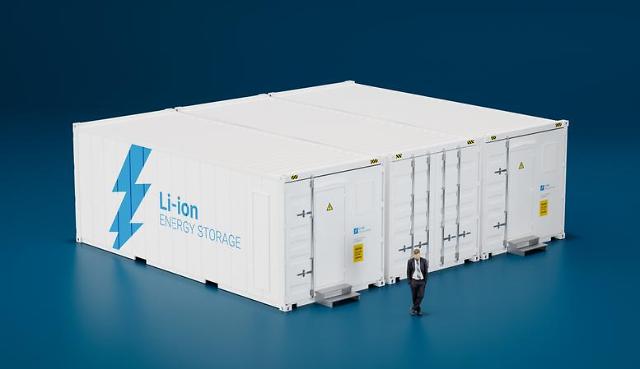
If the pilot project is successful, the group will push for a project to supply the world's largest energy storage system (ESS) recycling waste batteries. ESS, which has emerged as an effective means to establish stable and efficient systems for power demand and supply. Energy storage demand is growing thanks to the global transition from carbon-intensive energy sources to natural gas and renewable source solutions.
On Friday, Hyundai and Korea Hydro & Nuclear Power (KHNP) agreed to launch a joint pilot project to supply a 10MWh-class energy storage system using discarded batteries by the end of 2021. Hyundai and KHNP would install a 2MWh ESS into a solar power plant in Hyundai's manufacturing plant in the southern industrial port city of Ulsan by November this year, followed by the establishment of an 8㎿h ESS.
The two partners agreed to push for a 3GWh-class ESS in 2030 by utilizing KHNP's renewable energy sources such as wind farms and solar power plants.
Hyundai has enhanced its renewable energy sector. The group forged a strategic partnership with Wärtsilä of Finland In June last year to commercialize ESS for battery recycling and signed a memorandum of understanding with OCI, a domestic chemical product maker, on September 9 to recycle discarded EV batteries for solar energy ESS.
Park Sae-jin
Experienced journalist and editor at AJU PRESS specializing in multilingual news. I cover international diplomacy, geolpolitics, and policy, consistently delivering highly accurate, compelling reporting for a worldwide audience.
Copyright ⓒ Aju Press All rights reserved.
Related News
-
 Mid-sized Construction Firms Seek New Opportunities Amid Samsung, Hyundai Dominance
The prolonged slump in the housing market and the shift in major reconstruction and redevelopment contracts towards large construction firms like Samsung C&T and Hyundai Engineering & Construction have prompted mid-sized construction companies to accelerate their search for new opportunities in non-residential sectors.Samsung C&T has already established a substantial revenue and order base in high-tech semiconductor projects, while Hyundai Engineering & Construction has made significant strides in nuclear power and energy sectors. In contrast, companies such as Daewoo Engineering & Construction, DL E&C, GS Engineering & Construction, Hanwha's construction division, and Kolon Global are diversifying their business areas into various fields, including data centers, small modular reactors (SMR), liquefied natural gas (LNG), mixed-use developments, and advanced industrial facilities.According to the construction industry on November 15, Samsung C&T's construction division reported third-quarter revenues of 4.465 trillion won and operating profits of 277 billion won, marking increases of 44.5% and 149.5%, respectively, compared to the same period last year. The company attributed its improved performance to the ramp-up of high-tech construction projects and favorable progress in overseas building projects.The high-tech sector, including semiconductor factories, has transitioned from being a future prospect to a core business driving actual performance. Samsung C&T has also raised its annual order target from 23.5 trillion won to 30.1 trillion won, continuing its growth centered on non-residential projects.Hyundai Engineering & Construction is experiencing similar growth. Its cumulative orders for the third quarter reached 28.8746 trillion won, a 10.6% increase from the previous year, with a backlog of 99.531 trillion won. Strategic projects, including an electric steel mill in the U.S. and an AI data center in Pohang, have supported its performance. The company is expanding into future growth areas such as large nuclear power plants, SMR, solar energy, offshore wind, data centers, and mixed-use developments.In contrast, mid-sized construction firms are adopting strategies to reduce their reliance on housing by selecting markets where they have competitive advantages rather than focusing on a single sector.Daewoo Engineering & Construction is emphasizing overseas LNG and plant projects. Its third-quarter revenue was 1.8424 trillion won, a 7.4% decrease from the previous year, but its operating profit surged by 223.7% to 183.2 billion won. As of the end of the third quarter, its order backlog stood at 54.855 trillion won, equivalent to approximately 6.8 years of annual revenue.The future growth focus for Daewoo is overseas plants. The company is pursuing large project contracts, including LNG CPF in Papua New Guinea and the Rovuma LNG project in Mozambique. In addition to housing and maintenance projects, it is expanding its dedicated data center organization to target the domestic non-residential market.DL E&C is simultaneously growing its energy and data center sectors. Its third-quarter revenue was 1.5065 trillion won, with an operating profit of 107.3 billion won. Although both revenue and operating profit decreased compared to the previous year, its cumulative new orders for the third quarter increased by 31% to 7.2154 trillion won. The company has secured financial resources with net cash of 1.1238 trillion won and a debt ratio of 79%.DL E&C is particularly focused on North American energy, SMR, and data centers. It is bidding on a gas power project in Canada and exploring gas power and LNG infrastructure projects in the U.S. In the SMR sector, it is expanding cooperation with U.S.-based X-Energy.In the data center business, DL E&C has secured a project pipeline worth approximately 2 trillion won, centered around locations such as Hanam, Bucheon, and Dangjin. The key for next year will be whether these projects translate into actual contracts and construction starts.GS Engineering & Construction is implementing a strategy to offset declining housing revenues with growth in non-residential sectors such as plants and data centers. Until last year, the majority of its revenue came from construction and housing, but it has steadily increased its revenue from plants and new businesses. GS's plant revenue grew from 425.7 billion won in 2024 to 1.3201 trillion won last year, more than tripling, while new business revenue reached 1.7787 trillion won.Recently, GS has been expanding collaborations with telecommunications and power companies to target the AI data center market, focusing on broadening its business scope beyond simple construction to include power infrastructure and operations.Hanwha's construction division is prioritizing large mixed-use developments over data centers or nuclear power. The company believes that large-scale projects, such as those in the northern station area of Seoul and the Jamsil MICE complex, will help reduce reliance on housing and secure stable long-term revenues.Kolon Global is seeking growth opportunities in advanced industrial facilities and asset management. It is expanding construction for industrial facilities, including an engine maintenance plant for Korean Air and production facilities for semiconductor equipment, while establishing a structure to secure operational profits post-construction through leisure and asset management projects.A construction industry official stated, “Data centers are expected to become a common battleground for mid-sized construction firms, with growing market expectations due to the spread of AI.” However, he cautioned that securing large amounts of power, attracting primary tenants, and the substantial initial investment required mean that not all projects will lead to actual construction starts.* This article has been translated by AI.
-
HD Hyundai and Anduril Team Up to Transform Naval Warfare with Unmanned Vessels
HD Hyundai Heavy Industries and U.S. defense firm Anduril are positioning themselves to dominate the future naval warfare market with unmanned surface vessels. The companies anticipate a shift in naval operations as unmanned vessels take on dangerous missions traditionally performed by humans, showcasing confidence in their combined capabilities in ship design, construction, autonomous navigation, and mission execution technology.On November 12, Shane Ehnat, Anduril's Senior Vice President, predicted a complete transformation in maritime warfare during a press conference held at HD Hyundai Heavy Industries in Ulsan. He emphasized, "The key is that unmanned systems will take the place of humans on the front lines," explaining, "Our vision for the future involves deploying sensors and weapons to protect personnel between enemy and friendly forces."Choi Tae-bok, Executive Director at HD Hyundai Heavy Industries, added during the briefing, "The greatest command burden in warfare is the potential loss of life. If there are no personnel on board, commanders can execute more daring operations." He also noted that unmanned surface vessels do not require crew living quarters, allowing for increased armament and fuel capacity.On the same day, the companies launched the 600-ton ASV Alpha, a medium unmanned surface vessel, approximately one year after signing their agreement last November. HD Hyundai is responsible for ship design, construction, and vessel autonomy, while Anduril focuses on mission autonomy technology.The ASV Alpha's core technology enables the vessel to continue operations without human presence. In addition to following a predetermined route, it can autonomously manage engines and generators and respond to malfunctions or onboard anomalies.To achieve this, HD Hyundai developed the vessel autonomy solution VAOne, which integrates with Anduril's mission autonomy solution Lattice. VAOne handles navigation, engine operation, and damage control, while Lattice plans and assigns missions based on sensor data.Kim Hyung-taek, Executive Director at HD Hyundai Heavy Industries, explained, "Software will perform the cognitive, judgment, and response tasks previously done by humans." This means automating processes from checking engine status and fuel before departure to detecting and responding to onboard and external threats during operation. However, he clarified, "The final decision on whether to launch a missile after detecting an enemy is made by a human."The companies also highlighted their rapid development pace as a competitive advantage. Jang Jun-ho, Senior Executive at HD Hyundai Heavy Industries, stated, "We changed the traditional design and procurement sequence to complete the vessel in a short time." They prioritized securing available equipment and materials, allowing for concurrent design adjustments. Choi Tae-bok remarked, "The company leads the way in developing technology into products and creating markets," explaining that prototype development could accelerate the commercialization of private sector technologies.The prototype vessel will undergo sea trials and final preparations off the coast of Ulsan before being transported to the U.S. for demonstration and testing early next year. However, vessels for the U.S. Navy will be constructed in the United States.Approximately 70 attendees, including HD Hyundai Heavy Industries President Joo Won-ho, Executive Director Lee Sang-bong, Anduril Chief Operating Officer Matt Grimm, Senior Vice President Shane Ehnat, and Anduril Korea Representative John Kim, were present at the launch ceremony held on November 12 in Ulsan.* This article has been translated by AI.
-
HD Hyundai Launches 600-Ton Unmanned Surface Vessel Developed with Anduril
HD Hyundai has launched a 600-ton unmanned surface vessel targeting the U.S. unmanned vessel market.On November 15, HD Hyundai announced that it held a launch ceremony for the unmanned surface vessel, developed in collaboration with U.S. defense company Anduril, at its shipyard in Ulsan.Attending the ceremony were Ju Won-ho, President of HD Hyundai Heavy Industries; Lee Sang-bong, Executive Vice President; Matt Grimm, Chief Operating Officer of Anduril; Shane Annett, Senior Vice President of Anduril's Maritime and Maneuver Systems Division; John Kim, Anduril Korea Representative; and approximately 70 other executives and staff from both companies, along with representatives from the U.S. military and embassy.The vessel launched is a medium-sized unmanned surface vessel (ASV) with a displacement of 600 tons, built by HD Hyundai.Typically, ship construction takes several years, but this project was completed in just one year following the signing of the agreement in November 2025.The unmanned surface vessel is set to undergo sea trials and final preparations off the coast of Ulsan before continuing test operations in the U.S. early next year.This vessel, constructed by HD Hyundai Heavy Industries and Anduril, is equipped with HD Korea Shipbuilding & Offshore Engineering's self-developed total autonomy solution, VAone, and Anduril's mission autonomy solution, Lattice.VAone automates the operation of the vessel's main systems and integrates an autonomous system for responding to anomalies, as well as an unmanned and autonomous operation system that detects and avoids safety-related anomalies. This includes a damage autonomy solution and an automated navigation solution from Ibis.By combining Anduril's Lattice platform, the technology for autonomous unmanned surface vessels has been completed, automating navigation, system operations, damage control, and weapon operations.The vessel is expected to meet U.S. Navy requirements for long-term operations without crew, enabling it to perform various missions such as reconnaissance, surveillance, and maritime information collection. Considering that approximately 50 crew members are typically required for manned vessels of similar size, this development is anticipated to significantly reduce the operational burden on naval personnel and enhance operational efficiency.Ju Won-ho, President of HD Hyundai Heavy Industries, stated, "The launch of this unmanned surface vessel is a result of combining HD Hyundai's shipbuilding capabilities with unmanned navigation technology. We will continue to advance our technology to secure a leading position in the unmanned surface vessel market."Shane Annett, Senior Vice President of Anduril, remarked, "This vessel demonstrates what Anduril and HD Hyundai can achieve through collaboration. We look forward to validating the vessel's performance and capabilities in U.S. waters early next year and to continuously expanding our fleet with HD Hyundai."* This article has been translated by AI.