
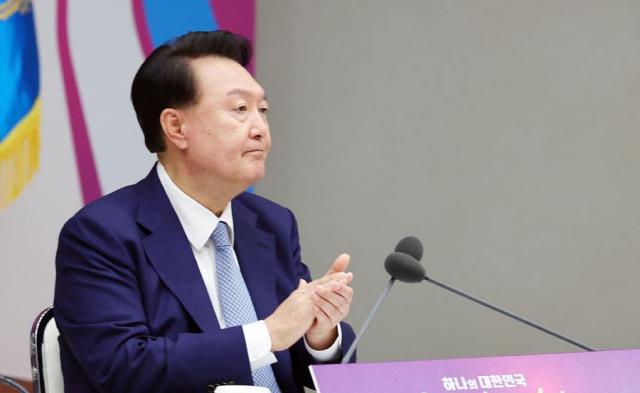
According to the presidential office, Yoon will visit Prague from Sept. 19 to 22, where he will sit for talks with Czech President Petr Pavel to discuss ways to enhance bilateral cooperation with a particular focus on nuclear energy.
One of the key topics on Yoon's agenda is likely to be seeking support for Korea's bid to participate in the European country's project to build two nuclear power plants in Dukovany.
In July, a Korean consortium led by Korea Hydro & Nuclear Power (KHNP) was selected as the preferred bidder for the project estimated at 24 trillion won ($18 billion). But the project faced a setback as U.S.-based Westinghouse Electric filed an appeal with the Czech government last month, arguing that the Korean consortium's reactors are based on its technology.
As the two countries mark the 35th anniversary of diplomatic ties and the 10th anniversary of their strategic partnership next year, Yoon's upcoming trip to the Czech Republic, the first by a Korean president since former President Park Geun-hye's visit in December 2015, is expected to provide momentum for elevating bilateral cooperation.
The Yoon government, which approved the construction of new nuclear reactors for the first time in over eight years on Thursday as part of efforts to reverse the previous administration's nuclear phase-out policy, is expected to focus primarily on sales diplomacy.
"As Korea's top salesman, Yoon will actively engage in securing partnerships for nuclear energy projects," a presidential spokesperson said the same day.
Yoon will be accompanied by a large business entourage which includes top executives from major conglomerates such as Samsung Electronics chairman Lee Jae-yong, SK Group chairman Chey Tae-won, LG Group chairman Koo Kwang-mo and Hyundai Motor Group chairman Chung Eui-sun.
Yoon's itinerary also includes tours of nuclear-related companies, a business forum, and the signing of several memorandums of understanding on bilateral cooperation across various sectors. He will then wrap up his trip by meeting with Korean expats and compatriots there.
Copyright ⓒ Aju Press All rights reserved.
Related News
-
 Minister Yoon Seok-joong Calls for Preemptive Measures Against Road Ice Hazards
Minister Yoon Seok-joong of the Ministry of Interior and Safety emphasized the need for preemptive inspections and responses to areas at risk of icing.On this day, Minister Yoon visited the de-icing forward base in Anyang, Gyeonggi Province, and inspected the safety management status and the preparedness of related agencies, reiterating this point.This inspection follows President Lee Jae-myung's directive at the Cabinet meeting on November 10 for thorough preventive measures and plans regarding recurring icing accidents.At the Anyang de-icing forward base, Minister Yoon checked the stockpile of de-icing agents, the operational status of de-icing equipment, personnel availability, and emergency communication systems, urging for swift responses to sudden snowfall.He then examined road conditions and factors contributing to the risk of road ice in areas where ice formation is a significant concern, such as bridges and tunnel entrances.Since road ice is difficult to identify, he personally oversaw the installation of 'Ice Hazard Warning Signs' to alert drivers to these dangerous areas. According to the Korea Road Traffic Authority, an average of 884 winter road icing accidents occur annually over the past five years, resulting in 16 injuries.Minister Yoon instructed related agencies to enhance patrols in vulnerable areas and monitor road surface temperatures, urging them to spread de-icing agents in advance when icing is anticipated.The Ministry of Interior and Safety previously allocated 10 billion won (KRW) in special disaster grants for securing de-icing agents and equipment on October 30, and plans to provide an additional 9 billion won (KRW) to expand safety facilities to prevent road ice accidents.Minister Yoon stated, "Since road ice is not easily visible, it can lead to major accidents, making it crucial to conduct preemptive inspections and preventive measures in hazardous areas," and emphasized, "Local governments and related agencies should prioritize the lives and safety of citizens and respond proactively to anticipated risks, even to the point of being excessive."* This article has been translated by AI.
-
Conditions for Nuclear Power Export: Is There Work for South Korea's Construction Capability?
The global nuclear power market is expanding, and the competitive standards of the nuclear industry are shifting from mere contract awards to the actual capabilities of construction and equipment supply. As major countries that had suspended nuclear construction for an extended period face challenges in restoring their workforce and manufacturing bases, South Korea is recognized as a nation with steady construction experience and a robust supply chain. However, there are concerns that to maintain this capability, domestic and international follow-up projects must continue without interruption.According to the World Nuclear Association (WNA) report titled 'World Nuclear Outlook' released on November 18, South Korea is classified as a 'leading country' alongside China and Russia, possessing continuous nuclear construction capabilities. The report analyzed that a steady volume of construction supports the maintenance of skilled labor and investment in manufacturing facilities, while standardized designs and repetitive construction experience enhance predictability in project duration and cost management.However, the WNA assessed that South Korea's future plans for new nuclear construction are limited compared to the scale of existing nuclear facilities. The Organisation for Economic Co-operation and Development (OECD) Nuclear Energy Agency (NEA) identified supply chain bottlenecks and a shortage of specialized personnel as major factors hindering global nuclear expansion.Domestically, the foundation for nurturing talent in the nuclear sector appears to be weakening. According to the 'Nuclear Industry Status Survey' released by the Ministry of Science and ICT this year, the number of students enrolled in nuclear-related majors across 16 universities and graduate schools nationwide has decreased by 25.4% from 2,777 in 2017 to 2,071 this year. The number of new students enrolled is 654, a 7.8% decrease from the previous year.Winning nuclear contracts does not immediately translate into securing work for the domestic supply chain. Even if a main contract is signed overseas, there can be a time lag of several years before the production of major equipment and the ordering of materials, as well as the commencement of on-site construction. If existing projects are exhausted during this period, there is a risk that skilled workers may leave or that corporate investment in facilities may decline.Localization demands from export destinations also pose a variable. As major nuclear-importing countries, including those in Europe, begin to foster their own industries and supply chains, even if contracts are secured, the production volume and added value that domestic equipment companies can secure remain separate challenges. In particular, there are calls to closely examine the scope of the industrial acceleration legislation being pursued by the European Union (EU), local procurement requirements, and the potential impacts on foreign companies.Industry experts emphasize the need to broaden the criteria for evaluating the success of nuclear exports. They argue that it is essential to consider not only the total contract amount but also the work allocated to the domestic supply chain, the maintenance of core design and manufacturing technologies and skilled personnel, and the division of roles between local and domestic production. The aim is to ensure that the timing and volume of domestic and international projects are linked so that contract achievements lead to the maintenance of the industrial base.Professor Jeong Beom-jin of Kyung Hee University’s Department of Nuclear Engineering pointed out, "While South Korea's nuclear power has construction and technological competitiveness, past policy fluctuations and a compensation structure centered on local transfers and public enterprises have led to a reluctance among talented individuals to pursue this field and a reduction in the number of related departments. Even as exports are promoted, the increase of personnel in public institutions remains stagnant, and Team Korea agencies are dispersed across regions, resulting in decreased efficiency and momentum on-site."He further emphasized, "Beyond simply investing in workforce training budgets, it is necessary to resolve policy discrepancies between departments and create practical incentives and compensation structures that allow skilled personnel to flow into the field so that they can actively engage in exports."* This article has been translated by AI.
-
APEC Leaders Call for Nuclear Disarmament in Joint Declaration
Nuclear weapons are the most powerful arms created by humanity. At the same time, they are the most tragic invention that proves humans can destroy their own civilization. They represent a victory of science but a defeat of human reason. Countries that possess nuclear weapons can become great powers, but a world that cannot control nuclear arms can never be a safe civilized society.On November 19, 2026, a historic scene unfolded in Shenzhen, China. US President Donald Trump, Chinese President Xi Jinping, and Russian President Vladimir Putin sat together. The leaders of three nuclear-armed nations that influence the strategic balance of the world held an unprecedented trilateral summit and announced the 'Joint Declaration for Peace among the US, China, and Russia.'The essence of the declaration was straightforward: there are no winners in a nuclear war, and such a war must never occur. The three nations agreed to engage in dialogue to reduce nuclear risks and prevent the proliferation of nuclear weapons.This is a fundamental principle. However, the fact that the leaders of the world's three great powers jointly confirmed this is significant. It acknowledges a shared responsibility not to neglect the dangers of nuclear war.The issue lies in what follows the declaration. There is a deep chasm between the promise not to engage in nuclear war and the practical steps to reduce nuclear arsenals. There is an even more daunting mountain range between the agreement to prevent nuclear proliferation and the actual disarmament of countries that have already developed nuclear weapons.At the heart of that mountain range lies the Korean Peninsula.The atomic bombs dropped on Hiroshima and Nagasaki in August 1945 were the first demonstration of what nuclear weapons could do to humanity. Cities were destroyed, and countless lives were lost. Survivors were left with radiation damage and deep scars. World War II ended, but the fear of nuclear weapons did not. The Contradiction of the Nuclear Non-Proliferation Treaty: Leaders Confirm Principles Without Action PlansDuring the Cold War, the United States and the Soviet Union competitively amassed nuclear weapons. The theory of nuclear deterrence, which posits that the ability to destroy the opponent prevents war, became the central logic of international security. This is known as the balance of terror.However, the balance of terror is not the same as peace. It is an order built on the uneasy expectation that the opponent will not pull the trigger first. A single miscalculation, technical error, or political leader's poor judgment could lead to an irreversible disaster.To mitigate these risks, the international community adopted the Nuclear Non-Proliferation Treaty (NPT) in 1968 and brought it into force in 1970. This treaty recognized the United States, the Soviet Union, the United Kingdom, France, and China as nuclear-armed states if they manufactured and detonated nuclear weapons before January 1, 1967. In return, it aimed to prevent the proliferation of nuclear weapons to other countries and imposed an obligation on nuclear-armed states to engage in sincere negotiations for disarmament.Herein lies the fundamental contradiction of the nuclear order. Countries that possess nuclear weapons are recognized as nuclear-armed states, while those that seek to develop them later are deemed violators of international order. This structure is understandable given historical circumstances, but it cannot be justified indefinitely.The ultimate goal of the NPT is not to perpetuate the privileges of existing nuclear-armed states but to move toward a world without nuclear weapons. If nuclear-armed states neglect their disarmament obligations while demanding denuclearization from other countries, they will find it difficult to gain the trust of the international community.The true value of this US-China-Russia summit lies in how well it addresses this contradiction.The three nations promised to engage in dialogue to prevent nuclear war and proliferation. However, the joint declaration did not include targets for warhead reductions, verification procedures, or specific negotiation timelines. While principles were confirmed, a blueprint for implementation was not presented.Another noteworthy point is the issue of North Korea's nuclear program.The summit brought the Korean Peninsula issue back into the international spotlight. However, the four-point joint declaration did not mention North Korea's nuclear program or the denuclearization of the Korean Peninsula. The agreement to engage in dialogue to prevent nuclear proliferation is entirely different from agreeing on North Korea's denuclearization. No Mention of North Korea's Nuclear Program or Korean Peninsula Denuclearization: What Are the Leaders' True Intentions?This declaration could serve as a diplomatic opportunity for the denuclearization of the Korean Peninsula, but it does not promise the dismantling of North Korea's nuclear program. This presents a challenge for South Korea's diplomacy.How should this silence be interpreted?It cannot be definitively stated that the three leaders ignored the North Korean nuclear issue. It is possible that the joint declaration contained only broad principles. However, it is also plausible that they could not reach a specific agreement on the denuclearization of the Korean Peninsula or did not align their positions enough to include it in the joint document.The clear fact is that the North Korean nuclear issue remains unresolved.North Korea declared its withdrawal from the NPT in 2003 and conducted its first nuclear test in 2006. Since then, it has continued to develop nuclear weapons and ballistic missiles through several tests. In 2022, it codified its nuclear policy, defining nuclear capability as a core means of national defense.Rafael Grossi, Director General of the International Atomic Energy Agency (IAEA), stated on the 18th that additional expansion work is ongoing at North Korea's existing uranium enrichment facility in Yongbyon, and by the end of October, the expansion portion was observed to be completed. Operations at enrichment facilities in Yongbyon and Kangson continue to be monitored. Signs of operation at the Yongbyon 5-megawatt reactor and the status of light water reactor operations have also been reported.Since 2009, access to North Korean nuclear facilities has been blocked, preventing direct verification of nuclear material production. However, concerns about the continued expansion of North Korea's nuclear program are well-supported by observations from satellite imagery and other means.North Korea's nuclear issue can no longer be resolved by mere declarations. The North's fear that abandoning nuclear weapons would threaten its regime's security clashes directly with the concerns of South Korea and the international community that possessing nuclear weapons threatens regional safety.If this dilemma cannot be resolved, denuclearization of the Korean Peninsula will remain a mere slogan. The Fate of the Korean Peninsula Cannot Be Left Solely to the Negotiations of Great PowersThe United States is an ally providing extended deterrence to South Korea. China holds significant economic and diplomatic influence over North Korea. Russia has also been strengthening its strategic relationship with North Korea. Therefore, it is difficult to expect a fundamental resolution to the North Korean nuclear issue without cooperation among these three nations.However, the fate of the Korean Peninsula cannot be left solely to the negotiations of these great powers.If a nuclear war were to occur on the Korean Peninsula, the first to be destroyed would be the lives of the people living there. This includes the citizens of Seoul and Pyongyang, industrial facilities, cultural heritage, and the long history of the nation built over many years. This is why the lives and safety of the people of the Korean Peninsula must take precedence over the strategic interests of great powers.South Korea must utilize this declaration as a new diplomatic opportunity.First, it must maintain effective deterrence and crisis management capabilities based on its alliance with the United States. It should not ignore real security threats in the name of pursuing peace. However, military deterrence alone cannot resolve the nuclear issue. Deterrence is a means to prevent war, not the ultimate goal of peace.At the same time, South Korea must demand responsible roles from China and Russia. If these two countries have jointly committed to preventing nuclear proliferation, they must also apply that principle to the North Korean nuclear issue. Their friendly relations with North Korea should not serve as a justification for tolerating nuclear proliferation.Dialogue with North Korea must not be abandoned either. While maintaining the ultimate goal of denuclearization, it is necessary to negotiate a phased approach that includes halting nuclear tests and missile provocations, limiting nuclear material production, international verification, and easing military tensions. A phased approach does not mean legally recognizing North Korea's possession of nuclear weapons. It is a diplomatic method to reduce real risks while moving toward ultimate denuclearization.Above all, nuclear disarmament and the prevention of nuclear proliferation cannot be separated.If the United States, China, and Russia continue to strengthen their nuclear arsenals while demanding that North Korea abandon its nuclear weapons, their arguments will have limits. Conversely, it is also unacceptable for North Korea to justify its nuclear development based on the nuclear possession of great powers. The danger of nuclear weapons does not disappear depending on which country possesses them.Here, humanity faces a fundamental question.Does science exist for humanity, or do humans become subservient to the power of science?Nuclear physics has unveiled the secrets of nature. Nuclear power has contributed to electricity generation and the advancement of medicine and industry. However, the same science has become a weapon capable of destroying countless lives in an instant. Science itself is neither good nor evil. The morality and political judgment of humans using that power determine the direction of civilization. The US-China-Russia Declaration to Prevent Nuclear War Must Lead to Denuclearization of the Korean PeninsulaEinstein deeply worried about the dangers of the nuclear weapons era. He reminded us that the advancement of science and technology alone cannot guarantee the safety of humanity. Today, as artificial intelligence and advanced military technology converge, that warning has become even more urgent.Eastern wisdom is no different. The 'Tao Te Ching' emphasized restraint and humility over the display of force. The 'Analects' found the foundation of politics in the trust of the people. The measure of a civilized nation is not how many nuclear weapons it possesses but how much it can restrain that power.The leaders of the United States, China, and Russia hold immense power to influence the global nuclear order. However, that power cannot exist above the lives of humanity. While nuclear weapons may symbolize national strength, the true leadership lies in the restraint of using them and the responsibility to ultimately reduce their numbers.This declaration from Shenzhen could be a historic starting point. At the same time, it could remain a diplomatic rhetoric that ends without any action. The difference lies in what actions the three nations will take moving forward.South Korea also has a clear task. It must not passively integrate into the nuclear order of great powers but actively design the denuclearization of the Korean Peninsula and the peace order in Northeast Asia.There are no winners in a nuclear war. Therefore, there should be no bystanders in preventing nuclear war.The US-China-Russia declaration to prevent nuclear war must lead to the denuclearization of the Korean Peninsula. A nuclear-free Korean Peninsula and a war-free Northeast Asia are the promises that the three great powers should aim for in the future of peace.* This article has been translated by AI.