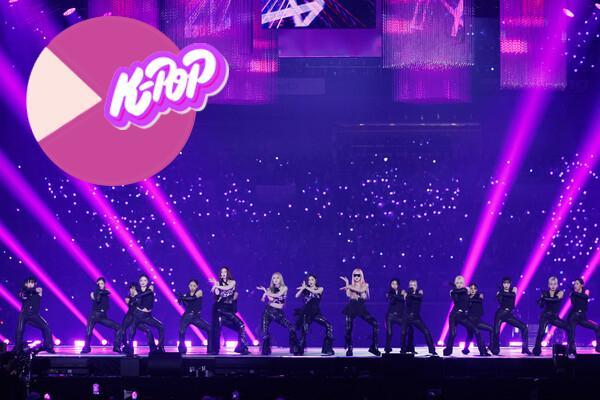
SEOUL, December 02 (AJP) - K-pop has broken a historic barrier at the Grammy Awards — one of the highest measures of global music recognition — entering a "Big Four" category for the first time. Since the Grammys began in 1959, no Korean artist had ever been nominated in any of the major categories.
That changed when the Recording Academy announced its 68th Grammy nominees in early November, naming BLACKPINK's Rosé, the OST "Golden" from Netflix's animated film "KPop Demon Hunters," and global girl group KATSEYE — jointly launched by HYBE and Geffen Records — in major categories, which are Song of the Year, Record of the Year, Album of the Year, and Best New Artist.
For years, the Grammys have been seen as conservative, prioritizing musical craftsmanship over commercial popularity. BTS attended as presenters in 2019 and earned multiple nominations over three consecutive years, but never broke into the Big Four.
Now, attention turns to next February's awards, where the industry is watching to see whether K-pop converts nominations into its first major-category win.
K-wave thrives in the social media age
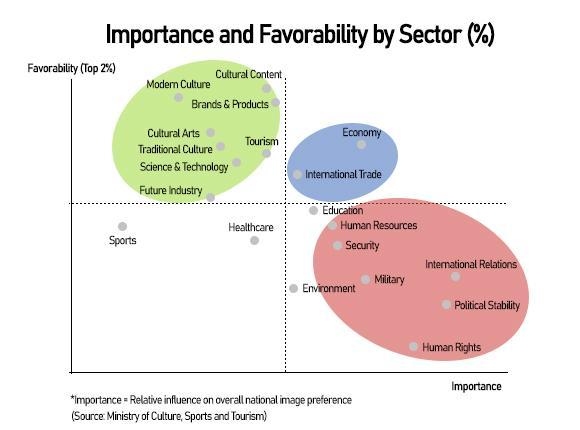
According to the 2024 National Image Survey by the Ministry of Culture, Sports and Tourism, Korea's global favorability has risen steadily for six years — from 71.1 percent in 2018 to 79 percent in 2024.
Among sectors such as sports, education, human rights, healthcare, and science, culture and entertainment emerged as the most influential contributor, rising from 35.3 percent in 2018 to 43.9 percent in 2024.
The pandemic further accelerated the trend. With digital media consumption soaring, 89.3 percent of respondents said they first encountered Korea through YouTube, and 60.8 percent through Netflix — confirming streaming as the primary gateway to Korean pop culture.
K-idol training sets a global standard for star-making
KATSEYE was formed through the global audition program "The Debut: Dream Academy," which selected six multinational members from more than 120,000 applicants via evaluations and fan voting.
The group trained under what is now widely recognized as the K-pop system — a long-term, intensive regimen that includes daily vocal and dance training, performance rehearsals, and moral education.
"We have long wanted to develop diverse global talent based on the methodology of K-pop and build global groups in the K-pop style," HYBE Chairman Bang Si-hyuk said.
The audition program was not only a debut project; it was a test of whether Korea’s star-making system could be exported intact.
In the United States, talent is discovered, not groomed. The idea of multi-year training and development (T&D) — shaping multidimensional artists before debut — is still unfamiliar.
Korean agencies build performers step by step — crafting group concepts, curating artistic direction, and supporting long-term branding. A crucial part of the system is extensive vocal coaching across multiple genres, equipping trainees to deliver synchronized choreography. The trainee system, which can last from six months to ten years, is built to cultivate potential rather than select only fully formed performers.
To ensure a stable debut, agencies provide mental and emotional support programs, including language education for foreign trainees, life coaching, and professional counseling.
Even in global audition formats, companies maintain private trainee pools that undergo monthly evaluations — a high-pressure system that explains the scale of the recent fallout between NewJeans and HYBE.
At the end of the day, music drives the momentum
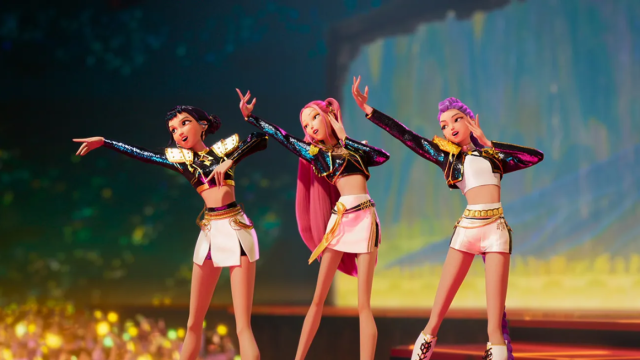
The breakout success of Netflix's animated film "KPop Demon Hunters" encapsulates how K-pop expands globally.
The film follows fictional girl group Huntrix, who use their songs to protect their fans from supernatural threats. Its OST tracks — including "Your Idol" by the group's rival Saja Boys and "Golden" by Huntrix — climbed Billboard's global charts soon after the film's June release.
Cover videos and challenge trends spread rapidly across social platforms, creating a loop in which music fuels content, and content boosts music streams.
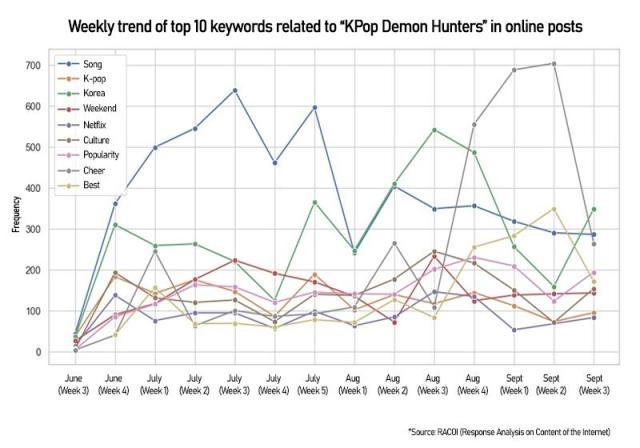
A recent study by Korea University's College of Media and Communication — based on keyword analytics from the Korea Broadcast Advertising Corporation — found that the two most frequently mentioned terms in online discussions were "song" and "Korea." Many viewers described replaying scenes while looping the soundtrack, responding strongly to the film's musical peaks. The inclusion of Korean lyrics in the OST was particularly striking, with global listeners singing along phonetically.
Professor Baek Hyun-mi, the author of the study, noted that the recent wave of success brings not only pride but also unresolved questions.
"This success leaves us with more than just a sense of pride," Baek said. "Within global platforms, the question of who truly owns this culture remains unanswered. The creative origins lie in Korea, but it is still unclear who ultimately controls the outcomes and reaps the benefits."

Industry power shift: Toward a new 'Big 4'
"K-pop is entering the early stage of mainstream globalization," said pop culture critic Ha Jae-keun.
K-pop's industrial scale is now reshaping the global music hierarchy. HYBE's market value has climbed to fourth worldwide, edging closer to Warner Music Group and challenging the decades-old dominance of the "Big Three" — Universal Music Group, Sony Music, and Warner Music Group.
Music Business Worldwide founder Tim Ingham recently predicted that Warner's revenue may gradually converge with HYBE's, signaling a structural shift in global music capitalism.
Between 2020 and 2024, HYBE recorded a 29 percent compound annual growth rate (CAGR) — far outpacing Sony (18.3 percent), Universal (12.5 percent), and Warner (9.5 percent).
"Along with BTS's full-group comeback next year, we see this moment as pivotal for strengthening both our market reach and long-term growth potential," a senior HYBE official said.
Critic Kim Hern-sik notes that K-pop must now secure its position as a genre, not just a cultural category.
"It should establish itself the way Britpop once did. Today, young people around the world see K-pop as a space where they can feel agency, dream, and achieve something. For many, it is the only arena where that possibility feels real — and that is why its power is so strong."

Copyright ⓒ Aju Press All rights reserved.