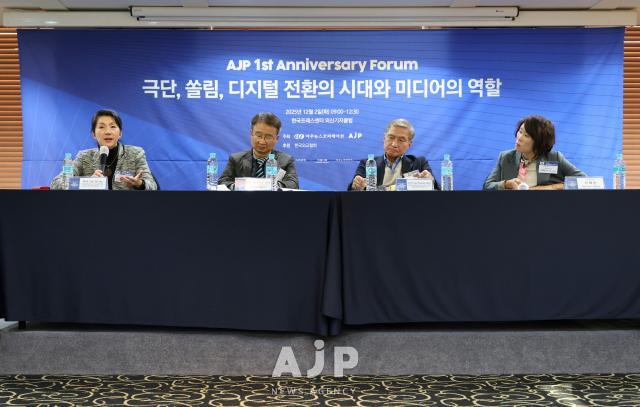
The forum, held to commemorate AJP's first anniversary, featured Sohn Jie-ae, visiting professor at Ewha Womans University, Park Han-woo, professor at Yeungnam University, and Lee Byung-jong, professor at Sookmyung Women's University. AJP Chief Editor Seo Hye-seung moderated the discussion.
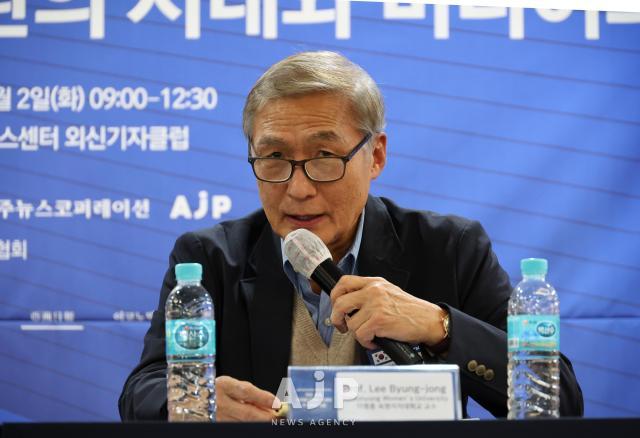
Lee opened the discussion by reflecting on long-standing asymmetries in global news coverage. He recalled UNESCO's past critism of the western-dominated news supply, and unsuccessful attempts by Asia-Pacific media to build alternative platforms.
"The situation is different now. Asian media outlets like AJP are preparing to step up," Lee said. "South Korea has developed its capabilities through democracy and media development."
Lee highlighted South Korea's pioneering role in online democracy, recalling how former President Roh Moo-hyun earned the nickname "Internet President" when SMS messaging positively influenced elections. However, he pointed out that two decades later, social media has shifted toward negative polarization through fan-based politics and fortified ideological camps.
"Research shows false information spreads about six times faster than truthful information," Lee added, expressing concern over changing media dynamics.
"People may now bet against their own ideological beliefs for financial gain," Park said. "This could create serious chaos for democracy."
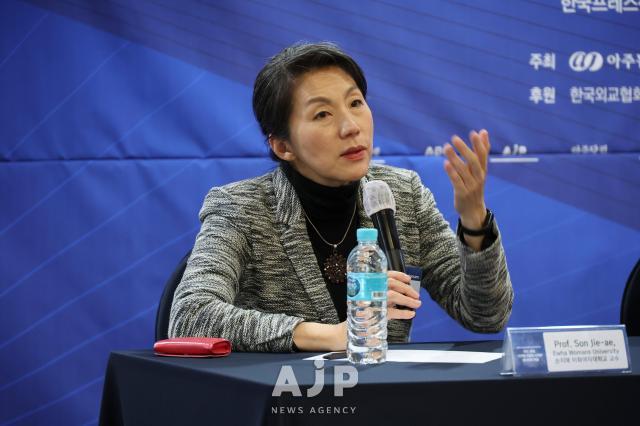
The panel tackled questions about journalistic objectivity in depth. Sohn argued that complete objectivity in reporting is difficult to achieve.
"The very act of deciding what story to write involves subjective judgment," Sohn said. "What matters is that journalists understand both sides of an issue before their readers do, and constantly consider how to present information fairly and in a balanced manner."
Sohn added that she teaches students to find the "selling point" in their stories, emphasizing that since editors and journalists ultimately make editorial decisions, their knowledge, integrity, and ethical awareness are crucial.
Park highlighted the unique challenges facing English-language news outlets in Korea. Using the recent Coupang data breach as an example, he noted the tension between reporting from a national interest perspective versus global standards.
"If you report from a national interest standpoint, you might approach it sympathetically. But global standards would require pointing out the digital platform's negligence in data management," Park said.
He also noted the Coupang incident involves allegations of Chinese involvement, raising questions about whether to frame coverage nationalistically or through universal principles. "Korean news consumers are likely issue-based or fan-based audiences, so deeper reporting is essential," he advised.
Lee explained that media outlets must balance independent, fair reporting with financial sustainability, noting some have turned to government subsidies or donations instead of advertising or subscriptions.
Park emphasized face-to-face engagement. "Most general readers tend to be older, so they need to meet journalists and editors directly," he said. "Offline events and forums help build rapport with readers. The New York Times uses this strategy as well."
He suggested that directly briefing senior readers would increase their subscription commitment, noting older audiences differ from younger demographics.
Sohn concluded that face-to-face communication and financial stability are both important. "In opinion sections, readers seek journalists they trust," she said. "Developing differentiated storytelling approaches is key to building that trust."

Copyright ⓒ Aju Press All rights reserved.