![Jerome Powell, Fed Chair [Photo=EPA Yonhap News]](https://image.ajunews.com/content/image/2025/12/11/20251211081348594521.jpg)
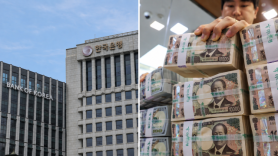
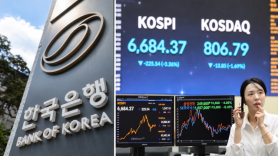
SEOUL, December 11 (AJP) - The U.S. Federal Reserve’s third consecutive interest-rate cut is expected to have little immediate impact on South Korea’s monetary stance, with the Bank of Korea likely to keep its policy rate unchanged amid persistent won volatility, elevated housing prices and uncertainty over the U.S. policy path, industry sources said Thursday.
The Fed lowered its benchmark range to 3.50–3.75 percent at its Wednesday meeting. Its latest dot plot left the year-end projection unchanged at 3.4 percent, implying only one additional 25-basis-point cut next year.
Chair Jerome Powell signaled a more cautious easing trajectory, saying the policy rate is now within a “neutral range.”
The Fed has cut rates by 25 basis points in each of September, October and December, shrinking the U.S.–Korea rate differential to 1.25 percentage points. The narrower gap has eased pressure on capital outflows and the won-dollar exchange rate, though foreign-exchange volatility remains significant.
The won hit 1,477.1 per dollar on Nov. 24 — the weakest level since April — and has since shown unstable movements. Bank of Korea official Kim Jong-hwa said about 70 percent of recent exchange-rate upward pressure stems from dollar demand related to outbound investments rather than interest-rate differentials alone.
BOK Governor Lee Chang-yong has stressed the won’s depreciation is partly driven by increased foreign stock purchases. With the weak currency pushing up import prices and inflation rising to 2.4 percent last month, analysts say the central bank may prefer to maintain its rate at the Jan. 15 policy meeting.
Housing market conditions remain another key concern. While prices in the broader Seoul metropolitan area appear to be stabilizing, a Bank of Korea official said certain districts still show declines that warrant continued monitoring.
Deputy Governor Park Jong-woo said external risks — including expectations of rate hikes in Japan and ongoing U.S.–China trade tensions — call for a cautious policy stance. “We will closely monitor market conditions and adjust as needed,” he said.
* This article, published by Aju Business Daily, was translated by AI and edited by AJP.
Copyright ⓒ Aju Press All rights reserved.